
Key Takeaways
Transition errors represent a distinct subset of numismatic history occurring when coins are struck using the wrong metal composition during a period of minting changes. Understanding these anomalies requires close attention to weight, edge profiles, and historical production data.
- Transitional errors typically occur during planned composition shifts.
- Mismatched planchets are the primary cause of these rare strikes.
- Verifying authenticity often involves testing physical weight metrics.
- Collector valuation rests on the rarity and documented provenance.
- Proper certification is essential to avoid common market traps.
Defining composition transition errors
When a mint prepares to change the metallic composition of a circulating coin, the transition period creates significant operational overlap. Often, both old and new metal planchets exist within the manufacturing facility simultaneously, leading to accidental swaps during the coining process. These occurrences are rare numismatic events that capture the interest of serious collectors worldwide.
The mechanics of mint changeovers
Mint changeovers occur when machinery is recalibrated for specific alloy requirements. Workers must carefully clear bins of old planchets before introducing new supplies, but residual blanks inevitably remain in feeding tubes. Understanding this process mirrors the kind of evaluative logic described in The Numbers Were Right. The Decision Was Wrong, where systematic errors arise from complex institutional logistics.
How planchet swaps create rarities
Planchet swaps occur when a blank designed for one specific alloy is struck with dies intended for another. This usually happens in small batches, making these pieces significantly rarer than traditional mint errors like lopsided strikes. Collectors often research fascinating world of transitional errors to understand how these anomalies bypass quality control checkpoints at the bureau.
Distinguishing transitions from other error types
Distinguishing a true transitional piece involves checking whether the metal composition mismatch coincides with the known dates of policy changes. Other errors, such as off-center strikes or planchet clips, arise from mechanical press issues rather than the supply of incorrect blanks. Identifying these requires a clear understanding of the metallurgical standards for each target year.
Historical context of major currency shifts
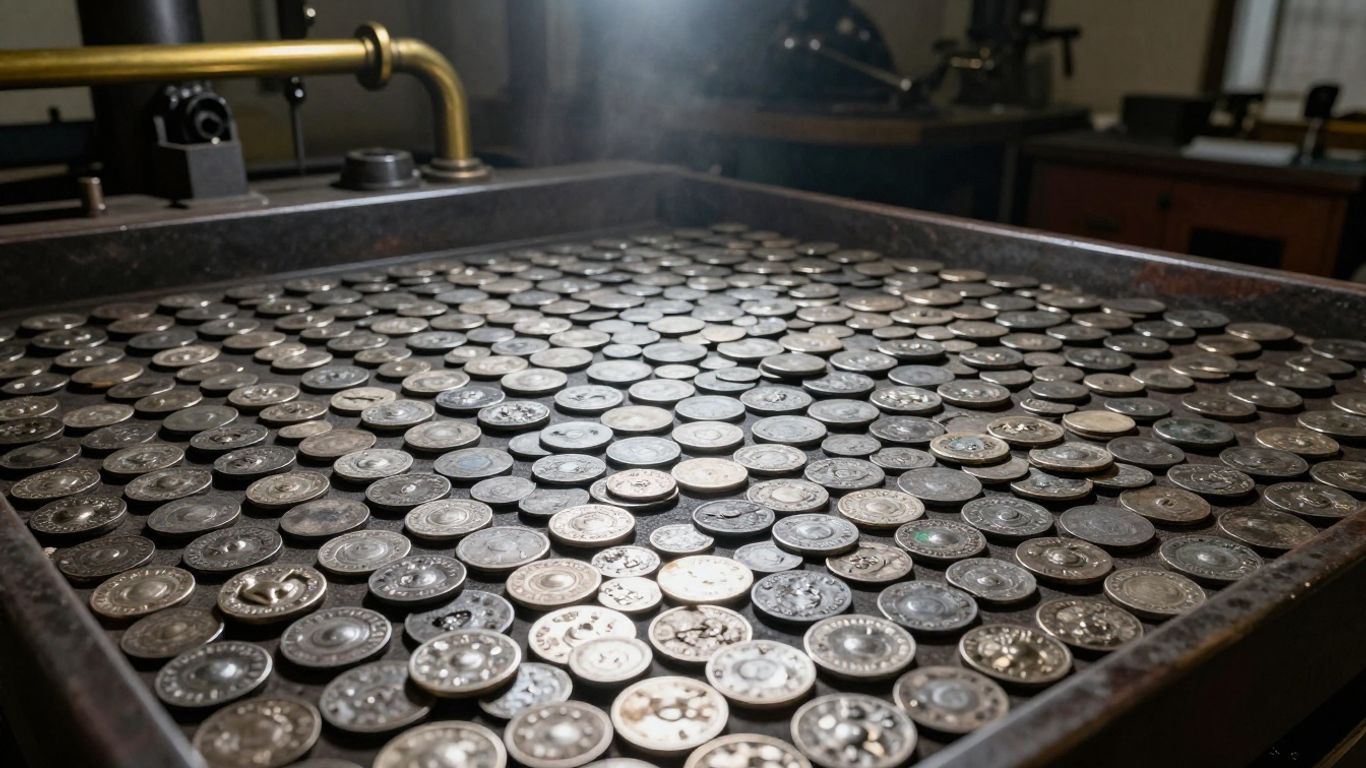
The history of US coinage has seen several major shifts in composition to accommodate changing economic realities. Historically, metals like silver were eventually replaced with base-metal alloys to maintain the circulation of currency while reducing manufacturing costs. When these shifts were implemented, they created windows where metallurgical inconsistencies became highly probable.
The 1965 move from silver to copper-nickel clad
In 1965, the United States transitioned from a silver-heavy coinage system to a copper-nickel clad composition for dimes and quarters. This move was a financial necessity dictated by rising bullion costs that exceeded the face value of the coins. The resulting overlap as the facility used up remaining silver blanks represents one of the most studied periods in modern collection history.
The 1982 copper and zinc penny transition
In 1982, the iconic Lincoln cent underwent a major transformation, shifting from a solid copper composition to a zinc core plated with copper. This move resulted in a weight difference that collectors can often identify with simple laboratory scales. The change occurred mid-year, meaning both versions were minted, creating perfect conditions for accidental planchet mixing.
International examples and global minting shifts
Global mints frequently update their currency compositions to fight inflation or currency debasement. Many countries have transitioned from silver or base metal alloys to specialized steel or plastic-infused materials. These international shifts serve as benchmarks for collectors who look at world coins to see how manufacturing errors fluctuate across different political and economic regions.
Methods for identifying transitional coins
Detecting an error coin often starts with a physical examination of the piece using standard numismatic tools. Because these coins often look identical to their standard counterparts from a distance, collectors must rely on objective data collection. The following table provides a quick guide to distinguishing standard coins from potential transitional errors based on typical specifications.
| Coin Type | Standard Metal | Normal Weight | Transitional Indicator |
|---|---|---|---|
| 1943 Cent | Steel | 2.7g | Bronze Weight (3.11g) |
| 1965 Dime | Clad | 2.27g | Silver Weight (2.50g) |
| 1982 Cent | Copper-Plated Zinc | 2.50g | Solid Copper (3.11g) |
Using precise weight metrics for verification
Weight is the most critical metric for identifying off-metal errors because metal densities differ significantly even when coin sizes matches. A difference of even a fraction of a gram can indicate that a coin was struck on the wrong alloy. Precision digital scales are necessary for verification, as manual weighing is far too inaccurate for numismatic standards.
Analyzing edge characteristics and rim anomalies
Examining the edge of a coin often reveals the metallic core that might not be visible on the obverse or reverse faces of the piece. A silver coin will lack the distinct copper band visible on modern clad coins when viewed from the side. This simple physical inspection often confirms whether the entire planchet consists of the unintended alloy.
Essential tools for at-home error analysis
Analyzing coins effectively requires a few specialized tools beyond basic scales and magnifiers. Collectors utilize high-resolution digital microscopes to inspect strike details along the rim and devices to measure magnetic susceptibility, which differentiates between metals like steel and copper. Accessing information on transitional errors in coin collecting helps enthusiasts understand how to build their examination kits responsibly.
Notable examples and value assessment
Values for transitional coins fluctuate based on market demand and the verified provenance of the specific specimen. While many errors are sold at auctions, their worth is often highly subjective and depends on independent grading from established third-party services. The market for these items has remained steady as collectors appreciate the history behind the minting mistake.
The 1965 transitional silver planchets
These pieces are legendary among collectors because they appear to be standard clads on the surface but carry the distinct weight and sound of silver when dropped. Examples in high grade command premiums because they represent the final remnants of the classic silver era. Collectors often search for these alongside valuable off-metal transitional coins to flesh out their error sets.
The 1982 copper vs. zinc cent variations
Determining the difference between the 1982 copper and zinc cents is a staple for new collectors learning to analyze mint errors. While millions of these coins were produced, errors where a bronze cent was struck during the zinc period, or vice versa, occupy a special value tier. These specific variations continue to pop up in bank rolls, providing regular excitement for local hunters.
Factors influencing collector and market demand
Market demand is largely driven by rarity, visual presentation, and historical importance. A coin that looks dramatically different from its intended base metal attracts more interest and higher prices than a subtle deviation. Collectors prioritize coins that have strong eye appeal and clear, strike-related features that distinguish them from modern post-mint damage.
Navigating the market for error collectors
Investing in error coins is a pursuit that requires patience and a cautious attitude toward market listings. Because counterfeiters occasionally attempt to alter common coins to mimic rare errors, collectors must prioritize transparency and standardized grading. Navigating these risks is part of the game for anyone interested in the technical side of minting anomalies.
Importance of third-party certification
Certification from reputable services acts as the gold standard for verifying the identity and status of an error coin. These services use experts who cross-reference the coin’s physical data against known minting logs to ensure its legitimacy. Relying on professional authentication prevents the purchase of questionable pieces that lack provenance or exhibit signs of tampering.
Detecting common counterfeits and altered pieces
Fake errors are often created by intentionally plating common coins with copper or zinc to trick unsuspecting collectors. Close inspection under magnification often reveals signs of chemical residues, pitting from acid etching, or uneven plating layers that do not match federal minting standards. Education about transitional errors in mint error coins is the best defense against these common scams.
Long-term trends in error coin appreciation
Long-term appreciation for rare errors typically tracks with the overall health of the numismatic hobby. High-quality transitional coins with documented pedigrees from older, famous collections often defy market volatility. Collectors tend to hold onto these unique historical documents, which limits the available supply and tends to keep prices stable over the long term.
Conclusion
Collecting composition transition errors offers a unique window into the technical evolution of modern currency systems. By focusing on physical verification and relying on professional certification, collectors can build impressive, historically significant holdings that serve as a testament to the complex realities of the minting process.
Frequently Asked Questions
Are all off-metal coins considered transitional errors?
No, an off-metal error occurs whenever a coin is struck on the wrong blank, while a transitional error specifically refers to mistakes made during a period where the mint is officially changing its alloy standards.
Can I find a 1943 bronze cent in circulation?
Because the 1943 bronze cents are extremely rare and highly publicized, the chances of finding one in daily circulation are statistically negligible, though they have been discovered in bank rolls in the distant past.
What weight should a standard copper-nickel clad dime be?
A standard copper-nickel clad dime should weigh approximately 2.27 grams, while a silver dime from the same era or prior years would weigh 2.50 grams.
Do magnetized coins always indicate an error?
No, some modern coins are intentionally minted with magnetic steel cores, so a magnetic coin is not inherently an error unless it appears on a coin type that should be composed of copper or silver.
how can I tell if a coin is plated?
Plated coins often exhibit soft, grainy surfaces or traces of the base metal at the edges where the plating has peeled away under inspection, which is a common indicator of a post-mint alteration.
Do third-party grading services label all error coins?
Yes, reputable grading services will generally encapsulate the coin and assign a specific designation to the error type if the authentication process confirms that the anomaly occurred within the minting process.
Should I clean my error coins to improve their look?
No, cleaning a coin typically destroys its numismatic value by creating micro-scratches on the surface, which is something that grading services will treat as damage when determining the coin’s grade.