
Key Takeaways
Understanding the nuances of minting errors helps collectors distinguish between planned adjustments and mechanical failures. Insufficient strike pressure coins often result from equipment malfunctions rather than test strikes.
- Low strike pressure results in missing or shallow design details on the coin surface.
- Spontaneous press malfunctions are the primary driver behind most weakly struck coins found in circulation.
- Properly identifying these errors requires distinguishing them from planchet issues or grease-filled dies.
- Market value for these coins typically depends on the degree of the strike error and overall eye appeal.
- Professional TPG certification is recommended for significant anomalies to ensure accurate identification and provenance.
The physics of minting and strike pressure
How a coin die creates an image
In the final stage of the minting process, a blank planchet is positioned between two hardened steel dies. As the press engages, massive internal force drives the die faces together, causing the metal to cold-flow into the recessed areas of the design. This intense pressure is what renders finer details, such as hairlines or small feathers, visible on the finished coin.
Variables affecting total strike force
Several factors determine the intensity of the strike, including the hydraulic ram pressure and the precise calibration of the die chamber. When calibrated correctly, as described in the strike quality guide, the transfer of design elements is uniform across the entire surface. Even minor fluctuations in the metallurgical properties of the planchet or the ambient temperature of the press can influence how the metal yields to the dies.
Mechanical limitations of minting presses
Even Paradise Studios standard practices remind us that consistent input is key, but industrial minting equipment faces mechanical wear over time. If a knuckle joint becomes stressed or a cam mistimes, the dies may fail to approach each other with the required tonnage. These machines can suffer from spontaneous failure, leading to a localized drop in pressure that renders an otherwise perfect planchet a weak strike error.
Identifying signs of insufficient strike pressure
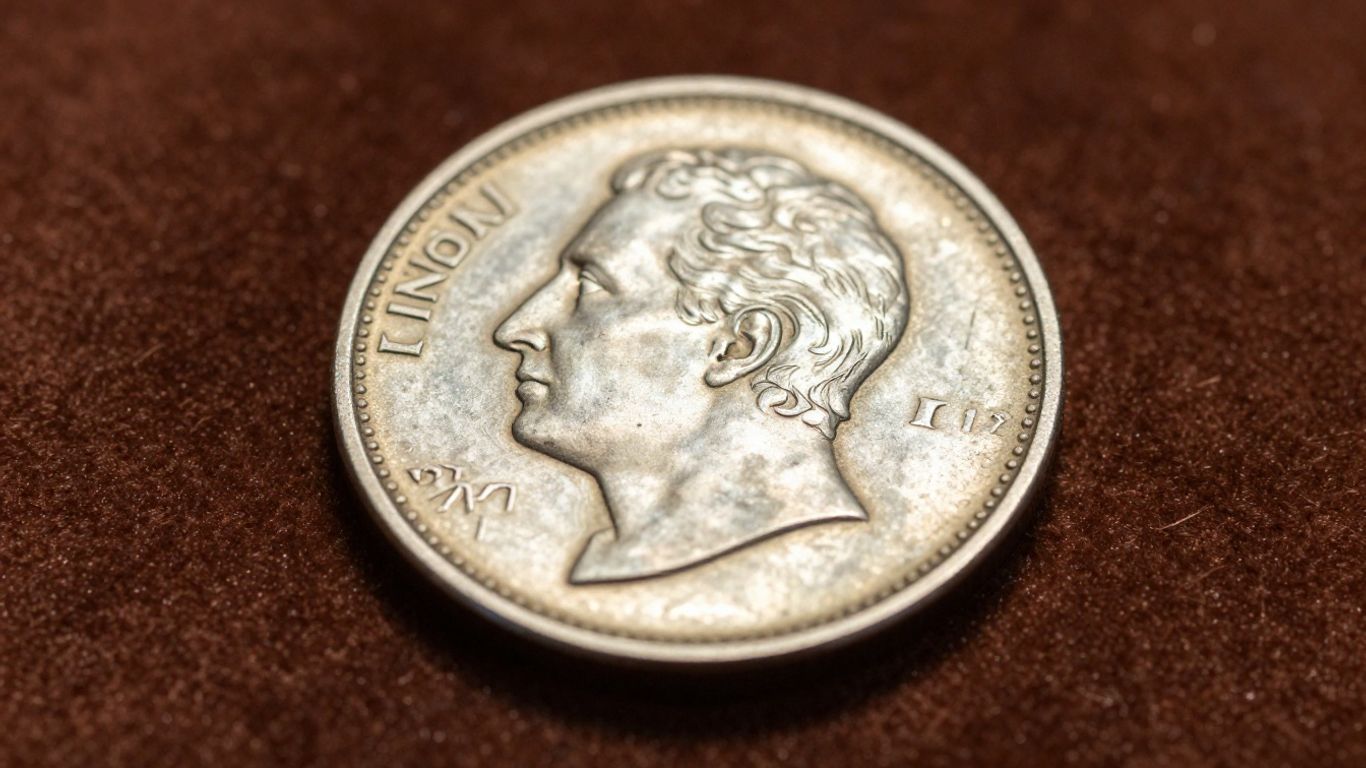
Differences between weak strikes and worn dies
Collectors often confuse a weak strike with the natural degradation of a late-stage die. A worn die results in mushy, rounded details, whereas a weak strike often displays crisp edges that simply lack height or completeness. As noted in Coin World analysis, spontaneous equipment malfunction often creates a sharp, albeit incomplete, impression that differs significantly from the progressive loss of detail associated with surface wear.
Visual characteristics of partial strikes
The following table illustrates the key differences between various striking anomalies to assist your examination process.
| Feature | Insufficient Pressure | Greased Die | Worn Die |
|---|---|---|---|
| DetailSharpness | Sharp but shallow | Missing/Obliterated | Rounded/Mushy |
| Surface Flow | Normal | Often smooth | Pitted/Textured |
| Edge Quality | Usually complete | Normal | Normal |
Surface texture and field abnormalities
The surface of a weakly struck coin frequently retains more of its original mint luster because the metal did not undergo the full strain of a complete strike. This creates a deceptive appearance that might lead one to believe the coin is a high-grade specimen. However, fields may show signs of "orange peel" texture or graininess where the planchet surface was not fully compressed against the polished die field.
Common causes of weak strikes in the minting process
Improper die height adjustments
Insufficient die approximation refers to the narrow clearance between the anvil and hammer dies. If the settings are too loose, the planchet does not experience the threshold tonnage required to force the metal into the deepest recesses of the portrait or lettering. Maintaining precise machine alignment is a critical factor in production success for any manufacturing operation, including the Mint.
Variations in planchet thickness or composition
Natural variations in planchet thickness can lead to sporadic strike issues during a single shift. If a planchet is slightly thinner than specifications, it fails to meet the die resistance required to trigger a full strike. These anomalies are occasionally identified through reports at Jim’s Coins and Stamps when evaluating raw rolls of coins.
Mechanical failure or debris in the collar
Mechanical blockages or debris inside the collar can impede the seating of the planchet. Items like small metal shavings can act as a buffer, preventing the dies from fully closing. This results in localized weakness around the periphery of the coin where the metal failed to flow completely into the lettering located near the rim.
Differentiating insufficient pressure from other coin errors
Distinguishing strike pressure from weak strikes on proof coins
Proof coins receive multiple strikes to ensure impeccable design clarity. When a proof coin exhibits a weak strike, it often suggests a major press malfunction or, in rare cases, a planchet that failed to be properly annealed. These errors are distinguishable by the presence of double images or misaligned strike points that would not appear on a standard business-strike coin.
Comparing strike pressure issues to grease-filled dies
Many collectors struggle to differentiate low pressure from grease-filled dies. A grease-filled die typically causes specific segments of the design to vanish, while the rest of the coin appears perfectly struck. In contrast, insufficient pressure tends to affect the entire surface of the coin, particularly the high points and central motifs where the metal demand is greatest.
How planchet errors hide strike details
Structural failures in the planchet itself, such as lamination peels or clips, can disrupt the force distribution during the strike. When this happens, it creates an area of missing detail that mimics a weak strike, even if the actual pressure exerted by the press was within normal parameters. Careful visual inspection, as recommended by MyCoinGrade, is essential to ensure you do not misclassify a physical planchet fault as a pressure issue.
Valuation and collectibility of low-pressure coins
Factors determining market appeal
Market demand is primarily driven by the drama of the visual effect. A coin that is missing the entire date or a major portion of the central design commands a higher premium than one with only minor peripheral weakness. Eye appeal is subjective, but consistency in the grade makes a piece more desirable for a general numismatic collection.
Rarity versus quality in error coins
Common weak strikes are abundant in the marketplace and often trade at low multiples of their face value. Collectors should weigh the rarity of the specific denomination against the severity of the strike. An extremely weak, uncirculated piece might be considered a curiosity, but professional error databases are limited to documented examples of extraordinary malfunctions.
Certification standards from major TPGs
Third-party grading services (TPGs) use strict internal protocols to differentiate between true die errors and post-mint events. These services provide an objective verification of the coin’s authenticity, which is a key component in establishing a collection’s long-term worth. Relying on professional slabbed items provides valuable peace of mind for collectors when identifying genuine mint anomalies from altered or damaged pieces.
Preserving and documenting your error collection
Best practices for storing lightly struck coins
Proper storage is essential to maintain the integrity of error surfaces. Coins should be kept in inert, PVC-free holders to prevent chemical reactions that could degrade the luster retention often found on weakly struck pieces. Using professional storage materials ensures that existing strike depth remains crisp over the decades.
Importance of provenance in error classification
Documenting where and when a coin was acquired adds layers of credibility to your collection. Keeping records of the original source or the circumstances of the find allows future owners to trust that the coin was not modified outside the mint. This history is especially vital for pieces that appear to be one-of-a-kind production variations.
When to seek professional grading for strike anomalies
If you believe you have discovered a significant strike error, professional evaluation is the best route for verification. Many collectors find that submitting their finds to a reputable grading service provides clarity on whether the coin has legitimate numismatic value or if it is merely a common production anomaly that does not merit high-tier appraisal.
Conclusion
Navigating the world of weakly struck coins requires a balance of mechanical understanding and careful observation. By learning to distinguish between spontaneous equipment failures and common planchet defects, you can better curate a meaningful error collection that captures the fascinating, imperfect nature of the minting process itself.
Frequently Asked Questions
Are weak strikes considered legitimate error coins?
Yes, weak strikes are recognized as legitimate minting errors. They stem from mechanical variables, such as improper die pressure, rather than post-mint damage.
Can cleaning a coin affect its value as an error?
Cleaning any coin, particularly one with a unique strike, will drastically reduce its value. It destroys the original surface and luster, often causing professional grading services to label the coin as damaged.
Do all weak strikes come from the same mint?
No, these errors have been documented across multiple government minting facilities. The mechanical causes are inherent to the types of high-speed presses used globally to mass-produce coinage.
Why are some weak strikes sharper than others?
The sharpness of a weak strike depends on the specific tonnage achieved during the strike. A slightly better-than-average strike will show more detail, while a catastrophic press failure will result in almost no design transfer at all.
Is it common for weak strikes to have double-struck elements?
Sometimes, a mechanical failure causes multiple strikes or shifted alignments. These are distinct from simple weak strikes and command higher interest among collectors due to their complexity.
How can I distinguish between a wear-induced weak strike and a mint-error strike?
Wear occurs over time through circulation, resulting in smoothing of high points. A mint error exists from the moment the coin leaves the press, often retaining full, sharp mint luster in the fields even where detail is lacking.
Should I buy a coin labeled as a die trial?
The term die trial is often misused. Most coins marketed as such are simply weak strikes resulting from press malfunctions, so treat them as basic error coins regardless of the label used.