
Key Takeaways
Understanding alignment is a fundamental skill for any numismatist, as it helps determine the intended orientation of currency and identifies potential minting mistakes. This article provides a foundational overview of the concepts and techniques required for accurate assessment.
- Standard coin alignment means the reverse appears upside down when flipped along a vertical axis.
- Medal alignment ensures that both sides remain upright when the coin is rotated vertically.
- Checking for orientation requires a consistent, stable hand and proper lighting or magnification.
- Minting errors involving rotated dies are rare and can significantly impact a specimen’s market value.
- Alignment preferences vary globally, influenced by both historical tradition and practical utility in daily transactions.
Understanding the basics of standard coin orientation
Defining obverse and reverse axis
In the world of coins, the obverse typically refers to the front or "heads" side, while the reverse is the back or "tails" side. The relationship between these two faces relies on their rotational position relative to each other. Understanding this axis is the first step in recognizing whether a piece holds to its intended design specifications.
The role of the mint process in orientation
During production, die placement determines how the images strike the final product. Mints utilize custom-machined dies that engage to apply pressure simultaneously, effectively freezing the orientation of each side. Precision at this stage is crucial to ensure that the production line creates uniform results in massive quantities.
Standard versus non-standard alignment definitions
Most modern circulation coins follow a fixed orientation pattern. When a coin deviates from this expectation, collectors often categorize it as a non-standard or error piece. Defining what constitutes the norm allows us to isolate abnormalities when we assess private collections or verify high-value finds.
Coin alignment versus medal alignment
Characteristics of standard coin alignment
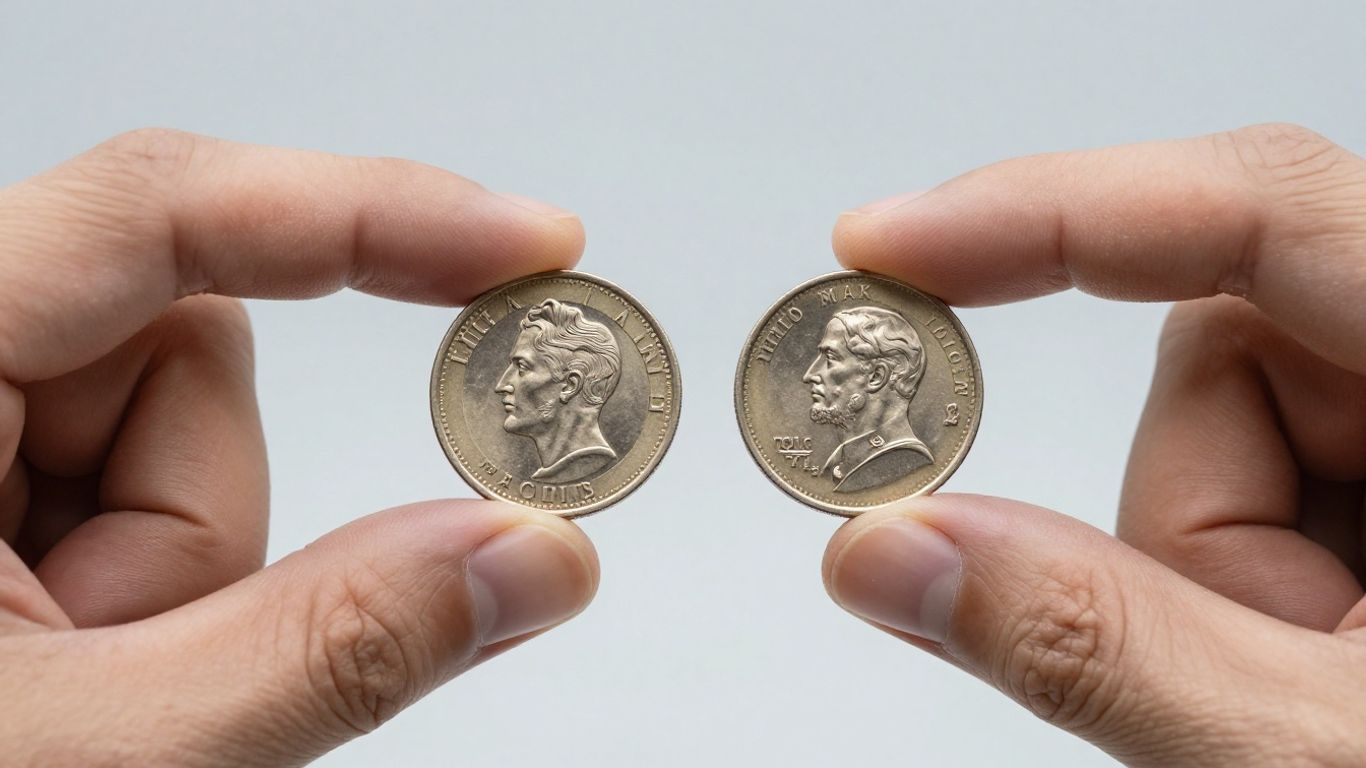
Standard coin alignment, or "coin turn," is the primary convention found in common United States coinage. It is designed so that when the item is held vertically and flipped like a page in a book, the reverse image is oriented upside down. This alignment is deeply rooted in the U.S. coinage history for everyday use.
Profile and orientation of medal alignment
Medal alignment, frequently utilized in European countries, keeps both the obverse and reverse sides in the same orientation. If you hold the item and perform a vertical flip, both sides remain upright. This makes viewing the artistic features seamless, which is why it is preferred for commemorative medals or awards.
How to distinguish the two visually
Distinguishing these systems is straightforward if you use a fixed point of reference. By placing your thumb on the top edge and rotating the piece, you can instantly see if the image on the reverse is inverted or upright. Observing the relationship between the top of the design on both sides will confirm the alignment type.
Historical usage of both systems
Different minting regions adopted their own traditions during the developmental stages of national currencies. Some countries preferred the "coin turn" to facilitate rapid tallying, while others prioritized aesthetic consistency. Historical patterns such as these are vital when you begin analyzing rarity within specific international series.
Practical methods for checking coin orientation
The vertical axis rotation technique
For most collectors, the vertical axis rotation remains the go-to method for checking alignment. By holding the coin at the 12 o’clock and 6 o’clock positions, you can rotate the item to see the reverse. This ensures gravity and hand movement do not disguise an actual error.
Utilizing visual aids and magnifying tools
When a rotation is suspected, clarity is paramount. You might use magnifying gear to inspect the die markers carefully. A clear look helps you verify the true rotation before documenting it in your collection database.
Establishing a consistent holding position
Developing a stable posture ensures that every piece is tested under the same conditions. This prevents false positives caused by slight tilting while inspecting specimens:
- Use a soft, non-abrasive surface to rest your hands.
- Keep the coin edges between your thumb and index finger.
- Ensure consistent lighting to see edge details.
- Record results immediately after each check.
Documenting your findings for cataloging
Maintaining a ledger helps track potential anomalies for future reference. Many enthusiasts rely on organized spreadsheets or specialized software to categorize coins and note any deviations. Below is a sample assessment table for common orientation types:
| Alignment Type | Flip Style | Typical Usage |
|---|---|---|
| Coin Turn | Vertical | US Currency |
| Medal Turn | Vertical | Euro/Medals |
| Off-Center | Vertical | Rare Errors |
You should always re-examine suspected errors if they appear suspicious against known historical data.
Numismatic significance and market value
Impact of rotation errors on coin grading
Minor rotational shifts are often ignored, but significant degree rotations can alter the coin grading outcome entirely. When you send a specimen to a service like PCGS, they assess the structural integrity, but also look specifically for errors that deviate from standard specifications.
Buyer demand for misaligned specimens
Collectors seeking rarity often pay premiums for extreme die rotations. These pieces are highly sought after because they represent unique "mistakes" that escaped quality control. Interest from niche market buyers keeps demand active for these accidental varietals.
Analyzing rarity within specific coin series
Understanding the production history of a specific series allows an advanced collector to know what is normal and what is exceptional. Researching numismatic terms and production runs is essential. If a specific year or mint saw frequent die slips, those variations become part of the series’ lore.
Authenticity concerns when assessing orientation
Unfortunately, artificial rotations are sometimes created after the coin has left the mint. Always check for signs of tampering, such as tool marks or seam lines near the rim, before concluding that a rotation is a genuine mint error.
Identifying rotation errors and minting anomalies
Detecting a rotated die error
A rotated die error occurs when the die shifts inside the press during the striking process. You can detect this by seeing that the central axis of the reverse image is shifted relative to the obverse. It is often a matter of degrees, measured on a virtual circle.
Differentiating between intentional and accidental misalignments
Accidental misalignments show wear patterns consistent with the rest of the coin’s surface. If the rotation looks sharp while the rest of the metal exhibits normal circulation wear, it might suggest post-mint damage. Authenticity hinges on observing if the metal flowed naturally during the strike.
Impact of die wear on perceived orientation
Over time, dies naturally loosen or wear down, sometimes resulting in a slight "wobble" in the strike. This is different from a core die rotation error. Differentiating between massive error-level rotations and simple strike variance requires a trained eye.
Documentation standards for reported errors
Reporting a new variety involves detailing the specific degrees of rotation and providing high-quality images. Most societies request measurements taken at specific radial intervals to ensure the report remains scientifically valid for historians.
Evolution of orientation standards in world coins
Historical transitions in US coinage
Early US minting was influenced by various colonial traditions, but by the mid-19th century, alignment standards became strictly codified. Following these coins trends helps collectors understand why older issues might occasionally differ from modern standards.
Regional preferences for alignment types
Global regions often cluster around either coin-turn or medal-turn styles. These regional standards are typically reflective of broader cultural aesthetics and historical influences of minting technology across the continent.
Modern minting technology and precision alignment
Modern machinery uses laser-guided alignment, making accidental misalignments virtually non-existent today. The consistency achieved in the current NGC standard demonstrates how technological progress has effectively eliminated the likelihood of fresh rotation errors.
Notable global exceptions to standard practice
Some nations intermittently switched between systems to signify changes in government or monetary policy. These anomalies are favorites for historians, as they mark exact moments of transition in the legal tender’s evolution.
Conclusion
Mastering coin orientation transforms how you perceive and value your collection, allowing you to move beyond simple accumulation into the world of genuine numismatic research. Whether you are hunting for rare die rotation errors or simply refining your ability to distinguish regional minting styles, the insights gained from observing these subtle rotations ensure that you interact with your specimens with deeper professional awareness and lasting accuracy.
Frequently Asked Questions
Does standard coin orientation explained properly apply to ancient coins?
Ancient coins were struck by hand, so individual alignment was rarely consistent, meaning there is no singular standard for thousands of years of historical currency.
Can I fix a rotated coin to make it standard?
Attempting to alter a coin’s orientation is considered damage and will destroy any numismatic value that the original minting error might have held.
How many degrees of rotation are needed for an error to be valuable?
Value is subjective, but collectors typically start paying premiums for rotations exceeding 15 or 30 degrees, depending on the rarity of the coin series itself.
Is medal alignment considered an error on US coins?
Yes, because US coinage is minted according to a coin-turn specification, any specimen found with medal alignment is considered an anomaly that should be professionally verified.
Can I determine alignment without professional tools?
Absolutely, as you can simply use your thumbs and index fingers to flip the coin vertically to observe the reverse orientation in relation to the obverse.
Why do some coins feature rotated edges but look normal otherwise?
This is usually due to collar die issues or peripheral strike anomalies rather than a full rotated-die error, which affects the entire face of the coin.
Where can I document found errors for other enthusiasts to see?
Many collectors congregate in specialized forums or submit their finds to grading services to create a publicly accessible record of unique error coins.