
Key Takeaways
Identifying die clashes requires a fundamental understanding of minting errors and careful observation of anomalous surface details. The following points summarize the essential information for collectors scouting these distinct varieties:
- Die clashes appear when opposing dies strike each other without a planchet present.
- Subtle transfer images often manifest as ghost-like outlines of the opposite design.
- Heavy, deep clashes are more sought after by serious variety collectors.
- Proper identification necessitates controlled lighting and industrial-grade magnification.
- Distinguishing between actual clashes and post-mint damage is crucial for validation.
Understanding the mechanics of die clashes
When coin dies come face-to-face in the press, they interact in a way that transfers design elements onto the opposing surfaces. The vast pressures involved cause these metallic shapes to mirror one another, leaving distinct markings on the subsequent coins minted with those specific dies. Understanding these interactions is the bedrock of correctly identifying rare and valuable die clash errors in your collection.
What defines a die clash in numismatics
A die clash occurs when the obverse and reverse dies strike one another without a coin blank between them. These anomalies represent the fleeting contact of steel between two competing surfaces, which results in the impression of the opposing imagery being transferred. Enthusiasts often refer to these as ghost images because the outlines are frequently subtle and require specific lighting conditions to view.
The process of minting and die contact
The minting press cycle is designed to cycle automatically, but when a feed malfunction prevents a planchet from entering the chamber, the dies collide. Because the metal of the dies is hardened and tempered, the impact is usually minor but structural enough to mar the surface of the dies themselves. As noted by resources for identifying these fascinating coin errors, these marks effectively become part of the die design for the remainder of that die’s productive life.
Distinguishing die clashes from post-mint damage
Casual collectors frequently confuse random scratches or abrasions with true die clashes, yet distinguishing the two is essential for valuation. While post-mint damage is usually random in depth and location, a genuine clash is constrained by the geometry of the die surfaces. If the marking follows the contour of the relief rather than appearing as a sharp cut, it is more likely to satisfy the fascinating world of die clashes classification system used by hobbyists.
Characteristics of prominent die clashes
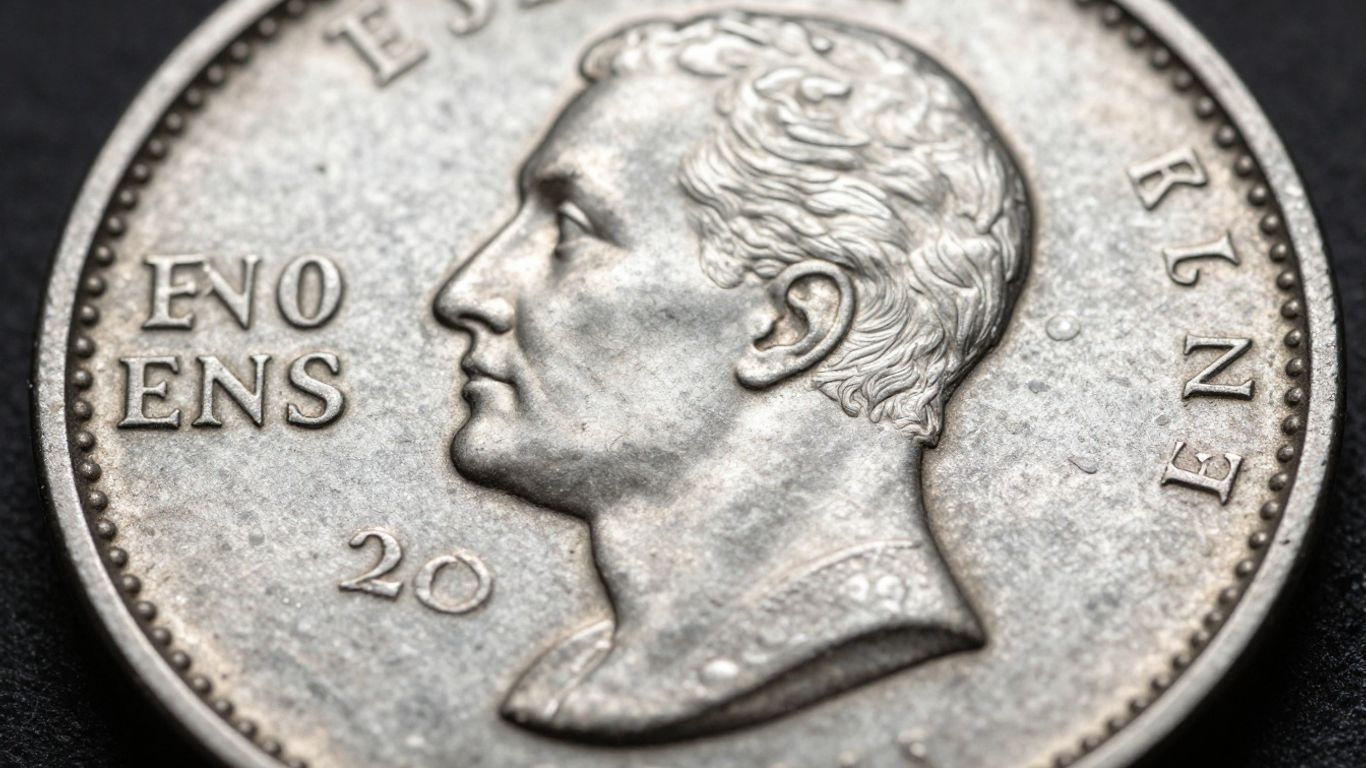
Prominent die clashes show clear evidence of design transfer, often appearing as distinct raised letters or imagery in fields where they do not traditionally reside. Collectors look for these features, knowing that their presence confirms the die pair’s history during the production cycle. The visual impact depends largely on the settings of the press and the exact state of the dies at the time of the incident.
Assessing the clarity of transfer images
Clarity is the primary driver of desirability, as images that are sharp and easily visible under moderate magnification command higher interest. When a clash is weak, the impression might appear as merely a slight change in the field texture, which is difficult to authenticate. High-quality imagery helps verify the legitimacy of these subtle markers against common surface issues.
The influence of die orientation on clash position
Die orientation is never uniform, meaning the clash position relative to the center of the coin changes based on the alignment of the dies. This variation is why off-center die clashes on specific series offer such distinct visual interest to researchers. The position of these ghosts provides a forensic look at the exact moment of machine failure.
Why deep, heavy clashes command more interest
Deeply impressed clashes alter the physical state of the coin in a way that is immediately obvious to the naked eye, removing the need for intense research. The extra depth suggests that the dies were under heavy pressure for a longer duration than usual. Such coins serve as excellent physical records for historians and collectors interested in the mechanical rigors of the mint.
Notable examples of famous die clashes
Some coins are famous specifically because of their clash variety, creating a niche market that transcends general numismatic interest. These examples are documented extensively in variety books and are often featured as the benchmark for quality when assessing new finds.
The 1888-O Morgan dollar "scarface" clash
The 1888-O Morgan dollar is widely recognized for a clash that resembles a scar moving across the cheek of Liberty. This variety is a perennial favorite because it is visible without complex tools, making it accessible to both new and seasoned collectors in the hobby.
Variety clashes on Peace silver dollars
Peace dollars represent a series where die alignment was frequently checked, yet clashes still occurred, creating interesting overlay patterns. Because these dies were so large, the impressions often covered significant portions of the fields, leading to dramatic results on the final struck coin.
Examining modern clashes on state and national park quarters
Modern production methods have made die clashes rarer, but they still appear with surprising frequency on state and national park quarters. These modern issues are often collected in high grades, where the clash acts as an enhancement to the coin’s historical profile and overall scarcity.
Evaluating the collectibility and market value
Value in the collision-variety market is driven by scarcity, aesthetic appeal, and the history of the specific series. Investors and collectors alike recognize that a rare clash on a common coin can elevate its status to a must-have item for specialized cabinets.
Factors determining the premium for clashed coins
Market premiums fluctuate based on the prominence of the clash and its inclusion in major variety listings. A subtle clash on a common date may carry little value, while a significant, easily identified clash on a scarce mint-mark coin can command a significant multiplier over the standard market value.
How third-party grading services recognize clashes
Professional grading services have established specific protocols for variety attribution, though they prioritize the coin’s state of preservation above the error. A clash is treated as an attribute rather than a detraction, provided the overall grade reflects the coin’s surface quality. It is important to remember that coins must comply with terms and conditions for using The Ike Group or similar grading resources when being submitted for variety attribution.
The relationship between coin condition and variety demand
Condition serves as the final arbiter for value in any variety market, regardless of the error type. A stunning, high-grade example with a visible clash is exponentially more valuable than a heavily circulated coin with the same error, making survival statistics a core component of the valuation process.
Given the complexity of valuation, researchers often rely on a data-driven approach. The following table provides a breakdown of how clash visibility impacts pricing tiers for collectors.
| Clash Visibility | Rarity Tier | Market Premium |
|---|---|---|
| Subtle/Minor | Common | 5-10% |
| Visible/Distinct | Moderate | 25-50% |
| Heavy/Dramatic | Rare | 100%+ |
This tiered system helps collectors quickly verify the expected value of an acquisition against broader market expectations.
Professional identification techniques
Authenticating these varieties requires patience and a systematic approach to lighting and magnification. Collectors must ensure they aren’t merely looking at circulation markings that happen to mimic a clash design.
Using industrial-grade magnification tools
High-power loupes or digital microscopes are essential for resolving fine details of the clash. Most professionals utilize tools that offer 10x to 20x magnification to examine the edges and contours of the transferred relief images.
Techniques for lighting surfaces to reveal surface relief
Lighting is perhaps the most critical skill for the variety specialist, as it highlights the shadow of the clash. Angling light sources at approximately 45 degrees helps reveal the topography of the coin, making raised ghost imagery much more prominent against the field glare.
Utilizing online databases for variety verification
Professional variety databases facilitate real-time comparison of suspected finds against known population statistics. Many collectors consider the following techniques as foundational for their workflow:
- Comparing the clash location against high-resolution reference photographs.
- Checking historical auction records to see if the variety is documented.
- Using coordinate measurements to verify the alignment of the clash.
- Verifying the die state by checking associated cracks or die polishing marks.
These steps ensure the variety is correctly identified before moving forward with professional authentication or personal cataloging.
Navigating common misidentifications
Misidentification remains the greatest hurdle for new collectors in this field. Proper documentation and a comparative analysis approach are necessary to prevent errors in classification.
Potential confusion with bag marks and circulation dings
Common bag marks often align with the periphery or focal points of a coin, causing them to be mistaken for clashes. One must look for the repeating pattern of a clash; random dings lack the structural design element of a true transfer image.
Separating genuine die marks from planchet defects
Planchet flaws like lamination or inclusion marks are often mistaken for surface anomalies but are usually localized to the planchet surface. A genuine clash always retains the characteristic shapes of the original design elements.
The importance of confirming consistent die state characteristics
Consistency is key. If a coin appears to have a clash, there should be similar examples that show the same variety markers from the same die pair, confirming the clash was indeed an element of the die state.
Conclusion
As the study of these numismatic anomalies continues to reveal, die clashes represent a fascinating intersection of minting machinery and collector craftsmanship. By mastering the identification techniques outlined here, you can sharpen your focus and build a collection that captures these unique moments in production history.
Frequently Asked Questions
Can any coin show a die clash error?
Technically, any coin can receive a clash if the dies impact while the press is running without a planchet, though it is much more common in some series than others.
Does the presence of a clash always increase a coin’s value?
A clash primarily adds value when it is well-defined, prominent, and documented, as minor or barely visible clashes often carry little to no premium over normal coins.
How can I distinguish a clash from a cleaning mark?
Cleaning marks are usually thin, localized scratches that do not follow the raised relief of a design, whereas a die clash consists of raised, mirrored letters or imagery.
Where should I look first to find a clash?
It is often helpful to inspect the open fields of the coin, particularly the areas around the main bust or portrait, where ghost images are most visible.
Are modern quarters more or less likely to have clashes?
Modern minting technologies use more robust die monitoring, which makes accidental die contact much less likely than in older, vintage coin series.
Is it worth getting a minor clash professionally graded?
Professional grading is generally reserved for high-value or highly sought-after varieties, as the cost of submission may exceed the value added by the authentication of a minor clash.
Can you see die clashes on worn coins?
While visible, die clashes are often most dramatic on coins that have been graded higher, as wear and circulation frequently destroy the thin, raised details characteristic of these errors.