
Have you ever looked at an old coin and noticed strange white spots? It’s a common thing, and it can make you wonder what’s going on. These aren’t just random marks; they often tell a story about the coin’s past. Figuring out the exact white spot causes on coins can be tricky, involving everything from how the coin was made to what it’s been exposed to over the years. This article aims to shed some light on these mysterious spots, helping you understand what they mean.
Key Takeaways
- White spots on coins can result from mineral deposits or surface contamination from environmental factors.
- Manufacturing processes, including casting and plating techniques, can leave behind characteristics that appear as white spots.
- The alloy composition of a coin plays a role in its susceptibility to corrosion and the formation of surface anomalies.
- Scientific analysis methods like X-ray fluorescence and microscopy help identify the elemental makeup and surface details contributing to white spots.
- Distinguishing between genuine wear, environmental damage, and deliberate falsification requires careful examination of wear patterns and surface features.
Understanding Coin Surface Anomalies
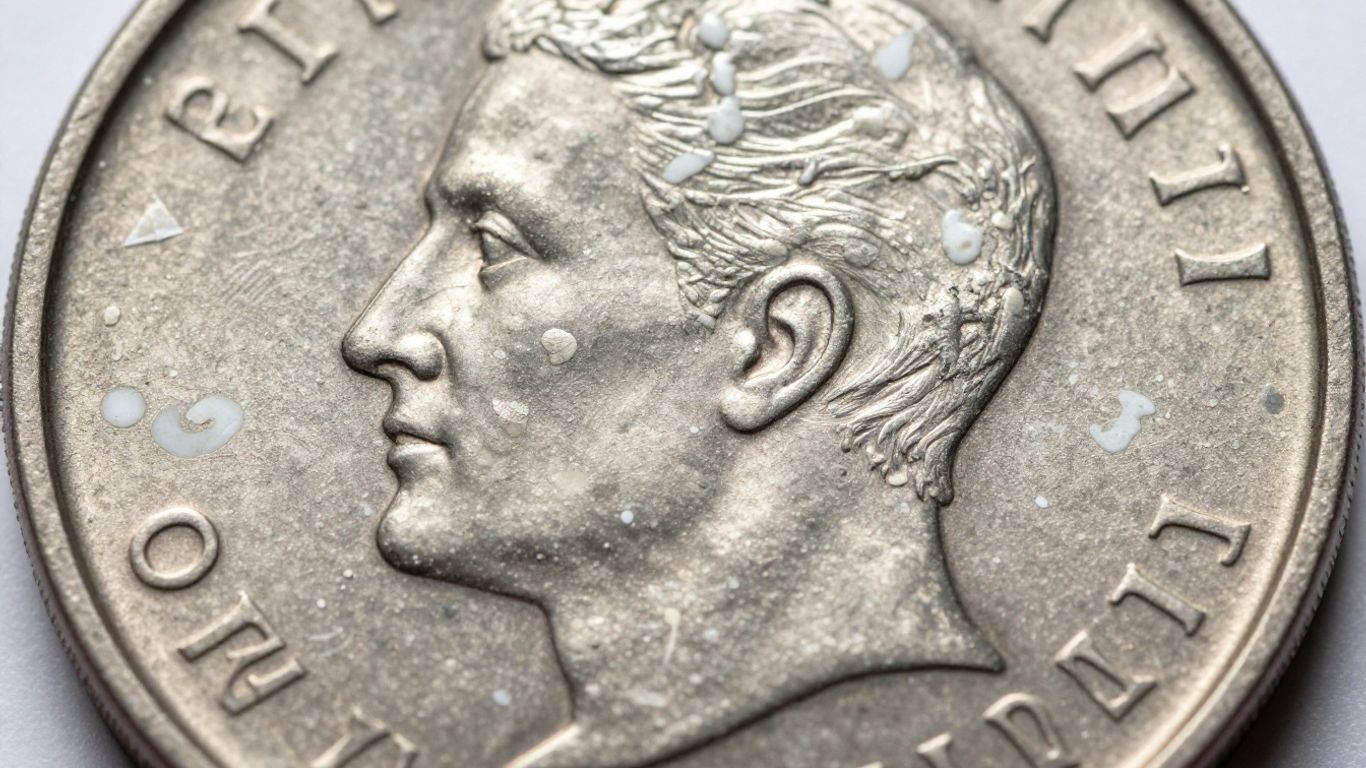
Coins, especially those that have seen circulation, often develop surface irregularities. These aren’t always signs of damage; sometimes they’re just a natural part of a coin’s life. Identifying what’s causing these marks is key to understanding a coin’s history and condition.
Identifying White Spot Causes on Coins
White spots on coins can be a bit of a puzzle. They might look like simple blemishes, but they can stem from a variety of sources. Understanding these origins is the first step in figuring out what you’re looking at. Sometimes, it’s just mineral deposits from the environment, like hard water residue. Other times, it could be related to the minting process itself or even how the coin was stored over the years. For collectors, distinguishing between a natural patina and an undesirable deposit is important.
The Significance of Surface Deposits
Surface deposits tell a story. They can indicate the conditions a coin has been exposed to, whether it’s the humidity in the air, contact with other metals, or even the cleaning agents used (or misused) on it. For instance, mineral deposits from water can leave behind chalky white marks. These are often referred to as milk spots, and they can be quite persistent. The type of deposit can also give clues about the coin’s alloy and its reactivity.
Microscopic Examination of Coin Surfaces
Sometimes, what looks like a simple white spot under normal light can reveal more complex details when viewed under magnification. A microscope can show the texture of the deposit, whether it’s crystalline, powdery, or layered. It can also reveal underlying surface damage that might have allowed the deposit to form in the first place. This detailed look is often necessary to differentiate between simple environmental contamination and more significant issues, like corrosion or remnants from the minting process.
Here’s a quick look at common deposit types:
- Mineral Deposits: Often from water, can appear chalky or crystalline.
- Chemical Residues: Leftovers from cleaning solutions or environmental pollutants.
- Organic Matter: Can include dirt, oils, or other biological material.
- Corrosion Products: Resulting from the metal reacting with its environment.
Investigating Manufacturing and Plating Processes
When we look at coins, especially older ones or those that seem a bit off, it’s really helpful to think about how they were made. The way a coin is manufactured and any plating it might have can tell us a lot about its appearance, including those pesky white spots. It’s not just about the metal itself; the processes involved leave their own marks.
Distinguishing Cast vs. Struck Coin Characteristics
Coins are generally made in one of two ways: striking or casting. Struck coins, the kind we usually see in circulation, are made by pressing a blank metal disc (a planchet) between two dies under immense pressure. This gives them sharp details and a consistent look. Cast coins, on the other hand, are made by pouring molten metal into a mold. This method is often used for less formal minting or for creating replicas, and it can result in a rougher surface texture and less precise details compared to struck coins. Sometimes, you might even see small bubbles or flow lines from the casting process. Recognizing these differences is a first step in figuring out if a coin is genuine or if it might have been made using a less common or even fraudulent method.
The Role of Silver Plating in Coin Appearance
Many coins, especially older ones or those intended to look more valuable, might have a plating of a more precious metal, like silver. This plating is applied to the base metal coin. The quality and thickness of this plating can vary a lot. A thin or poorly applied plating might wear off unevenly, revealing the base metal underneath, or it could lead to different types of corrosion. Sometimes, the plating process itself can introduce imperfections. For instance, if the surface isn’t perfectly clean before plating, you might get adhesion issues or small defects that show up later. Understanding common defects in metal plating can help us interpret what we see on a coin’s surface.
Analyzing Plating Methods and Their Impact
There are several ways to plate a coin, and each has its own characteristics. Electroplating, a common method, uses an electric current to deposit a thin layer of metal. Other methods might involve dipping the coin in a molten metal bath. The specific technique used can influence how the plating adheres and how it ages. For example, some plating methods might be more prone to developing white spots or other surface issues over time due to the way the metals interact or how the plating layer is structured. It’s also worth noting that historical plating techniques, like those used in medieval times for counterfeit coins, were often less sophisticated and could leave tell-tale signs. These older methods, sometimes involving silver and tin plating, were designed to mimic genuine coins but often had distinct surface characteristics that modern analysis can detect.
The manufacturing process, whether striking or casting, and the subsequent application of any plating, are not just about creating the coin’s basic form. These stages are critical in determining the coin’s surface texture, its susceptibility to environmental factors, and ultimately, its overall appearance and potential for developing anomalies like white spots. Even subtle variations in these processes can provide clues about a coin’s authenticity and history.
Elemental Analysis for Coin Authentication
When you’re trying to figure out if a coin is the real deal, looking at what it’s made of is a big clue. This is where elemental analysis comes in. It’s like a chemical fingerprint for the coin, telling us exactly what metals are in it and in what amounts. This can help us spot fakes or understand a coin’s history better.
X-Ray Fluorescence for Elemental Composition
X-Ray Fluorescence, or XRF, is a pretty common way to do this kind of analysis. You basically shoot X-rays at the coin, and the atoms inside give off their own characteristic X-rays. By looking at the energy of these returning X-rays, we can tell what elements are present. It’s a non-destructive method, which is great because we don’t have to damage the coin to find out what it’s made of. This technique has been applied in repeated analyses across various white areas, yielding consistent results. It’s a solid tool for getting a quick look at the coin’s makeup.
Interpreting XRF Spectra for Coin Alloys
Once you have the XRF data, it looks like a graph with peaks. Each peak corresponds to a specific element. The height and position of these peaks tell us about the concentration of each element. For example, a coin that’s supposed to be mostly silver should show a strong silver peak. If we see a lot of other metals mixed in, or if the proportions are way off, it might be a sign that the coin isn’t what it claims to be. Comparing these spectra to known standards helps us identify the alloy. For instance, a nickel silver alloy might show specific ratios of nickel, copper, and zinc. The presence of trace elements like lead or iron can also point to older manufacturing methods, as seen in some nineteenth-century coins.
Detecting Trace Elements and Impurities
Sometimes, it’s not just the main metals that matter, but the little things too. Trace elements and impurities can be really telling. For example, if a coin is supposed to be pure gold but has traces of other metals, it might be a clue. Or, if a coin is supposed to be modern but shows elements common in older alloys, that’s a red flag. These tiny details can help distinguish between genuine coins and counterfeits, or even help date a coin more accurately. It’s all about building a complete picture of the coin’s composition. The analysis of dried matrix spots can also be useful in clinical elemental analysis, showing how detailed this field can get.
Understanding the exact elemental makeup of a coin is like having a secret code. It can reveal its origin, its manufacturing process, and whether it’s a genuine artifact or a clever imitation. This detailed chemical information is a cornerstone of coin authentication and historical research.
The Impact of Alloy Composition on Coin Condition
The metal a coin is made from really matters when it comes to how it holds up over time. Different alloys react differently to the world around them, and this can show up as all sorts of surface issues, including those pesky white spots. It’s not just about what the coin looks like now, but how it got to be that way.
Nickel Silver Alloys in Coinage
Nickel silver, also known as German silver or paktong, is a mix of copper, nickel, and zinc. It was pretty popular for making coins and decorative items, especially back in the 19th century, even though it doesn’t have any actual silver in it. The exact recipe for these alloys wasn’t always standardized back then, so you’d find variations in their composition. Sometimes, other metals like iron or lead would sneak in. These differences in makeup can affect how the coin ages and what kind of surface deposits form on it. For instance, the presence of certain elements can influence its resistance to corrosion.
Historical Alloy Standards and Variations
Back in the day, coin makers didn’t have the precise control over metal mixtures that we do now. This meant that what was supposed to be the same coin alloy could have slightly different amounts of each metal. These small changes could lead to different outcomes in terms of durability and how the coin reacted to environmental exposure. For example, some historical alloys might be more prone to developing certain types of surface discoloration or pitting than others. Understanding these historical variations is key to figuring out why some coins look so different from others, even if they’re from the same era.
Corrosion Resistance and Alloy Properties
Different metal mixes have different strengths when it comes to fighting off corrosion. Some alloys are naturally more stable and less likely to react with air, moisture, or other environmental factors. Others might be more susceptible to chemical reactions that can lead to discoloration, pitting, or the formation of deposits. For example, adding certain elements to an alloy can actually make it more resistant to corrosion, which is a big deal for coin longevity. The way an alloy behaves chemically directly impacts its long-term condition and appearance. This is why knowing the specific alloy composition is so important for coin collectors and conservators alike. It helps predict how a coin might degrade and what steps, if any, can be taken to preserve it. The stability of copper patinas, for instance, can significantly slow down corrosion rates compared to bare copper [5034].
The specific blend of metals in a coin dictates its destiny. From its initial shine to its eventual patina, the alloy’s inherent properties guide its interaction with the environment, influencing everything from its susceptibility to tarnish to the very nature of any surface deposits that may form over time. It’s a chemical story written on metal.
Common Causes of White Spots on Coins
White spots on coins can be a bit of a puzzle, but they usually come down to a few common culprits. It’s not always about the coin itself being faulty; often, it’s what happens to it after it leaves the mint that causes these marks. Think of it like leaving a glass of water out – eventually, you’ll see rings from the minerals. Coins can experience something similar.
Mineral Deposits and Surface Contamination
One of the most frequent reasons for white spots is mineral deposits. This happens when a coin comes into contact with water that has a high mineral content, often referred to as ‘hard water.’ As the water evaporates, it leaves behind tiny traces of these minerals, like calcium and magnesium, which can build up over time. These deposits aren’t usually harmful to the coin’s metal, but they can certainly mar its appearance. Surface contamination from environmental dust or even residues from handling can also contribute to these spots. It’s important to handle coins carefully to avoid transferring oils from your skin, which can react with the metal over time.
The Effect of Hard Water on Coin Surfaces
Hard water is a big player here. When coins are stored in environments where they might get damp, especially with tap water, those dissolved minerals can settle on the surface. Over time, these can form a visible white film or distinct spots. This is particularly noticeable if coins are stored in albums or holders where moisture can get trapped. Different water sources have varying mineral compositions, so the appearance of these spots can differ from one coin to another.
Identifying Environmental Factors Contributing to Spots
Beyond just water, the general environment plays a role. High humidity, exposure to certain chemicals in the air, or even contact with other materials can lead to surface changes. For instance, if a coin is stored near certain types of wood or in a damp basement, it’s more likely to develop these anomalies. Sometimes, what looks like a mineral deposit could actually be a reaction with something else in its surroundings. It’s a good idea to store coins in a dry, stable environment, away from potential contaminants. Proper storage is key to preserving the condition of your collection, and avoiding direct contact with your hands is a good start [6344].
The appearance of white spots on coins is often a result of external factors rather than inherent flaws in the coin’s metal. Understanding these environmental influences is key to both identifying the cause and preventing future occurrences. Careful handling and appropriate storage conditions are the best defenses against these common surface blemishes.
The History of Coin Falsification
Counterfeiting for Circulation vs. Collectors
Coin falsification isn’t a new problem; people have been trying to pass off fake money for as long as money has existed. Broadly, we can split this into two main groups. First, there’s the counterfeiting of coins meant to be used as everyday cash. This affects everyone who uses money and has been going on since currency was first invented. Then, there’s the second type: copies made specifically to trick coin collectors or museums. These are often called forgeries and really took off during the Renaissance when collecting became more popular. It’s a practice that hasn’t really stopped since.
Historical Techniques in Coin Forgery
Historically, counterfeiters used a variety of methods to create fake coins. Early techniques often involved melting down genuine coins and recasting them, or using simpler striking methods with crude dies. As technology advanced, so did the sophistication of these forgeries. For instance, silver plating became a common trick. This involved taking a cheaper base metal, like German silver, and coating it with a thin layer of silver. This made the fake coin look and feel like a genuine silver piece, making it harder for the average person to spot the difference. The chemical treaties published in the mid-nineteenth century included special chapters devoted to the detection of counterfeit objects (specially coins) that imitated silver but were made using cheaper alloys such as german silver.
- Melting and Recasting: Using genuine coins as raw material or creating molds from existing coins.
- Crude Striking: Employing hand-cut dies or poorly made machinery to impress designs onto metal blanks.
- Plating: Applying a thin layer of precious metal (like silver) over a base metal to mimic the appearance of genuine coinage.
- Alloy Manipulation: Using base metals or alloys that closely resemble the composition of legitimate coins, sometimes with slight variations.
The challenge for ordinary people was significant. They weren’t accustomed to differentiating between solid silver and silver-plated objects, especially when dealing with smaller coins. If both genuine and fake coins tarnished similarly over time, telling them apart became a real headache for the public.
The Evolution of Detection Methods
Detecting fake coins has always been a cat-and-mouse game. For centuries, numismatists and authorities relied on visual inspection, weight, and simple tests. They’d look for inconsistencies in the design, check if the coin felt right in the hand, or compare it to known genuine examples. Sometimes, basic chemical tests were used to check the metal’s purity. However, as counterfeiters got better, these methods became less effective. This led to the development of more scientific approaches. Today, techniques like X-ray fluorescence (XRF) and scanning electron microscopy (SEM) are used to analyze the elemental composition and surface details of coins, making it much harder for fakes to go unnoticed. The Indian Penal Code, for example, has specific sections dealing with counterfeit coins, outlining penalties for those involved in their production or distribution, aiming to protect the integrity of the currency system. [26e4] Routine cash handling and sorting processes within the financial industry are also designed to authenticate notes and assess their fitness for circulation. [4345]
Analyzing Wear and Tear on Circulated Coins
Coins that have spent time in circulation tell a story. Their surfaces show the effects of countless hands, pockets, and machines. Understanding these signs of wear is key to figuring out a coin’s history and, sometimes, its authenticity. It’s not just about how old a coin looks; it’s about the specific ways it has been handled.
Patterns of Wear on Old Coins
When coins circulate, certain areas naturally wear down faster than others. High points, like the details on a portrait or the lettering around the rim, tend to lose their sharpness first. This gradual smoothing is a hallmark of a coin that has been used as money. You might see a general softening of details across the entire surface, making fine lines and intricate designs less distinct. The edges can also become rounded, and the overall relief of the design might appear flattened.
Weight and Diameter Deviations
Wear doesn’t just affect appearance; it also changes a coin’s physical dimensions. Over time, friction from handling and circulation can cause a slight loss of metal, leading to a reduction in weight. Similarly, the diameter might decrease slightly. While these changes can be subtle, they are measurable. For instance, a coin that is significantly lighter than its original specifications, without any obvious damage, might indicate extensive circulation. Comparing a coin’s measurements to known standards for its type can reveal these discrepancies. For older coins, especially those made of precious metals, their intrinsic value might be tied more to their metal content than their face value, and wear affects this [7894].
Surface Pits and Scratches as Indicators
Beyond general wear, circulated coins often exhibit more specific types of surface damage. Scratches, which can range from fine hairlines to deeper gouges, are common. These often result from coins rubbing against each other or against rough surfaces. Surface pits, which are small depressions, can also form. These might be caused by environmental factors or by the coin’s metal reacting over time. The presence and pattern of these pits and scratches can offer clues about a coin’s journey.
Here’s a look at common wear characteristics:
- Softened Details: High points of the design lose sharpness.
- Rounded Edges: The rim becomes less defined.
- Surface Abrasion: A general smoothing from friction.
- Scratches: Linear marks from contact with other objects.
- Pitting: Small, localized depressions on the surface.
Examining the specific types of wear, such as the depth and direction of scratches, or the distribution of pitting, can sometimes help distinguish between natural circulation wear and damage caused by cleaning or other artificial treatments. This level of detail is often part of a broader coin grading scale [f70d].
These physical changes are not just cosmetic; they are part of the coin’s history. For collectors and numismatists, recognizing these patterns is a skill that develops with experience, helping to assess a coin’s condition and potential value.
Scientific Techniques for Coin Analysis
When trying to figure out what’s going on with a coin, especially if there are weird spots or questions about its authenticity, scientists have a few tricks up their sleeves. These methods help us look at coins on a really tiny level, way beyond what our eyes can see. It’s like having a super-powered magnifying glass that can also tell us what the coin is made of.
X-Ray Diffraction for Phase Identification
X-ray Diffraction, or XRD, is a technique that helps us understand the internal structure of the coin’s metal. When X-rays hit a crystalline material, they bounce off in specific patterns. By analyzing these patterns, we can figure out the different mineral phases present in the coin’s surface or any deposits on it. This is super useful because different compounds, like various oxides or sulfides, will produce unique diffraction patterns. It’s a bit like a fingerprint for the material.
Scanning Electron Microscopy for Surface Detail
Scanning Electron Microscopy, or SEM, gives us an incredibly detailed look at the coin’s surface. It uses a beam of electrons to scan the surface, and the way these electrons interact with the material creates a highly magnified image. This allows us to see the fine details of any corrosion, pitting, or those mysterious white spots. Often, SEM is paired with Energy Dispersive X-ray Spectroscopy (EDS) to get a chemical map of the surface at the same time. This combination is really powerful for pinpointing the exact location of different elements.
Energy Dispersive X-Ray Spectroscopy Applications
Energy Dispersive X-ray Spectroscopy, or EDS (sometimes called EDX), is usually used alongside SEM. As the electron beam from the SEM hits the coin’s surface, it causes the atoms in the coin to emit characteristic X-rays. EDS detects these X-rays and analyzes their energies. Each element emits X-rays at specific energies, so by looking at the spectrum of detected X-rays, we can determine the elemental composition of the coin’s surface, including any foreign material causing those white spots. This technique is really helpful in identifying things like mineral deposits or plating issues. For example, it can help distinguish between actual silver and a silver plating that might be wearing off, which is a common issue with some coins. This kind of analysis is also used in archaeological coin studies.
These scientific methods are not just for academic curiosity; they play a direct role in numismatics. By understanding the precise composition and structure of a coin, we can better identify counterfeits, understand the effects of environmental exposure, and even learn more about historical minting processes. It’s about getting to the absolute truth of what a coin is made of and how it got that way.
Here’s a quick rundown of what these techniques can reveal:
- XRD: Identifies crystalline structures and mineral phases.
- SEM: Provides high-magnification images of surface topography.
- EDS: Determines the elemental composition of specific surface areas.
Together, these tools offer a robust way to investigate coin anomalies, from the subtle to the obvious, helping to solve mysteries like the formation of milk spots on silver coins.
The Role of Silver Sulfides and Oxides
When we talk about coins, especially those with silver content, we often see changes in their surface appearance over time. These changes aren’t just random; they’re usually the result of chemical reactions. Two common culprits are silver sulfides and silver oxides. These compounds form when the silver on the coin interacts with elements in its environment.
Blackening of Silvered Coin Surfaces
Have you ever noticed a coin that was once bright and shiny turn dark, almost black? This is often due to the formation of silver sulfide. Sulfur compounds are present in the air, and over time, they can react with the silver on a coin’s surface. This reaction creates a thin layer of silver sulfide (Ag₂S). This black coating is a tell-tale sign of tarnishing, a common process affecting silver. The thicker this layer gets, the darker the coin appears. This is particularly noticeable on coins that were originally silver-plated, where the underlying base metal might be different.
Chemical Reactions Affecting Coin Patina
The surface of a coin, often called its patina, is a complex layer that develops over years of exposure. This patina isn’t just dirt; it’s a result of various chemical interactions. For silver coins, the formation of oxides and sulfides is a primary part of this process. The specific environment a coin has been in plays a huge role. For instance, coins stored in humid or polluted areas might develop these layers faster than those kept in dry, clean conditions. Understanding these reactions helps us appreciate the coin’s history and its journey through time. It’s like reading a chemical diary of the coin’s life.
Distinguishing Tarnish from Other Deposits
It’s important to tell the difference between genuine tarnish, like silver sulfide, and other surface deposits that might look similar. Sometimes, dirt, grime, or even residues from cleaning attempts can accumulate on a coin. These might appear as dark spots or a general dullness, but they aren’t the same as the chemical alteration of the metal itself. For example, mineral deposits from hard water can leave white or chalky residues, which are physically attached rather than chemically bonded like tarnish. Microscopic examination can often reveal the true nature of these surface anomalies. Genuine tarnish, like the blackening from silver tarnishing, is a chemical change of the metal surface itself, often indicating the coin’s age and environmental history.
Challenges in Identifying Counterfeit Coins
Difficulties in Differentiating Silver-Plated Objects
Spotting a fake coin isn’t always straightforward, especially when it comes to silver-plated items. Counterfeiters have gotten pretty good at making things look the part. They might use a base metal and then coat it with a thin layer of silver. This can fool the eye, and even some basic tests, if you’re not careful. The plating might wear off over time, revealing the cheaper metal underneath, but sometimes it holds up well enough to cause confusion. It really makes you think about how much effort goes into making something look like the real deal.
The Impact of Tarnishing on Authenticity
Tarnish, that dark coating that forms on silver and some other metals, can actually make identifying fakes harder. Genuine coins develop a patina over time, which is a natural part of their aging process. This patina can sometimes hide imperfections or details that might otherwise give away a counterfeit. On the flip side, a fake coin might be artificially tarnished to look older. It’s a bit of a double-edged sword; tarnish can both conceal and mimic age, making it a tricky factor in authentication. Sometimes, the way a coin tarnishes can be a clue, but it’s not always a clear-cut indicator.
Expertise Required for Coin Authentication
Authenticating coins, especially valuable ones, really does take a lot of know-how. It’s not just about looking at a coin; it’s about understanding its history, its metal composition, and the manufacturing techniques used. Experts often use a combination of methods, from simple visual checks to advanced scientific analysis. They look at things like the coin’s weight, its dimensions, and the sharpness of its details. Even the sound a coin makes when dropped can sometimes be telling. For anyone serious about collecting or dealing with coins, developing this level of discernment is key. It often involves years of study and hands-on experience with genuine and known counterfeit examples. Simple methods like checking the coin’s weight and dimensions can be a good starting point for distinguishing genuine coins from fakes [105e].
Here are some common areas experts examine:
- Weight and Dimensions: Genuine coins have precise specifications. Deviations can signal a fake.
- Edge Details: The reeding or lettering on the edge should be consistent and well-defined.
- Surface Texture: Look for signs of casting (grainy texture) versus striking (sharp details).
- Sound: The ring of a genuine coin when tapped can differ from that of a counterfeit.
The line between a skillfully made counterfeit and a genuine coin can be incredibly fine. It often comes down to subtle inconsistencies that only a trained eye, or sophisticated equipment, can detect. This is why relying on established dealers and numismatic resources is so important when acquiring coins.
Wrapping Up the White Spot Puzzle
So, we’ve looked at why those white spots show up on coins. It turns out it’s not just one thing causing it. We saw how things like old plating wearing off, dirt getting stuck in the nooks and crannies, or even how the metal itself reacts over time can all lead to these marks. It’s a mix of how the coin was made, how it was used, and just the simple fact that metal changes when it’s out in the world. Understanding these different causes helps us appreciate the history these coins carry and why they look the way they do. It’s a bit like reading the story of the coin, written right there on its surface.
Frequently Asked Questions
What are white spots on coins, and why do they appear?
White spots on coins are usually marks or deposits on the coin’s surface. They can show up because of minerals from water, dirt, or chemicals that have touched the coin over time. Sometimes, how the coin was made or if it was plated can also lead to these spots.
Can hard water cause white spots on my coins?
Yes, absolutely. When you use water that has a lot of minerals, like calcium and magnesium, these minerals can be left behind on the coin’s surface as the water dries. This is similar to how you might see white, chalky marks on your shower doors.
Are white spots a sign that a coin is fake?
Not always. While certain surface issues can be clues for experts, white spots themselves don’t automatically mean a coin is counterfeit. They can be caused by normal environmental factors or even normal wear and tear.
How do scientists figure out what causes these spots?
Scientists use special tools to look closely at the coin. They might use techniques like X-ray fluorescence (XRF) to see what elements the spots are made of, or scanning electron microscopes (SEM) to get a super close-up view of the surface.
Does the metal the coin is made of affect white spots?
Yes, the metal’s composition matters. Some metals react differently to their environment. For example, coins made with certain alloys might be more prone to certain types of surface changes or reactions that could look like white spots.
What is the difference between tarnish and white spots?
Tarnish, often seen as blackening or dulling, is usually a chemical reaction on the coin’s surface, like silver turning into silver sulfide. White spots are typically deposits or mineral buildup, which are different from the chemical change that causes tarnish.
Can cleaning a coin remove white spots?
Sometimes, gentle cleaning might remove surface deposits. However, aggressive cleaning can damage the coin’s surface, potentially making it look worse or reducing its value. It’s often best to consult with a coin expert before attempting to clean a valuable coin.
What should I do if I find white spots on a coin I own?
First, try to identify the type of coin and its condition. Avoid cleaning it right away, especially if it seems old or valuable. You might want to take clear photos and consult with a numismatist (a coin expert) or a reputable coin dealer for advice.