
The Morgan silver dollar is a really interesting coin for collectors. Minted for a good chunk of time, from 1878 to 1904 and then again in 1921, these coins hold a special place in American history. They’re not just old pieces of silver; they tell a story about the country’s past, from its economy to its art. If you’re thinking about collecting them, or just curious about why people love them so much, this guide is for you. We’ll look at their history, what makes them special, and how to go about collecting them.
Key Takeaways
- The Morgan dollar coin series history is tied to post-Civil War economic shifts and legislation like the Bland-Allison Act of 1878.
- George T. Morgan’s artistic vision created iconic imagery for both the obverse (Lady Liberty) and reverse (American Eagle) of the coin.
- Production of the Morgan dollar occurred in distinct eras, primarily from 1878-1904 and a final mintage in 1921, with variations between these periods.
- Collectors are drawn to Morgan dollars for their intrinsic silver content, the historical narratives they represent, and their appeal to both numismatists and investors.
- Building a Morgan dollar collection involves setting goals, understanding mint marks, and paying attention to coin condition and varieties, while ensuring authenticity through reputable sources is vital.
The Genesis Of The Morgan Dollar Coin Series History
Post-Civil War Economic Landscape
The period following the Civil War was a time of significant change for the United States. The nation was rebuilding and growing, but its money system was a bit of a mess. A big deal happened in 1873 when silver was no longer officially tied to the dollar’s value, which upset a lot of people, especially those involved in silver mining. This move, sometimes called the "Crime of ’73," really got people talking about how the country should handle its money.
The Bland-Allison Act of 1878
Because of all the talk and pressure, Congress passed the Bland-Allison Act in 1878. This law basically said the U.S. Treasury had to buy a certain amount of silver every month and turn it into silver dollars. It was a way to help out the silver mines out West and also get more silver dollars circulating again. This act directly led to the creation of the Morgan Dollar, making it a coin born out of specific economic and political needs of the time. It was a compromise, trying to balance different interests in the country’s monetary policy.
A Pivotal Era In American Monetary History
So, the Morgan Dollar wasn’t just some random coin that appeared. It came about because of big economic shifts and political decisions after the Civil War. The Bland-Allison Act was a major piece of legislation that brought silver dollars back into the picture. This whole situation really shaped American money and set the stage for coins that followed. It’s a fascinating look at how history and economics come together to create something as lasting as a coin. The Morgan Dollar is more than just silver; it’s a piece of that history you can hold in your hand. The coin’s creation is a story about the nation finding its footing and deciding what its currency should represent. It’s a great starting point for anyone interested in U.S. silver coin collecting.
George T. Morgan's Artistic Vision
Lady Liberty's Profile
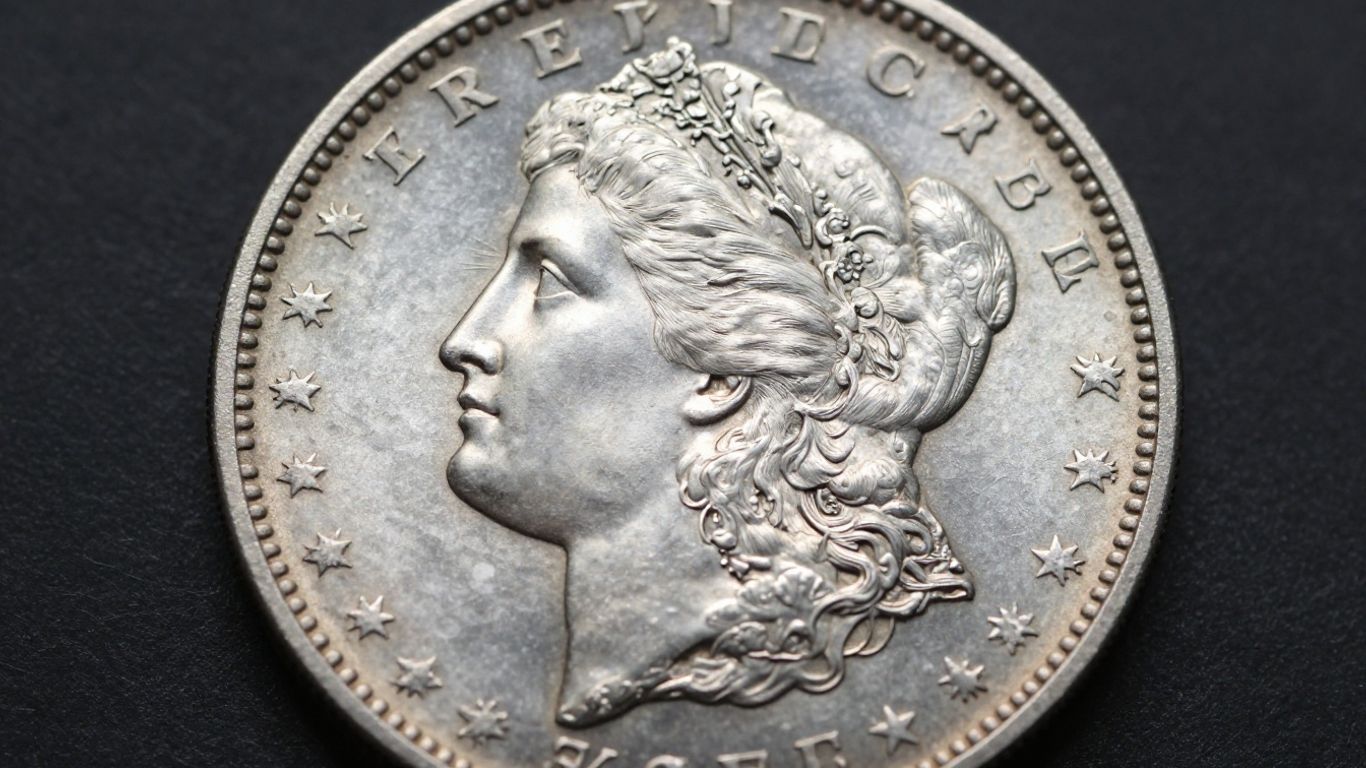
George T. Morgan, an English engraver working for the U.S. Mint, was tasked with creating a new design for the silver dollar. He sought to move away from the older Seated Liberty motif, aiming for something more distinctly American. For the obverse, he depicted Lady Liberty in profile. This iconic image was famously modeled by Anna Willess Williams, a Philadelphia schoolteacher. Morgan adorned her with a Phrygian cap, a symbol of liberty, and intertwined cotton and wheat in her hair, nodding to America’s agricultural strength and future. This portrayal was meant to embody a strong, yet classical, vision of the nation.
The Majestic American Eagle Reverse
The reverse side of the Morgan Dollar features a striking American Eagle, wings spread wide. In its talons, it holds an olive branch, signifying peace, and a bundle of arrows, representing readiness and strength. This imagery was carefully chosen to convey a sense of national power and a desire for peace. The design is encircled by the inscriptions "UNITED STATES OF AMERICA," "IN GOD WE TRUST," and "ONE DOLLAR," all standard elements for U.S. currency.
Morgan's Design Legacy Within The U.S. Mint
Morgan’s design for the silver dollar proved to be incredibly popular and enduring. It cemented his reputation within the U.S. Mint and is considered one of his most significant contributions to American coinage. The design’s longevity speaks to its artistic merit and its ability to capture the spirit of the era. It’s a design that continues to be admired by collectors and numismatists today, making it a key part of the Morgan Silver Dollar’s appeal.
The creation of the Morgan Dollar design was a deliberate effort to forge a new numismatic identity for the United States, moving beyond European classical influences to something that felt uniquely American. Morgan’s success in this endeavor is evident in the coin’s lasting popularity.
Production Eras And Interrupted Mintage
The Morgan Dollar coin wasn’t always churned out without a break. Its production history has a couple of distinct chapters, marked by periods of continuous minting and then, quite suddenly, a halt.
Continuous Production From 1878 To 1904
When the Morgan Dollar first came onto the scene in 1878, it was minted without interruption for quite a long stretch. This era lasted for over two decades, right up until 1904. The reason for this long run was largely tied to government policy and the amount of silver the U.S. Treasury held. The Bland-Allison Act of 1878 required the Treasury to buy a certain amount of silver each month and coin it into dollars. This created a steady demand for production. This sustained minting period resulted in a vast number of Morgan Dollars being produced, making many dates relatively common, though certain years and mint marks are still quite scarce.
The Final Mintage In 1921
After a hiatus of nearly two decades, the Morgan Dollar made a surprising comeback in 1921. This wasn’t a return to the old policy, but rather a response to new legislation. The Pittman Act of 1918 had authorized the melting of millions of silver dollars to sell silver bullion to Great Britain. By 1921, the Treasury needed to replace these melted dollars, and the Morgan Dollar design was chosen for this final push. It was a bit of a rush job, and the coins from this year have some unique characteristics.
Distinct Characteristics Of 1921 Issues
Coins minted in 1921 are noticeably different from their predecessors. Due to the urgency and perhaps changes in minting technology or dies, the 1921 Morgan Dollars tend to be struck in higher relief. This means the design elements stand out more prominently. They also often appear sharper and more detailed, almost as if the dies were brand new and very crisp. It’s a fascinating contrast to the slightly softer strikes you might find on some earlier issues. This final year of production also saw the Denver Mint strike Morgan Dollars for the first time, adding another layer of variety for collectors.
The shift from continuous production to an abrupt halt, followed by a single, high-relief resurgence, tells a story of changing economic conditions and legislative shifts in the United States. It’s this dynamic history that adds so much depth to collecting these coins.
Here’s a quick look at the production periods:
- 1878-1904: Continuous minting under the Bland-Allison Act.
- 1905-1920: Production ceased due to depleted silver reserves and the impact of World War I.
- 1921: Final minting year, driven by the Pittman Act, with higher relief and sharper detail. This year also saw the introduction of the Peace Dollar later in the year, marking the end of an era for the Morgan design [6513].
Collecting Morgan Dollars means engaging with these different production eras, understanding what caused the breaks, and appreciating the subtle differences that resulted.
Why The Morgan Dollar Coin Series History Captivates Collectors
So, what makes the Morgan Dollar so special to so many people? It’s not just one thing, really. It’s a mix of history, art, and, let’s be honest, silver. These coins are like little time capsules, giving us a tangible link to a really interesting period in American history. They were made when the country was really finding its feet after the Civil War, a time of big changes and growth. Holding one feels like holding a piece of that story.
Intrinsic Silver Content As A Tangible Asset
First off, these coins are made of silver. A lot of silver, actually. Each Morgan Dollar contains about 0.77344 troy ounces of pure silver. This isn’t just some abstract number; it means the coin has real, physical value. In times when the economy feels shaky, having something solid like silver can feel pretty reassuring. It’s a way to hold onto wealth that isn’t just numbers on a screen. This makes them attractive not just to coin collectors but also to people looking for a different kind of investment, something you can actually touch. It’s a way to diversify your assets beyond stocks and bonds, offering a bit of a hedge against inflation.
Historical Narrative As A Window Into American History
But it’s more than just the metal. The Morgan Dollar tells a story. It was minted during a time when silver was a big deal politically and economically, especially with the Bland-Allison Act of 1878 that brought silver dollars back into production. Think about the Wild West, the expansion westward, the industrial boom – all of that was happening when these coins were being made. Each date and mint mark can point to specific events or economic conditions. It’s like having a history lesson in your pocket. For anyone interested in how America developed, collecting these coins is a really engaging way to learn about it. You can explore the history of U.S. silver coins and see how the Morgan fits into the bigger picture.
Appeal To Both Serious Numismatists And Investors
This blend of history and intrinsic value means the Morgan Dollar appeals to a wide range of people. Serious coin collectors, known as numismatists, love them for their design, the different mint marks, and the tiny variations that can make certain coins rare and valuable. They might focus on collecting by date and mint mark, or hunt for specific die varieties. On the other hand, investors see the silver content and the potential for the coin’s value to increase over time due to collector demand. It’s this dual appeal – a piece of history with real metal value – that makes the Morgan Dollar series so enduringly popular. It’s a coin that can satisfy both the desire for historical connection and the practical considerations of investment. The enduring appeal of collecting Morgan silver dollars is clear when you consider these combined factors.
The Morgan Dollar isn’t just a coin; it’s a tangible piece of American heritage. Its substantial silver content provides a stable base value, while its rich historical context and artistic design fuel its desirability among collectors. This combination makes it a unique asset, bridging the gap between precious metals investment and historical artifact.
Here’s a quick look at why they’re so popular:
- Tangible Asset: Contains significant silver content (0.77344 troy ounces).
- Historical Connection: Represents a key era in U.S. economic and social development.
- Dual Appeal: Attracts both dedicated numismatists and savvy investors.
- Artistic Merit: Features a classic and well-regarded design by George T. Morgan.
Strategies For Building Your Morgan Dollar Collection
Starting a Morgan Dollar collection can feel a bit overwhelming at first, but with a plan, it becomes much more manageable and, honestly, a lot more fun. It’s not just about buying any old coin; it’s about building something meaningful, whether that’s for historical interest, investment, or just the sheer joy of the hunt. Think of it like putting together a really cool puzzle, but with actual history in your hands.
Defining Your Collection Goals
Before you even think about buying your first coin, take a moment to figure out what you want your collection to be. Are you aiming for a complete set of every date and mint mark? Or maybe you just want a few really nice examples from different mints? Having a clear idea helps you focus your search and your budget. It stops you from just buying whatever looks good and instead guides you toward coins that fit your vision. This initial step is probably the most important one you’ll take.
Collecting By Date And Mint Mark
This is a popular way to go, and it’s a real challenge. You’re trying to get one coin for every year it was made and at every place it was made (like Philadelphia, San Francisco, Carson City, etc.). It’s a long-term project, for sure, but incredibly satisfying when you fill in those gaps. It gives you a real appreciation for the entire run of the Morgan Dollar. If you’re interested in this approach, looking at a list of dates and mint marks is a good place to start.
Focusing On Condition Or Specific Varieties
Some collectors really care about the condition of their coins. They want the ones that look almost brand new, with no wear at all. These are usually more expensive, but they can also be better investments. Others get into the really fine details, looking for specific die varieties, known as VAMs. These are tiny differences in the coin’s design that only a keen eye can spot. It’s like a treasure hunt for the truly dedicated.
Building a collection takes time and patience. It’s easy to get excited and buy too much too soon. It’s better to buy fewer, better coins that fit your plan than to have a lot of random pieces that don’t really add up to a cohesive collection. Think quality over quantity, especially when you’re starting out.
Here’s a quick look at some common collecting strategies:
- Date and Mint Mark Sets: Aiming for a coin from every year and mint. This is the most thorough approach.
- Type Collecting: Getting one representative coin from different mints or time periods.
- Condition Focus: Prioritizing coins in high grades (like uncirculated).
- Key Date Collection: Concentrating on the rarer and more valuable dates and mint marks.
- Variety (VAM) Collecting: Hunting for specific die variations, which is quite advanced.
Identifying Authentic Morgan Dollars: Key Characteristics
So, you’ve got your eye on some Morgan Dollars, huh? That’s awesome. They’re really something special. But before you hand over your hard-earned cash, you gotta know how to spot the real deal. It’s not as hard as it sounds, honestly. It’s mostly about paying attention to the details.
Understanding Fundamental Characteristics
First off, let’s talk about the basics. Every genuine Morgan Dollar has a specific weight and size. We’re talking 26.73 grams and a diameter of 38.1 millimeters. If a coin feels too light or too heavy, or just doesn’t seem quite right in your hand, that’s a red flag. Also, check out the edge. It should have these neat, evenly spaced reeds. If they look messy or uneven, it’s probably not authentic. The overall strike of the coin is also a big clue; a well-struck coin will have sharp, clear details, especially on Lady Liberty’s hair and the eagle’s feathers.
Here’s a quick rundown of what to look for:
- Weight: 26.73 grams (90% silver, 10% copper)
- Diameter: 38.1 mm
- Edge: Reeded, with consistent and sharp reeds
- Luster: A natural, soft silver sheen, not overly bright or artificial
- Sound: A genuine silver dollar often produces a distinct, clear ring when lightly tapped.
Recognizing Subtle Die Varieties (VAMs)
Now, things get a little more interesting. Even among authentic coins, there are tiny differences called VAM varieties. These happen because the dies used to stamp the coins wear out or get slightly damaged. Advanced collectors love hunting for these. You might see things like a doubled die, where a part of the design looks like it was stamped twice, or maybe a die crack that shows up as a thin line on the coin. These aren’t mistakes; they’re just part of the coin’s history. Finding a rare VAM can seriously boost a coin’s value. It’s like finding a hidden treasure within the coin itself. You’ll need a good magnifying glass for this part, and maybe a VAM book to help you identify them. It’s a whole sub-hobby within collecting Morgans.
The mint mark is another super important detail. You’ll find it on the reverse, right below the eagle. The ‘CC’ for Carson City is famous for being rare, while ‘S’ for San Francisco and ‘O’ for New Orleans are more common. The ‘D’ is only found on 1921 issues. Knowing these marks helps you understand the coin’s origin and potential rarity.
The Importance Of High Relief And Detail
When George T. Morgan designed this coin, he really went for it with the detail. Look closely at Lady Liberty’s profile on the front. Her hair should be distinct, and you should be able to see the individual strands. The stars around her should be clearly separated. On the back, the eagle is a masterpiece. Check out the feathers – they should be sharp, not blurry. The olive branch and arrows in its talons need to be well-defined. If these details look mushy or worn down, it could be a sign of a fake or a coin that’s been heavily circulated and perhaps altered. A good strike means you can see all these little things clearly. It’s these fine points that really separate a genuine, well-preserved Morgan from a lesser piece. For a deeper dive into what makes a Morgan dollar authentic, checking out resources on coin specifications can be really helpful.
Navigating Authenticity And Value In The Market
The Challenge Of Counterfeit Items
When you’re looking to buy Morgan dollars, one of the first things you’ll run into is the problem of fakes. It’s a real issue, and you have to be careful. People try to pass off fake coins as the real deal, and if you’re not paying attention, you could end up with something worthless. Always be suspicious of deals that seem too good to be true. It’s better to pay a bit more for a coin you know is genuine than to get a cheap fake.
Professional Grading and Authentication Process
This is where things get serious. To really know what you’re buying, you want coins that have been looked at by the pros. Services like PCGS and NGC are the big names here. They examine the coin, grade its condition, and then seal it in a protective holder. This holder has all the details about the coin, and it’s a pretty good guarantee that the coin is real and in the condition they say it is. It takes a lot of the guesswork out of buying. For example, a common circulated Morgan might be worth around $25, but a rare key date in top condition could be worth way, way more. It really depends on the specifics.
Verifying Authenticity Through Certified Sources
So, how do you actually check if a coin is legit? The best way is to look for those certified coins from PCGS or NGC. If you’re buying a coin that isn’t in one of those holders, you need to be extra careful. Ask the seller if they guarantee authenticity and if you can return it if it turns out to be fake. You can also check online resources that show what genuine coins should look like. Sometimes, the weight is off on fakes, or the details aren’t as sharp as they should be. It takes some practice, but you can learn to spot the differences. If you’re unsure, it’s always best to walk away or get a second opinion from someone who knows coins well. You can find a lot of information about Morgan silver dollar values online, which helps when you’re trying to figure out if a price is fair.
The Value Of Expert Advice And Reputable Sources
When you’re building a collection of Morgan Dollar coins, especially if you’re new to the hobby, it’s easy to feel a bit overwhelmed. There’s so much information out there, and let’s be honest, not all of it is accurate. That’s where getting help from people who really know their stuff comes in handy. Relying on experienced numismatists and trusted dealers can save you a lot of headaches and money. They’ve seen it all and can guide you through the process.
The Importance Of Reputable Dealers
Finding a good coin dealer is like finding a good mechanic – once you find one you trust, you stick with them. These professionals have spent years learning about coins, their history, and what makes them valuable. They can help you spot fakes, understand the condition of a coin, and point you toward pieces that fit your collecting goals. It’s always a good idea to start with established dealers who have a solid reputation. They often guarantee the authenticity of their coins, which is a big deal when you’re spending your hard-earned money.
Leveraging Numismatic Expertise
Numismatics is the study or collection of coins, and numismatists are the folks who are really passionate and knowledgeable about it. These experts can offer insights that you just won’t find in a book or online. They might know about specific coin varieties, historical context for certain mintages, or even upcoming market trends. Think of them as your personal guides in the world of Morgan Dollars. They can help you avoid common mistakes and make smarter decisions about what to buy.
A Partner In Your Numismatic Journey
Building a collection is a journey, and it’s much more enjoyable when you have a reliable partner. This could be a dealer, a fellow collector, or even a numismatic club. These connections can provide support, share knowledge, and open doors to new opportunities. For instance, knowing the right people might give you access to coins before they hit the open market. Remember, getting coins professionally graded is also a way to partner with trusted third-party experts who verify authenticity and condition.
Building a collection is a marathon, not a sprint. Taking the time to connect with knowledgeable individuals and reputable sources will pay dividends in the long run, ensuring your collection is built on a foundation of authenticity and sound value. Don’t be afraid to ask questions; most experts are happy to share their passion and knowledge.
Preserving Your Morgan Dollar Investment
Proper Handling Techniques
Once you’ve acquired these pieces of American history, keeping them in good shape is pretty important. It’s not just about looking nice; it directly affects their worth. The way you handle your coins has an immediate and lasting impact on their condition.
- Avoid Direct Skin Contact: Our skin has oils, acids, and salts that can leave marks, especially on coins that look brand new. It’s best to always use soft, lint-free cotton gloves. You can find good ones for coin collecting online.
- Hold Coins by Their Edges: If you must touch a coin, carefully hold it by its edges between your thumb and forefinger. This way, you touch the surfaces as little as possible, which helps keep the shine and details looking sharp.
Optimal Storage Solutions
What you store your coins in matters a lot for keeping them safe over time. The wrong materials can actually harm them.
- Acid-Free Coin Holders: Look for holders made from Mylar or hard plastic capsules. These materials are inert, meaning they won’t react with the metal and cause damage. They protect coins from dust and other environmental issues.
- Certified Slabs (PCGS, NGC): For your most prized Morgan dollars, the sealed plastic cases, or "slabs," from grading services like PCGS or NGC are ideal. They offer great physical protection and also serve as proof of the coin’s authenticity and grade.
- Avoid PVC Materials: Stay away from soft plastic flips or albums that contain PVC. Over time, PVC breaks down and releases chemicals that can permanently damage coin surfaces and lower their value.
The environment where your coins live is also a big deal. Try to keep them in a place with steady temperatures and not too much moisture. Direct sunlight and dusty or polluted air can also cause problems over the years. Think of it like storing fine art – a stable, clean environment is key.
Continuous Market Research
Keeping up with what Morgan dollars are worth is a smart move. Prices can change based on rarity, condition, and what collectors are looking for at any given moment. It helps you know if you’re getting a good deal or when might be a good time to sell.
- Check Price Guides: Resources like the Red Book or online guides from grading services offer a good starting point for understanding values.
- Follow Auction Results: Seeing what similar coins actually sell for at auctions gives you real-time market data.
- Stay Informed on Trends: Sometimes, certain dates or mint marks become more popular, affecting their prices. Being aware of these shifts can help you make better decisions for your collection.
Remarkable Discoveries Within The Morgan Dollar Series
The Discovery: 50 Years in Federal Reserve Vaults
Sometimes, history just sits there, waiting to be found. That’s exactly what happened with a massive stash of Morgan silver dollars. We’re talking about 16,000 of them, tucked away in a New York Federal Reserve vault. They’d been there, undisturbed, for fifty years! Imagine that – sealed up in their original canvas bags since 1964. It’s like finding a time capsule, but filled with coins. This find gave everyone a fresh look at American silver money and its past.
A Forgotten Fortune Unearthed
This hoard really shows how keeping things safe in big institutions can preserve treasures for ages. Unlike some old pirate stories, there’s no doubt about these coins being real. They’re a huge deal for coin collectors today. The coins found span a range of dates, from 1878 to 1889, and include pieces from the Philadelphia, San Francisco, and New Orleans mints. This makes the find even more interesting for people who collect these coins.
- Original Storage: The 16,000 Morgan dollars were bagged and stored in New York Federal Reserve vaults in 1964.
- Rediscovery: During a vault check in 2014, Federal Reserve staff found the forgotten coins.
- Authentication: The Numismatic Guaranty Corporation (NGC) graded and authenticated the entire hoard, adding special labels to show their history.
The coins were in amazing shape because they were kept in a controlled environment and never handled or circulated. This kind of preservation is rare and makes them highly sought after.
Historical Bank Hoards and Numismatic Treasures
Discoveries like this aren’t just about finding old coins; they tell a story. The fact that these Morgans were kept safe for so long means they offer a unique glimpse into their original condition. This hoard included coins from 1878 to 1889, covering production from multiple mints. Many of these coins were later melted down, especially during World War I under the Pittman Act, which authorized melting millions of silver dollars for war efforts. Finding so many together, in such good condition, is a rare event that excites collectors and investors alike. It highlights how important proper storage can be for preserving the value of precious metals over time. For those interested in collecting, understanding the impact of events like the Pittman Act is key to appreciating the rarity of surviving coins, especially those with a documented history like the coins found in this New York Bank Hoard. The sheer volume and condition of these coins make them a significant addition to the numismatic world.
A Lasting Legacy in Silver
So, that’s a look at the Morgan Dollar coin. It’s more than just old silver; it’s a piece of American history you can actually hold. Whether you’re drawn to the stories behind the minting, the beauty of the design, or the idea of owning a tangible asset, the Morgan Dollar offers something special. It’s been a popular coin for a long time, and it seems like it’s going to stay that way for collectors and investors alike. Just remember to do your homework, buy from trusted sources, and enjoy the hunt for these fascinating coins. Happy collecting!
Frequently Asked Questions
What exactly are Morgan Silver Dollars?
Morgan Silver Dollars are special U.S. coins made of silver. They were made for many years, starting in 1878 and stopping in 1904, then made again for a short time in 1921. People really like them because they are a real piece of American history, have a beautiful design, and are made of silver.
Why are Morgan Silver Dollars so popular with collectors?
Collectors love Morgan Silver Dollars for a few big reasons. They tell a story about America’s past, especially during a time when silver was very important for money. The design is also very artistic, showing Lady Liberty and an eagle. Plus, because they are made of silver, they have value as a precious metal, which makes them interesting to both collectors and people who invest.
How can I be sure that a Morgan Silver Dollar I want to buy is real?
To make sure you’re getting a real coin, it’s best to buy from trusted dealers who guarantee their items. Also, look for coins that have been checked and put in special holders by grading companies like PCGS or NGC. These companies are experts and help make sure coins are not fake.
What makes one Morgan Silver Dollar worth more than another?
The price of a Morgan Silver Dollar depends on a few things. The year it was made, where it was made (the mint mark), how good its condition is (like if it’s worn out or looks brand new), and how rare it is all play a part. Some specific years or mint marks are much harder to find, making them more valuable.
What are 'key dates' in Morgan Silver Dollar collecting?
‘Key dates’ are the Morgan Silver Dollars that were made in the smallest numbers or are the hardest to find in good condition. Because they are rare, these specific coins are often the most sought-after and valuable ones in a collection.
What is a VAM variety?
VAM stands for Van Allen and Mallis, two people who wrote a book about the small differences found on Morgan Silver Dollars made from the same dies. These differences, called VAM varieties, might be tiny mistakes or changes made during the coin-making process. Finding these specific varieties can be a special challenge for dedicated collectors.
Besides collecting, can Morgan Silver Dollars be a good investment?
Yes, Morgan Silver Dollars can be a good investment. They have value because of their silver content, which is a precious metal. They also have numismatic value, which is the value collectors place on them due to their rarity and historical importance. This combination can lead to them increasing in value over time.
How should I store my Morgan Silver Dollars to keep them in good shape?
To protect your Morgan Silver Dollars, it’s important to handle them carefully by the edges, avoiding touching the surfaces. Store them in protective holders or albums designed for coins, made from materials that won’t harm the silver. Keep them in a stable environment, away from moisture and extreme temperature changes, to prevent damage.