
The Walking Liberty half dollar is more than just a piece of currency; it’s a work of art that tells a story. Introduced in 1916, this coin replaced older, less inspiring designs and quickly became a symbol of American hope and resilience. Its imagery, from the striding figure of Liberty to the majestic bald eagle, carries deep meaning that continues to be appreciated today. Let’s take a closer look at the walking liberty coin symbolism and what makes this coin so special.
Key Takeaways
- The Walking Liberty half dollar was designed by Adolph Weinman and first minted in 1916, replacing older coin designs that were seen as uninspired.
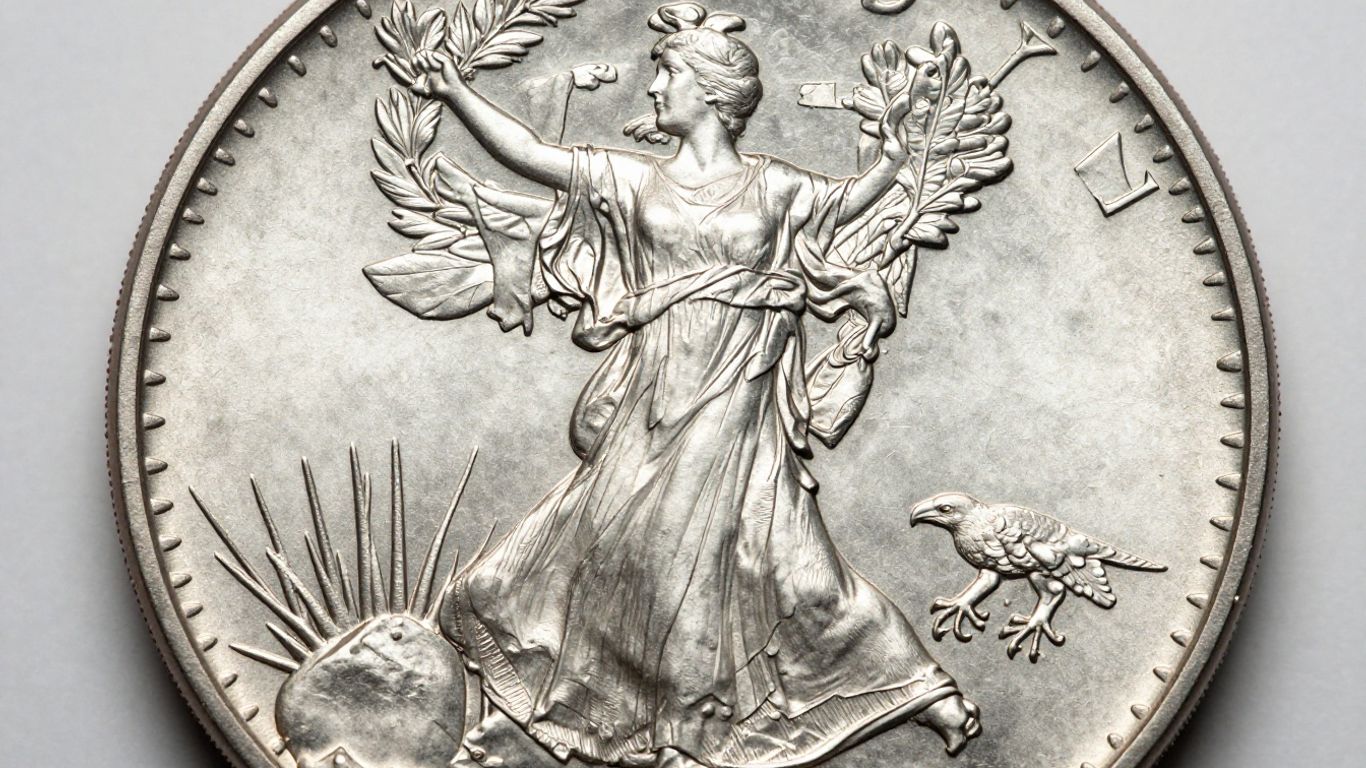
- The obverse features Liberty walking forward, draped in the American flag and carrying oak and laurel branches, representing strength and prosperity. The reverse shows a bald eagle on a rocky perch with a pine tree, symbolizing America’s roots.
- The coin’s design process involved several revisions and challenges, including adjustments to lettering, size, and issues with the coin’s edge, with input from Mint officials and the designer.
- Minted during turbulent times including World War I and the Great Depression, the Walking Liberty half dollar’s imagery of a hopeful stride towards a new dawn reflected national sentiment.
- The enduring legacy of the Walking Liberty design is evident in its continued use on modern American Eagle silver bullion coins and its status as a beloved collectible.
The Genesis Of The Walking Liberty Half Dollar
A Nation In Transition
It’s easy to look at coins and just see money, right? But sometimes, they tell a bigger story. Back in the early 1900s, America was really changing. The country was moving from a more rural place to a big industrial power. Think factories popping up, cities growing, and a general sense that things were moving fast. This was a time when people were thinking about what America stood for, and that feeling even made its way to the U.S. Mint. They wanted coins that felt modern and reflected this new energy.
Replacing Uninspired Designs
Before the Walking Liberty half dollar came along, the coins we were using, like the Barber half dollar, were designed by Charles E. Barber. Now, Barber was a skilled engraver, no doubt, but his designs, while functional, weren’t exactly setting the world on fire. They were seen as a bit old-fashioned and not really capturing the spirit of the times. The U.S. Mint decided it was time for a refresh, a chance to put something new and exciting into people’s pockets. They wanted art that spoke to the nation’s progress and ideals.
The Competition For A New Symbol
So, the Mint decided to hold a contest, a big one, to find a new look for the half dollar. They wanted something special, something that would really stand out. Many artists submitted their ideas, hoping to create the next iconic American coin. It was a chance for them to leave their mark on history. The goal was to find a design that wasn’t just pretty, but also packed with meaning, something that could represent America’s hopes and dreams. This competition was a significant moment, marking a shift towards valuing artistic expression in American coinage. The winning design, as we know, came from Adolph A. Weinman, and it certainly did not disappoint in its symbolism and beauty. It was a big deal for the Walking Liberty Half Dollar to replace the older Barber series.
Adolph Weinman's Vision Of Liberty
Striding Towards A New Dawn
When the U.S. Mint decided it was time for a fresh look on its half dollar coin, they held a competition. The goal was to replace the older Barber design, which many felt was a bit dull. Adolph Weinman, a sculptor with a knack for creating dynamic figures, won that competition. His design, introduced in 1916, wasn’t just a new face for the coin; it was a whole new feeling. Weinman’s Liberty is shown walking forward, not just standing still. This movement was a big deal, suggesting progress and a nation always moving ahead. It was a stark contrast to the static figures often seen on coins before.
Symbolism In Her Garb And Gifts
Look closely at the lady on the coin, and you’ll see she’s not just wearing a dress. Her robes flow, adding to that sense of motion. In her left arm, she carries olive branches, a classic symbol of peace. But it’s what she’s doing with her right hand that’s really interesting. She’s reaching out, almost as if she’s offering something to the world or perhaps embracing the future. This gesture, combined with the olive branches, paints a picture of a peaceful, giving nation. It’s a thoughtful touch that adds layers to the coin’s message.
The Motto And The Date
Every coin needs its details, and Weinman’s design includes the essential ones. You’ll find "IN GOD WE TRUST" inscribed above the rising sun. This phrase, a cornerstone of American identity, is placed deliberately. The date, also present, grounds the coin in its time, reminding us of when this vision of Liberty was first put into metal. These elements, while seemingly small, are part of the overall narrative Weinman crafted, blending abstract ideals with concrete historical markers. It’s a good example of how coin design tells a story.
Interpreting The Obverse Imagery
Liberty's Determined Stride
The front of the Walking Liberty Half Dollar shows a powerful image of Liberty. She’s not just standing there; she’s moving forward, stepping over rough ground. This stride is meant to show progress and a nation moving ahead. Her left arm is draped with the American flag, suggesting she’s protected by the nation’s ideals and history. She’s reaching out with her right hand, as if towards a new day or a hopeful future. It’s a dynamic pose, not static, which really makes you think about where the country was going when this coin was first made.
The American Flag's Embrace
That flag wrapped around Liberty isn’t just decoration. It’s a clear symbol of the United States. The way it’s shown, flowing and covering her, implies that Liberty and the nation are intertwined. It’s a visual reminder that freedom and the country are linked, and that the nation’s identity is tied to the concept of liberty. It’s a pretty strong statement for a coin design, if you ask me.
Oak And Laurel: Strength And Prosperity
Look closely at what Liberty is carrying. She has branches of oak and laurel. The oak is a symbol of strength and endurance, something solid that can withstand storms. The laurel, on the other hand, represents victory and achievement, or prosperity. So, by holding both, Liberty is shown as both strong and successful. It’s like saying the nation needs to be tough to get ahead, but also that success and good times are the goal. It’s a nice balance of qualities.
The design really captures a sense of forward momentum. It’s not just about being free, but about actively moving towards a better future, carrying the symbols of national identity and aspiration.
The Majestic Bald Eagle On The Reverse
Flipping the Walking Liberty Half Dollar over reveals a powerful symbol of American resilience: the bald eagle. This isn’t just any bird; it’s the national emblem, perched regally on a rugged outcrop. From this rocky perch, a mountain pine tree springs forth, a visual nod to the nation’s enduring strength and its deep roots. It’s a scene that speaks of enduring spirit, even when times get tough.
A Symbol Of American Resilience
The bald eagle has been a symbol of the United States since the late 18th century. Its inclusion on the reverse of the half dollar was a deliberate choice, meant to evoke feelings of strength, freedom, and national pride. The eagle here isn’t depicted in flight, but rather standing firm, suggesting stability and unwavering resolve. It’s a powerful image that complements the striding Liberty on the other side, presenting a unified message of American character.
Rugged Roots And Mountain Pine
The landscape beneath the eagle is just as important. The rocky base and the hardy mountain pine are not accidental details. They represent the untamed, rugged nature of the American continent and the ability of its people and institutions to grow and thrive even in challenging environments. This imagery connects the coin to the vastness and the enduring spirit of the land itself. It’s a reminder that the nation, like the pine, can weather storms and continue to grow.
Mint Mark And Designer's Initial
Look closely, and you’ll find the subtle marks that tell a story of creation. The designer’s initial, "AW" for Adolph Alexander Weinman, is typically found beneath the eagle’s right wing. This signature is a mark of pride and a testament to the artist’s vision. Depending on the mint, a mint mark might also be present, indicating where the coin was produced. For instance, coins made in Denver will show a "D", and those from San Francisco will bear an "S". Philadelphia-minted coins, common in earlier years, often have no mint mark at all. This detail is a small but significant part of the coin’s history and its journey through the U.S. mint system.
The reverse design, with its prominent eagle and natural elements, was carefully crafted to embody the spirit of the nation. It’s a visual representation of strength, endurance, and the wild beauty of America, a fitting counterpart to the dynamic figure of Liberty on the obverse.
Navigating Design Challenges And Revisions
Early Pattern Strikes
When Adolph Weinman first submitted his designs for the new half dollar, the Mint wasn’t just looking for a pretty picture. They were evaluating how well the design would actually work on a coin. This meant looking at early pattern strikes, which are essentially test runs. These early versions showed how the raised elements of the design would appear after being struck by the coin press. Sometimes, what looks good on paper or in a plaster model doesn’t translate perfectly to metal. The Mint officials and engravers would scrutinize these patterns, looking for any potential issues with detail, depth, and overall appearance. It was a back-and-forth process to get the design just right for mass production.
Adjustments To Lettering And Size
One of the common hurdles in coin design is fitting all the necessary text – like the date, "Liberty," and "In God We Trust" – onto the coin without making it look cluttered or unreadable. For the Walking Liberty Half Dollar, there were definitely some tweaks made to the lettering. Early iterations might have had letters that were too large, too small, or spaced unevenly. The goal was to achieve a balanced and aesthetically pleasing arrangement that was also clear to read. This often involved resizing the letters, adjusting their placement, and sometimes even changing the font style slightly. It’s a detail that might seem minor, but it significantly impacts the coin’s overall look and feel. The Mint Director’s office played a role here, making sure the final design met all the requirements for clarity and official inscriptions. This careful attention to detail is what separates a good coin from a great one, and it’s a process that has been refined over the years, even impacting later coin series like the Franklin Half Dollar.
The Fin Edge Problem
Coins, especially older ones, often had a raised rim around the edge. This rim, sometimes called a "fin," served a purpose: it protected the coin’s design from wear and tear, and it also made stacking easier. However, getting this rim just right could be tricky. If it was too high or too low, it could interfere with the design elements, especially those near the edge of the coin. For the Walking Liberty Half Dollar, there were discussions and adjustments related to this fin edge. The Mint needed to ensure that the raised rim didn’t obscure Weinman’s artwork or make the coin difficult to handle. It’s a practical consideration that highlights the blend of art and engineering involved in coin minting. The process of creating these coins was a complex one, involving many hands and decisions, much like the earlier Barber coinage era.
Coinage is more than just metal stamped with a design; it’s a tangible piece of history that requires careful planning and execution. Every element, from the grand imagery to the smallest inscription, is considered. The journey from initial concept to a finished, circulating coin is often paved with revisions and problem-solving, a testament to the dedication of those involved in its creation.
The Role Of Mint Officials And Engravers
The creation of any coin, especially one as significant as the Walking Liberty Half Dollar, isn’t just about the artist’s vision. It involves a whole cast of characters behind the scenes, particularly the folks at the U.S. Mint and the engravers who actually make the coins. These individuals played a big part in how the final design turned out, sometimes in ways that weren’t exactly smooth.
Charles E. Barber's Influence
When it was time to update the nation’s silver coinage, Chief Engraver Charles E. Barber was initially tasked with creating new designs. Barber had been with the Mint for a long time, and his existing designs for the dime, quarter, and half dollar were considered pretty dated by the 1910s. Many people, including coin collectors and dealers, thought they were quite unattractive. Barber did submit some designs, but they weren’t well-received by the National Commission of Fine Arts. They suggested bringing in outside artists instead. This must have been a blow to Barber, especially since his own work was being replaced. However, Barber didn’t just step aside. He remained involved, and some accounts suggest he wasn’t exactly thrilled about Weinman’s winning design. He even tried to make modifications, claiming Weinman’s design had issues that made it difficult to mint, like creating sharp "fins" of metal. He proposed changes, and at one point, even suggested his own design as a replacement.
Mint Director's Decisions
Mint Director Robert W. Woolley was the man in charge of the whole redesign process. He was the one who presented the initial designs to the Commission of Fine Arts and then had to deliver the news about which artists were selected. Woolley had to balance the artistic desires of the sculptors with the practicalities of coin production. He was aware of the tensions, noting that sculptors felt Barber was less cooperative than his assistant, George T. Morgan. Woolley had to manage these artistic temperaments and make sure the project moved forward. He also had to deal with Barber’s objections and attempts to alter Weinman’s design, trying to find a way to make the coins producible without sacrificing the artistic merit. It was a tough balancing act, trying to satisfy everyone from artists to engravers to the Treasury Department.
Weinman's Final Input
Even after Adolph Weinman’s designs were chosen, the process wasn’t entirely over for him. While his vision for Liberty was selected, the practicalities of minting meant adjustments were necessary. The Mint’s engraving staff, including Barber, worked on creating the dies for the coins. There were discussions and revisions regarding the size of design elements, the spacing of lettering, and the overall relief of the design to make it suitable for mass production. Weinman’s original concept had to be adapted to avoid issues like the "fins" Barber complained about. This often involved subtle changes to ensure the coin could be struck cleanly and consistently. While Weinman’s artistic intent was the foundation, the engravers and mint officials had the final say on the technical execution, ensuring the design could be translated into a durable and recognizable coin.
The journey from an artist’s sketch to a finished coin is a complex one, involving not just creative talent but also the practical, sometimes contentious, input of those responsible for its manufacture. The Walking Liberty Half Dollar is a testament to this collaborative, and at times challenging, process.
Walking Liberty Coin Symbolism In Turbulent Times
It’s easy to look at the Walking Liberty half dollar and see just a beautiful coin, but it was actually born during some pretty rough times for the United States. Think about it: World War I was raging over in Europe, and things were getting tense here at home. The U.S. Mint itself was going through some changes, with old designs being replaced and new ones being debated. It was a period of a lot of uncertainty.
Hope Amidst World War I
When the Walking Liberty half dollar first came out in 1916, the world was a mess. War was everywhere, and the U.S. was getting pulled into it. Germany’s decision to start sinking ships really ramped up the tension. Despite all this, the coin’s design, with Liberty striding forward towards a new day, offered a sense of optimism. It was like a little beacon of hope when things felt pretty bleak. This sense of looking forward was a powerful message during a time when the future felt so uncertain.
Economic Upswings And Downturns
The life of the Walking Liberty half dollar spanned a huge chunk of American history, including the Roaring Twenties, the Great Depression, and World War II. The economy went through wild swings during this time. Money supply changed a lot, partly because of gold coming into the country to pay for exports. The Federal Reserve was still new and didn’t have a firm grip on things. This meant periods of inflation, followed by really tough deflationary times. It’s pretty wild to think that by the time the series ended in 1947, a half dollar was still worth a decent amount, not that much less than it was at the start of World War I.
A Reflection Of National Sentiment
This coin really captured the mood of the nation. It started out with a hopeful look towards the future, even with war clouds gathering. Then it lived through the hardship of the Depression, and finally, it saw the country through World War II. The image of Liberty moving forward, carrying symbols of strength and prosperity, seemed to mirror the country’s own journey. It was a constant reminder of what America stood for, even when things were tough. The design itself became a symbol of resilience, much like the nation it represented. It’s amazing how a piece of metal can hold so much history and feeling, becoming a tangible link to America’s past.
The coin’s design, with Liberty facing the dawn, was a powerful symbol of optimism that many hoped would eventually be realized, especially after the difficult years of war and economic hardship.
The Enduring Legacy Of The Design
Transition To Bullion Coinage
The Walking Liberty Half Dollar, a coin that captured the spirit of a nation, didn’t just disappear after its run as circulating currency. Its design proved so popular, so iconic, that it found a new life. When the United States began producing American Silver Eagles in 1986, they looked to Weinman’s masterpiece for inspiration. The reverse of the Silver Eagle bullion coin features a heraldic eagle, but the obverse? That’s pure Walking Liberty, a testament to the enduring appeal of her graceful stride. This transition wasn’t just a practical choice; it was an acknowledgment of the design’s powerful symbolism and its place in American numismatic history. It’s pretty amazing how a coin designed over a century ago can still be the face of a major bullion program today.
Centennial Gold Striking
To celebrate the 100th anniversary of the design, the U.S. Mint issued special gold coins in 2016. These weren’t just any gold coins; they were direct descendants of the original Walking Liberty Half Dollar. Struck in .9999 fine gold, these commemorative pieces featured the same beloved obverse design by Adolph Weinman. It was a way to honor the original artwork and its creator, bringing the image of Liberty striding forward into a new century. The Mint even produced a companion gold reverse design, but the obverse remained true to Weinman’s original vision. It really shows how much people still connect with that image.
A Timeless Representation Of Freedom
More than just a piece of metal, the Walking Liberty Half Dollar has become a symbol. Its image is instantly recognizable, representing not just a specific historical period but the very idea of freedom itself. The way Liberty moves forward, with the flag draped around her, speaks volumes about progress and resilience. Even as the country has changed, the core message of the coin remains relevant. It’s a reminder of the ideals that the nation strives for, a constant visual cue in a world that’s always shifting. The design’s ability to transcend its original purpose and become an enduring emblem of American values is its true legacy.
The coin’s design has a way of making you feel something, a sense of optimism and forward movement that’s hard to find elsewhere. It’s more than just art; it’s a feeling captured in silver.
Here’s a quick look at some key dates for collectors interested in the original series:
- 1916-D: The first year of issue and a notoriously rare key date, often found in lower grades due to its scarcity.
- 1921: A Philadelphia mint issue, also quite scarce and sought after by collectors.
- 1942: The last year of issue for the Walking Liberty Half Dollar, with various mint marks available.
This design, first introduced in 1916, replaced the Barber Half Dollar and marked a significant shift in American coin design. Its continued use, even in modern bullion coinage, highlights its lasting impact.
Collecting The Walking Liberty Half Dollar
So, you’ve been looking at these Walking Liberty half dollars and thinking, ‘Hey, I’d like to collect those.’ That’s a pretty common thought, honestly. They’re beautiful coins, and the history behind them is pretty interesting. But where do you even start? It’s not like you can just walk into any old shop and grab a complete set.
Navigating Series Variations
First off, you need to know that this series isn’t just one coin. It ran from 1916 all the way to 1947, and there were a lot of different dates and mint marks made. Think of it like collecting stamps or old cars; there are common ones, and then there are the ones that make collectors sweat. The 1916-S is a big one to watch out for, and the 1921 and 1921-D coins are also considered key dates. These are the ones that will probably cost you a bit more, even in worn condition. Most of the other dates from the 1930s and 1940s, especially if they’ve seen some use, are pretty affordable. You can actually build a decent collection of circulated coins without breaking the bank. It’s a series with 66 different date and mint mark combinations, so there’s plenty to keep you busy.
Key Dates and Mint Marks
When you’re building a set, you’ll want to pay attention to specific dates and where the coin was made. The mint mark, usually a small ‘D’ for Denver or ‘S’ for San Francisco, can make a big difference in value. For example, the 1916-S is a big deal, and so are the 1921 and 1921-D. These are often called the ‘key dates’ because they’re harder to find and more expensive. But don’t let that scare you off entirely. There are plenty of other dates that are quite common, even in good shape. It’s all about finding that balance between the coins you really want and the ones that fit your budget. You can find a lot of information about which dates are considered key, and it’s worth doing a little reading before you start buying.
Understanding Strike Quality
This is where things get a little more technical, but it’s important. The Walking Liberty half dollar is known for having some coins with weak strikes. This means that not all the details on the coin came out clearly when it was made. Liberty’s face, for instance, can sometimes look a bit soft. This is because the high points on the front and back of the coin are opposite each other, and it’s hard for the minting press to get everything perfectly sharp. So, when you’re looking at coins, especially the more expensive ones, pay attention to how well-struck they are. A coin with a sharp, clear strike is generally more desirable than one that looks mushy, even if they’re the same date and mint mark. Some collectors even specialize in finding the best-struck examples of each date. It’s a detail that can really make a coin stand out.
The series is known for its potential for weak strikes, especially on Liberty’s features and the eagle’s details. This means a coin that looks sharp and well-defined, even if it’s a common date, can be quite appealing to collectors.
If you’re serious about collecting, you might want to look into resources that show you what a good strike looks like versus a weak one. It’s a skill that develops over time, but it’s worth the effort. You can find some really nice examples of the Walking Liberty half dollar, and with a little patience, you can build a collection you’re proud of. It’s a great way to connect with American history, and honestly, they’re just really good-looking coins. The value can range quite a bit, from just a few dollars for a worn common coin to much more for rare, high-grade versions, making them an interesting area for numismatists.
The Deeper Meaning Of Walking Liberty Coin Symbolism
Freedom's Forward March
The Walking Liberty half dollar isn’t just a pretty picture; it’s a statement. When Adolph Weinman designed it, he wasn’t just drawing a lady walking. He was showing freedom as something active, something that moves forward. Think about it: she’s not standing still, she’s striding out, heading towards a new day. This idea of liberty as an active force, rather than just a concept, really changed how people saw coins. It’s like freedom in motion, always progressing.
Resilience and National Identity
This coin came out during some pretty rough times, like World War I and the Great Depression. So, that image of Liberty pushing forward, with the flag wrapped around her and carrying symbols of strength (oak) and prosperity (laurel), meant a lot. It was a reminder that even when things are tough, the country keeps moving. The eagle on the back, perched strong on a mountain pine, adds to this. It speaks to America’s tough roots and its ability to endure.
A Lasting Emblem of American Ideals
Even today, Weinman’s design is still with us. It’s on the American Eagle silver bullion coins, and special gold versions have been made to celebrate its history. This shows how much people connect with the design. It represents more than just a coin; it’s a symbol of what America stands for: progress, strength, and the ongoing pursuit of liberty. It’s a design that has truly stood the test of time, reframing liberty for generations.
Here’s a quick look at what the main symbols represent:
- Liberty: Striding forward, representing progress and an active pursuit of freedom.
- American Flag: Symbolizing unity and the nation itself.
- Oak Branches: Signifying strength and endurance.
- Laurel Branches: Representing victory and prosperity.
- Bald Eagle: A powerful emblem of American resilience and independence.
The coin’s design captures a sense of optimism and forward momentum, a hopeful vision during periods of national and global uncertainty. It’s a visual narrative of a nation striving towards a brighter future, embodying ideals that continue to inspire.
A Lasting Impression
So, that’s the Walking Liberty half dollar. It’s more than just a coin; it’s a piece of history that tells a story about America. From Liberty striding forward to the eagle standing strong, the design really captures a sense of hope and resilience. It went through some tough times, like wars and economic ups and downs, but the coin itself kept going. Even today, its design lives on in other coins, showing just how much people liked it. It’s a reminder of what the country stood for back then and still does, really. Pretty neat, huh?
Frequently Asked Questions
What does the lady on the Walking Liberty half dollar represent?
The lady on the coin is a symbol of Liberty, a core idea of the United States. She is shown walking forward, holding symbols of strength and success, and is wrapped in the American flag, showing her connection to the country. She represents hope and the idea of moving towards a brighter future.
What do the oak and laurel branches mean on the coin?
The oak branches symbolize strength, while the laurel branches represent victory and achievement. Together, they suggest that America is strong and has achieved great things, and will continue to do so.
Why is the bald eagle on the back of the coin?
The bald eagle is a national symbol of the United States, known for its power and freedom. Putting it on the coin shows the country’s strength and resilience. The eagle is shown with a pine tree, reminding us of America’s natural beauty and deep roots.
When was the Walking Liberty half dollar first made, and why?
This coin was first made in 1916. At that time, many older coin designs were being replaced with new ones that better represented the country. The Walking Liberty design was chosen to replace older, less popular designs and to reflect the nation’s spirit during a time of change.
Were there any problems when making the coin?
Yes, there were some challenges. The designers and mint workers had to adjust the size of the pictures and words on the coin to make sure they fit well and looked good. They also had to figure out how to make the edges of the coin smooth and even.
Does the Walking Liberty design still appear on coins today?
Yes, the famous Walking Liberty design is still used today. It appears on the popular American Silver Eagle bullion coins. The design was also brought back for special gold coins celebrating its 100th anniversary.
What historical events happened while the Walking Liberty half dollar was being made?
This coin was made during a very eventful period in American history. It was created around the time of World War I, went through the Roaring Twenties, and then the difficult years of the Great Depression. The coin’s hopeful image was a symbol for people during these challenging times.
Is the Walking Liberty half dollar a good coin for collectors?
Yes, it is considered a great coin for collectors. There are many different versions of the coin to find, spanning many years. While some rare versions can be expensive, many common ones are affordable, making it possible to build a collection without spending a fortune.