
The Peace Dollar coin production is a fascinating story, stretching from the end of World War I to modern times. These coins, meant to symbolize peace, have a rich history involving design changes, production pauses, and even some unusual events. Let’s take a closer look at how these silver dollars came to be and what makes them special to collectors.
Key Takeaways
- The Peace Dollar coin production began in 1921 to mark the end of World War I, featuring a design by Anthony de Francisci that symbolized peace. The initial high-relief design was quickly changed to a lower relief for easier mass production.
- Production of the Peace Dollar coin was halted between 1928 and 1934 due to the Great Depression and a lack of demand, but resumed briefly due to new legislation requiring the purchase of domestic silver.
- While most Peace Dollar mintages are not rare, the 1921 high-relief issue and the 1928 Philadelphia mint issue are notable exceptions that are highly sought after by collectors.
- A controversial batch of Peace Dollar coins dated 1964 was struck at the Denver Mint but were reportedly destroyed and never entered circulation, adding a layer of mystery to the series.
- The Peace Dollar coin production was revived in 2021 for the 100th anniversary, using 99.9% fine silver, and has continued as an annual release, offering modern collectors a chance to own these iconic coins.
The Genesis of Peace Dollar Coin Production
Initial Design Controversies and First Strikes
The story of the Peace Dollar really kicks off after World War I. People wanted a coin that symbolized the end of the fighting and the hope for a lasting peace. The U.S. Mint held a design competition, and Anthony de Francisci’s design was chosen. It featured Lady Liberty on one side and a proud eagle on the other, holding an olive branch. However, the very first design had a broken sword, which some folks thought looked like a symbol of defeat. That didn’t quite fit the ‘peace’ theme, so the Mint quickly removed it before the coins were officially struck. The very first Peace Dollars, dated 1921, were minted on December 28th of that year. Over a million of these initial coins were produced, and they were quite distinct because they were struck in a high relief, giving the design a very bold, almost three-dimensional look. This high relief made them stand out, but it also meant they wore down faster in circulation.
Commemorating Post-War Aspirations
The Peace Dollar was more than just a coin; it was a statement. It was meant to mark the end of a brutal global conflict and look forward to a brighter future. The design itself, with Liberty looking serene and the eagle holding symbols of peace, was a deliberate choice to reflect these post-war sentiments. When the first coins were released in early 1922, there was a lot of public interest. People lined up at banks to get their hands on these new silver dollars, which were seen as a tangible representation of the peace everyone hoped would last. It was a way for the country to visually commemorate a significant historical moment and the collective desire for a world without war. The coin’s issuance also completed a broader effort to update U.S. coinage that had been ongoing since 1907.
The Pittman Act's Influence on Early Mintages
Believe it or not, the production of the Peace Dollar was directly tied to an earlier piece of legislation called the Pittman Act. This act, passed in 1918, required the U.S. Mint to melt down millions of surplus silver dollars (mostly older Morgan dollars) and then recast them into new silver dollars. The Peace Dollar design was the chosen successor for these newly minted silver dollars. The Mint was obligated to produce these coins until the silver purchased under the Pittman Act was used up. This requirement heavily influenced the mintages of the early Peace Dollars. Production continued under this mandate until 1928, when the requirements of the Pittman Act were finally met. This marked the end of the first major production run for the Peace Dollar, at least for a little while. The early years saw significant mintages, especially from the Philadelphia, Denver, and San Francisco mints, all working to fulfill the act’s requirements.
The Peace Dollar was conceived as a symbol of victory and a hopeful look towards a future free from the ravages of war, a sentiment deeply felt across the nation and the world following the Great War.
Evolution of Peace Dollar Minting
Transition from High Relief to Standard Relief
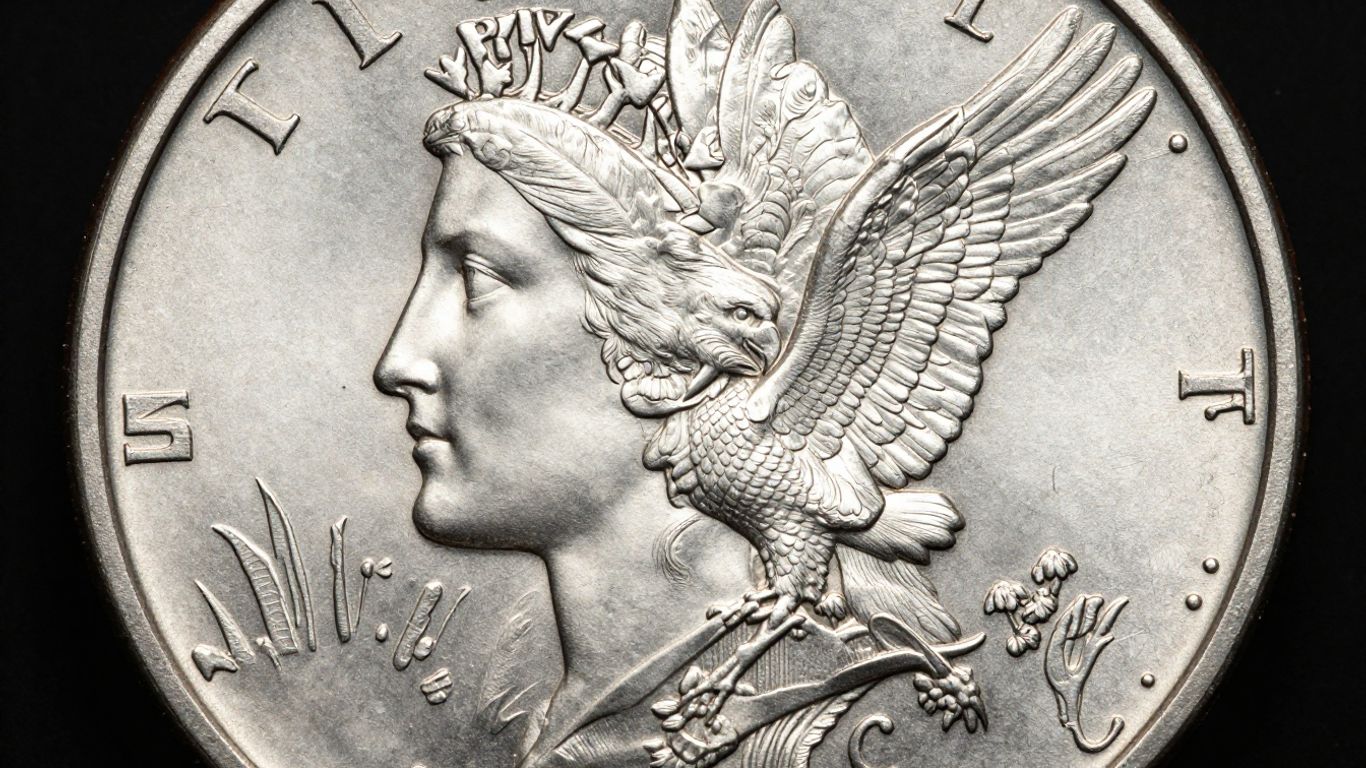
The very first Peace dollars, minted in 1921, were struck in a high relief. This design choice was quite striking, featuring a very detailed and raised image of Liberty. It was a deliberate move to make the coin stand out, a sort of celebratory flourish for the end of World War I and the hope for lasting peace. However, this high relief wasn’t exactly practical for mass production and circulation. The coins wore down faster, and the intricate details could be lost over time. Plus, they didn’t stack as neatly as standard relief coins, which was a bit of a hassle for banks. So, by the end of 1921, the U.S. Mint shifted gears, moving to a more manageable, standard relief for subsequent issues. This change made the coins more durable and easier to handle in everyday commerce.
Mint Mark Significance and Location
Where a Peace dollar was made is noted by a small mint mark, usually found on the reverse side of the coin. Philadelphia-minted coins, which were the first ones produced, actually don’t have a mint mark at all. For coins struck at the Denver Mint, you’ll see a ‘D’, and for those from San Francisco, it’s an ‘S’. These marks are typically located above the tip of the eagle’s wings on the reverse. For collectors, the mint mark can be a big deal. It tells you where the coin was struck, and sometimes, a particular mint’s output for a given year might be rarer or more sought after than another’s. It’s a small detail, but it adds a whole layer of information about the coin’s journey.
The Role of Mint Engravers in Design Refinements
While Anthony de Francisci created the original Peace dollar design, the Mint’s engravers played a quiet but important role in its production. After de Francisci’s initial work, chief engravers like John R. Sinnock, who took over after Morgan’s passing, were responsible for preparing the dies used for striking the coins. Sometimes, subtle adjustments or refinements might have been made during the die-making process. For instance, there’s a curious note about the word "God" in "In God We Trust" appearing slightly bolder on some 1926 issues. While no official records explain this, it’s speculated that Sinnock might have started engraving the motto mid-word, leading to this unusual effect. These engravers were the ones translating the approved designs into the tools that would create millions of coins, and their skill ensured the consistent, albeit sometimes subtly varied, appearance of the Peace dollar throughout its production runs. The history of coin design and production is a fascinating part of U.S. Mint history.
The transition from high relief to standard relief was a practical adjustment, making the coins more robust for daily use. Mint marks, though small, offer vital clues about a coin’s origin and can significantly impact its desirability for collectors. The skilled hands of mint engravers were instrumental in translating artistic visions into durable coinage, sometimes leading to minor, undocumented variations that add to the coins’ mystique.
Key Dates and Mintages in Peace Dollar History
When you start collecting Peace Dollars, certain dates just jump out at you. It’s not just about having a coin from every year; some years and mint marks are more special than others, usually because fewer were made or something unique happened during their production. These are the ones that collectors often focus on to complete their sets or to snag a piece of history.
The Notable 1921 High Relief Issue
The very first Peace Dollars, minted in late 1921, are a bit different from the rest. These coins were struck in what’s called high relief. Imagine the design elements, like Lady Liberty’s profile and the eagle, sticking out much more from the coin’s surface. It made for a really beautiful, detailed coin, but it turned out to be a pain for the mint to produce in large numbers. Because of this, the mint quickly changed to a lower relief design starting in 1922. The 1921 Peace Dollar is the only year this high relief design was used. Over a million of these were made at the Philadelphia Mint, but their unique design and status as the first year make them a popular starting point for many collectors.
Understanding the 1928 Philadelphia Mint Rarity
Now, let’s talk about the 1928 Peace Dollar. This coin was only made at the Philadelphia Mint, and its mintage number is quite low compared to many other years – just over 360,000. You might think a coin with such a low number would be super expensive, but it’s a bit more complicated. The U.S. Mint actually announced that they were only going to make a limited amount of these coins, and because of that, a lot of people saved them right away. So, while the mintage is low, you can still find them without breaking the bank, especially in circulated condition. Still, it’s considered a key date because of that small production run.
The 1934-S Dollar and its Circulated Value
Moving on to the 1934-S Peace Dollar, this one has an interesting story regarding its value. The ‘S’ means it was made at the San Francisco Mint. While the 1934-S wasn’t saved in huge numbers like some other low-mintage coins, it also wasn’t hoarded to the same extent as, say, the 1928-P. This means that finding circulated examples isn’t too difficult and they are generally affordable. However, if you’re looking for uncirculated versions, especially those in really nice condition (mid-grade uncirculated), the prices can jump up significantly. It shows how condition really plays a big role in a coin’s value, even for dates that aren’t considered ultra-rare.
Here’s a quick look at some key mintages:
| Year | Mint Mark | Mintage | Notes |
|---|---|---|---|
| 1921 | P | 1,006,473 | High Relief |
| 1928 | P | 360,649 | Low Mintage |
| 1934 | S | 1,011,000 | Circulated value varies greatly with condition |
It’s fascinating how a coin’s production numbers, combined with historical events and collector behavior, can create such distinct stories for each date. What seems like a simple number on a coin can actually tell you a lot about its journey.
Some other dates and mint marks that often get attention include:
- 1927-S: A relatively low mintage from the San Francisco Mint.
- 1934-D: Also produced at the Denver Mint with a decent mintage, but still sought after.
- 1935-S: The final year of the original run, with a good number produced but still popular.
Remember, the Peace Dollar is a significant American coin, minted from 1921-1928 and 1934-1935, and it’s made of 90% fine silver. Understanding these key dates helps collectors appreciate the nuances of this series.
Periods of Production and Pauses
The Peace Dollar coin, a symbol of post-war optimism, didn’t have a continuous run from its inception. Its production history is marked by distinct periods of minting, interspersed with significant breaks. Understanding these phases is key to appreciating the coin’s journey.
The Initial Production Run: 1921-1928
The first chapter of the Peace Dollar’s life began in late 1921 and continued through 1928. This initial period saw the striking of millions of coins, with the high-relief 1921 issue being a particular standout. However, the Mint quickly encountered technical challenges with the high relief, leading to rapid die wear and production issues. This necessitated a design modification to a lower relief, which became the standard for the subsequent years of this first run. The coins from this era were produced at Philadelphia, Denver, and San Francisco.
The Great Depression's Impact on Coinage
Economic hardship cast a long shadow over the late 1920s and early 1930s. The Great Depression brought about a sharp decline in the demand for silver dollars. With fewer transactions requiring such denominations and a general economic slowdown, the U.S. Mint saw little need to continue producing Peace Dollars. This resulted in a halt to their minting, creating a gap in the production timeline. It was a time when many other coin productions also slowed or stopped entirely.
Resumption of Production in the Mid-1930s
As economic conditions gradually improved, so did the demand for circulating coinage. The Peace Dollar made a comeback in 1934 and continued into 1935. This second, shorter production period saw coins minted again, primarily to meet the needs of commerce. However, this was to be the final run for the original Peace Dollar series before its eventual discontinuation. The coins from these years, particularly the 1934-S, are often sought after by collectors.
The production pauses for the Peace Dollar were not arbitrary; they directly reflected the economic climate of the United States. The initial burst of minting was followed by a significant lull due to the severe economic downturn, only to be revived briefly as conditions improved.
Unusual Minting Events and Controversies
The Mysterious 1964-Dated Denver Mint Strikes
It sounds like something out of a spy novel, but it’s true: the Denver Mint actually struck Peace Dollars dated 1964. This happened in early 1965, and it was quite a stir. The U.S. Mint produced over 316,000 of these coins. However, they were never released to the public and are all believed to have been destroyed. This event remains a curious footnote in the coin’s history, a production run that technically happened but left no official trace in circulation.
The Fate of Unissued 1964 Peace Dollars
So, what happened to all those 1964-dated Peace Dollars struck in Denver? The official story is that they were melted down. This was a common practice for unissued or recalled coinage at the time. It’s a shame, really, considering the historical significance of the Peace Dollar. While most were destroyed, a few might have slipped through the cracks, making any surviving examples incredibly rare and sought after by collectors. The destruction of these coins is considered a significant mistake by many numismatists.
Private Mint Replicas and Fantasy Pieces
Beyond the official minting, the Peace Dollar’s popularity has also led to a market for private mint replicas and fantasy pieces. These are coins not produced by the U.S. Mint but often made to look like genuine Peace Dollars, sometimes with unique designs or dates. It’s important for collectors to be aware of these. They can be interesting in their own right, but they aren’t official U.S. coinage and don’t carry the same historical weight or value as genuine mint-issued coins. Always do your homework before buying.
The initial high relief design of the Peace Dollar presented significant production challenges for the U.S. Mint. The immense pressure required to fully impress the design onto the planchets caused dies to break rapidly. This led to a temporary halt in production and a redesign to a lower relief, which, while resolving the minting issues, also introduced its own set of complexities in execution.
Here’s a quick look at the production issues:
- High Relief Problems: The original design, while artistically stunning, was too difficult to strike consistently. Dies wore out very quickly.
- Design Modifications: To solve the striking problems, the relief was lowered. This made production feasible but altered the coin’s appearance.
- Private Mint Activity: The allure of the Peace Dollar has led to many unofficial copies and fantasy pieces being created over the years, which can confuse new collectors.
Modern Revival of Peace Dollar Coin Production
It’s pretty wild to think that after a long break, the Peace Dollar made a comeback. The U.S. Mint decided to bring it back, and honestly, it’s been a big deal for collectors. The first big event was the 2021 Centennial Anniversary issue. This coin was a nod to the original design, celebrating 100 years since it first came out. It was a limited run, and people were really excited about it.
The 2021 Centennial Anniversary Issue
This special 2021 coin was designed to look like the original, but with some modern touches. It was struck in .999 fine silver, a step up from the .900 silver of the older coins. The Mint really wanted to honor the original design by Anthony de Francisci. The 2021 release was a huge success, selling out quickly and showing just how much interest there still is in this iconic coin.
Annual Releases and Collector Anticipation
Following the 2021 success, the Mint announced that Peace Dollars would be produced annually starting in 2023. This means collectors can look forward to new issues each year. It’s a bit different from the original run, which had pauses and specific reasons for production. Now, it’s more about meeting collector demand and continuing the legacy. People are always wondering what the next year’s mintage will be, and it adds a lot of excitement to the hobby. You can check out the mintages for these new issues to see how they compare to the old ones here.
Compositional Differences: Vintage vs. Modern
There’s a pretty clear difference in what these coins are made of. The original Peace Dollars, minted from 1921 to 1935, were made of 90% silver and 10% copper. That’s what made them such a big deal back then. The newer ones, starting in 2021, are made of 99.9% pure silver. This change reflects modern minting practices and the current market for precious metals. It also means the newer coins have a slightly different feel and weight, even though they look very similar.
Here’s a quick look at the specs:
| Feature | Vintage Peace Dollar (1921-1935) | Modern Peace Dollar (2021-Present) |
|---|---|---|
| Silver Content | 90% | 99.9% |
| Diameter | 38.1 mm | 38.1 mm |
| Weight | 26.73 g | 26.73 g |
| Designer | Anthony de Francisci | Anthony de Francisci |
The return of the Peace Dollar wasn’t just about making more silver coins. It was about bringing back a piece of history that symbolized a hopeful time. The design itself, with Liberty and the eagle holding an olive branch, still speaks volumes about peace and resilience. It’s a connection to the past that many people find really meaningful.
It’s interesting to see how the Mint handles production now compared to the early days. Back then, they had issues with dies breaking because of the high relief. They had to change the design to a lower relief to make it work. Today, with advanced technology, they can strike these coins with precision. The mintages for the modern coins are also quite different, often produced in larger quantities for collectors, unlike some of the rarer dates from the original run. You can find detailed mintage figures for all Peace Dollars here.
Analyzing Peace Dollar Mintages by Location
When we talk about Peace Dollars, where they were made really matters. The U.S. Mint had a few different facilities churning these coins out, and each location has its own story when it comes to production numbers. Knowing these differences helps collectors understand rarity and value.
Philadelphia Mint Output
The Philadelphia Mint, often just called "P" (though Peace Dollars from Philly don’t have a mint mark), was the primary place these coins were made. It produced the very first Peace Dollars in 1921, including that special high-relief version. For most years, Philly churned out the biggest numbers. For instance, in 1922, they made over 51 million coins! But there are exceptions, like the 1928 Peace Dollar, which had a much smaller run of just over 360,000. This low mintage makes the 1928-P a sought-after coin for collectors. You can find a detailed breakdown of mintages on this resource.
Denver Mint Contributions
The Denver Mint, marked with a "D", also played a significant role, especially in the mid-1920s. While their output wasn’t always as high as Philadelphia’s, Denver produced millions of Peace Dollars in years like 1922 and 1923. Interestingly, the Denver Mint was the only facility to strike Peace Dollars dated 1964, though these were reportedly melted down and never officially released. The Denver Mint’s total contribution to the vintage Peace Dollar series is substantial, though often overshadowed by Philadelphia’s larger numbers.
San Francisco Mint's Role
San Francisco, marked with an "S", was another key mint for Peace Dollars, particularly from the mid-1920s onwards. Their production numbers varied quite a bit. For example, in 1923, they produced over 19 million coins, but in 1924, the output dropped significantly to just over 1.7 million. The "S" mint coins are often popular with collectors because they represent a different branch of production and can sometimes be found in better condition due to their circulation patterns, which tended to be more in the Western United States. The San Francisco Mint’s output is a vital part of the overall Peace Dollar story.
Here’s a look at some of the mintages by location:
| Year | Philadelphia | Denver | San Francisco |
|---|---|---|---|
| 1921 | 1,006,473 | ||
| 1922 | 51,737,000 | 15,063,000 | 17,475,000 |
| 1923 | 30,800,000 | 6,811,000 | 19,020,000 |
| 1924 | 11,811,000 | 1,728,000 | |
| 1925 | 10,198,000 | 1,610,000 | |
| 1926 | 1,939,000 | 2,348,700 | 6,980,000 |
| 1927 | 848,000 | 1,268,900 | 866,000 |
| 1928 | 360,649 | 1,632,000 | |
| 1934 | 954,057 | 1,569,500 | 1,011,000 |
| 1935 | 1,576,000 | 1,964,000 |
The location where a Peace Dollar was minted is a key factor for collectors. It’s not just about the year; the mint mark (or lack thereof for Philadelphia) tells a story about production volume and potential rarity. Some mints produced far more than others, and certain dates from specific locations are much harder to find in top condition.
Factors Influencing Peace Dollar Collectibility
When you’re looking at Peace Dollars, a few things really make a difference in how collectible they are and, of course, how much they’re worth. It’s not just about having a silver dollar; it’s about the specifics of that particular coin. The year it was made and where it came from are huge.
The Impact of Low Mintage Numbers
Generally, coins made in smaller quantities tend to be more sought after. Think about it – fewer exist, so more people might be competing to get one. For Peace Dollars, most years had pretty big mintages, meaning lots of them were made. However, there are a couple of standouts.
- 1921 High Relief: This was the very first year, and it was made with a high relief design. They only made a little over a million of these in Philadelphia, which isn’t a massive number compared to some later years. This makes them a bit more special.
- 1928: This year, only about 360,000 were produced in Philadelphia. Even though that’s not the absolute lowest, the U.S. Mint announced they wouldn’t be making many, so a lot of people saved them right away. This saving behavior, combined with the low production, makes the 1928 a key date.
- 1934-S: While not as rare as the 1928 in terms of sheer numbers, the 1934-S Peace Dollar is also a date that collectors pay attention to. Circulated examples are usually affordable, but finding one in really nice, uncirculated condition can get pricey.
Here’s a quick look at some mintages:
| Year | Mint | Mintage | Notes |
|---|---|---|---|
| 1921 | Philadelphia | 1,006,473 | High Relief |
| 1928 | Philadelphia | 360,649 | Key Date |
| 1934 | San Francisco | 1,011,000 | Notable |
It’s interesting how sometimes a coin with a seemingly high mintage can still be desirable if specific circumstances led to it being saved by collectors early on. The story behind the coin matters just as much as the numbers.
Condition and Preservation of Peace Dollars
This is where things get really detailed. The physical state of a Peace Dollar plays a massive role in its value. A coin that looks like it just left the mint will be worth way more than one that’s been passed around for decades. We’re talking about things like:
- Wear: Is the design sharp and clear, or are the high points worn smooth? Even slight wear can drop a coin’s grade significantly.
- Luster: Does the coin still have its original shine or
The Composition and Physical Characteristics
Silver Content in Circulating Dollars
The Peace Dollar, a coin meant to symbolize a hopeful future, was made with a substantial amount of silver. For the coins that circulated widely, the standard mix was 90% silver and 10% copper. This blend was pretty common for U.S. silver coins back in the day. It meant that each Peace Dollar had about 0.7734 troy ounces of pure silver in it. The rest of the weight came from that copper, which helped make the coin a bit more durable for everyday use. It’s this silver content that makes them so interesting to collectors today.
Dimensions and Weight of the Coin
When you hold a Peace Dollar, you’ll notice it has a good heft to it. These coins measure 38.1 millimeters across, which is a bit larger than a U.S. quarter. The total weight of a Peace Dollar is around 26.73 grams. Out of that, the silver makes up the bulk, as we just talked about. This size and weight made them feel substantial in your pocket, a far cry from the lighter clad coins we use now.
The Reeded Edge Detail
Take a close look at the edge of a Peace Dollar, and you’ll see those little vertical lines. That’s called a reeded edge, and it was a security feature. Back when coins were made of precious metals, people sometimes shaved off tiny bits of the metal from the edges to hoard it. The reeding made it obvious if someone had tampered with the coin’s edge. It’s a small detail, but it tells a story about how coins were made and protected in the past.
The design of the Peace Dollar, chosen through a competition, aimed to capture the spirit of the post-World War I era. The sculptor, Anthony de Francisci, brought a modern artistic style to the coin, which was a departure from some earlier designs.
Here’s a quick look at the physical specs:
- Diameter: 38.1 mm
- Composition (Circulating): 90% Silver, 10% Copper
- Silver Weight: Approximately 0.7734 troy ounces
- Total Weight: Approximately 26.73 grams
- Edge: Reeded
The Legacy and Enduring Appeal of the Peace Dollar
Symbolism Embodied in the Design
The Peace Dollar isn’t just a piece of silver; it’s a story told in metal. When it first came out, right after World War I, the whole idea was to show that the world was finally at peace. The front of the coin has Lady Liberty, looking pretty regal with rays of sunshine coming off her head. It’s meant to represent a new dawn, a brighter future after all the fighting. The back shows a bald eagle, a symbol of America, just chilling on a mountaintop with an olive branch. And of course, the word "PEACE" is right there, big and clear. It’s a pretty powerful message, all packed into a coin that was actually used in everyday transactions. It really captured that post-war feeling of hope and a desire for things to be better. The model for Lady Liberty was actually the designer’s wife, Teresa de Francisci, who came to the US as an immigrant and felt a deep connection to symbols of freedom. It’s kind of neat how personal touches can end up on something so widely seen.
Its Place as a Last Circulating Silver Dollar
This coin holds a special spot in history because it was the last U.S. dollar coin made for general circulation that was mostly silver. Think about that – for decades, people were actually using these 90% silver coins to buy things. They were minted from 1921 to 1928, then again from 1934 to 1935. After that, the composition of circulating dollars changed, and we didn’t see another silver dollar for everyday use. It’s a bit of a marker, really, signaling the end of an era for coinage. While other silver dollars have been made since, they were mostly for collectors or special issues, not for just handing over the counter. So, when you hold a Peace Dollar, you’re holding a piece of that transition, a tangible link to a time when silver was a common part of our money.
Continued Interest from Numismatists
It’s no surprise that coin collectors, or numismatists, are really into the Peace Dollar. There’s a lot to like. For starters, the design is just really striking. It’s different from a lot of other coins out there. Plus, the history behind it is fascinating – commemorating peace after a huge war, the Pittman Act influencing how many were made, and then that gap in production during the Depression. All these little details make collecting them more interesting. People also like that it was the last circulating silver dollar, which gives it that extra historical weight. And let’s not forget the different mint marks – Philadelphia (no mint mark), Denver (D), and San Francisco (S) – each adding a layer of rarity and challenge for collectors trying to complete a set. It’s a coin that tells a story, and that’s what really draws people in.
Here’s a quick look at some key aspects that keep collectors engaged:
- Design Appeal: The artistic quality of Anthony de Francisci’s work is widely admired.
- Historical Significance: It represents a specific moment in American and world history, marking the end of WWI.
- Rarity Factors: Certain dates and mint marks, like the 1928-S or the 1934-D, are harder to find in top condition, driving collector demand.
- Silver Content: For many, the intrinsic silver value adds another dimension to their appeal, though its numismatic value often far exceeds melt value.
The Peace Dollar’s journey from a symbol of post-war hope to a cherished collectible highlights its lasting impact. Its unique design and historical context have cemented its place in American numismatics, making it a coin that continues to capture the imagination of enthusiasts and historians alike.
| Year Range | Mint Marks | Key Characteristics |
|---|---|---|
| 1921-1928 | P, D, S | High relief (1921), standard relief thereafter; last circulating silver dollar |
| 1934-1935 | P, D, S | Resumed production due to silver purchase acts |
| 2021-Present | P, D, S | Modern commemorative issues, 99.9% silver |
Collectors often seek out specific dates and mint marks to build their sets. The 1921 high relief issue is particularly sought after for its distinct design and historical context as the very first strike. The rarity of certain issues, like the 1928 Philadelphia mint coin, also adds to their allure. These factors combine to make the Peace Dollar a coin with enduring appeal for anyone interested in American history and coinage.
A Lasting Impression
So, we’ve looked at the Peace dollar, from its start right after the big war to its comeback in recent years. It wasn’t always a smooth ride, with some bumps like that 1921 high relief design and the whole 1964 batch that never saw the light of day. But through it all, the Peace dollar has stuck around, showing up in collections and sparking interest. Whether you’re into the old ones from the 20s and 30s, or the newer ones being made today, this coin really tells a story about America. It’s more than just silver; it’s a piece of history you can hold in your hand.
Frequently Asked Questions
When were Peace Dollar coins first made?
Peace Dollar coins were first made starting in late December 1921. They were created to celebrate the peace that came after World War I.
What is the design of the Peace Dollar?
The front of the coin shows Lady Liberty with a crown of sun rays. The back features a bald eagle sitting on a mountaintop, holding an olive branch, with the word “PEACE” written below it.
What are Peace Dollars made of?
Older Peace Dollars, made between 1921 and 1935, are made of 90% silver and 10% copper. The newer ones made since 2021 are made of 99.9% pure silver.
Why did they stop making Peace Dollars for a while?
Production stopped between 1928 and 1934 because of the Great Depression, a time when the economy was very bad and there wasn’t much need for new silver dollars. They started making them again for a short time in 1934 and 1935.
Are there any rare Peace Dollars?
Most Peace Dollars are not very rare, but the 1921 high-relief version and the 1928 coin made at the Philadelphia Mint are harder to find and more valuable.
What about the 1964-dated Peace Dollars from Denver?
In 1964, the Denver Mint made over 316,000 Peace Dollars, but they were never given to the public. It’s believed that almost all of them were melted down, making them very rare if any still exist.
Are Peace Dollars still being made today?
Yes, the U.S. Mint started making special Peace Dollars again in 2021 to mark the 100th anniversary of the coin’s first issue. They are now made annually for collectors.
Where can I find the mint mark on a Peace Dollar?
Coins made in Philadelphia have no mint mark. Coins made in Denver have a ‘D’ and coins made in San Francisco have an ‘S’. You can usually find these marks on the back of the coin, below the word ‘ONE’.