
Coins have always been more than just money; they’re tiny pieces of history you can hold. Some coins are valuable just because they’re made of gold or silver, but others? They’re worth a whole lot more. This happens because of things like how many were made, how many are still around, and if they have a cool story from history. We’re going to look at the main reasons why some coins are so sought after, focusing on the scarcity premium factors coins that really make a difference.
Key Takeaways
- Limited mintage and survival rates are huge factors in a coin’s rarity and value.
- A coin’s historical importance, like being tied to a major event, can significantly boost its desirability.
- The condition of a coin, especially if it’s in near-perfect shape, greatly influences its price.
- Strong collector interest and demand, often seen in auctions, drive up a coin’s market value.
- Coins can act as a hedge against inflation and market volatility, offering a tangible asset in uncertain times.
Understanding The Scarcity Premium Factors Coins
When you start looking at coins, especially the ones that people get really excited about, you’ll notice a few things that make them stand out. It’s not just about having a coin; it’s about which coin you have and how many others are out there like it. This is where the idea of scarcity really comes into play, and it’s a big deal for collectors and investors.
The Power of Limited Mintage
Think about it: if a mint only made a few thousand of a certain coin, but millions of another, which one do you think is going to be harder to find? That’s the basic idea behind limited mintage. Coins produced in smaller quantities from the start are naturally going to be rarer. For instance, some specific Morgan Silver Dollar varieties, especially those from the Carson City mint, are highly sought after precisely because fewer were originally made. This low production number is a direct indicator of potential scarcity.
Assessing Survival Rates
But mintage isn’t the whole story. What happens to those coins after they leave the mint? Many coins get lost, damaged, or even melted down over the years. So, even if a coin had a decent mintage, if most of them didn’t make it to today in good shape, the ones that did become quite rare. This is why looking at how many coins have actually survived is just as important as how many were made. It’s the surviving population that truly matters for rarity.
Defining Certified Population
This is where professional grading services come in. They examine coins and assign a grade based on their condition. More importantly for scarcity, they keep track of how many of each specific coin and grade they’ve certified. This
Historical Significance And Its Impact
Beyond just the metal they’re made of or how many were originally produced, coins often carry a weight of history that collectors find incredibly appealing. Think of them as tiny time capsules, each one holding a story from a different era. This connection to the past is a major reason why certain coins become so sought after.
Tied to Pivotal Moments
Some coins are valuable because they were made during important historical events. For instance, coins minted during times of war, major political change, or national celebration can be especially interesting. They serve as tangible reminders of those times. The 1794 Flowing Hair Silver Dollar, considered the first official silver dollar of the U.S. Mint, is a prime example of a coin tied to a nation’s foundational moments. Its design and its status as a first-issue piece make it historically important.
Representing Cultural Milestones
Coins can also represent significant cultural shifts or achievements. Commemorative coins, for example, often mark important national events, anniversaries, or honor notable figures. These coins aren’t just currency; they’re pieces of cultural heritage. A coin that symbolizes a nation’s identity or a major societal development can attract a wide range of collectors interested in that specific cultural narrative.
Narrative Value of Coins
Every coin has a story, and sometimes that story is what drives its value more than anything else. This narrative can come from its design, the person or event it commemorates, or even its journey through history. A coin associated with a famous historical figure or a significant event can become incredibly desirable simply because of the tale it tells. Collectors often seek out these coins not just as investments, but as artifacts that connect them to history in a personal way.
The story behind a coin can transform it from a simple piece of metal into a highly prized artifact. This narrative appeal, combined with rarity and condition, is what truly makes a numismatic item special to collectors and investors alike.
Condition Rarity And Grading Multipliers
The Importance of Pristine Condition
When we talk about rare coins, it’s not just about how many were made or how old they are. How well a coin has held up over time plays a massive role in its worth. Think about it: a coin that’s been tossed around in pockets for decades is going to look a lot different than one that’s been tucked away safely since it was minted. The physical state of a coin is a primary driver of its value. Older coins are often more valuable to collectors due to their rarity in good condition. As coins age, they tend to wear down or get damaged, making well-preserved older specimens highly sought after. This concept is often referred to as "condition rarity" – a coin might not be rare by mintage numbers, but it becomes rare when you look for examples in top-notch shape.
Professional Grading Scales
To make sense of a coin’s condition, the numismatic world uses a standardized system. The most common is the Sheldon Scale, which assigns a numerical grade from 1 (Poor) to 70 (Mint State Perfect). This scale looks at things like the sharpness of the coin’s design (strike), its original shine (luster), and any marks or wear on its surface. Professional grading services, like PCGS and NGC, use this scale to give coins an official grade. This grading is super important because even a small jump in grade can mean a huge difference in price. For instance, a coin might be worth a few hundred dollars at a grade of MS-64, but jump to thousands if it reaches MS-65. It’s a big deal for collectors trying to build sets of the best possible examples.
Here’s a look at how grades can affect value, using a popular coin series:
| Coin Example | Grade | Approximate Value Range | Value Jump (MS-64 to MS-65) |
|---|---|---|---|
| 1880-O Morgan Dollar | MS-64 | $1,319 – $1,639 | >8x increase |
| MS-65 | $12,495 | ||
| Common Date Morgan | MS-64 | $700 – $1,000+ | ~3x increase |
| 1878 Morgan Dollar | MS-65 | $2,300+ |
Key Elements of Surface Preservation
When graders look at a coin, they’re really zeroing in on the surface. They check for things like scratches, nicks, rim dings, and any signs of cleaning or polishing, which can seriously hurt a coin’s value. They also consider "eye appeal" – how attractive the coin looks overall. Sometimes, a coin with a slightly lower grade but better eye appeal can be more desirable than a technically higher-graded coin with distracting flaws. It’s this detailed examination of the coin’s surface that separates the truly valuable specimens from the average ones. Developing an eye for these details is a big part of becoming a savvy collector.
The difference between a coin graded MS-64 and one graded MS-65 might seem tiny to the untrained eye, but it can represent a massive leap in market price. This highlights how critical professional grading is for understanding a coin’s true worth and potential for appreciation. It’s not just about the date or the metal; it’s about the coin’s journey through time and how well it survived that journey.
Collectors often compete fiercely for the finest known examples of a particular coin, driving up prices for what are known as "top pop" coins. This pursuit of perfection is a major factor in the pricing of high-end numismatic items. You can find more information on coin grading and its impact on value at PCGS CoinFacts.
Market Demand And Collector Interest
Driving Forces of Popularity
So, what makes one coin zoom up in value while another just sits there? A lot of it comes down to sheer popularity. Think about series like the Morgan Silver Dollar or the Walking Liberty Half Dollar. These coins have a dedicated fan base, and that consistent interest keeps demand high. It’s not just about how rare a coin is; it’s about how many people want it. This desire can stem from a coin’s beauty, its historical ties, or even just a trend that catches on. When a particular coin or series captures the imagination of collectors, its price often follows suit.
Auction Momentum and Bidding
Auctions are where you really see demand play out in real-time. We’ve seen auction records shattered year after year, with international buyers and online platforms really stepping things up. It’s not uncommon for coins that used to be just for hobbyists to now fetch prices that rival fine art. This intense bidding activity, especially from serious collectors and investors, can significantly push up a coin’s perceived value. It shows that there’s a strong, active market ready to pay top dollar for the right pieces.
The Role of Online Platforms
These days, you can’t talk about coin collecting without mentioning the internet. Online platforms, coin shows, and even social media groups have made it easier than ever for people to learn about coins, connect with other collectors, and buy or sell. This increased visibility and accessibility have definitely boosted interest in numismatics. It’s created a more dynamic market where information spreads quickly, and coins can find new audiences and buyers much faster than before. This digital shift has truly opened up the rare coin world to a much wider audience.
The market for rare coins is growing, and it’s not just for seasoned experts anymore. With more information available and easier ways to connect with sellers and other collectors, more people are getting involved. This wider interest naturally drives up demand for desirable coins, impacting their overall value.
Macroeconomic Forces And Safe Haven Assets
When the economy gets shaky, people start looking for places to put their money where it feels safer. That’s where coins, especially the rare ones, can really shine. Think of them as a kind of safety net for your wealth. During times when prices are going up fast, like with inflation, holding onto physical things that have value in themselves, like gold and silver coins, becomes more appealing. It’s like trying to keep your money from losing its buying power.
Coins as a Hedge Against Inflation
It’s interesting how coins can act as a shield when inflation is high. While the price of plain gold or silver can bounce around with the market, old coins with a story or a special date often do better. They aren’t just about the metal; they’re also about history and how many of them are left. This extra bit of value, sometimes called "numismatic alpha," means these coins can grow in worth even when the economy is uncertain. This unique characteristic makes them a compelling alternative to traditional investments.
Tangible Assets in Volatile Markets
In times of economic ups and downs, having something real in your hands can feel more secure than stocks or bonds. Rare coins are physical items, and their supply is fixed – you can’t just make more of them. This scarcity, combined with their historical importance and the fact that they exist outside of typical digital or banking systems, gives them a special kind of stability. They offer a sense of control and privacy that other assets might not.
Numismatic Alpha Over Bullion
Here’s a look at how different types of investments have performed over a long stretch. You can see that rare coins, tracked by indexes like the PCGS Rare Coin Index, have historically shown strong growth, often driven by factors like rarity and condition, and they don’t always move in the same direction as the stock market.
| Asset Class |
|---|
| PCGS Rare Coin Index |
| S&P 500 |
| Dow Jones |
| Gold Bullion |
| Performance (1970-2023) |
|---|
| +7,070% |
| +2,800% |
| +2,000% |
| +1,800% |
| Key Driver(s) |
|---|
| Rarity, Grade, Demand |
| Corporate Earnings, Macro-Economics |
| Corporate Earnings, Macro-Economics |
| Inflation, Geopolitical Risk, Industrial Demand |
| Correlation with S&P 500 |
|---|
| Low, Counter-cyclical |
| High |
| High |
| Low |
The value of rare coins isn’t just about the metal they contain. It’s a mix of how many exist, their condition, and the interest from collectors. This makes them behave differently than simple gold or silver, especially when the economy is unpredictable.
The Intrinsic Value Of Precious Metals
The base worth of a rare coin almost always starts with its metal content, like gold or silver. These precious metals are universally recognized and traded, giving just about every coin a solid floor for value—no matter its age or rarity. Still, the way that value is calculated changes depending on whether a coin is a basic bullion piece or something with collector interest.
Bullion Coin Valuation
Bullion coins—think American Eagles or Maple Leafs—are mainly valued for their precious metal content.
- Their worth closely follows the live market price of metals like gold and silver.
- Factors like weight, purity, and global trading conditions play the biggest roles in price swings.
- There’s not a lot of mystery or story: you can check the current spot price and use it as a benchmark for almost any bullion piece.
Here’s a quick table illustrating how melt value is calculated:
| Coin | Weight (oz) | Metal Type | Purity | Market Value ($) |
|---|---|---|---|---|
| Gold Eagle (1oz) | 1.000 | Gold | 0.9167 | Spot x 0.9167 |
| Silver Maple | 1.000 | Silver | 0.9999 | Spot x 0.9999 |
| Krugerrand | 1.0909 | Gold | 0.9167 | Spot x 0.9167 |
If the only value in a coin is its metal, you can always fall back on its melt value—this sets a dependable price floor, even during rough markets.
Hybrid Value of Numismatic Coins
Some coins straddle the line between pure bullion and true collectibles. Old U.S. gold or silver coins, for example, pack both metal content and collector value. Even if gold prices drop, rare coins with a strong numismatic following often hold their value or even appreciate.
- Pre-1933 U.S. gold coins bring together bullion and numismatic appeal.
- Rarity and condition can push values far above melt, even for common metals.
- High demand can drive prices independently from the metal market.
Gold and Silver Coin Selections
Choosing which coins to hold or collect often comes down to:
- Market popularity: Are more collectors after a certain series?
- Recognizability: Is it a coin buyers and dealers know well?
- Physical condition: Unblemished, original-surface coins bring higher prices.
A few examples of popular coins with strong intrinsic and added collector value:
- American Gold Eagle (bullion and collectible editions)
- Morgan Silver Dollar (historic, with substantial silver content)
- Saint-Gaudens Double Eagle (pre-1933, high numismatic status)
The combination of pure metal content with collector interest is what makes certain coins stand out—it’s never just about the gold or silver alone. When both factors are present, price potential goes far beyond simple melt value.
Tangibility And Finite Supply Dynamics
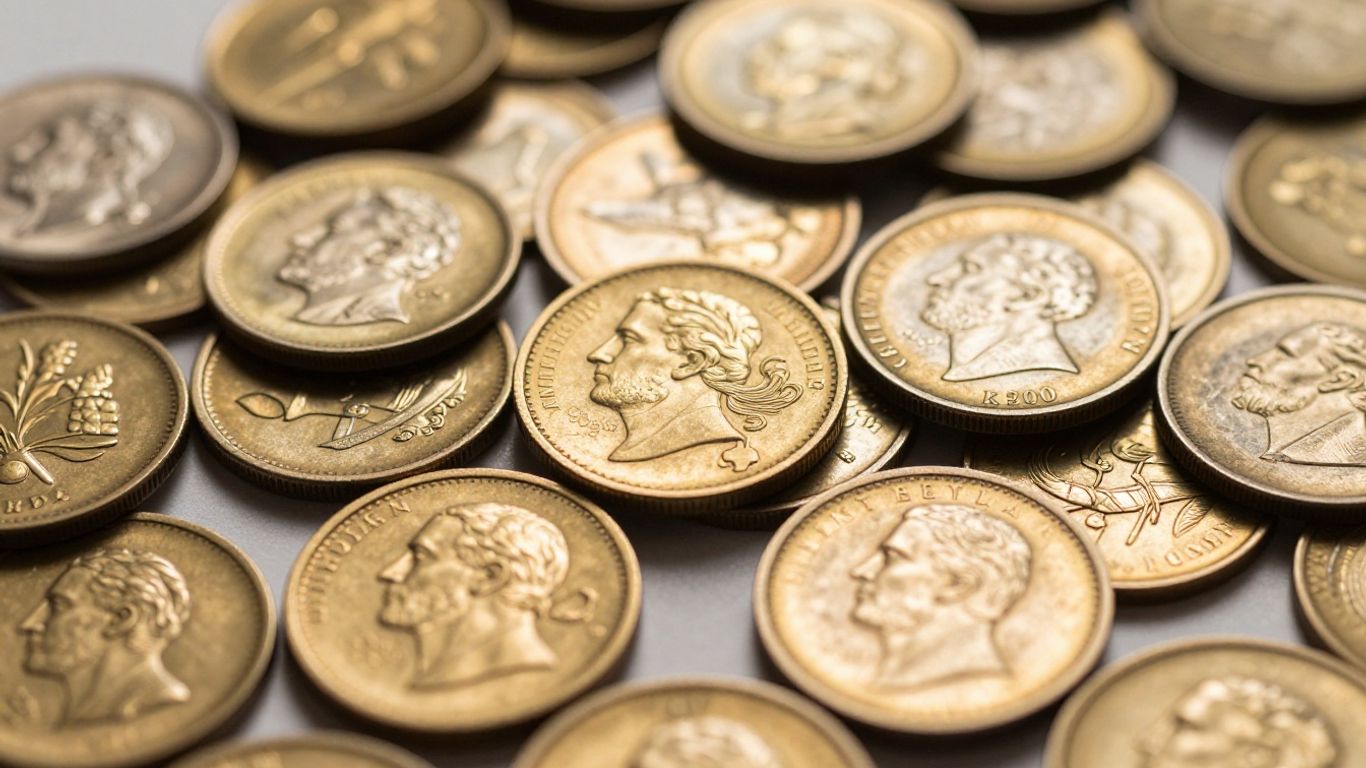
Rare coins are physical objects, and that’s a big deal. Unlike digital assets or even paper money, they exist in the real world. This gives owners a direct sense of security and control. You can hold it, you can keep it safe yourself, and it operates outside the usual digital or banking systems. This offers a level of privacy and independence that many other investments just can’t match.
What really sets coins apart, though, is their limited supply. The number of any specific coin that still exists is fixed. It can only go down over time as coins get lost, damaged, or melted. This fixed scarcity is a powerful thing. As more people want a coin, and the number available stays the same or shrinks, its value naturally tends to climb. This immutable scarcity acts as a solid floor for value and a strong reason for long-term price growth.
Here’s a look at how supply and physical presence play a role:
- Physical Possession: Owning a tangible asset means you have direct control. It’s not just an entry in a database or a promise on paper.
- Autonomy: Coins exist independently of traditional financial networks, offering a degree of freedom from system-wide issues.
- Immutable Scarcity: The number of surviving coins is a set figure, which can only decrease. This unchanging, limited nature is a core driver of value.
The finite nature of rare coins means that as demand grows, the price has a natural upward pressure. This isn’t tied to market sentiment in the same way stocks are; it’s a direct result of supply and demand for a physical item that cannot be reproduced.
Consider the difference in performance over the long term:
| Asset Class | Performance (1970-2023) | Key Driver(s) | Correlation with S&P 500 |
|---|---|---|---|
| PCGS Rare Coin Index | +7,070% | Rarity, Grade, Demand | Low, Counter-cyclical |
| Gold Bullion | +1,800% | Inflation, Geopolitical | Low |
This shows how rarity and demand for coins can lead to growth that outpaces even precious metals, largely due to their tangible and finite characteristics.
The Three Pillars Of Numismatic Value
When you’re looking at rare coins, it’s not just about how old they are or what metal they’re made of. There are three main things that really decide how much a coin is worth to collectors and investors. Think of them as the foundation for everything else. Understanding how these three elements interact is key to figuring out a coin’s true potential.
Interplay of Rarity, Condition, and Demand
These three pillars – rarity, condition, and demand – don’t exist in a vacuum. They constantly influence each other. A coin might be incredibly rare, but if nobody wants it (low demand) or it’s in terrible shape (poor condition), its value won’t be very high. Conversely, a coin that’s relatively common might fetch a high price if it’s in absolutely perfect condition and there’s a huge surge in collector interest. It’s this dynamic balance that makes numismatics so interesting.
- Rarity: This refers to how many of a particular coin were originally made and, more importantly, how many still exist today. Lower mintage numbers and fewer surviving examples generally mean higher rarity.
- Condition: This is all about the coin’s physical state. Is it worn down from circulation? Are there scratches or other damage? Coins graded as being in near-perfect or perfect condition are far more desirable.
- Demand: This is the collector and investor interest. How many people want this specific coin? Popular series, coins tied to significant historical events, or those with striking designs often see higher demand.
Strategic Acquisition Framework
Knowing about these pillars helps you make smarter choices when buying coins. Instead of just grabbing anything that looks interesting, you can develop a plan. This means looking for coins where the rarity, condition, and demand are all pointing towards potential growth. It’s about finding those sweet spots where a coin is scarce, well-preserved, and has a solid base of interested buyers.
Building a collection isn’t just about accumulating objects; it’s about making informed decisions based on a clear understanding of what drives value in the long term. This strategic approach helps avoid impulse buys and focuses on assets with genuine appreciation prospects.
Accurate Valuation Techniques
To properly value a coin, you need to assess all three pillars. You can’t just look at a rarity guide and stop there. You also need to consider its grade – is it a high-grade example or a low-grade one? And then, you have to gauge the current market demand. Are prices for this type of coin trending up, down, or staying steady? Using resources like auction records, population reports from grading services, and consulting with experienced dealers can help you get a more precise picture of a coin’s worth. It’s a bit like detective work, piecing together all the clues to arrive at a fair assessment.
Appreciation Potential In Rare Coin Investments
Historical Track Record of U.S. Coins
When we look back at how rare U.S. coins have performed over time, it’s pretty interesting. For decades, many of these pieces have steadily gained value. Think about it – a coin minted a century or more ago, especially one with a limited production run, has already survived a lot. It’s seen economic ups and downs, and yet, its value has often climbed. This isn’t just a recent trend; it’s a pattern that’s been playing out for a long time. For instance, some studies show that certain rare coins have outperformed major stock market indexes over extended periods. It’s not a guarantee, of course, but the historical data gives you a solid reason to pay attention.
Limitless Appreciation Prospects
The idea of "limitless" appreciation might sound a bit much, but in the rare coin world, it’s not entirely out of the question. The value of a coin isn’t just about its metal content or how many were made initially. It’s also about how many are still around today, their condition, and how many people want them. If a coin is already scarce and its condition is top-notch, and then suddenly, more collectors start wanting it, its price can really take off. It’s like a perfect storm of factors that can push a coin’s value much higher than anyone expected. This is especially true for coins tied to significant historical events or those that represent a unique moment in time.
Identifying Future Rarity
So, how do you spot a coin that might be worth a lot more down the road? It’s a bit of detective work. You need to look beyond the coins that are already famous. Sometimes, coins that were common in the past might become rare in the future. This can happen if a large number of them were melted down, lost, or simply didn’t survive in good shape. Keep an eye on coins with lower mintages that aren’t currently in huge demand but have a solid historical background. Also, consider coins that are difficult to find in high grades – even if the coin itself isn’t super rare, finding one in perfect condition can make it rare and thus more valuable. It’s about anticipating what might become scarce and desirable.
The numismatic market, while showing impressive long-term growth, can experience cycles. Investors should be prepared for periods of volatility and consider a long-term investment horizon, ideally a decade or more, to navigate these fluctuations and benefit from the overall upward trend.
Here’s a look at how some coin indices have performed:
| Index Name | Start Value (1970) | Value (March 2023) | % Gain | S&P 500 (Same Period) | Gold (Same Period) |
|---|---|---|---|---|---|
| PCGS Rare Coin Index | $1,000 | $71,705 | ~7070% | Lower | Lower |
| PCGS 20th Century Coin | $102,248 (Peak 1989) | $55,505 (May 2025) | -45% | N/A | N/A |
Wrapping Up: What Makes a Coin Truly Special
So, we’ve talked about why some coins are worth a lot more than others. It really comes down to a few main things: how many were made, how many are still around, what condition they’re in, and if people are interested in them. It’s not just about the metal they’re made of, though that can play a part. Thinking about these points helps you figure out what makes a coin valuable, whether you’re just starting out or have been collecting for years. It’s a fascinating mix of history and economics, and understanding it can lead to some really interesting finds.
Frequently Asked Questions
What makes a coin rare and valuable?
A coin becomes rare and valuable mostly because of how few were made and how many have survived over time. If a coin was made in small numbers or most have been lost or damaged, the ones that remain can be worth a lot.
Why does a coin’s condition matter so much?
The better shape a coin is in, the more collectors want it. Coins with no scratches, dents, or signs of wear are called ‘pristine.’ These coins often get the highest grades from professional grading companies and can sell for much more than worn ones.
How does history affect a coin’s value?
Coins linked to important times or events in history are usually more valuable. For example, coins made during wars or special celebrations can be worth more because they tell a story or represent a special moment.
What is a certified population in coin collecting?
Certified population means the number of coins that have been officially graded and recorded by trusted grading companies. If only a few coins of a certain type are certified, those coins are often more valuable.
Do gold and silver coins always have extra value?
Coins made from gold or silver are valuable because of the metal, but some coins are worth even more if they are rare or have historical importance. This extra value is called a ‘numismatic premium.’
How does market demand affect coin prices?
When a lot of collectors want a certain coin, its price can go up. Popular coins, or those that get lots of attention at auctions or online, often sell for more because of strong demand.
Can rare coins protect my money during tough economic times?
Yes, rare coins are often seen as a safe place to keep money when the economy is unstable. Since they are real, physical items with limited supply, they can hold or even grow in value when other investments lose value.
How can I tell if a coin will increase in value in the future?
Coins with a strong history of going up in value, limited numbers, and high collector interest are more likely to grow in value. Learning about the market and getting advice from experts can help you spot coins with good appreciation potential.