
Exploring the world of coin collecting can be fascinating, especially when you come across coins with unusual features. Sometimes, coins don’t come out of the mint exactly as planned. This can lead to what collectors call mint errors. One common type involves something called a weak strike. If you’re in San Antonio, TX, and you’ve found a coin that looks a bit off, understanding the weak strikes causes on coins San Antonio TX can help you figure out what you’ve got.
Key Takeaways
- Weak strikes on coins happen when the minting press doesn’t apply enough pressure, leading to less detailed images.
- Several factors can cause insufficient minting pressure, including issues with the coin press or the dies themselves.
- Identifying a weak strike involves looking for areas with flattened details, especially in the coin’s design and lettering.
- It’s important to tell the difference between a weak strike and other mint errors or damage that happens after the coin is made.
- Understanding these causes helps collectors in San Antonio, TX, and elsewhere appreciate the variety of errors found on coins.
Understanding Weak Strikes on Coins
Sometimes, coins coming out of the mint just don’t look quite right. They might seem a bit fuzzy, or maybe some of the finer details are missing. This is often because of something called a "weak strike." It’s not a super rare thing, but it can definitely make a coin look off. Basically, a weak strike happens when the coin press doesn’t apply enough pressure to fully impress the design onto the metal blank. Think of it like trying to press a stamp into soft clay – if you don’t push hard enough, you won’t get a clear image. The same idea applies here, just on a much larger scale with heavy machinery.
Causes of Insufficient Minting Pressure
There are a few reasons why a coin might not get enough oomph during striking. One common culprit is a problem with the minting presses themselves. Sometimes, the power supply to the presses might fluctuate, or the machinery might not be calibrated quite right. This can lead to a gradual decrease in striking pressure. Imagine the press is like a giant hammer; if its power source flickers, the hammer won’t hit as hard. Another factor can be issues with the dies themselves. If the dies are worn down or not properly prepared, they might not be able to transfer the full design to the planchet, even with adequate pressure. It’s also possible that the metal blank itself isn’t quite right, though this is less common for weak strikes specifically. The key takeaway is that it’s usually a mechanical issue within the minting process that prevents the full design from being imprinted. This can happen for a variety of reasons, but usually occurs when the power to the presses is turned off and the dies continue to strike coins with less and less pressure until coming to a stop. On such coins all the detail, including the reeding on clad coins should exhibit extreme weakness. If the coin is simply struck through grease, some details may be strong and the edge reading will also be strong. Poorly struck coins can result from three main issues, often stemming from the minting die itself.
Identifying Weak Strike Characteristics
So, how do you spot a weak strike? The most obvious sign is a lack of sharp detail. You’ll notice that the design elements, like the lettering, the date, and the portrait or image, appear soft or mushy. The fine lines and textures that should be crisp might be rounded or barely visible. On coins with reeded edges, like dimes and quarters, the reeding might be weak or even completely absent. It’s like the metal didn’t quite flow into all the nooks and crannies of the die. Another characteristic is a general lack of "mint luster." Coins fresh from the mint usually have a bright, frosty appearance. Weakly struck coins often look duller because the surface texture isn’t fully developed. You might also see areas where the design is just plain missing, especially on the edges or in recessed areas. It’s important to remember that a weak strike is different from a coin that was struck with a damaged die, like a die break or a cud. With a weak strike, the entire design is just not fully impressed, rather than having a chunk missing or a raised blob.
- Soft or mushy design elements: Lettering and imagery lack sharp definition.
- Reduced mint luster: The coin appears duller than a well-struck example.
- Weak or absent edge reeding: The grooves on the rim are not fully formed.
- Incomplete detail in recessed areas: Fine lines and textures are not visible.
Distinguishing Weak Strikes from Other Errors
It’s easy to confuse a weak strike with other minting anomalies, but there are key differences. For instance, a "strike-through" error happens when an object, like a piece of metal or grease, gets between the die and the planchet. This leaves an impression of the object itself on the coin, which is very different from the overall lack of detail in a weak strike. A "broadstrike" error occurs when the collar that’s supposed to contain the metal fails, allowing the coin to expand beyond its normal diameter. While broadstrikes can sometimes look a bit weak on the edges, the main design is usually well-defined. Then there’s "mechanical doubling," which looks like a doubling of the design but is actually caused by the die shifting slightly during striking. This often results in a shelf-like appearance, unlike the uniform softness of a weak strike. Finally, don’t confuse it with a "die trial," which is an experimental strike made with a die to test its quality, often on a softer metal or with less pressure intentionally. Understanding these differences is key for collectors.
A weak strike is characterized by a general lack of full detail across the entire coin’s surface, stemming from insufficient striking pressure. It’s not about a specific missing element or an impression from an external object, but rather a failure of the minting process to fully transfer the die’s design onto the planchet.
Broadstrike Errors and Their Origins
Malfunctioning Collar Dies
Sometimes, the machinery at the mint just doesn’t cooperate. One of the ways this can happen is with the collar die. You know, that ring around the coin when it’s being struck? Its job is to keep the metal from spreading out too much. When it messes up, or isn’t there at all, the coin can get a bit too big. This is what we call a broadstrike error.
Characteristics of Broadstruck Coins
So, what do these broadstruck coins look like? Well, the most obvious thing is that they’re usually larger than a normal coin. The metal just spread out more than it should have. Because the collar wasn’t doing its job, these coins often have a plain edge, even if the coin is supposed to have reeds. Think of it like this: the metal had nowhere to go but outwards.
- Increased diameter: The coin is noticeably larger than a standard one.
- Plain edge: Even if the coin should have reeded edges, they’ll be smooth.
- Full design: Unlike some other errors, the design details are usually complete, just spread out.
Examples of Broadstrike Errors
Broadstrikes can happen on any denomination. You might find a penny that’s the size of a quarter, or a quarter that’s significantly wider than usual. These errors are a direct result of the collar die not functioning correctly during the minting process. It’s a pretty straightforward error to spot once you know what to look for. If you’re interested in collecting these kinds of mistakes, you might want to check out some popular coin error types. It’s fascinating how these little slip-ups can make a coin stand out.
Broadstrike errors occur when the collar die, which normally contains the coin’s metal, fails to do its job. This allows the planchet to expand outwards during striking, resulting in a larger coin with a plain edge.
Strike-Through Errors: Foreign Objects and Their Impact
How Strike-Throughs Occur
Sometimes, things get in the way when a coin is being made. Imagine a blank metal disc, called a planchet, heading into the big striking machine. If something foreign lands on that planchet right before the dies hit it, that object gets pressed into the coin’s surface. This is what we call a strike-through error. It’s basically an imprint of whatever was in the wrong place at the wrong time. These can happen with all sorts of coins, from modern quarters to older pennies.
Impact of Hard vs. Soft Objects
The kind of object that causes the strike-through really changes what the error looks like. Hard things, like a small piece of metal, a staple, or even another coin fragment, tend to leave a really sharp, clear impression. Sometimes, these hard objects can even get stuck to the coin, creating what’s called a retained strike-through. On the flip side, softer materials like grease, cloth fibers, or even a bit of string will leave a more smudged or flattened mark. Grease, in particular, can fill in the tiny details of the die, leading to a weaker overall strike on the affected areas. It’s pretty wild how different materials leave such distinct marks.
Retained Strike-Throughs and Brockage
When a foreign object is struck into a planchet and stays there, it’s a retained strike-through. This is a pretty cool error to find because the object itself is still part of the coin. Brockage errors are a bit different but related. They happen when a struck coin gets stuck to a die and then strikes a new blank planchet. This leaves a mirror image of the struck coin’s design on the new planchet. It’s like the coin is stamping itself! These errors are fascinating because they show a malfunction in the normal process of striking coins.
Here’s a quick look at what can happen:
- Hard Objects: Staples, metal shavings, wire fragments.
- Soft Objects: Grease, cloth, string, hair.
- Retained Strike-Through: Object remains on the coin.
- Brockage: A struck coin imprints onto a blank planchet.
The minting process is a high-speed operation. Even small contaminants can cause significant deviations from the intended design. These deviations, while errors, are often sought after by collectors for their uniqueness.
Finding a strike-through error can be exciting. It’s a tangible piece of the mint’s production line gone slightly awry. While some might just look like a smudge, others, especially those with clear imprints of foreign objects or retained pieces, can be quite valuable to collectors interested in coin error types.
Planchet Preparation and Striking Issues
Sometimes, the problems that lead to weird-looking coins start way before the actual striking happens. It all comes down to how the metal disks, called planchets, are made and handled. If these aren’t just right, you can end up with some pretty interesting errors.
Improper Planchet Thickness
Think of it like baking. If your dough is too thin or too thick, the final cookie won’t turn out right. The same goes for coins. Planchets need to be the correct thickness. If the metal strip they’re punched from is rolled too thin, the resulting coin will be underweight and might lack detail. On the flip side, if the strip is too thick, the coin will be overweight. Sometimes, a planchet meant for one coin gets used for another, like a dime planchet being struck with quarter dies. This can lead to size and weight issues because the planchet isn’t the right size for the dies or the collar that shapes the edge. This mismatch in thickness is a common source of striking problems.
Lamination Flaws and Split Planchets
Metal isn’t always perfectly pure. During the rolling process, impurities or air bubbles can get trapped within the metal strip. When the planchet is struck, these imperfections can cause layers of metal to separate. This is called a lamination flaw. You might see it as a crack, a peel, or a flaky surface on the coin. If the flaw is really bad, the planchet can actually split into two pieces, either before or after striking. A split planchet error results in a thin coin, often with rough, striated surfaces where the metal separated.
Clipped Planchets and Blakesley Effect
When the metal strip is fed into the blanking machine to punch out the round disks, things can go wrong. If the strip doesn’t move forward enough, the punch can overlap an already punched area, creating a curved "clip" where a piece of the planchet is missing. You might also see straight clips if the punch hits the straight edge of the metal strip, or ragged clips if it hits the irregular end. Often, on coins with curved clips, you’ll notice a distortion or weakness on the opposite side of the rim. This is known as the Blakesley Effect. It’s a tell-tale sign of a genuine clipped planchet error, showing how the metal flow was disrupted during the striking process.
The journey of a coin from raw metal to a finished piece of currency involves many steps, and errors can occur at almost any stage. Understanding these early issues, like those with the planchets themselves, helps explain why some coins look so unusual.
Die Malfunctions and Their Coinage Effects
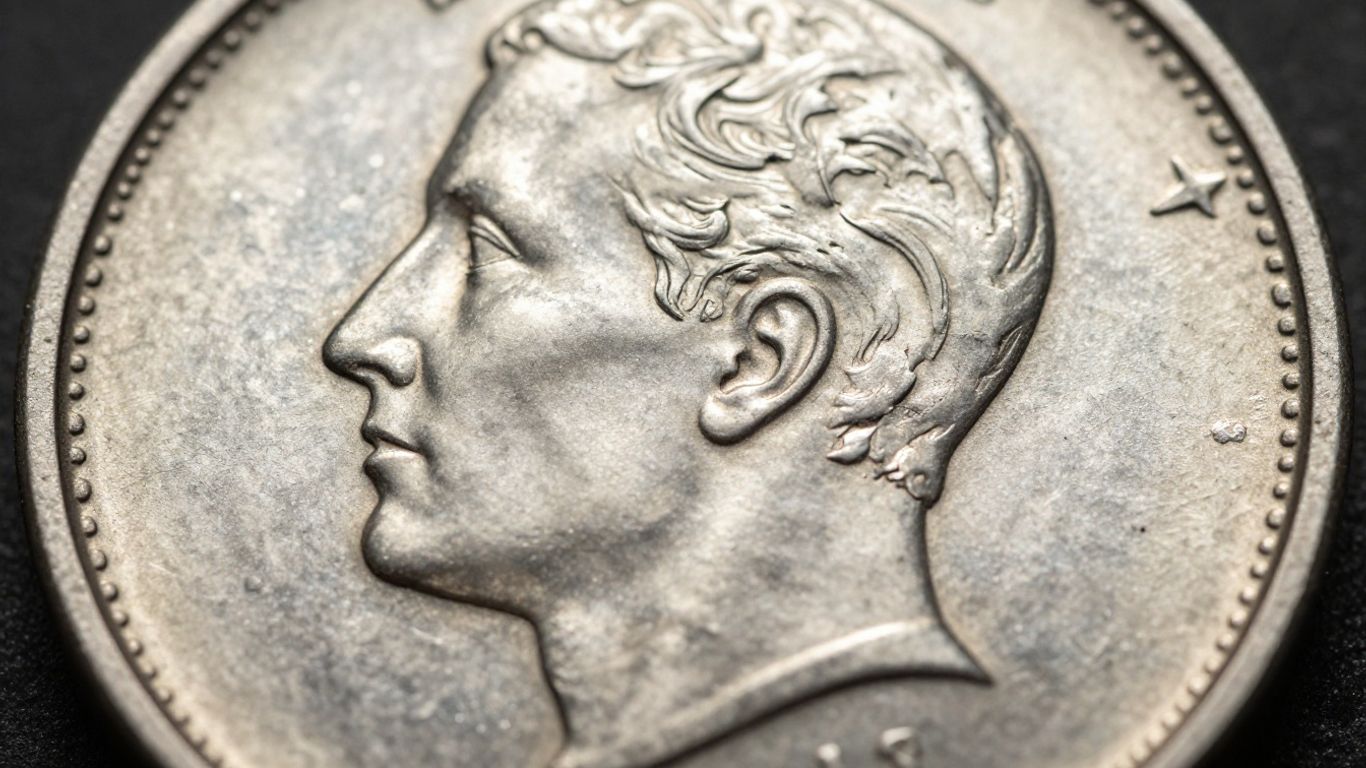
Sometimes, the minting process hits a snag, and it’s not the metal’s fault or the press itself, but the dies – the very tools that imprint the design onto the coin. These metal stamps, though tough, can develop issues that lead to some pretty interesting errors. When dies malfunction, it can really mess with how a coin turns out.
Clashed Dies and Their Impressions
This happens when the coin press is fired without a blank coin, or planchet, in place. Basically, the two dies, the one for the front (obverse) and the one for the back (reverse), slam into each other. This forceful collision can transfer some of the design from one die to the other, creating a ghost-like impression on subsequent coins. You might see faint details of the opposite side’s design appearing on the coin’s surface. It’s like the dies gave each other a hug, but a really, really hard one that left a mark. These can range from barely visible smudges to quite distinct impressions, depending on how hard the dies clashed. You can check out some examples of die clash errors to see what I mean.
Die Breaks and Cud Errors
Dies are made of hardened steel, but they aren’t indestructible. Over time, or due to a sudden shock, a crack can form in the die. When a coin is struck with a cracked die, the metal flows into that crack, creating a raised line or a small lump on the coin. If the crack is large enough, or if a piece of the die actually breaks off, it creates what’s called a "cud" error. A cud is essentially a large, flat, raised area on the edge of the coin where a chunk of the die is missing. The design in that area will be completely absent, replaced by this smooth, irregular blob of metal. It’s a pretty dramatic error to find.
Capped Die Errors and Their Appearance
A capped die error occurs when a struck coin fails to eject from the die chamber properly. Instead of popping out, the coin sticks to the upper die. When the next planchet is fed into the press, the stuck coin gets caught between the new planchet and the lower die. The result is a thin, dome-shaped object that looks like a "cap" – hence the name. This cap is essentially a coin that has been flattened and spread out, often showing a faint impression of the die design on its inner surface. The coin struck underneath the cap will usually be weak or incomplete because the cap absorbed much of the striking force. It’s a pretty unusual sight and definitely stands out from a normal coin.
Multiple Strikes and Off-Center Minting
Sometimes, things don’t go quite right in the minting process, and a coin ends up getting struck more than once, or it’s not struck squarely in the middle. These are known as multiple strikes and off-center minting errors. They can lead to some pretty unusual-looking coins.
The Process of Double Strikes
A double strike happens when a coin isn’t ejected properly after its first strike. The minting press then strikes it again. This second strike can happen right on top of the first one, or it might be a bit off to the side. If the coin flips over between strikes, you can get a "flip-over strike," where you see the design from both sides of the coin on one piece. Sometimes, a coin can even be struck a third or fourth time, leading to multiple strike errors. These are different from doubled dies, which happen during the die-making process itself.
Off-Center Strikes Explained
An off-center strike occurs when the planchet (the blank metal disc) isn’t perfectly positioned between the dies when it’s struck. Instead of hitting the center, the dies strike closer to the edge. This results in a coin that isn’t fully round and shows a significant portion of the blank metal around the design. The degree of the off-center strike can vary a lot. Some might only be slightly off, while others are dramatically so, with only a small part of the design showing. Coins with the full date visible are generally more sought after than those missing it.
Flip-Over Strikes and Double Exposures
Flip-over strikes are a fascinating type of multiple strike error. They happen when a coin is struck, then flipped over, and then struck again. This results in a coin that displays elements of both the obverse (heads) and reverse (tails) sides. It’s like a double exposure on a camera. These are often confused with doubled dies, but the mechanism is entirely different. The coin is physically struck twice, with a rotation in between. You can find a variety of these errors, from subtle to quite dramatic, depending on how much of each side is visible. It’s a good idea to familiarize yourself with common coin errors to spot these unique pieces.
Here’s a quick look at how these errors differ:
| Error Type | Cause |
|---|---|
| Double Strike | Coin struck more than once without proper ejection between strikes. |
| Off-Center Strike | Planchet not centered between dies during a single strike. |
| Flip-Over Strike | Coin struck, flipped, and struck again. |
These types of errors are a direct result of mechanical issues during the striking process. They aren’t intentional and happen when the machinery doesn’t function exactly as planned, leading to a coin being struck improperly or multiple times. Understanding the sequence of events in the minting process helps explain why these anomalies occur.
Errors Related to Planchet Feeding
Sometimes, the way the metal discs, called planchets, are fed into the minting press can cause some pretty interesting errors. It’s not always a smooth process, and when things go a little sideways with how these blanks are presented to the dies, we can end up with some unusual coins.
Indent Errors from Overlapping Planchets
This happens when one blank planchet doesn’t quite clear the previous one as it’s being fed into the striking chamber. So, you have two planchets in the same spot, or at least overlapping. When the dies come down, the area where they overlap gets pressed into the other planchet. This leaves a blank, indented spot on the struck coin, kind of like a shallow crater. It’s a clear sign that two planchets were in the wrong place at the wrong time. You can often see the outline of the planchet that caused the indent.
Brockage Errors from Struck Coins
Brockage errors are a bit like indents, but with a twist. Imagine a coin that has already been struck. If this struck coin somehow gets stuck and then another blank planchet is fed into the press on top of it, the struck coin acts like a die. When the press strikes, it leaves a mirror image of the design from the struck coin onto the new blank planchet. These impressions are usually a bit distorted because the metal flows differently than it would from a proper die. It’s a fascinating error that shows a coin getting struck twice, but in a very unusual way.
Chain Edge Strikes with Paired Coins
This is a less common, but still interesting, feeding error. It occurs when two planchets are fed into the press side-by-side, and they get struck while still connected, often by a small sliver of metal. The result is a coin that looks like it has a chain-like edge, or sometimes just a very thick, irregular rim. It’s a direct result of the feeding mechanism not separating the blanks properly before they hit the dies. These errors are a good reminder of the mechanical precision required in minting and how even small misfeeds can create collectible anomalies. You can sometimes find these on older coins, and they’re a neat piece of minting history to hold onto. Learning about these feeding errors can help you spot them in your own change, and it’s a fun part of coin collecting to explore these types of errors.
The journey of a coin from a simple metal disc to a finished piece of currency involves a complex series of mechanical steps. When the feeding mechanism, responsible for delivering these discs to the striking dies, encounters an issue, the resulting coin can bear unique marks. These feeding errors are not the result of faulty dies or planchets themselves, but rather a hiccup in the automated process that presents the planchet for striking. It’s a testament to the intricate machinery at play in a mint.
Here’s a quick rundown of what can go wrong:
- Overlapping Planchets: Two blanks try to occupy the same striking space, leading to indents.
- Stuck Struck Coins: A previously struck coin interferes with the process, causing a mirror-image impression (brockage).
- Paired Planchets: Blanks are fed together, resulting in connected coins or unusual edge features.
These errors, while not as dramatic as some others, offer a glimpse into the precise, yet sometimes fallible, nature of coin production. They are a direct consequence of the feeder mechanisms at work within the minting presses.
Mechanical Doubling vs. Doubled Dies
Causes of Mechanical Doubling
Sometimes, coins can look like they have a "double" impression, but it’s not the kind collectors usually get excited about. This is called mechanical doubling. It happens when the coin die shifts just a little bit right after it hits the metal planchet. Think of it like a slight wobble or drag. This movement can make the design elements appear a bit thicker or spread out, almost like a shadow. It’s a common issue and usually happens because the die might be a bit loose in its holder or the striking pressure wasn’t perfectly aligned. It’s not a rare variety, just a byproduct of the minting machinery.
Identifying Mechanical Doubling Characteristics
Spotting mechanical doubling takes a keen eye. Unlike a true doubled die, which has distinct, raised doubling on the design, mechanical doubling often looks flatter and shelf-like. The doubling might appear more like a spreading or a slurring of the design elements, especially on the letters and numbers. It doesn’t have the sharp, crisp separation you’d see on a genuine doubled die. You might notice that the doubling is more pronounced on one side of the coin than the other, or it might affect only certain parts of the design. It’s important to remember that die-deterioration doubling can also look similar, but it’s caused by the die wearing down over time.
Distinguishing from Genuine Doubled Dies
This is where it gets tricky for new collectors. A true doubled die is created when the die itself is struck multiple times by the hub, and each strike is slightly misaligned. This creates a very distinct, raised doubling that’s part of the die itself. You’ll see this doubling on every coin struck by that die. Mechanical doubling, on the other hand, is a post-striking event, a sort of slip-up during the coin’s creation. It’s often described as a "shelf" effect, where the metal seems to have been pushed or dragged. Genuine doubled dies have a more dramatic, often wider, and more defined doubling. For example, the famous 1969-S doubled die cent is a prime example of a true doubled die, and it’s vastly different from the common mechanical doubling seen on many coins. If you’re unsure, comparing your coin to known examples of both errors is a good idea. Many resources online can help you see the differences side-by-side.
The key difference lies in how the doubling is formed. Doubled dies are created during the die-making process itself, meaning the doubling is an integral part of the die. Mechanical doubling occurs during the coin striking process due to movement or slippage, and it’s not a permanent feature of the die.
Edge and Rim Errors in Coin Production
The edges and rims of coins might not seem like the most exciting part, but they can tell us a lot about how a coin was made, and sometimes, what went wrong. These areas are directly affected by the collar, a crucial piece of equipment in the minting process. The collar’s job is to keep the metal from spreading too much when the dies strike the blank, giving the coin its final shape and diameter.
Collar Position and Deterioration
When the collar isn’t quite right, things can get interesting. If the collar is out of position during the strike, it can leave a distinct mark on the coin’s edge. This mark is often a straight line, sometimes called a partial collar. It’s like a little scar from where the collar was supposed to be but wasn’t quite there. Over time, collars can wear down, too. This deterioration can lead to metal being squeezed out between the collar and the die, creating what’s known as a wire rim. This results in a very thin, raised edge that looks almost like a wire wrapped around the coin.
Wire Rims and Partial Collars
Let’s break down these two common edge issues:
- Wire Rims: Caused by excessive pressure forcing metal outward between the collar and the die. The result is an unusually thin and high rim.
- Partial Collars: Occur when the collar is not fully engaged or is out of position. This leaves a visible line or band around the coin’s edge.
Railroad Rims on Reeded Coins
When a coin with a reeded edge, like many U.S. dimes and quarters, experiences a partial collar error, it gets a special name: a railroad rim. The line left by the out-of-place collar looks like a railroad track, and the coin’s reeds on either side of that line can resemble railroad ties. It’s a pretty neat visual, and a clear sign that something unusual happened during the striking process. These types of errors, along with others like off-center strikes, can make a coin stand out from the crowd.
Errors related to the collar and rim are direct results of the physical interaction between the coin blank, the dies, and the collar during the high-pressure striking process. Issues with the collar’s placement or condition directly impact the final shape and appearance of the coin’s edge and rim, distinguishing them from errors originating from the dies or planchets themselves.
Post-Mint Damage vs. Mint Errors
It’s pretty common for folks to get excited about finding a coin with something "wrong" with it, thinking they’ve stumbled upon a rare mint error. But here’s the thing: not every odd-looking coin is a true mint error. A lot of what people find is actually post-mint damage, or PMD for short. Understanding the difference is key for any collector, whether you’re just starting out or have been at it for years.
Identifying Post-Mint Damage
Post-mint damage happens after the coin has left the mint. Think of it like this: the minting process is finished, and the coin is officially made. Anything that happens to it after that point – scratches, dents, bends, cleaning marks, or even corrosion – falls under PMD. It’s basically damage that occurs during circulation, handling, or even deliberate alteration.
Here are some common types of PMD you might see:
- Scratches: These can be fine lines or deep gouges. They often happen when coins rub against each other or other hard surfaces.
- Dents and Bends: Coins can get bent out of shape from being dropped, stepped on, or run over. Dents are usually localized impacts.
- Cleaning Marks: If someone tries to clean a coin, especially with abrasive materials, it can leave behind a dull or swirly appearance. This is a big no-no for coin collectors.
- Corrosion: This is damage from chemical reactions, often caused by moisture or exposure to certain substances. It can eat away at the metal.
- Filing or Grinding: Sometimes people try to alter coins, and you might see evidence of filing or grinding marks.
Distinguishing from True Mint Errors
So, how do you tell the difference? True mint errors happen during the minting process. This could be anything from a planchet that wasn’t prepared right to issues with the dies or the striking process itself. For example, a coin struck off-center is a mint error because the planchet wasn’t perfectly aligned when it hit the dies. A coin with a missing date is a mint error if the die itself was flawed or damaged in a way that prevented the date from being struck.
Mint errors are a result of something going wrong at the mint during production. Post-mint damage is anything that happens to the coin after it’s been made, no matter when or where that occurs.
Here’s a quick way to think about it:
- Mint Errors: Happen before the coin is finished. They are part of the manufacturing process. Examples include off-center strikes, double strikes, or brockage errors.
- Post-Mint Damage (PMD): Happens after the coin is finished. It’s external damage. Examples include scratches, bends, and cleaning marks.
It’s important to know that while mint errors can sometimes increase a coin’s value significantly, PMD almost always decreases it. Collectors are looking for coins that are as close to their original mint state as possible. So, next time you find a coin that looks a bit unusual, take a close look to see if it’s a genuine mint error or just a victim of time and handling.
Wrapping Up: What to Do With Your Findings
So, we’ve looked at a bunch of weird coin stuff that can happen during the minting process. Things like broadstrikes, strike-throughs, and double strikes can make a coin look pretty odd. If you’re in San Antonio and you happen to find a coin that doesn’t look quite right, it might be one of these errors. It’s pretty interesting to think about how these mistakes happen. Most of the time, these coins aren’t worth a ton of money, but they can be fun to collect if you like the unusual. Just remember, not every odd-looking coin is a rare find; sometimes, it’s just damage that happened after it left the mint. Keep your eyes peeled, though – you never know what you might discover!
Frequently Asked Questions
What causes a coin to have a weak strike?
A weak strike happens when the coin press doesn’t have enough power to fully press the design onto the metal blank. Think of it like pressing too lightly when you’re trying to make a stamp imprint. This can happen if the press’s power is reduced, or sometimes if there’s too much grease on the dies, which can fill in the tiny details of the design and make them look smudged or weak.
How can I tell if a coin has a weak strike versus other problems?
With a weak strike, you’ll notice that the whole coin’s design looks soft and lacks sharp details. This includes things like the lettering, the date, and even the edge’s reeding (the little lines on the side of some coins). Other errors might only affect a part of the coin or look different, like a smudge from grease or a missing piece of the design.
What is a broadstrike error?
A broadstrike error occurs when the metal ring, called a collar, that normally keeps the coin’s metal from spreading out during striking either malfunctions or isn’t in place. This allows the metal to spread outwards more than it should, making the coin larger in diameter, sometimes as big as a different coin denomination. These coins usually have plain edges because the collar wasn’t there to create the reeding.
Can a foreign object cause a coin error?
Yes, absolutely! When something like a piece of metal, a staple, or even a bit of cloth gets between the coin blank and the die during striking, it’s called a strike-through error. The object’s shape gets pressed into the coin’s surface. If the object is hard, it leaves a sharp mark. Sometimes, the object sticks to the coin, creating a ‘retained strike-through’.
What's the difference between mechanical doubling and a doubled die?
Mechanical doubling looks like a doubled image, but it’s caused by the coin press itself. If the dies are a bit loose, they can wiggle or drag slightly after the main strike, creating a flat, shelf-like doubling effect. A true doubled die is made when the die itself is incorrectly engraved, resulting in a much sharper and more detailed doubling that’s a part of the die’s design.
What are clipped planchets and how do they happen?
A clipped planchet is a coin that was made from a metal strip that wasn’t fed correctly into the machine that punches out the round discs (planchets). Sometimes, the punch overlaps the edge of the metal strip, creating a straight clip. Other times, it punches where a previous hole was already made, resulting in a curved clip. You can often see a distortion, called the Blakesley Effect, on the edge opposite the clip.
What is a 'cud' error on a coin?
A ‘cud’ error happens when a piece of the edge of a die breaks off. When the coin is struck, the metal flows into this missing piece of the die. On the resulting coin, this looks like a raised, flat area that’s missing some of the design. It’s basically a large die break that affects the coin’s edge.
How do I know if damage to a coin happened at the mint or later?
Figuring this out is key! Mint errors happen during the coin-making process. Post-mint damage (PMD) happens after the coin leaves the mint, like if it gets scratched, bent, or run over. Errors usually have a certain look – like a weak strike all over, a perfectly formed strike-through, or a clipped edge. PMD often looks like gouges, nicks, or flattened spots that don’t fit the coin’s original design.