
The Indian Head Penny, a coin that spent decades in American pockets, has a story worth telling. Its creation wasn’t just about making money; it was a process filled with ideas, changes, and even a bit of debate. This article looks at how the Indian Head Penny coin development happened, from the very first ideas to the coin we remember today. We’ll see who designed it, what the pictures mean, and why it eventually went away.
Key Takeaways
- The Indian Head Penny coin development began with a need for a new copper cent design, leading to James B. Longacre’s involvement.
- The obverse design, featuring Lady Liberty, faced some early discussion regarding its inspiration and portrayal.
- The reverse design, with its wreath and oak leaves, evolved to symbolize strength and national identity.
- Minting the Indian Head Penny involved challenges, especially with die wear, and the coin saw various adjustments throughout its production life.
- The Indian Head Penny’s run ended with the introduction of the Lincoln Cent, but it left a significant mark on coin collecting and American history.
The Genesis Of The Indian Head Penny Coin Development
The Need For A New Copper Cent
Back in the mid-1800s, the United States was using a few different types of copper cents. The large, heavy Flying Eagle cent had been around for a bit, but it wasn’t exactly a hit. People found them too big, and the metal composition wasn’t ideal for everyday use. There was a definite push for something new, something that would be more practical and, frankly, more appealing to the public. The government recognized this need for a change, a fresh start for the nation’s smallest denomination.
James B. Longacre's Vision
Enter James B. Longacre. He was the fourth Chief Engraver of the U.S. Mint, and he had a vision for a new cent design. Longacre was tasked with creating a coin that was not only aesthetically pleasing but also represented American ideals. He was known for his detailed work, and he wanted to put his stamp on American coinage. His goal was to create a design that would be both dignified and distinctly American. He had already been working on designs for other denominations, so he was no stranger to the challenges of coin engraving.
Initial Design Concepts
Before settling on the final Indian Head design, Longacre explored several ideas. He sketched out various concepts, some of which were quite different from what we know today. Early thoughts included different portrait styles and even allegorical figures. It was a process of trial and error, with the Mint officials and Longacre himself refining the concepts. The aim was to find a design that would be well-received and stand the test of time. Some of these early sketches show a different approach to the headdress, hinting at the debates to come.
The transition from older coin designs to new ones was often a slow and debated process, involving public opinion, artistic interpretation, and the practicalities of minting. The Indian Head Penny was no exception to this historical pattern.
Crafting The Iconic Obverse Design
The face of the Indian Head penny, the part you see when you first pick it up, took some doing to get just right. It wasn’t a simple sketch and done situation; there were definitely some bumps along the road.
The Lady Liberty Controversy
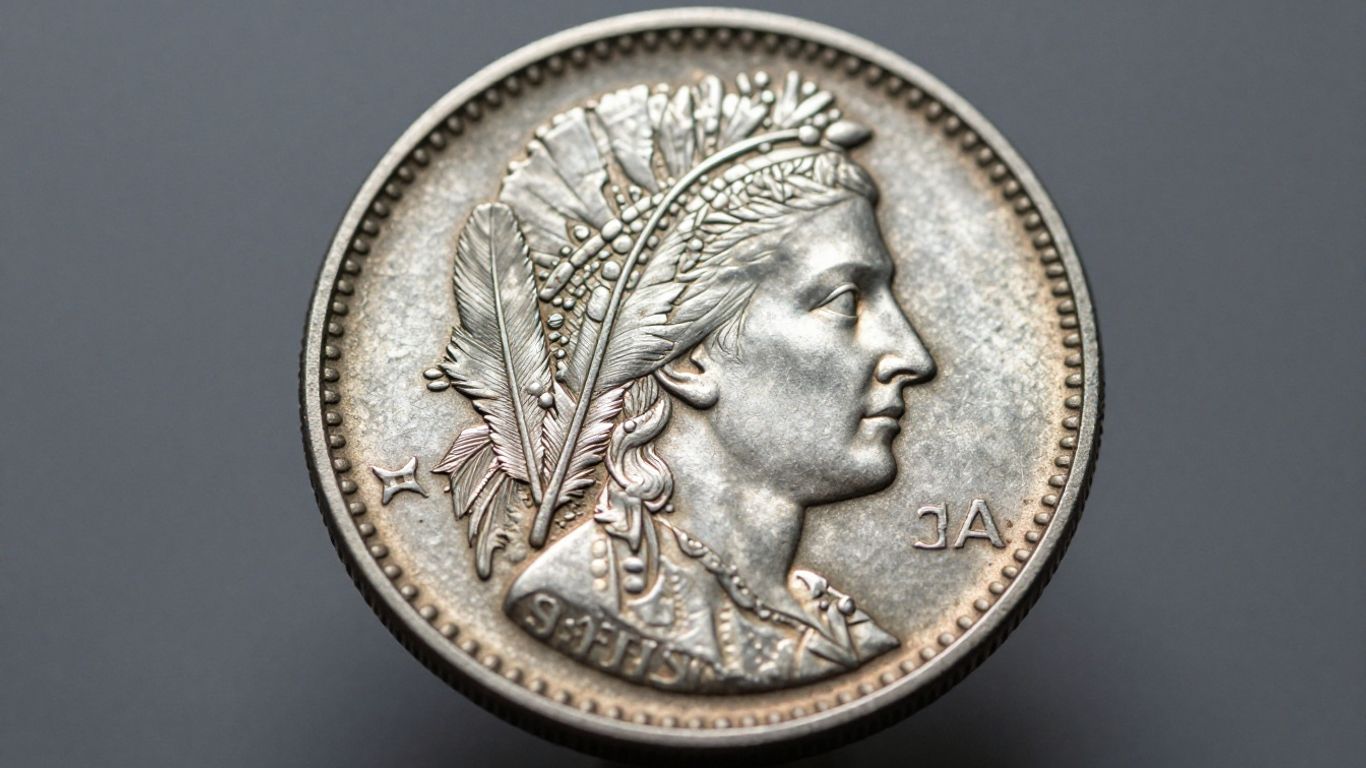
When James B. Longacre first put pen to paper, he envisioned a figure representing Liberty. However, the initial portrayal of Liberty, particularly her headdress, sparked quite a bit of debate. Some folks thought it looked a bit too much like a Native American headdress, which wasn’t exactly what they had in mind for the symbol of the United States. This led to some back-and-forth about what exactly Liberty should look like on our coins. It’s funny how a small detail can cause such a stir, isn’t it?
Inspiration For The Headdress
Longacre’s inspiration for the headdress actually came from classical art and his own daughter. He reportedly used his daughter, Sarah, as a model, placing a Native American-style headdress on her. The idea was to blend classical notions of liberty with a distinctly American symbol. The goal was to create an image that was both dignified and representative of the nation’s spirit. This blend of classical and indigenous imagery was a common artistic trend of the time, but it certainly made for an interesting discussion when it came to coinage.
Refining The Portrait
After the initial design, there were adjustments. One notable change involved the designer’s mark. Initially, the coin was released without any indication of who designed it. Later, a small "L" was added to the obverse, near the ribbon of the headdress, to credit James B. Longacre for his work. This addition wasn’t made on all coins at once, leading to different versions of the obverse. It’s a detail that collectors often look for when identifying specific mint years. The process of refining the portrait also involved ensuring the details would hold up well during the minting process, which was a constant challenge for coin designers.
Developing The Reverse: A Symbol Of Strength
While the obverse of the Indian Head penny captured attention with its controversial Liberty design, the reverse side was equally important in conveying the coin’s message. The initial concept for the reverse was a simple wreath, but it evolved to become a more robust symbol of the nation’s growing strength and identity. This side of the coin needed to complement the portrait and speak to American values.
The Wreath Design Evolution
Initially, the plan was to feature a relatively plain wreath on the reverse. However, this was quickly revised. The final design showcases a more detailed and substantial wreath, encircling the denomination. This change wasn’t just about aesthetics; it was about creating a more impactful symbol. The wreath itself was composed of various elements, each chosen for its meaning.
Symbolism Of The Oak Leaves
The wreath design prominently features oak leaves and acorns. Oak trees are widely recognized symbols of strength, endurance, and longevity. By incorporating these elements, the designers aimed to imbue the coin with a sense of the nation’s resilience and its potential for lasting power. This choice of imagery was intended to project an image of a strong and enduring United States. The oak’s deep roots and sturdy branches served as a metaphor for the nation’s foundations and its ability to withstand challenges, much like the Buffalo nickel’s design aimed to represent Native American dignity and strength universally.
The Value Inscribed
Clearly displayed within the wreath is the coin’s denomination: "ONE CENT". This inscription was straightforward, leaving no room for ambiguity about the coin’s face value. It was a practical necessity, but also part of the overall design that aimed to create a balanced and informative piece of currency. The placement within the wreath helped integrate the monetary value with the symbolic imagery, reinforcing the idea that even the smallest unit of currency was part of a strong and unified nation, a concept that this iconic coin holds a significant place in American history.
Minting Challenges And Early Production
The Philadelphia Mint's Role
The actual making of the Indian Head penny happened at the Philadelphia Mint. This was the only place producing them when they first came out. It’s kind of wild to think about how many of these coins they had to churn out right from the start. They were replacing a coin that hadn’t been around for too long, so there was a real push to get these new ones into people’s hands. The mint had to get its processes dialed in quickly to meet demand.
Addressing Die Wear Issues
One of the big headaches early on was how fast the dies wore out. These metal tools used to stamp the coin designs were getting damaged pretty quickly. This meant they had to be replaced more often than expected. This constant need for new dies added to the production costs and slowed things down a bit. It wasn’t just a simple matter of stamping coins; it was a continuous battle against wear and tear on the machinery.
- Frequent die replacements
- Impact on production speed
- Increased manufacturing expenses
The early years of the Indian Head penny saw the Philadelphia Mint grappling with the practicalities of mass production. Issues with die durability were a significant hurdle, requiring constant attention and resources to maintain a steady output of coins. This wasn’t a smooth sailing operation by any means.
Initial Circulation And Reception
When the Indian Head pennies first started showing up, people had mixed feelings. Some really liked the new design, thinking it was a big improvement. Others were still getting used to it, especially after the previous coin’s short run. Getting these coins out into everyday use was the next big step. They had to travel from the mint to banks and then into the pockets of everyday folks. It took time for the coin to become a common sight.
- Public reaction varied.
- The coin gradually became familiar.
- Distribution networks were key to circulation.
Variations And Key Dates In Indian Head Penny Coin Development
Even within a coin series as established as the Indian Head Penny, things weren’t always straightforward. Over its production run, several interesting variations and specific dates stand out, making them particularly sought after by collectors. Understanding these can really change how you look at these coins.
The 1864 Small Motto Variant
This is a pretty interesting one. In 1864, the design saw a slight modification. The "IN GOD WE TRUST" motto on the reverse ribbon was initially larger. Later in the year, a smaller, more refined "IN GOD WE TRUST" was introduced. This subtle change created two distinct varieties for the 1864 issue, with the small motto version generally being less common and more desirable to dedicated collectors. It’s a good example of how small details can matter a lot in coin collecting.
Notable Rare Dates
Some dates just naturally produced fewer coins, making them harder to find today. These are the ones that often get people excited when they find them in a collection or at a coin show.
- 1877: This is often called the "king" of Indian Head Pennies. Very few were made, and even fewer survive in good condition.
- 1909-S: This is the only year the Indian Head Penny was minted in San Francisco. Its low mintage makes it a key date, especially for those interested in the history of U.S. mint operations.
- 1869/8: A rare overdate where the ‘9’ is clearly struck over an ‘8’.
Understanding Mint Marks
For most of their run, Indian Head Pennies were only made at the Philadelphia Mint. This means most coins won’t have a mint mark. However, as mentioned, the San Francisco Mint produced them in 1909. You’ll find an ‘S’ mint mark on these coins. Knowing where a coin was made can be a big part of its story and value. The 1909-S Indian Head Penny is a prime example of how a mint mark can significantly impact a coin’s rarity and desirability.
The pursuit of specific variations and key dates adds a layer of challenge and reward to collecting the Indian Head Penny. It transforms a simple coin into a puzzle, where rarity, historical context, and condition all play a role in determining a piece’s significance and appeal within the numismatic community.
The Indian Head Penny's Evolution Through The Years
Even after its initial release, the Indian Head penny wasn’t exactly set in stone. Like many things in life, it saw a few changes over its production run. These adjustments weren’t always huge, but they mattered to collectors and the folks using the coins every day.
Mid-Production Adjustments
One of the most talked-about changes happened early on, in 1864. This is when the mint decided to switch the composition of the penny. Initially, they were made of bronze, a mix of copper and tin. But then, they shifted to a copper-nickel alloy. This change was partly due to the rising cost of copper during the Civil War and the desire for a slightly harder coin. This metal shift is a key point for collectors trying to identify specific issues. The copper-nickel version was a bit lighter in color and had a different feel. Later, they went back to bronze, which is what most of the Indian Head pennies we see today are made from.
The Impact Of Economic Shifts
Economic conditions really played a role in how these coins were made and how many were produced. During times of economic boom, mint production would often increase. Conversely, during downturns, fewer coins were struck. The Civil War, for instance, caused a lot of flux in metal prices and minting operations. The transition back to bronze after the war was a direct response to stabilizing economic factors. It’s interesting how a small coin can reflect larger financial trends.
Changes In Metal Composition
Let’s break down those metal changes a bit more. It wasn’t just a simple swap; there were nuances.
- 1864 (Bronze): The original composition, a mix of 95% copper and 5% tin and zinc.
- 1864 (Copper-Nickel): A temporary switch to a harder alloy, often called "white metal," made of 88% copper and 12% nickel. These are much rarer.
- 1865 onwards (Bronze): A return to the 95% copper, 5% tin and zinc composition, which remained standard for the rest of the series.
The decision to alter the metal content wasn’t just about aesthetics; it was a practical response to wartime economics and manufacturing challenges. These shifts, though subtle to the casual observer, created distinct varieties that are highly sought after by numismatists. Understanding these changes helps in appreciating the coin’s journey and its place in American industrial history.
Collectors often look for these specific metal variations, as they represent distinct phases in the coin’s manufacturing history. The rarity of the copper-nickel issues, in particular, makes them quite desirable. It’s a good reminder that even seemingly minor details can have a big impact on a coin’s collectible value.
The End Of An Era: Transitioning Away From The Penny
The Rise Of The Lincoln Cent
By the early 20th century, the familiar Indian Head Penny had been a fixture in American pockets for decades. However, the winds of change were blowing through the U.S. Mint. The decision to replace the Indian Head Penny wasn’t a sudden one; it was a response to evolving national sentiment and a desire to honor a beloved historical figure. In 1909, to commemorate the 100th anniversary of Abraham Lincoln’s birth, the U.S. Mint introduced a new one-cent coin featuring his portrait. This marked a significant shift, moving away from allegorical figures to a direct representation of a president. The introduction of the Lincoln Cent was a monumental event in American numismatics. It was the first time a U.S. coin had featured a real person’s likeness on the obverse.
Reasons For The Change
Several factors contributed to the phasing out of the Indian Head Penny. One major driver was the increasing cost of production for the copper cent. While the exact figures fluctuated, the metal itself was becoming a significant expense. Reports from around this time indicated that the cost to produce a penny was creeping up, sometimes exceeding its face value [3a3c]. Beyond economics, there was a growing public interest in memorializing Lincoln. His presidency during the Civil War and his enduring legacy made him a natural choice for such a tribute. The public’s embrace of the Lincoln Cent was swift, signaling a clear preference for the new design and its historical significance.
The Final Year Of Production
The year 1909 marked the official end of the Indian Head Penny’s run. Production ceased to make way for the new Lincoln design. This transition wasn’t just about a new face on a coin; it represented a broader cultural moment, a nod to a pivotal figure in American history. The final mintages of the Indian Head Penny, particularly those from 1908 and earlier, are now sought after by collectors. The shift from the Indian Head to the Lincoln Cent highlights how coinage can reflect the times, honoring past achievements while looking toward the future. It’s a reminder that even the smallest pieces of currency have stories to tell about the nation they represent.
The Lasting Legacy Of The Indian Head Penny
Numismatic Significance
The Indian Head Penny, despite its discontinuation, holds a significant place in American numismatics. For many collectors, it represents a tangible link to a bygone era of American commerce and design. Its relatively long production run, from 1859 to 1909, means there are plenty of examples available, making it an accessible entry point for new collectors. However, certain dates and mint marks are quite scarce, offering a challenge for even seasoned numismatists. The quest for these rarer pieces drives much of the ongoing interest. For instance, the 1901 Indian Head Penny is a date that often attracts attention due to its historical context and potential for error varieties, making it a popular item for those interested in the investment potential of rare coins.
Cultural Impact And Recognition
Beyond the world of coin collecting, the Indian Head Penny has woven itself into the fabric of American culture. It was a common sight in pockets and cash registers for half a century, witnessing immense changes in the nation. Its distinctive design, featuring Lady Liberty in a Native American headdress, has become an iconic image, even if the historical accuracy of the depiction is debated. This coin was part of everyday life, a small but constant presence during periods of industrial growth and westward expansion. It’s a symbol that many Americans recognize, even if they can’t recall its name.
Collecting The Indian Head Penny Today
Collecting Indian Head Pennies today is a rewarding pursuit. The series offers a range of challenges and opportunities, from building a complete set of circulated coins to hunting down elusive mint-state examples. Here’s a look at what makes collecting them appealing:
- Accessibility: Many dates can be found in good condition without breaking the bank, allowing for the creation of a satisfying collection.
- Variety: From the early copper-nickel issues to the later bronze versions, and including numerous die varieties and errors, there’s a lot to explore.
- Historical Connection: Each coin is a piece of history, a small artifact from a transformative period in American development.
When building a collection, understanding key dates and mint marks is important. For example, while the 1864 Small Motto is common, other dates like the 1877 and 1909-S are significantly rarer and command higher prices. The condition of the coin, often graded using a standardized scale, also plays a major role in its value. Many collectors focus on specific aspects, such as collecting by date, by mint mark, or by type (e.g., collecting only the copper-nickel issues).
The enduring appeal of the Indian Head Penny lies in its blend of historical significance, artistic merit, and the thrill of the hunt for collectors. It’s more than just a coin; it’s a miniature piece of American history that continues to captivate people decades after its production ceased.
A Lasting Impression
So, the Indian Head penny, it’s been quite a journey, hasn’t it? From its first minting to becoming a familiar sight in pockets and coin collections, this little copper coin really tells a story. It saw a lot of changes in the country, and its design itself shifted over the years, reflecting different times. Even though we don’t use them anymore, people still find them, collect them, and learn from them. It’s pretty neat how something so small can have such a long history and still be interesting today. The Indian Head penny definitely left its mark.
Frequently Asked Questions
What was the main reason for creating the Indian Head Penny?
Before the Indian Head Penny, the U.S. used a copper cent that wasn’t very popular. The government wanted a new, more appealing coin, and James B. Longacre was chosen to design it. He had a vision for a coin that would represent America better.
Who is the person on the front of the Indian Head Penny?
The person on the front is actually Lady Liberty, not a Native American chief as many people believe. Longacre based her headdress on Native American styles, which led to the coin’s popular name. The design went through some changes to make her look just right.
What does the design on the back of the coin mean?
The back of the coin usually shows a wreath, often made of oak leaves. These leaves were chosen to symbolize strength and endurance. The coin’s value, ‘ONE CENT’, is clearly written within or below the wreath.
Were there any problems when the Indian Head Penny was first made?
Yes, like with any new coin, there were some challenges. The mints, especially the one in Philadelphia, had to figure out the best way to make the coins. They also dealt with issues like the metal dies wearing out too quickly, which affected how many coins could be made.
Are there any specific Indian Head Pennies that are more valuable than others?
Absolutely! Some years and mint marks are much harder to find. For example, the 1864 version with a ‘Small Motto’ is quite rare. Knowing about these special editions, called ‘key dates,’ is important for collectors.
Did the Indian Head Penny change much over the years?
While the main design stayed the same, there were small adjustments made during its production. These changes were often to improve how the coins were made or to deal with the changing economic conditions of the time. The metal used also saw some shifts.
Why did the U.S. stop making the Indian Head Penny?
The Indian Head Penny was made for a long time, but eventually, the country decided it was time for a change. In 1909, to celebrate President Abraham Lincoln’s 100th birthday, a new penny featuring his portrait was introduced, and that’s the Lincoln Cent we know today.
Is the Indian Head Penny still important to collectors today?
Definitely. The Indian Head Penny is a very popular coin among collectors because of its history and attractive design. It represents a significant period in American coinage and is a great piece of history to own and study.