
Thinking about coin collecting or maybe just curious about why some old coins are worth a lot more than others? It’s not just about how old they are. There’s a whole economic side to it that really shapes the value. We’re going to look at what makes coins valuable, beyond just what’s printed on them. This includes things like how many were made, if people actually want them, and even the cost to produce them. Understanding the economic impact on coin values can really change how you see your pocket change.
Key Takeaways
- The value of coins goes way beyond their printed face value, influenced heavily by factors like how rare they are and how many people want them.
- Production costs, including the price of metals and the minting process, play a significant role in the economics of coins, sometimes costing more to make than they’re worth.
- Scarcity, driven by low mintage numbers and unique variations, is a major factor that increases a coin’s desirability and market price.
- The condition of a coin, assessed through standardized grading systems, directly impacts its market price, with better-graded coins fetching higher values.
- Keeping up with market trends, understanding collector demand, and consulting reliable sources like price guides and expert opinions are vital for accurately assessing coin values.
Understanding The Economic Impact On Coin Values
It’s easy to just see coins as, well, coins. You know, a penny is worth a cent, a quarter is worth twenty-five cents. But when you start looking at them as collectibles, or even just as objects produced by a government, things get a lot more complicated. The actual value of a coin, especially a rare one, can be way, way more than what it says on its face. This happens because of a bunch of different things, and understanding them helps you figure out why some old coins are worth a fortune and others are just pocket change.
Factors Influencing Numismatic Value
When we talk about numismatic value, we’re talking about what a coin is worth to collectors, not just its face value. This value isn’t set in stone; it shifts based on several key elements. Think of it like this: a coin’s worth is a mix of its history, how many of them are still around, and how much people want them.
- Rarity: If there aren’t many of a certain coin out there, it automatically becomes more desirable. This could be because fewer were made originally, or maybe most of them got melted down or lost over time.
- Historical Significance: Coins tied to important events, famous people, or specific eras often carry extra weight. A coin from a pivotal moment in history is naturally going to attract more attention and a higher price.
- Condition: Just like anything else, the better a coin looks, the more it’s worth. Chips, scratches, or wear can really bring down its value.
The economics behind coin collecting can be surprisingly complex. It’s not just about finding old coins; it’s about understanding the forces that make them desirable and, therefore, valuable to others.
The Role Of Rarity And Demand
Rarity and demand are like two sides of the same coin when it comes to value. If a coin is super rare but nobody wants it, its value won’t go up much. On the flip side, if a coin is common but suddenly everyone wants it, its price can skyrocket. The sweet spot for collectors, and for value, is when a coin is both hard to find and highly sought after.
Historical Significance And Coin Worth
Sometimes, a coin’s story is what gives it its real worth. A coin might be common in terms of numbers, but if it was part of a significant historical event, like being minted during a war or a period of major change, collectors will pay a premium for that connection to the past. It’s like owning a piece of history that you can hold in your hand. This historical context adds a layer of value that goes beyond just the metal or the minting.
| Factor | Impact on Value |
|---|---|
| Low Mintage Numbers | Increases desirability and potential price |
| Important Historical Link | Adds significant cultural and monetary worth |
| High Collector Demand | Drives up market prices, especially for rare items |
| Excellent Condition | Preserves detail and aesthetic appeal, boosting value |
Coin Production Costs And Their Economic Implications
It might seem straightforward, but the actual cost of making a coin is a complex economic equation. We’re not just talking about the metal itself; there’s a whole process involved that adds up. Understanding these costs is key to grasping why some coins are worth more than their face value to collectors, and why governments sometimes struggle with currency production.
Material Costs And Minting Processes
The price of metals like copper, nickel, and zinc fluctuates based on global markets and supply. When these prices go up, so does the cost to mint coins. Think about it: the U.S. Mint has to buy these metals to create our everyday change. Beyond the raw materials, there are significant expenses tied to the actual minting. This includes the energy to run massive presses, the labor involved in operating and maintaining the machinery, and the quality control checks to ensure each coin meets standards. It’s a whole industrial operation.
Here’s a look at some estimated production costs:
| Coin | Approximate Cost to Produce (2023) |
|---|---|
| Penny | 2.4 cents |
| Nickel | 10 cents |
As you can see, for both the penny and the nickel, the cost to produce them is higher than their face value. This situation isn’t sustainable in the long run and has led to discussions about changing how we make coins.
The Paradox Of Producing Coins Above Face Value
This is where things get interesting. When it costs more to make a coin than it’s worth, it creates a financial drain. The U.S. Mint has to spend more money to create a nickel than it will ever get back from that nickel being used in transactions. This paradox is a major reason why reforms are often proposed. It makes you wonder why we continue to produce them, but there are reasons, like the need for physical currency in certain transactions and for machines that still rely on coins. The continued production of pennies, despite the significant cost of producing them exceeding their face value, is a prime example of this ongoing debate.
Seigniorage And Government Revenue
Seigniorage is essentially the profit a government makes from issuing currency. It’s the difference between the face value of a coin or banknote and the cost to produce it. For example, if a government spends $0.10 to make a coin worth $1.00, it has a seigniorage of $0.90. This revenue is a way for governments to fund operations without directly taxing citizens. However, when production costs rise to meet or exceed face value, seigniorage shrinks or even disappears, impacting government income. This makes maintaining positive seigniorage a goal for minting authorities.
The economic reality of coin production means that the value of the metal and the manufacturing process can outweigh the coin’s purchasing power. This creates a challenge for governments aiming to profit from currency issuance.
Several factors influence the ongoing discussion about coin production:
- Metal Market Volatility: Fluctuations in the prices of copper and nickel directly impact production expenses.
- Technological Advancements: While new technology can improve efficiency, it also represents an initial investment cost.
- Public Demand: The need for physical coins in everyday transactions, especially for vending machines and small purchases, influences production decisions.
- Inflationary Pressures: Rising costs for labor, energy, and materials due to inflation further complicate the economics of coin minting.
These elements combine to create a complex economic picture for coinage, prompting continuous evaluation and potential changes in how we produce and use physical money.
Key Determinants Of Coin Value
When you’re looking at coins, especially for collecting or investing, their value isn’t just about what’s stamped on them. Several things really shape how much a coin is worth beyond its face value. It’s a mix of its physical traits and how people feel about it.
Mintage Numbers And Variations
The number of coins made, or the mintage, is a big deal. If only a few thousand of a certain coin were ever produced, it’s naturally going to be worth more than one made in the millions. Think of it like a limited edition print versus a mass-produced poster.
- Low Mintage: Fewer coins mean greater scarcity, which usually drives up demand and price.
- Mint Marks: Where a coin was made (like a ‘D’ for Denver or ‘S’ for San Francisco) can also affect its rarity. Some mint marks are much rarer than others for specific years.
- Die Varieties and Errors: Sometimes, mistakes happen during the minting process. These can be anything from a doubled die impression to a coin struck off-center. Collectors often seek out these errors because they are unique and scarce.
Coin Grading And Condition Assessment
How well a coin has been preserved is super important. A coin that looks like it just came from the mint will be worth a lot more than one that’s been worn down from years of use. This is where coin grading comes in.
Grading uses a scale, often from 1 (Poor) to 70 (Mint State Perfect). A coin’s grade is based on:
- Wear: How much of the original detail is still visible.
- Strike: How clearly the design was impressed onto the coin.
- Luster: The original shine or cartwheel effect on uncirculated coins.
- Surface Preservation: Any marks, scratches, or damage.
Professional grading services provide a standardized assessment, giving buyers confidence in a coin’s condition and authenticity. This consistency makes it easier to compare and value coins.
Eye Appeal And Collector Demand
Beyond the technical aspects, there’s the subjective element of ‘eye appeal.’ Does the coin just look good? Does it have a pleasing color, sharp details, and minimal distracting marks? This can significantly influence what a collector is willing to pay.
Collector demand is also a huge factor. If a particular series or type of coin becomes very popular, prices can go up simply because more people want it. Trends change, and what’s hot one year might be less so the next, but strong, consistent demand for certain coins keeps their value steady or increasing.
The worth of a coin is a complex equation. It’s not just about how old it is or what metal it’s made from. Scarcity, the quality of its preservation, and whether people actually want to collect it all play massive roles in its final price tag.
Market Dynamics Affecting Coin Prices
The price of coins, especially those collected by enthusiasts, doesn’t just stay put. Lots of things can make them go up or down. It’s not just about how old a coin is or how many were made; the wider economy plays a big part too. Think about it – when people have more money, they might spend it on hobbies like collecting coins. But if times get tough, those same coins might not seem as important, and prices could drop.
Influence Of Market Trends On Numismatics
Just like stocks or art, coins have trends. Sometimes, a certain type of coin becomes really popular for a while, maybe because of a new movie or a historical anniversary. This sudden interest can drive up prices, even for coins that weren’t considered super special before. On the flip side, if a trend fades, so can the demand and the price. It’s a bit like fashion; what’s hot one season might be forgotten the next.
Economic Factors And Coin Valuation
When the economy is doing well, people often have more disposable income. This means they might be more willing to spend money on collectibles like coins. Inflation also plays a role; as the cost of everything else goes up, the perceived value of tangible assets like rare coins can also increase. Conversely, during economic downturns, people tend to hold onto their money, and demand for non-essential items, including coins, can decrease, potentially lowering prices.
- Inflation: Rising general prices can make tangible assets like rare coins seem more attractive.
- Interest Rates: Higher interest rates might draw investment away from collectibles and towards savings or bonds.
- Consumer Confidence: When people feel good about the economy, they’re more likely to spend on hobbies.
- Global Events: Major international events can impact economies worldwide, affecting collector spending.
Volatility And Investment Decisions
Coin values can be quite unpredictable. A coin that’s worth a lot today might be worth less tomorrow, or vice versa. This is especially true for rarer coins or those tied to specific market trends. For people looking to invest, this volatility is something to consider carefully. It means that while there’s potential for good returns, there’s also a risk of losing money. Making smart decisions means keeping a close eye on the market and understanding what drives these price swings.
Understanding these market forces is key. It’s not just about the coin itself, but also about the world around it. Economic shifts, collector fads, and even global news can all send ripples through the coin market, affecting what a piece of metal is worth.
Trusted Sources For Coin Value Assessment
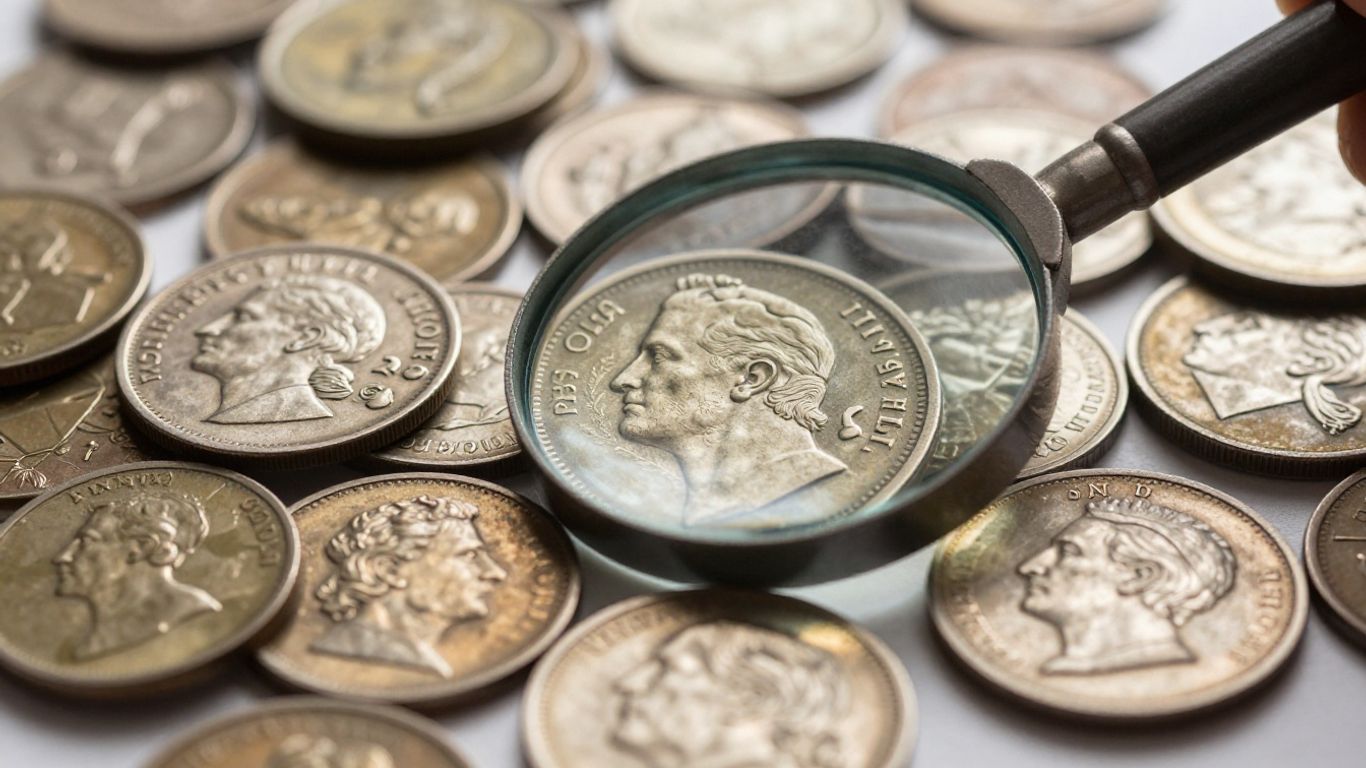
When you’re trying to figure out what a coin is really worth, it’s easy to get lost. There are so many things to consider, and not all information out there is equally helpful. That’s why sticking to reliable sources is a really smart move. It helps you get a clear picture without all the guesswork.
U.S. Mint As A Reliable Resource
The United States Mint is a good place to start. They are the official source for information about coins produced in the U.S. While they don’t typically provide market values for older coins, they offer definitive details on coin specifications like metal content, weight, and dimensions. This information is foundational for understanding a coin’s intrinsic value, especially for precious metal coins. Knowing the exact composition helps in calculating melt value, which is a baseline for many coins.
Utilizing Price Guides For Accurate Valuations
Price guides are incredibly useful tools for collectors. They compile data from various places, like dealer advertisements, auction results, and sales records. This gives you an idea of what similar coins have been selling for recently. It’s not an exact science, as prices can change quickly, but it’s a solid reference point.
Here’s a look at what these guides often consider:
- Rarity: How many of these coins were made, and how many are still around?
- Condition: The state of the coin, from its original mint luster to signs of wear.
- Demand: How many collectors are actively looking for this specific coin?
- Historical Significance: Does the coin represent an important event or era?
Price guides are snapshots in time. They reflect current market conditions and can fluctuate based on economic trends and collector interest. Always cross-reference information from multiple guides if possible.
The Importance Of Expert Input
Sometimes, especially with rare or high-value coins, you need more than just a price guide. Getting an opinion from a professional numismatist or a reputable coin dealer can be very helpful. These individuals have years of experience and a deep understanding of the market. They can spot details that might be missed and provide a more precise valuation. Many grading services also offer opinions on authenticity and condition, which adds another layer of confidence when assessing a coin’s worth.
The Evolving Landscape Of Coinage
The way we use money is changing, and that definitely includes coins. Think about it: how often do you actually pull out change for a purchase these days? More and more, we’re tapping our phones or swiping cards. This shift towards digital transactions is making us rethink what physical coins are for and how we should make them.
Proposed Reforms in Coin Production
Because the cost of metals goes up and down, and everything else seems to get more expensive too, it’s now costing more to make some coins than they’re actually worth. This is a bit of a head-scratcher, right? To deal with this, there have been ideas floating around for a while now about changing what coins are made of. The goal is to find cheaper materials that still work for minting and keep people happy with the currency. For example, there’s been talk about changing the mix of metals in nickels because the price of nickel itself has really jumped.
- Altering metal compositions: Using less expensive alloys for coins.
- Streamlining minting processes: Finding more efficient ways to produce coins.
- Adjusting production volume: Making fewer coins if demand is dropping.
The economic reality of coin production means that sometimes the cost to mint a coin is higher than its face value. This situation forces a look at potential changes to keep currency practical and affordable.
Impact of Digital Transactions on Physical Coins
As more people use digital payments, the need for physical coins in everyday spending goes down. This affects how many coins the U.S. Mint needs to produce. If fewer people are using coins, especially for small purchases, the Mint might shift its focus. They could concentrate on making coins that are still needed for specific things, like vending machines, or perhaps reduce the overall number of coins made. It’s a balancing act between keeping the system running and not spending too much money making something that isn’t used as much.
Alternatives to Traditional Coinage
Beyond just digital payments on phones, there are other ways money is moving around that don’t involve physical coins. Think about online banking, payment apps, and even the idea of digital currencies. These methods are often quicker and can be more convenient for many people. While coins aren’t going away overnight, these alternatives are definitely shaping the future. It makes you wonder what coins will look like, or even if they’ll be around in the same way, a few decades from now. The continued rise of digital payment methods is a significant factor influencing the future of physical coinage.
Numismatic Investment: Risks And Rewards
Potential for High Returns in Rare Coins
Investing in coins can be pretty exciting, especially when you think about the possibility of making a good return. Rare coins, in particular, have a history of increasing in value over time. Think about it – some coins are so hard to find that collectors will pay a premium just to add them to their collection. This isn’t like putting money in a savings account; it’s more about finding those special pieces that have a story and a scarcity that drives their worth up. It’s not guaranteed, of course, but the potential is definitely there for those who know what to look for.
Tangible Link to History and Culture
Beyond just the money aspect, coins offer something really unique: a connection to the past. Holding a coin that’s decades or even centuries old is like holding a piece of history. These aren’t just bits of metal; they represent different eras, events, and cultures. For many collectors, this historical significance is a huge part of the appeal. It’s a way to own a physical piece of our shared story, something you can see and touch, which is pretty cool in our increasingly digital world.
Understanding Investment Risks
Now, let’s be real, no investment is without its downsides, and coins are no exception. The value of a coin can swing quite a bit depending on what’s happening in the market. Things like how rare a coin is, its condition (that’s where grading comes in), and how many people want it all play a big role. If you buy a coin that’s not as rare as you thought, or if its condition isn’t great, you might end up losing money. It’s important to do your homework and understand these risks before you jump in.
Here are some things to keep in mind:
- Market Fluctuations: Coin prices can change based on economic conditions and collector trends.
- Grading Accuracy: An improperly graded coin might not be worth what you paid for it.
- Liquidity: Selling a coin might take time, especially if it’s a very specialized piece.
- Counterfeits: Sadly, fake coins exist, so authenticity is key.
Investing in numismatics requires patience and knowledge. It’s often best viewed as a long-term strategy rather than a get-rich-quick scheme. Understanding the factors that influence a coin’s value, like its rarity, condition, and historical context, is key to making sound decisions.
Factors Driving Coin Demand
Collector Popularity and Trends
Coin collecting, or numismatics, is a hobby with a long history, and like any interest group, collectors have their favorite series and types of coins. Sometimes, a particular coin or series becomes really popular for a while. This can be due to a few things. Maybe the U.S. Mint releases a special series of quarters with different state designs, and suddenly everyone wants to collect them all. Or perhaps a historical event sparks renewed interest in coins from that era. These waves of popularity can significantly boost demand for specific coins, making them harder to find and driving up their prices. It’s not just about the coin’s age or rarity; it’s also about what’s currently catching collectors’ eyes.
Influence Of Special Designations
Coins aren’t just made of metal; they’re also pieces of art and history. When a coin has a special design, a unique mint mark indicating where it was made, or even a small error during production, it can become much more desirable. Think about coins that commemorate important anniversaries or feature famous figures. These special features set them apart from regular circulation coins. Even minor variations in the design or striking process can turn an ordinary coin into a sought-after item for collectors looking for something unique to add to their collection. It’s these little details that often make a big difference in how much a coin is wanted.
Economic Climate And Investment Interest
Sometimes, people look at coins not just as collectibles but as investments. When the economy is doing well, people might have more disposable income to spend on hobbies like coin collecting. On the other hand, during uncertain economic times, some people might see tangible assets like rare coins as a safer place to put their money compared to stocks or bonds. This can increase demand from investors looking for stability. However, it’s a bit of a balancing act; if the economy is really struggling, people might cut back on non-essential spending, including collecting. So, the overall health of the economy plays a big role in how much people are willing and able to spend on coins, both for enjoyment and as a potential investment.
The desire for coins is a mix of passion and practicality. Collectors seek beauty and history, while investors look for value and security. Both contribute to the market, creating a dynamic environment where a coin’s worth can shift based on what people are looking for at any given time.
The Significance Of Coin Grading
Standardized Scales For Condition
When you look at a coin, its physical state is a big deal. That’s where grading comes in. Think of it like a report card for coins. Professional grading services use a set of rules to describe how worn a coin is, how well it was made, and if it has any marks or damage. This helps everyone talk about coins in the same way. The most common system goes from 1 (Poor) all the way up to 70 (Mint State), with lots of steps in between. A coin that looks almost perfect, like a 65 or higher, is usually worth a lot more than one that’s seen better days.
Assurance Of Quality And Authenticity
Getting a coin graded by a well-known company does more than just tell you its condition. It also acts as a stamp of approval. These services check if the coin is real and if it’s been tampered with. This is super important because there are a lot of fake coins out there. When a coin has a grade from a trusted source, buyers feel more confident they’re getting what they pay for. It cuts down on the guesswork and the risk involved in buying or selling.
Impact Of Graded Coins On Market Prices
It’s pretty clear that graded coins tend to sell for more than similar coins that haven’t been graded. Why? Because that professional grade gives buyers peace of mind. They know exactly what they’re getting. This standardized assessment makes it easier for people to compare prices and agree on a fair value. So, if you’re looking to sell, getting your coins professionally graded can really make a difference in the price you get. It’s an investment that often pays off.
- Higher Grades Mean Higher Prices: Coins in better condition (higher grade numbers) are generally more desirable.
- Authenticity Matters: Grading services verify that a coin is genuine.
- Market Confidence: Graded coins reduce risk for buyers, leading to stronger sales.
- Consistency: A standardized grading scale allows for easier price comparisons.
The condition of a coin is a primary driver of its numismatic worth. Professional grading provides a universally recognized standard, simplifying transactions and building trust within the collecting community. This objective assessment helps to align buyer and seller expectations, ultimately influencing market prices.
Understanding Numismatic Value Beyond Face Value
When you first look at a coin, you see its face value – that’s the amount printed right on it, like a quarter being worth 25 cents. But for collectors, that’s just the starting point. The real worth, what we call numismatic value, goes way beyond that. It’s about all the other things that make a coin special and sought after.
Defining Numismatic Value
Numismatic value is essentially the worth a coin holds for collectors and investors, separate from its official denomination. Think of it as the price a coin can fetch in the market based on its desirability, not just its stamped worth. This value is shaped by a mix of tangible and intangible qualities.
Scarcity and Its Impact on Worth
One of the biggest drivers of numismatic value is how rare a coin is. If only a small number of a particular coin were ever made, it’s naturally going to be more interesting to collectors than one that’s incredibly common. Low mintage numbers are a big deal here. For example, a coin from a year with a very limited production run, especially if it’s in good shape, can be worth hundreds or even thousands of times its face value.
Here’s a simple way to look at it:
- Very Common Coins: Often worth only slightly more than face value, if anything.
- Scarce Coins: Can be worth 10x to 100x face value, depending on condition and demand.
- Rare Coins: May command prices hundreds or thousands of times their face value.
The Role of Variations in Coin Production
Sometimes, even within a single year’s production, there can be small differences that make a coin much more valuable. These are called variations or errors. Maybe a die was slightly different, or there was a minor mistake during the minting process. These little quirks can make a coin stand out. For instance, a specific mint mark (like a ‘D’ for Denver or ‘S’ for San Francisco) might be missing or doubled, or there could be an unusual strike. Collectors often hunt for these specific varieties because they are less common and add a unique challenge to building a collection.
The history behind a coin, its condition, and how many others like it still exist all play a part in its true worth. It’s not just about the metal it’s made of or the number stamped on it; it’s about its story and its place in the world of collecting.
Wrapping Things Up
So, we’ve looked at why making coins costs more than they’re worth sometimes, and how things like metal prices and how they’re made play a big part. It’s interesting to see how the government makes a little money on each coin, called seigniorage, but that can disappear if costs get too high. Things like vending machines and what people actually use also affect whether certain coins keep getting made. It seems like we might see some changes down the road, maybe with different metals or even more digital money. It’s a lot to think about when you just pull a coin out of your pocket, isn’t it?
Frequently Asked Questions
What makes a coin valuable beyond its printed value?
A coin’s worth can be much more than what’s printed on it. This extra value, called numismatic value, comes from things like how rare it is, how many people want it, its historical importance, and if it has any unique errors or variations from when it was made. Think of it like a collectible trading card – some are common, but others are super rare and worth a lot more.
Why does it sometimes cost more to make a coin than it's worth?
It’s true, the cost of materials like metal, plus the process of making the coin, can sometimes add up to more than the coin’s face value. This happens especially with lower-value coins like pennies and nickels. Governments often keep making them because people need them for everyday shopping and for machines like vending machines, even if it costs a bit more to produce them.
How does rarity affect how much a coin is worth?
Rarity is a big deal in coin collecting. If there are only a few of a certain coin in existence, it becomes much more desirable to collectors. This high demand for a scarce item naturally drives up its price. Coins made in very small numbers, or those that were lost to time, are often the most sought-after.
What is coin grading, and why is it important?
Coin grading is like giving a coin a report card on its condition. Experts look at things like wear and tear, how well it was made, and its overall appearance. A standardized grading system, often on a scale from 1 to 70, helps everyone agree on a coin’s quality. A higher grade usually means a higher value because the coin is in better shape and is more authentic.
Are historical coins always more valuable?
While historical significance can add a lot of value, it’s not the only factor. A coin’s worth is usually a mix of its history, how rare it is, its condition, and how many people want to collect it. A very old coin might not be worth much if tons of them were made and they’re all in poor condition. But if it’s old, rare, and in great shape, its historical connection can make it extremely valuable.
Where can I find reliable information about coin values?
It’s smart to check trusted sources. The U.S. Mint website offers official information. You can also use price guides from reputable grading services like PCGS or NGC, which show average prices based on recent sales and expert opinions. Talking to experienced coin dealers or appraisers can also give you valuable insights.
Can the economy affect the value of coins I collect?
Yes, the economy can definitely play a role. When the economy is doing well, people might have more money to spend on hobbies like coin collecting, increasing demand and prices. Sometimes, people even see rare coins as a safe place to put their money when other investments seem risky, which can also boost their value. On the flip side, tough economic times might mean less interest in collecting.
What is 'seigniorage' and how does it relate to coins?
Seigniorage is basically the profit the government makes from creating money. It’s the difference between the cost of producing a coin and its face value. For example, if it costs 10 cents to make a quarter, the government makes 15 cents in seigniorage. This profit helps fund government services without needing to raise taxes.