
Key Takeaways
Understanding the world of error coins provides a unique perspective on the production process of modern currency and offers exciting possibilities for numismatic discovery. By recognizing the telltale signs of these errors, collectors can better assess the value and authenticity of pieces in their collections.
- Mirror image brockages result from a planchet striking a previously ejected coin.
- These errors appear as incuse, reversed impressions on one side of the coin.
- Authentication requires close inspection of design depth and surface metal displacement.
- Collectors should prioritize professional certification services to confirm the validity of their finds.
- Proper archival-quality storage is essential to prevent degradation of the unique surfaces.
The mechanics of mirror image brockage errors
Many collectors find the production process of error coins to be an intriguing aspect of numismatics, showing where mechanical failures occur during high-speed minting. Understanding the movement of metal under force helps reveal why these artifacts appear so unusual and distinct from standard circulating currency. The creation of such an error requires a specific series of malfunctions within the collecting coin error landscape.
The minting process and planchet feeding
The minting process relies on a precise sequence of feeding planchets into a striking chamber where they are hit by two opposing dies. When everything functions perfectly, the coin is ejected after the strike, allowing the next blank planchet to move into position immediately. If a system failure causes a piece to remain instead of falling out, it creates a dangerous mechanical obstruction for the cycle that follows.
How a struck coin produces a mirror image
A wayward piece trapped between the upper and lower dies effectively acts as a ghost die for the next blank planchet. As the fresh planchet is struck, it is not merely being shaped by the hardened steel dies; it is being stamped by the previous coin that has been forced into its surface. This results in the stamped mirror image imprint that defines the classic brockage appearance, creating an incuse design that is the exact reverse of the normal relief.
Differentiating between full and partial brockage types
Distinguishing between degrees of impact helps collectors understand how far the error progressed inside the press. A full brockage typically happens when the obstruction fully covers the surface, whereas partial variants show only a portion of the mirror effect.
| Type of Brockage | Surface Coverage | Visual Characteristics |
|---|---|---|
| Full | Entire face | Uniform incuse mirror impression |
| Partial | Less than 50% | Overlapping design elements |
| Off-Center | Edge deviation | Distorted and shifted relief |
These variations indicate the degree of physical collision that occurred during the brief window of the strike, offering insight into the specific timing of the mechanical fail.
Identifying authentic mirror image errors
Verifying these pieces requires careful observation of the incuse details to ensure they were created by a high-pressure collision rather than manual tools. Because of their high value, enthusiasts often rely on error coin resources to learn how to distinguish genuine errors from post-mint damage. Authenticity is often confirmed through microscopic examination of the way metal flows within the mirror features.
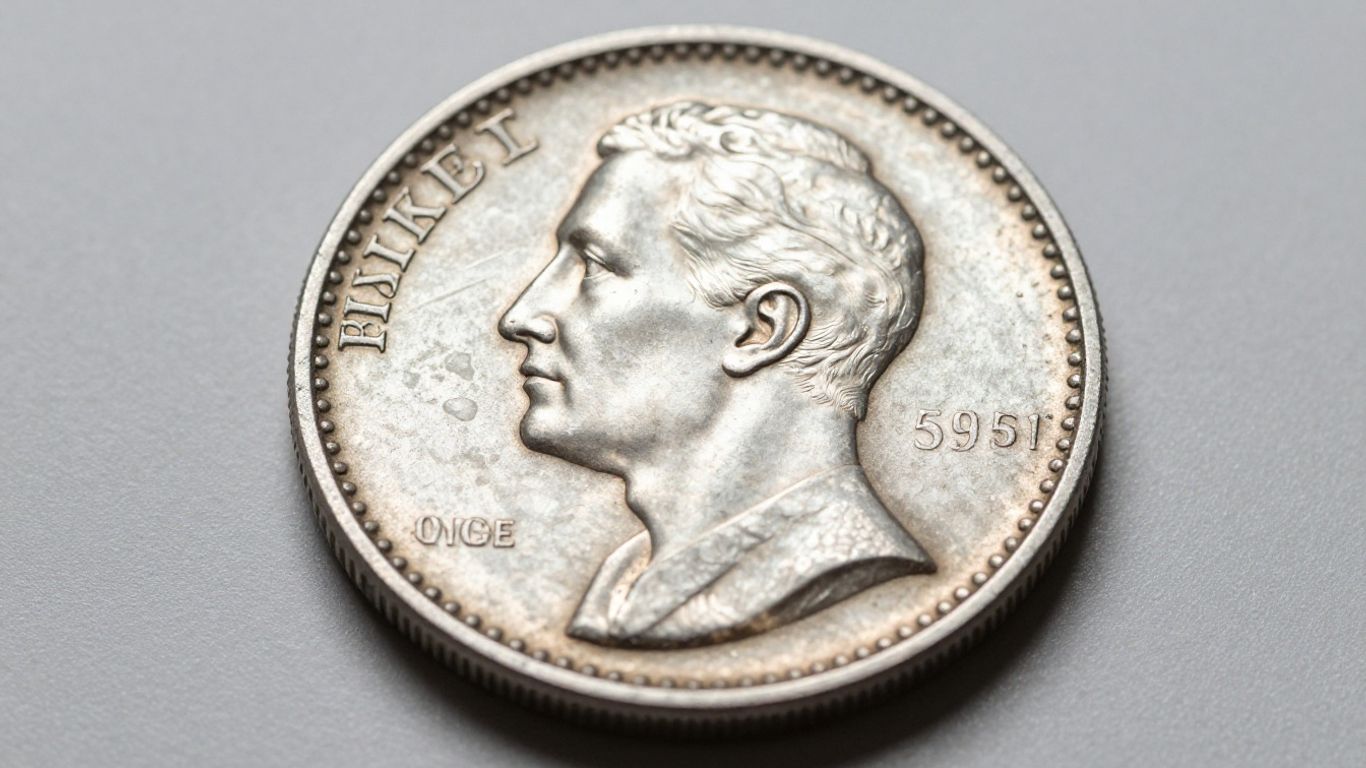
Visual markers of a genuine mint error
A true mirror image error shows natural, fluid metal displacement around the incuse devices. Unlike hand-engraved alterations, the pressure of a die strike forces the metal into the deep, reflective impressions characteristic of legitimate errors. Researchers often look for the correct orientation, where individual letters appear backwards and the central portrait features are sunken, not raised.
Comparing detail clarity and surface impressions
When evaluating a piece, consider the crispness of the border and the depth of the incuse fields. Genuine errors exhibit uniform pressure across surfaces, mimicking the weight and strike intensity of the authentic dies used during the original minting run. If the details look inconsistent or shallow, it may suggest the piece has been manipulated or simulated by an artist attempting to replicate the look of a premium error.
Risks of altered coins and artificial indentations
Investors must remain cautious of counterfeiters who use manual punches to create artificial impressions on standard coins. These forgeries often display tool marks or unnatural metal flow that fails to align with the laws of physics found in high-tonnage coin presses. Comparing suspect coins against known examples certified by CACG label services provides a baseline for evaluating surface treatments and strike depth.
Factors influencing the numismatic value
Not every error carries the same level of interest, and some factors are more critical than others when evaluating potential market price. A major driver of value involves how successfully the mirror image depicts the original subject and whether the strike was centered.
Determining the impact of the subject's portrait
The most desirable error pieces are those where the portrait remains recognizable in its mirror form. If the features of the portrait are clearly defined and the incuse impression is not heavily obscured by subsequent damage, the market demand significantly increases among serious collectors.
The role of surface grade and strike depth
Surface quality is paramount when assigning a grade to these pieces. The depth of the mirror strike needs to be significant enough to leave a lasting mark without rendering the surface fragile. High-grade examples often show:
- Sharp, cleanly defined incuse lettering.
- Minimal post-strike surface abrasions.
- Lustrous original mint surfaces.
- Excellent clarity on the non-errored side.
These characteristics ensure that the piece retains its aesthetic appeal and structural integrity over time, which are key to maintaining long-term curiosity.
Assessing rarity by denomination and date
Certain dates and denominations provide more history, which naturally commands higher prices at public auctions. A coin that combines a unique error and a historically significant production year can be seen as a crown jewel in many displays, particularly when that coin is well-documented in registries.
The value of a rare error is inextricably linked to the scarcity of the strike, the visual quality of the mirror impression, and the documented success of similar specimens in previous high-end auctions.
These factors combine to form the overarching narrative that professional collectors use when setting their bids.
Proper handling and storage techniques
Protecting these unique errors requires a shift in approach compared to standard circulation coins, as the surface is often more prone to damage. Using the wrong materials can introduce long-term contamination that permanently alters the appearance of the incuse mirror surface.
Selecting inert holders to prevent corrosion
Using archival-safe holders, such as PVC-free plastic capsules, ensures that the surface of the coin does not react with the environment. Inert materials are non-negotiable for collectors who aim to keep the original luster intact for future generations, as chemical leaching from lesser plastics creates green residue.
Minimizing environmental exposure and damage
Consistent storage temperatures and low humidity are crucial for avoiding any oxidation or toning that might obscure the mirror image. Keep the coins away from direct sunlight and areas where humidity fluctuates, as moisture can lead to microscopic pitting inside the incuse areas that are especially hard to clean.
Importance of professional coin encapsulation
Submitting pieces to reputable services ensures they remain protected. Professional holders are hermetically sealed against atmospheric contaminants, providing a clean environment that preserves the error’s state while offering a verified label that makes the piece easier to track or transfer.
Navigating the error coin market
Entering the market for these errors requires a level of diligence that pays off when building a curated portfolio. Understanding how to interpret market trends and knowing where to source verified items helps mitigate the risk of purchasing misrepresented pieces.
Finding verified dealers and reputable auction houses
Working with established dealers who specialize in mint errors is the safest way to find authentic specimens. These professionals often hold a deep understanding of historical error registries and are familiar with the specific technicalities that define a legitimate mirror strike.
Understanding certification labels from grading services
Certification labels confirm that a professional numismatist has evaluated the error and agreed it represents a mint-made anomaly. Labels from reputable third-party graders are the standard metric for the industry because they provide an objective analysis of the coin’s condition and the error type before it ever hits the auction block.
Common pitfalls for new error coin investors
New investors occasionally focus too heavily on price while overlooking the necessity of independent certification. Skipping the authentication process can lead to acquiring common pieces that have been mislabeled or, worse, items that were damaged after they left the mint. Always prioritize historical verification over a seemingly attractive bargain.
Conclusion
Collecting mirror image errors offers a profound look into the intricate mechanics of the minting process, transforming simple pocket change into a record of mechanical history. By mastering identification techniques, utilizing proper protective measures, and engaging with established professional services, collectors can confidently build a collection that reflects the fascinations of this distinct numismatic niche.
Frequently Asked Questions
What causes a coin to strike another coin during production?
This usually happens when an already struck coin fails to eject from the collar after the press hits it, causing it to become trapped between the dies and the next blank planchet.
How can I distinguish between a mirror brockage and a normal coin?
A mirror brockage will display an incuse and reversed version of a design, whereas a normal coin features raised relief designs on both the obverse and reverse sides.
Are all mirror image error coins valuable?
While all are interesting, value varies greatly based on the quality of the error, the date of the coin, the denomination, and the overall state of preservation of the strike.
Can cleaning a brockage coin damage its value?
Yes, cleaning or attempting to polish the incuse surfaces can remove original mint luster and leave permanent scratches, which significantly reduces the market attractiveness and financial worth.
Should I store my mirror image errors differently than regular coins?
Storage principles are similar, but because the mirror detail is often quite fragile and prone to gathering dust, using high-quality inert holders is even more critical.
Are there specific denominations where these errors appear more often?
While they can appear on any denomination, they are commonly reported on cents due to the high volume of production at various mint facilities across the country.
Is an incuse mirror image the same as a die cap?
A die cap is the coin that has stuck to the die and is causing the error, while the brockage is the subsequent coin that has been stamped by that stuck piece.