
Key Takeaways
Collecting coins with die imperfections allows numismatists to own unique pieces of production history that deviate from standard specifications.
- Die cracks result from the inevitable wear and structural fatigue of minting dies under immense pressure.
- Minor cracks are frequent, but varieties showing significant metal displacement are sought after for their rarity.
- Proper attribution requires comparing found specimens against established variety catalogues and high-resolution images.
- Magnification is essential, as the most subtle characteristics can distinguish a common coin from a valuable error.
- Market interest for these items fluctuates based on technical rarity, series popularity, and proven collector demand.
Understanding die dynamics
How die cracks form during minting
During the high-speed minting process, dies are subjected to immense tonnage to strike thousands of coins. Over time, the steel of the die experiences fatigue, leading to fine fractures on the working face. When a planchet is struck by this weakened tool, the metal flows into these microscopic fissures, creating a raised line of metal on the finished coin surface.
Difference between die cracks and planchet flaws
It is vital to distinguish between true die-related errors and damage incurred by the planchet itself. A die crack is a raised feature on the coin because it represents metal pushed into a void, which is a consistent indicator of Variety Vista documentation standards. Conversely, planchet flaws—such as clips or laminations—are typically recessed into the coin’s surface or represent missing material rather than added relief.
Why the mint allows cracked dies to stay in circulation
Mint officials prioritize production volume and efficiency over absolute aesthetic perfection. Consequently, unless a die has degraded to a point that threatens the structural integrity of the coinage, it remains in service until the scheduled maintenance cycle. This pragmatic approach leads to the wide distribution of varied strike states that current collectors analyze today.
Common types of major crack varieties
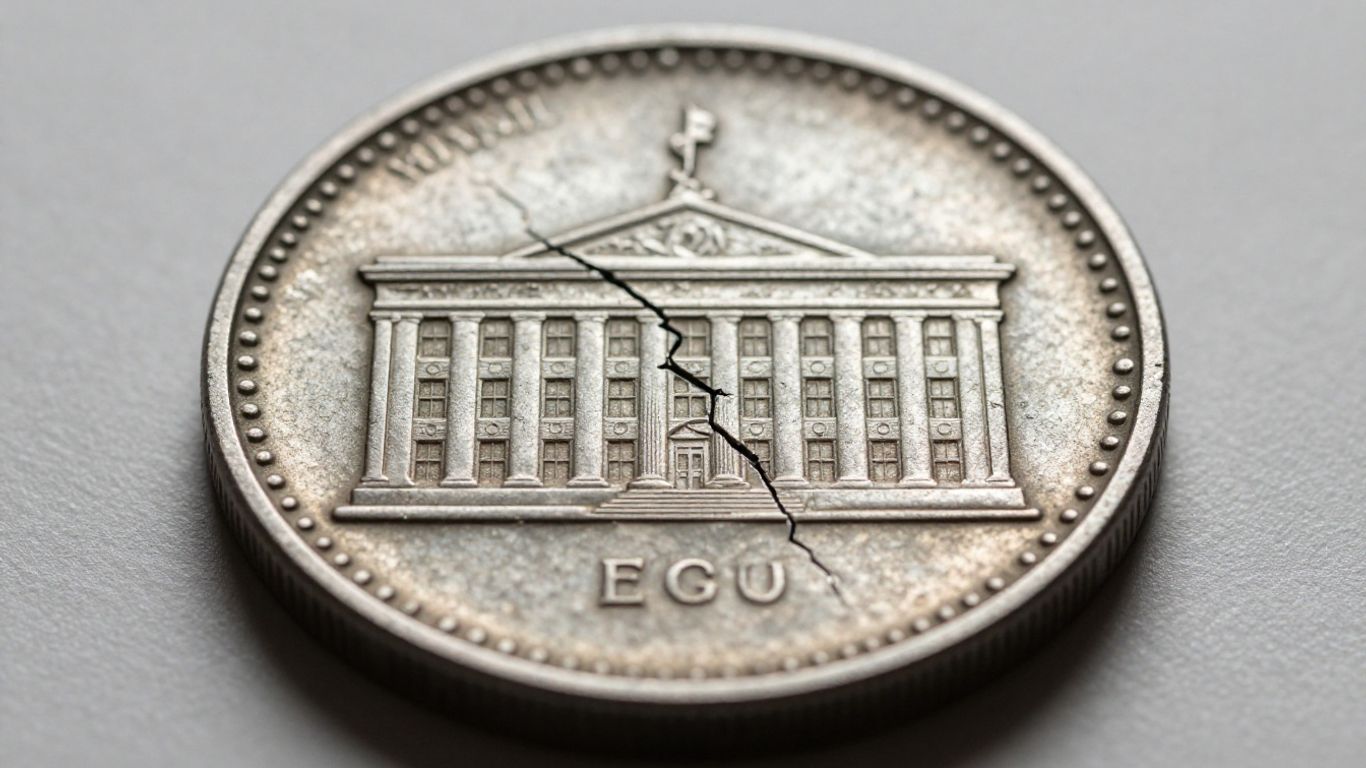
Major crack varieties are categorized by the extent of die damage sustained during the production run. These stages reflect the progressive degradation of the tool, ranging from simple hairline fractures to catastrophic failures that reshape the coin’s design elements. Understanding these categorizations helps hobbyists differentiate between common production variations and notable numismatic anomalies.
The early stage: hairline cracks
Early-stage cracks often appear as singular, fine lines near the devices or legends. These are common and generally reflect the initial sign that a die is beginning to tire under the mechanical stress of striking.
The advanced stage: retained die breaks
As the die continues to strike planchets, those hairline fractures typically widen and branch outward. In these instances, the metal becomes a retained die break, which effectively displaces surface design elements while remaining attached to the die body. The following table illustrates the typical progression of these issues:
| Stage | Description | Visibility |
|---|---|---|
| Hairline | Faint raised line | Requires 5x magnification |
| Retained | Noticable branch lines | Visible to naked eye |
| Cud | Significant metal blob | Readily apparent to observer |
Collectors often seek out these mid-range stages because they represent a clear, observable departure from the intended design without the complete obfuscation found in later, more damaged die states.
The extreme stage: cuds and missing die pieces
When a section of the die face breaks off entirely, the resulting defect is known as a cud. This leaves a smooth, raised area of metal where the design element should be, a phenomenon familiar to those following studies by CONECA. These represent the final useful life of a die before it is retired.
Identifying valuable crack varieties
Key indicators of high-demand errors
Collectors hunt for significant and visually distinct errors that alter the perception of the coin’s design. The most valuable pieces usually involve instances where the crack significantly obscures legends or interacts with major portraits, increasing the visual "personality" of the error.
Using magnification and lighting to grade cracks
To properly evaluate these pieces, you must utilize high-quality lighting at various angles to highlight the relief of the crack against the flatter fields. Using a jeweler’s loupe allows for precise inspection of the crack edges, which helps in identifying if the variation is a genuine die strike or a post-mint manipulation.
Researching specific series with known crack patterns
Diligent research is the hallmark of a successful error collector. You should focus on narrowing your collection to specific series like the Lincoln cent or Morgan dollars, where Jim’s Coins and Stamps has identified numerous verified plate matches. You can track known die states by following these steps:
- Review online variety indices for your chosen series.
- Cross-reference the location of the crack with listed photos.
- Verify the die state of your specimen against known examples.
- Document the specific mint mark and year to confirm rarity.
Following this systematic approach ensures that you are gathering specimens that hold genuine numismatic merit rather than random, uncatalogued die wear.
Documenting and authenticating your findings
Step-by-step photography for error attribution
Capturing the minute details of a die crack requires a steady camera and a macro lens set to a high depth of field. Ensure that your lighting is indirect to prevent harsh glares, as you want to showcase the depth of the raised metal line. Consistent photo sets allow others in the community to verify your findings accurately.
Using professional grading services for mint errors
For high-value or highly unusual crack varieties, professional grading is your most reliable path toward validation. These services provide expert opinions that standardize the condition and variety, which significantly influences market liquidity and future value for your collection.
The importance of cross-referencing variety guides
Never rely on visual similarity alone when attributing a major crack variation. Always cross-reference your find with reputable literature, such as Liberty Seated Dime variety guides, to ensure the die marriage matches the documented error state.
Market trends in die crack collecting
Factors influencing collector interest and value
Market demand is primarily driven by the drama of the error. A crack that traverses a major portrait or motto will almost always command a premium over a crack situated in the open field, as the former provides a more immediate, visually striking impact for the collection.
Avoiding counterfeit or altered coins
Because of the potential for premium prices, some bad actors attempt to create artificial cracks using tools to scratch the coin surface. By learning the physical characteristics of metal displacement versus surface abrasion, collectors can protect their investments from these fraudulent attempts.
Building and maintaining an error coin collection
Start your journey by participating in online forums and local clubs to learn which errors are currently gaining traction. As you curate your collection, focus on quality over quantity, ensuring each piece is housed in archival-safe materials to prevent environmental damage over time.
Conclusion
Finding and preserving major crack varieties coins offers a profound way to connect with the mechanical history of the minting process. By understanding how these fascinating anomalies form and treating your collection with the care it deserves, you secure a piece of numismatic history that is truly unique among standard sets.
Frequently Asked Questions
Do all die cracks increase the value of a coin?
Most minor die cracks on common business-strike coins are considered manufacturing variations and do not significantly add to a coin’s base value.
What is the difference between a cud and a die crack?
A die crack is a thin, raised line resulting from a fracture, whereas a cud is a larger, featureless raised blob caused by a missing piece of the die.
Can die cracks appear on proof coins?
Yes, although they are much rarer on proof issues since the minting process for proof coins is strictly controlled and die states are monitored more carefully.
Should I clean my coins with die cracks?
No, cleaning your coins will cause permanent damage to the surface, which will destroy the numismatic value of the specimen and make it harder to authenticate.
How do I store my error coins?
You should store your error coins in high-quality, archival-safe flips or holders made of inert plastics that will not off-gas or corrode the metallic surface.
Where can I find a list of known die cracks?
Numismatic clubs and specialty error-collecting organizations provide comprehensive online databases and physical reference books listing confirmed die variety types.
What tools do I need to inspect my coins?
A strong magnifying glass, such as a 10x jeweler’s loupe, and high-intensity, directed lighting serve as the essential starting kit for any collector.