
Key Takeaways
Understanding the condition of a coin’s surfaces helps you identify its true rarity and condition. Key factors include luster, flow lines, and the absence of surface damage.
- Fields represent the background area of a coin distinct from the primary design.
- Luster is created by the friction between metal and die during the striking process.
- Harsh cleaning or improper handling leaves microscopic hairlines that lower market value.
- Proof-like finishes reflect light differently due to highly polished die preparation.
- Specialized tools and directional lighting are essential for accurate surface grading.
The basics of coin fields
Coin fields contribute significantly to the overall eye appeal and technical grade of numismatic specimens. They serve as the backdrop for the central design elements, being generally smooth and untouched by the intricate relief of the portraits or lettering. Evaluating these open spaces provides immediate clues into how the coin was handled throughout its existence.
Defining the field area on a coin
The field refers to the flat, open expanse of the coin surface not occupied by the main design or legends. On a well-struck piece, this area should be uniform and free from distracting obstructions, allowing the observer to focus on the craftsmanship of the relief elements above it. Experienced collectors look for a consistent planes that reflect light evenly across the entire surface.
The distinction between primary design elements and fields
Primary design elements, such as the portrait or date, are raised from the background and receive the full force of the striking pressure. The fields, by contrast, act as the negative space that provides contrast or balance. Maintaining a distinction between these two zones is paramount when evaluating the strike quality, as deep recesses are often the first to show weakness.
Why eye appeal depends on field consistency
A coin with immaculate fields often commands higher premiums due to the scarcity of high-grade examples. When you examine field surface quality coins, the uniformity of the field surface becomes the critical background stage for judging the overall aesthetic finish. If the background contains unsightly marks or discoloration, the entire visual impact of the coin is diminished, even if the primary design elements appear otherwise perfect.
Understanding mint luster and flow lines
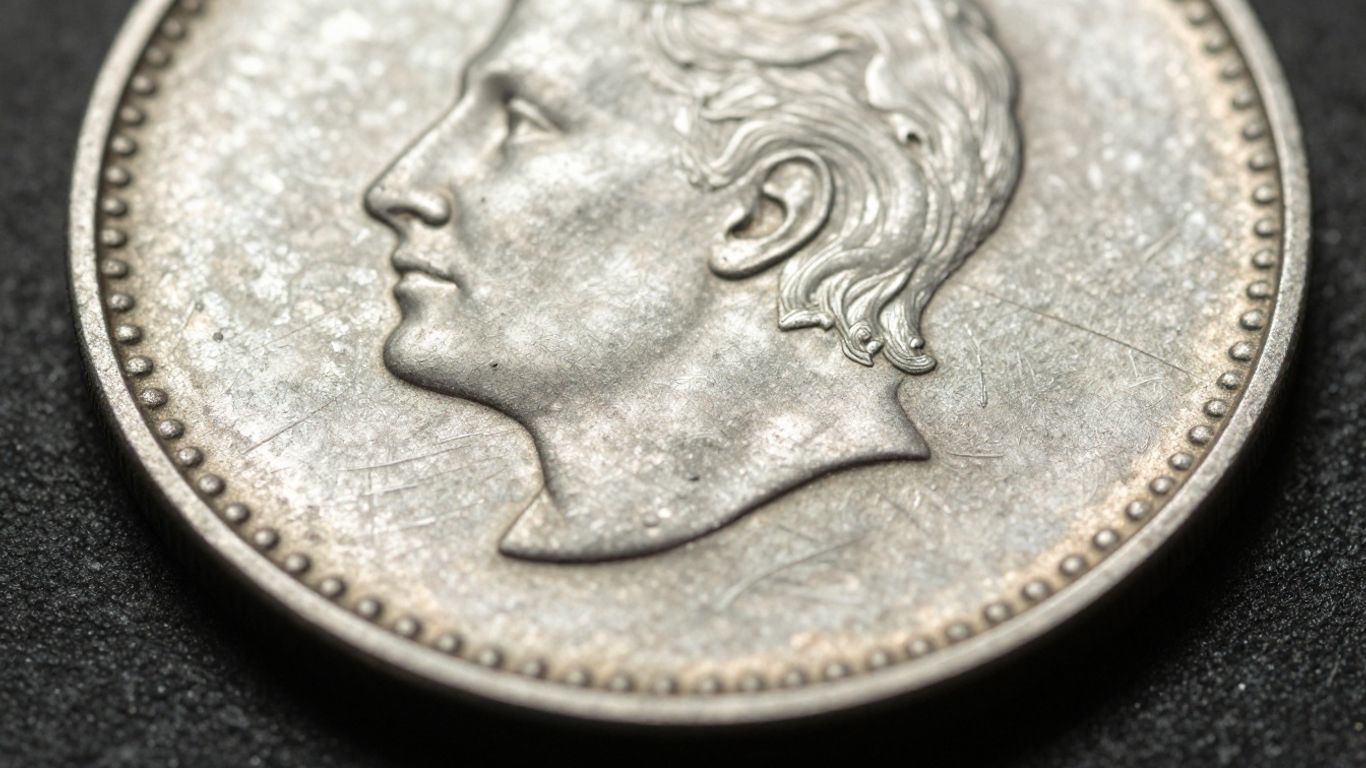
Original mint luster is perhaps the most difficult quality to replicate, acting as a fingerprint of the coin’s birth at the mint. When a planchet is struck, the metal flows outward from the center under immense pressure, stretching and compressing the surface. This physical movement results in a characteristic frost-like skin that reflects light in a unique, rolling pattern across the coin’s surface.
How die preparation impacts field texture
Die preparation dictates how effectively the surface will reflect light. When mint workers polish the dies, they leave behind tiny microscopic lines that influence the final look. We can categorize the resulting textures and their potential market impact as follows:
| Surface Type | Visible Texture | Reflectivity Level | Market Impact |
|---|---|---|---|
| Proof-like | Mirror-like | Very High | Premium |
| Frosty | Satin-like | Moderate | High |
| Dully Satin | Grainy/Flat | Low | Average |
These variations indicate how much attention was paid to the preparation of the die before it even struck the metal blank.
Identifying original luster versus artificial surfaces
Distinguishing original luster from chemically dipped or polished surfaces remains a vital skill. According to the Coin luster guide, original surfaces exhibit a lively, shifting glow under a light source, whereas artificial surfaces often appear flat or overly shiny. Collectors often study specimens like a Dirty Gold Coin™ to compare these luster characteristics against documented examples of original, circulated surfaces.
The role of microscopic flow lines in field reflection
Flow lines are the primary contributors to the cartwheel effect seen on uncirculated silver coinage. These subtle, microscopic trails occur as metal migrates into the recesses of the die, and they trap and reflect light in a way that hand-polishing cannot duplicate. Maintaining these delicate lines is essential for preserving the original state of the coin.
Common indicators of compromised field quality
Differentiating between normal wear and active damage requires a keen eye and disciplined light usage. While some surface marks are purely cosmetic, others indicate severe handling that fundamentally alters the desirability of the piece. Collectors should look for NGC Ancients standards to evaluate how surface marks and cleaning efforts have influenced the historical integrity of their collection.
Differentiating between bag marks and die-related flaws
Bag marks occur naturally when coins contact one another during the minting and storage process, resulting in distinct, shallow abrasions. Die-related flaws, however, appear as raised anomalies or cracks within the field, representing weaknesses in the stamping equipment. Distinguishing these types helps a collector assess whether the surface quality reflects intentional state or machine problems.
The impact of cleaning and hairlines on surface integrity
Cleaning is the most common cause of permanent surface damage, often leaving behind fine, parallel hairlines that destroy the original mint frost. Even mild scrubbing disrupts the delicate surface grain, causing an unnatural, dull appearance that is obvious to experienced graders. Once these surface hairlines appear, the original finish of the coin is effectively gone.
Detecting evidence of improper storage or environmental damage
Environmental damage, such as spotting or verdigris, can eat away at the surface grain over time when exposed to humidity or acidic materials. These issues create permanent stains or pitting in the field that cannot be corrected without further damaging the coin. Consistent storage in inert holders is the best way to prevent such degradation from taking hold.
Grading proof and proof-like coinage
Evaluating proof and proof-like coins requires a focus on reflective depth and contrast rather than typical mint frost. These specimens are struck from polished dies intended to create a mirror-like finish, which creates a very high standard for surface clarity. Understanding the nuance of these terms through a Proof-Like analysis helps collectors distinguish true high-end strikes from common business strikes.
Characteristics of deep-mirror proof-like fields
Deep-mirror proof-like coins display fields so reflective that they mirror nearby objects with sharp clarity. To earn this designation, the fields must pass rigorous observation where text or design features are clearly readable in the surface reflection. This glassy, liquid-like appearance is rare for business strikes and adds significantly to the grade of the coin.
How cameo contrast highlights field imperfections
Cameo contrast occurs when highly frosted devices stand out against the deep, dark fields of the coin. This interplay draws the eye directly to the fields, making any thin scratches, haze, or cleaning marks immediately noticeable to the viewer. When the contrast is high, even minor surface issues can break the illusion of the mirrored background.
Challenges in grading mirrored surfaces compared to matte finishes
Mirrored surfaces are far less forgiving than matte or circulation-finish coins. While a matte surface might naturally hide small abrasions or handling marks, the reflective nature of a proof field magnifies the slightest flaw. Consequently, grading these coins requires looking past the distraction of the "bright light" to verify the total integrity of the original metal.
Tools for inspecting coin surfaces
Inspection tools allow the collector to move beyond casual observation into methodical analysis of surface health. Utilizing these tools properly ensures that you capture every detail, whether checking for environmental damage or verifying original lustre. Following a proper Digital marketing agency approach to data is useful because it helps you prioritize your time during examinations, much like a systematic inspection process helps filter out surface noise.
Selecting the right magnification for surface examination
Choosing the correct magnification is essential for seeing the fine details without losing the overall context of the field. Many collectors use a standard 5x or 10x loupe to identify most surface issues. You should consider common steps for your inspection routine:
- Use a 5x loop to gauge overall surface luster and texture.
- Employ a 10x loupe for spotting fine hairlines or scratch depth.
- Keep a steady light source at a 45-degree angle to reveal recessed marks.
- Document findings immediately rather than relying on memory for later grading.
Following these established inspection habits will allow for a more objective assessment of field quality.
Using directional lighting to reveal surface breaks
Directional lighting is the single most important technique for highlighting hidden surface marks. By tilting the coin slowly under a single, direct light source, you can catch the glint of scratches that are otherwise invisible under straight-on illumination. This lighting method exposes the microscopic texture and separates the original luster from areas that have been polished or rubbed.
The role of digital imaging in assessing field quality remotely
Digital imaging has transformed the way collectors verify coin quality when they cannot see a specimen in person. By using high-resolution macro lenses, collectors can capture images that highlight specific surface zones, allowing for virtual consultation with experts. While not a complete replacement for in-hand examination, properly produced images allow for a much closer inspection of field topography.
Aesthetic impacts on market value
Surface quality serves as a primary driver of market value and collector interest. Collectors often utilize ANA grading standards to determine the baseline value of their holdings, balancing their own aesthetic preferences against the technical grade received from recognized services. This balance is an essential aspect of building a portfolio that stands the test of time.
How surfaces affect the perception of grade and premium
A coin with superior field quality can often jump a full point in eye appeal, significantly increasing the price it commands in the marketplace. Premium coins possess a synergy between high strike quality and pristine surface preservation that typical pieces lack. Ultimately, the way the light dances off the fields directly influences how buyers perceive the value of the object.
Balancing field quality against strike and eye appeal trade-offs
Collectors often have to decide between a coin with a perfect field but a weaker strike, or one with a strong strike but moderate field marks. Most advanced collectors prioritize original surface integrity over a slightly better strike. It is a pursuit of Authenticity in the collection, choosing specimens that retain the genuine character of their original minting over those that have been modified or overly cleaned.
Collector preferences for original versus polished surfaces
Most modern collectors heavily prefer original, untouched surfaces, even if they show minor contact marks from the minting process. Polished surfaces lack the natural mint skin and luster that provide the core beauty of a coin. Buying only original coins often requires patience and study, but it ensures that the specimen remains a true representation of the mint’s output.
Conclusion
Mastering the evaluation of field surface quality is a cornerstone of becoming a successful numismatist. By focusing on luster, identifying signs of handling, and utilizing the right tools, you can confidently distinguish between common pieces and truly exceptional rarities. Maintaining a commitment to original surfaces will preserve the long-term desirability and visual impact of your coin collection for generations.
Frequently Asked Questions
What represents a perfect field on a coin?
A perfect field refers to a flawless background with original mint luster intact, completely free from scratches, hairlines, or environmental corrosion.
Can cleaning a coin improve its field quality?
No, cleaning a coin universally damages its surface quality by removing original luster and leaving microscopic marks that permanently alter the finish.
Why do some coins show mirror-like fields?
Mirror-like fields are typically found on proof coins or those struck from highly polished dies, where the metal blank is smoothed to a high shine before the strike.
What are flow lines and how do they form?
Flow lines are microscopic surface tracks formed as metal squeezes into the die recesses under extreme pressure during the minting process.
Are there tools to fix scratched fields?
Professional restoration is possible for specific types of damage, but generally, there is no way to "fix" a scratched coin field without removing more surface metal, which typically lowers the grade.
How do bag marks differ from circulation wear?
Bag marks are specific, sharp dings caused by movement in storage containers, while circulation wear represents the gradual smoothing of high points due to extended commercial use.
Does surface quality matter for lower-grade coins?
Yes, surface quality always impacts value; even in lower-graded coins, an uncleaned, original surface is far more desirable than one that has been damaged or altered.