
Collecting coins can be a really rewarding hobby, connecting you with history and art. But, it’s not just about owning them; it’s about keeping them nice. Coins, especially the old or valuable ones, can get damaged pretty easily if you’re not careful with how you handle, store, or clean them. Knowing the right ways to look after your coins is a big deal if you want them to stay in great shape and hold their value. This article will walk you through the important steps to protect your coin collection, covering everything from how you touch them to where you keep them and how you clean them. Whether you’re just starting out or you’ve been collecting for a while, these tips should help you keep your coins looking good and worth something.
Key Takeaways
- Controlling the air’s moisture is super important for keeping coins from tarnishing and corroding. Aim for a humidity level between 30% and 50% to keep them safe.
- Keeping your coins in a stable temperature, away from heat and direct sun, stops them from changing color and getting damaged.
- Using the right holders, like acid-free flips, capsules, or certified slabs, stops coins from getting scratched and protects them from the air.
- Don’t clean your coins unless you absolutely have to. If you do, use gentle methods like distilled water and avoid anything abrasive, or get a professional to do it.
- Storing coins in sealed containers, separate from air and moisture, and monitoring the environment with tools like silica gel packs or dehumidifiers helps a lot.
Understanding Coin Storage Humidity Requirements
When it comes to keeping your coins in good shape, humidity is a big deal. It might not seem like much, but too much moisture in the air can really mess with your collection over time. Think of it like leaving metal out in the rain; it’s going to start to corrode. Coins are no different, especially older ones or those made from more reactive metals.
The Impact of Humidity on Coin Preservation
High humidity is a coin’s enemy. It creates a damp environment where oxidation and tarnish can really take hold. This isn’t just about looks; it can actually eat away at the metal, causing pitting and other damage that’s pretty much irreversible. Even seemingly minor fluctuations can contribute to long-term degradation. Over years, this can significantly reduce the value and historical integrity of your coins. It’s why keeping an eye on the moisture levels in your storage area is so important for any serious collector.
Ideal Humidity Levels for Coin Collections
So, what’s the sweet spot for humidity? Most experts agree that keeping your coins in an environment with relative humidity between 35% and 55% is best. Some might even suggest aiming for the lower end of that range, around 30-50%, to be extra safe. This range helps prevent both the excessive moisture that leads to corrosion and the overly dry conditions that can sometimes make certain materials brittle. Maintaining this balance is key to long-term preservation. For more details on environmental controls, you might find information on climate-controlled storage helpful.
Consequences of Excessive Humidity
If you let humidity get out of hand, you’re asking for trouble. The most common issue is the development of what collectors call ‘verdigris’ or ‘patina’ – but not the good kind. This is often a green, powdery substance that forms on copper and bronze coins due to oxidation. On silver coins, you might see dark spots or a dulling of the surface. In severe cases, this corrosion can become active and eat into the coin’s surface, causing permanent damage. It’s a slow process, but one that’s hard to stop once it starts.
Storing coins in areas prone to dampness, like basements or garages, is a common mistake that can lead to significant damage over time. The constant exposure to moisture accelerates the degradation process, turning a valuable piece of history into something that looks like pocket change.
To avoid these issues, it’s wise to consider using desiccants like silica gel packs or even a small dehumidifier if your storage space is particularly susceptible to moisture. These tools can make a big difference in protecting your collection from the damaging effects of high humidity. You can find more tips on controlling your environment by looking into humidity control methods.
Environmental Factors Affecting Coin Longevity
Beyond just humidity, several other environmental elements play a significant role in how well your coins hold up over time. It’s not just about keeping things dry; it’s about creating a stable, protected space for your collection.
The Role of Temperature Stability
Temperature fluctuations are a coin’s enemy. Think about it: when things get hot, they expand, and when they cool down, they contract. While this might seem minor, over years and years, these tiny shifts can stress the metal. More importantly, rapid temperature changes often go hand-in-hand with changes in humidity, creating a double whammy of potential damage. Keeping your coins in a consistently cool environment, away from heat sources like radiators, direct sunlight, or even electronics that generate warmth, is key. Attics and basements, often prone to extreme temperature swings, are generally not the best places for long-term coin storage.
Minimizing Exposure to Pollutants
Air quality matters more than you might think. Airborne chemicals, dust, and even everyday household fumes can react with the metal surfaces of your coins. Sulfur, often found in certain cleaning products or even in some types of paper and cardboard, is particularly notorious for causing tarnish and discoloration. Even seemingly harmless things like cooking fumes or smoke can leave deposits on your coins. The goal is to limit contact with anything that could chemically alter the coin’s surface. This is where good storage solutions, like sealed holders, really come into play, acting as a barrier against these airborne threats. Controlling climate in your storage area helps manage these pollutants.
The Dangers of Direct Sunlight
Direct sunlight is a triple threat to coins. First, it’s a major source of heat, contributing to those damaging temperature fluctuations we just discussed. Second, the ultraviolet (UV) rays in sunlight can cause fading and discoloration, especially on coins with colorful toning or those housed in certain types of plastic holders that aren’t UV-resistant. Third, if your coins are displayed in direct sun, the heat buildup can be significant. It’s best to keep your collection, whether in storage or on display, out of the sun’s direct path. This means positioning display cases carefully and avoiding windowsills or areas that get intense, prolonged sun exposure. For metal objects, controlling humidity is also a major concern, as moist environments accelerate corrosion. Relative humidity is a significant factor in metal degradation.
The cumulative effect of minor environmental stresses over long periods can lead to noticeable degradation in a coin’s condition. Stability in temperature, controlled air quality, and protection from light are not just suggestions; they are foundational practices for preserving numismatic items.
Selecting Appropriate Coin Storage Solutions
Choosing the right way to store your coins is a big deal. It’s not just about keeping them from getting lost; it’s about protecting them from all sorts of things that can mess them up over time. Think about it – coins might seem tough, but they’re actually pretty sensitive to things like air, moisture, and even the oils from your hands. Using the wrong storage can really bring down their look and, more importantly, their value.
Protective Holders and Capsules
For individual coins, especially those you want to keep in top shape, individual holders are a good idea. These can be made of different materials, but you want to make sure they’re "acid-free." This means they won’t react with the metal of the coin and cause it to discolor or corrode. Plastic flips are common, but some can break down over time. Better options include hard plastic capsules that fit snugly around the coin, offering a good barrier against the environment. For very valuable coins, these capsules provide a solid layer of protection.
Coin Albums and Binders
If you have a bunch of coins, maybe from a specific series or just a general collection, coin albums and binders are a popular choice. They let you organize everything neatly and make it easy to flip through and see what you have. Just like with individual holders, make sure the pages and pockets in these albums are acid-free. Some older albums might use materials that can actually harm your coins over the long haul. Look for albums designed specifically for coin collecting, often with sturdy plastic slides or pockets that keep each coin separate and protected. This method is great for keeping track of your collection and showing it off, but it might not offer the same level of airtight protection as sealed capsules.
Certified Slabs for High-Value Coins
When you have really valuable or rare coins, you might see them in what are called "certified slabs." These are special hard plastic cases that coins are put into after being graded by a professional service. The grading service authenticates the coin, determines its condition (its grade), and then seals it in this tamper-evident holder. This slab protects the coin from handling, environmental damage, and even counterfeiting. It’s the gold standard for preserving the condition and value of important numismatic items, making them easy to identify and secure. While they can be a bit bulky, they offer the highest level of protection and assurance for your most prized possessions.
Controlling Your Coin Storage Environment
Keeping your coins in good shape means paying attention to where you keep them. It’s not just about putting them in a box; you’ve got to think about the air around them. Too much moisture or big swings in temperature can really mess with your collection over time.
Utilizing Silica Gel Packs
Silica gel packs are small but mighty helpers for keeping humidity in check, especially in smaller, enclosed spaces like coin boxes or display cases. These little packets absorb moisture from the air. You can often recharge them by heating them up, which makes them reusable. Think of them as tiny sponges for the air around your coins. They are great for preventing that fuzzy green or white buildup that can appear on coins, especially those made of copper or silver. For best results, make sure the container they’re in is sealed well so the packs can do their job effectively. You’ll want to keep an eye on them, though; they can get saturated and need to be dried out or replaced.
The Function of Dehumidifiers
When you’re dealing with a larger area, like a whole room or a big storage cabinet, silica gel packs might not cut it. That’s where dehumidifiers come in. These appliances actively pull moisture out of the air. They’re particularly useful in basements or other areas that tend to be damp. Setting up a dehumidifier can help maintain a consistent, lower humidity level, which is ideal for preventing tarnish and corrosion. It’s important to choose a unit that’s appropriately sized for the space you need to protect. You’ll also need to empty the water reservoir regularly or set up a continuous drain if possible. Keeping the humidity below 50% is a good target for most coin collections [bbf0].
Monitoring Storage Conditions
It’s not enough to just set up your humidity control and forget about it. You really need to keep an eye on things. Using a hygrometer is the best way to do this. This little device tells you the exact humidity level in your storage area. You can get simple, affordable ones, or more advanced digital models that might also track temperature. Regularly checking these readings helps you know if your silica gel packs or dehumidifier are working correctly, or if you need to make adjustments. It’s also a good idea to check your coins themselves periodically for any signs of environmental damage. This kind of regular oversight is key to long-term preservation.
Consistent environmental conditions are vital for coin longevity. Fluctuations in humidity and temperature can accelerate degradation processes, leading to irreversible damage. Proactive monitoring and control are not optional; they are a necessary part of responsible coin collecting.
Here’s a quick rundown of what to aim for:
- Humidity: Aim for a relative humidity between 30% and 50%. Below 50% is generally good, and below 40% is even better for preventing tarnish on sensitive metals like silver [1dee].
- Temperature: Keep the temperature stable and cool, ideally between 65-70°F (18-21°C). Avoid placing coins near heat sources or in areas with extreme temperature swings.
- Air Circulation: While you want to control humidity, completely stagnant air isn’t always ideal. Some gentle air movement can help prevent localized moisture buildup, but avoid drafts that can carry dust or pollutants.
Preventing Moisture and Air Damage
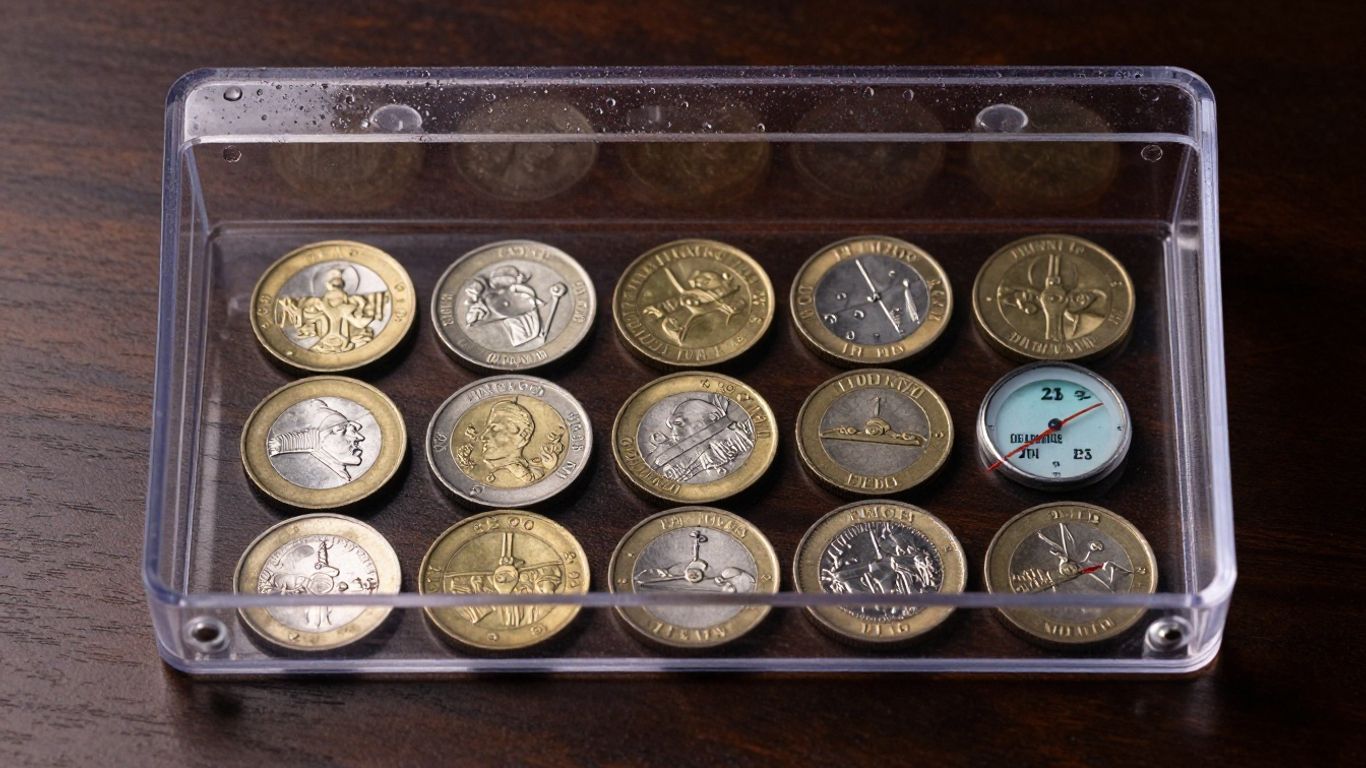
Water and air are two of the biggest enemies of your coin collection. Left unchecked, they can cause all sorts of problems, from simple tarnishing to serious corrosion that eats away at the metal. It’s really important to think about how to keep these elements away from your coins.
Sealed Containers for Optimal Protection
One of the most effective ways to shield your coins is by using sealed containers. Think of them as little protective bubbles for each coin. These can range from individual plastic capsules to specialized coin storage boxes with tight-fitting lids. The goal is to create a barrier that stops moist air from getting in. When you’re picking out holders, make sure they’re made from materials that won’t harm the coin over time. You want to avoid things like PVC, which can leave a sticky residue on the metal. Acid-free materials are the way to go for long-term safety. Using these kinds of holders is a big step in keeping your coins looking good.
Avoiding Exposure to Airborne Chemicals
It’s not just water that can cause damage; the air itself can carry harmful substances. Things like sulfur from pollution, cleaning fumes, or even certain types of paper can react with the metal of your coins. This can lead to discoloration or a dulling of the surface. Storing your coins in a place with good air circulation, but also one that’s free from strong odors or chemical smells, is key. If you keep your collection in a room where you do a lot of crafting or use cleaning products, consider moving it. The less exposure to unknown airborne agents, the better for your coins’ condition.
The Risks of Water and Oxidation
Water is a coin’s worst nightmare. Even small amounts of moisture can kickstart a process called oxidation. This is basically the metal reacting with oxygen in the air, and it’s what causes rust on iron or tarnish on silver. For coins, this can mean a loss of detail and a change in color. If water gets into a storage area, it can be a disaster. This is why controlling humidity is so important, as we’ve discussed. But it also means being careful about where you store your collection. Avoid basements that might flood or areas prone to leaks. Keeping your coins dry and away from direct contact with water is a fundamental part of preservation.
Best Practices for Handling Coins
When it comes to coin collecting, how you handle your coins directly impacts their condition and long-term value. Even something as simple as a fingerprint or a small scratch can be enough to drop their grade or ruin their appeal to collectors. Knowing the right way to manage your collection will help your coins look their best for years to come.
The Importance of Clean Hands or Gloves
Always make sure your hands are clean and dry before touching coins, or better yet, use cotton or nitrile gloves. Natural skin oils and tiny bits of dirt can cling to your hands and transfer right onto the delicate surface. If gloves aren’t available, only handle the coins by their edges, never the flat faces.
- Use a fresh pair of cotton or nitrile gloves for each handling session.
- Remove any rings or jewelry to avoid accidental scratches.
- Wash and dry hands well if gloves aren’t an option.
If you’d like more background on why using a soft cloth or gloves matters, learn about the basics of careful handling.
Proper Techniques for Holding Coins
It’s easy to think coins are tough, but they’re far from indestructible. Handling them incorrectly can cause visible marks or, worse, lower their collectible value. To keep things as safe as possible:
- Grip coins gently by the edge, never across their faces.
- Avoid picking up multiple coins at once.
- If you must set them down, use a soft cloth or pad as a surface.
This method reduces the chance of dropping your coins or leaving marks that can’t be removed. It doesn’t hurt to practice picking up and setting down coins on a designated clean pad.
Safe Surfaces for Coin Examination
When you’re examining or sorting through coins, what you lay them on matters just as much as how you touch them. Hard or dirty surfaces can cause dings, scratches, or even just pick up dust that later sticks to your coins. Consider the following:
- Always use clean, soft fabrics such as microfiber cloths or felt pads.
- Avoid glass, metal, or wooden surfaces unless covered with something soft.
- Set up a workspace dedicated just for your coin work, where you know there’s no stray grit or residue.
| Surface Type | Coin Safety | Recommendation |
|---|---|---|
| Hard table | Poor | Use a protective cloth |
| Paper towel | Fair | Acceptable for cleaning |
| Microfiber cloth | Excellent | Best for examination |
| Bare hands | Poor | Use gloves or clean hands |
A little care in your coin handling routine goes a long way — even small habits, like using gloves and setting up a clean space, add up to keeping your collection in premium shape for the long run.
The Risks Associated with Coin Cleaning
When Cleaning Might Be Necessary
While it’s generally advised to leave coins as they are, sometimes a coin might be so grimy that its details are obscured. This is rare, though. Most of the time, what looks like dirt is actually a natural patina that adds character and value. Aggressively cleaning a coin can strip away this history and significantly decrease its worth. If you’re looking at a coin that’s genuinely covered in something that looks like mud or has obvious foreign substances clinging to it, you might consider cleaning it. But before you grab any old rag, think hard about whether it’s truly necessary. For most collectors, the risk of damage outweighs any potential benefit.
Safe Methods for Cleaning Coins
If you absolutely must clean a coin, proceed with extreme caution. The goal is to remove loose debris without altering the coin’s surface. Here are a few steps to consider:
- Gentle Rinse: Use distilled water only. Tap water can contain minerals and chemicals that might react with the coin’s metal. A simple rinse under a slow stream of distilled water can dislodge loose dirt.
- Pat Dry: Use a soft, lint-free cloth, like a microfiber cloth, to gently pat the coin dry. Never rub the coin, as this can create fine scratches.
- Avoid Harsh Chemicals: Never use household cleaners, polishes, or abrasive materials. These will almost certainly damage the coin’s surface and reduce its value. Stick to the simplest methods possible.
Remember, even the most careful cleaning can alter a coin’s surface in ways that are not immediately apparent. This alteration can be viewed negatively by future collectors or grading services.
The Value of Professional Conservation
For valuable or rare coins, attempting to clean them yourself is a gamble you likely don’t want to take. The potential for irreversible damage is too high. Instead, consider professional conservation. Numismatists and coin conservation experts have the knowledge and tools to assess a coin’s condition and perform cleaning or stabilization if it’s deemed beneficial. They understand the delicate balance between removing harmful contaminants and preserving the coin’s historical integrity. Sending a coin for professional assessment is often the safest route when dealing with potentially valuable pieces, and it can help maintain its numismatic value.
It’s important to understand that cleaning coins is a controversial topic in numismatics. Many collectors and experts believe that cleaning almost always diminishes a coin’s value by removing its natural patina and potentially causing microscopic damage. The patina, often referred to as "grunginess," is a natural layer that forms over time and is considered by many to be a desirable characteristic that adds to a coin’s historical appeal and worth. Therefore, unless a coin is severely compromised by something that poses an immediate threat to its metal, it’s usually best to leave it untouched. Cleaning coins can lead to significant devaluation.
Long-Term Preservation Strategies
For anyone hoping to pass their coin collection down through generations, or even just hold onto it for a few decades, planning for long-term preservation isn’t something to overlook. How you store your coins makes a difference that really adds up over the years.
Avoiding Temperature Fluctuations
Sudden changes in temperature can stress metals and storage materials. Stable temperature is key to keeping corrosion and other environmental damage at bay. Deep freezes or heat waves can warp coin holders and cause unwanted reactions on coin surfaces.
Tips for consistency:
- Store coins in a room or safe with minimal temperature swings.
- Avoid attics, garages, or basements. These spots are known for dramatic temperature changes, as well as higher humidity (storing coins in a basement often leads to problems).
- Don’t place storage units or safes near windows, radiators, or exterior walls.
| Location | Temperature Stability | Risk Level |
|---|---|---|
| Interior Closet | High | Low |
| Basement | Low | High |
| Near Window | Low | High |
Keeping your coins at a steady, moderate temperature prevents many environmental problems before they start.
Securing Collections from Physical Damage
It’s not all about the weather. Physical accidents are a real threat—drops, scratches, or the weight of heavy objects pressing down over time can lead to problems.
A few simple steps help avoid most mishaps:
- Store coins in rigid holders, albums, or boxes to limit movement.
- Place storage containers where they’re unlikely to be bumped or dropped.
- Don’t stack heavy objects on top of coin boxes.
If your collection is especially valuable, consider using a safe or a secure bank vault for that added peace of mind. Different storage methods, like those outlined in proper coin storage guides, offer various levels of protection.
The Benefits of Stable Environments
Stable conditions don’t just solve one problem—they help with nearly all threats to your collection. Keeping temperature and humidity in check slows chemical reactions and mold growth. Limiting movement and exposure protects the coins’ surfaces for the long haul.
Why it matters:
- Reduces risk of corrosion and tarnishing.
- Minimizes accidental handling or dropping.
- Protects the structural integrity of storage materials.
Small, consistent choices—like climate control and careful placement—are the backbone of strong, reliable coin preservation for years to come.
Balancing Display and Preservation Needs
Displaying your coin collection can be a source of great pride and enjoyment, allowing you to share your passion with others. However, the very act of showcasing your coins can introduce risks to their long-term preservation. It’s a delicate balance, but one that can be managed with careful planning and the right equipment.
Protective Measures for Display Cases
When choosing display cases, prioritize those that offer robust protection. Look for cases made from inert materials that won’t react with the metal of your coins. Acrylic cases, for instance, can be a good option, especially if they are designed to be airtight. This helps to shield your coins from dust, airborne pollutants, and fluctuations in humidity. The best display cases will also incorporate UV protection to prevent light damage. This is particularly important for coins with vibrant colors or delicate patinas that can fade over time when exposed to direct light.
Strategic Placement of Display Cabinets
Where you place your display cabinets is just as important as the cabinets themselves. Avoid areas that experience significant temperature swings or high humidity. This means keeping them away from windows that get direct sunlight, heating vents, or exterior walls that can get cold. A stable environment is key, and strategic placement helps maintain that stability. Consider a room with consistent climate control, like a main living area, rather than an attic or basement which are prone to environmental extremes.
UV Protection for Visible Collections
Direct sunlight and even strong artificial lighting can be detrimental to coins over time. UV rays can cause discoloration and accelerate degradation of the coin’s surface. To combat this, opt for display cases or cabinets that feature UV-filtering glass or acrylic. If your display cabinet doesn’t have built-in UV protection, you can sometimes find UV-filtering films that can be applied to the glass. Regularly inspect your coins for any signs of fading or color change, which might indicate that your UV protection isn’t sufficient. Remember, even indirect sunlight can carry damaging UV rays over extended periods.
Here are some key considerations for displaying your collection:
- Material Safety: Ensure display case materials are inert and won’t corrode or react with your coins.
- Environmental Control: Choose cases that offer some level of protection against dust and humidity.
- Light Management: Prioritize UV-filtering glass or acrylic to shield coins from damaging light.
- Location, Location, Location: Place displays away from heat sources, direct sunlight, and areas with fluctuating temperatures.
Balancing the desire to admire your collection with the need to protect it requires thoughtful choices. The right display solutions and placement can allow you to enjoy your coins daily without compromising their condition for the future.
Advanced Coin Storage Considerations
When you’ve got a collection that’s really grown, or you’re dealing with some seriously valuable pieces, you might need to think beyond the basic album or box. This is where things get a bit more serious, focusing on maximum security and long-term preservation.
Home Safes Versus Bank Vaults
Deciding between keeping your coins at home in a safe or using a bank’s safety deposit box comes down to what you need most: convenience or ultimate security. A good home safe can be fireproof and waterproof, and bolting it down is a smart move to deter thieves. However, it’s still in your home, which might be a target. Bank vaults offer a higher level of security against break-ins and natural disasters, but you can’t just pop over to grab a coin whenever you feel like it. For really high-end collections, some people even look into private vault services that offer a mix of top-notch security and insurance.
The Necessity of Coin Insurance
Most standard home insurance policies won’t cover a valuable coin collection if something happens, like a fire, flood, or theft. It’s a good idea to look into specialized insurance just for your coins. This way, if the worst happens, you’re covered financially. Getting regular appraisals from a professional helps keep a clear record of what your collection is worth, which makes filing a claim much smoother if you ever need to.
Leveraging Expert Guidance
Sometimes, you just need to call in the pros. Figuring out the best way to store specific types of coins, especially older or more delicate ones, can be tricky. Experts can help you choose the right holders, understand the ideal environmental conditions, and plan for the long haul. They’ve seen it all and know the little details that can make a big difference in keeping your coins in great shape for years to come. Working with a reputable dealer can also provide access to secure storage solutions and advice on preserving your assets for gold coins.
Protecting your collection isn’t just about putting coins in a box. It involves understanding the materials they touch, the air they breathe, and the environment they live in. Taking these extra steps can mean the difference between a collection that degrades over time and one that remains a source of pride and value for generations.
Wrapping Up: Keeping Your Coins Safe
So, we’ve talked a lot about keeping coins happy and healthy. It really comes down to a few main things: don’t let them get too damp, keep them out of extreme heat or direct sun, and try not to touch them too much with your bare hands. Using the right holders and storing them in a stable spot makes a big difference. It might seem like a lot of fuss, but honestly, a little bit of care now can save you a lot of trouble and keep your collection looking good for a long, long time. Think of it as giving your coins the best chance to stick around in great shape.
Frequently Asked Questions
Why is humidity bad for my coins?
Too much moisture in the air can cause coins to rust or get spots, which is called oxidation. This can damage the coin’s surface and make it look bad, lowering its value. It’s like leaving metal out in the rain – it doesn’t end well!
What's the best humidity level for storing coins?
You want to keep the air pretty dry, but not completely dried out. Aim for a humidity level between 30% and 50%. Think of it as a comfortable, slightly dry room – not a steamy bathroom or a desert.
What happens if my coins get too much humidity?
Excessive humidity is a coin’s enemy! It can lead to corrosion, where the metal starts to break down, and unsightly tarnish. This damage can be permanent and significantly reduce how much your coin is worth.
How can I control the humidity where I store my coins?
You can use small packets called silica gel, which soak up moisture. For larger areas, a dehumidifier can help keep the air dry. It’s important to check the humidity levels regularly with a small device called a hygrometer.
Should I worry about temperature too?
Yes, definitely! Big swings in temperature can also harm coins, just like humidity. Keeping your coins in a cool, stable place, away from direct sun or heat sources, is very important for keeping them in good shape.
Is it okay to clean my coins?
Generally, it’s best not to clean rare or valuable coins. Cleaning can often remove a coin’s natural color or shine, called patina, which adds to its history and value. If a coin is really dirty, it’s often better to get advice from an expert.
What's the best way to hold my coins?
Always handle coins carefully to avoid getting oils or dirt from your hands on them. It’s best to wear clean cotton or nitrile gloves. If you don’t have gloves, hold the coin by its edge, never by the flat surfaces.
What are the best storage options for my coins?
For individual coins, protective holders or capsules made of safe materials are great. For larger collections, albums with acid-free pages can work. For very valuable coins, certified slabs offer the best protection and authentication.