
The Mercury dime, officially known as the Winged Liberty Head dime, is a real standout in American coin history. It wasn’t just another coin; it was a whole new look for U.S. currency, and people noticed right away. Designed by Adolph A. Weinman, this dime has a unique artistic flair that still grabs attention today. Let’s take a closer look at what makes this mercury dime artistic coin design so special and why collectors can’t get enough of it.
Key Takeaways
- The Mercury dime was created through a design competition in 1916, with Adolph A. Weinman’s artistic vision ultimately chosen.
- Its iconic imagery features Liberty wearing a winged cap, often mistaken for the Roman god Mercury, and a reverse side displaying a fasces and olive branch.
- This coin holds a unique place in numismatic history, marked by its groundbreaking design and minor modifications for vending machines.
- The Mercury dime’s enduring appeal lies in its timeless design, which blends Art Deco and classic styles, making it accessible to collectors of all budgets.
- Collectors can identify the Mercury dime by Liberty’s winged cap and the distinctive fasces and olive branch on the reverse, with mint marks (D, S) indicating their origin.
The Genesis Of A Masterpiece: The Mercury Dime's Artistic Origins
A Competition For A New Look
Back in the early 20th century, the United States Mint decided it was time for a change. The Barber dime, which had been around since 1892, was looking a bit dated. So, in 1916, a competition was held to find a fresh design for the dime. The goal wasn’t just to update the look, but also to create a coin that would represent America’s ideals. Treasury Secretary William G. McAdoo, who happened to be President Woodrow Wilson’s father-in-law, pushed for this redesign. He saw it as a chance to put some artistic flair onto the nation’s coinage and send a message to the world.
Adolph A. Weinman's Vision
Out of many submissions, the design by Adolph A. Weinman was chosen. Weinman was a sculptor with a keen eye for detail and a knack for creating memorable imagery. He presented a design that was both classic and modern, a style that would later be associated with Art Deco. His vision for the dime was a departure from the more traditional coin portraits of the time. Weinman’s work on the dime, along with his designs for the Mercury dime’s companion pieces, the Winged Liberty Head nickel and the Peace dollar, cemented his place in numismatic history.
The Winged Liberty Head Symbolism
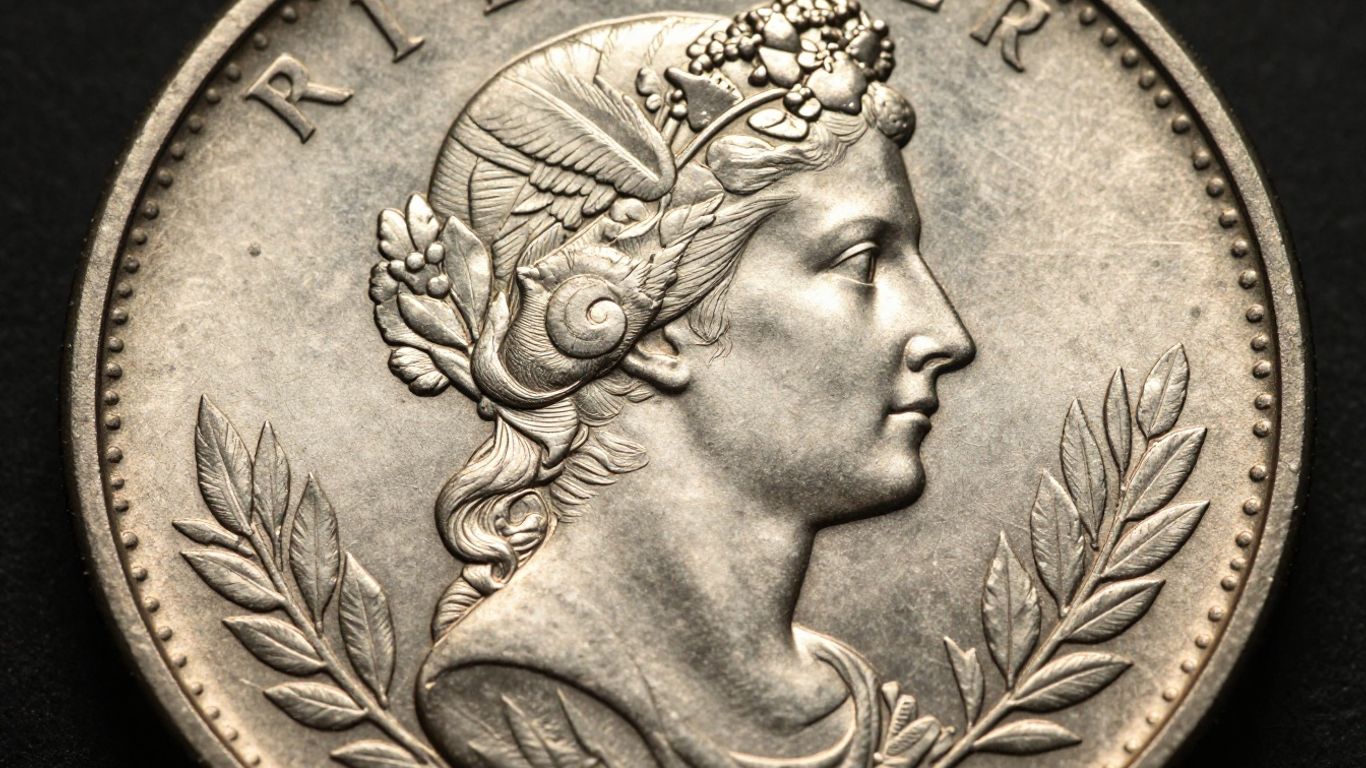
The most striking feature of Weinman’s design is the profile of Liberty wearing a winged Phrygian cap. This cap, often called a liberty cap, is a symbol of freedom and enlightenment. The wings were added by Weinman to represent freedom of thought. However, many people at the time mistook the image for the Roman god Mercury, known for his winged sandals and helmet, because of the wings. This misinterpretation led to the coin being popularly known as the Mercury dime, a nickname that stuck even though it wasn’t technically accurate. Weinman’s initials, ‘AW’, are subtly placed on the right side of Liberty’s neck, a small signature on a grand design.
The choice of Weinman’s design was a significant moment, marking a shift towards more artistic and symbolic representations on U.S. currency. It was a deliberate effort to imbue the coinage with meaning beyond mere monetary value.
Unpacking The Mercury Dime's Iconic Imagery
Liberty's Profile And Her Cap
The most striking feature on the obverse, or front, of the Mercury dime is the profile of Lady Liberty. She’s depicted wearing a distinctive Phrygian cap, a soft felt cap with a backward-curving point, traditionally associated with freedom. What makes this cap truly unique, however, are the wings attached to its sides. These wings aren’t just decorative; they symbolize freedom of thought and speech, a powerful message for the era. It’s this specific imagery that led many to mistakenly call the coin the "Mercury" dime, confusing Liberty with the Roman messenger god. Adolph Weinman, the designer, subtly placed his initials, "AW," on the right side of Liberty’s neck, a small but significant mark of his artistry.
The Misunderstood Roman God
Despite the coin officially being known as the Winged Liberty Head dime, the public and even many numismatists quickly adopted the nickname "Mercury." This misattribution likely stemmed from the prominent wings on Liberty’s cap, which strongly resembled the winged helmet of Mercury, the Roman god of commerce and communication. Mercury was a male deity, and the confusion highlights how readily a compelling visual can shape popular perception, even overriding the actual intended symbolism. This nickname, though technically incorrect, has stuck for over a century, becoming an inseparable part of the coin’s identity.
Weinman's Signature On The Coin
Eagle-eyed collectors will notice a small detail that confirms the artist behind this masterpiece: the initials "AW." These are the initials of the designer, Adolph A. Weinman. You’ll find them discreetly placed on the obverse of the coin, typically to the right of Liberty’s neck. It’s a subtle signature, a testament to Weinman’s skill and a point of interest for those who appreciate the finer details of coin design. Finding these initials is a good way to confirm you’re looking at an authentic Mercury dime and not a later imitation.
The design competition for this dime was fierce, aiming to replace the older Barber dime. Weinman’s vision, with its blend of classical symbolism and modern artistic flair, ultimately won out, though not without some initial public confusion about its central figure.
The Reverse: A Powerful Allegory Of American Ideals
The Fasces: Symbol Of Unity And Strength
The reverse of the Mercury dime presents a striking image: a fasces. This isn’t just a random bundle of sticks; it’s a symbol with deep historical roots, originating from ancient Rome. The fasces was carried by lictors, officials who accompanied Roman magistrates, and it represented their authority and power. On the dime, this bundle of rods bound together signifies unity and strength. The idea is that when individual elements are bound together, they become much stronger than they would be on their own. It’s a visual reminder that a nation’s power comes from its people standing together. This symbol was particularly relevant in the early 20th century, a time when America was solidifying its identity and facing new global challenges.
The Olive Branch: A Message Of Peace
Paired with the formidable fasces is a delicate olive branch. This contrast is intentional and powerful. While the fasces speaks of strength and the potential for forceful action, the olive branch is a universally recognized symbol of peace. Its inclusion suggests that America’s strength is not solely for conflict, but also for pursuing and maintaining peace. The full-foliaged branch is depicted with care, showing a desire for prosperity and tranquility alongside national might. This duality on the coin reflects a complex national identity – ready to defend itself, but always striving for peaceful relations. It’s a message that America’s enduring balance was a key ideal.
A Political Statement For Its Time
When Adolph A. Weinman designed the Mercury dime, the world was a turbulent place. World War I had broken out in Europe, and the United States was navigating a complex international landscape. The inclusion of both the fasces and the olive branch wasn’t just artistic; it was a subtle political statement. It communicated a message of American resolve and readiness for defense, while simultaneously expressing a hope for peace. This was a way for the nation to project an image of strength and diplomacy without explicitly stating a political stance. The design aimed to capture the spirit of a nation that was both powerful and peace-seeking, a delicate balance that continues to be relevant.
The imagery on the reverse of the Mercury dime is a carefully crafted allegory. It speaks to the nation’s capacity for strength and unity, represented by the fasces, while also emphasizing a commitment to peace, symbolized by the olive branch. This dual message was particularly significant during a period of global uncertainty, reflecting America’s complex role on the world stage.
Key elements on the reverse include:
- The Fasces: A bundle of rods, symbolizing unity and strength.
- The Olive Branch: A symbol of peace and prosperity.
- The Mint Mark: Typically located to the right of the "E" in "ONE DIME", indicating where the coin was minted (e.g., D for Denver, S for San Francisco, or absent for Philadelphia).
This combination of symbols on the Mercury dime created a lasting impression, encapsulating core American ideals in a compact and artistic form.
The Mercury Dime's Unique Place In Numismatic History
A Groundbreaking Year For U.S. Coinage
The year 1916 was a pretty big deal for American coins, and the Mercury dime was right at the center of it. It wasn’t just a new dime; it marked the first time the U.S. Mint decided to put completely different designs on the half dollar, quarter, and dime all in the same year. This was a pretty bold move, shaking things up from the usual way things were done. It really set a new tone for coin design in the country.
Modifications For Vending Machines
Believe it or not, the first Mercury dimes that came out didn’t always fit into the vending machines that were becoming more common. This led to a specific adjustment being made to the coin’s thickness. It’s kind of wild to think that a coin’s design had to be altered because of a machine! This particular change wasn’t something that happened to other U.S. coins, making the Mercury dime stand out even more.
The Enduring Mystery Of The Model
Even today, there’s still a bit of a puzzle surrounding who actually posed for the portrait of Liberty on the Mercury dime. The designer, Adolph A. Weinman, never really came right out and said who it was. He hinted it might have been the wife of a friend, but rumors have circulated for years, with some people thinking it was Elsie Stevens. This little bit of mystery just adds to the coin’s interesting story and keeps people guessing.
The Mercury dime’s debut in 1916 was a significant moment, ushering in a wave of artistic change across U.S. coinage. Its brief stint with vending machine compatibility issues and the lingering question of the model’s identity only add layers to its unique historical narrative.
The Allure For Collectors: Why The Mercury Dime Captivates
Timeless Design Appeals To All
The Mercury dime, with its distinctive winged cap on Liberty’s profile, has a way of drawing people in. It’s not just about the silver content; it’s the artistry. Adolph A. Weinman really outdid himself here. The design feels both classic and modern, a tricky balance to strike. This blend of elegance and symbolism is what makes it a favorite for so many collectors, whether they’ve been collecting for decades or are just starting out. It’s a coin that looks good in any collection, plain and simple.
A Blend Of Art Deco And Classicism
When you look at the Mercury dime, you can see influences from different art movements. It has that clean, streamlined look associated with Art Deco, but it also carries the weight of classical design. This mix gives the coin a unique character that stands out. It’s not overly ornate, but it’s also not plain. The winged cap on Liberty, meant to symbolize freedom of thought, is often mistaken for the Roman god Mercury, adding another layer of intrigue.
Suitable For Every Collector's Budget
One of the best things about collecting Mercury dimes is that there’s something for almost everyone. You don’t need to be a millionaire to start. While some rare dates and mint marks can fetch high prices, many common dates are quite affordable. This means you can build a nice collection without breaking the bank. It’s a coin that allows for growth, from entry-level pieces to more advanced acquisitions. The 1942 Silver Mercury Dime, for instance, is a popular choice that offers a good entry point.
Here’s a quick look at how value can vary:
| Condition & Rarity | Typical Value Range |
|---|---|
| Common Dates (e.g., 1941-D, 1943-P) | $3 – $15 |
| Semi-Key Dates (e.g., 1916-D, 1921-S) | $50 – $500+ |
| Key Dates (e.g., 1916, 1926-S) | $200 – $1,000+ |
Note: Values are approximate and depend heavily on the coin’s condition (grade).
The Mercury dime’s enduring appeal lies in its accessible nature for collectors. Its design transcends simple monetary value, offering a piece of history and art that can be appreciated across different financial capacities. This makes it a welcoming coin for newcomers and a satisfying pursuit for seasoned numismatists alike.
Collectors are drawn to the Mercury dime not just for its aesthetic qualities but also for its historical context. These coins were minted during a significant period in American history, including World War I and the Great Depression. Owning a Mercury dime means holding a tangible piece of that past. The collectibility of these classic coins often pushes their worth well beyond their silver melt value, making them a smart and engaging addition to any collection.
Identifying The Mercury Dime: Key Design Features
So, you’ve got a dime, and you’re wondering if it’s one of those cool Mercury ones? It’s actually pretty straightforward once you know what to look for. These coins have some really distinct features that set them apart from other dimes.
Recognizing Liberty's Winged Cap
The most obvious clue is the lady on the front. It’s not just any profile; it’s Liberty, and she’s sporting a winged cap. This isn’t something you see on many other U.S. coins, making it a pretty good identifier. This winged cap is the most iconic element of the Mercury dime’s obverse. The wings are meant to symbolize freedom of thought, a neat little detail that adds to the coin’s story. It’s easy to mistake her for the Roman god Mercury because he also had winged headgear, but this is actually Liberty herself. You can find the designer’s initials, ‘AW’, tucked away near the bottom of her neck, usually on the right side.
The Distinctive Fasces and Olive Branch
Flip the coin over, and you’ll see more unique imagery. The reverse side features a bundle of rods bound together with an axe, known as a fasces. This symbol represents unity and strength, a powerful message for its time. Alongside the fasces, there’s an olive branch, which clearly stands for peace. The combination of these two symbols on a coin is quite unusual and a dead giveaway for a Mercury dime. It’s a visual representation of America’s dual stance: ready for defense but desiring peace.
Distinguishing Mint Marks: D, S, and Philadelphia
Where the coin was made also matters, especially if you’re looking for specific varieties. Most Mercury dimes don’t have a mint mark, meaning they were struck at the Philadelphia Mint. However, if you see a small ‘D’ below the fasces on the reverse, it means it came from the Denver Mint. A small ‘S’ in the same spot indicates it was minted in San Francisco. These mint marks are pretty small, so you’ll need to look closely, maybe even with a magnifying glass, to spot them. Knowing the mint mark can tell you a lot about a coin’s rarity and value.
Here’s a quick rundown:
- No Mint Mark: Philadelphia Mint
- ‘D’: Denver Mint
- ‘S’: San Francisco Mint
The Mercury dime’s design was so striking and unique that it quickly became a favorite. Its blend of classical imagery with a modern, Art Deco feel made it stand out. Even today, these design elements make it easy to pick out a Mercury dime from a pile of change.
Exploring The Variations In Mercury Dime Minting
When you start looking into Mercury dimes, you quickly realize there’s more to them than just the basic design. These coins, minted from 1916 to 1945, weren’t all created equal. Different mints, specific production years, and even little mistakes can make a big difference in what you find.
Mint Marks and Their Significance
One of the first things collectors look at is the mint mark. This little letter tells you where the coin was made. Dimes from the Philadelphia Mint, the original mint, don’t have a mint mark at all. If you see a ‘D’, it means it came from the Denver Mint, and an ‘S’ means it was struck in San Francisco. These marks are usually found on the reverse side, near the bottom.
- Philadelphia (No Mint Mark): The most common, but still important for dating.
- Denver (D): Often found in lower mintages than Philadelphia.
- San Francisco (S): Can be scarcer, especially in certain years.
Knowing the mint mark is key to understanding a coin’s rarity and potential value. For instance, a 1942/1 overdate from San Francisco is a highly sought-after variety.
Pre-1934 Versus Post-1933 Issues
There’s a bit of a historical quirk with the Mercury dime. Production was halted for a period, leading to a distinction between dimes made before 1934 and those made after. Dimes minted from 1916 up to 1933 are generally considered scarcer than their counterparts produced from 1934 onwards. This interruption in production, partly due to the economic conditions of the Great Depression, means that earlier dates can be harder to come by in good condition. This makes the pre-1934 issues particularly interesting for collectors focused on rarity.
Rare Varieties and Minting Errors
Beyond the standard mint marks and date ranges, the world of Mercury dimes opens up to a fascinating array of varieties and errors. These are the anomalies that often excite collectors the most. Think doubled dies, where the die used to strike the coin was accidentally struck twice, creating a doubled image. There are also repunched mint marks, partial collar errors, and even coins struck on the wrong metal planchets. These aren’t just mistakes; they’re unique pieces of minting history. Some of these errors, like the 1945-D over D dime, can significantly increase a coin’s value, sometimes making a common date quite rare. It’s a whole other level of collecting that adds depth to the pursuit of these classic coins. You can find some of these valuable dimes in your change, though it takes a keen eye [0428].
The allure of collecting Mercury dimes extends beyond their beautiful design; it encompasses the thrill of discovery. Each coin tells a story, not just of its intended creation, but of the subtle variations and occasional errors that occurred during its production. These unique characteristics transform a simple 10-cent piece into a tangible piece of history, sought after for its rarity and the story it tells.
The Mercury Dime's Journey Through Time
From Circulation to Collector's Item
The Mercury dime, minted from 1916 to 1945, saw its role in everyday commerce diminish significantly by the early 1960s. This shift was largely due to the practice of hoarding silver coins, especially those composed of 90% silver, which was the standard for the Mercury dime. As the United States transitioned to a copper-nickel clad composition for its coinage in the mid-1960s, these silver dimes became increasingly scarce in daily transactions. This scarcity, however, only fueled their desirability among numismatists.
The Impact Of Silver Hoarding
During the period leading up to the mid-20th century, the intrinsic value of silver began to rise. This economic factor prompted many people to hold onto their silver coins, including the Mercury dimes, rather than spend them. The coins were seen as a store of value, a tangible asset in uncertain economic times. This widespread hoarding meant fewer dimes were circulating, making them harder to find for everyday use and, consequently, more sought after by collectors who appreciated their artistic merit and silver content. The practice of saving these coins contributed directly to their transition from common currency to a prized numismatic item.
The Copper-Nickel Clad Era
With the introduction of the copper-nickel clad coinage in 1965, the era of the silver dime in general circulation effectively ended. The Mercury dime, being a 90% silver coin, was no longer minted for everyday use. This change marked a definitive point where the Mercury dime moved from being a piece of pocket change to a collectible artifact. While they were once common, finding one in circulation today is exceptionally rare, a testament to their historical journey and enduring appeal to collectors interested in American coinage history.
Modern Interpretations And Enduring Legacy
The Mercury dime, though no longer in circulation, continues to inspire. Its artistic merit hasn’t faded, and this is clear in how it’s been honored in more recent times. The U.S. Mint itself has paid tribute, showing just how much this coin is still valued.
The 2016 Centennial Gold Edition
In 2016, the U.S. Mint released a special gold version of the Mercury dime to mark its 100th anniversary. This wasn’t just a simple copy; it was a stunning, one-ounce, .9999 fine gold coin. It recreated Adolph Weinman’s original design with incredible detail, giving collectors a chance to own a piece of history in a precious metal. This release highlighted the enduring appeal of Weinman’s artwork. It was a limited edition, making it highly sought after by collectors.
Future Gold Reissues
While specific plans for future gold reissues of the Mercury dime haven’t been announced, the success of the 2016 edition suggests it’s a possibility. The Mint often revisits popular historical designs for commemorative issues. Given the Mercury dime’s status as a numismatic icon, it’s likely to be considered again for special releases, perhaps in different metals or formats.
A Lasting Impression On Coin Design
The Mercury dime’s influence stretches beyond just commemorative coins. Its blend of classical motifs with a modern, Art Deco feel set a new standard for U.S. coinage. The way Liberty was depicted, with her winged cap symbolizing freedom of thought, was quite innovative for its time. The strong symbolism on the reverse, with the fasces and olive branch, conveyed a powerful message of unity and peace.
- Artistic Innovation: It pushed the boundaries of what was expected in coin design.
- Symbolic Depth: The imagery conveyed complex ideas in a compact space.
- Collector Appeal: Its beauty and historical significance continue to draw in new and experienced collectors alike.
The Mercury dime stands as a testament to the power of art in everyday objects. Its design continues to be studied and admired, proving that great art transcends its original purpose and time.
Collectors today can still find original Mercury dimes in various conditions, from well-worn circulated examples to pristine uncirculated specimens. For those interested in modern tributes, looking into commemorative silver rounds that echo the Mercury dime’s design can be a great way to connect with its legacy. These modern commemorative 1 oz silver rounds often capture the spirit of the original, offering a tangible link to this beloved coin.
A Lasting Impression
So, it’s pretty clear why people still dig the Mercury dime. It’s not just some old coin; it’s a piece of art that tells a story. From its unique winged cap design, which many folks mistook for the god Mercury, to the strong symbols of peace and unity on the back, this dime really stands out. It was made during a time of change for US coins and has managed to keep its charm for over a century. Whether you’re just starting your coin collection or you’ve been at it for years, the Mercury dime offers something special. It’s a reminder that even everyday objects can be beautiful and hold a lot of history.
Frequently Asked Questions
What is a Mercury dime?
The Mercury dime is a U.S. 10-cent coin made from 1916 to 1945. It’s known for its beautiful design, featuring a woman with a winged hat on one side and a fasces (a bundle of rods with an axe) and an olive branch on the other. Even though it’s called the Mercury dime, the woman is actually meant to be Liberty.
Who designed the Mercury dime?
The Mercury dime was designed by Adolph A. Weinman, a talented sculptor. He won a contest held by the U.S. Mint to create a new look for the dime. His design was chosen for its artistic quality and unique imagery.
Why is it called the Mercury dime if it's Liberty?
Many people at the time thought the winged hat on Liberty’s head looked like the one worn by Mercury, the Roman god of commerce. Because of this common mistake, the coin became widely known as the Mercury dime, even though that wasn’t the designer’s original intention.
What do the symbols on the Mercury dime mean?
The symbols have important meanings. The winged hat on Liberty represents freedom of thought. On the back, the fasces (a bundle of sticks with an axe) symbolizes unity and strength, while the olive branch represents peace. Together, they sent a message about America’s strength and desire for peace.
Are Mercury dimes valuable?
The value of Mercury dimes can vary a lot. Some common ones might only be worth a few dollars, while rare dates or ones in perfect condition can be worth much more, sometimes hundreds or even thousands of dollars. This makes them interesting for collectors with different budgets.
What makes the Mercury dime special in coin history?
The Mercury dime was part of a big change in U.S. coins in 1916, where the dime, quarter, and half dollar all got new designs. Also, a small change had to be made to the dime’s thickness shortly after it was released so it would fit better in vending machines, which was unusual for U.S. coins.
Who was the model for the Mercury dime?
Adolph Weinman never officially revealed who posed for the image of Liberty. He suggested it was the wife of a lawyer friend, but some people believe it might have been Elsie Stevens, the wife of poet Wallace Stevens. The exact identity remains a bit of a mystery.
Why did the U.S. Mint stop making Mercury dimes?
The Mercury dime was made until 1945. In 1946, the U.S. Mint decided to replace it with a new dime design featuring President Franklin D. Roosevelt, who had recently passed away. This is a common practice in coin design to honor important figures.