
Key Takeaways
The minting collar is a fundamental component of the modern coining press that ensures consistency and security in coin production. Understanding the hardware involved reveals the precision required to produce reliable currency.
- The collar defines the exact diameter and edge profile of a coin during the strike.
- Modern minting processes utilize high-pressure systems to force metal into the collar’s grooves or patterns.
- Reeded edges were historically introduced to prevent the illegal practice of clipping metal from coin circumferences.
- Misaligned collars frequently lead to collectible error variants like partial collar strikes.
- Automated inspection systems ensure that every circulating coin meets rigorous manufacturing quality standards.
Understanding the definition and history of the minting collar
Historical evolution of coin production
Early methods of minting relied on hand-hammering, which often resulted in inconsistent coin shapes and easily tampered edges. As production moved toward mechanical screw presses, the need for a containment device became apparent to maintain circular integrity. This historical shift laid the groundwork for contemporary mass manufacturing.
Basic components of the modern coining press
Modern coining presses operate with a suite of synchronized parts that function in milliseconds to convert a blank planchet into a finished coin. The assembly relies on a feeding mechanism to position the planchet, while upper and lower dies impart the design. Just as a Signature Solitaire Collection emphasizes professional touch and precision in jewelry crafting, the coining press relies on calibrated alignment to ensure each cycle produces a perfect result.
Defining the collar’s physical role in shaping a flan
The collar acts as a hardened steel ring that physically restricts the expansion of the planchet when the dies strike. Before entering the press, the flan is a simple metal disc; once the pressure is applied, the metal is forced to fill the space between the dies and the internal walls of the collar. This creates the final circumference and any edge features, effectively locking the coin into its intended shape.
Core mechanics of the coining process
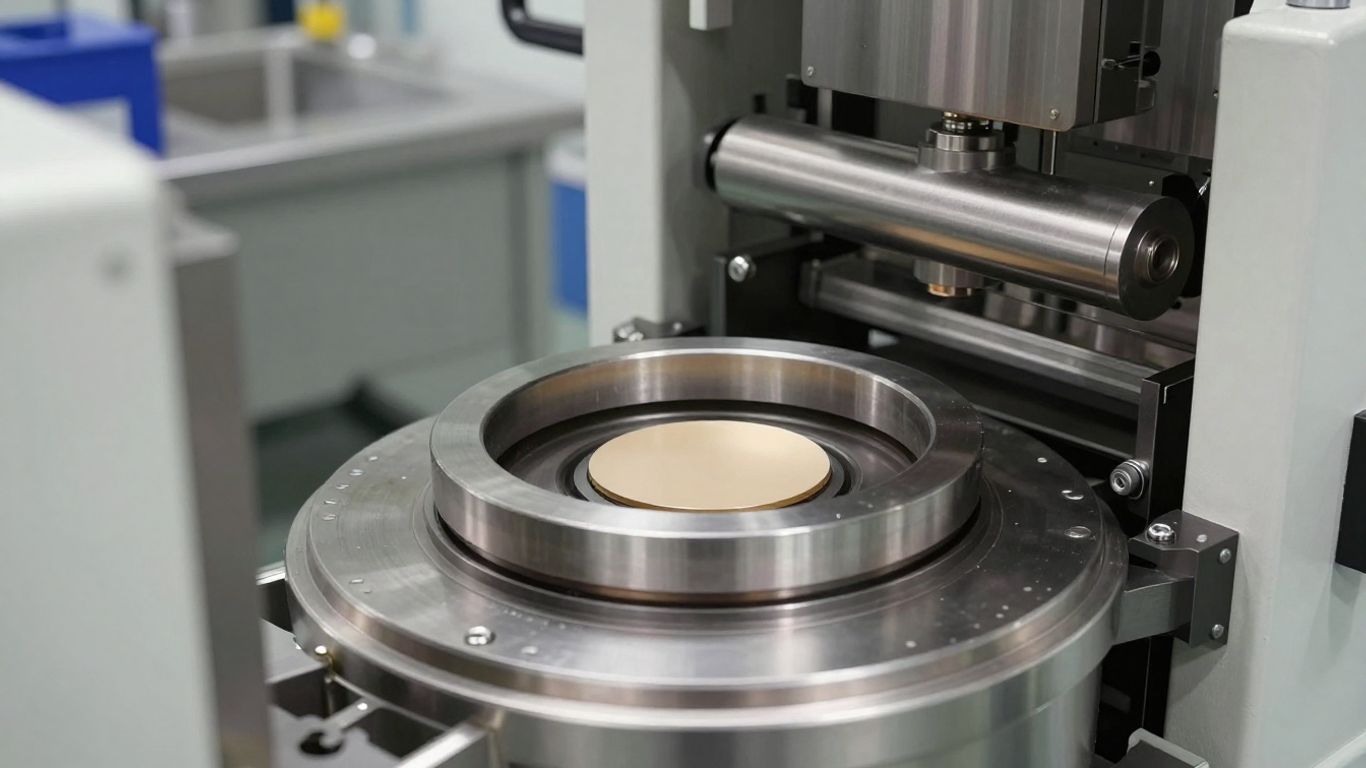
How the collar shapes the flan during the strike
When the hydraulic press exerts massive downward force, the collar must remain perfectly stationary to prevent distortion. The planchet is pinched against the collar, which provides the necessary resistance to allow metallurgical flow into the die recesses. If the collar is not perfectly centered, the resulting pressure will cause an uneven strike, which serves as a reminder that even refined processes require strict parameter management, much like the Private Reserve Strategy focuses on structured wealth management through high-discipline systems.
Controlling metallurgical flow through pressure
The force applied during the strike determines how cleanly the metal fills the collar’s interior. We can summarize the general mechanical variables in the following table:
| Process Variable | Purpose | Impact on Coin |
|---|---|---|
| Die Pressure | Defining relief | Determines edge sharpness |
| Collar Tightness | Preventing spread | Ensures diameter accuracy |
| Strike Speed | Increasing volume | Alters metal consolidation |
This table illustrates the balance between force and structure which is essential for consistent minting output.
Interaction between the dies and the collar assembly
The interaction between the moving dies and the stationary collar forms a closed chamber that defines the physical limits of the coin.
This chamber configuration ensures that the metal does not simply extrude beyond the design diameter. By constraining the expansion, the collar ensures the finished surface maintains its structural integrity and exact sizing.
Types of collar edges and their characteristics
Understanding reeded edges versus plain edges
Most circulating coins feature reeded edges to provide a distinct tactile and visual differentiation. While plain edges are smooth and sometimes used on proof or commemorative issues, the reeded style features uniform vertical grooves that must be perfectly spaced. These ridges are essential to coining edge variety and help distinguish denominations for users.
Lettered and ornamental collar designs
Some high-value coins, particularly sovereign currency, feature lettering or intricate designs incused directly into the collar rather than the die face. This requires the collar to be a multipart assembly that expands and contracts, allowing the finished coin to be ejected without damaging the fine inscription on its edge. Similar to how Poppy Lane Bridal focuses on modern minimalist metal pieces that require specific finish tolerances, mints must monitor wear on these collar segments to ensure no degradation of the intricate design.
Distinguishing factory finish from post-minting wear
A pristine collar strike shows sharp, well-defined junctions where the edge meets the fields. Conversely, post-minting wear typically exhibits flattened ridges and erratic scratching inconsistent with the uniform deformation caused by a press. Collectors must carefully examine these edge features to confirm the coin’s authenticity.
The role of the collar in currency security
Security features embedded in edge configurations
Modern edges often serve as the first line of defense against counterfeiting. Specialized micro-engraving and radial line finishes are impressed into the edge by the collar at the moment of strike, providing an authentication metric that is exceptionally difficult to replicate.
Detecting clipped or altered planchets
A correctly struck coin displays a consistent and unbroken edge profile. If a planchet is clipped or damaged before striking, the collar will fail to shape the edge uniformly at that location, revealing a diagnostic feature that exposes the tampering to experienced numismatists.
Historical use of reeded collars to prevent edge-shaving
Historically, the reeded edge was developed to prevent clipping of precious metal coins. By milling the edges with precise grooves, authorities ensured that any tampering would be instantly visible, making the circulation of "shaved" coins less viable in common trade. This effectively preserved the base value of the circulating supply.
Common errors and variations associated with the collar
Identifying causes of off-center strikes
An off-center strike occurs when the planchet is not positioned correctly within the collar before the press activates. This results in a design that is shifted to one side, leaving a characteristic blank crescent on the opposite edge of the coin.
The mechanics behind partial collar errors
Partial collar errors happen when the planchet is not fully seated inside the collar during the strike. As a result, only part of the coin is shaped by the reedy grooves, while the remainder of the edge expands freely. This creates a distinct visual variation that is highly coveted by professional collectors.
Impact of collar misalignment on numismatic value
Numismatic value often correlates with the visual drama of an error. Collectors typically classify these items based on:
- The degree of off-center shift from the center point.
- The percentage of the design that remains fully captured within the collar.
- The overall condition of the strike quality despite the misalignment.
These factors determine how much interest a specific misaligned piece will hold for serious hobbyists of minting anomalies.
Advancements in modern collar manufacturing
Precision engineering in die sinking and setup
Today’s die sinking processes allow for unprecedented levels of accuracy in collar creation. Engineers use software-tracked models to ensure that every groove is cut to micro-millimeter tolerances, reducing the rate of production-line failures.
Material durability and longevity requirements
Collars must withstand millions of high-pressure strikes without warping or cracking. Advanced alloys and heat-treatment cycles are used to extend the lifespan of these tools, ensuring consistent quality and reduced downtime for the minting facility.
Automated inspection systems for edge quality control
Modern facilities employ optical sensors that scan every coin immediately after it exits the press. If a collar-related anomaly, such as a burr or a lack of definition, is detected, the machine automatically ejects the coin. This automated process ensures that only high-quality items move to the finishing phase, maintaining the integrity of modern coinage across all batches.
Conclusion
The minting collar is far more than a simple machine part; it is the silent guard that maintains the physical and security standards of our currency. By understanding its evolution and mechanical role, we gain a deeper appreciation for the precision required in the transformation of metal into pieces of history that we hold in our daily lives.
Frequently Asked Questions
What is a minting collar?
A minting collar is a fixed or segmented steel ring in a coining press that defines the final diameter and edge profile of a coin by containing the planchet during the striking process.
Why do some coins have smooth edges?
Smooth edges are often chosen for aesthetics on commemorative medals or as a design requirement for larger denominations that do not require the anti-clipping security of reeding.
Can a collar error increase a coin's value?
Yes, collar errors such as partial strikes or off-center impressions are frequently sought by collectors and can command premium prices depending on the severity of the error.
How does a segmented collar work?
Segmented collars are composed of multiple movable pieces that allow the press to manufacture coins with edge lettering, as the segments can retract to release the coin without marring its surface.
Are reeded edges still effective for security?
Reeded edges remain a global standard for tactile denomination recognition and provide a level of security that, while simple, helps maintain the visual integrity of circulating coinage.
What causes a partial collar error?
A partial collar error usually results from a planchet failing to sit fully within the throat of the collar before the press cycles, leading to an irregular edge profile.
How often are collars replaced in a mint?
Collars are replaced based on the specific count of strikes they perform, as the high pressure of coining eventually leads to metal fatigue and loss of dimensional tolerance.