
Here are the main points to remember about premium over spot calculations for coins. Keep these in mind when you’re looking to buy precious metals.
Key Takeaways
- The spot price is the base value of the metal, but the premium is the extra cost you pay above that for the physical coin.
- Several things affect premiums, like how the coin is made, who made it, how many people want it, and how much is available.
- Coins with special collector appeal or those from official government mints usually have higher premiums than basic bullion rounds.
- Premiums can be shown as a dollar amount (e.g., $5 over spot) or a percentage, and understanding both helps you see the true cost.
- Getting quotes from different dealers, buying in larger amounts, and watching market trends can help you pay lower premiums.
Understanding Premium Over Spot Calculations for Coins
When you look at the price of gold or silver coins, you’ll notice it’s usually higher than the ‘spot price.’ That extra amount is called the premium. It’s not just a random markup; it covers a bunch of things that go into getting that coin into your hands. Think of the spot price as the raw material cost, like the price of flour for a loaf of bread. The premium is like the cost of baking, packaging, and selling that bread.
Defining Spot Price Versus Premium
The spot price is the current market value of the precious metal itself, like gold or silver, on the open market. It changes by the minute, driven by global trading. It’s the baseline. The premium, on the other hand, is the additional charge added by the dealer or mint. This covers things like manufacturing, minting, distribution, and the dealer’s own operating costs and profit. So, your total cost is always the spot price plus the premium.
Components of Total Investment Cost
Your total investment cost isn’t just the metal’s spot price. It’s made up of several parts:
- Spot Price: The base value of the metal.
- Manufacturing Costs: What it costs to mint the coin (design, labor, materials).
- Distribution & Logistics: Shipping, insurance, and handling.
- Dealer Overhead: Business costs like rent, staff, and marketing.
- Dealer Profit: The margin the seller makes.
The Role of Premiums in Your Purchase
Premiums play a big part in how much you actually pay for a coin. They can vary a lot depending on the type of coin, how it was made, and even the current market demand. For instance, a common silver round might have a lower premium than a special edition gold coin from a government mint. Understanding these differences helps you figure out the true cost of your investment and compare different products fairly. It’s like comparing the price of a basic white t-shirt to a designer one – both are shirts, but the costs are different for various reasons.
It’s easy to get caught up in the spot price, but that’s only half the story. The premium is where the real cost of acquiring physical metal lies. Ignoring it means you’re not seeing the full picture of your investment.
When you’re looking to buy, it’s smart to compare prices from different dealers. You can use online tools to get a sense of current spot prices, which helps you see what a fair premium might be. For example, a gold and silver calculator can give you a good starting point for your research.
Factors Influencing Coin Premiums
When you’re looking at buying coins, especially precious metals, you’ll notice the price isn’t just the current market value of the metal itself. There’s this extra bit added on, called the premium. It’s not just random; a bunch of things play a role in how high or low that premium ends up being. Understanding these factors is pretty key to not overpaying.
Product Type and Minting Complexity
Not all coins are created equal, and this really shows in their premiums. Think about it: a simple, mass-produced silver round is way easier and cheaper to make than a highly detailed, government-minted coin with intricate designs and security features. The more complex the minting process, the higher the costs involved, and that gets passed on to you in the premium. Generally, coins tend to have higher premiums than bars or simple rounds. This is partly due to the manufacturing effort and partly due to the perceived value and demand for specific coin types.
Brand Recognition and Manufacturer Reputation
Just like with any product, some brands are just more trusted or sought after than others. For coins, this means government mints like the U.S. Mint or the Royal Canadian Mint often command higher premiums. Their products are seen as reliable, authentic, and often have a strong secondary market. Private mints can also build a strong reputation, and their products might carry a premium based on that trust and quality. It’s about the perceived guarantee of quality and authenticity that comes with a well-known name.
Market Demand and Supply Availability
This is a big one, and it can change pretty quickly. If everyone suddenly wants a particular coin, and the mint can’t produce them fast enough, prices go up. We saw this big time during the pandemic. Demand shot up because people were worried about the economy, but mints had to slow down production. This imbalance between how many people wanted to buy and how many coins were available caused premiums to skyrocket. It’s basic supply and demand, but it can have a huge effect on what you pay.
Order Size and Dealer Pricing Structures
How much you buy can also affect the price you pay per coin. Most dealers have different pricing tiers. If you’re buying just one or two coins, you’ll likely pay a higher premium than someone buying a whole tube or a monster box. Dealers have overhead costs, and they often offer better rates, meaning lower premiums, for larger transactions. It’s similar to buying in bulk at a warehouse store; you get a better per-unit price when you buy more. This is why getting quotes from multiple dealers is always a good idea, as their pricing structures can vary.
The price you see isn’t just the metal’s value. Premiums are influenced by how the coin is made, who made it, how many people want it, and how much is available. Even the size of your order plays a part in the final cost you’ll pay.
Identifying Coins with Higher Premiums
Collectible Appeal and Numismatic Value
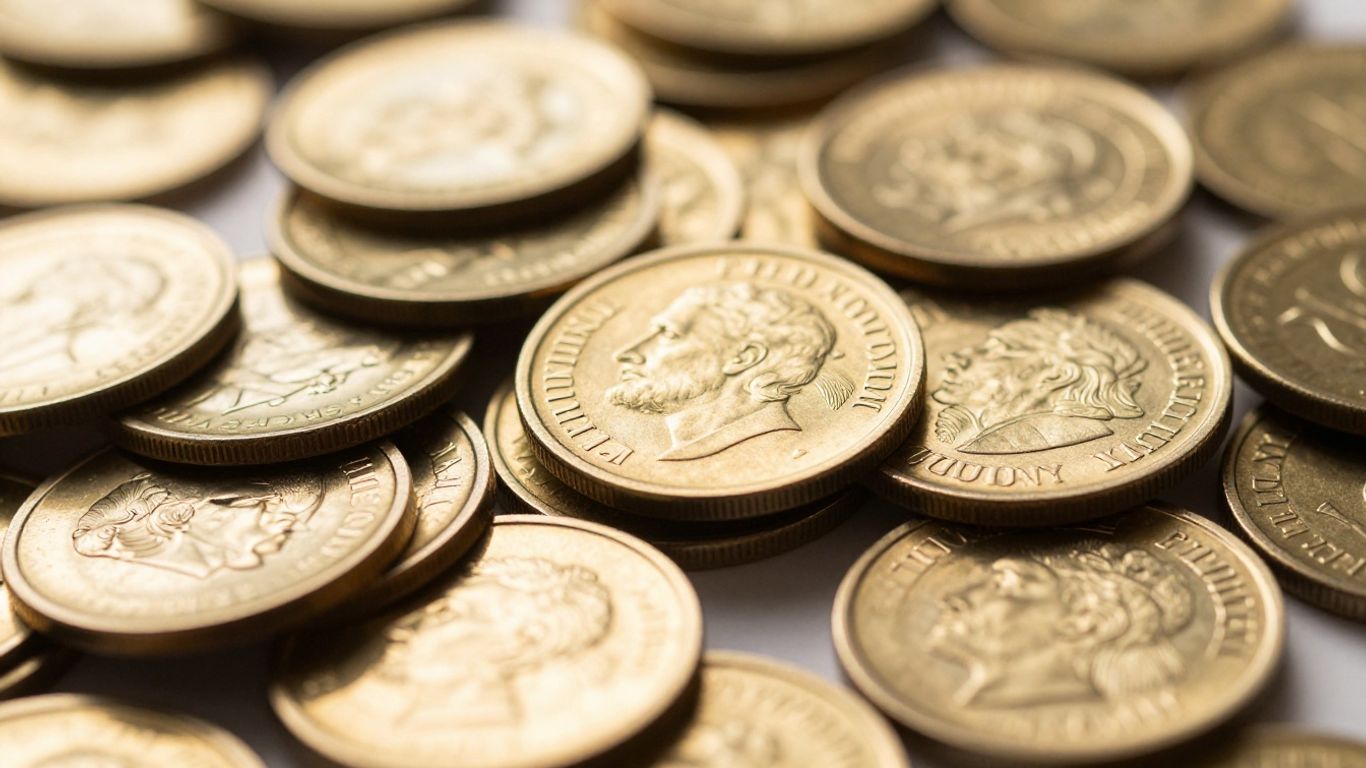
Some coins just cost more because people want them for reasons beyond their metal content. Think about old coins with interesting history or special designs. These often carry a higher price tag, sometimes called a numismatic premium. It’s not just about the gold or silver inside; it’s about the coin’s story and how rare it is. This collector demand can push prices well above the melt value. For instance, a coin that’s hard to find or has a unique minting error will naturally cost more than a brand-new, mass-produced round. It’s a bit like collecting art versus buying a print – one has a built-in scarcity that drives value.
Government-Issued Coins Versus Private Mints
Generally, coins made by official government mints tend to have higher premiums than those from private companies. This is often due to a few things. For starters, government coins, like the American Eagle or Canadian Maple Leaf, are widely recognized and trusted. They have a certain prestige and are often easier to sell later on. Private mints might produce good quality products, but they don’t always have that same level of global acceptance. This difference in recognition and perceived security plays a big role in how premiums are set. You’re paying a bit extra for that official stamp of approval and the ease of resale. For more on this, check out understanding gold and silver prices.
The Evolution of Premiums on Popular Coins
Premiums aren’t static; they change over time, especially for popular coins. Take the American Silver Eagle, for example. Years ago, the premium over spot price was much lower, maybe just a few dollars. But as more people got interested in buying silver and as these coins gained a collector following, the premiums went up. Sometimes, supply chain issues or unexpected demand spikes can cause these premiums to jump quite a bit, as we saw during recent global events. It shows that even well-known bullion coins can see their premiums shift based on market conditions and collector interest. Understanding this historical context can help you anticipate future price movements and make smarter buying decisions. It’s a good idea to keep an eye on how premiums for coins you’re interested in have behaved in the past, which you can learn more about by understanding the difference between spot price and premium.
Calculating Your True Cost: Premium Over Spot
So, you’ve looked at the spot price, that’s the base number, right? But when you actually go to buy a coin, the price tag is always higher. That extra bit is the premium. It’s not just some random markup; it covers a bunch of things like making the coin, getting it to the dealer, and, of course, the dealer’s own costs and profit. Understanding this premium is key to knowing what you’re really paying for your precious metals.
Think of it like buying gas. The wholesale price of oil is one thing, but what you pay at the pump includes refining, transportation, and the gas station’s cut. It’s the same idea with coins. The spot price is just the starting point.
Expressing Premiums: Dollar Amount vs. Percentage
Premiums can be shown in two main ways, and it’s important to know the difference. You’ll see it as a flat dollar amount over the spot price, like "$3 over spot." This is pretty straightforward. Or, you’ll see it as a percentage. This is where things can get a little tricky, especially when comparing gold and silver.
For example, if gold is trading at $2,000 per ounce and the premium is $40, that’s a 2% premium ($40 / $2000 * 100). Now, if silver is at $25 per ounce and the premium is $5, that’s a 20% premium ($5 / $25 * 100). See how the percentage for silver looks much higher? That’s just because silver’s spot price is way lower. It doesn’t necessarily mean silver is a worse deal; it just means the premium is a bigger slice of the pie relative to its spot price. It’s why people often talk about silver premiums seeming "high" percentage-wise.
Analyzing Premium Percentages for Gold and Silver
When you’re looking at gold, premiums tend to be lower as a percentage. This is partly because gold is much more expensive, so a larger dollar amount premium still represents a smaller percentage of the total cost. For instance, a $50 premium on a $2,000 gold coin is only 2.5%. This makes it easier to accumulate more gold for your money if you’re focused purely on metal weight.
Silver, on the other hand, often has higher percentage premiums. A $5 premium on a $25 silver coin is 20%. This is due to factors like higher production volumes for silver, more complex distribution, and sometimes, just how the market is behaving. It’s why many investors focus on generic silver rounds or bars when they want to maximize their silver ounces, as these usually have the lowest premiums available.
Practical Examples of Premium Calculations
Let’s break down a couple of scenarios so it’s crystal clear.
- Scenario 1: Buying Gold Eagles
- Scenario 2: Buying Generic Silver Rounds
- Scenario 3: Buying American Silver Eagles
As you can see, even though the dollar premium for the Gold Eagle is higher, the percentage is lower than for the silver coins. The generic silver round has the lowest percentage premium, making it efficient for acquiring pure silver. The American Silver Eagle, a popular government-issued coin, carries a higher premium due to its recognized status and minting quality, which can be important for resale value.
When you’re calculating your true cost, don’t just look at the spot price. Always factor in the premium, and understand whether it’s expressed as a dollar amount or a percentage. This difference is especially noticeable when comparing gold and silver, and it directly impacts how much metal you get for your money.
Navigating Market Conditions and Premiums
Market conditions can really shake up how much you pay for precious metals over the base price. It’s not just about the gold or silver price you see online; what’s happening in the world plays a big part. Think of it like this: when things get a bit shaky economically, people tend to want to hold onto physical assets like gold and silver. This rush to buy can push up the premiums dealers charge, even if the actual spot price of the metal isn’t moving much.
Impact of Economic Uncertainty on Premiums
When there’s a lot of economic worry going around, you’ll often see premiums climb. This is because more people are looking to buy, and dealers know they can charge a bit more. It’s a classic supply and demand thing. Government-issued coins, like American Eagles or Canadian Maple Leafs, tend to see their premiums go up even more during these times. People feel safer buying from established mints, so those products become more desirable, and dealers can charge more for them. It’s a good idea to keep an eye on the news and economic reports because they can give you a heads-up on potential premium spikes. You can often find good information on economic indicators that might signal these shifts.
Supply Chain Disruptions and Their Effect
Remember back in 2020? That was a wild time for premiums. Mints had trouble making coins because of lockdowns, and at the same time, everyone wanted to buy. This double whammy – less supply and more demand – sent premiums through the roof. Silver premiums, which are usually pretty reasonable, suddenly doubled. It showed how much outside events can mess with prices. Even now, things might not be back to exactly how they were before. The increased interest in metals means that even in normal times, premiums might be a bit higher than they used to be. So, what you paid a few years ago might not be the standard anymore.
Adapting to the 'New Normal' in Premium Pricing
It seems like the days of super-low premiums might be over for a while. The world has changed, and more people are interested in precious metals now. This means the baseline demand is higher. So, when you’re looking to buy, you need to adjust your expectations a bit. It’s not about finding the absolute cheapest price possible, but more about finding a fair price from a dealer you trust. You have to balance the premium cost with the quality of the coin and how easy it will be to sell later. For instance, while generic silver rounds might have the lowest premiums, a well-known government-minted coin might cost a bit more upfront but could be easier to sell when you decide to cash out. It’s all about figuring out what works best for your own investment goals.
Strategic Approaches to Minimize Premiums
If you’re aiming to buy precious metals without paying more than you need to, getting a handle on premium strategies is a must. Your real cost is always more than the spot price, but you can shave off a surprising amount with a little planning and tactical shopping.
Securing Competitive Quotes from Multiple Dealers
The first step in minimizing premiums is simple—compare. Don’t just settle for the first quote or flashy website that pops up in your search. Try to gather:
- Up-to-date pricing from at least three to five reputable dealers
- Full total cost calculations (include shipping, insurance, and payment method fees)
- Quick research on dealer reviews and credentials
A quick table like this can help clarify comparisons:
| Dealer | Coin Type | Premium per Ounce | Shipping Cost | Total Cost |
|---|---|---|---|---|
| Dealer A | Silver Round | $2.50 | $15 | $265 |
| Dealer B | Silver Round | $2.30 | $20 | $263 |
| Dealer C | Silver Round | $2.80 | Free | $268 |
You might notice that the lowest listed premium doesn’t always deliver the lowest total cost, so put everything in context before buying.
Taking a few minutes to compare actual order totals can prevent buyer’s remorse from overpaying a silent fee hidden past the advertised price.
Understanding Wholesale Versus Retail Pricing
Retail buyers almost always pay a higher premium than wholesale accounts do. Knowing this gap is key:
- Wholesale pricing is typically available for large purchases or direct business with mints
- Retail premiums cover more overhead, services, and smaller orders
- Dealers often give bulk discounts—ask what quantities trigger a lower rate
- Sometimes, the secondary market or larger quantity purchases deliver real savings
If you’re not ready to make bulk buys, consider piggybacking with friends or family to reach these lower tiers. That way, everyone benefits from the reduced premium.
Timing Your Purchases for Optimal Premium Rates
Market conditions can swing premiums widely, sometimes faster than spot prices themselves. To avoid the worst spikes:
- Track premium trends by watching dealer sites or price aggregators
- Look for seasonal swings—major gift-giving holidays often push certain coins higher
- Wait out panic buying if possible. Premiums usually mellow once market fear subsides
Premiums can balloon when supply is tight or demand surges. Here’s a basic rundown:
| Situation | Typical Premium Movement |
|---|---|
| High Demand / Low Supply | Premiums jump sharply upward |
| Stable/Normal Conditions | Premiums remain steady |
| Sudden Market Drops | Premiums may rise as spot falls |
It’s smarter to accumulate during quiet, steady market periods. The rush months will almost always cost you more.
In summary, sticking to methodical research, asking about bulk rates, and waiting out hype periods go a long way. These cost-effective strategies mean you actually get more metal for every dollar—and that’s the whole point.
The Significance of Premium Knowledge for Investors
Knowing about premiums really changes how you approach buying precious metals. It’s not just about the spot price you see flashing on the screen; that’s only part of the picture. Understanding premiums helps you figure out your actual cost and, more importantly, how much metal you’re really getting for your money. This knowledge is key to making smarter investment choices.
Maximizing Investment Efficiency Through Lower Premiums
When you’re looking to buy, say, gold or silver, the premium is that extra amount you pay above the metal’s current market value. If you want to get the most metal for your budget, focusing on products with lower premiums makes a lot of sense. Think of it like buying in bulk – you generally get a better price per unit. For instance, generic silver rounds or larger bars often have lower premiums compared to collectible coins like American Eagles. This means your dollar buys more ounces of pure metal, which can add up significantly over time, especially if you’re making regular purchases. It’s about maximizing the amount of the actual commodity you hold.
Informed Decision-Making in a Competitive Market
Being aware of premium ranges helps you spot good deals and avoid overpaying. If you know that a typical premium for a certain type of coin is usually around $5, but a dealer is asking $15, that’s a red flag. It prompts you to shop around and compare prices from different sellers. This comparison is vital. You should always check prices from a few reputable dealers to get a feel for what’s reasonable. Remember, premiums can change quickly based on market demand and supply, so staying informed is an ongoing process. This awareness helps you avoid the trap of thinking you’re getting a deal when you’re actually paying too much.
Balancing Premium Costs with Product Quality and Liquidity
While chasing the lowest premium is tempting, it’s not always the best strategy. Sometimes, products with slightly higher premiums are worth it. These might be government-issued coins that are easier to sell later because they’re well-known and trusted. They often have better liquidity, meaning you can sell them faster when you need to. It’s a trade-off: you pay a bit more upfront for potentially easier resale down the line. You have to weigh your goals. Are you looking to just stack as much metal as possible, or do you need something that’s readily convertible back to cash? Thinking about these factors helps you pick the right products for your specific investment plan. It’s about finding that sweet spot between cost, quality, and how easily you can turn your investment back into cash. For example, understanding the different market cycles in cryptocurrencies can also inform broader investment strategies, showing how various asset classes react to different economic conditions [3afa].
The world of precious metals investing isn’t just about the metal’s price. It’s also about the extra costs, the premiums, that come with buying it. These premiums aren’t fixed; they move around based on all sorts of things, from how much is being made to how many people want to buy. Knowing this helps you make sure you’re not paying more than you need to, which means you end up with more actual metal for your money. It’s a simple idea, but it makes a big difference in how well your investments do over time.
Analyzing Premium Differences Across Coin Types
When you’re looking at buying precious metals, you’ll notice that not all coins are priced the same, even if they contain the same amount of gold or silver. This difference comes down to the premium over the spot price, and it really changes depending on what kind of coin you’re looking at. It’s not just about the metal content; a lot of other things play a role.
Lowest Premium Bullion Products
If your main goal is to get the most metal for your money, you’ll want to look at products with the lowest premiums. These are typically generic rounds or bars from less-known private mints. They don’t have the fancy designs or the government backing that drives up prices. Think of them as the no-frills option for pure bullion.
- Generic Silver Rounds: Often the cheapest way to buy silver ounces.
- Generic Gold Bars: Similar to silver rounds, these offer pure gold at a lower markup.
- Large Bars (100 oz, Kilo): Economies of scale often mean lower premiums per ounce for larger bars.
- Lesser-Known Mint Products: Mints without strong brand recognition usually have to price more competitively.
These products are all about maximizing your metal acquisition. They’re a straightforward play on the metal’s value, without the added costs associated with collector appeal or mint prestige. If you’re focused purely on accumulating ounces, this is where you’ll find the best deals.
Mid-Range Premiums for Popular Formats
This category includes some of the most recognizable bullion coins. They offer a balance between the metal’s value and a bit of brand recognition or collector interest. You’ll see products here that are popular for their consistent quality and relative ease of resale. For instance, American Silver Eagles, while having a higher premium than generic rounds, are widely traded and understood by most dealers and collectors. The spot price for cryptocurrencies can vary significantly between different regions. These variations are influenced by factors such as the availability of fiat currency on-ramps, capital controls, the number of exchanges operating in a region, and local market demand. To understand these differences, it’s important to examine regional liquidity and other relevant market conditions. A spot Bitcoin ETF could potentially lower the premium that institutional investors typically pay for Bitcoin.
- American Gold Eagles: A popular choice for gold investors.
- American Silver Eagles: Widely recognized and traded silver coins.
- Canadian Maple Leafs: Another well-known government-issued bullion coin.
- Popular Branded Bars: Bars from established private mints like Scottsdale or Valcambi.
Higher Premiums for Government-Minted Coins
This is where you find coins that blend intrinsic metal value with significant numismatic appeal or collector demand. These items often come from government mints and might have limited mintages, special finishes (like proof coins), or historical significance. The premiums here can be substantially higher because you’re paying not just for the gold or silver, but also for the coin’s collectibility, its rarity, and its status as a piece of history or a special edition.
- Pre-1933 U.S. Gold Coins: These coins have both gold content and historical collector value.
- Pre-1965 90% Silver Coins (Junk Silver): While often considered lower premium, certain dates or conditions can command higher prices.
- Proof and Special Edition Coins: Limited runs and special finishes significantly increase their price over spot.
- Modern Collectible Series: Annual sets or special issue coins from government mints.
The premium on these coins reflects a combination of their precious metal content and their desirability among collectors. This means their price can move based on both metal markets and collector trends, making them a different kind of investment than pure bullion.
Leveraging Tools for Premium Over Spot Calculations
Figuring out the real cost of your precious metals purchase involves more than just glancing at the spot price. You need tools to help you see the full picture, especially when it comes to those premiums. Luckily, there are several ways to get a handle on this.
Utilizing Real-Time Spot Price Data
The spot price is your starting point, and it changes constantly. Think of it like the fluctuating price of gas at the pump – it’s the base value of the metal itself. To get accurate premium calculations, you need to know the current spot price. Many financial websites and specialized precious metals dealers provide live feeds of this data. Having access to up-to-the-minute spot prices is the first step in understanding how premiums are applied. You can often find this data freely available, but for more advanced tracking, especially if you’re also into digital assets, services like CoinStats offer real-time price data from various sources.
Employing Online Calculators for Estimates
Once you have the spot price, you need to factor in the premium. Many dealers and investment sites offer online calculators. You input the product you’re interested in, the quantity, and sometimes the dealer’s specific premium, and it spits out your total cost. These are super handy for quick comparisons between different products or dealers. They usually show the premium as both a dollar amount and a percentage over the spot price, which is really useful for seeing where your money is going. It helps you avoid the trap of just focusing on the spot price and ignoring the markup, which is key to understanding the difference between spot price and premium.
Understanding Dealer-Provided Premium Information
Dealers are the ones setting the premiums, so their information is vital. When you look at a product on a dealer’s website, they should clearly state the price. By comparing this price to the current spot price, you can calculate the premium yourself. Some dealers are more transparent than others. They might list the premium separately, or you might have to do the math. It’s a good idea to ask questions if it’s not clear. Here’s what to look for:
- Product Price: The total price the dealer is asking for the item.
- Spot Price: The current market value of the metal.
- Calculated Premium: Product Price – Spot Price = Premium in dollars.
- Premium Percentage: (Premium in dollars / Spot Price) * 100 = Premium percentage.
It’s also smart to ask dealers about any additional fees, like shipping or payment processing costs, as these add to your total investment. Sometimes, a slightly higher premium from a reputable dealer is worth it for the peace of mind and better customer service they provide.
Conclusion
Understanding premium over spot calculations for coins is not just about numbers; it’s about making smarter investment choices. By knowing what influences these premiums, how to calculate them, and strategies to manage them, you can significantly improve your investment efficiency. This knowledge empowers you to buy more metal for your money, leading to better potential returns. Whether you’re a seasoned investor or just starting, mastering premium calculations is a key step toward successful precious metals ownership.
Frequently Asked Questions
What's the difference between the spot price and the premium for a coin?
Think of the spot price as the basic price of the metal itself, like the price of gold or silver on a global market. The premium is the extra bit you pay on top of that spot price. This extra cost covers things like making the coin, shipping it, and the dealer’s profit. So, your total cost is the spot price plus the premium.
Why do some coins cost a lot more than others, even if they have the same amount of metal?
That’s because of the premium! Coins that are harder to make, have a well-known brand name (like from a government mint), or are really popular with collectors will have higher premiums. If there isn’t much of a certain coin available, or if lots of people want it, the premium can go up too.
How do I calculate the total price I'll pay for a coin?
It’s pretty simple! You take the current spot price of the metal (like gold or silver) and add the premium that the dealer is charging for that specific coin. So, if silver is $25 an ounce spot price, and the coin has a $4 premium, your total cost is $29 per ounce.
Are premiums always the same for all dealers?
Nope, not at all. Different dealers can charge different premiums for the exact same coin. It’s like shopping for anything else – prices can vary. That’s why it’s a good idea to compare prices from a few different dealers before you buy.
Do bigger orders mean lower premiums?
Usually, yes. Dealers often give better rates, meaning lower premiums, if you buy in larger quantities. Buying a single coin might have a higher premium per ounce than buying a whole tube of coins or a large bar.
What's the deal with gold coins having lower percentage premiums than silver coins?
It’s mostly about the price difference. Gold is much more expensive than silver. So, a $30 premium on a $2,000 gold coin is a smaller percentage (1.5%) than a $8 premium on a $25 silver coin (which is 32%). The dollar amount of the premium might be higher for gold, but the percentage is often lower.
Can market news or world events change coin premiums?
Absolutely. If there’s a lot of economic worry or uncertainty, more people might want to buy precious metals, which can drive up demand and therefore premiums. Also, if something happens that makes it hard to get new coins made or shipped, that can affect premiums too.
Are there ways to pay less in premiums?
Yes, there are! You can try to get quotes from several dealers to find the best price. Sometimes, buying less popular but still pure bullion products can get you a lower premium. Also, paying attention to when you buy can help; sometimes, prices are better at certain times of the year or when the market is calmer.