
Diving into coin collecting can be a bit overwhelming at first, especially when you start thinking about how to tell if a coin is in good shape or not. It’s like learning a new language, but for coins. Figuring out a coin’s condition, or grade, is a big part of the hobby. This guide will walk you through the basics of home coin grading techniques, helping you get a better handle on what makes a coin desirable, whether you’re looking to buy, sell, or just understand your collection better. We’ll cover the tools you need, what to look for, and some common mistakes to avoid. It’s all about getting a clearer picture of what you’re holding.
Key Takeaways
- Understanding the Sheldon Scale (1-70) is central to assessing coin condition, with higher numbers indicating better preservation.
- Good lighting and magnification are vital tools for spotting wear, marks, and original mint luster during home coin grading techniques.
- Assessing a coin’s strike (how well the design details were impressed) and surface (looking for marks, scratches, or corrosion) are key steps.
- Recognizing wear on high points is important for circulated coins, while luster and the absence of marks are critical for uncirculated grades.
- While technical grading is important, a coin’s overall ‘eye appeal’—its aesthetic qualities like toning and sharpness—also plays a role in its perceived value.
Understanding The Fundamentals Of Home Coin Grading Techniques
Getting a handle on coin grading is a big step for anyone serious about their collection. It’s not just about knowing if a coin is old or rare; it’s about understanding its condition, which directly impacts its worth. Think of it like assessing a classic car – the mileage, the rust, the original paint all play a part. For coins, this condition assessment is what we call grading.
The Importance Of Accurate Coin Grading
Why bother with accurate grading? Well, it’s the language of the coin world. Without it, you’re essentially guessing at a coin’s value. Knowing how to grade helps you make smarter buying decisions and avoid overpaying for a coin that isn’t quite what it seems. It also builds confidence when you’re ready to sell or trade. Imagine trying to sell something without knowing its true condition – it’s a recipe for misunderstandings. This skill is key for anyone looking to build a solid collection or even just understand what they already have. Learning the basics of coin grading is a good start.
Navigating The Sheldon Scale
Most coins, especially those from the U.S., are graded using the Sheldon Scale. This system uses numbers from 1 to 70. A ‘1’ means the coin is barely recognizable, while a ’70’ represents a perfect specimen with no flaws whatsoever. It sounds simple, but there are many steps in between, each with its own description. For example, you’ll hear terms like ‘Good-4’, ‘Very Fine-15’, ‘Extremely Fine-40’, and ‘Mint State-65’. Each number represents a specific level of wear and preservation.
Here’s a quick look at some key points on the scale:
- Poor (P-1): Barely identifiable, major design elements are worn away.
- Good (G-4): Design is visible but worn flat, lettering may be weak.
- Very Fine (VF-20): Design details are clear, but some wear is visible on high points.
- Extremely Fine (EF-45): Slight wear on the highest points, but most details remain sharp.
- About Uncirculated (AU-58): Very minor wear, almost looks uncirculated.
- Mint State (MS-65): No wear from circulation, often with good luster and few distracting marks.
Understanding where a coin fits on this scale is the first major hurdle in grading. It’s the backbone of numismatics, providing a common ground for collectors and dealers alike. You can find more details about the 70-point scale used by professionals.
Key Factors In Coin Condition Assessment
When you’re looking at a coin to grade it, you’re really checking out a few main things. First, there’s the strike, which is how well the coin’s design was pressed into the metal. A strong strike means all the little details are sharp and clear. A weak strike can leave parts of the design looking mushy or incomplete, even on a coin that hasn’t been handled much. Then you have the surface. This is where you look for any marks, scratches, or imperfections that might have happened after the coin left the mint. Things like bag marks (scratches from being tossed around in mint bags) or even tiny nicks can affect the grade. Finally, there’s luster. This is the original shine or glow a coin has when it’s brand new. Circulation wears this down, so a coin with strong, original luster is usually more desirable. These three factors – strike, surface, and luster – are the building blocks for assessing any coin’s condition.
Essential Tools For Home Coin Grading Techniques
So, you want to get serious about grading coins from your own collection? That’s great! It really doesn’t take a whole lot to get started, but having the right gear makes a world of difference. Think of it like trying to bake a cake without measuring cups – you might end up with something edible, but it probably won’t be your best work. The same goes for coin grading; the right tools help you see what’s really going on with your coins.
Magnification For Detailed Inspection
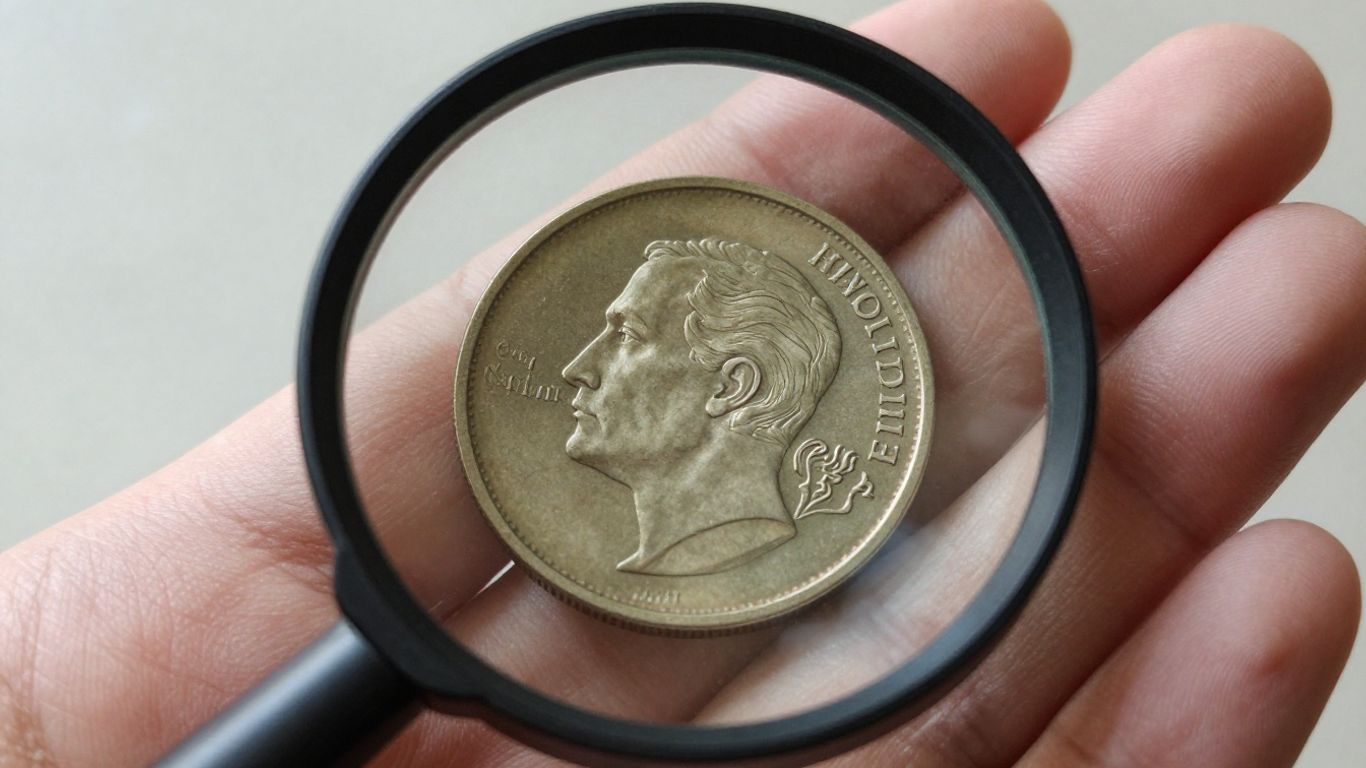
This is probably the most important tool you’ll need. You can’t see all the little nicks, scratches, or the sharpness of the design details with just your eyes. A good magnifying glass, often called a loupe in coin collecting circles, is key. Most folks find something in the 5x to 10x magnification range works well. This lets you really zoom in on those high points where wear shows up first and spot those tiny marks that can affect a coin’s grade. You’re looking for clarity and detail that the naked eye just can’t pick up. It’s amazing what you can see when you magnify a coin, from faint mint-made imperfections to signs of handling.
Proper Lighting For Accurate Assessment
Good lighting is your best friend when grading. You need to see the coin’s surface clearly, including its original mint luster. A desk lamp with an adjustable arm is ideal. You want to be able to move the light source around the coin to catch different angles. This helps you see the coin’s surface texture and any imperfections that might be hiding in shadows. Harsh, direct light can sometimes wash out details, while too little light means you’ll miss important clues about the coin’s condition. It’s all about finding that sweet spot where the coin’s details and luster pop.
Handling Coins Without Damage
This one is super important, especially if you plan on keeping your coins in good shape. You absolutely do not want to add new scratches or fingerprints to the coins you’re trying to grade. The best way to handle coins is by their edges. Many collectors use cotton gloves for this. They prevent the oils from your skin from getting on the coin’s surface, which can cause problems over time, especially with silver coins. A soft, lint-free cloth is also handy for gently wiping away any dust, but be careful not to rub the coin’s surface, as this can create fine scratches. Remember, the goal is to assess the coin as it is, not to alter its condition.
Here’s a quick rundown of what to keep handy:
- Magnifier/Loupe: Aim for 5x to 10x magnification.
- Good Lighting: An adjustable desk lamp is perfect.
- Cotton Gloves: To keep oils off the coin surface.
- Soft, Lint-Free Cloth: For gentle dusting.
When you’re starting out, it’s easy to think that every coin is in better shape than it actually is. You might overlook a tiny scratch or mistake a mint-made imperfection for damage. Having these basic tools helps you move beyond just a casual glance and start to really see the coin. It’s the first step toward understanding the Sheldon Scale and what makes one coin grade higher than another.
Evaluating A Coin's Strike And Detail
Understanding how to judge a coin’s strike and detail is a big step in figuring out its true quality. The way a coin’s design stands out, how sharp its features appear, and whether any part is faint or missing all affect how collectors value it. A coin with a strong, clear strike always draws more interest—even if two coins hold the same technical grade.
Assessing The Sharpness Of Design Elements
When you start inspecting a coin, check if the little lines, letters, and symbols are easy to see. Coins should have crisp edges and well-defined elements, like clear lettering or feathers if there’s a bird. Some tips for assessing sharpness are:
- Focus on raised parts (like Liberty’s hair or an eagle’s feathers) for the sharpest lines.
- Compare the coin to reference images to see what a well-struck coin should look like.
- Watch out for mushy or blurry spots, which suggest a weak strike or worn dies.
Here’s a general way to rate sharpness:
| Feature | Well-Struck | Weak Strike |
|---|---|---|
| Main Motif | Crisp, detailed | Blurred, low detail |
| Lettering | Full, clear, raised | Flat or incomplete |
| Edge Features | Distinct and obvious | Faint or missing |
Identifying Weaknesses In The Strike
Even coins fresh from the mint can end up with faint areas. A weak strike usually shows as fuzzy or incomplete details, no matter how unworn the surface is. To spot a weak strike:
- Hold the coin under strong light at different angles.
- Compare features on both sides for any vague spots.
- Use a 10x loupe to zoom in — you’ll see weaker areas stand out better.
You can read more about why strike matters and how it affects grading from this piece on understanding coin details.
Spotting a weak strike early can save you from overvaluing a coin that might look great at first glance but lacks depth in key areas.
Recognizing Full Mint Detail
A coin with full mint detail will have every element sharp and completely visible. This is especially prized—collectors look for things like “full bands” on Mercury dimes or “full steps” on Jefferson nickels as special markers of a great strike. Signs of full mint detail:
- All design features are present, with no parts wiped out or soft.
- High points show as much detail as lower design features.
- What looks frosty or well-textured under light instead of looking flat or worn.
Keep in mind, even a coin that seems flawless might hide soft areas if you don’t look closely. Take your time; evaluating strike and detail gets easier as you compare more coins and learn to spot important differences.
Assessing A Coin's Surface And Luster
When you grade coins at home, one of the biggest challenges is judging the surface and luster without letting bias get in the way. The surface condition tells you a lot about a coin’s journey, while luster helps distinguish between original and heavily handled pieces. Taking your time with both of these can boost your accuracy as a collector.
Identifying Contact Marks And Imperfections
A coin’s surface holds clues to its past: each scratch, mark, or ding lowers its market value. You want to look for any disruptions in the smoothness or reflectiveness of the metal, especially on the high parts of the design.
- Use a magnifying tool for close inspection.
- Watch for tiny scratches—parallel hairlines often mean the coin has been cleaned.
- Pay attention to rim nicks, dents, or clusters of marks in one spot.
| Imperfection Type | Typical Cause | Impact on Grade |
|---|---|---|
| Hairline scratches | Cleaning or wiping | Moderate to high |
| Rim nicks | Dropping or contact | Moderate |
| Bag marks | Coin-to-coin contact | Mild to moderate |
Once you spot an imperfection, consider both its size and where it’s located. Marks on the main design hurt the grade more than those hidden near the rim.
Understanding Mint Luster And Cartwheeling
Luster is the natural shine a coin gets from the minting process. When you tilt a true mint state coin under a lamp, you should see an even, spinning light reflection, sometimes called a "cartwheel" effect. Learning to spot this takes practice, but once you do, it’s hard to miss.
- Rotate the coin under a direct light source.
- Watch for a clear, spinning light pattern that covers the whole surface.
- Dull or flat areas can show where the luster is worn or lost.
Blockquote:
The cartwheel effect isn’t just pretty—it’s one of the best signs that a coin hasn’t been over-cleaned or messed with.
Detecting Signs Of Cleaning Or Damage
Unnatural surfaces are a red flag. Cleaning attempts can leave a coin dull or with fine lines. Chemical "dips" often strip away luster and leave odd, uneven spots. Being able to spot these issues means you won’t overpay for a coin that’s been altered from its original state.
- Look for strange-colored spots or streaks across the surface.
- Check for scratches that follow a pattern.
- Compare your coin’s shine and texture to known, original coins from guides or reputable sources like this coin grading overview.
Even subtle cleaning can devalue a coin, so it’s best to be extra careful whenever the surface looks “off.”
You don’t need fancy equipment—just good light, patience, and a careful eye. Each coin you examine helps you learn what untouched original surfaces—and real mint luster—look like up close. Don’t rush. Sometimes it’s the littlest mark or hint of lost shine that makes the biggest difference.
Recognizing Wear On Circulated Coins
When you’re looking at coins that have seen some action out in the world, the main thing to figure out is how much wear they’ve picked up. This wear is what separates a circulated coin from a mint state one. It’s not just about how old a coin is; it’s about how much it’s been handled and passed around. Think of it like a favorite pair of jeans – the more you wear them, the more they show it, especially in certain spots. Coins are no different.
Examining High Points For Wear
The first place to check for wear is on the coin’s highest points. These are the parts of the design that stick out the most and are the first to get rubbed down when a coin is in circulation. On U.S. coins, this often means looking at:
- Liberty’s hair and cheek on older coins.
- The eagle’s head and wings on the reverse of many designs.
- The tips of Lincoln’s hair on the Lincoln cent.
- The highest points of the lettering and date.
The more these high points are worn smooth, the higher the grade of wear. You’re looking for a loss of detail. A coin that’s just starting to show wear might have just a slight softening on these areas, while a heavily worn coin will have these details almost completely gone.
Distinguishing Between Grades With Minimal Wear
This is where things can get a bit tricky, especially when you’re trying to tell the difference between grades that are pretty close, like About Uncirculated (AU) and Extremely Fine (XF). Both have seen some circulation, but the amount of wear is different.
- Extremely Fine (XF): You’ll see noticeable wear on the high points, but most of the coin’s original detail is still there. The luster might be mostly gone from the high points, but it could still be present in the protected areas.
- About Uncirculated (AU): This is where the wear is very light. You might see just a hint of wear on the very highest points, or maybe just a slight rub. The coin will still look very sharp overall, and much of the original mint luster should still be visible.
It takes practice to see these subtle differences. Comparing your coin to known examples is a big help here. You can find lots of pictures online or in grading guides that show what each grade looks like. For instance, looking at how the design elements are struck can give you clues about wear.
Understanding Terms Like 'About Uncirculated'
‘About Uncirculated’ (AU) is a grade that means a coin has seen some circulation but is very close to being uncirculated. It’s a step above coins that show clear signs of wear. On an AU coin, you’ll see only very light wear, usually confined to the highest points of the design. The coin will still retain a good amount of its original mint luster, which is that frosty or satiny sheen you see on brand-new coins. It’s that almost-perfect state that collectors often seek. It’s important to remember that even coins with ‘Details’ grades, which indicate specific issues, can still fall into categories like About Uncirculated based on their overall wear. Circulated coins are graded on a spectrum, and AU sits near the top of that spectrum before you get into the uncirculated categories.
The Role Of Eye Appeal In Grading
Eye appeal is a big deal when it comes to judging coins. Even if a coin checks all the technical boxes, how it catches your eye can bump it up or down a notch on the grading scale. Professional graders even consider eye appeal as the most important element in determining the final grade of a coin—sometimes, it’s the difference between an average and an exceptional piece.
Beyond Technical Grade: Aesthetic Qualities
The technical side of grading—striking, marks, and luster—is only part of the story. Eye appeal is more about a coin’s visual character. This considers color, balance, and overall look, making some coins stand out more than others even within the same grade. A technically perfect coin that’s unattractive might not fetch top value, while a technically average coin with great visual presence often does better in the market.
- Color uniformity and natural toning
- Absence of distracting spots, stains, or streaks
- Balanced contrast between design and background
Distinctive visual traits can make a coin more desirable, regardless of small flaws.
Toning And Its Impact On Appeal
Toning is a natural process—coins can develop colors over time, often due to reacting with air or storage materials. While some collectors value original, colorful toning, others prefer a more uniform, silver-gray shade. Toning can greatly increase or decrease a coin’s appeal:
| Toning Type | Collector Interest | Impact on Value |
|---|---|---|
| Attractive rainbow | High | Often positive |
| Patchy/dull | Low | Can reduce value |
| Even antique gold | Moderate | Frequently neutral |
If a coin’s toning looks unnatural (such as bright, harsh colors or spotted patches), it may have been artificially altered, which almost always lowers both grade and desirability.
A coin’s color and toning can be the first thing collectors notice, sometimes overshadowing technical details like strike and luster.
Subjectivity Versus Objective Grading
Eye appeal introduces a subjective element into an otherwise objective process. Grading guidelines help, but opinions on what “looks good” will always differ. Even expert graders sometimes disagree, especially with unique coins that just don’t fit typical patterns.
Some subjective factors to remember:
- What looks outstanding to one collector might seem average to another
- Market trends can change, making bright or dark toning more or less sought after over time
- A coin’s overall harmony—composed of subtle factors—often wins out over strict technical points in premium grades
For an overview of how eye appeal and other grading factors are used by professionals, check out this summary of grading elements.
In summary, eye appeal is what gives coins their “wow” factor. Don’t overlook it when grading at home—sometimes it’s the single thing that turns an ordinary coin into a collector’s highlight.
Common Pitfalls In Home Coin Grading Techniques
Grading coins at home can be rewarding, but it’s easy to stumble into the same mistakes that trip up even seasoned collectors. Accuracy in grading often hinges more on what you overlook than what you see. Below are some typical missteps and tips on how to avoid them.
Overlooking Minor Surface Imperfections
Tiny scratches, small dings, or slight nicks can make a big difference in a coin’s grade. Many new collectors will overlook these, seeing only the overall shininess or age. It’s vital to check every detail with proper magnification because even tiny marks can lower a coin’s value by a whole grade.
- Use a high-quality magnifier (10x is standard).
- Look at the coin under different lighting angles to pick up subtle flaws.
- Create a checklist of areas where marks often show: rims, fields, and high points of the design.
Even one faint mark, invisible to the naked eye, can make a nice coin just another average example in a dealer’s tray.
For more about how missing small imperfections affects value, see this overview of mistakes collectors make.
Misinterpreting Mint State Versus Proof Coins
Mint State (MS) and Proof (PR) coins might look similar, especially to beginners, but they’re produced differently and evaluated by distinct standards. Proof coins are meant for collectors and have a special mirror finish, while MS coins are struck for circulation. Confusing these two can lead to assigning the wrong grade and, often, mispricing.
Here’s how to tell them apart:
- Proof coins: Deep, mirror-like backgrounds, often with frosted raised areas.
- Mint State coins: Uniform surface, usually frosty or satiny, sometimes with bag marks from mint handling.
- Check the edge—proofs sometimes have a sharper rim.
A quick table for clarity:
| Feature | Mint State (MS) | Proof (PR) |
|---|---|---|
| Intended for | Circulation | Collectors |
| Finish | Frosty/satiny | Mirror-like |
| Detail | Regular | Sharper, more defined |
The Danger Of Artificial Alterations
Trying to clean or otherwise "improve" a coin at home can seriously damage it. Some methods, like chemical dips or surface polishing, mask the coin’s true state and hurt value instead of helping. The altered surfaces often appear unnatural: too bright, with lost texture, or sudden color changes. When the coin eventually gets into the hands of an expert, these tricks are easy to spot and discount right away.
Common signs of artificial alteration:
- Irregular shine or loss of mint luster
- Unnatural, sharp color differences (especially on copper)
- Evidence of abrasions, hairline scratches in one direction
Once a coin has been cleaned, it can’t ever return to its original state. Buyers and grading services tend to penalize this harshly.
Avoiding these traps will help you keep your grades honest and your coins as valuable as possible. With time, you’ll get better at spotting these pitfalls and saving yourself (and your coins) from lost value and disappointment.
Utilizing Reference Materials For Grading
Access to solid reference materials is a game changer when grading coins at home. The right coin guide or database provides context for what you see when examining your coins, making your grading much more consistent. Whether you are just starting or have years of experience, these resources can help you avoid common mistakes and recognize subtle differences that might impact a coin’s value.
The Value Of Grading Guides And Books
Books on coin grading are one of the best investments for any collector. Many experienced hobbyists will tell you to "buy the book before the coin." With well-known guides like the Official ANA Grading Standards or Photograde, you get clear photos and explanations of each grading level. These tools show worn spots, luster changes, and minor damage so you aren’t guessing. Benefits of using grading books:
- Standardized grading terms help you keep your scores uniform
- Clear images let you compare your coins’ exact condition
- Descriptions explain why a coin is graded a certain way
| Book Title | Focus |
|---|---|
| Official ANA Grading Standards | US coins, Sheldon scale |
| Photograde: Official Photographic Grading Guide | Photo comparisons |
| Grading Coins by Photographs | US and world coins |
Take your time flipping through grading guides during an assessment; they often include nuances and key visual cues that will build your confidence when you’re unsure about a grade.
Comparing Your Coin To Standardized Images
Images are practical for side-by-side checks. Viewing reference pictures of actual coins at each grade makes even small differences much clearer. Here’s a simple approach:
- Find an image that matches the year and type of your coin.
- Check the high points and compare wear, marks, and overall tone.
- Move up or down the grading spectrum until you see a true match.
Having a reliable online coin guide can make this method much easier, especially for rarer or specialized types. For many collectors, an established coin guide or detailed coin database is handy to keep open on your desk while working.
Leveraging Online Resources And Databases
Web-based references are helpful for research and fast comparisons. Many sites let you search by year, mint mark, and even show auction prices for your specific grade.
- Online grading scales with zoomable images
- Price histories for different grades
- User forums to ask about tough-to-grade items
Besides books and printed materials, a thorough graded coin value explanation often includes sections on using digital resources, including step-by-step tutorials.
If you have both print and digital references, you’ll probably see your grading accuracy improve over time. Grading coins can be confusing without a point of reference, but with these materials at hand, you’ll be judging like a pro in no time.
Special Considerations For Specific Coin Types
When you start grading coins at home, you’ll notice not every coin fits into a single box. Different coin types—proofs, copper coins, or coins with special mint marks—come with their own quirks. Learning these differences will help you grade more accurately and avoid costly mistakes.
Grading Proof Coins
Proof coins are a different animal compared to regular strikes. Unlike coins meant for everyday use, proofs are made for collectors, usually with extra sharp strikes and a shiny, mirror-like finish.
- Examine the fields (flat areas) and devices (raised elements) for imperfections; even minuscule marks can lower a proof’s grade.
- Watch for haze, fingerprints, or hairlines—these aren’t normal for proof coins straight from the Mint.
- Be alert for "cameo" contrast, where the devices are frosted but the fields are mirrored; this can increase a proof coin’s eye appeal.
Proof coins need careful handling. Even slight touches can leave permanent marks, so it’s best to use gloves and only hold the coin by the edge.
Understanding Variations In Copper Coins
Copper coins tend to show their age in their own way: color changes. When grading copper, don’t just look at the wear—consider the color and surface quality, which can seriously impact value.
- Original red color (RD) brings the highest prices; red-brown (RB) and brown (BN) typically sell for less.
- Even new copper coins can tone to red-brown in a few years if exposed to air and humidity.
- Watch for signs of cleaning or artificial color changes—these are common and will lower a coin’s grade.
| Color Code | Typical Description | Collector Value |
|---|---|---|
| RD | Bright red | Highest |
| RB | Red-brown mix | Medium |
| BN | Fully brown | Lower |
Identifying Key Dates And Mint Marks
Some coins are worth more simply because they’re rare or have a specific mint mark. Always check carefully—these small details can mean a big price jump.
- Mint marks show where a coin was made (like "D" for Denver, "S" for San Francisco). Sometimes, mints produced far fewer coins than others.
- Key dates—years when few coins were struck—can be the difference between a $5 coin and a $500 coin.
- Check for well-known varieties, like double dies or errors. These can bring serious premiums and often need special identification skills.
When you’re unsure if a variation is important or just a minor feature, it can help to refer to "standardized grading systems" like those originally introduced by the ANA (coin grading standards). They offer photos and clear criteria, which is handy for tricky coins.
Attention to subtle details—like a tiny mint mark placement or a hint of doubling—can make all the difference when home grading special coin types.
When To Seek Professional Coin Grading
Look, grading coins at home is a great skill to have. It helps you understand what you’re buying and can save you from getting a raw deal. But let’s be real, there are times when you just need to call in the pros. It’s not about admitting defeat; it’s about being smart with your collection.
Recognizing The Limits Of Home Grading
Sometimes, you’ll look at a coin, and it just feels… off. Maybe it’s a really subtle wear pattern, or perhaps the luster is unusual. These are the moments where your own eyes and your grading guides might not be enough. The difference between a Mint State-65 and a Mint State-66 can be worth a lot of money, and spotting that tiny detail often requires specialized equipment and a trained eye. It’s easy to miss things like microscopic scratches, slight rim dings, or even artificial toning that’s been done to make a coin look better than it is. These little imperfections can really knock a coin’s grade down, and if you’re not careful, you might end up with a coin that’s worth less than you thought.
- Subtle Wear: Identifying wear on high points is one thing, but distinguishing between a coin that’s just touched the edge of wear and one that’s clearly worn can be tricky. This is especially true for coins that are supposed to be in top condition.
- Luster and Surface: While you can see luster, understanding its quality – whether it’s original, dipped, or altered – takes practice. Original mint luster is often described as having an
Putting Your Grading Skills to Work
So, we’ve gone over how to look at coins, what to watch out for, and why it all matters. It might seem like a lot at first, but the more you practice, the better you’ll get. Remember, even small details can make a big difference in a coin’s grade and, well, its value. Don’t be afraid to compare your coins to pictures online or even get a second opinion if you’re unsure. And hey, if you’re dealing with really special coins, sending them off to the pros for grading is always an option. It’s a skill that really pays off, helping you make smarter choices whether you’re buying, selling, or just enjoying your collection. Keep looking closely, and happy collecting!
Frequently Asked Questions
What is coin grading and why is it important?
Coin grading is the process of judging a coin’s condition based on its appearance, wear, and other features. It’s important because a coin’s grade can greatly affect its value and how much collectors are willing to pay for it.
What tools do I need to grade coins at home?
To grade coins at home, you’ll need a magnifying glass or loupe (5x to 10x magnification works best), a bright desk lamp, and cotton gloves for safe handling. A soft cloth is also helpful to protect coins from scratches.
How does the Sheldon Scale work in coin grading?
The Sheldon Scale is a system that rates coins from 1 to 70, with 1 being the poorest and 70 being perfect. This scale helps collectors and dealers speak the same language when describing a coin’s condition.
What is 'eye appeal' in coin grading?
Eye appeal means how attractive a coin looks overall. Even if two coins have the same technical grade, one with better color, shine, and fewer marks might be more valuable because it looks nicer.
How can I tell if a coin has been cleaned or damaged?
Look for signs like tiny scratches that go in the same direction (called hairlines), dull or unnatural shine, or odd colors. These can mean a coin was cleaned, which can lower its value.
What is the difference between Mint State and Proof coins?
Mint State coins are made for regular use and have no wear, while Proof coins are specially made for collectors. Proof coins are struck with extra care, giving them shiny, mirror-like surfaces and sharp details.
When should I use a professional coin grading service?
You should think about using a professional service if your coin is rare, valuable, or if you want to sell it. Professionals can give an official grade and put the coin in a sealed holder, which builds trust with buyers.
How can I avoid common mistakes when grading coins at home?
Always use good lighting and magnification, handle coins gently, and compare your coins to photos in grading guides. Don’t ignore small scratches or other marks, and avoid cleaning your coins, as this can hurt their value.