
Coin toning, that colorful patina that develops on a coin’s surface, can really make a piece stand out. Sometimes it happens all on its own over many years, and other times, people try to create it. This guide looks into those artificial coin toning methods, exploring how they’re done, how to spot them, and what they mean for collectors. It’s a bit of a deep dive into the science and art behind those eye-catching colors.
Key Takeaways
- Understanding coin toning involves recognizing both natural patina development and the spectrum of colors that can appear.
- Distinguishing between natural and artificial toning is vital, as it impacts a coin’s authenticity, ethical considerations, and market value.
- Common artificial coin toning methods include chemical treatments, heat application, and environmental simulation techniques.
- Detecting artificial toning requires careful examination, looking for unnatural patches, specific color sequences, and using microscopic analysis.
- Building a collection of toned coins means appreciating their aesthetic appeal, understanding potential premiums, and sourcing authentically toned pieces.
Understanding Coin Toning
What Constitutes Coin Toning
Coin toning refers to the discoloration that appears on a coin’s surface over time. It’s basically a chemical reaction between the metal of the coin and its environment. Think of it like how a piece of iron can rust if left out in the rain. For coins, this process can create a whole spectrum of colors, from subtle golden or brown hues to vibrant blues, greens, and purples. This natural development of patina is often seen as a sign of a coin’s age and history. It’s not just about the color, though; the texture and pattern of the toning can also be quite interesting.
Exploring Natural Patina Development
Natural patina forms when a coin is exposed to air, moisture, and other elements over many years. The specific environment plays a huge role. For example, coins stored in old paper envelopes or albums might develop different toning than those kept in wooden boxes or even buried in the ground. The metal composition of the coin itself is also a big factor. Silver, copper, and bronze all react differently to their surroundings, leading to a wide variety of colorations. It’s a slow, organic process that collectors often find appealing because it tells a story about the coin’s journey.
- Environmental Factors: Humidity, temperature fluctuations, and exposure to specific chemicals in the air.
- Metal Reactivity: Different alloys will oxidize and react at varying rates.
- Time: The longer a coin is exposed, the more developed the patina can become.
The subtle changes that occur over decades, or even centuries, can transform a plain metal disc into a piece with unique visual character. This natural aging is what many collectors seek.
The Spectrum of Toning Colors
The colors you see on a toned coin can be quite diverse. They often appear as patterns or splotches rather than a uniform coating. You might find:
- Golden and Brown Tones: Common, often seen as a result of mild oxidation.
- Blue and Green Hues: Frequently associated with copper or silver coins exposed to certain sulfur compounds.
- Purple and Pink Shades: These are rarer and often considered highly desirable, usually appearing on silver coins with specific chemical exposures.
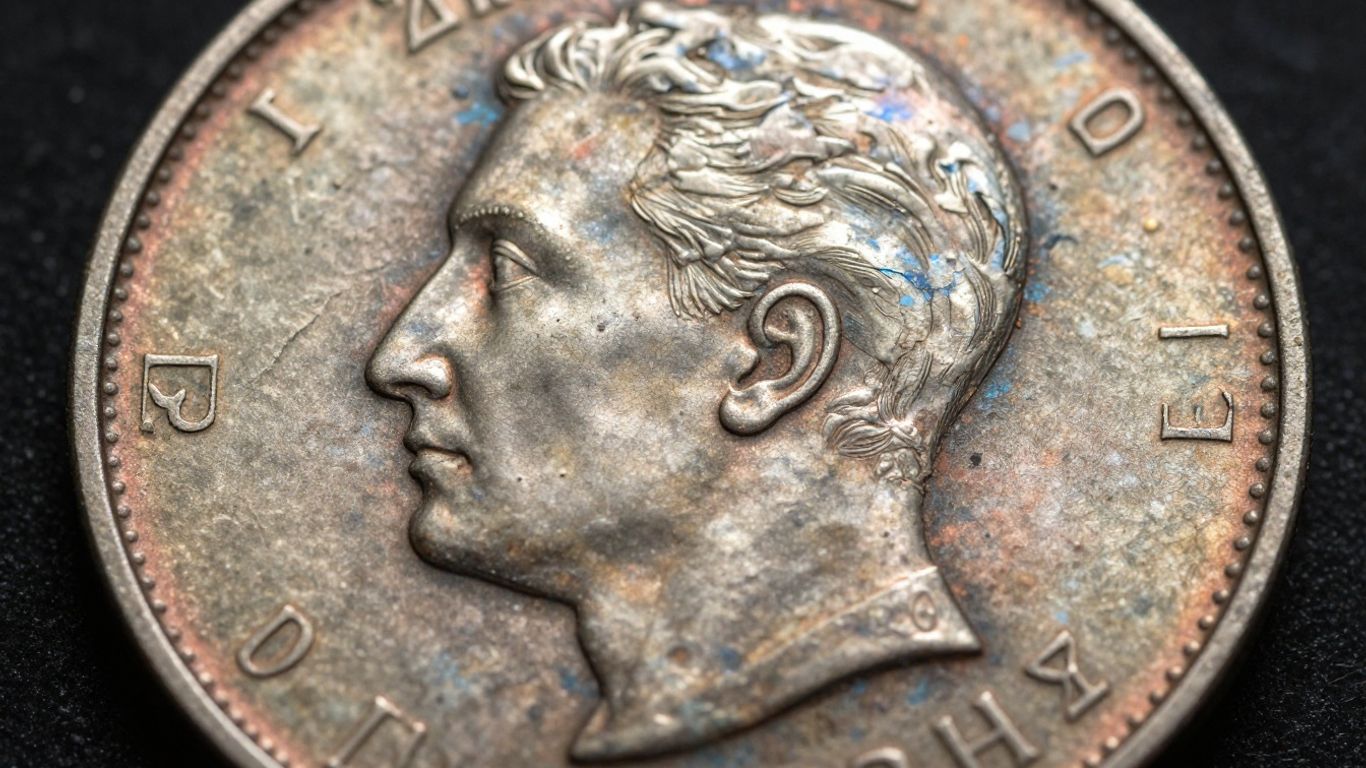
- Rainbow Toning: This is when multiple colors appear on a single coin, often in concentric rings or streaks. It’s a result of complex chemical reactions and is highly sought after by collectors. Understanding coin toning can help you appreciate these variations.
It’s important to remember that the intensity and distribution of these colors can vary greatly, making each toned coin potentially one-of-a-kind.
Distinguishing Natural Versus Artificial Toning
Identifying Red Flags for Fakes
Spotting fake toning on a coin can feel like a detective job sometimes. You’re looking for clues that just don’t add up. Natural toning usually develops slowly over many years, reacting to the coin’s surroundings. Think about how old books get that mellow, aged look – it’s a similar idea. Artificial toning, on the other hand, is done on purpose, often to make a coin look more appealing or valuable than it really is. It’s like putting a fresh coat of paint on something old; it might look good at first, but up close, you can often see the signs of a quick fix.
Here are some things to watch out for:
- Unnatural Color Patterns: Real toning often has a flow, maybe darker around the edges and lighter in the center, or following the coin’s design. If you see bright, uniform colors all over, or sharp, unnatural lines where colors change, that’s a warning sign. It might look like someone just painted it on.
- Surface Texture: Artificial methods can sometimes alter the coin’s surface. Look for areas that seem too smooth, too rough, or have a strange sheen that doesn’t match the rest of the coin. Sometimes, you can even see tiny pits or unevenness from chemical treatments.
- Color Progression: Natural toning progresses through a spectrum of colors over time. If a coin shows colors that seem out of sequence – like a deep purple right next to a bright yellow without any of the usual intermediate shades – it might be a sign of artificial treatment. Learning about the color sequence of rainbow toning can help here.
Ethical Considerations in Collecting Toned Coins
When you’re collecting coins, especially ones with toning, it’s important to think about the ethics involved. It’s not just about finding a pretty coin; it’s about being honest and fair. When someone tries to pass off artificially toned coins as natural, it misleads other collectors and can mess with the market. It’s like selling a fake designer bag as the real thing – it’s just not right. We want to build trust in the collecting community, and that means being upfront about how a coin got its look.
The Critical Difference in Market Value
The value of a toned coin can swing wildly depending on whether the toning is natural or artificial. Collectors generally seek out coins with attractive, natural toning because it shows the coin has a history and has been preserved well over time. These coins often fetch higher prices. Artificial toning, however, is usually seen as a form of alteration. It can significantly decrease a coin’s value because it’s not a genuine characteristic of the coin’s journey. The market strongly prefers authenticity and natural development over deliberate manipulation.
It’s really about respecting the coin’s history. Natural toning tells a story of time and environment. Artificial toning, well, that’s a story of someone trying to create a shortcut, and collectors usually see right through that.
Common Artificial Coin Toning Methods
Chemical Treatments for Patina
Creating artificial toning often involves using chemicals to speed up the natural oxidation process that gives coins their color. Think of it like fast-forwarding time. Different chemicals react with the metal in specific ways, leading to a range of colors. It’s not just about dunking a coin in something; it’s a bit more involved. The goal is to mimic the look of natural aging without actually waiting decades or centuries.
Some common approaches include:
- Sulfur-based compounds: These are popular because sulfur readily reacts with silver, a common coin metal, to produce browns, blues, and purples. Think of things like egg yolks or even specific chemical compounds.
- Ammonia fumes: Exposing coins to ammonia vapor can create vibrant, often rainbow-like toning. This is a bit trickier to control and can sometimes lead to overly aggressive toning.
- Various acids and salts: Diluted acids or specific salt solutions can be used, but these require extreme caution as they can easily damage the coin’s surface if not handled properly.
It’s important to note that the concentration of the chemical, the duration of exposure, and the specific metal composition of the coin all play a big role in the final color. Getting it right often takes a lot of trial and error.
Heat Application Techniques
Another way people try to tone coins artificially is by using heat. This method aims to accelerate the oxidation process by raising the coin’s temperature. It’s a bit like baking a cake – you’re using heat to change the composition and appearance.
Here’s a general idea of how it works:
- Heating the coin: This can be done in various ways, from using a heat gun to placing the coin on a hot surface. The temperature needs to be controlled carefully.
- Introducing an oxidizing agent: While the coin is hot, it’s often exposed to something that will react with the metal. This could be air (oxygen), or sometimes specific chemicals are introduced to speed things up.
- Cooling and observation: Once the desired color is achieved, the coin is allowed to cool. The colors can sometimes change further as the coin cools.
This method can produce interesting results, but it’s also quite risky. Overheating can permanently damage the coin’s surface, making it look dull or even causing pitting. The colors produced by heat can sometimes look different from natural toning, often appearing more "baked on" or less vibrant.
Environmental Simulation Methods
This approach tries to replicate the conditions under which natural toning occurs, but in a much shorter timeframe. Instead of just using chemicals or heat directly on the coin, you’re trying to create an environment that encourages toning.
Think about where coins naturally tone: old coin albums, paper envelopes, or even just sitting in a drawer for years. These environments often have trace amounts of chemicals or gases that react with the metal over time.
Methods include:
- Sealed containers with toning agents: Placing a coin in a sealed container with materials that release toning gases (like sulfur compounds) can create a controlled environment. The gases slowly build up and react with the coin’s surface.
- Using specific storage materials: Some collectors use old coin holders or specific types of paper that are known to promote toning. The idea is to mimic the conditions of historical storage.
- Controlled humidity and air exposure: Manipulating the humidity and the type of air the coin is exposed to can also influence toning. For example, slightly humid air with trace pollutants can accelerate oxidation.
The key here is control. While natural toning happens organically over long periods, environmental simulation aims to speed up that process by carefully managing the coin’s surroundings. It’s about creating the right conditions for the metal to react, but doing it on a compressed timeline. This often results in more subtle and sometimes more natural-looking toning compared to direct chemical dips or harsh heat treatments.
Understanding these methods is important for collectors to distinguish between naturally toned coins and those that have been artificially altered. This distinction can have a significant impact on a coin’s desirability and market value. Artificial toning can sometimes be difficult to spot, making knowledge of these techniques essential.
Chemical Approaches to Artificial Toning
Understanding Liquid Transfer Toning
Liquid transfer toning is a method where a coin’s surface is exposed to specific chemical solutions. The idea is to get the chemicals to react with the metal, creating a colored layer. This is often done by dipping the coin or placing it in a container with the solution. The way the liquid moves across the coin’s surface can create patterns, sometimes looking like streaks or swirls. The goal is to mimic the look of natural toning, but it’s done much faster. It’s important to note that the type of metal in the coin really matters here; some metals react more readily than others. For instance, silver coins are quite susceptible to these kinds of reactions.
The Role of Air Transfer in Patina
Air transfer toning, sometimes called "gas toning," involves exposing a coin to certain gases or vapors. This is a bit different from liquid transfer because it’s not about direct contact with a liquid. Instead, the coin sits in an environment where specific airborne chemicals can interact with its surface. Think of it like a coin breathing in fumes that cause a color change. This method can sometimes produce more subtle and even toning, or it can create interesting patterns depending on how the air circulates. It’s a way to get a reaction without actually submerging the coin. This technique is often used to try and replicate the gradual changes seen in naturally toned coins.
Specific Chemical Reagents Used
Several chemicals are commonly used in artificial toning. Each one has a different effect on the coin’s surface, leading to various colors and patterns. Some popular choices include:
- Sulfur-based compounds: Things like sulfur compounds (e.g., egg yolks, liver of sulfur) are very effective at creating browns, blues, and purples on silver coins. They react with the silver to form silver sulfide, which is dark.
- Ammonia solutions: Ammonia can cause a range of colors, often yellows, oranges, and reds, especially when used in controlled vapor form.
- Various acids and bases: Dilute acids or bases can be used, but they are riskier as they can also etch the coin’s surface if not handled carefully. They can create a variety of colors depending on the metal and concentration.
It’s a delicate balance when using chemicals. Too much of a good thing, or the wrong chemical, can permanently damage a coin’s surface, making it look artificial or even causing physical degradation. Collectors often look for specific color sequences that are hard to fake convincingly.
Understanding these chemical methods is key to appreciating the difference between a coin that has developed its patina over decades naturally and one that has been altered. This knowledge helps in assessing a coin’s true authenticity and value.
Advanced Techniques in Artificial Patina Creation
Artificial Frosting and Surface Reproofing
Beyond just adding color, some methods aim to alter the coin’s surface texture to mimic natural wear or specific environmental effects. Artificial frosting, for instance, might involve abrasive treatments or chemical etches to create a duller, less reflective surface. This can sometimes be done to make a coin appear older or to hide prior damage. Reproofing, on the other hand, is a more deceptive practice where a coin’s original surface is intentionally altered or removed and then reapplied, often to make a common coin appear rarer or more valuable. These techniques often leave tell-tale signs under magnification, such as unnatural uniformity or a lack of natural flow lines.
Mimicking Natural Toning Patterns
Creating artificial toning that looks genuinely natural is a complex art. It involves understanding how environmental factors influence the development of patina over long periods. For example, natural toning often starts at the edges and moves inward, or develops in specific patterns based on how the coin was stored. Advanced artificial methods try to replicate these patterns, sometimes using controlled gas exposure or carefully applied chemical solutions. The goal is to avoid the blotchy, uneven, or overly vibrant colors that often betray artificial treatments. It’s about subtlety and consistency with known natural processes.
Controlled Application of Toning Agents
This is where precision comes into play. Instead of simply dipping a coin into a solution, advanced techniques involve very specific application methods. This could include:
- Gas Fuming: Exposing the coin to specific chemical vapors in a controlled environment. This often results in more uniform, yet still natural-looking, color development.
- Liquid Transfer: Using specialized applicators to apply liquid toning agents in precise locations or patterns, mimicking how liquids might have interacted with the coin over time.
- Heat and Chemical Combinations: Applying heat can accelerate chemical reactions. Some methods use controlled heat in conjunction with specific chemicals to achieve unique color profiles and surface textures.
The pursuit of creating artificial toning that is indistinguishable from natural patina is an ongoing challenge. It requires a deep knowledge of chemistry, metallurgy, and the subtle ways time and environment affect metal surfaces. While some techniques can produce visually appealing results, numismatists and grading services are constantly developing methods to detect these alterations. The key is often in the details – the uniformity of the color, the texture of the surface, and the absence of natural wear patterns.
Understanding these advanced techniques is vital for collectors who want to avoid being misled. It highlights the importance of careful examination and seeking out coins with authentically toned surfaces that have developed over time through natural processes. While artificial methods can be interesting from a chemical standpoint, their impact on a coin’s numismatic integrity is significant. For those interested in the science behind coin aging, exploring electrochemical ageing offers a glimpse into rapid patina development.
Factors Influencing Toning
Coin toning isn’t just a random event; it’s a chemical reaction, and like any reaction, it depends on what’s around it. Think of it like baking – you need the right ingredients and the right conditions for the perfect outcome. Several things play a big part in how a coin develops its color.
Metal Composition and Reactivity
The metal the coin is made from is the starting point. Different metals react differently to their environment. For instance, silver coins are well-known for developing beautiful, colorful toning because silver readily oxidizes. Copper coins, on the other hand, tend to develop darker, more uniform patinas, often in shades of brown or red, though vibrant colors can appear under specific conditions. Gold is quite stable and rarely tones significantly.
Here’s a quick look at how common coin metals react:
| Metal | Reactivity to Toning | Typical Toning Colors |
|---|---|---|
| Silver | High | Blues, purples, greens, golds, oranges, pinks, browns |
| Copper | Medium to High | Browns, reds, dark browns, some greens (verdigris) |
| Nickel | Low | Grays, dull browns, sometimes faint blues or greens |
| Gold | Very Low | Little to no significant toning; may develop a dull luster |
Environmental Exposure Variables
This is where things get really interesting. The air around the coin is full of gases and moisture that can cause changes. Things like sulfur compounds, humidity, and even just the general air quality can speed up or alter the toning process. Coins stored in old paper envelopes or wooden boxes might pick up different tones than those kept in plastic holders. Even proximity to other objects can matter. For example, coins stored near rubber bands or certain types of wood might develop unusual toning patterns because of the chemicals released.
- Sulfur: A common culprit, often found in the air or in packaging materials, leading to vibrant blues and purples on silver. Artificial coin toning often tries to replicate these sulfur-induced colors.
- Humidity: Higher moisture levels can accelerate oxidation, sometimes leading to darker or more diffuse toning.
- Temperature: While less direct, temperature fluctuations can affect the rate of chemical reactions.
- Air Circulation: Stagnant air can trap reactive gases, while good circulation might lead to more even toning.
Storage Methods and Their Impact
How a coin is stored is probably the most direct way a collector can influence toning. The materials used for holders, the type of container, and the overall environment all play a role. Some storage methods are designed to prevent toning altogether, while others might inadvertently encourage it. For example, PVC (polyvinyl chloride) found in older, "soft" plastic flips can break down and release chemicals that cause green, crusty spots on coins, which is generally considered damaging.
The choice of storage material is not trivial. Some plastics release gases that can interact with the coin’s surface, leading to undesirable chemical changes. Others provide a barrier, protecting the coin from environmental contaminants. Understanding these interactions is key to preserving a coin’s natural state or its developed toning.
Collectors often debate the best way to store toned coins. Some prefer inert materials like Mylar flips or specially designed holders that offer protection without promoting further chemical reactions. Others might intentionally store coins in environments known to produce toning, though this treads into the territory of artificial toning and raises ethical questions about a coin’s true worth.
The Impact of Toning on Coin Grading
Toning can really change how a coin is seen, especially when it comes to grading. Grading services look at a lot of things, and toning is definitely one of them. It’s not just about wear and tear; the surface appearance matters a lot.
How Toning Affects Eye Appeal
Eye appeal is a big deal in coin collecting. A coin with nice, even toning, maybe with some blues and golds, can look really attractive. This kind of toning can make a coin stand out and be more desirable to collectors. On the flip side, dark, splotchy, or unnatural-looking toning can hurt eye appeal. It might make a coin look dirty or damaged, even if the underlying metal is in good shape. The goal is usually to have toning that complements the coin’s design, not distracts from it.
Grading Original Surfaces vs. Treated Surfaces
Graders are trained to spot the difference between natural toning and artificial treatments. Natural toning happens over a long time, usually in a holder or buried away. It tends to be more uniform or follows natural patterns, like around the rim. Artificial toning, on the other hand, can look forced. It might have sharp lines where a chemical was applied, or the colors might be too bright and unnatural. If a coin is found to have artificial toning, it’s a major problem. It can lead to the coin being disqualified or severely downgraded. It’s important to know that artificial coin toning can harm a coin’s market value and grading. This can lead to significant financial losses.
The Role of Toning in High-Grade Coins
For coins in high grades, like MS-65 and above, toning becomes even more important. In these top-tier grades, the difference between one grade and the next can be worth a lot of money. A high-grade coin with fantastic, original toning might get a higher grade and a better price than an identical coin with no toning or with unattractive toning. However, if the toning is deemed artificial, the coin will likely be rejected or given a very low grade, regardless of its original condition. This is why understanding the nuances of toning is so important for anyone involved in numismatics, whether you’re learning about grading standards or just building a collection. Educational opportunities can help clarify these distinctions.
Here’s a quick look at how toning might be viewed:
| Toning Type | Eye Appeal Impact | Grading Impact |
|---|---|---|
| Natural, attractive | Positive | Can support or enhance grade, increase value |
| Natural, dull/dark | Neutral to Negative | May not affect grade significantly, can lower value |
| Artificial | Negative | Severe downgrade or rejection, significant value loss |
It’s really about authenticity and how the coin developed its appearance over time. Graders are looking for signs that the coin’s surface is original and hasn’t been tampered with to make it look better or more valuable than it really is. This attention to detail is what keeps the grading system fair and trustworthy.
Detecting Artificial Toning
Spotting coins that have been artificially toned can be tricky, but it’s a skill worth developing for any serious collector. It’s not just about the pretty colors; it’s about understanding what’s real and what’s not, which directly impacts a coin’s value and authenticity. Think of it like spotting a fake designer handbag – there are often subtle clues if you know what to look for.
Color Sequence Analysis
One of the first things to check is the sequence of colors. Natural toning often starts at the edges and gradually moves inward, creating a smooth transition. You’ll typically see blues, greens, and golds appearing first, sometimes followed by oranges and reds. Artificial toning, on the other hand, can sometimes look a bit too perfect or have abrupt color changes. It might appear as if the colors were applied unevenly or in a pattern that doesn’t make sense for natural environmental exposure. The order and flow of colors are key indicators.
Microscopic Examination Techniques
For a closer look, a magnifying glass or a microscope is your best friend. Under magnification, you can often see signs that the toning isn’t natural. Look for:
- Uneven application: Are there tiny dots or streaks where the toning agent was applied?
- Surface disruption: Does the toning seem to sit on top of the coin’s surface rather than being integrated into it?
- Absence of wear: If a coin is supposed to be circulated, but the toning looks pristine and uniform, that’s a red flag.
Sometimes, artificial toning can obscure wear that would otherwise be visible on a naturally aged coin. This is where understanding natural patina development becomes really important.
Identifying Unnatural Patches and Hues
Beyond the color sequence, pay attention to the overall appearance. Does the toning look like it was sprayed on or dipped? Sometimes, artificial toning can create overly vibrant or unnatural hues that you just don’t see in nature. You might also notice "hot spots" where the toning is intensely colored, or areas that look completely untouched, creating a patchy effect. These inconsistencies can point to a coin that’s had some help in the toning department. It’s a good idea to familiarize yourself with the signs of artificial toning to avoid costly mistakes.
When examining a toned coin, try to think about how it might have developed its appearance over decades. Would a coin left in a paper envelope for 50 years develop such a vibrant, uniform purple sheen across its entire surface? Probably not. Natural toning is often a slow, subtle process influenced by many factors, and its results usually reflect that gradual development.
Building a Collection of Toned Coins
Appreciating Aesthetic Appeal
Collecting coins with toning is a bit like collecting art. You’re not just looking at the metal and the design; you’re appreciating the colors and patterns that have developed over time. Some collectors really go for the vibrant, almost iridescent "rainbow" toned coins, while others prefer the more subtle, earthy browns and blues. It’s all about what catches your eye. The beauty of toned coins lies in their uniqueness; no two coins will ever tone exactly alike. This individuality makes each piece a little special. It’s a personal journey, finding those coins that just speak to you visually.
Understanding Toning Premiums
It’s no secret that coins with attractive natural toning can fetch higher prices than their un-toned counterparts. This isn’t just a whim; it’s a market reality. The premium can vary wildly, depending on the coin’s rarity, the intensity and type of toning, and overall market demand. A common coin with spectacular toning might be worth significantly more than a plain one, sometimes even doubling or tripling in value. However, this is where things get tricky, as artificial toning can sometimes mimic natural beauty, but it rarely commands the same respect or price. Understanding the difference is key to making smart purchases. For instance, a coin with toning that follows the natural flow of the strike and surfaces is generally more desirable than one with blotchy, unnatural patches. This is why knowing how to spot artificial alterations is so important when you’re looking to build a collection that will hold its value. This article explains how coin toning impacts a coin’s value.
Sourcing Authentically Toned Coins
Finding genuinely toned coins requires a bit of detective work. You can’t just grab any old coin and expect it to be a gem. Building a collection of authentically toned coins means being diligent. Here are a few ways to go about it:
- Reputable Dealers: Seek out dealers who specialize in toned coins or have a strong reputation for honesty. They can often guide you toward quality pieces and help you avoid fakes.
- Coin Shows: Attending coin shows can be a great way to see coins in person and talk directly with sellers. You can examine coins closely and ask questions about their provenance.
- Online Auctions (with caution): While convenient, online auctions carry risks. Always check seller feedback, look for detailed photos, and be wary of descriptions that seem too good to be true. If possible, buy from sellers who offer clear return policies.
- Collector Forums and Clubs: Engaging with other collectors can provide insights and leads. Sometimes, collectors sell pieces from their own collections, offering a chance to acquire well-vetted coins.
When you’re building a collection, especially one focused on toned coins, patience is a virtue. It’s better to wait for the right coin with authentic, appealing toning than to rush into a purchase that might turn out to be artificially altered or simply unappealing. The long-term satisfaction comes from owning coins that are both beautiful and genuine.
Remember, the goal is to acquire coins that have developed their toning naturally over time. This often means looking for coins that have been stored in older holders or have a documented history. It’s a journey of discovery, and the thrill of finding that perfect, naturally toned piece is part of the fun. Learning to distinguish between natural and artificial toning is a skill that develops with experience and careful observation. Understanding these distinctions is crucial for collectors.
Preservation of Toned Coins
Conservation Ethics for Toned Specimens
When it comes to preserving coins that have developed attractive toning, it’s really important to think about what’s best for the coin in the long run. The goal is usually to keep the coin as it is, without making things worse. This means avoiding any actions that could damage the surface or remove the toning that makes the coin special. The primary ethical consideration is to do no harm. This often means leaving the coin alone, even if you think a little cleaning might make it look ‘better’ to some. Remember, what looks like dirt or tarnish to an untrained eye might actually be a desirable natural patina. Messing with it can destroy its value and historical character. It’s a delicate balance, and often, the most ethical choice is inaction.
Appropriate Storage Solutions
Storing toned coins correctly is key to keeping that beautiful patina intact. You want to prevent further unwanted reactions or damage. Here are some good ways to store them:
- Archival-quality holders: These are typically made of inert materials like Mylar or polyethylene. Avoid PVC (polyvinyl chloride) holders, as the plasticizers can leach out and damage the coin’s surface over time, potentially creating green or brown spots.
- Inert containers: For longer-term storage, consider placing individual coins in their holders within larger, airtight containers made of materials like polypropylene or specialized archival boxes. This adds another layer of protection against environmental fluctuations.
- Controlled environment: If possible, store your collection in a stable environment with consistent temperature and humidity. Extreme fluctuations can accelerate degradation or cause condensation, which is bad for coins.
The surface of a toned coin is a delicate record of its history. Any intervention, no matter how well-intentioned, carries the risk of altering that record. Understanding the coin’s composition and the nature of its toning is vital before considering any form of preservation beyond basic protective storage.
Handling Techniques to Prevent Damage
Handling toned coins requires a gentle touch. You don’t want to accidentally remove or alter that hard-earned toning. Here’s how to handle them properly:
- Use gloves: Always wear clean cotton or nitrile gloves when handling coins. Your skin oils can react with the metal surface and cause spotting or accelerate unwanted toning.
- Hold by the edge: When you must handle a coin without gloves (though it’s best to avoid this), always grasp it by its reeded or smooth edge. Never touch the obverse (front) or reverse (back) surfaces.
- Work over a soft surface: If you’re examining a coin outside of its holder, do so over a soft cloth or felt pad. This provides a cushion in case the coin is accidentally dropped, preventing it from bouncing or hitting a hard surface. This is especially important for coins with significant eye appeal.
It’s really important to remember that cleaning coins, even with the best intentions, can significantly diminish their numismatic value. It’s generally advised against cleaning collectible coins because it can erase natural toning and make them harder to sell or appreciate.
Wrapping Up Our Look at Artificial Toning
So, we’ve gone through a lot about how coins get those interesting colors, both the natural way and when people try to make them happen artificially. It’s pretty wild how chemistry and time can change a coin’s look, and how some folks try to speed that up. Knowing the difference between a coin that developed its color over decades versus one that was treated last week is a big deal for collectors. It affects how much a coin is worth and whether it’s seen as genuine. Keep what we talked about in mind when you’re looking at toned coins, whether you’re just curious or thinking about adding one to your collection. It’s a whole world out there, and understanding toning is a good step.
Frequently Asked Questions
What exactly is coin toning?
Coin toning is like a natural skin that forms on a coin over a long time. It’s a change in the coin’s surface color, often caused by the metal reacting with the air or other things around it. This can create beautiful colors like blues, purples, and golds, making the coin look really special.
How can I tell if a coin's toning is real or fake?
Spotting fake toning can be tricky, but there are clues. Real toning usually looks natural and spreads evenly, or follows the coin’s edge. Fake toning might look too perfect, have strange splotches, or seem like it was just painted on. Looking closely with a magnifying glass helps a lot.
Why does natural toning happen to coins?
Natural toning happens because the metal in the coin slowly reacts with its surroundings. Think of it like an old penny turning brown. This reaction, called oxidation, can create different colors depending on what the coin touches, like paper in an old album, or even just the air over many years.
Are artificially toned coins worth less than naturally toned ones?
Generally, yes. Collectors prefer coins that toned naturally over a long period. Coins that have been artificially toned, meaning someone tried to make them look toned using chemicals or heat, are usually worth less because the process isn’t seen as natural or authentic.
What are some ways people try to make fake coin toning?
People might try to speed up the toning process using chemicals, like certain cleaning solutions or even household items, to create colors. Sometimes, they might heat the coin to make it change color, or expose it to specific gases. These methods often leave behind unnatural patterns or colors.
Does toning affect how a coin is graded?
Yes, toning can definitely affect a coin’s grade. While some natural toning can be beautiful and add to a coin’s appeal, making it more valuable, harsh or unnatural toning can be seen as damage. Grading experts look at how the toning impacts the coin’s overall look and originality.
What's the best way to store coins with toning?
To keep your toned coins looking their best, it’s important to store them properly. Use holders made of inert materials, like Mylar or special plastic, that won’t react with the coin. Avoid storing them in PVC holders, as this can damage the toning over time. Keeping them in a stable environment, away from moisture and extreme temperatures, is also key.
Is it okay to clean a toned coin?
It’s generally not recommended to clean a toned coin, especially if you want to preserve its value. Cleaning can remove the toning, which is often what makes the coin desirable to collectors. If you’re unsure, it’s best to consult with a coin expert before attempting any cleaning.