
Key Takeaways
Clipped planchet errors occur during the minting process when a metal blank is produced from a strip that did not advance correctly. Understanding these artifacts helps collectors distinguish authentic production anomalies from intentional damage while assessing the true value of their coins.
- Clipped planchets originate from issues within the blanking press machinery.
- Curved clips are the most frequent type, produced by overlapping punch patterns.
- Authentication requires observing specific edge characteristics and metal flow.
- Value is heavily dictated by the severity of the clip and the rarity of the coin type.
- Counterfeit clipping is often recognizable by unnatural edge textures compared to genuine mint-strike errors.
Understanding clipped planchet errors
When collectors begin to study the nuances of the minting process, the variety of planchet errors can seem overwhelming. A clipped planchet is not simply a damaged coin, but rather a unique witness to the industrial chaos that can occur on a factory floor. As explored in our comprehensive guide, these errors arise when metal strips fail to feed properly through the blanking press.
How a clipped planchet is formed at the mint
A clip happens when the metal ribbon is not moved forward far enough after the previous blank has been punched. Because the blanking die is positioned to overlap a section of the preceding cut, it removes a portion of the metal strip that results in a truncated planchet. This accidental lack of metal creates the characteristic shape we identify on these coins.
Differentiating between a mint error and post-mint damage
To distinguish true mint errors from post-mint damage, one must evaluate the edge uniformity. Authentic clips will typically show a smooth metal flow where the press cut the coin, as opposed to the jagged, irregular marks left by files or clippers used after the coin has left the mint. Utilizing a numismatics glossary to understand these surface features is helpful for beginners.
Essential terminology for numismatic beginners
A solid grasp of terms like "blank," "planchet," and "blanking press" is necessary for effective cataloging. Understanding how these tools function helps clarify why certain errors appear in specific, predictable patterns throughout history. Referencing U.S. Coins and Jewelry terminology ensures that every description aligns with professional standards.
Characteristics of curved clips
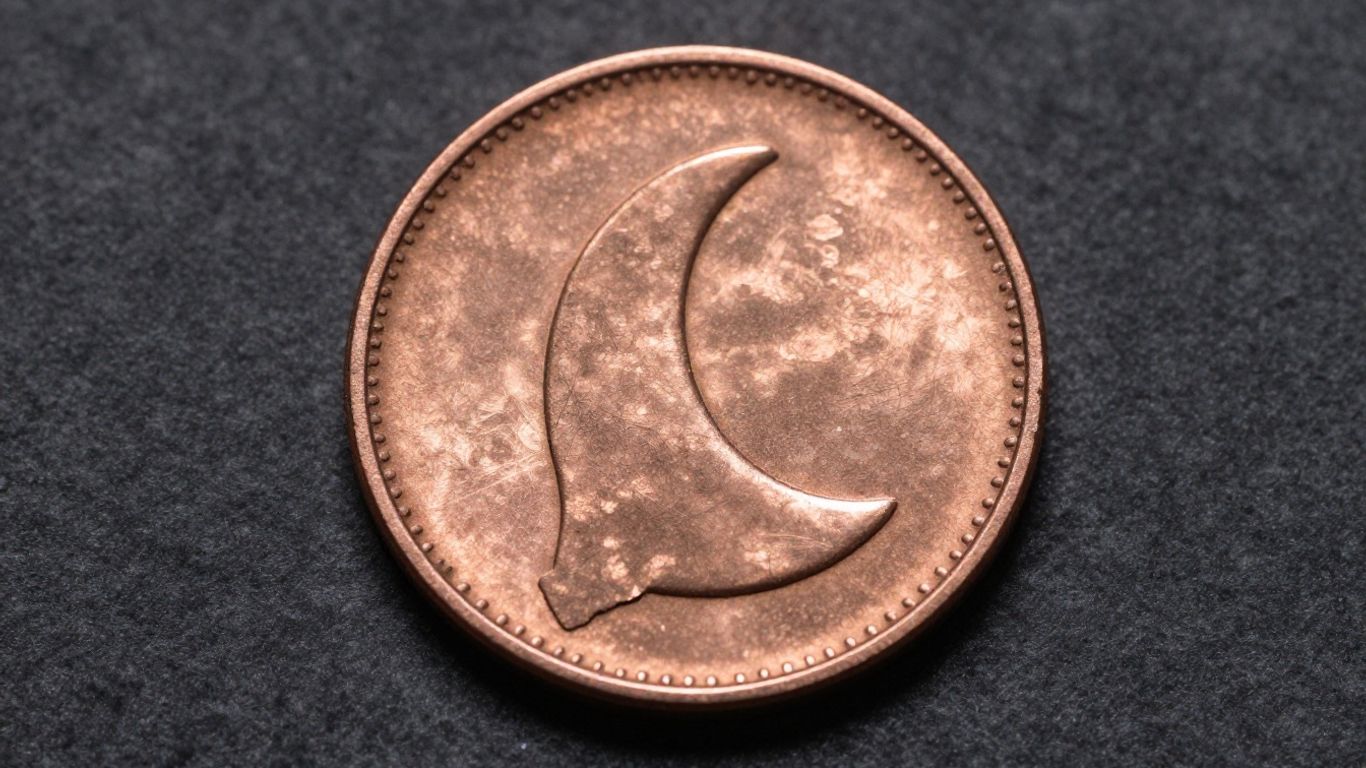
Curved clips represent the most common category observed by collectors due to the circular design of standard coinage. These errors occur when the punch dies overlap, creating a distinctively arched section missing from the edge of the planchet. This specific geometry is a primary focus for those interested in understanding the mechanical limitations of coin production machinery.
Why curved clips appear on circular coinage
Because the planchets are circular, the circular punch dies naturally create an arched void when they overlap with an existing hole in the strip. This result is nearly inevitable when the feed mechanism lags, forcing the press to partially strike empty space on the metal sheet. The resulting coins exhibit a classic crescent shape.
The importance of the Blakesley effect in authentication
The Blakesley effect acts as a crucial indicator that the clip is authentic rather than altered. On the side of the coin directly opposite the clip, the striking pressure is reduced, often leading to weakness in the design details or a flattened rim. This phenomenon confirms that the irregularity occurred before the coin was struck.
Variations in clip depth and placement
The depth of a clip varies depending on how far the strip advanced between strikes. Minor clips may only remove a sliver of the edge, while deep clips can significantly alter the diameter of the piece. Observing these variations helps historians trace specific mechanical shifts within the mint at the time of production.
Identifying straight-edge and guillotine clips
Straight and guillotine clips offer a fascinating look at the varied geometry that can emerge when machines fail. While curved clips are circular due to the die, these errors involve flat planes or sharp angles that disrupt the circular form of the planchet entirely.
Mechanical origins of a straight clip error
A straight clip usually occurs when the blanking dies punch across the edge of the metal strip itself. Instead of punching through the center, the die encounters an edge, resulting in a perfectly linear side on an otherwise round coin. The following table showcases common distinctions between these types.
| Clip Type | Geometric Origin | Typical Appearance |
|---|---|---|
| Curved Clip | Die Overlap | Arched missing portion |
| Straight Clip | Ribbon Edge | Flat linear side |
| Guillotine Clip | Faulty Shearing | Angular or jagged straight cut |
These different configurations allow collectors to classify their specimens based on the path the machinery took during the production cycle.
How a guillotine clip differs from standard shearing
A guillotine clip often involves a vertical cut that behaves more like a hydraulic blade shearing through metal than a standard blanking die. This produces an exceptionally sharp angle, which is distinguishable from the rounded, compressed metal of a typical straight clip.
Visual cues for recognizing geometric irregularities
When evaluating these, look for the abrupt transition where the edge meets the flat plane of the clip. Authentic pieces maintain consistent luster across the transition, whereas a modified coin will often show scratch marks or discoloration where a file was used, unlike the history found in coin clipping practices.
Analyzing ragged and irregular clips
Ragged or irregular clips are perhaps the most visually chaotic errors a collector might find. These often stem from structural integrity issues within the metal strip or extreme machine malfunction that prevents a clean punch, leading to uneven results.
Forces that create jagged or ragged edges
High-pressure forces can tear the strip if the metal is brittle or the feed rate is pushed beyond mechanical capacity. This creates edges that look shattered rather than sheared, providing a distinct profile that stands apart from standard straight or curved variations.
Identifying incomplete or partially punched planchets
Partial punches occur when the die only engages half of the blank, leaving a thin, mangled strip of metal attached to the coin. Collectors should look for signs of inconsistent metal thickness which signify a failure in delivery. Consider these common identifiers:
- Excessive thinning of the metal near the clipped area.
- Incomplete imprints of the legend or portrait near the edge.
- Variations in edge texture that imply a tearing motion.
- Protrusions of base metal that were not fully compressed by the collar.
Dealing with multi-clip coins and overlapping errors
Multi-clip coins are significantly rarer because they require the strip to have malfunctioned in multiple, specific ways during a single sequence. Overlapping errors, where a clip shares space with a strike-through or die break, fetch premium prices among specialist collectors.
Detecting counterfeit or altered coins
A coin that seems to have a clip but lacks the characteristic strike symptoms is often suspiciously modified. Modern tools allow for the creation of very convincing clips that can easily fool the untrained eye if they do not check for proper edge flow.
Signs of modern clipping done with mechanical tools
Mechanical tools, like high-speed drills or grinders, leave minute, parallel striations on the clipped area. A genuine error displays a smooth, slightly rounded transition, reflecting the impact of the blanking die. Anything showing tool marks is almost certainly a post-mint modification.
Comparing edge luster and texture with authentic errors
Authentic coins should exhibit a uniform, natural luster as the metal flowed into the collar during the strike. If the clipped area is dull or significantly darker than the rest of the edge, it suggests the area was exposed to air for a duration after the coin was struck, which is a red flag for post-mint filing.
Common pitfalls in identifying high-value clip types
Collectors often mistake small "disc clips" for genuine errors when they are actually just slight adjustments in edge geometry. Misidentifying minor errors as major clips can lead to overvaluation, so verifying the Blakesley effect is essential before assuming a piece has significant value.
Factors influencing the value of clipped coins
Value is determined by a combination of visual appeal, the degree of the error, and the desirability of the coin series itself. Not all clips are created equal, and some fetch far higher prices due to scarcity.
How clip size significantly affects collector appeal
Larger clips attract more attention because they drastically alter the appearance of the coin. A minor clip that is barely visible on the edge is often categorized as a curiosity, whereas a massive, multi-percent clip becomes a centerpiece for an error collection.
The impact of coin rarity on clip value premiums
A clip on a common, modern circulating coin is far less valuable than the same error on a scarce, older issue. The combination of early numismatic scarcity and an auxiliary mint error like a clip leads to exponential price increases.
Market demand for major versus minor clip errors
Demand remains consistently high for major errors that show a clear, dramatic displacement of metal. While small clips have their place, experienced investors prioritize pieces where the error is immediately recognizable and clearly defines the manufacturing failure.
Conclusion
Collectors who understand the technical origins of these mint anomalies find deeper meaning in their collections. By examining the edge, luster, and strike characteristics, one can navigate the world of mint errors with confidence, identifying genuine history while avoiding the pitfalls of counterfeit modifications. As the market for error coins evolves, so does the importance of thorough authentication, ensuring that each piece represents a true relic of the high-speed machinery that powers the heart of the mint.
Frequently Asked Questions
Are clipped coins considered legal tender?
A clipped coin is technically legal tender if it originated from the mint, but its numismatic value far exceeds its face value, meaning it should never be spent in circulation.
Can any coin have a legitimate clip error?
While most coins can have a clip, they are more common in larger, base-metal coinage where the blanking process is subjected to higher volume and speed constraints.
How does a clipped coin affect the grading process?
Professional grading services acknowledge the clip on the slab label, acknowledging the error’s authenticity while assessing the visual condition and strike quality of the remaining portion of the coin.
Why do some clips have a smooth edge while others are rough?
Smooth edges suggest a clean cut from a properly functioning press, whereas rougher edges may indicate dulling dies, metallic impurities in the strip, or extreme forces applied during the blanking stage.
Is it possible for a coin to have more than one clip?
Yes, multi-clip coins occur when a metal strip advances incorrectly multiple times, or when a strip is fed into the press in an irregular, angled orientation, leading to several overlapping punch marks.
What should a collector look for when buying a clipped coin?
Always verify the presence of the Blakesley effect to ensure the clip occurred before striking, and carefully inspect the clipped area for signs of mechanical abrasion or modern tool marks.
Do clipped coins ever get confused with planchet defects?
Occasionally, a porous or hollow planchet can look like a clip, but these are actually surface anomalies caused by metallurgical flaws rather than the mechanical shearing associated with the blanking press.