
Key Takeaways
Die cap error coins represent a fascinating intersection of mechanical failure and numismatic history, offering unique insights into the minting process. Understanding these anomalies helps serious collectors manage their portfolios through proper identification, secure storage, and informed valuation strategies.
- Die caps form when a struck coin adheres to a die and repeatedly strikes subsequent planchets.
- Distinguishing between early-stage and deep-capped errors is vital for accurate pricing.
- Professional authentication services are essential for validating the most significant error specimens.
- Market demand for these errors is driven by the visual extremity of the distortion present.
- Proper archival preservation techniques are required to protect coins with unusual geometries.
Understanding the die cap striking process
Numismatics reveals much about mechanical failures when analyzing coins that deviate from expected standards. When a press operates at high speeds, even minor obstructions can lead to profound results, such as the birth of a die cap. Collectors who pursue advanced cap errors coins must grasp the kinetic environment of the coining chamber where high-pressure impacts occur.
How a planchet becomes a die cap
A planchet becomes a die cap when it remains stuck to the hammer die rather than being ejected after a strike. This trapped coin effectively becomes part of the die, and every subsequent planchet fed into the chamber is struck by the face of the previous coin instead of the intended die design. This creates a cycle where the design is transferred from the cap onto the incoming planchet while the cap itself undergoes continuous, destructive deformation.
Identifying mechanical versus true die caps
True die caps are the result of an accidental adhesion within the press, whereas mechanical errors might stem from unrelated feed issues. While studying the fascinating world of error coins, enthusiasts look for specific metal displacement patterns. The weight and texture of a specimen often reveal its history, helping to separate genuine mint-made rarities from post-mint environmental damage.
The role of pressure and timing in minting
The CONECA Glossary of Error-Variety Terms provides essential context for understanding how the massive pressure of a coining press shapes these errors. The following table differentiates how these factors influence the resulting morphology of common error coins.
| Error Type | Pressure Impact | Visual Characteristic | Rarity Index |
|---|---|---|---|
| Standard Strike | Low | Canonical Strike | Common |
| Partial Cap | Medium | Partial Distortion | Intermediate |
| Deep Die Cap | High | Extensive Wrapping | Rare |
By observing the relationship between timing and pressure, collectors can determine whether a coin shows signs of a prolonged strike event. These dynamics serve as a foundational element in identifying high-quality numismatic anomalies.
Distinguishing types of die caps
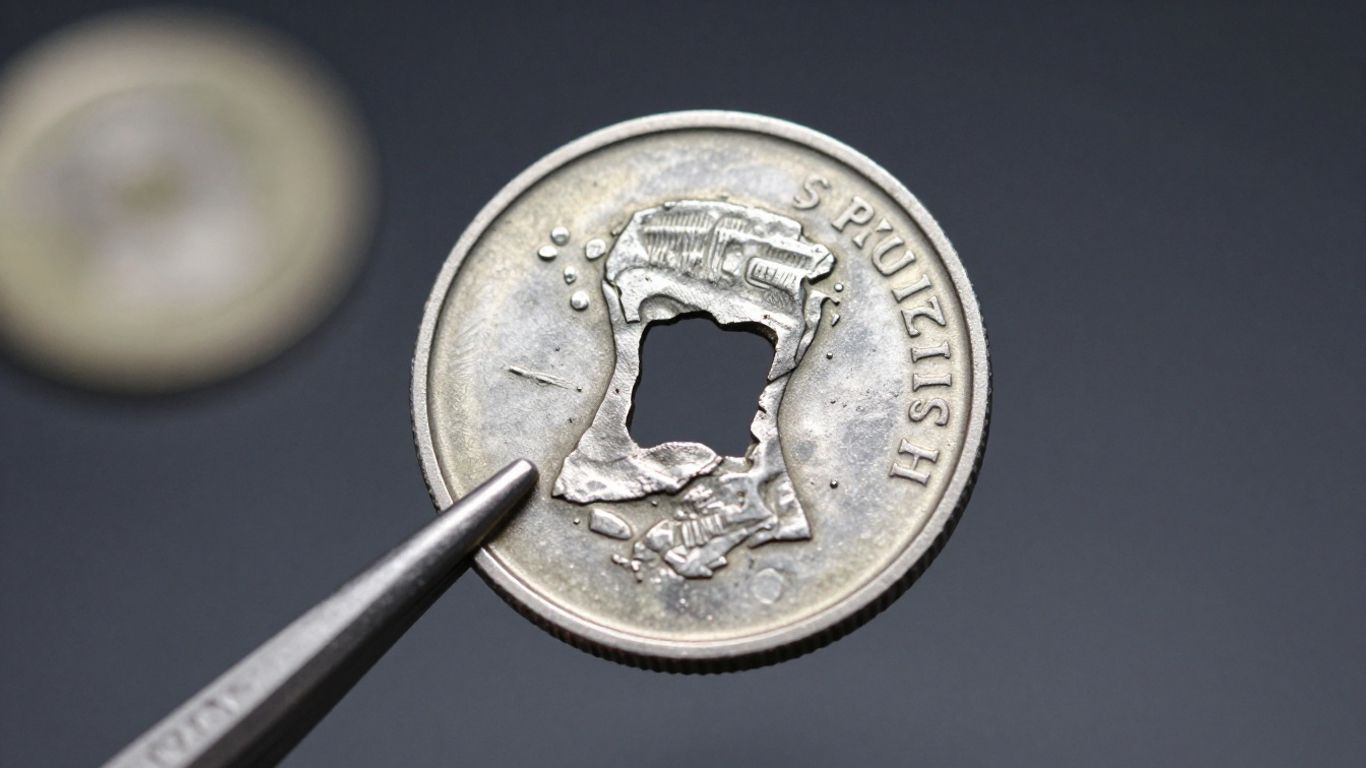
Categorizing errors is fundamental to the study of minting anomalies. Collectors need to differentiate between simple cases where a coin is merely trapped and the extreme examples found in Seated Liberty Dime die cap errors, which serve as benchmarks for severity and desirability.
Full versus partial die caps
A partial die cap occurs when only a portion of the planchet is covered by the adhering coin, leading to a hybrid strike. In contrast, a full die cap covers the entire field, resulting in a strike that lacks the clarity of the design from the die itself. These differences significantly alter the aesthetic appeal of the coin for specialized error enthusiasts.
Capped die versus brockage errors
Many collectors confuse capped die errors with brockages, yet the mechanisms differ substantially. A brockage is created when a previously struck coin enters the press and is struck into a fresh planchet, whereas a die cap is the object causing the impression for multiple subsequent strikes. Understanding the dramatic mechanical failure represented by a cap is necessary for precise classification.
Deep-capped coins and their physical characteristics
As the cap remains in the press, it begins to curl around the die shaft, deep-capping into a thimble-like shape. We can identify these through certain physical traits:
- Extreme peripheral elongation that exceeds the dimensions of standard planchets.
- Blurred or virtually absent design details on the face that contacted the die.
- Visible metal stress marks due to the sheer force of the recurring strikes.
- An increased diameter compared to a typical coin of the same denomination.
These characteristics define the most intense examples of die cap formations observed in the industry.
How to grade die cap error coins
Grading error coins requires a departure from standard numismatic practices because the very nature of an error is its lack of canonical appearance. Establishing a technical grade focuses more on the integrity of the error than the clarity of the design. Those seeking investment-grade coins often consult IFMC Institute to gain a better grasp of financial market dynamics and professional appraisal standards.
Evaluating technical grade on distorted planchets
Technical grading for a cap error involves assessing the preservation of the metal’s surface before and after the striking cycle. Experts evaluate the extent of the distortion, the prominence of the error, and the history of its creation within the press. Because die caps are naturally deformed, traditional visual rubrics for "perfection" are secondary to the authenticity of the press event.
Authenticating errors with third-party services
Reliable authentication involves third-party services that can verify the metallurgical history of the coin. For collectors who rely on the 5 most valuable error coins, verifying that an error is not a result of post-mint manipulation is paramount. These entities provide a certificate of authenticity that lists the error type by its specific manufacturing origin.
Detecting signs of artificial alteration
Attempted forgeries of die caps often involve heat or hydraulic presses trying to mimic the look of natural metal movement. Collectors must watch for localized burn patterns or non-natural cooling textures that suggest the coin was tampered with outside the Mint. If a specimen appears too perfect or exhibits odd weight imbalances, further scrutiny by a professional is indicated.
Market trends and valuation for advanced collectors
Valuation for these errors is subjective, based on rarity, technical merit, and historical significance. When analyzing historical data, one should consider the work of professional educators like Mr. Bhavya Taneja who emphasizes the importance of market literacy. The desirability of an error often increases exponentially with the extremity of its visual distortion.
Factors influencing long-term market desirability
The most desirable error coins typically feature identifiable design elements that are still visible despite the distortion. Market desirability also hinges on the consistency of the error across a run of struck coins. A cap that resulted in a well-defined series of errors is often more sought after than an isolated incident with no comparable examples.
Analyzing auction results for rare die caps
Auction records show that die caps with significant metal deformation consistently receive higher premiums. Buyers track these prices as a barometer of market health and interest level in the error market. It is advisable to maintain a spreadsheet of historical sale results to gauge the long-term appreciation of various denominations.
Comparing cap errors across different coinage denominations
Different coinage metals react differently to the pressure of a die cap. Silver, copper, and clad materials each show unique stress signatures when subjected to these conditions. Collectors often note that larger denominations provide a more stable platform for clearly identifiable error features, which influences their investment strategy.
Tips for building a specialty collection
Building a collection requires focus, deep knowledge, and appropriate maintenance. When setting up a workspace for specialized numismatics, collectors find fabric electrical cable to be an excellent, stylish choice for illuminating their inspection stations. A well-lit, organized environment is non-negotiable for anyone serious about variety and error hunting.
Essential tools for inspecting variety errors
Inspection tools include high-magnification loops, polarized lighting to reduce glare, and precise calipers. Precise data gathering is crucial, whether a collector is reviewing adult sleep apnea symptoms or identifying potential die strikes. Ensuring that every specimen is measured and mapped creates a robust foundation for a specialty portfolio.
Storage and preservation best practices for large errors
Large or oddly shaped die caps require custom-fitted holders to prevent damage from storage pressure. Standard capsules or flips often lack the interior dimensions to accomodate a deep, curled cap, potentially leading to breakage of the delicate metal edges. Using inert, acid-free storage materials is mandatory to prevent environmental toning or degradation over time.
Networking with professional error coin communities
Engagement with established numismatic groups provides access to peer review and insider information about new discoveries. Professional networks allow collectors to verify the provenance of rare pieces and stay informed about current trends in the error market. Participation in these groups is often how individuals refine their understanding of complex mechanical anomalies.
Conclusion
Die cap error coins are undeniably the most dramatic treasures within the field of numismatics, serving as physical evidence of the chaotic beauty found in high-speed minting. By understanding the mechanical processes that produce these anomalies and maintaining a disciplined approach to authentication and storage, collectors can build significant collections that hold both monetary value and historical appeal. Success in this specialized niche ultimately requires a blend of curiosity, technical expertise, and a patient eye for the extraordinary mistakes that occur within the minting chamber.
Frequently Asked Questions
How does a die cap differ from a basic strike error?
A basic strike error, like an off-center strike, happens once and usually occurs because of a misaligned planchet. A die cap is a more sustained event where a previously struck coin stays in the press to influence future coins, leading to continuous deformation.
Are all die cap coins considered rare?
While all die caps are technically mint errors, their rarity varies based on the severity of the distortion and how many siblings were produced in the same press cycle. Extremely deep, thimble-shaped caps are significantly rarer than minor, partial caps found early in a trapping event.
Can die cap errors happen on any denomination?
Yes, die caps can occur on any coinage denomination, but they are most commonly identified in smaller denominations like cents and dimes. This is likely due to the higher production speeds and volumes at which these smaller coins are minted, increasing the statistical likelihood of a snag.
Should I clean my die cap error to make it look better?
No, never clean an error coin, as cleaning is considered damage by professional third-party services and destroys the numismatic value. You should store the coin exactly as it was recovered, even if it has debris or surface toning, to preserve its original condition.
How are these errors authenticated?
Authentication involves professional numismatic services that examine the coin for the specific surface flow lines and metal displacement consistent with a press error. They look for metallurgical indicators that could not be replicated by artificial tools like a hydraulic press.
Are die caps expensive for new collectors to buy?
Entry-level die caps are relatively accessible, but high-quality specimens with dramatic distortion can command significant premiums at major auctions. It is best to start by researching common issues in specific series to understand the baseline cost before investing in rare, high-grade examples.
Is it possible to find a die cap in my pocket change?
Finding a die cap in circulation is exceptionally rare because modern mints utilize rigorous quality control processes designed to eject malformed coins before they reach the consumer. Most caps in the market are found in uncirculated bag lots or original rolling stock rather than from standard daily circulation.