
Key Takeaways
- Obstructed die errors occur when foreign material prevents the intended design from being fully struck onto the planchet.
- These errors range from minor grease strikes that hide small details to massive die caps that significantly alter the coin’s appearance.
- Properly distinguishing between genuine mint-made errors and post-mint damage requires careful examination of surface textures and design integrity.
- Professional certification provides essential verification for collectors seeking to authenticate their most valuable error specimens.
- Systematic storage and high-quality photography are critical components for documenting the progression and provenance of an error collection.
Understanding the basics of obstructed die errors
Defining the obstructed die process
The creation of coins is a precise industrial operation that occasionally results in unintended anomalies. Obstructed die errors occur when extraneous material inserts itself between the striking die and the blank planchet. This barrier prevents the die from making direct contact with the metal, resulting in missing or softened design elements under the obstruction.
How mint debris impacts coin surfaces
When a die face is obscured by lubricant or particulates, the resulting strike often leaves the coin with hazy or incomplete sections. The specific look depends on the composition of the debris. Collectors often investigate these anomalies using specialized gear. To better analyze fine surface details, some collectors utilize TruLight inspection systems, finding that proper lighting is as essential for coin evaluation as Gemstone lighting is for visual precision in home environments. These obstructions can be highly localized or cover almost the entire die face, changing the visual output during the strike.
Distinguishing between obstructions and die damage
It is essential to differentiate between genuine factory errors and damage sustained after the coin enters circulation. Post-mint damage often shows sharp, unnatural gouges or surface corrosion that lacks the softened, flow-metal characteristics of an obstruction. As highlighted by Rocky Mountain Coin, legitimate mint errors are produced through equipment malfunction or accidental debris entering the striking chamber, whereas scratches are inflicted by external forces.
Types of obstructions found in coin production
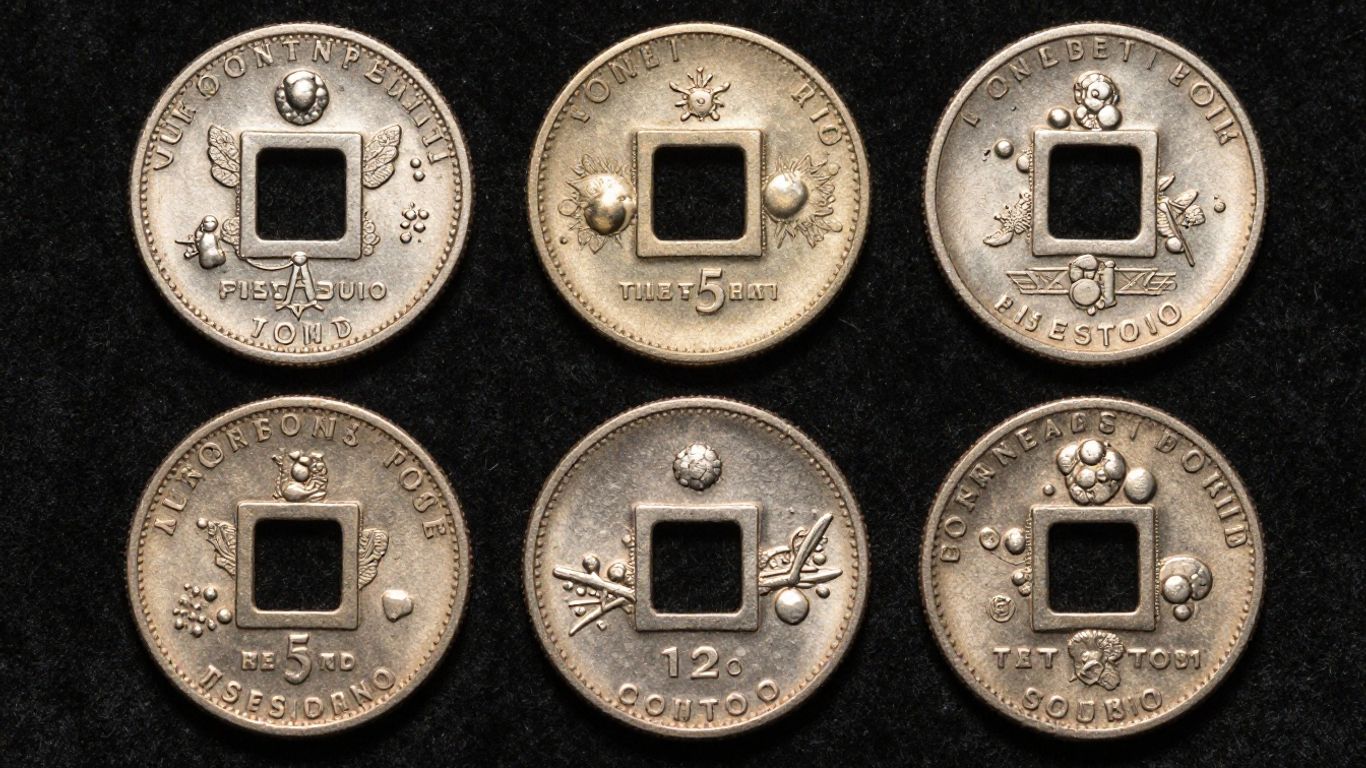
Foreign material: Grease and oil residue
The most common substance involved in striking through is a mixture of manufacturing lubricants, dirt, and microscopic metallic dust. This accumulation, often termed die fill, creates a thick, viscous layer that hides details. Insights into how Collectors’ Clearinghouse categorizes these materials reveal that they vary from smooth grease to brittle, hardened deposits.
Metal fragments: Planchet scraps and metal shavings
Hard metallic obstructions often produce different visible results on the planchet compared to soft grease. These fragments create distinct, often sharp indentations that clearly outline the shape of the metal scrap that was caught in the press. The table below provides a quick reference for common types of debris found during the minting process.
| Obstruction Type | Surface Impact | Typical Texture |
|---|---|---|
| Grease/Lubricant | Hazy details | Smooth or viscous |
| Metal Shavings | Deep impressions | Coarse and jagged |
| Textile/Fabric | Mesh-like patterns | Woven impressions |
These variations indicate that different industrial processes are prone to their own specific contamination risks within the facility.
Non-metallic debris: Fabric, plastic, and dust
Less frequently, items like cleaning cloths, plastic fragments, or airborne dust particles can become embedded in the strike. These materials typically create lighter, non-metallic impressions. Collectors using a coin error checklist often find these to be rare curiosities that add significant interest to a specialized cabinet.
Identifying obstructed die errors on modern coins
Detecting weak or missing design elements
When a die surface is partially covered, the intended design may vanish entirely or appear as a faint ghost of its original state. These weak strikes are often found on the obverse where the die meets the highest pressure point. Identifying these anomalies requires looking for a lack of consistent relief depth compared to similar coins from the same batch.
Locating localized versus full-face obstructions
Localized obstructions typically mask only a few letters or a specific profile feature, while full-face incidents can leave the field nearly featureless. Comparing your specimens to known examples is a standard practice for numismatists. Just as some seek unique arrangements in alternative betting sites for control, collectors look for unique obstruction patterns to gauge how the die was affected during production.
Analyzing the depth and clarity of the strike
Proper assessment of a strike involves looking at the edge where the obstruction meets clean metal. If the metal exhibits a smooth, flowing transition, the error is likely a result of the striking phase. Conversely, forced surface manipulation often shows a crisp, artificial transition point that does not mirror the flow characteristics of a professional strike.
The significance of die cap errors
How a stuck coin becomes a die cap
A die cap error occurs when a previously struck coin adheres to the striking die face. This newly attached coin then acts as a temporary die for all subsequent planchets. As reported by analysts of the die cap error, the trapped coin stretches and forms a chimney or mushroom shape as it is hammered onto new blanks.
Distinguishing die caps from standard obstructions
Unlike temporary grease barriers, die caps are semi-permanent fixtures that change every time a new coin is fed into the press. The resulting coins are often referred to as capped die strikes, featuring distorted or completely blank faces that are essentially mirror images of the cap’s design.
Stages of die cap progression
Early stages show thick, high-dome shapes while later stages manifest as thin, stretched cylinders. The progression represents one of the most mechanically interesting phases in the production of modern coins, often resulting in pieces that are highly sought after in prestige auctions.
Grading and valuation of obstructed error coins
Factors influencing market value
Several factors dictate what a collector pays for these specimens. Collectors often prioritize the following attributes when building their portfolios:
- Visual impact: How significantly the error changes the appearance of the coin.
- Rarity: The frequency of the specific obstruction type in a given series.
- Clarity: Whether the error clearly displays the type of object that caused the obstruction.
- Preservation: The absence of post-mint damage or improper cleaning.
Market interest tends to spike for high-contrast specimens where the error is immediately recognizable to the naked eye.
The role of professional certification
Having an error verified by a top-tier grading service provides essential long-term security. These organizations use specialized light and microscopic analysis to confirm that the obstruction occurred at the mint rather than being a result of atmospheric corrosion or intentional alteration post-release.
Avoiding counterfeit or altered coins
Counterfeit detection focuses on searching for tell-tale signs of acid or grinding tools. Altered coins often display a distinct lack of metal flow inside the affected area, confirming that the "error" was artificially applied after the coin left the mint. When investing in high-end error pieces, always rely on documentation from reputable sources.
Preserving and cataloging your error coin collection
Proper storage techniques for error coins
Long-term preservation demands stable, inert storage environments. Avoiding PVC-based flips or high-humidity storage areas is crucial to preventing long-term corrosion. Much like ensuring sturdy flooring for a home office, as discussed in home office flooring guides, maintaining a proper environment is the best way to safeguard your numismatic investment.
Maintaining provenance and documentation
Keeping a detailed log of every purchase, along with the source and any certification numbers, builds the value of the collection over time. Documentation serves as the historical record of your collection’s development, which is vital for eventual resale or estate planning purposes.
Using photography to record die state variations
High-resolution photography allows for the tracking of die state changes over time. By documenting minor differences in surface wear or obstruction placement, collectors can contribute to a better understanding of how individual dies degraded during the manufacturing process. This visual archive is invaluable for both personal study and public numismatic discourse.
Conclusion
Obstructed die errors represent a fascinating convergence of industrial reality and numismatic rarity. By understanding the mechanical origin of these anomalies—from grease fills to dramatic die caps—collectors can better appreciate the complex environment of the minting process. With a methodical approach to authentication and storage, your collection stays secure and historically significant, providing enjoyment for generations of enthusiasts to come.
Frequently Asked Questions
Are all obstructed die errors valuable?
No, value varies based on the drama of the error, the coin denomination, and the demand within the collecting community.
Can I find error coins in my pocket change?
It is possible to find minor errors in circulation, though major varieties are usually pulled from circulation before they ever reach the public.
Does cleaning an error coin hurt its value?
Yes, cleaning an error coin almost always destroys its numismatic value by stripping away natural toning and damaging surface luster.
How are grease strikes different from other errors?
Grease strikes are relatively common and usually involve a soft, temporary barrier while other obstructions often involve harder debris.
Can a die cap error be repaired?
No, any attempt to "fix" or alter a die cap or any other error specimen is considered damage and significantly reduces the coin’s worth.
Is documentation necessary for lower-value errors?
Maintaining records for all error coins helps track the provenance, even if the individual coin’s current market price is relatively low.
Why do some obstructions look like metal shavings?
Hard materials like metal filings get caught in the striking cycle, leaving deep, physical impressions that differ from the hazy look of grease-filled dies.