
Thinking about selling your Civil War tokens in San Antonio? It’s a great idea, especially if you’ve got some interesting pieces. These old coins aren’t just metal; they’re little bits of history. Figuring out where to sell them and how to get a fair price is key. This guide will walk you through the process, from understanding what makes your tokens valuable to finding the right buyers right here in San Antonio.
Key Takeaways
- To sell Civil War tokens in San Antonio, consider local coin shops, antique stores, and online platforms.
- Token value depends on rarity, historical significance, condition, and origin research.
- Prepare your tokens by assessing their condition, cataloging them, and researching fair market prices.
- Joining numismatic organizations and attending shows can help you connect with buyers and learn more.
- Understand different collecting niches, like state or topical tokens, to better market your items.
Understanding Civil War Token Value
Figuring out what a Civil War token is actually worth can feel like a puzzle. It’s not just about how old it is; a bunch of things play into its price tag. Think of it like collecting anything else – some items are just more sought after than others.
Factors Influencing Token Rarity
When you’re looking at a token, rarity is a big deal. Some tokens were made in huge numbers, and you can find them pretty easily. Others? Not so much. These might have been produced in smaller batches, or maybe they just didn’t survive the years as well. The fewer there are out there, the more collectors might want them, and that usually bumps up the price.
- Minting Quantity: How many were made in the first place?
- Survival Rate: How many are still around today?
- Dealer Inventory: How often do you see them pop up for sale?
Historical Significance and Appeal
Sometimes, a token’s story is what makes it special. Tokens from important historical events or those linked to well-known figures or businesses can be more interesting to collectors. A token that tells a story about a specific time or place, especially during the Civil War era, often has more appeal than a generic one. It connects you to the past in a tangible way.
The history behind a token can add a layer of appeal that goes beyond its material worth. These small pieces of metal often carry tales of commerce, daily life, and the turbulent times they were created in.
Researching Token Origins
Knowing where a token came from is key to understanding its value. Was it a merchant token from a specific town? A post trader token from a military fort? Researching the business or entity that issued the token can reveal its historical context. This detective work can uncover details that make a token more desirable. You might find out it was used in a place that no longer exists or by a business that played a unique role in its community. This kind of background information is what serious collectors look for.
Where to Sell Civil War Tokens in San Antonio
So, you’ve got some Civil War tokens sitting around and you’re wondering what to do with them. Selling them in San Antonio involves a few different avenues, and knowing where to look can make a big difference. It’s not quite like selling common coins; these pieces of history often require a more specialized approach.
Local Coin and Collectible Shops
Your first stop might be local coin shops. While many focus on coins, some also deal in other forms of numismatic material, including tokens. It’s wise to call ahead and ask if they handle Civil War tokens specifically. Some shops might be more interested than others, depending on their clientele and inventory. You might find a place like Bartlett Coin Shop that has a broader interest in currency and collectibles. Be prepared for them to offer a wholesale price, which will be lower than retail, as they need to make a profit when they resell your tokens.
Antique Stores with Numismatic Sections
San Antonio has a vibrant antique scene, and some of these stores have dealers who specialize in or have a section dedicated to coins and collectibles. These dealers often have a good understanding of historical items and might be interested in your Civil War tokens. It’s a good idea to visit a few and see what their focus is. Sometimes, you can find a dealer who is actively looking to add to their inventory of exonumia, which is the broader category that includes tokens and medals.
Online Marketplaces and Auctions
For a potentially wider reach, consider online platforms. Websites like eBay are popular for selling all sorts of collectibles, including Civil War tokens. You can list your items with clear photos and detailed descriptions. Another option is to work with an auction house that specializes in numismatics or historical collectibles. They can often achieve higher prices for rare or significant items, though they will take a commission. This method requires more effort in terms of listing and shipping, but it can connect you with buyers across the country or even globally.
Preparing Your Tokens for Sale
Before you even think about listing your Civil War tokens, taking some time to get them ready is a smart move. It’s not just about cleaning them up; it’s about presenting them in the best possible light to potential buyers. This preparation can make a real difference in how much you get for them.
Token Condition and Preservation
When it comes to old tokens, condition is king. You don’t want to do anything that might accidentally damage them. For most Civil War tokens, it’s best to leave them as they are. Harsh cleaning can actually lower their value. If a token is particularly dirty, a gentle rinse with distilled water and a soft cloth might be okay, but always test on a less valuable piece first if you’re unsure. The goal is to preserve the token’s original state, not to make it look brand new. Remember, many collectors prefer original, uncleaned pieces.
Cataloging Your Collection
Knowing what you have is half the battle. Take the time to catalog each token. This means noting down:
- Issuer: Who made the token?
- Location: Where was it used (city, state)?
- Date: If known, when was it issued?
- Material: What is it made of (e.g., brass, copper)?
- Description: Any unique markings or designs.
- Condition: A brief assessment (e.g., good, very good, fine).
This list will not only help you keep track of your collection but will also be invaluable when you start researching prices and describing your tokens to potential buyers.
Determining Fair Market Value
Figuring out what your tokens are worth can be tricky. It’s not like walking into a store and seeing them all lined up with price tags. You’ll need to do some homework.
- Check Online Marketplaces: Look at sites like eBay or specialized numismatic auction sites. See what similar tokens have sold for recently. Pay attention to the sold prices, not just the asking prices.
- Consult Price Guides: While specific Civil War token price guides might be hard to find, general exonumia or token guides can offer some insight. These often list tokens by type and provide estimated values based on condition.
- Talk to Experts: If you have a particularly rare or valuable token, getting an appraisal from a local coin dealer or a numismatic expert is a good idea. They have the experience to spot rarity and assess condition accurately.
The history behind a token often adds to its appeal. Researching the issuer and the time period can reveal fascinating stories that make a token more desirable to collectors, potentially increasing its market value beyond its physical condition alone.
By following these steps, you’ll be much better prepared to sell your Civil War tokens and get a fair price for them.
Specialized Token Collecting Niches
When you start looking at Civil War tokens, you might notice that collectors often focus on specific types. It’s not just about having a bunch of old coins; people get really into certain categories. This can make finding specific pieces a bit of a treasure hunt, but it also means some tokens can be quite rare and sought after within their niche.
Collecting by State or Region
One of the most popular ways people build their collections is by focusing on a particular state or even a smaller region. Many collectors start with tokens from where they live, which makes sense. It connects them to local history. For example, someone in Texas might try to find as many different tokens as possible that were used in San Antonio or other Texas towns during the Civil War era. This approach can lead to some really interesting discoveries about local businesses and their impact.
- Geographic Focus: Collectors often choose their home state or a region they have a connection to.
- Local History: This method allows for a deep dive into the history of specific towns and businesses.
- Rarity within a Niche: While a token might not be rare nationally, it could be very scarce within a specific state collection.
Topical Token Collections
Beyond geography, many collectors choose to specialize in tokens based on their theme or subject matter. This is where things can get really diverse. You might find someone who only collects tokens related to saloons, or perhaps those used by military post traders. Other popular themes include tokens from specific types of businesses like bakeries or dairies, or even tokens associated with entertainment like billiard halls.
The appeal here is often the story behind the token and what it represents about a particular aspect of life during that time. For instance, military post trader tokens can offer a glimpse into the daily lives and economies of frontier forts.
Military and Post Trader Tokens
This is a particularly interesting niche within topical collecting. Military post trader tokens were issued at U.S. Army forts, often on the Western Frontier, and served as a form of currency for soldiers to use at the post sutler or trader. These tokens are frequently quite rare because they were used in isolated locations and often produced in limited quantities. Some of the most valuable and sought-after tokens in existence fall into this category. For example, tokens from Fort Craig in New Mexico, associated with figures like Captain Jack Crawford, are exceptionally rare and can command significant prices due to their historical context and scarcity.
The life of a token was often a hard one. Unlike coins kept safe, tokens were frequently used, abused, and eventually discarded or recycled. This rough existence contributes to the rarity of many surviving examples, especially those from military posts where supplies were limited and usage was heavy.
The Role of Numismatic Organizations
Joining a numismatic organization can really open up your world when it comes to collecting Civil War tokens. These groups are full of people who are just as passionate about this stuff as you are, and they often have a wealth of knowledge that’s hard to find anywhere else.
Joining the Token and Medal Society
The Token and Medal Society, or TAMS, is a big one for anyone interested in tokens, medals, and other forms of exonumia. It’s a place where collectors, dealers, and historians come together. Think of it as a central hub for all things related to these items. They put out publications that are pretty informative and can help you learn a lot about different types of tokens, their history, and how to spot fakes. It’s a good starting point if you’re serious about building a collection.
Networking with Fellow Collectors
One of the best parts of joining a group like TAMS or even a local coin club that has exonumia enthusiasts is the people you meet. You can learn so much from experienced collectors. They can offer advice on where to find tokens, what to look out for, and how to properly care for your pieces. Plus, you might find someone who has just the token you’ve been searching for, or they might know someone who does. It’s like having a whole team of experts in your corner.
Attending Token Shows and Events
Numismatic organizations often host shows and conventions. These events are fantastic opportunities to see a wide variety of tokens up close, talk to dealers, and maybe even find that missing piece for your collection. It’s not just about buying and selling, though. These shows are great for learning, too. You can often attend talks or seminars where experts share their insights. It’s a chance to really immerse yourself in the hobby and connect with the community on a deeper level. You might even find some Civil War tokens right here in San Antonio at a local event.
Appraising Your Civil War Tokens
Expert Appraisals in San Antonio
Figuring out what your Civil War tokens are actually worth can feel like a puzzle. If you’re in San Antonio and looking to get a handle on your collection’s value, seeking out local experts is a smart move. Many coin and collectible shops in the area have staff who know their way around numismatics, including these historical pieces. They can offer an appraisal based on their knowledge of the market and the specific token you have. Sometimes, antique stores that deal in a variety of old items might also have someone on hand who can give you a ballpark figure, especially if they have a dedicated coin section. Don’t be afraid to visit a few places to get a sense of different opinions.
Understanding Pricing Guides
While an expert appraisal is great, having your own reference points is also helpful. There are several pricing guides and catalogs available that list Civil War tokens and their estimated values. These guides often break down tokens by state, type, and condition, giving you a way to compare your own pieces. Keep in mind that these are just guides; the actual price you get can depend on the buyer and the current market demand. It’s a good idea to consult a few different resources if you can find them, as values can sometimes vary between publications. Looking at recent sales data for similar tokens can also provide a clearer picture of what collectors are willing to pay.
The Importance of Provenance
Provenance, which is basically the history of ownership for an item, can add a surprising amount of appeal and value to your Civil War tokens. If you have any documentation that shows where a token came from – maybe it was passed down through your family, or you have a receipt from a previous sale – that information is gold. Knowing the story behind a token can make it much more interesting to a collector. For example, if a token is linked to a specific historical event or a well-known figure, its desirability can increase significantly. Even a simple note about when and where you acquired it can contribute to its story. This kind of background information helps collectors connect with the piece on a deeper level, often leading to a higher perceived value.
Navigating the Market for Exonumia
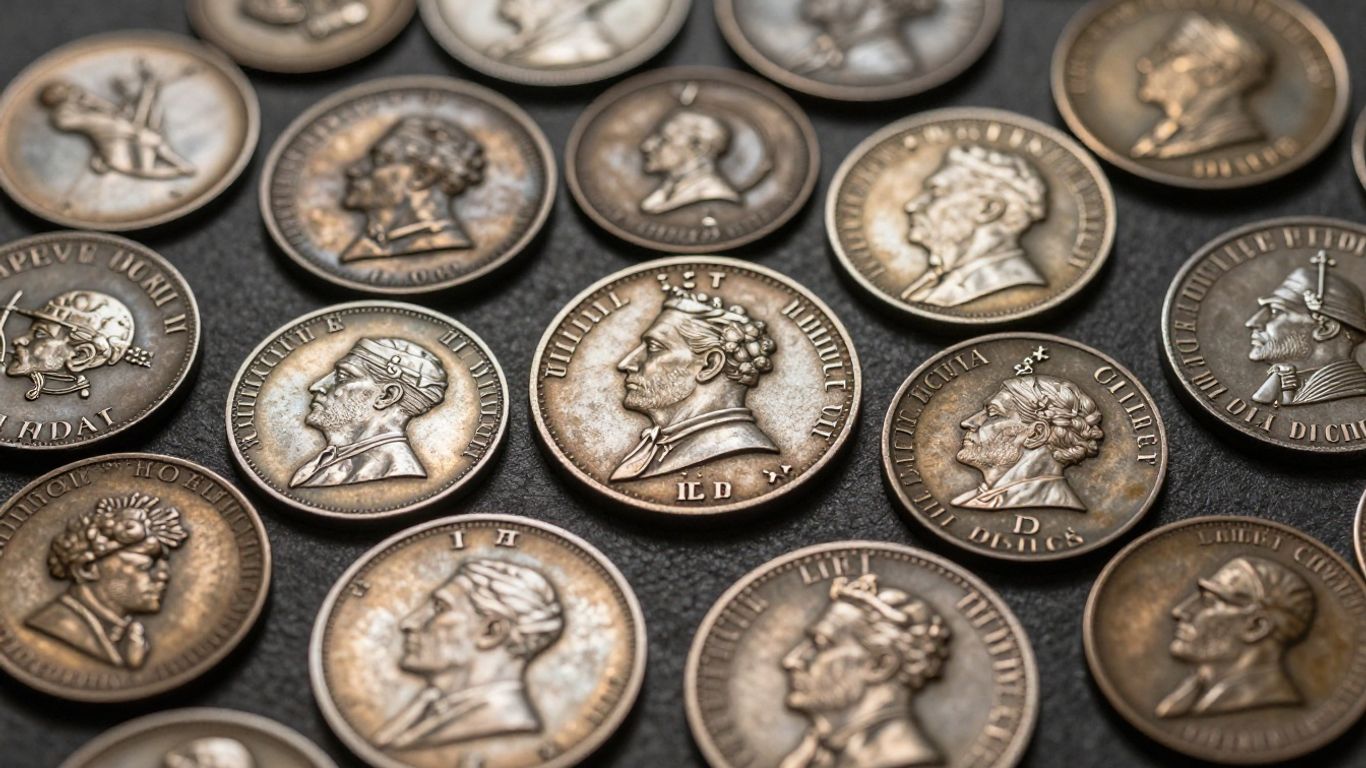
Exonumia is a broad category that includes items related to numismatics but aren’t official government-issued currency. This can encompass a wide range of objects, from tokens and medals to transportation passes and even gaming chips. Understanding this wider world is key to appreciating the full scope of what you might have in your collection, especially when it comes to Civil War tokens.
The Broader World of Exonumia
While Civil War tokens are a specific type of exonumia, they exist within a much larger universe of collectible items. Think of it like this: coins are the main stars, but exonumia are the fascinating supporting cast. This category includes everything from commemorative medals struck for historical events to advertising tokens given out by local businesses. Many collectors start with coins and then branch out into exonumia as their interests grow. It’s a way to connect with history on a more personal level, often through items that were once part of everyday life. For instance, a token from a San Antonio merchant might tell a story about local commerce during a specific era. Exploring this wider field can also reveal unexpected connections and potential value in items you might have overlooked.
Tokens vs. Medals: Key Differences
It’s easy to lump tokens and medals together, but there are distinctions. Generally, tokens were created for a specific purpose, often as a substitute for money or for use in a particular place or transaction. Think of the Civil War store cards; they were used as currency in areas where official money was scarce. Medals, on the other hand, are typically commemorative or awarded for achievement. They don’t usually circulate as currency. While both can be made of similar metals and have historical significance, their original function is the primary differentiator. Understanding this helps in accurately identifying and valuing your items. For example, a medal commemorating a local event in Texas would be distinct from a token used at a San Antonio saloon.
Identifying Undervalued Collectibles
Sometimes, items that aren’t widely sought after by the masses can represent excellent opportunities for collectors. This is especially true in the exonumia market, where niche interests can drive demand for specific types of tokens or medals. Research is your best friend when trying to spot these hidden gems. Look for items with strong historical ties to San Antonio or Texas, or those related to specific industries or events. Sometimes, a well-preserved token from a defunct local business might be more appealing to a regional collector than a common national token. Don’t be afraid to explore less common categories. You might find that certain types of advertising tokens or even transportation tokens from early San Antonio have a dedicated following. Checking resources like the PCGS CoinFacts database can help you understand the rarity and historical context of various numismatic items, including some exonumia.
The exonumia market, while often overshadowed by coins, offers a rich tapestry of historical artifacts. These items provide tangible links to the past, reflecting the economic, social, and cultural landscape of their time. For collectors in San Antonio, this means a potential treasure trove of local history waiting to be discovered and appreciated.
Here are some general categories of exonumia that collectors often explore:
- Merchant Tokens: Issued by businesses, often to provide change or encourage local trade.
- Transportation Tokens: Used for streetcars, buses, or ferries.
- Commemorative Medals: Struck to honor significant events, people, or places.
- Fraternal Tokens: Issued by organizations like the Masons or Odd Fellows.
- Good Luck Tokens: Often given away as promotional items.
When preparing to sell, consider how your tokens fit into these broader categories. This can help potential buyers understand their appeal and historical context. For instance, a Civil War token that also served as a merchant token for a San Antonio business combines two layers of historical interest.
Selling Strategies for San Antonio Collectors
Consignment Options
When you’re ready to sell your Civil War tokens, consignment is a common route. This involves entrusting your items to a dealer or auction house who will then sell them on your behalf. They handle the marketing, display, and negotiation, taking a percentage of the final sale price as their fee. It’s a good option if you prefer a hands-off approach and want to tap into a dealer’s established customer base. For San Antonio collectors, local coin shops that offer consignment services can be a convenient choice. They often have a good understanding of the local market and can provide personalized attention to your collection. Remember to ask about their commission rates, payment schedules, and insurance policies before agreeing to consign.
Direct Sales to Dealers
Another straightforward method is selling directly to a coin dealer. This usually means a quicker transaction, as the dealer purchases your tokens outright. While you might not get the absolute top dollar compared to a successful auction, it offers immediate payment and certainty. When approaching dealers in San Antonio, it’s wise to visit a few to compare offers. Some dealers specialize in certain types of numismatic items, so finding one familiar with Civil War tokens can be beneficial. Be prepared to present your tokens clearly and have any research you’ve done readily available. This can help the dealer assess their value more accurately and make a fair offer.
Setting Realistic Expectations
It’s important to approach the selling process with a clear understanding of what your tokens are worth. Market conditions, rarity, condition, and historical significance all play a role. Researching recent sales of similar tokens can provide a good baseline. Don’t expect every token to fetch a premium price; some may be more common or in lesser condition, affecting their desirability. A balanced perspective will help you avoid disappointment and make sound decisions about where and how to sell. Consider the time and effort involved in each selling method; sometimes, a slightly lower price for a quick, easy sale is preferable to waiting months for a potentially higher return that may never materialize.
The Historical Context of Tokens
Tokens as Historical Artifacts
Tokens are more than just old pieces of metal; they are tiny windows into the past. Think about it: each one was made for a specific reason, at a specific time, and in a specific place. They tell stories about everyday life that official currency often misses. These items offer a tangible connection to the people and businesses that shaped our communities. Whether it’s a token used at a local general store or one for a long-gone amusement park, it represents a moment in history. They can show us what people bought, where they worked, and how they interacted with commerce before credit cards and digital payments were even a thought.
Merchant Tokens and Their Stories
Many Civil War tokens were issued by merchants. These weren’t just random businesses; they were often small shops, saloons, or workshops trying to make a sale. They’d issue these tokens as a form of credit or a discount, encouraging customers to spend money with them. Sometimes, these tokens were the only form of small change available, especially when the official currency was scarce or hoarded. Researching the merchant behind a token can be like detective work. You might find out they were a prominent figure in town, or perhaps a small business that struggled to survive. It’s a way to learn about local economies and the people who ran them.
The Life Cycle of a Token
Tokens often had a pretty rough life. Unlike coins that might be carefully saved in a collection, tokens were meant to be used and spent. They were handled by many people, passed from hand to hand, and often ended up back at the business that issued them. Once redeemed, they might be destroyed, melted down, or sometimes, if they were lucky, they’d be set aside. Many were simply lost, dropped on the street, or forgotten in a drawer. This hard life is part of why so many tokens are rare today. The ones that survive have made it through a lot, which adds to their appeal for collectors. It’s a reminder that these aren’t just objects; they’re survivors from a different era.
Wrapping Up Your Search
So, you’ve learned a bit about where to look for Civil War tokens right here in San Antonio. It’s not always easy, and sometimes you might just stumble upon a gem when you least expect it. Remember, these old tokens aren’t just metal; they’re little pieces of history. Whether you’re talking to local dealers, checking out antique shops, or even just keeping an eye out at estate sales, the hunt itself can be pretty rewarding. Don’t get discouraged if you don’t find something right away. The journey to finding these historical bits is part of the fun, and who knows what else you might discover along the way in our city.
Frequently Asked Questions
How do I know if my Civil War token is valuable?
The value of a Civil War token depends on several things. How rare is it? Is it connected to a significant historical event or person? What condition is it in? Doing some research on its history and rarity can help you figure out its worth.
Where can I sell my Civil War tokens in San Antonio?
You have a few options in San Antonio. You could try local coin shops that deal with collectibles, some antique stores might have sections for coins and tokens, or you can look at online marketplaces and auctions where collectors worldwide search for these items.
What makes some tokens rarer than others?
Tokens can be rare for many reasons. Sometimes, only a few were ever made, or very few have survived over time. Tokens from specific places, like old military forts, or those linked to unique historical events or businesses are often considered more rare.
Should I clean my Civil War tokens before selling them?
Generally, it’s best not to clean your tokens. Cleaning can sometimes damage the surface and lower its value. It’s usually better to leave them as they are, or consult with an expert on the best way to preserve their condition.
How can I find out the history of my token?
You can research the names and places written on the token. Old business records, historical newspapers, and online archives can provide clues about the business that issued the token and the time it was used. Sometimes, historical photos can even match the token’s design.
What is 'exonomia'?
Exonumia is a broad term that includes any numismatic item that isn’t regular money. This covers things like tokens, medals, slugs, and other similar objects that were used for trade, advertising, or as souvenirs, but were not official currency.
Are there special groups for people who collect tokens?
Yes, there are organizations dedicated to collecting tokens and medals, like the Token and Medal Society (TAMS). Joining these groups can help you connect with other collectors, learn more about your tokens, and find out about shows and events where you can buy, sell, or trade.
What's the difference between a token and a medal?
While both are forms of exonumia, tokens were typically used as a form of currency or for trade, like a substitute for money in a specific place or business. Medals, on the other hand, are usually made to commemorate an event, honor a person, or serve as a keepsake, and weren’t intended for everyday exchange.