
So, you’re interested in coins that are a bit more special than the usual ones you find in your pocket change? That’s where key and semi-key date coins come in. These aren’t just any old coins; they’re the ones that collectors and investors really pay attention to. Think of it like finding a rare book instead of a paperback – there’s just more to it. We’ll go over what makes these coins stand out, how to spot them, and why they matter in the world of collecting. It’s not as complicated as it sounds, and understanding the basics can really change how you look at coins.
Key Takeaways
- Value in coins often comes down to how rare they are. This rarity is usually tied to how many were made in the first place and how many have managed to stick around over time.
- Certain dates or mint marks on coins are considered ‘key dates’ because very few were produced. ‘Semi-key dates’ are similar but slightly more common. These specific coins are often what collectors are hunting for.
- The condition of a coin plays a big part in its worth. Coins that look like they just came from the mint (Mint State) are generally worth more than coins that show signs of wear.
- Knowing about different coin series, like Wheat Pennies or Washington Quarters, helps you understand which specific key and semi-key date coins are the most sought after within those groups.
- When you’re looking to buy key and semi-key date coins, always do your homework. Check current prices, be wary of deals that seem too good to be true, and make sure the seller is someone you can trust.
Understanding the Fundamentals of Key and Semi-Key Date Coins
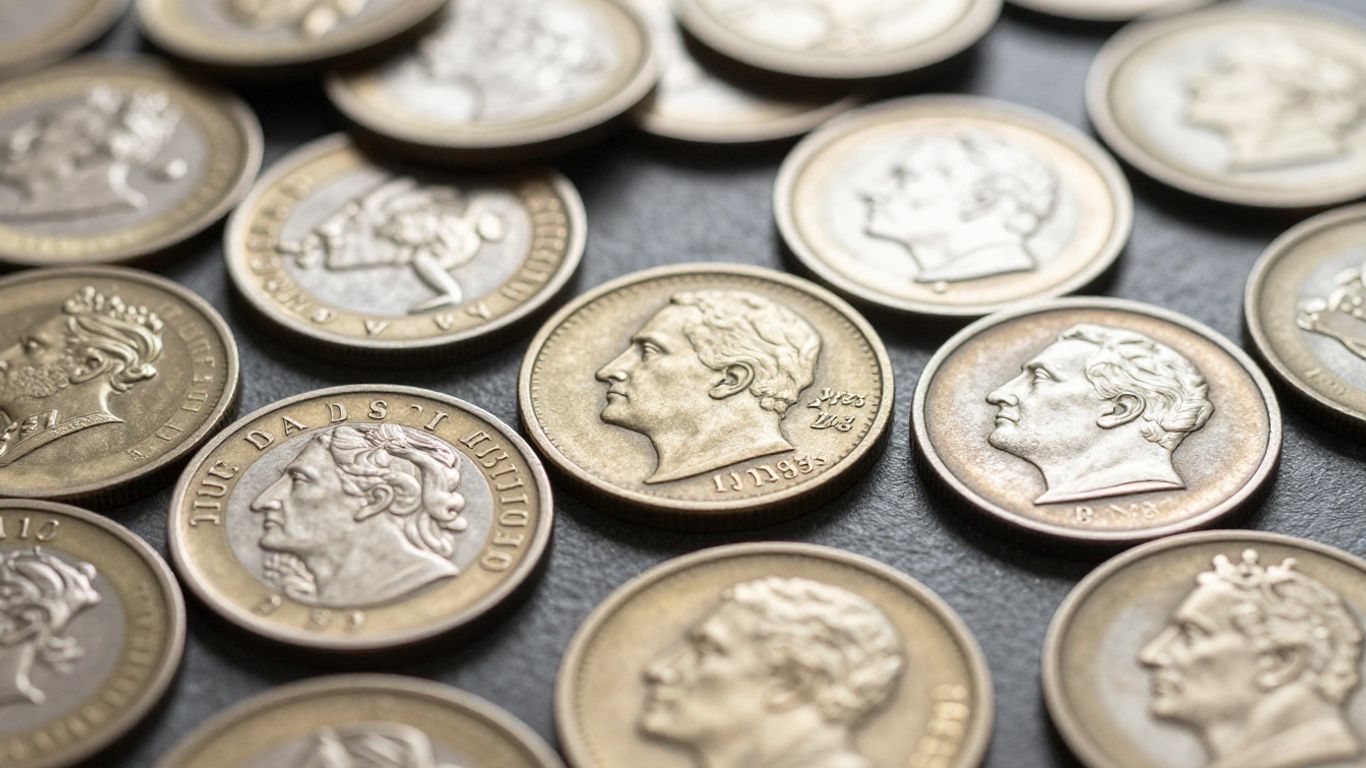
When you start looking at coins beyond just their face value, you quickly run into terms like "key date" and "semi-key date." These aren’t just random labels; they point to coins that are significantly harder to find and, as a result, often worth more. Think of it like finding a specific book in a huge library – some are everywhere, but others are tucked away, making them special.
Defining Key and Semi-Key Dates
At its core, a key date coin is one that is particularly scarce within its series. This scarcity usually comes down to a combination of when and where it was made. A coin might be a key date because only a small number were produced in a specific year, or perhaps at a particular mint facility. These are the coins that collectors often need to complete a set and are willing to pay a premium for. Semi-key dates are similar but represent a step down in rarity. They are still harder to find than common coins in the series, but not quite as elusive as the absolute key dates. They offer a more accessible way for collectors to acquire scarcer pieces without the extreme cost associated with the top rarities. Identifying these key dates in coin collecting is a big part of building a valuable collection.
The Role of Mintage Figures in Rarity
So, how do we know if a coin is rare? The biggest clue is the mintage figure. This is simply the number of coins produced by the mint for a specific date and mint mark. Lower numbers generally mean a coin is rarer. It’s pretty straightforward supply and demand. If the U.S. Mint only made 10,000 of a certain coin, and millions of another, that 10,000-mintage coin is going to be much harder to find.
Here’s a simplified look at how mintage impacts rarity:
| Mintage Figure | Rarity Level | Collector Demand | Potential Value |
|---|---|---|---|
| Over 10 Million | Common | Low | Base Value |
| 1 Million – 10 Million | Less Common | Moderate | Moderate Premium |
| 100,000 – 1 Million | Scarce | High | Significant Premium |
| Under 100,000 | Very Scarce | Very High | High Value |
Of course, mintage isn’t the only factor. What happens to those coins after they’re made is also important.
Survival Rates and the Melting Factor
Not every coin that was minted is still around today. Many coins get lost, damaged, or, quite significantly, melted down. Governments have historically recalled coins, especially those made of silver or gold, for their metal content. This process, often called melting, drastically reduces the number of coins that survive. A coin with a low mintage that was also heavily melted will be far rarer than its initial production numbers might suggest. The coins that make it through these historical events, often referred to as survivors, are the ones that collectors are really after. It’s a bit like finding an old photograph that somehow survived a house fire – it’s rare and holds a special significance. Understanding these survival rates helps paint a fuller picture of a coin’s true scarcity beyond just the initial mint count.
The journey of a coin from mint to collector is often a long and unpredictable one. Factors like economic conditions, wars, and even simple everyday use can impact how many of a particular coin remain in existence. This makes the coins we find today not just pieces of metal, but survivors of history.
Identifying Key and Semi-Key Date Coins
Figuring out which coins are the real stars of a collection, the ones that collectors really chase, comes down to a few key things. It’s not just about the date on the coin; there’s more to it than that. We’re talking about coins that stand out because they were made in smaller numbers or because something interesting happened during their production. These are the coins that often get talked about and sought after.
Mintage Figures as a Primary Indicator
The number of coins a mint actually produced in a given year and at a specific location is usually the first place to look when trying to spot a rare coin. Think of it like this: if only a few hundred of something were made, it’s naturally going to be harder to find than something made by the millions. These production numbers, called mintage figures, are recorded by the U.S. Mint and are available in various reference books. A coin with a really low mintage is a strong signal that it might be a key or semi-key date. For example, a coin from the San Francisco mint (marked with an ‘S’) might have a much lower mintage than one from Philadelphia (no mint mark) for the same year, making that ‘S’ coin significantly scarcer. Lower mintages generally mean higher rarity.
Here’s a look at how mintage can affect rarity:
- Very Low Mintage: Often indicates a key date, highly sought after.
- Moderately Low Mintage: Suggests a semi-key date, still valuable and collectible.
- High Mintage: Typically points to a common date, less valuable unless in top condition.
Mint Marks and Coin Scarcity
Beyond just the year, where a coin was made plays a big part in how rare it is. Different mints – like Philadelphia (no mark), Denver (D), or San Francisco (S) – had different production levels. Sometimes, a specific mint would produce far fewer coins than another in the same year. This is where mint marks become super important. For instance, certain ‘S’ mint coins from earlier decades are known for being much harder to find than their ‘D’ or Philadelphia counterparts. The 1909-S VDB Lincoln cent is a famous example; its low mintage combined with the designer’s initials on the reverse made it an instant classic and a true key date in the series.
Recognizing Valuable Die Varieties and Errors
Sometimes, a coin isn’t rare just because of its date or mint mark, but because of a mistake made during the minting process. These are called die varieties or errors. They can range from a doubled die, where a date or design element appears doubled, to a mint error where a coin is struck off-center or has a piece missing. While many errors are obvious, some are subtle and require a close look, maybe with a magnifying glass. Comparing a questionable coin to a known ‘normal’ example of the same date and mint mark can help you spot these differences. These imperfections, while technically mistakes, can make an otherwise common coin quite valuable to collectors looking for something unique.
Identifying these specific issues requires careful examination. It’s about looking beyond the obvious and understanding the subtle ways coins can deviate from their intended design during production. These deviations are what collectors often seek out to add depth and rarity to their collections.
The Significance of Condition in Coin Valuation
When you’re looking at coins, especially those that might be key or semi-key dates, how good a shape the coin is in really matters. It’s not just about the date or the mint mark; the physical state of the coin plays a huge role in what it’s worth. Think of it like this: a rare book in perfect condition is worth way more than the same book with torn pages and a broken spine, right? Coins are pretty similar.
The Sheldon Grading Scale Explained
To talk about coin condition, people use a system called the Sheldon Scale. This scale runs from 1 to 70, with 70 being the absolute best possible condition. It gives everyone a common language to describe how worn or how pristine a coin is. A coin graded a 70 is theoretically worth 70 times more than a coin graded a 1. This scale helps collectors and dealers compare coins accurately. The PCGS grading standards are based on this established system, making it a go-to for serious collectors.
Distinguishing Mint State and About Uncirculated
Coins are generally put into two big groups: circulated and uncirculated. Uncirculated coins, also called Mint State (MS), have never been used in everyday money transactions. They still have their original shine, or luster, from when they were made, and all the details are sharp. The higher the number after MS (like MS-65 or MS-68), the better the condition within that uncirculated category. About Uncirculated (AU) coins are just a step below. They look pretty much new to the casual observer, but if you look closely, maybe with a magnifying glass, you can spot tiny signs of wear, usually on the highest points of the design.
Understanding Extremely Fine to Fine Grades
Coins that fall into the Extremely Fine (XF) to Fine (F) range have definitely seen some action. They’ve been passed around in commerce and show noticeable wear. However, for a coin to still be considered collectible in these grades, the main parts of the design, like the lettering and the date, should still be clear and readable. You won’t see that sharp, minty luster here; instead, you’ll see smoothed-out details and possibly some scratches or nicks. The exact amount of wear determines where it falls between XF and F, with XF being the better of the two. The grade of rare coins significantly impacts market demand and investment potential.
Here’s a quick look at what to expect:
- Mint State (MS): No signs of wear, full original luster, sharp details.
- About Uncirculated (AU): Very light wear, only visible under magnification on high points.
- Extremely Fine (XF): Moderate wear, but all major details are clear.
- Fine (F): Significant wear, details are visible but flattened.
When you’re evaluating a coin, pay attention to specific spots. For example, on a Lincoln cent, check his cheekbone and the hair above his ear. On the reverse, look at the wheat stalks and the lettering. If these areas are worn flat, the coin has seen a lot of use. Original shine and how well the design was stamped (the strike) also play a big part, as does any natural coloring the coin might have developed over time.
Key Date Examples Across Coin Series
Iconic Key Dates in Wheat Pennies
The Lincoln Cent, often called the Wheat Penny due to its reverse design, has several dates that stand out as particularly scarce and sought after. The 1909-S VDB is perhaps the most famous. Its low mintage of just 484,000 pieces, combined with the fact that the designer’s initials (VDB) were removed from the reverse shortly after production began, makes it a true rarity. Another significant key date is the 1914-D, with a mintage of only 1,193,000. Pennies from the San Francisco (S) and Denver (D) mints, especially from earlier years, often have lower production numbers compared to those from Philadelphia (P), making them more challenging to find in circulated condition. These low-mintage coins are often the first ones collectors look for when building a set.
Key Dates in the Washington Quarter Series
When it comes to Washington Quarters, the 1932-D and 1932-S are the undisputed key dates. These coins were minted during the Great Depression, a period of economic hardship that saw significantly reduced mintages across the board. The Denver mint produced only 436,800 quarters in 1932, while the San Francisco mint produced a mere 424,800. These numbers are exceptionally low for a circulating coin series, making them very difficult to acquire, especially in higher grades. Other dates, like the 1936-D, are considered semi-key dates due to their relatively lower mintages compared to other dates in the series.
Notable Key Dates in Other Series
Many other coin series feature their own challenging key dates. For instance, in the Mercury Dime series, the 1916-D is a legendary key date. With a mintage of only 264,000, it’s incredibly scarce. The Barber Dime series also has its tough dates, such as the 1913-S. In the Morgan Dollar series, the 1893-S is a prime example of a key date, known for its low mintage and high demand. These coins represent significant historical moments and are highly prized by collectors.
The scarcity of these specific coins is not just about the number minted; it’s also about how many have survived over time. Factors like melting campaigns and general wear and tear reduce the number of available coins, further increasing their rarity and desirability among numismatists.
Here are some examples of key dates and their approximate mintages:
| Series | Key Date | Mint Mark | Mintage |
|---|---|---|---|
| Lincoln Cent | 1909-S VDB | S | 484,000 |
| Lincoln Cent | 1914-D | D | 1,193,000 |
| Washington Qtr | 1932-D | D | 436,800 |
| Washington Qtr | 1932-S | S | 424,800 |
| Mercury Dime | 1916-D | D | 264,000 |
| Morgan Dollar | 1893-S | S | 100,000 |
Collecting these key dates can be a rewarding pursuit, offering a glimpse into the history of U.S. coinage and the factors influencing coin rarity. While challenging, finding these coins can significantly enhance a collection’s appeal and potential value.
Navigating Semi-Key Dates for Collection Building
While the thrill of finding a true key date coin is undeniable, building a robust collection often involves a strategic focus on semi-key dates. These coins, while not reaching the stratospheric values of their key date counterparts, represent a more accessible entry point for many collectors and investors. They offer a tangible way to acquire scarcity without the prohibitive cost, making them excellent candidates for assembling a well-rounded numismatic portfolio.
Identifying Semi-Key Date Characteristics
Semi-key dates are typically characterized by mintages that are significantly lower than common dates within a series, but not so low as to be considered the absolute rarest. They often fall into a middle ground, where production numbers were limited due to specific economic conditions, changes in mint operations, or simply less demand for that particular issue at the time. The interplay between mintage figures, survival rates, and collector demand is what truly defines a semi-key date.
Here are some common traits to look for:
- Lower Mintage Figures: While not the lowest, these figures will stand out when compared to the majority of dates in a series. Consulting mintage charts is your first step.
- Specific Mint Marks: Often, certain mint marks (like ‘S’ for San Francisco or ‘D’ for Denver) will have lower production numbers for particular years compared to the Philadelphia mint.
- Circulation Impact: Many semi-key dates were still produced in quantities that led to them entering circulation. Their scarcity is often amplified by the fact that fewer have survived in higher grades.
- Historical Context: Understanding the era in which the coin was minted can provide clues. For instance, coins produced during the Great Depression or wartime often have lower mintages.
Examples of Semi-Key Date Coins
Across various popular coin series, numerous semi-key dates offer excellent opportunities. For instance, in the Lincoln Cent series, dates like the 1910-S, 1911-S, 1913-S, 1914-S, and 1915-S are often considered semi-key. These coins, while not as famous as the 1909-S VDB, represent a significant step up in rarity from common issues. Similarly, within the Washington Quarter series, dates such as the 1934-S or 1936-D can be viewed as semi-key, offering a more attainable acquisition than the 1932 issues.
It’s important to remember that what constitutes a semi-key date can evolve as collector interest shifts and more data becomes available. Staying informed about market trends is part of the fun.
Entry Points for Investment-Grade Collections
Building an investment-grade collection doesn’t always mean starting with the most expensive coins. Semi-key dates provide a smart way to begin acquiring scarcity and potential value appreciation. They allow collectors to focus on acquiring higher-grade examples of these scarcer dates, which can be more important for long-term investment than lower-grade key dates. For example, a high-grade certified 1914-D Lincoln Cent might be a more prudent investment than a heavily worn 1909-S VDB, depending on your budget and goals. This approach allows for diversification within a series and can lead to a more balanced and potentially profitable collection over time. Considering coins related to national milestones, like those commemorating the upcoming U.S. Semiquincentennial, can also be a smart strategy for building a collection with historical significance and potential future demand.
Acquiring semi-key dates requires diligent research. Understanding their specific mintage figures, mint mark variations, and typical survival rates in various conditions is paramount. This knowledge allows you to make informed purchasing decisions and avoid overpaying for coins that may not offer the same long-term potential as genuine semi-key issues.
By focusing on these accessible rarities, collectors can steadily build a numismatic portfolio that balances historical significance with investment potential, all while enjoying the process of discovery and acquisition. The SemiQ Program is another example of how national events can spark collector interest in specific coin issues.
The Impact of Historical Context and Demand
Coins Affected by Political and Economic Changes
It’s not just about how many coins were made or how many are left. Big historical events really shake things up for coins. Think about times of war, economic booms, or major recessions. During the Great Depression, for instance, people were struggling, and the government even considered melting down silver coins. This kind of uncertainty can affect how many coins were actually saved by people, not just how many were minted. Sometimes, coins that were made in large numbers can become rare if they were used up or melted down due to economic policies. It’s a whole story tied to the times.
Historical Significance and Collector Demand
Some coins just capture people’s attention because of what was happening when they were made. A coin from a significant historical period, like the American Revolution or the Civil War, might be more sought after, even if its mintage isn’t the lowest. Collectors often want a piece of that history. This desire can push prices up way beyond what the metal is worth or what the production numbers suggest. When a coin has both a great story and isn’t easy to find, it becomes a real prize. These key dates are significant and treasured items within any collection, merging historical importance with numismatic value.
Modern Era Coins Gaining Momentum
Don’t think it’s all about old coins, though. Even newer coins can become popular. Sometimes, a specific series or a coin with a unique design can spark a lot of interest. The 50 State Quarters program, for example, got a whole new group of people collecting. When a lot of people want a coin, whether it’s common or rare, the demand goes up. This can make even less scarce coins more desirable. It shows that history isn’t just in the past; it’s being made all the time, and collectors are paying attention. Building a collection often involves looking at both the old standbys and what’s becoming popular now, like the key dates are significant coins that hold both historical importance and numismatic value.
Leveraging Resources for Coin Identification
So, you’ve got a coin that might be something special. Now what? You can’t possibly be an expert on every single coin ever made, right? Thankfully, there are plenty of tools and people out there ready to help you figure out exactly what you have. Think of it like having a whole team of detectives on your side.
Utilizing Reference Guides and Online Resources
This is where you start verifying your suspicions. Reference guides and online resources are your best friends when you’re trying to identify a coin and get a sense of its worth. Websites from major grading services like PCGS and NGC are goldmines. They often have price guides and population reports that can tell you just how rare your coin is. Seriously, these are invaluable for understanding rarity. Don’t forget the classic printed guides, too. The "Red Book" (A Guide Book of United States Coins) is a staple for a reason, offering mintage figures and value estimates year after year. It’s a good idea to have one handy. For a more traditional approach, a printed guide to American coinage, like the “Red Book,” is a must-have for any serious collector. You can also find online forums and social media groups where experienced collectors hang out. Posting pictures and asking questions there can get you some really helpful feedback.
- PCGS CoinFacts: An online encyclopedia with images, auction prices, and information on thousands of coins.
- The “Red Book”: An annual publication with mintage figures and value estimates.
- Online Forums: Websites where you can ask questions and share photos of your coins for feedback.
The Value of Professional Grading Services
When you’re dealing with potentially valuable coins, especially key and semi-key dates, getting a professional opinion is a smart move. Third-party grading services (TPGS) like PCGS and NGC employ numismatic experts who meticulously examine coins. They check for authenticity and assign a grade based on condition. Once graded, the coin is sealed in a protective holder, often called a slab. This process gives you a trusted, independent assessment. It’s a robust layer of security and helps protect against fakes or altered coins. For any significant investment, professional authentication is really indispensable. It’s worth the cost to know for sure what you have.
For any significant investment in antique currency or investment-grade coins, professional authentication is not just recommended, it is indispensable. Third-party grading services, TPGS, like PCGS and NGC, employ teams of expert numismatists who meticulously authenticate and grade coins. They use advanced techniques, including spectroscopy and high-resolution imaging, to detect fakes and alterations. Once authenticated and graded, the coin is encapsulated in a sonically sealed, tamper-evident plastic holder, known as a slab. This process provides a robust layer of security and a trusted, independent assessment of the coin’s authenticity and condition.
Engaging with Coin Collecting Communities
Don’t underestimate the power of talking to other collectors. Coin collecting communities, whether online or at local coin shows, are fantastic places to learn. You can share your finds, ask for advice, and even get help identifying specific mint errors or die varieties. Sometimes, just seeing what others are collecting or discussing can give you new ideas. You might even find someone who specializes in the exact series you’re interested in, like the 1901-O Barber quarter, which is a significant semi-key date. Building connections within the hobby can open doors to new information and opportunities. Plus, it’s just more fun to share your passion with others who get it. Remember to always handle coins carefully, preferably by the edges, and ideally over a soft surface when examining them in person. Asking questions about a coin’s history or specific features is also a good practice when dealing with reputable dealers.
Avoiding Pitfalls When Acquiring Key and Semi-Key Date Coins
Buying key and semi-key date coins can be exciting, but it’s also a space where folks can get tripped up. It’s not just about finding a rare coin; it’s about making sure you’re getting what you pay for and that the coin is what it’s claimed to be. A little bit of caution goes a long way.
Researching Current Market Values
Before you even think about making a purchase, you absolutely need to know what the coin is actually worth. Prices can swing, and what one dealer is asking might be way off from what others are charging. You can check out price guides, look at recent auction results, and see what similar coins have sold for. This homework helps you spot deals that are actually too good to be true.
- Consult reputable numismatic price guides.
- Review recent auction records for comparable coins.
- Compare offerings from multiple trusted dealers.
Caution Against 'Too Good to Be True' Offers
If a deal seems unbelievable, it probably is. Sellers might use high-pressure tactics or promise incredible returns. Always be skeptical of offers that seem to bypass the normal market dynamics. This is especially true for high-value items like rare silver dollars, where counterfeit U.S. silver dollars are becoming more common. Always verify authenticity through trusted channels.
Be wary of sellers who claim to have a limited-time offer on a coin that’s usually very hard to find. Genuine rarity doesn’t typically require aggressive sales pitches. Take your time, do your research, and don’t let anyone rush you into a decision.
Verifying Seller Reputation and Policies
Who you buy from matters a lot. A seller’s history and how they treat customers can tell you a lot. Look for dealers who are members of professional organizations, have positive reviews, and have been in business for a while. It’s also super important to understand their return policy and any guarantees they offer. A good dealer will stand behind their products and make it easy to return a coin if there’s an issue. For significant purchases, consider only buying from dealers who offer a clear guarantee of authenticity. This is a key step in avoiding common mistakes when acquiring silver dollars.
Here’s what to look for:
- Seller Reputation: Check online reviews, Better Business Bureau ratings, and industry affiliations (like the ANA).
- Return Policy: Ensure there’s a clear, fair return period if the coin isn’t as described.
- Authenticity Guarantee: Reputable sellers will guarantee the authenticity of their coins, especially key dates.
When you’re looking to discover the value of your coin collection, doing this kind of due diligence on sellers is just as important as understanding the coins themselves.
The Future of Tangible Assets in Numismatics
In a world increasingly dominated by digital information and abstract financial instruments, there’s a growing appreciation for the physical. This trend is particularly evident in the numismatic market, where coins are transitioning from mere collectibles to significant tangible assets. As we look ahead, the appeal of holding a piece of history, something with intrinsic value and a story to tell, is becoming more pronounced. This isn’t just about nostalgia; it’s about recognizing the enduring worth of physical objects in a fluctuating economic landscape.
The Renaissance of Tangible History
The current economic climate, marked by rapid technological change and the rise of digital finance, has paradoxically spurred a renewed interest in tangible goods. People are seeking anchors in a sea of intangibility, and rare coins offer just that. They represent a connection to the past, a physical manifestation of economic history that can be held and understood. This shift means that collecting is evolving beyond a hobby into a serious consideration for wealth preservation and diversification. The global coin market is experiencing a significant boom, reaching $18.1 billion in transactions and rivaling traditional asset classes in scale and sophistication. This growth positions rare coins as a major alternative asset class within the numismatic economy. This growth signifies the rise of rare coins.
Coins as Legacy Wealth
When we talk about legacy wealth, we often think of real estate or stocks. However, rare coins are increasingly being recognized for their potential to build lasting value across generations. Unlike purely digital assets, coins possess inherent scarcity and historical significance that can appreciate over time. They are not subject to the same risks as purely paper-based wealth. Building a collection with an eye toward the future means focusing on quality, rarity, and historical importance. These are the elements that tend to endure and grow in value, creating a tangible legacy.
- Focus on Quality: Prioritize coins with high grades and genuine rarity over quantity.
- Historical Significance: Coins tied to important historical events or periods often hold greater long-term appeal.
- Long-Term Perspective: View coin collecting as a patient investment, allowing value to build over many years.
The enduring appeal of tangible assets is becoming more apparent as economic landscapes shift. Rare coins, with their blend of historical narrative and intrinsic scarcity, offer a unique avenue for wealth preservation and growth that transcends fleeting digital trends. Investing in these physical pieces of history is akin to investing in a stable, enduring story.
The Growing Importance of Information in Numismatics
While the physical nature of coins is their primary appeal, information is what truly drives their value in the modern era. Understanding the nuances of mintage figures, survival rates, mint marks, and even die varieties is paramount. The market is becoming more sophisticated, and those who possess detailed knowledge are best positioned to make informed decisions. This is where resources like reference guides, professional grading services, and knowledgeable communities become indispensable. The ability to accurately assess a coin’s condition and historical context, backed by solid data, is key to successful collecting and investing. For those looking to build a collection with investment potential, understanding the market trends and the factors that influence coin values is a critical step. This knowledge transforms a simple collection into a well-considered portfolio of tangible assets.
Wrapping Up Your Coin Journey
So, we’ve gone over a lot of ground, looking at what makes certain coins stand out. It’s not just about old dates or shiny metal; it’s about understanding the story behind each piece. Whether it’s a low mintage number, a historical event that limited production, or even a small mistake made at the mint, these factors all add up. Knowing these details helps you see why some coins are more sought after than others. Keep these points in mind as you build your collection, and remember that research is your best friend. Happy collecting!
Frequently Asked Questions
What exactly are 'key date' and 'semi-key date' coins?
Think of ‘key date’ coins as the most important, rare ones in a coin series. They were made in very small numbers or are hard to find in good shape. ‘Semi-key date’ coins are also less common than regular coins but not as rare as the key dates. They are still valuable and important for building a complete collection.
How do mintage numbers affect a coin's value?
The mintage number tells you how many of a certain coin were made. When fewer coins are produced, they become rarer and usually more valuable. It’s like having a limited edition item – the fewer there are, the more people want them.
What is the 'melting factor' in coin collecting?
Sometimes, governments or people would melt down old coins, often for their metal content. Coins that survived these melting events are much rarer and therefore more sought after by collectors. It means the coins we find today are survivors from a time when many were destroyed.
Why is the condition of a coin so important?
A coin’s condition, or how well-preserved it is, plays a huge role in its value. Coins that look almost new, with no signs of wear, are worth much more than those that are heavily worn. The official grading scale helps experts describe exactly how good a coin’s condition is.
Are older coins always more valuable than newer ones?
Not necessarily. While many older coins are valuable due to rarity and history, some modern coins with very low mintages or special features are becoming increasingly valuable. It’s a mix of age, rarity, condition, and historical interest that determines value.
What are mint marks and why do they matter?
Mint marks are small letters on a coin that show where it was made (like ‘D’ for Denver or ‘S’ for San Francisco). Sometimes, coins made at a specific mint in a certain year were produced in much smaller quantities, making that particular date and mint mark combination rare and valuable.
How can I find out if a coin I have is valuable?
You can use reference guides, like the ‘Red Book,’ or check reputable websites from grading services like PCGS or NGC. These resources provide information on mintage numbers, rarity, and current market values. Talking to experienced collectors or professional dealers can also help.
What are some common mistakes to avoid when buying rare coins?
It’s important to do your homework and know the current market price before buying. Be wary of deals that seem too good to be true, as they often are. Always check the seller’s reputation and make sure they have a fair return policy, especially when buying valuable coins online.