
Exploring the past often feels like piecing together a puzzle, and sometimes, the smallest fragments hold the biggest clues. Coins, for instance, are more than just old money; they’re tiny historical artifacts that can tell us a lot about the people and events of their time. This article looks at how coin historical context research helps us understand history in new ways, from sunken ships to ancient settlements.
Key Takeaways
- Underwater discoveries of ancient coins can reveal forgotten maritime trade routes and civilizations.
- Viking Age hoards, like the Mørstad find, show shifts in power and the move toward a national currency.
- Numismatic evidence, such as coins found at colonial sites, helps pinpoint locations and understand founding rituals.
- Gold coin hoards from eras like the Byzantine Empire offer insights into economic conditions and the impact of invasions.
- Advanced tools and new questions allow archaeologists to revisit known sites and gain a clearer picture of past events, showing the importance of coin historical context research.
Unearthing Maritime Secrets Through Coin Discovery
The ocean floor holds a silent history, and sometimes, coins are the only voices left to tell the tale. Shipwrecks, those watery graves of vessels and their cargo, often become time capsules. When we find coins among the wreckage, it’s like finding a lost page from a ship’s log, offering clues about where it came from, where it was going, and who was on board. These aren’t just pieces of metal; they are tangible links to past voyages and the people who undertook them.
Submerged Chapters of History Revealed
Imagine a ship, laden with goods and hopes, setting sail centuries ago. It encounters a storm, or perhaps a navigational error, and sinks. For years, even centuries, its story is lost to the waves. Then, a diver, perhaps by chance or through careful searching, stumbles upon the wreck. Among the scattered debris, coins begin to appear. Each coin is a small artifact that can tell us a lot. For instance, the minting date and origin of a coin can help pinpoint the era of the shipwreck and its trade connections. A significant historical coin discovery has been made off the coast of Vero Beach, with approximately 1,000 silver and gold pieces recovered, contributing to maritime history [fd0b].
Ancient Coins as Emissaries of Bygone Eras
These submerged coins act as messengers from the past. They can reveal trade routes that were once active, showing us the reach of ancient economies. The types of coins found can also indicate the wealth and status of the ship’s owners or passengers. Were they carrying common currency for daily trade, or were there rare, valuable coins meant for significant transactions or as personal treasures? The condition and quantity of coins can also suggest the purpose of the voyage. For example, a large number of coins might point to a trading mission, while a smaller, more select group could be part of a personal fortune.
Diving into Submerged History
Researching coins found in shipwrecks involves more than just identifying them. It’s about piecing together a narrative. We look at:
- Coin Type and Origin: Where was it made, and when?
- Quantity and Distribution: How many were found, and where within the wreck?
- Associated Artifacts: What else was found with the coins?
New images of coins recovered from a 300-year-old shipwreck off the coast of Colombia are providing researchers with fresh insights into the vessel’s voyage [14da]. These detailed photographs are helping to reconstruct the ship’s journey and shed light on its historical context. It’s a process that requires careful study and a bit of imagination to bring these silent witnesses back to life.
The silent depths of the ocean guard countless stories. When coins surface from these watery graves, they don’t just represent monetary value; they become keys to understanding past lives, trade, and the very fabric of societies long gone. Each piece is a fragment of a larger, submerged narrative waiting to be told.
Viking Age Hoards: A Glimpse into Power and Transition
Discovering Viking Age hoards is like finding a time capsule, offering a direct look into a period of immense change and influence. These buried treasures aren’t just random collections of coins; they tell stories of trade, conflict, and the very foundations of economies. The sheer volume and variety found in these hoards often reflect the peak of Viking power and their extensive reach across Europe.
Reflecting Peak Viking Power
During the late 10th and early 11th centuries, often called the "Second Viking Age," Viking influence was at its height. Hoards from this era frequently contain coins minted by powerful rulers like Cnut the Great, Otto III, and Æthelred II. This mix of foreign currency shows just how far Viking trade routes stretched. It wasn’t uncommon to find coins from England, Germany, and even further afield, all gathered in one place. This indicates a sophisticated network of exchange and a strong presence in international affairs.
The Shift Towards a National Currency
While foreign coins dominated many Viking Age hoards, a significant shift began to occur. Figures like Harald Hardrada started to move away from relying solely on imported currency. His efforts to establish a national mint marked a turning point, moving Norway towards a more unified economic system. The presence of these early national coins alongside older foreign ones in a hoard can illustrate this transition in real-time. It’s a tangible sign of a developing national identity and economic independence.
Exceptional Finds and Archaeological Excitement
Finding a Viking Age hoard is a major event for archaeologists. The discovery of the Mørstad Hoard, for instance, was hailed as a national and international event. Containing thousands of silver coins, it became the largest medieval coin hoard ever found in Norway. Such finds are often the result of dedicated metal detectorists who follow proper protocols, leading to discoveries that surpass all expectations.
- Initial Discovery: Often starts with a few scattered coins found by chance.
- Archaeological Response: Experts are called in to carefully excavate the site.
- Unearthing the Full Hoard: The process can take time, revealing hundreds or even thousands of coins.
- Analysis and Interpretation: Researchers study the coins’ origins, dates, and condition to understand the historical context.
The excitement surrounding these finds is palpable. Archaeologists often describe them as once-in-a-lifetime discoveries, offering unparalleled snapshots of economic history and societal dynamics. The careful handling and reporting of these finds by those who discover them are just as important as the excavation itself, ensuring that this history is preserved for future study and appreciation. The Mørstad Hoard is a prime example of how these discoveries can illuminate Norway’s transition during this dynamic period.
These hoards are more than just old money; they are historical documents, providing insights into the wealth, power, and evolving economic landscape of the Viking Age. Each coin, each hoard, adds another layer to our understanding of this fascinating era. The discovery of such significant Viking coin hoards, like the one potentially representing a pivotal moment in Norwegian history, continues to fuel research and spark public imagination.
The Mørstad Hoard: A National and International Event
A Once-in-a-Lifetime Discovery
The Mørstad Hoard, unearthed in Norway, has truly captured the attention of both the nation and the international archaeological community. What began as a chance find by metal detectorists quickly escalated into one of the most significant Viking Age discoveries in recent memory. This hoard, containing over 3,000 silver coins, is the largest of its kind ever found in Norway. The sheer volume and preservation of the coins offer an unparalleled snapshot of economic activity and political shifts during a transformative period.
Norway on the Brink of Establishing Its Own Mint
The coins themselves tell a compelling story, dating roughly from the 980s to the 1040s. This era was a time of great change for Norway, a period when foreign currencies, primarily from England and Germany, were in common circulation. The Mørstad Hoard provides tangible evidence of these extensive trade connections and the reliance on external coinage. It’s fascinating to consider that this discovery occurred just as Norway was moving towards establishing its own national mint, a significant step in solidifying its own identity and economic independence.
- Dominance of Foreign Currency: Most coins originated from English and German mints, highlighting Norway’s integration into broader European trade networks.
- Transitional Period: The hoard reflects a time when Norway was transitioning from widespread foreign coinage to the development of its own monetary system.
- Economic Snapshot: The collection offers a detailed look at the types of coins used and their relative prevalence, aiding in understanding economic practices.
The presence of such a vast quantity of foreign coins underscores the interconnectedness of Viking Age economies and the flow of wealth across vast distances. It paints a picture not just of trade, but of the very fabric of daily life and governance.
An Unparalleled Snapshot of Economic History
This find is more than just a collection of old coins; it’s a historical document in metal. The mix of denominations and origins within the Mørstad Hoard allows researchers to reconstruct economic patterns, understand trade routes, and even gauge the political influence of various powers during the late Viking Age. The careful excavation and ongoing analysis by experts from the Museum of Cultural History in Oslo are shedding new light on this dynamic period. The meticulous work of the metal detectorists, who followed proper protocols, has been instrumental in preserving this incredible piece of Norwegian history.
| Coin Origin | Approximate Percentage | Key Rulers Represented |
|---|---|---|
| English | 50% | Æthelred II, Cnut the Great |
| German | 40% | Otto III, Henry II |
| Danish | 5% | Harald Bluetooth |
| Norwegian | 5% | Early local issues |
Pinpointing Colonial Sites with Numismatic Clues
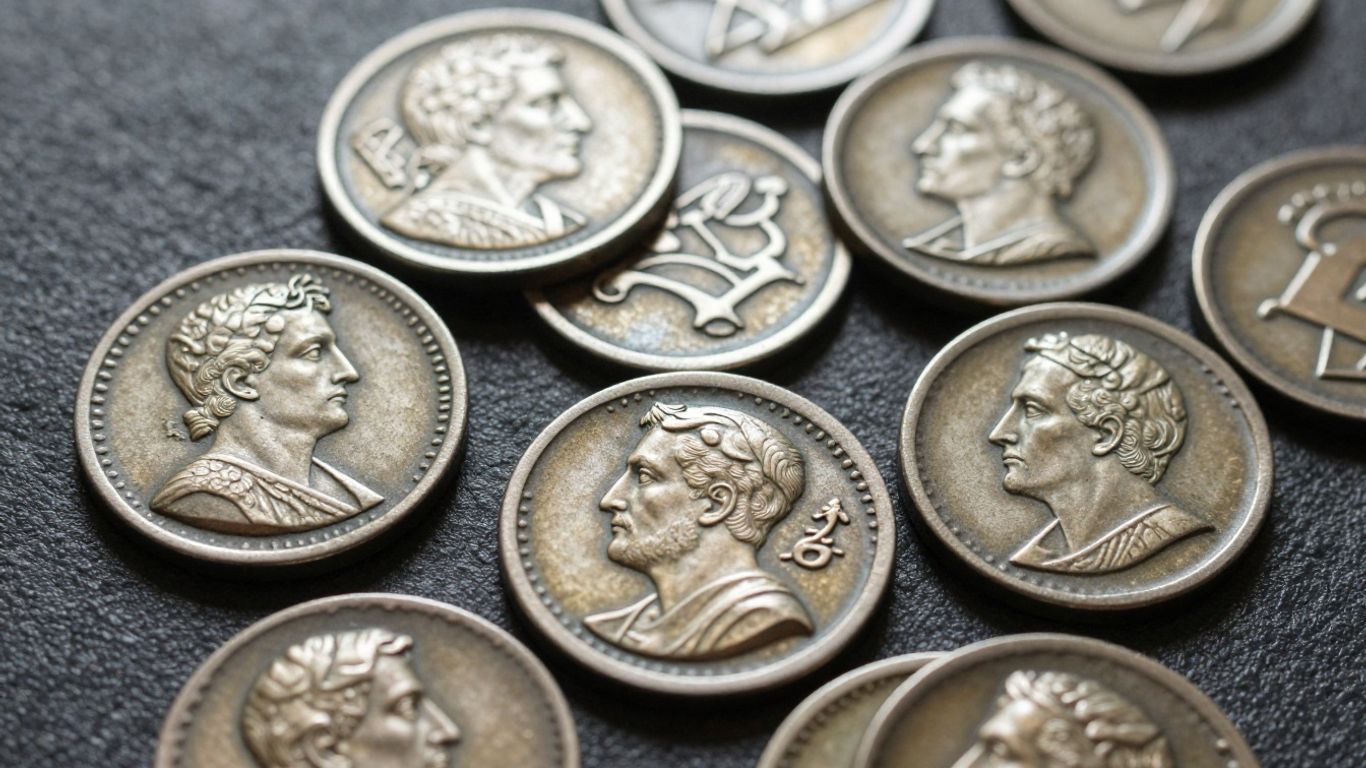
Sometimes, a single coin can rewrite history books. It sounds dramatic, but it’s true. When archaeologists are trying to figure out where old settlements were, especially those that didn’t last long, coins can be incredibly helpful. They’re not just pretty objects; they’re tiny time capsules that can tell us a lot about who was there and when.
The Spanish Roanoke's Confirmation
Think about the mystery of lost colonies. One famous example is the "Spanish Roanoke," or Rey Don Felipe, established in Patagonia in the late 1500s. It was meant to control a key shipping route, but it failed quickly, becoming known as Port Famine. For years, its exact location was debated. However, recent work by Chilean researchers, using advanced metal detection and geolocation, zeroed in on a specific spot. And what did they find there? A single silver coin, a real de a ocho, or piece of eight. This wasn’t just lying around; it was found exactly where historical accounts suggested a coin might be placed as part of a founding ritual. This find helped confirm the site with a high degree of certainty.
A Coin Recovered In Situ
Finding a coin is one thing, but finding it in situ – in its original place – is another level of important. It means the coin wasn’t moved by later events, like erosion or other human activity. For the Rey Don Felipe site, this coin was exactly where historical records indicated it would be for a ceremonial placement. This consistency between the physical evidence and written accounts is what makes numismatics so powerful for archaeology. It’s like finding a key that perfectly fits a lock described in an old diary. This specific coin, with its irregular, hand-cut shape, is typical of early Spanish colonial minting, further solidifying its context. It really shows how early colonial projects were put into motion archaeological excavations at the site of a notorious colonial American heist.
Foundational Rituals and Colonial Ventures
These coins weren’t just dropped randomly. They were often part of deliberate acts. Placing a coin during the founding of a settlement was a way for the Spanish monarchy to officially claim territory and show their presence. It was a symbolic act, marking the moment the colonization project became real on the ground. The discovery at Rey Don Felipe highlights how fragile these early colonial efforts were. They depended heavily on support from far-off rulers and faced immense challenges like isolation and lack of resources. Understanding these foundational rites, and the objects associated with them, gives us a clearer picture of the hopes, intentions, and eventual struggles of these early ventures. It’s a reminder that even seemingly small objects can carry immense historical and symbolic weight, offering a glimpse into the complex dynamics of colonial expansion and the lives of those involved.
The placement of coins during colonial founding ceremonies was a deliberate act, symbolizing imperial authority and the formalization of territorial claims. These numismatic finds, when recovered in their original context, provide tangible links to these historical rituals, corroborating documentary evidence and offering profound insights into the materialization of colonial ambitions.
Gold Coin Hoards from the Byzantine Era
New Light on the Final Years of Byzantine Rule
Discoveries of Byzantine gold hoards have given historians a close-up view of the last years before the empire’s collapse, particularly in regions like Palestine. In one case, nearly 100 pure gold coins dating to the early 7th century were uncovered, likely hidden when the Sassanid Persian army advanced in 614 AD. These finds capture a sense of danger and urgency, preserving sudden moments when people tried—sometimes in vain—to safeguard their fortunes. One particular find—a rare coin minted during Heraclius’s revolt—illustrates just how volatile the era was. For a more detailed exploration, the background of this major discovery can be found at Byzantine gold hoard unearthed.
When people saw armies approaching, some hurriedly concealed gold coins and personal jewelry, hoping to recover them later, but most never returned to collect their treasures.
Emergency Hoards and Advancing Empires
Many of these caches are what researchers call "emergency hoards." Essentially, when an enemy threatened a city or region, residents gathered up gold coins, jewelry, and other valuables, hiding them quickly. The goal was survival—waiting out the turmoil, then returning in safer times. Instead, many of those spots sat undisturbed for more than a millennium. Archaeological work shows these deposits were not always in obvious hiding places, but often in burnt layers or collapsed walls that signaled abandoned homes or buildings. These moments speak volumes about how unexpected and fast-moving military invasions left people little time to plan.
- Caches usually contain coins, jewelry, or both.
- Hoards are typically found in abandoned or destroyed buildings.
- Items often show signs of hasty concealment, such as being tied in cloth bags.
The Significance of Mixed Denominations
One of the more interesting aspects of these hoards is their mix of coin types. In the Hippos-Sussita find, coins ranged from solidi (full value) to semisses (half) and tremisses (a third), with some types rarely seen in the region before. This variety suggests active trade, the blending of family savings, and perhaps the work of a local jeweler who handled gold and precious stones. Table below summarizes typical denominations found:
| Coin Type | Value (as fraction of solidus) | Frequency in Hoards |
|---|---|---|
| Solidus | 1 | High |
| Semissis | 1/2 | Medium |
| Tremissis | 1/3 | Low |
Mixed denominations could hint at panic-driven mixing of personal or business savings, not just a stash from a single paycheck or trade. In some hoards, unique coins, possibly from military mints or emergency issues, further underline the confused, busy backdrop of a world facing dramatic change.
For more about the details from Hippos-Sussita, see insights into life during the Sassanid invasions.
The Hippos-Sussita Excavation and Its Treasures
A Chance Discovery of Gold
Sometimes, history just falls into your lap. That’s kind of what happened at the ancient city of Hippos, also known as Sussita, perched high above the Sea of Galilee. During excavations, a significant find of gold coins and jewelry came to light. This wasn’t just a few scattered pieces; it was a substantial hoard, hidden away perhaps 1400 years ago. The discovery offers a direct look into a moment of crisis for the city. It’s the kind of find that makes all the digging worthwhile, giving us tangible links to people who lived and worried centuries ago.
The Property of a Private Family or Jeweler?
One of the big questions after unearthing such a treasure is, who did it belong to? The team at Hippos thinks this particular hoard likely belonged to a private family, and maybe even a jeweler. Why? Well, the collection included not just coins but also a lot of jewelry fragments. These pieces, like earring bits with semi-precious stones, seemed a bit varied, not perfectly matched. This eclectic mix led researchers to consider the possibility that a goldsmith might have owned them. Interestingly, an inscription found elsewhere in the city from 556 CE actually mentions a goldsmith as a donor, so we know such artisans were definitely part of the community.
- Coins: Primarily gold, spanning roughly a century of Byzantine rule.
- Jewelry: Fragments of earrings and other adornments, suggesting personal wealth.
- Denominations: A mix of solidi, semisses, and rare tremisses, providing economic insight.
Inscriptions Revealing Urban Life
Beyond the gold itself, the context of the find is just as important. The coins found date from Emperor Justin I (early 6th century CE) up to the early reign of Emperor Heraclius (around 610-613 CE). This timeframe is really helpful for dating the hoard and understanding when it might have been hidden. The presence of this hoard also challenges some earlier ideas about Hippos during its later Byzantine years. Some thought the city might have been in decline, but this find suggests that at least some residents were quite well-off. It paints a picture of a city that, despite potential challenges, still held significant wealth. The coins themselves tell a story, too, with some being quite rare, like a piece minted at a military workshop, possibly in Cyprus. This find helps us rethink the economic situation in Hippos during the 7th century.
The hoard’s mixed denominations, including the seldom-seen tremisses, offer a detailed look at the circulating currency of the time. This variety suggests a complex economy, not just a simple exchange system.
Revisiting Known Sites with Advanced Tools
Returning to archaeological sites that have already been identified but not fully explored can yield surprising results, especially with new technology at hand. Every field season, more archaeologists are starting to see how useful this approach can be. Even sites investigated half a century ago are now giving up secrets under fresh methods.
The Importance of New Questions and Technologies
Today, archaeologists and specialists discuss why going back matters. Tools like high-precision geolocation, metal detection, and remote sensing cut down wildly on wasted time and guesswork. These tools mean you’re not just digging blind anymore—you pick your spot and go straight to where the signals are strongest.
- Technologies such as LIDAR and ground-penetrating radar allow researchers to spot features and anomalies underground without disturbing the site.
- Metal detectors, programmed with new algorithms, filter out noise and pick up faint signals that earlier generations would have missed.
- Drone mapping provides bird’s-eye visuals and overlays, making systematic site planning easier.
Advanced survey techniques often reveal patterns or artifacts missed in older digs, proving that sites can still offer something new long after their first discovery.
Documentary Evidence and Precision Surveying
Combining documentary records—like old maps, ritual descriptions, or reports—with high-tech survey methods has become standard practice. Take a site where earlier teams might have missed a founding ritual spot: using colonial records, you can zero in with metal detection and then map the results precisely.
| Technology | Key Benefit | Example Use Case |
|---|---|---|
| LIDAR | Finds hidden site features | Outlines ancient building sites |
| Metal Detection | Locates buried metallic items | Identifies coins or tools |
| Precision GPS | Tracks artifact positions | Plots excavation grid |
Blockquote:
Re-examining an old site with today’s technology can feel like opening a locked box with the right key. The same soil, the same artifacts—but a whole new story waiting underneath.
Understanding Complex Colonial Failures
Early settlements didn’t just fail from hunger or distance from Europe. Sometimes the story is way more complicated: conflict, ceremonial blunders, or ecological trouble. Here’s how updated methods help unravel those layers:
- Analyze ritual spaces or founding artifacts pinpointed by new tech; often, these items match up to older colonial paperwork, giving evidence for events once only guessed at.
- Use remote sensing for cultural heritage to spot subtle site changes—disturbed earth, abandoned structures, or evidence of violence—that weren’t obvious before.
- Compare new finds to original sources: why did this site thrive, while another failed? What do changes in coinage or the layout of settlements reveal about shifting priorities or underlying tensions?
This process adds new texture to long-held beliefs about why some historical ventures just didn’t last. Sometimes, it all comes down to finding the right clue with the right tool—something older methods simply couldn’t deliver.
The Symbolic Value of Foundational Coins
Coins aren’t just about what they’re worth in metal or as currency. Sometimes, they carry a weight far beyond their face value, especially when they mark the beginning of something new. Think about it: when a new colony is established, or an empire plants its flag, the coins they use are like little flags themselves, proclaiming ownership and presence.
Marking Imperial Presence and Possession
When an empire expanded, dropping coins in a new territory was a deliberate act. It was a way of saying, "We are here, and this land is now ours." These coins, often bearing the ruler’s image or imperial symbols, served as a constant reminder of who was in charge. They were tangible proof of dominion, distributed as payment, tribute, or even as part of ceremonies.
The Exact Point of Materialized Colonization
Finding coins at a specific spot can tell us precisely when and where a colonial presence began. It’s not just about finding old money; it’s about pinpointing the moment a new society started to take root. Imagine finding a coin minted in Rome right at the foundation of a Roman fort – that’s a direct link to the past, showing the very beginning of that settlement.
Deep Symbolic Meaning in Colonial Rites
Sometimes, coins were used in rituals to bless or consecrate new foundations. Burying coins under buildings or at the corners of new settlements was a common practice in many cultures. This wasn’t just about luck; it was about imbuing the new venture with the authority and prosperity of the ruling power. These acts turned ordinary metal pieces into powerful symbols of continuity and legitimacy. The presence of specific denominations, like the mix of solidi, semisses, and tremisses found in some Byzantine hoards, can even hint at the economic conditions and the urgency of the situation when they were hidden [da21].
- Marking Territory: Coins acted as a physical declaration of sovereignty.
- Economic Integration: Their distribution signaled the introduction of a new economic system.
- Ritualistic Significance: Coins were often incorporated into foundational ceremonies.
The act of minting and distributing coins in a newly claimed area was a sophisticated form of communication. It conveyed messages of power, economic intent, and cultural influence, solidifying the colonizer’s claim in a way that was both practical and deeply symbolic.
Coin Historical Context Research: A Multifaceted Approach
Looking at old coins isn’t just about admiring their age or the metal they’re made of. It’s about piecing together a much bigger story. Think of it like being a detective, but instead of fingerprints, you’re looking at mint marks, wear patterns, and the metal itself. This kind of work requires pulling together information from all sorts of places to get a clear picture.
Integrating Archaeological Finds with Historical Records
When archaeologists find coins, especially in a place like a shipwreck or an old settlement, those coins are like little time capsules. They can tell us who was there, when they were there, and what kind of trade was happening. But just finding a coin isn’t the whole story. We need to compare what we find with old documents, maps, and written accounts. For example, finding a coin at a specific spot can help confirm the location of a lost colony, like the Spanish Roanoke. This cross-referencing is key to making sense of the past. It helps us understand not just what was found, but why it was there and what it meant to the people who used it.
Understanding Economic Shifts Through Coinage
Coins are a direct window into how economies worked. Take the Viking Age hoards, for instance. Finding a mix of coins from different places – England, Germany, even Denmark – shows us the vast reach of Viking trade networks. But then, you see a shift. As Norway started to establish its own mint, the types of coins found change. This transition from a reliance on foreign currency to a national one is a huge economic event. It marks a move towards greater independence and a more structured financial system. Studying these changes in coinage helps us chart the rise and fall of powers and the evolution of trade.
The Role of Numismatics in Revealing Societal Dynamics
Numismatics, the study of coins, goes beyond just economics. It can reveal social structures and even rituals. Were the coins found in a wealthy person’s stash, or were they part of a larger, perhaps state-owned, hoard? The Mørstad Hoard, for example, seemed to represent more than just individual wealth; it hinted at something larger, possibly related to the booming iron production of the time. Sometimes, coins are found in specific contexts, like during the founding of a new settlement. These aren’t just random finds; they can be part of ceremonies meant to mark territory and establish presence, showing how deeply symbolic these everyday objects could be. The study of these artifacts provides insights into the past through the examination of these tangible artifacts [a50f].
The careful examination of coins, when combined with other historical evidence, allows us to reconstruct not just trade routes and economic policies, but also the social fabric and symbolic meanings that shaped past societies. It’s a way of listening to the quiet whispers of history that coins have preserved for centuries.
Wrapping Up Our Coin Quest
So, we’ve seen how digging into coins isn’t just about shiny metal. It’s like finding puzzle pieces that help us see history more clearly. Whether it’s a Viking hoard showing a country on the move, or a single coin marking a failed colony, these small objects tell big stories. They remind us that the past is always around us, waiting to be found and understood. It’s pretty amazing what a little bit of old metal can teach us about where we came from.
Frequently Asked Questions
What makes old coins so important for understanding history?
Old coins are like tiny time capsules! They can tell us about the people who made them, the places they traveled, and the events that happened long ago. Think of them as little messengers from the past, showing us who was in charge, what people traded, and even what images or symbols were important to them.
How can finding coins underwater help us learn about history?
When coins are found in shipwrecks, they’re often preserved exactly as they were when the ship sank. This helps us figure out where ships traveled and what they carried. Sometimes, these coins can even help us locate lost settlements or understand ancient trade routes that we didn’t know about before.
What can Viking coin hoards tell us?
Viking coin hoards, which are collections of coins buried for safekeeping, show us how powerful the Vikings were and how their society was changing. They often contain coins from different places, showing how far the Vikings traded. Later hoards might show the beginnings of a national currency, marking a big shift in how their economy worked.
How do coins help pinpoint the locations of old settlements?
Sometimes, coins are found exactly where they were first placed as part of a ceremony when a new settlement was being built. Finding a coin in its original spot, called ‘in situ,’ can confirm the location of a lost colony or ancient town, giving us solid proof of where people lived and established their communities.
Why are gold coin finds from places like the Byzantine Empire significant?
Finding gold coins from ancient times, like the Byzantine era, can reveal important details about difficult periods. These coins might have been hidden away during times of invasion or unrest. The types of coins found can show us who was in power, how the economy was doing, and the challenges people faced.
Can old coins reveal details about everyday life in ancient cities?
Absolutely! Coins found at ancient sites can sometimes belong to regular people, like jewelers or families, not just kings or governments. Inscriptions on or near these coins, along with the types of items found with them, can offer clues about the jobs people did, their beliefs, and how they lived their daily lives.
Why is it important to re-examine old historical sites with new tools?
Technology has come a long way! By using new tools like advanced mapping and detection equipment, scientists can look at old sites again with fresh eyes. This allows them to find things they missed before, ask new questions about what happened, and get a much clearer picture of complex historical events, like why certain colonies failed.
What is the 'symbolic value' of coins found at colonial sites?
When a new territory was claimed by an empire, like Spain in the Americas, placing a coin was often a symbolic act. It was a way to officially mark the land as belonging to the empire. These coins represent the moment colonization became real and show the deep meaning behind the ceremonies used to take possession of new lands.