
Starting a coin collection can be a really exciting hobby. You might get a coin as a gift, find one at a market, or just start saving change. Before you know it, you’ve got quite a few coins, and then comes the big question: how do you keep them all organized? Good organization isn’t just about making things look neat; it helps you keep track of what you have, avoid buying duplicates, and even makes it easier if you ever decide to sell some. This guide will walk you through different ways to handle your type set coin organization, from simple methods to more detailed systems.
Key Takeaways
- Decide on a primary method for your type set coin organization, whether it’s by country, metal, type, or historical significance, to create a structured approach.
- Consider using alphabetical or numerical systems for simpler cataloging, especially for diverse collections, making it easier to find and add new coins.
- Hybrid methods, combining different organizational approaches, can offer a robust system tailored to your specific collection’s needs and your personal preferences.
- Thoroughly cataloging each coin with details like date, mint mark, condition, and purchase history is vital for tracking value and provenance.
- Proper storage using archival-quality materials and appropriate display solutions protects your collection and enhances its presentation.
Establishing Your Type Set Coin Organization Strategy
Getting your type set coin collection in order is more than just making it look neat; it’s about making sure you know what you have, where it is, and how it fits into the bigger picture of your collecting goals. Think of it like setting up a library – you wouldn’t just toss books onto shelves randomly, right? The same applies here. A good system helps you appreciate your collection more, makes it easier to add new pieces, and is super important if you ever decide to sell or pass it on. It really is one of the most important steps for any serious collector.
Understanding the Importance of Organization
When you first start collecting coins, it’s easy to just put them wherever they fit. But as your collection grows, this can quickly become a jumbled mess. Proper organization means you can easily find any coin you’re looking for, understand its place in your set, and keep track of its condition and value. This structured approach prevents confusion and safeguards your investment. Without a plan, you might not even realize you have duplicates or miss out on opportunities to acquire a specific coin needed to complete a series. It’s about making your collection work for you, not the other way around. Organizing your coin collection, regardless of its size, can be a rewarding experience. Implementing smart strategies for cataloging and organizing will help you manage your collection effectively.
Defining Your Collection's Focus
Before you start sorting, take a moment to think about what kind of type set you’re building. Are you focusing on a specific country, like U.S. coins? Or perhaps a particular metal, such as silver coins? Maybe you’re interested in coins from a certain historical period. Knowing your focus helps you decide on the best way to arrange everything. For example, if you’re building a 20th-century type set, you might want to pay special attention to denominations like the quarter, a significant coin throughout that era. Your focus dictates the categories you’ll need.
Here are some common ways collectors define their focus:
- By Country/Region: U.S. coins, foreign coins, ancient coins.
- By Metal Content: Gold, silver, copper, platinum.
- By Coin Type: Bullion, commemoratives, circulating coins, proof coins.
- By Denomination/Date: Focusing on specific coins like Lincoln cents or Morgan dollars.
- By Historical Significance: Coins tied to major events or eras.
Choosing Your Primary Organizational Method
Once you know your focus, you can pick a main way to organize. There isn’t one single ‘right’ way; the best method is the one that makes sense to you and is easy to maintain. Some collectors prefer to group coins by type or country first, then arrange them alphabetically within those groups. Others might use a numerical system for their storage containers. The key is consistency. Whatever system you choose, stick with it across your entire collection. This makes it simple to add new coins and locate existing ones without a second thought.
A well-organized collection is a joy to behold and a sound investment. It allows for easy tracking of your numismatic assets and simplifies future acquisitions or potential sales. Don’t underestimate the power of a systematic approach from the outset.
Some popular primary methods include:
- Categorical: Grouping by country, metal, type, or historical period. This works well for focused collections.
- Alphabetical: Simply arranging coins by their name. This is very straightforward, especially for diverse collections.
- Numerical: Assigning numbers to coins or storage locations. This can be efficient for quick notation.
- Hybrid: Combining elements of the above methods to create a custom system.
Categorical Approaches to Coin Organization
When your coin collection starts to grow, you might find yourself wanting to group things in a more structured way than just tossing them all in a box. This is where categorical organization comes in handy. It’s all about sorting your coins based on shared characteristics, which can make finding specific pieces much easier and also help you see where your collection has gaps.
Organizing by Country and Region
This is a pretty common way to start. You can group all your coins from the United States together, then all your Canadian coins, and so on. Within each country, you might then sort by denomination or date. It’s a straightforward method that works well if you collect coins from various parts of the world. For example, you could have a section for North America, another for Europe, and a third for Asia. This approach helps you appreciate the numismatic history of different areas.
Grouping by Metal Content
Some collectors prefer to organize by what the coin is made of. This is especially popular for those interested in precious metals. You could have a dedicated area for gold coins, another for silver, and perhaps one for copper or nickel. This method is great if you’re tracking the intrinsic value of your collection or if you have a specific interest in bullion. It also makes it easier to manage insurance for your more valuable metal holdings.
Classifying by Coin Type and Denomination
Another popular method is to sort by the actual type of coin. Think about organizing by pennies, nickels, dimes, quarters, and half-dollars within a single country. Or, if you’re looking at world coins, you might group all crowns together, or all trade dollars. This system is very logical and aligns with how coins are often presented in catalogs and by dealers. It’s a good way to see the variety within a specific denomination or series. You can see how a particular coin type evolved over time by arranging them chronologically within their category. This is a solid way to build a focused type set collection.
Arranging by Historical Significance
For the history buff, organizing coins by the era they represent can be incredibly rewarding. You could create sections for coins from the Roman Empire, the Medieval period, or specific historical events like World War I. This method turns your collection into a tangible timeline. It allows you to study the economic and political history of different periods through the coinage of the time. It’s a more thematic approach that can add a rich narrative to your collection, making each coin a story from the past. This method really brings history to life and can be a great way to learn more about different time periods.
Categorical organization provides a framework that allows for both broad overviews and detailed examination of your numismatic holdings. By selecting a primary category, such as country or metal type, you establish a foundational structure. Subsequent sub-categorization, like by date or denomination, refines this structure, making your collection more accessible and informative. The key is to choose a system that aligns with your collecting interests and allows for logical expansion as your collection grows.
Alphabetical and Numerical Systems for Simplicity
Sometimes, the most straightforward approach is the best, especially when you’re just starting out or have a collection that’s growing rapidly. These methods focus on making it easy to find what you have without a lot of fuss.
Alphabetical Arrangement for Diverse Collections
This is pretty much what it sounds like: you arrange your coins based on their names. It works really well if you have a wide variety of coins from different places or time periods. You don’t need a special focus; you just need to know the name of the coin. It makes adding new coins simple because you just slot them in where they belong alphabetically. This method is great for keeping things tidy when your collection doesn’t fit neatly into specific categories. It’s a good way to get a handle on your collection without getting bogged down in details. For a quick reference to common terms, checking out a coin collecting terms list can be helpful.
Numerical Systems for Efficient Notation
Numerical systems take simplicity a step further by assigning numbers or codes to your coins or their storage locations. Instead of writing out the full name of a coin every time, you can use its assigned number. This is especially handy if you’re keeping detailed records in a ledger or database. You might number individual coin holders, pages in an album, or even specific slots in a display case. This method speeds up the cataloging process significantly. You only need to write the full coin name once, and then you can refer to it by its number.
Here’s a quick look at how you might set up a numerical system:
| Storage Location | Assigned Number | Coin Name | Notes |
|---|---|---|---|
| Album Page 5 | 101 | Morgan Dollar | 1889-O, MS63 |
| Coin Slab 23 | 102 | Peace Dollar | 1922-P, AU58 |
| Envelope B3 | 103 | Mercury Dime | 1916-D, VF20 |
Benefits of Simple Sorting Methods
Using alphabetical or numerical systems offers several advantages:
- Ease of Use: They are intuitive and don’t require a deep understanding of numismatic history or complex classification schemes.
- Quick Retrieval: You can locate specific coins rapidly once the system is in place.
- Scalability: Both methods adapt well as your collection grows, making it easy to add new items without disrupting the existing order.
- Reduced Duplication: By having a clear inventory, you’re less likely to buy coins you already own, saving money and effort.
When you’re starting out, it’s easy to get overwhelmed by all the different ways people organize their collections. But honestly, the best system is the one that makes sense to you and that you’ll actually stick with. Don’t feel pressured to use a complicated method if a simple alphabetical list or a numbered ledger helps you keep track of your coins better. The main goal is to know what you have and where it is.
These straightforward methods provide a solid foundation for any coin collection, allowing you to enjoy the hobby without getting lost in the details. For more on the language of collecting, a numismatic glossary can be a great resource.
Hybrid Methods for Comprehensive Type Set Coin Organization
Combining Categorical and Alphabetical Sorting
Sometimes, a single organizational method just doesn’t quite cut it for a diverse type set. That’s where hybrid systems come in. Think of it like this: you might first group your coins by country or historical period, and then, within each of those categories, you arrange them alphabetically. This way, you get the broad structure of categorization along with the easy lookup of alphabetical order. It’s a way to build a system that’s both logical and user-friendly. For instance, you could have a section for "United States" coins, and within that, you’d list "Barber Half Dollars," "Buffalo Nickels," and "Capped Bust Dimes" in alphabetical order. This approach helps keep things tidy, especially when your collection spans multiple regions or eras.
Integrating Numerical Codes with Thematic Groupings
Another popular hybrid approach involves using numerical codes alongside thematic groupings. This is particularly useful if you’re tracking specific details like purchase dates, prices, or even storage locations. You might assign a unique number to each coin or type of coin and then use that number in your main organizational system. This can be really handy for quick reference. For example, if you have a coin in a specific album slot, you can assign it a number that corresponds to its entry in a separate catalog or spreadsheet. This method is great for collectors who want detailed records without making their primary display overly cluttered. It’s a bit like having a secret code for your collection that only you understand, making it efficient for managing a large number of items. You can find more about cataloging methods on this guide.
Maintaining Consistency in Hybrid Systems
The real trick with any hybrid system is consistency. It sounds simple, but it’s easy to slip up. You need to apply your chosen combination of methods uniformly across your entire collection. If you decide to organize U.S. coins by type and then alphabetically, stick to that for all U.S. coins. Don’t switch to a purely chronological system for half-dollars within that same category.
Here’s a quick checklist to help maintain that consistency:
- Define your primary and secondary sorting criteria clearly. Write it down somewhere accessible.
- Document your system. Explain how it works, especially if others might need to access your collection.
- Review your system periodically. Make sure you’re still following your own rules.
When you combine different organizational strategies, the most important thing is to make sure the system works for you. It should be intuitive enough that you can find what you’re looking for without a major effort. A well-maintained hybrid system can make managing even a large and varied type set feel manageable and even enjoyable. It’s about creating a structure that supports your collecting goals, whether that’s for investment, historical interest, or simply the joy of the hunt. For those concerned about the security of their digital records, exploring options like Hybrid Custody Ecosystem might offer peace of mind.
Essential Cataloging for Your Coin Collection
Cataloging your coin collection is where the hobby really starts to feel like a serious pursuit, moving beyond just accumulating pieces to managing a tangible asset. It’s not just about knowing what you have; it’s about understanding its history, its value, and its place within your overall collection. A well-maintained catalog is your primary tool for avoiding costly duplicate purchases and for tracking your collection’s growth.
Recording Key Coin Details
When you first acquire a coin, jotting down its basic information is the first step. This might seem tedious at first, but it pays off immensely down the line. You’ll want to capture the essentials so you can easily identify each piece later. Think of it as creating a unique identity for every coin.
Here’s a list of the core details to record:
- Date and Mint Mark: The year the coin was minted and where it was produced (e.g., ‘1909-S’).
- Type and Denomination: What kind of coin is it? (e.g., ‘Indian Head Cent’, ‘Morgan Dollar’).
- Metal Composition: Is it gold, silver, copper, or a mix? This impacts value and care.
- Condition/Grade: While you might not be a professional grader, noting any visible wear or damage is helpful. For certified coins, record the assigned grade (e.g., ‘MS-65’ from PCGS or NGC).
Tracking Purchase History and Value
Beyond the basic identification, understanding the financial aspect of your collection is key. This is where your collection starts to look more like an investment.
- Purchase Price and Date: Record what you paid for the coin and when you bought it. Include any associated costs like shipping or grading fees.
- Current Value Estimate: Periodically update this based on market trends or recent sales of similar coins. This helps you gauge your collection’s overall worth.
- Sales Record (if sold): If you ever sell a coin, note the sale price and date. This completes the financial lifecycle for that piece.
Adding Notes on Provenance and History
This is where your collection truly comes alive. Provenance, or the history of ownership, and any unique historical details can significantly add to a coin’s story and, sometimes, its value. Don’t underestimate the power of a good story.
Sometimes, a coin’s true value isn’t just in its metal content or rarity, but in the narrative it carries. A coin that passed through significant historical hands or was part of a notable collection can be far more interesting and sought after than a similar piece without such a background. Documenting these details adds a layer of depth that pure numismatic data cannot capture.
For example, if you know a coin was part of a famous hoard or was owned by a notable collector, write it down. This information is invaluable for future reference and can be a significant selling point if you ever decide to part with the piece. Keeping these records is a vital part of managing your numismatic assets, and you can find more tips on cataloging a coin collection to help you get started.
Selecting Appropriate Storage Solutions
When it comes to keeping your coins safe and sound, the right storage is a big deal. It’s not just about shoving them in a drawer; you want to protect them from damage, tarnish, and even loss. Picking the right holders and cases can make a huge difference in how well your collection holds up over time. Think of it as giving your coins a comfortable, secure home.
Choosing Archival-Quality Holders
Archival-quality holders are your first line of defense. These are made from materials that won’t harm your coins. You’ll see a lot of options out there, but not all are created equal. Some plastics can break down and actually damage your coins, which is the last thing you want. Look for holders made from inert materials like Mylar, polyethylene, or polypropylene. These are designed to last and keep your coins in the condition you found them. It’s a small detail, but it matters a lot for the long-term health of your collection. You can find a wide selection of coin storage and display solutions online, which is super handy.
Utilizing Albums and Display Cases
Beyond individual holders, albums and display cases offer a more organized and visually appealing way to store your coins. Albums are great for type sets or specific series, with pre-cut slots that keep each coin in place. They make it easy to flip through your collection and see what you have. Display cases, on the other hand, are more for showing off your prized pieces. They can be wall-mounted or sit on a shelf, turning your collection into a conversation starter. Just make sure whatever you choose is also made with archival-safe materials to avoid any unwanted reactions with your coins.
Understanding the Risks of Improper Storage
Putting coins in the wrong kind of holder or just leaving them exposed can lead to some serious problems. Fingerprints can cause corrosion, especially on silver coins. Humidity can lead to toning or even more severe damage. Cheap plastic holders might off-gas chemicals that pit the coin’s surface over time. Even just stacking coins loosely can cause scratches. The goal is to prevent any physical or chemical damage that could reduce a coin’s value and appeal. It’s worth taking the time to research and invest in proper storage solutions to safeguard your numismatic treasures.
Digital Tools for Modern Coin Organization
Exploring Cloud-Based Cataloging Platforms
These days, keeping track of your coin collection doesn’t have to involve stacks of paper or complicated spreadsheets. Cloud-based platforms are a real game-changer. They let you access your collection’s details from pretty much any device – your computer, your tablet, even your phone. Plus, the automatic backup feature is a lifesaver. No more worrying about losing all your hard work if your computer crashes. Many of these services also make it easy to share your collection’s inventory, which is handy for insurance purposes or if you ever need to pass your collection on to someone else. Some even link up with mobile apps, making it simple to add or check coins when you’re out and about at coin shows or shops. It’s a modern convenience that really simplifies things.
Leveraging Desktop Software and Mobile Apps
Beyond the cloud, there’s a whole world of specialized software designed just for coin collectors. Programs like CoinManage can help you sort your coins by all sorts of things – type, date, what they’re made of, you name it. They often come with huge databases of world coins already built-in, which saves a ton of time. You can usually add pictures, track prices, and get a good overview of your collection’s value. For those who like a bit of friendly competition or want to see how their collection stacks up against others, online Set Registries are pretty neat. Platforms like the PCGS Set Registry or NGC Registry let you view your collections online and compare them with other collectors globally. It adds a social and competitive angle to cataloging.
Benefits of Digital Record-Keeping
Using digital tools for your coin collection offers a lot of advantages. Here are a few:
- Accessibility: Access your collection data from anywhere with an internet connection.
- Data Security: Automatic backups and cloud storage reduce the risk of data loss.
- Efficiency: Quickly search, sort, and update your collection details.
- Detailed Tracking: Easily record purchase history, current values, and condition notes.
- Sharing Capabilities: Simplify insurance documentation or estate planning.
Keeping your coin collection organized is extremely important, especially as it grows. Doing this will both allow you to more easily find and file coins, but also help avoid the sometimes costly mistake of purchasing a coin you already own. Whether you’re collecting historic gold coins, modern silver bullion, or rare numismatic treasures, proper cataloguing transforms collecting from a chaotic pursuit into a systematic investment strategy. The world’s largest encyclopedia of US coins is now available as a free mobile app, download it today.
The key is finding a system that fits your collecting style and budget. Whether you prefer a simple mobile app or a robust desktop program, digital record-keeping can make managing your numismatic treasures much easier.
Implementing Physical Organization Systems
Perhaps you’re not too computer savvy, or you’d rather just not fiddle with it. If this is the case, you can do it the old way. Physical systems offer tangible benefits that many collectors prefer, including hands-on interaction with their collections and independence from technology. While it will take longer, organizing your coin collection with physical logs and display cases will allow you to become much more familiar with your collection than you may otherwise be. This approach can be particularly rewarding for those who enjoy the tactile experience of handling their numismatic treasures.
Setting Up Notebooks and Ledgers
If a physical system sounds like the way you’d like to go, start by getting a log. You’ll need some way to keep track of your collection. Something as simple as a 5-subject notebook would do the trick. In it, you should set up some kind of system – most importantly, something that makes sense to you – for cataloguing your collection. For example, you could dedicate each section of the notebook to a coin type, a country, or a specific historical period. This makes it easy to flip to the relevant section when you acquire a new piece. Remember to record key details like the coin’s name, date, mint mark, condition, and purchase price. This foundational step is vital for any serious collector looking to organize and display their coin collection.
Creating Tangible Cataloging Systems
Beyond a simple notebook, you can create more structured physical cataloging systems. Consider using index cards, with each card representing a single coin. You can punch holes in these cards to store them in a binder, allowing for flexible sorting and easy updates. For each card, list the coin’s specifications, its condition, and perhaps even a small photograph. This method provides a visual overview and makes it simple to rearrange your catalog as your collection evolves. Another option is to use pre-printed catalog sheets designed for numismatics, which often include spaces for all the necessary details. These can offer a more professional appearance and streamline the cataloging process.
Hands-On Interaction with Your Collection
Physical systems work particularly well for collectors focusing on specific series or those who prefer handling their precious metals investments regularly. You should also create an organizational system. A step as simple as alphabetizing your collection or printing numbers that correspond to a specific coin in your log will help you locate your coins quickly. This hands-on approach allows for a deeper connection with your coins. You can physically arrange them, admire their details, and truly get to know each piece. This method is a great way to showcase their passion effectively and build a personal connection with your numismatic journey.
The key to a successful physical organization system lies in consistency and personal preference. Whatever method you choose, stick with it. This ensures that your catalog remains a reliable tool for managing your collection, preventing confusion and making it easy to find any coin at a moment’s notice.
Maintaining and Evolving Your Collection's Organization
Regularly Updating Your Records
Keeping your coin records current is like tending to a garden; it needs consistent attention to thrive. When you add a new coin, don’t let the cataloging fall behind. Update your records immediately after acquiring a new piece. This prevents a backlog and the potential for errors. Think of it as a quick note-taking session right after the event, rather than a daunting task later. This also helps you avoid the costly mistake of buying a coin you already own, which can happen more easily than you might think, especially with valuable gold coins.
Adapting Your System as Your Collection Grows
What works for a collection of 50 coins might not be ideal for one with 500. As your collection expands, you might find your initial organizational method becoming cumbersome. Don’t be afraid to reassess. Perhaps you started with a simple alphabetical system but now find yourself specializing in a particular series. In that case, a categorical approach within that series might be beneficial. The key is flexibility. If you’re collecting Morgan dollars, for instance, you might want to group them by mint mark and year, which is easier than a purely alphabetical list.
Here’s a look at how systems might need to evolve:
- Small Collection (Under 100 coins): Simple alphabetical or numerical systems are usually sufficient.
- Medium Collection (100-500 coins): Hybrid systems, combining categorical grouping with alphabetical or numerical sorting within categories, often work well.
- Large Collection (500+ coins): Database software or advanced spreadsheet systems become almost necessary for efficient management.
Avoiding Common Organizational Pitfalls
Several common mistakes can trip up even the most dedicated collectors. One is changing organizational systems without fully migrating existing records. This creates confusion and makes it hard to find anything. Another is relying on a single backup method for your valuable collection data. Technology fails, hard drives crash, and cloud services can have issues. Always have multiple backups – perhaps a local copy, a cloud backup, and even a printed summary of your most important holdings.
A well-organized collection isn’t just about neatness; it’s about safeguarding your numismatic assets. It aids in insurance claims, estate planning, and making informed decisions when buying or selling. Neglecting organization can lead to lost value and unnecessary stress.
Displaying Your Organized Coin Collection
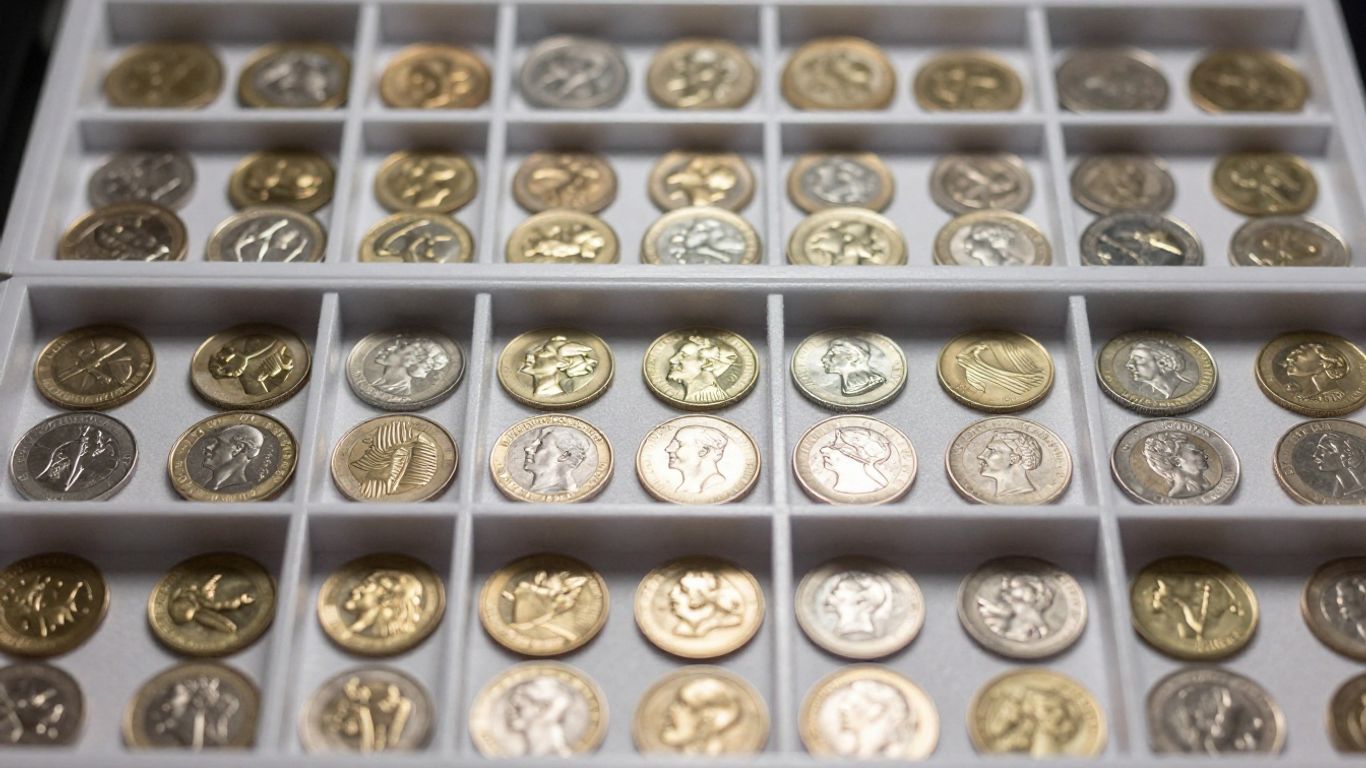
Once you’ve meticulously organized and cataloged your coins, the next step is to present them in a way that is both visually appealing and protective. Displaying your collection turns your numismatic treasures into conversation pieces and allows you to appreciate them fully. It’s about more than just showing off; it’s about creating a narrative and safeguarding your hard work.
Intentional Arrangement for Visual Appeal
Think about how you want your collection to look. Grouping coins by theme, country, or historical period can create a cohesive and engaging display. For instance, a set of Morgan dollars arranged by year and mint mark can tell a story of American coinage history. Similarly, showcasing foreign coins with unique designs together can highlight global artistry. The goal is to create a visual flow that draws the viewer in and tells a story. Consider using different types of holders or display cases to add variety and emphasize certain pieces.
Labeling for Clarity and Education
Clear and informative labels are vital. They not only help you and your visitors identify each coin but also add an educational layer to your display. Labels should include key details such as the coin’s type, date, mint mark, metal content, and perhaps a brief historical note. This level of detail transforms a simple display into an informative exhibit. For example, a label for a Roman denarius might note its emperor and approximate date of issue. This attention to detail can make your collection more appreciated and understood.
Balancing Presentation with Security
While visual appeal is important, the security and preservation of your coins should never be compromised. Choose display methods that offer adequate protection against environmental factors like humidity and dust, as well as physical damage. Glass-top cabinets are excellent for showcasing valuable gold and silver coins, offering a good balance of visibility and protection. Shadow boxes can be ideal for themed sets, keeping them contained and secure. For particularly rare or valuable items, consider more robust security measures, perhaps even incorporating them into a safe or secure display case. Remember, the best display is one that protects your investment while allowing you to enjoy its beauty. You can find creative ways to showcase your coin collection using methods like shadow boxes for themed sets or glass-top cabinets.
Here are some popular display options:
- Albums and Binders: Great for organizing and storing large numbers of coins, especially for type sets or date runs. They offer good protection and easy browsing.
- Display Cases: Glass-top or wall-mounted cases are perfect for showcasing select coins or entire themed collections. They provide visibility and a degree of security.
- Shadow Boxes: Ideal for creating visually striking arrangements of coins, often grouped by theme or historical significance. They keep coins contained and protected.
- Frames: Custom frames can be designed to hold coins securely, turning them into wall art.
Proper storage and display are not just about aesthetics; they are critical components of coin preservation. Using archival-quality materials and secure enclosures prevents damage from handling, environmental exposure, and accidental mishaps, thereby maintaining the integrity and value of your numismatic assets.
Wrapping Up Your Collection Journey
So, we’ve gone over a bunch of ways to get your coins sorted. Whether you’re into fancy computer programs or just a good old notebook, the main thing is to pick something that works for you and stick with it. It doesn’t really matter if you go by date, type, or just plain alphabetize; what’s important is that you can find what you’re looking for and know what you have. This helps avoid buying the same coin twice, which, let’s be honest, happens. Plus, having everything neat and tidy makes it way more enjoyable to look through your collection. It turns a hobby into something you can really manage, and if you ever decide to sell or pass it on, a well-organized collection is a huge plus. So, take what we’ve talked about, find your system, and keep those coins in order. It makes the whole experience better.
Frequently Asked Questions
Why is it important to organize my coin collection?
Organizing your coin collection is super important because it helps you keep track of everything you own. It makes it easier to find specific coins when you want to look at them or show them off. Plus, it stops you from accidentally buying a coin you already have, which can save you money. A well-organized collection is also easier to value and can be helpful if you ever decide to sell some of your coins or pass them on to someone else.
What are some simple ways to organize my coins?
You can start with easy methods like arranging coins by their country of origin, like putting all U.S. coins together and all foreign coins together. Another simple way is to group them by the type of metal they are made of, such as gold coins, silver coins, or copper coins. You can also sort them by their face value, like all the quarters in one spot and all the dimes in another.
Should I use a physical notebook or a computer program to keep track of my coins?
Both have their good points! A physical notebook is great if you like writing things down by hand and having something you can hold. It feels more personal. Computer programs or apps are often faster and can store a lot more information, like pictures, and they can back up your data automatically. Think about what feels most comfortable and useful for you.
What kind of information should I record for each coin?
When you get a new coin, you should write down important details like the year it was made, where it was made (the mint mark), what type of coin it is (like a penny or a dollar), and what it’s made of. It’s also good to note down how much you paid for it and when you bought it. If you know its condition or any interesting history about it, jot that down too!
Are plastic bags like Ziploc safe for storing coins?
No, those plastic bags are not safe for your coins in the long run. They can sometimes release chemicals or trap moisture, which can damage the surface of your coins over time. It’s much better to use special holders that are made for coins, often called archival-quality holders, which are designed to protect them.
How can I display my coin collection nicely?
You can display your coins in ways that look good and keep them safe. Special coin albums with clear pages let you see them easily. You could also use display cases or frames to show them off on a shelf or wall. Make sure each coin is in a protective holder, and consider adding small labels that tell people what the coin is.
What if my collection gets really big? How do I keep it organized?
As your collection grows, you might need to combine different ways of organizing. For example, you could group coins by country first, and then within each country, sort them by date. The most important thing is to stick with the system you choose and apply it the same way every time. This keeps things consistent and easier to manage, even with lots of coins.
What are some common mistakes new coin collectors make?
A few common slip-ups include trying to clean coins yourself (this can lower their value!), using unsafe storage like plastic bags, not keeping good records of what you buy, and mixing different types of coins like shiny gold bars with regular collectible coins. It’s best to learn about proper care and record-keeping from the start.