
Finding high-quality coin albums in San Antonio, TX, can make a big difference for collectors, whether you’re just starting out or have been at it for years. Local shops and dealers offer a wide selection, from popular American Gold Eagles to rare 1916-D Mercury Dimes. If you’re sorting through inherited coins, building a themed set, or simply looking for a safe place to store your collection, knowing where to go in San Antonio helps keep things simple and secure. Here’s a local guide to help you pick the best coin albums and understand which coins are most sought after in the area.
Key Takeaways
- Coin albums in San Antonio, TX, are available for all major types, including gold and silver coins.
- Shops in San Antonio offer albums for both common and rare coins, like the 1916-D Mercury Dime.
- Local dealers often consider both metal content and collector value when pricing albums and coins.
- You can find options for organizing everything from bullion bars to early U.S. gold pieces.
- Appraisals and expert advice are available locally, making it easier to protect and value your collection.
1. American Gold Eagles
When you’re looking for solid gold investments, American Gold Eagles are a top choice for many collectors and investors right here in San Antonio. These coins are officially recognized by the U.S. government and are made with gold mined in the United States. They come in four denominations: $50 (one ounce), $25 (half ounce), $10 (quarter ounce), and $5 (tenth ounce). The one-ounce version is the most popular, offering a straightforward way to own a full troy ounce of pure gold.
The design features Lady Liberty on the obverse and a heraldic eagle on the reverse, making them not only valuable but also quite attractive. The reverse design was updated in 2021 to a more modern look, which collectors seem to appreciate. These coins are a fantastic way to diversify your portfolio, and you can often find them at local coin shops. If you’re just starting out or looking to add to an existing collection, American Gold Eagles are a reliable option. You can find these and other gold coins at places like Alamo Heights Coin Shop.
Here’s a quick look at the gold content and face value:
| Denomination | Gold Content (Troy Ounce) | Face Value |
|---|---|---|
| $50 | 1.00 | $50 USD |
| $25 | 0.50 | $25 USD |
| $10 | 0.25 | $10 USD |
| $5 | 0.10 | $5 USD |
When buying American Gold Eagles, it’s good to know what you’re getting. The price will fluctuate with the market, but their value is tied directly to the price of gold. They are a popular choice because they are easy to buy, sell, and trade. Plus, owning physical gold can offer a sense of security in uncertain economic times. Many people choose to store them in safes or safety deposit boxes. It’s always a good idea to check current market prices before making a purchase.
Owning American Gold Eagles provides a tangible asset that is recognized worldwide. Their intrinsic value is based on their gold content, making them a stable store of wealth. The U.S. Mint produces them annually, and while they are legal tender, their market value is significantly higher than their face value due to the gold they contain.
2. Silver Eagles
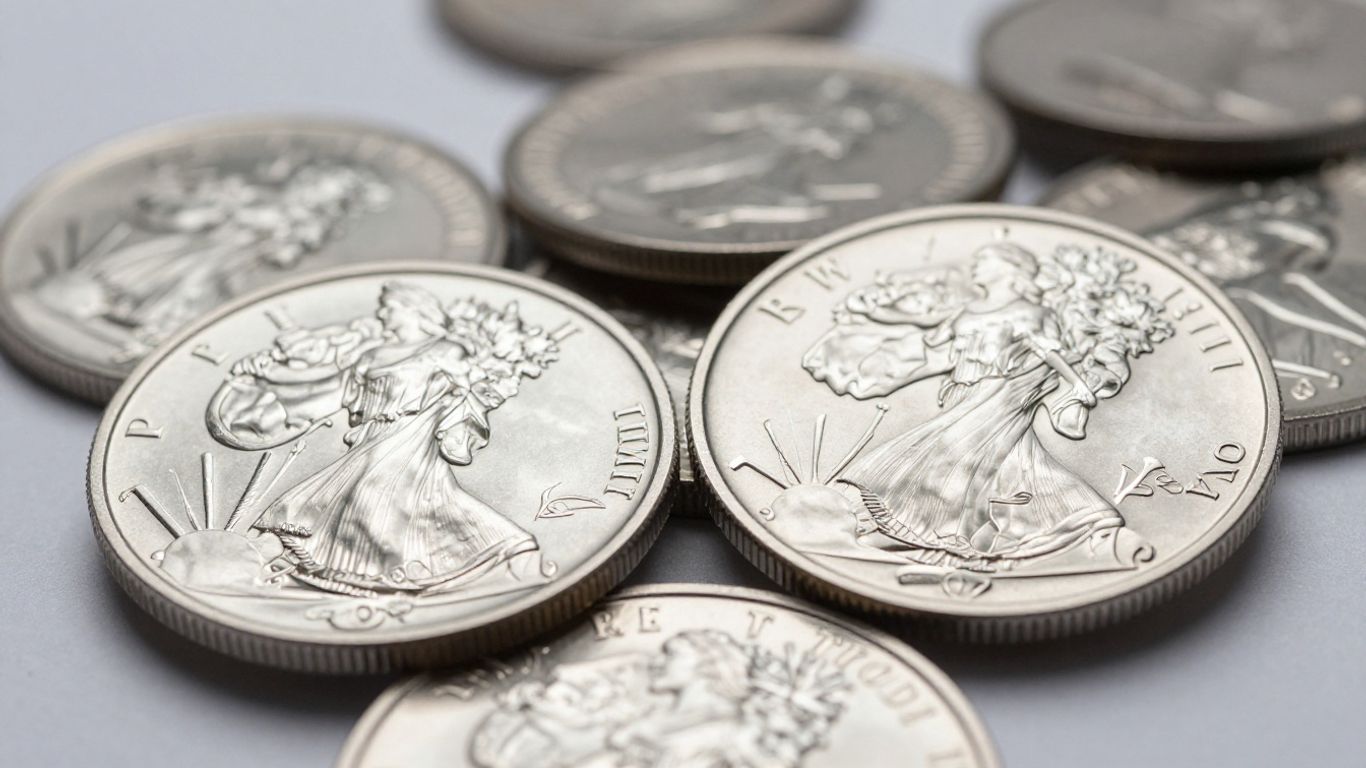
When you’re looking for a solid investment in precious metals, the American Silver Eagle coin is a top contender. These coins are produced by the United States Mint and are backed by the U.S. government, meaning their weight and purity are guaranteed. They are made of 99.9% pure silver, making them a popular choice for both collectors and investors.
The Silver Eagle is one of the most recognized silver bullion coins in the world. Its design features Lady Liberty on the obverse and a heraldic eagle on the reverse. The design has remained consistent since its introduction in 1986, which adds to its appeal for collectors who appreciate continuity.
When considering Silver Eagles, it’s helpful to know a bit about their grading. While bullion coins aren’t typically graded like collectible coins, their condition still matters. Here’s a quick look at how condition can be assessed:
- Mint State (MS): These coins have never been circulated and show no signs of wear. Even within Mint State, there are finer distinctions (e.g., MS-60 to MS-70), but for bullion purposes, a coin that looks pristine is generally considered desirable.
- About Uncirculated (AU): These coins show very light wear, often only visible under magnification. You might see faint hairlines or minor contact marks.
- Circulated (G, VG, F, XF): These coins have seen significant use. Details will be worn, rims may be softened, and surfaces can show scratches or other damage. While still containing their silver value, their numismatic appeal is reduced.
Finding these coins in San Antonio is quite possible. Many local coin shops and dealers carry them. If you’re looking to add to your collection or start an investment, checking out a place like a local coin dealer is a good first step. They can help you understand the current market prices, which fluctuate with the price of silver, and show you available options. Remember, the price you pay will include the silver’s spot price plus a premium, which covers minting costs and dealer profit. It’s always wise to compare prices and ask questions before making a purchase.
3. Morgan Dollars
Morgan Dollars are a big deal in the coin collecting world, and for good reason. These silver dollars, minted from 1878 to 1904 and then again briefly in 1921, are quite popular. They’re named after their designer, George T. Morgan, and feature Lady Liberty on the obverse and a majestic eagle on the reverse.
The Morgan Dollar is a favorite among collectors due to its historical significance and the substantial silver content. Many collectors look for these coins to fill out albums or to simply own a piece of American history. The melt value alone makes them interesting, but their numismatic appeal is what really drives the market.
When you’re looking for Morgan Dollars in San Antonio, you’ll want to check out local coin shops. They often have a good selection, though prices can vary quite a bit depending on the coin’s condition, rarity, and the current silver market. Some shops might specialize in older U.S. coins, making them a good place to start.
Here’s a quick look at what influences their value:
- Date and Mint Mark: Coins from certain years or mints (like Carson City or New Orleans) are rarer and thus more valuable.
- Condition (Grade): A coin that’s been well-preserved with sharp details will be worth much more than one that’s heavily worn.
- Rarity: Some Morgan Dollars were produced in much smaller numbers than others.
- Market Demand: Like any collectible, popularity plays a role in price.
It’s not uncommon to find Morgan Dollars in various states of wear. Most coins you’ll encounter will have seen circulation, meaning they’ll have some scratches, nicks, and worn-down details. However, finding one in a higher grade, especially one that hasn’t been cleaned, can be a real find.
When examining a Morgan Dollar, pay attention to the overall strike, the luster (if any remains), and the presence of any major marks or damage. Even in lower circulated grades, a coin with good eye appeal can be more desirable than a technically higher-graded coin that looks rough.
If you’re just starting out, it might be helpful to get a basic guide on grading Morgan Dollars. This will help you understand what to look for and avoid overpaying for a coin that’s in poor condition. Many dealers are happy to explain the differences between grades, which can be quite helpful.
4. Peace Dollars
The Peace Dollar, minted from 1921 to 1935, stands as a significant piece of American numismatic history. Designed by Anthony de Francisci, it commemorates the end of World War I and ushers in an era of peace. These coins are primarily composed of 90% silver and 10% copper, making them attractive to both collectors and investors.
When looking for Peace Dollars in San Antonio, keep an eye out for key dates and mint marks, as these can greatly influence a coin’s value. The 1921 high-relief version is particularly sought after, as are the 1928 and 1934-S issues. While many Peace Dollars circulated widely, finding examples in higher grades, especially uncirculated condition, can be a rewarding pursuit.
Here are some points to consider when evaluating Peace Dollars:
- Mint Marks: Look for ‘D’ (Denver) and ‘S’ (San Francisco) mint marks, which often carry a premium over the Philadelphia issue.
- Date: Certain dates, like 1921, 1928, and 1934-S, are considered key dates and are more valuable.
- Condition: The coin’s wear and tear, or grade, significantly impacts its worth. Higher grades mean more detail is visible.
- Rarity: While millions were minted, the survival rate of high-grade examples is lower, making them scarcer.
The Peace Dollar represents a hopeful transition in American coinage, moving from the Morgan Dollar’s more martial imagery to a symbol of peace and prosperity.
Understanding the grading scale for circulated coins is helpful. For instance, a coin in ‘About Good’ (AG3) condition might have a rim that’s nearly gone, with details worn flat. In contrast, a ‘Very Good’ (VG8) coin will show more definition, with complete rims and clearer separation between the design elements and the lettering. This difference in detail, even in lower grades, can affect a coin’s desirability and price.
5. Krugerrands
The Krugerrand, first minted in 1967, is a gold coin that holds a special place in the world of bullion. South Africa is the country behind this popular coin, and it was initially created to help individuals invest in gold. The name itself is a combination of Paul Kruger, a former president of South Africa, and ‘rand,’ the country’s currency.
Krugerrands are recognized globally for their gold content and distinctive appearance. They are made of a gold alloy that includes copper, giving them a reddish-gold hue and making them more durable than pure gold coins. This alloy is 22-karat gold, which translates to 91.67% pure gold.
When you’re looking to add Krugerrands to your collection or investment portfolio, here are a few things to keep in mind:
- Weight and Purity: While they look like a one-ounce gold coin, the actual gold content is slightly less to account for the copper alloy. A standard Krugerrand contains one troy ounce of fine gold, but its total weight is about 1.091 troy ounces (33.93 grams).
- Denominations: The most common Krugerrand is the one-ounce version, but they also come in fractional sizes: half-ounce, quarter-ounce, and tenth-ounce. These smaller coins are useful for more accessible entry points into gold ownership.
- Legal Tender Status: Although they are primarily seen as bullion investments, Krugerrands are legal tender in South Africa. However, their face value is rarely, if ever, used in trade, as their value is tied directly to the fluctuating price of gold.
- Reverse Design: The reverse side features the iconic springbok antelope, a national symbol of South Africa. The obverse displays the profile of Paul Kruger.
Krugerrands have faced periods of import bans in some countries due to political reasons related to South Africa’s past. While these restrictions have largely been lifted, it’s a piece of their history that collectors sometimes discuss.
6. Maple Leafs
When you’re looking for coin albums in San Antonio, don’t forget to consider the Canadian Maple Leaf. These coins are popular with collectors for their purity and distinct design. While not as old as some U.S. coins, they’ve developed a strong following.
Maple Leaf coins are known for their high gold content, typically .9999 fine gold, making them a favorite for investors and collectors alike. The iconic reverse features a single maple leaf, a symbol of Canada, while the obverse displays the reigning monarch’s portrait.
Finding albums specifically designed for Maple Leafs can sometimes be a bit trickier than for more common U.S. issues, but many general bullion or international coin albums will accommodate them well.
Here’s what to look for when selecting an album for your Maple Leafs:
- Size Compatibility: Ensure the album’s slots or pages are the correct diameter for the Maple Leaf coins you own. Different denominations or mintages might have slight variations.
- Protection: Look for albums that offer good protection against scratches and environmental damage. Archival-quality materials are a plus.
- Organization: Consider how you want to display your collection. Some albums offer space for dates, mint marks, or other specific details you might want to track.
While you might not find a "Maple Leaf only" section in every San Antonio coin shop, many dealers will carry a variety of albums suitable for these popular Canadian coins. It’s always a good idea to bring a coin with you or know its exact diameter when shopping for an album.
7. Pre-1933 U.S. Gold
When you’re looking for older U.S. gold coins, the pre-1933 era is a big deal for collectors. These coins aren’t just about the gold content; they’re pieces of American history. Think about the gold dollars, Quarter Eagles, Half Eagles, Eagles, and Double Eagles minted before 1933. Many of these were melted down during the Great Depression when the government recalled gold.
The scarcity of these coins today, especially in good condition, makes them highly sought after. Finding them in San Antonio requires knowing where to look. Coin shops that specialize in numismatics are your best bet. They often have a selection of these historic gold pieces.
Here’s a quick rundown of what you might find:
- Gold Dollars (Type 1, 2, and 3): The smallest U.S. gold coin, minted from 1849 to 1933.
- Quarter Eagles ($2.50): These were produced from 1796 to 1933, with various design changes over the years.
- Half Eagles ($5): A popular denomination, minted from 1795 to 1933.
- Eagles ($10): These were minted from 1795 to 1933 and are often seen as a significant gold coin.
- Double Eagles ($20): The largest denomination, minted from 1849 to 1933. The Saint-Gaudens Double Eagle is particularly famous for its beauty.
When you’re examining these coins, pay attention to the condition. Wear can significantly impact value. Look for coins with clear details, especially on the date and the main design elements. A coin that’s been heavily circulated will look quite different from one that’s been kept in a collection for decades.
The historical context of these coins is fascinating. Many were used in everyday commerce before gold was recalled. Their survival is a testament to collectors who preserved them through the years. This makes them more than just metal; they’re tangible links to the past.
8. Pre-1964 U.S. Silver
Pre-1964 U.S. silver coins hold a certain old-town charm, with people in San Antonio and beyond hunting for them because of their silver content and nostalgic feel. These coins—made before the U.S. switched to less expensive metals—have 90% silver and often turn up in collectors’ albums or tucked away in family coin boxes. Their value depends not only on the silver content but also the rarity and condition.
Common Pre-1964 U.S. Silver Coins:
- Dimes (Mercury and Roosevelt, 1946–1964)
- Quarters (Washington, 1932–1964)
- Half Dollars (Walking Liberty, Franklin, and early Kennedy, up to 1964)
Here’s how the silver content stacks up in these coins:
| Coin | Silver Content (Troy oz) | Approx. Melt Value* |
|---|---|---|
| Dime | 0.0723 | $5.24 |
| Quarter | 0.1808 | $13.10 |
| Half Dollar | 0.3617 | $26.20 |
*Based on silver spot price around $72.42/oz (April 2026)
If you’re looking to build or expand your coin album, focus on coins with minimal damage, good details, and readable dates. Many of these coins survived decades of circulation, so light wear is common. It’s worth double-checking for rare dates or mint marks—they can surprise you.
Even common dates in pre-1964 silver are worth much more than face value, so sorting through a stack of old change could turn up a small treasure for your album.
9. 1916-D Mercury Dime
The 1916-D Mercury dime is a real head-turner for collectors, and not just because it’s a silver dime. What makes this particular coin so sought after is its status as a "key date." This means it was produced in a very small number, especially compared to other Mercury dimes from the same era. The Denver Mint only struck about 264,000 of these dimes, a tiny amount when you consider that millions of other Mercury dimes were made. Most of these coins were released into circulation back in 1916, meaning they’ve seen a lot of wear and tear over the years.
Finding a 1916-D Mercury dime in good condition can be quite a challenge. Because so many of them were used heavily, most surviving examples show significant signs of wear. This scarcity, particularly in higher grades, drives up their value considerably. Even coins that look pretty beat up can fetch a good price among collectors who are just trying to complete their sets.
When you’re looking at a 1916-D, pay close attention to the mint mark. The ‘D’ for Denver is important, and sometimes, wear can make it hard to see clearly. It’s also worth noting that this coin has been faked in the past, so always be sure you’re looking at a genuine piece. Checking the weight and size, and ideally getting it authenticated by a professional service, is a smart move.
Here’s a general idea of what to expect when grading heavily circulated 1916-D Mercury dimes:
- About Good (AG3): The coin will be very worn. The rim might be almost gone, and details like the date and design elements will be very faint or partially missing. The mint mark might be worn down so much that the opening in the ‘D’ is hard to distinguish.
- Good (G4): Still quite worn, but some details will be a bit clearer than in AG3. The rim might be more defined, and you might be able to make out more of the date and design.
- Very Good (VG8): At this level, the coin will have complete rims, and the date should be clearly visible. More details on Liberty’s profile and the reverse design will start to show, though they won’t be sharp.
The rarity of the 1916-D Mercury dime wasn’t fully appreciated until much later, around the late 1930s. This was partly due to the rise of coin collecting through coin boards and albums, which made people more aware of specific dates and mintmarks that were harder to find. Before that, many of these valuable coins were likely just spent like any other dime.
10. Gold Bars
Gold bars, also known as gold bullion, are a straightforward way to invest in gold. Unlike coins that might have collectible value beyond their metal content, gold bars are primarily valued for their weight in pure gold. They come in various sizes, from small one-gram bars to large kilobar units.
When looking for gold bars in San Antonio, you’ll want to consider a few things. The purity of the gold is key – most reputable bars will be .999 or .9999 fine gold. The size you choose often depends on your budget and investment goals. Smaller bars are easier to buy and sell, while larger bars typically have a lower premium over the spot price of gold.
Here’s a quick look at common gold bar sizes:
- 1 gram
- 5 grams
- 10 grams
- 1 ounce
- 10 ounces
- 1 kilogram (approx. 32.15 troy ounces)
The premium you pay over the spot price of gold is usually lower for larger bars. This means you get more gold for your money when buying in bulk. However, smaller bars offer more flexibility for smaller investments or if you need to sell a portion of your holdings.
When purchasing gold bars, always buy from a trusted dealer. They can help you understand the current market price and the premiums associated with different sizes and brands. A good dealer will also be able to authenticate the bars and provide clear pricing.
Buying gold bars is a direct way to own physical gold. Their value is closely tied to the current market price of gold, making them a popular choice for investors looking for a tangible asset. The main difference between bars and coins often comes down to the premium charged over the spot price and any potential numismatic value a coin might hold.
Wrapping Up Your Coin Album Hunt
So, after all that, finding the right coin album in San Antonio isn’t too complicated. You’ve got a few good spots to check out, from dedicated coin shops to places that might surprise you with their selection. Remember to think about what kind of coins you have and what you need the album for – is it for display, protection, or just keeping things organized? Don’t be afraid to ask questions when you’re looking around. The folks who know coins usually love to talk about them. Happy hunting for that perfect album!
Frequently Asked Questions
What types of coins are generally sought after by collectors in San Antonio?
Collectors often look for a variety of coins, including popular series like American Gold Eagles and Silver Eagles, historical pieces such as Morgan and Peace Dollars, and international coins like Krugerrands and Maple Leafs. Older U.S. gold and silver coins, especially those minted before 1933 and 1964 respectively, are also highly valued. Even specific rare coins, like the 1916-D Mercury Dime, can be very desirable.
How is the value of a coin determined when selling it?
A coin’s value is typically based on several factors. These include its precious metal content (like gold or silver weight), its condition or grade, its rarity, and its appeal to collectors. Sometimes, the price also reflects current market demand and any premiums associated with its historical significance or specific minting.
Are there specific places in San Antonio to find coin albums?
While this guide focuses on finding the best coins, local coin shops and hobby stores in San Antonio are your best bet for purchasing coin albums. These establishments often carry a range of albums designed for different coin types and collections, helping you organize and protect your treasures.
What should I do if I have inherited a coin collection?
If you’ve inherited coins, it’s wise to seek a professional appraisal. Experts can help you understand the value of each coin, distinguishing between its melt value and its collector value. This ensures you get a fair understanding of what you possess, whether it’s bullion or rare numismatic items.
Is it safe to sell coins online or through mail?
Many reputable dealers offer secure online and mail-in services. They often provide insured shipping and clear instructions, making the process safe and convenient. Always ensure the buyer is well-established and offers guarantees for peace of mind.
What makes a coin like the 1916-D Mercury Dime so special?
The 1916-D Mercury Dime is considered special primarily due to its rarity and its status as a key date in the Mercury dime series. While many were initially released into circulation, few survived in good condition, making them highly sought after by collectors focused on completing their sets.
Do coin dealers in San Antonio buy gold bars as well as coins?
Yes, most reputable coin dealers and precious metal buyers will purchase gold bars. Similar to coins, the value of gold bars is determined by their gold content, purity, and current market price, though collector premiums are less common for modern bars.
What is the difference between bullion value and numismatic value?
Bullion value refers to the worth of a coin based purely on the amount and type of precious metal it contains, like gold or silver. Numismatic value, on the other hand, is what a coin is worth to collectors, taking into account its rarity, condition, historical significance, and demand, which can often be much higher than its melt value.