
San Antonio, Texas, with its rich history and proximity to Mexico, is a great spot for anyone interested in collecting Mexican coins. Whether you’re just starting out or you’ve been collecting for years, there’s a lot to explore. This guide will help you find some interesting pieces and understand more about Mexican coinage.
Key Takeaways
- Mexico has a long history of minting coins, with different periods producing unique designs and types of currency.
- Understanding the history of Mexican mints, like those in Alamos, Hermosillo, and Durango, can help collectors identify specific coins.
- The Revolutionary era in Mexico (1913-1917) saw a lot of varied and often scarce coinage, making it a popular area for collectors.
- Studying coin varieties and errors can lead to finding rare and valuable pieces.
- Silver and nickel played significant roles in Mexican currency, with certain issues causing notable historical events.
Exploring Mexican Coinage History
Mexico’s journey through coinage is a long and winding road, filled with fascinating stories and diverse designs. From the early days of Spanish rule to the revolutionary periods and beyond, each era left its mark on the metal that circulated through the country. Understanding these historical shifts is key to appreciating the coins you might find today.
The Mexican Mints of Alamos and Hermosillo
Two important mints in the northern state of Sonora, Alamos and Hermosillo, played significant roles in Mexican coinage. The Alamos mint, established in the late colonial period, produced a variety of silver coins. Later, the Hermosillo mint took over operations, continuing the production of important denominations.
- Alamos Mint: Operated for a significant period, known for its silver 8 reales.
- Hermosillo Mint: Became a key production center, especially during times of upheaval.
- Continuity: Both mints contributed to the flow of currency, reflecting regional economic activity.
The Spurious Guadalajara Coinage of 1860
The year 1860 saw a peculiar chapter with the spurious coinage from Guadalajara. These coins, often referred to as "counterfeits" or "unofficial issues," were produced outside the legitimate minting system. They represent a period of instability and the challenges of maintaining monetary control.
The appearance of these unauthorized issues highlights the complex political and economic landscape of mid-19th century Mexico.
The Durango Mint Pattern 8 Reales of 1840
The Durango mint is notable for its pattern issues, including a striking 8 reales from 1840. Pattern coins are essentially test strikes or proposed designs that were not officially adopted for regular circulation. They offer numismatists a glimpse into the mint’s design process and potential coin series that never came to be. The Durango mint has a long history, and its pattern coins are often highly sought after by collectors interested in the history of the Mexican Mint.
These early mints and their unique issues are just the beginning of the story. Exploring them can lead to some truly remarkable finds for any collector.
Key Periods in Mexican Numismatics
The End of the Mexican Dollar
The term "Mexican Dollar" often brings to mind the iconic silver coins that circulated widely, especially the "Pillar Dollar" series. However, the end of this era wasn’t a single event but a gradual shift. The transition away from the Spanish colonial system and the establishment of an independent Mexican mint marked a significant change. The introduction of new designs and denominations reflected the nation’s evolving identity. This period saw the mints working to produce coinage that was both functional and symbolic of the new republic.
Free Coinage in Mexico
In the 19th century, Mexico experienced a period known as "Free Coinage." This policy allowed private individuals to bring bullion to the mints and have it struck into coins. It was a way to encourage the mining industry and bring more silver into circulation. However, it also presented challenges in terms of standardization and control.
- Encouraged mining output: Private citizens could profit from their silver discoveries.
- Increased silver in circulation: More coins were available for trade and commerce.
- Variability in production: Quality and design could sometimes vary depending on the mint and the private smelter.
The Tlacos of Ferdinand VII
The "Tlacos" are a fascinating series of small-denomination coins, often made of copper or billon, that were minted during the reign of Ferdinand VII, particularly in the early 19th century. These coins were a response to a shortage of silver and were intended for everyday transactions. They are known for their often crude appearance and the variety of mint marks and dates found on them, making them a popular area for collectors.
These small coins, though not as glamorous as their silver counterparts, played a vital role in the daily economic life of the people. Their existence highlights the practical challenges faced by the colonial administration in providing a stable currency.
Revolutionary Era Coinage
The Mexican Revolutionary Coinage 1913-1916
The period of the Mexican Revolution, roughly from 1910 to 1920, was a time of immense upheaval and change. This instability naturally extended to the nation’s currency. As different factions vied for control, the established mints often faced disruptions, leading to a fascinating array of coinage that reflects the turbulent times. The "Provisional" or "Revolutionary" issues are particularly sought after by collectors.
During this era, various revolutionary leaders and governments authorized the minting of coins. These issues can be broadly categorized, though the lines often blur due to the chaotic nature of the period. Some were official issues from recognized authorities, while others were more localized or even emergency measures.
- Constitutionalist Issues: These were often produced by mints that remained under the control of forces loyal to the revolutionary government, such as those in Sonora or Chihuahua. They aimed to provide a stable currency during a time of uncertainty.
- Federalist or Local Issues: In areas controlled by other factions or local strongmen, different types of coins might have been produced. These can be quite rare and varied in design and metal content.
- Emergency or "Varying" Issues: Sometimes, due to a lack of official coinage or the need for quick funds, local authorities or even private entities might have issued tokens or scrip that circulated as money. These are often the most unusual and collectible.
Understanding the specific mint, the issuing authority, and the date is key to appreciating these coins. Many of these pieces were struck in limited quantities and circulated heavily, making well-preserved examples quite scarce today.
Historical Notes on Coins of the Mexican Revolution 1913-1917
Delving into the history behind these revolutionary coins reveals a complex picture of a nation in flux. The years 1913 to 1917 were particularly active in terms of coinage production by various revolutionary groups. It wasn’t just about replacing the old currency; it was often about asserting authority and financing ongoing military campaigns.
The need for coinage during the revolution was twofold: to maintain some semblance of economic order and to fund the war efforts. Different factions issued their own currency, sometimes using existing mint facilities and other times resorting to cruder, localized minting operations.
Collectors often look for specific mint marks and dates associated with these revolutionary issues. For instance, coins from Durango, Chihuahua, and Sonora during this period are frequently studied. The quality of these coins can vary significantly, from well-executed pieces to those that appear hastily made.
Financing Revolutions in Mexico
The financial aspects of the Mexican Revolution were as critical as the battles themselves. Coinage played a direct role in this, serving as a means to pay soldiers, purchase supplies, and generally keep the economy functioning, however precariously. The ability of a revolutionary faction to mint or control the flow of currency was a significant indicator of its power and legitimacy.
- Resource Mobilization: Issuing currency allowed factions to raise funds by essentially borrowing from the future, as the value of these coins was often based on the promise of a stable government to come.
- Propaganda: Coinage could also serve as a form of propaganda, displaying the symbols and leaders of the revolutionary movement.
- Economic Disruption: Conversely, the proliferation of different currencies and the debasement of some issues contributed to economic instability and inflation during the period.
Specific Mint and Regional Studies
When you’re hunting for Mexican coins, it’s not just about the date or the denomination. The mint where a coin was made tells a whole story. Different mints had their own quirks, their own periods of operation, and sometimes, their own unique issues. Focusing on specific mints or regions can really narrow down your search and make collecting more focused.
Sonora y sus casas de moneda. Alamos y Hermosillo
The northern states of Mexico, particularly Sonora, had important mints in Alamos and Hermosillo. These locations were active during various periods, producing coins that circulated widely. Alberto F. Pradeau’s work is a key resource here, detailing the history of these mints from colonial times through the Republic. Understanding the output of these specific mints can help identify rarer varieties. It’s fascinating to see how geography influenced coinage.
Initials on 8 Reales Coins of the Durango Mint
Many Mexican coins, especially the older 8 Reales silver pieces, carry initials that represent the assayer or mint official who supervised their production. The Durango Mint is a prime example where these initials can be a collector’s best friend. Clyde Hubbard’s research on these initials is invaluable for dating and authenticating coins from this mint. It’s like a secret code left by the people who made the coins.
Here’s a quick look at some common Durango assayer initials:
- D.R.
- J.M.
- F.G.
- M.A.
Numismatics of Guanajuato
Guanajuato, a historically rich mining region, also had its own mint. The numismatics of this area are tied closely to its silver production. Eduardo Rosovsky’s work touches on the Guanajuato mint and even the Banco de Guanajuato. Coins from this region can sometimes show distinct characteristics. It’s a good area to explore if you’re interested in the connection between mining wealth and currency.
The mint in Guanajuato played a significant role in the regional economy, especially during periods of high silver output. Its coins are often sought after by collectors interested in Mexican silver coinage history.
If you’re serious about Mexican coinage, looking into the history of the Mexican Mint itself provides a broader context for understanding these regional studies. Each mint, whether in Alamos, Hermosillo, Durango, or Guanajuato, adds another layer to the rich tapestry of Mexican numismatics.
Understanding Coin Varieties and Errors
When you start collecting Mexican coins, you quickly realize that not every coin is exactly the same. Even coins from the same year and mint can have small differences. These are called varieties. Sometimes, mistakes happen during the minting process, and these are known as errors. Both varieties and errors can make a coin more interesting and, often, more valuable to collectors.
Some Varieties of Current Mexican Coinage
Modern Mexican coinage, like that from other countries, isn’t always perfectly uniform. Over the years, slight changes in dies, planchets, or striking can lead to variations. For instance, you might find different styles of numbers or letters, or even subtle differences in the national coat of arms. Identifying these minor differences is key to appreciating the nuances of coin production. It’s like finding a slightly different print in a book – it doesn’t change the story, but it’s a unique characteristic.
Here are a few common areas where varieties appear:
- Date Digits: Look closely at the numbers in the date. Sometimes, a ‘7’ might be slightly different, or a ‘0’ might appear more open or closed.
- Mint Marks: The small letters indicating the mint can vary in style or clarity.
- Design Elements: Details in the eagle, serpent, or wreath can show minor variations from die to die.
The New Revolutionary Corner: Aguascalientes Cast 5-Centavo, GB-17-VAR
During the Mexican Revolution, minting conditions were often chaotic. This led to some very unusual coins. The Aguascalientes cast 5-centavo piece, often cataloged as GB-17-VAR, is a prime example. Unlike most coins struck from dies, these were sometimes cast. This method can result in a different surface texture and less sharp details compared to struck coins. It’s a fascinating piece of history that shows how coinage was produced under difficult circumstances.
Some Unlisted Varieties in Mexican Coins
Collectors often discover varieties that haven’t been officially documented in standard catalogs. This is especially true for older coins or those from periods with less centralized minting control. Finding an unlisted variety can be quite exciting. It means you’ve found something unique that might not be widely known yet. These discoveries often come from careful examination and comparison of many coins. Sometimes, these unlisted varieties are simply slight die variations, while others might be more significant.
The pursuit of unlisted varieties requires patience and a keen eye. It’s about looking beyond the obvious and appreciating the subtle deviations that tell a story of the coin’s creation. These can range from minor die polish marks to more pronounced differences in design elements that were not intended by the mint.
When you’re hunting for these, keep these points in mind:
- Compare, Compare, Compare: Always compare your coin to known examples or detailed descriptions.
- Document Everything: If you think you’ve found something new, take clear photos and detailed notes.
- Consult Experts: Share your findings with numismatic organizations or experienced collectors. They might have insights or be able to confirm your discovery.
It’s this kind of detailed study that adds depth to collecting. You’re not just collecting coins; you’re uncovering the history and the little quirks that make each piece special. For those interested in the value of specific issues, resources like the NGCcoin.com World Coin Price Guide can offer insights into market trends for various Mexican denominations.
The Role of Silver and Nickel in Mexican Currency
Silver and the Mexican Emergency Money of the Post Revolutionary Period
Following the intense upheaval of the Mexican Revolution, the country faced significant economic instability. This period saw a surge in the use of emergency currency, often made from whatever materials were available. Silver, a traditional and highly valued metal in Mexico, played a complex role during this time. While the government struggled to mint official coinage, private entities and even individuals issued scrip and tokens, many of which were intended to circulate locally. These emergency issues, while not always made of silver themselves, often reflected the fluctuating value of silver and the general scarcity of official currency.
- Scarcity of Official Coinage: The disruption of mint operations during the revolution led to a severe shortage of circulating coins.
- Private Issuance: Businesses and local authorities issued "monedas provisionales" (provisional coins) or "utilidades" (tokens) to facilitate trade.
- Silver’s Value: Despite the chaos, silver remained a benchmark for value, influencing the exchange rates and perceived worth of these emergency issues.
The Nickel, the Coin That Shook Up a Government
Mexico’s foray into widespread nickel coinage, particularly in the late 19th century, was not without its challenges. The introduction of nickel coins, intended to modernize the currency and potentially reduce costs, met with public resistance and economic disruption. This shift away from traditional silver and copper coinage caused confusion and discontent.
The government’s attempt to introduce a new series of nickel coins faced significant backlash, highlighting the public’s attachment to established currency standards and their distrust of rapid monetary changes.
Mexico's Nickel Riots of 1883
The year 1883 marked a particularly turbulent period in Mexican monetary history, characterized by widespread public unrest over the introduction of nickel coins. This event, often referred to as the "Nickel Riots," demonstrated the deep-seated public attachment to silver and copper currency and the strong negative reaction to what was perceived as an imposed and unwelcome change. The government’s efforts to push nickel into circulation were met with protests and resistance, showing how sensitive monetary policy can be to public sentiment and tradition.
- Public Outcry: Widespread protests erupted in various cities.
- Economic Disruption: The new nickel coins were often rejected by merchants and the public.
- Government Response: The administration faced pressure to address the public’s concerns and reconsider the nickel coinage policy.
Notable Coin Series and Issues
The Legend: Independencia y Libertad
This series, marked by the iconic "Independencia y Libertad" inscription, represents a significant chapter in Mexican numismatic history. These coins often feature imagery tied to Mexico’s struggle for independence and its subsequent establishment as a republic. Collectors often seek out specific mint marks and dates to complete sets, as variations can be quite common.
The "Independencia y Libertad" series is a cornerstone for many Mexican coin collections.
History of the Coinage Issued to Commemorate the Centenary of Independence
Mexico’s 100th anniversary of independence was a momentous occasion, celebrated with a special series of coins. These commemorative issues are highly sought after by collectors, not just for their historical significance but also for their often intricate designs. They offer a tangible link to a pivotal moment in the nation’s past.
Key aspects of these commemorative coins include:
- Design Elements: Often featuring national heroes, symbols of liberty, and dates relevant to the independence movement.
- Minting Locations: Issued from various Mexican mints, adding another layer of collectibility.
- Metal Content: Typically struck in silver or gold, reflecting the value placed on the commemoration.
The Comprehensive Catalog and Encyclopedia of Modern Mexican Coins
For anyone serious about collecting modern Mexican coins, a good catalog is indispensable. These resources provide detailed listings, including:
- Coin Specifications: Dates, mint marks, metal composition, weight, and diameter.
- Rarity and Value: Information on the relative scarcity and market value of different issues.
- Varieties and Errors: Documentation of known die varieties and mint errors, which can significantly impact a coin’s desirability and price.
Having a reliable catalog is like having a map for your collecting journey. It helps you identify what you have, what you’re looking for, and how to spot the genuine article amidst potential fakes or common issues.
Exploring Historical Connections
Mexican Coins of Early Virginia
It might seem a bit out of the blue, but Mexican coins actually played a role in the early days of what would become the United States, specifically in places like Virginia. Back in the colonial era, before the U.S. even had its own official currency, people used whatever money was available. This often included coins from other countries, and Spanish colonial coins, which were minted in Mexico, were quite common. These coins, often made of silver, were a reliable form of currency that facilitated trade and daily transactions.
When California Used Mexican Coins
Long before California was a state in the U.S., it was a territory with its own unique economic history. During the Mexican period and even into the early American era after the Mexican-American War, Mexican pesos and reales were the primary currency circulating in California. The discovery of gold in 1848 only increased the flow of these coins, as prospectors and merchants alike relied on them. It’s fascinating to think about how these pieces of Mexican history were once the backbone of commerce in the Golden State.
The Naval Battle of Campeche and Its Mementos
The First and Second Naval Battles of Campeche, fought in 1843 and 1844, were significant events in Mexican history. While not directly about coinage, these battles had a ripple effect. The victory for Mexico boosted national pride and, in turn, influenced the imagery and themes found on some of its currency. Sometimes, historical events are commemorated not just through official medals but also through the subtle or overt symbols that appear on the coins people used every day. These coins can serve as tangible reminders of past conflicts and national identity.
Discovering Rare and Unique Pieces
Finding those truly special Mexican coins can feel like a treasure hunt. It’s not just about the silver or gold content; it’s about the story each coin tells and how uncommon it is. Some pieces are rare because they were made in very small numbers, perhaps for a specific event or a short period. Others might be unique due to errors in the minting process or because they represent a particular historical moment that didn’t last long.
The 1914 Revolutionary Coinage of Durango, Mexico
During the Mexican Revolution, various factions minted their own currency. The 1914 coinage from Durango is a prime example of this turbulent period. These coins weren’t mass-produced like regular government issues. They were often struck under difficult conditions, leading to variations in strike quality and metal composition. The scarcity of these coins today makes them highly sought after by collectors.
The Unknown Independence Coin Stamping of Monterrey in 1814
This refers to a specific, less-documented issue from the Monterrey mint around the time of Mexican Independence. Information on these particular stampings can be hard to come by, suggesting they were produced in limited quantities or perhaps for a very brief period. Their rarity stems from this obscurity and the limited survival rate.
An Itemized Listing of the Published Mexican Royal Eight Escudos
This section would focus on a specific denomination, the 8 Escudos, which was a high-value gold coin. "Royal" indicates it was minted during the Spanish colonial period. Finding a detailed list of published information about these coins is key to understanding their rarity and variations. It implies that while the denomination itself might be known, specific issues or varieties might be poorly documented or exceptionally rare, making a cataloged listing a significant find for collectors.
Here’s a look at what makes these types of coins stand out:
- Limited Mintage: Coins produced in small quantities are naturally rarer.
- Historical Context: Issues tied to specific, often short-lived, historical events (like revolutions or specific decrees) tend to be less common.
- Mint Errors: Flaws in the striking process can create unique, one-of-a-kind pieces.
- Survival Rate: Over time, many coins are lost, melted down, or damaged, reducing the number of surviving examples.
The pursuit of rare Mexican coins often involves piecing together historical fragments and understanding the economic and political forces that shaped their production. What might seem like a simple piece of metal is often a tangible link to a complex past, with its rarity reflecting the challenges and circumstances of its creation.
Assayers and Mint Officials
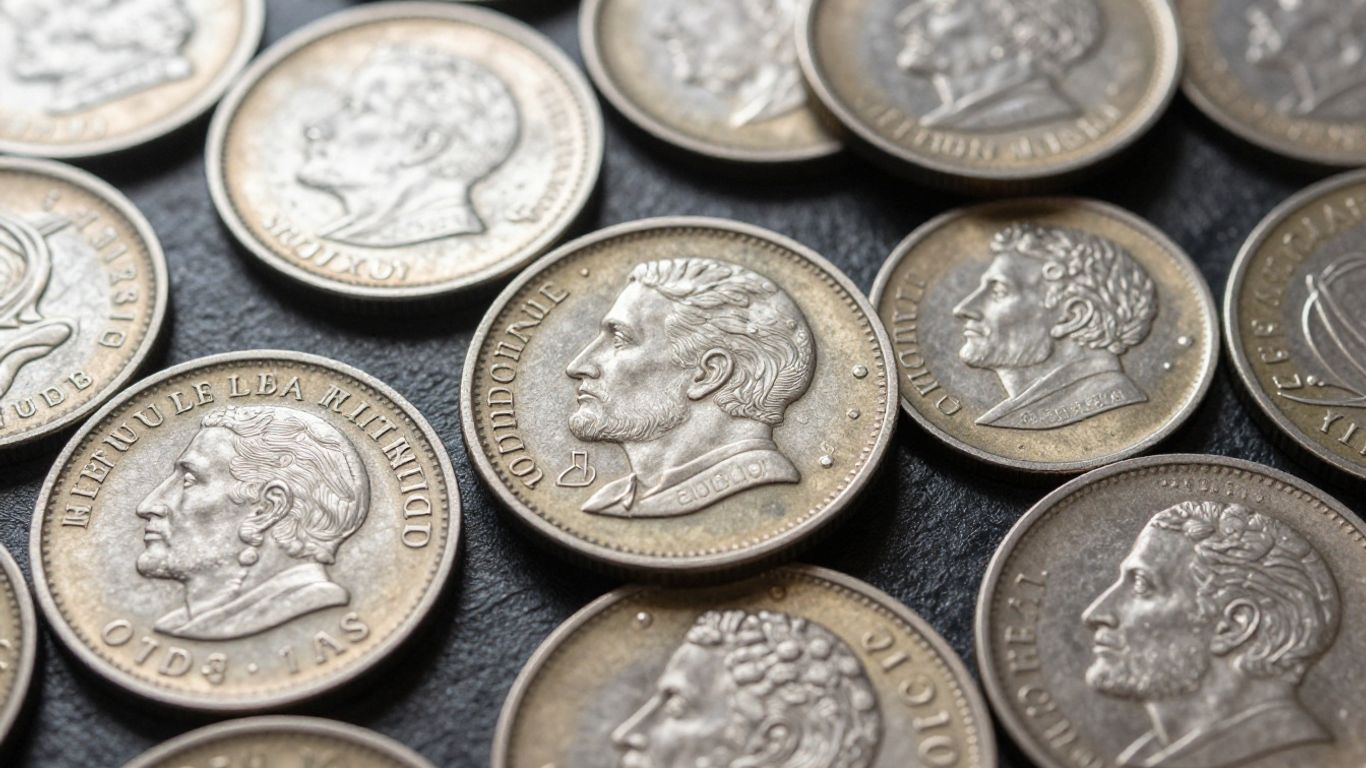
When you’re looking at old Mexican coins, you’ll often see little letters on them. These aren’t just random marks; they tell a story about who was in charge of making the coins. These officials, known as assayers, were super important. Their job was to make sure the metal used was the right stuff – usually silver or gold – and that the coins weighed what they were supposed to. It was a big responsibility because the value of the money depended on it.
Discoveries and Observations About the Coinage of Assayer P, Pedro de Espina, Second Assayer of the Mexico City Mint, 1536-1541
This section really gets into the nitty-gritty of early Mexican coinage. We’re talking about the very first mints set up after the Spanish arrived. The Mexico City Mint was one of the first, and figuring out who did what back then is tough. Pedro de Espina, known by his assayer’s mark ‘P’, was a key figure at the Mexico City Mint from 1536 to 1541. His work is important because it helps us date and identify coins from that early period. Researchers have spent a lot of time looking at the coins themselves, trying to match them up with records to confirm Espina’s involvement and understand the minting process of the time. It’s like detective work, but with old coins.
The Assayers of the Mint of Mexico During the 16th Century Pillars Coinage, Early Series: Assayers R, P, F and G
The 16th century was a foundational time for Mexican currency. The "Pillars" coinage, a distinctive design, was produced during this era. Identifying the assayers who worked on these coins, like those marked ‘R’, ‘P’, ‘F’, and ‘G’, is vital for collectors. Each mark represents a specific individual who oversaw the quality control of the precious metals. Understanding their tenure and the variations in their marks can help authenticate coins and reveal details about the mint’s operations.
Here’s a look at some of the early assayers:
- Assayer R: One of the earliest, his mark is found on coins from the initial period.
- Assayer P: As mentioned, Pedro de Espina is a significant figure associated with this mark.
- Assayer F: Another key official whose mark appears on a range of 16th-century issues.
- Assayer G: His mark also helps in dating and attributing coins from this formative era.
Corrections and Confirmations of the Names of the Assayers of the Durango Mint 1811 – 1985
This topic focuses on a much longer period, covering over a century and a half of the Durango Mint’s history. Official records aren’t always perfect, and sometimes names get misspelled or records are lost. This research aims to set the record straight, confirming the correct names of the assayers who worked at the Durango Mint. It’s about making sure numismatic history is accurate. For collectors, knowing the correct assayer can be the difference between a common coin and a rare variety.
The meticulous work of identifying and confirming assayer names is not just an academic exercise; it directly impacts the cataloging and valuation of Mexican coinage. Accurate attribution relies on precise knowledge of the individuals who signed off on the metal’s quality and the coin’s production.
Wrapping Up Your San Antonio Coin Hunt
So, you’ve got a better idea now of where to look for those interesting Mexican coins right here in San Antonio. It’s not always easy, and sometimes you might just find common stuff, but that’s part of the fun, right? Keep your eyes open at flea markets, antique shops, and especially those coin shows. Don’t be afraid to ask questions; most dealers are happy to share what they know. Happy hunting out there!
Frequently Asked Questions
What makes a Mexican coin valuable to collectors?
The value of a Mexican coin to collectors often depends on its rarity, historical significance, condition, and the metal it’s made from. Older coins, coins from less common mints, or those with unique errors can be particularly sought after.
Where can I learn about the history of Mexican coins?
Understanding the history of Mexican coinage involves exploring different eras, such as the Spanish colonial period, the Mexican Revolution, and modern issues. Learning about the mints, like those in Alamos and Hermosillo, and the types of metal used, like silver and nickel, provides valuable context.
Are there specific types of Mexican coins that are more collectible?
Yes, certain series and types of coins are highly collectible. For instance, coins from the revolutionary period (1913-1917), special commemorative issues like those for the Centenary of Independence, and coins with unique minting errors or varieties often attract significant collector interest.
What role did silver and nickel play in Mexican currency?
Silver has been a cornerstone of Mexican currency for centuries, especially in the form of the famous ‘Mexican Dollar’ or 8 Reales coins. Nickel also played a role, though its introduction sometimes led to interesting historical events, like the ‘Nickel Riots of 1883’.
How can I identify different Mexican coin varieties or errors?
Identifying varieties and errors requires careful examination. Collectors often use specialized catalogs and guides that detail known variations in minting, such as different mint marks, dates, or design elements. Sometimes, even small mistakes in the minting process can make a coin rare and valuable.
What were some of the important mints in Mexico?
Mexico has had several important mints throughout its history. Key ones include the mints in Alamos and Hermosillo in Sonora, Guadalajara, Durango, and Guanajuato. Each had its own period of operation and produced distinct coinage.
Are there historical connections between Mexican and U.S. currency?
Indeed, there are. For example, Mexican coins, particularly the silver 8 Reales, were widely used in early America, including in Virginia and California, before the U.S. established its own consistent coinage.
What should I know about coins from the Mexican Revolution?
The coinage from the Mexican Revolution (roughly 1913-1917) is a fascinating area. Different factions and leaders issued their own coins to finance the conflict. These coins can vary greatly in design and metal, and some are quite rare and historically significant.