
When it comes to dividing a coin collection, things can get a bit tricky. It’s not just about splitting up a pile of old coins; there’s a process to it, especially if you want to be fair to everyone involved. This guide will walk you through the main steps for dividing coin collection assets, making sure everything is handled properly and without too much confusion. We’ll cover organizing, valuing, and making sure the division is as smooth as possible.
Key Takeaways
- Get your coin collection organized first. Grouping coins by type and date makes everything easier to track later on.
- Create a detailed list of every coin. Knowing what you have is super important for figuring out what it’s all worth.
- Learn about coin grading. The condition of a coin really affects its value, so understanding basic grading helps a lot.
- Look into getting professional appraisals, especially for valuable parts of the collection. Getting a few offers can help you see the real market value.
- Remember to consider debts and future needs when dividing assets, not just the coins themselves.
Organizing Your Coin Collection for Fair Division
Before you can even think about dividing up a coin collection fairly, you need to get it into some kind of order. Trying to split up a jumbled mess of coins is a recipe for arguments and missed value. Think of it like sorting laundry before you can fold it – you wouldn’t just throw everything into drawers, right? The same applies here. A little bit of organization upfront makes everything else, like valuing and dividing, so much smoother.
Categorizing Coins by Denomination and Date
The first step is to group your coins. The most logical way to do this is by denomination – all the pennies together, all the nickels together, and so on. Once you have your piles by denomination, then you can sort them by date. This helps you see if you have a complete run of a certain coin or if there are any obvious gaps. It also makes it easier to spot those key dates that might be worth more.
- Pennies: Group all pennies together, then sort by year (e.g., 1900-1909, 1910-1919, etc.).
- Nickels: Do the same for nickels.
- Dimes, Quarters, Half Dollars, Dollars: Repeat this process for all other denominations.
Ordering Coins Within Albums and Sets
If the collection includes coin albums or pre-made sets, these are already partially organized. You’ll want to go through each album or set and make sure the coins are in the correct order by date and mint mark. Sometimes coins get misplaced, or an album might be missing a coin that was removed. Note any missing coins or any that seem out of place. This is also a good time to check if the coins are in good condition or if they look worn out.
Keeping coins in their original albums can be helpful, but don’t assume the order is perfect. A quick check can prevent errors later on.
Separating Foreign and Bullion Coins
Not all coins are from the United States, and not all are just for collecting. You’ll want to set aside foreign coins that aren’t made of precious metal. These usually have a much lower value, often just face value in their home country, and can be dealt with separately. Also, identify any coins that are primarily valuable for their metal content – like silver dollars or gold coins. These are called bullion coins, and their value is tied to the current price of silver or gold, not just their rarity as a collectible. Keeping these separate makes their valuation much simpler.
- Foreign Coins: Bag them together, noting the country if possible.
- Bullion Coins: Keep these separate, perhaps in protective holders.
- U.S. Circulated Coins: These are the bulk of most collections and will be categorized by denomination and date.
Creating a Comprehensive Inventory for Valuation
Documenting Each Coin's Unique Details
Before you can even think about what your coin collection is worth, you need to know exactly what you have. This means going through each coin, one by one, and writing down its specifics. Think of it like taking attendance for your coins. You’ll want to note down things like the year it was made, where it was made (that’s the mint mark), and what denomination it is. If you’ve had any coins professionally graded, you’ll want to record that grade too. It sounds tedious, I know, but trust me, this step is super important. It’s the foundation for everything else.
Using Organization to Streamline Cataloging
If you’ve already organized your coins by denomination and date, like we talked about earlier, this part will be a breeze. Your organized piles make it way easier to go through and catalog. You can just work through each category. For example, tackle all the Lincoln cents first, then move on to Buffalo nickels. This way, you’re not jumping all over the place. It keeps things logical and helps you spot duplicates or gaps in your sets more easily. It’s like having a roadmap for your inventory.
Understanding the Importance of an Inventory for Heirs
So, why go through all this trouble? Well, if you’re planning to pass your collection down, an inventory is a lifesaver for your heirs. It tells them exactly what’s there, so they don’t have to guess or feel completely lost. This document can help prevent arguments later on, especially if there are multiple people splitting the collection. It provides a clear, objective list of what needs to be valued and divided. Without a good inventory, heirs might not get a fair shake, or they might unknowingly sell something valuable for way less than it’s worth.
Here’s a basic template you can adapt:
| Year | Mint Mark | Denomination | Condition (e.g., Circulated, Uncirculated) | Notes (e.g., Key Date, Error) |
|---|---|---|---|---|
| 1909 | S | Cent | Circulated | VDB |
| 1931 | D | Cent | Uncirculated | |
| 1916 | D | Dime | Circulated | Mercury Dime |
Keeping this inventory updated as you add or remove coins is key. It’s a living document for your collection’s history and value.
Understanding Coin Grading and Its Impact on Value
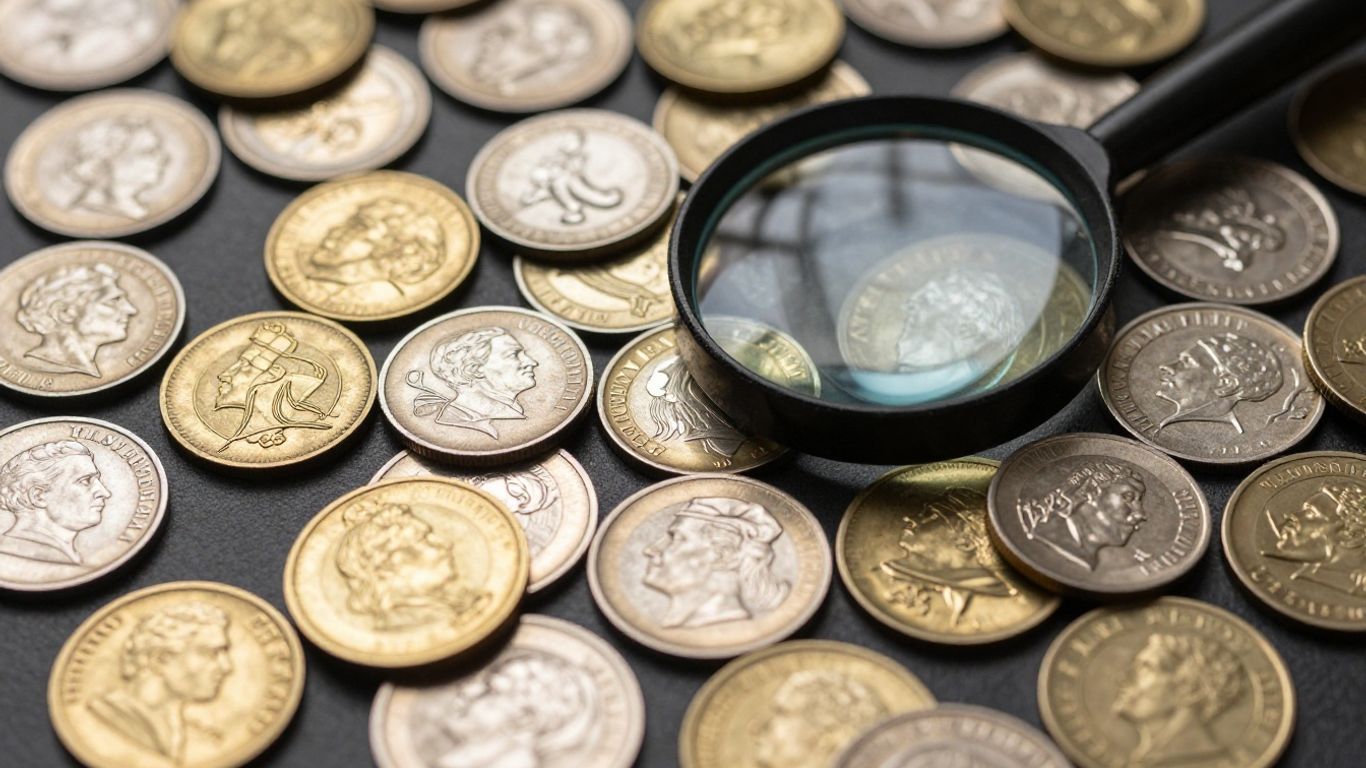
When you’re looking at a coin collection, especially if you’re thinking about dividing it up or selling it, you’ll quickly run into the idea of coin grading. It’s not just about whether a coin looks old or new; it’s a whole system that tells you about a coin’s condition and, by extension, its worth. Think of it like grading a diamond – the clearer and more perfect it is, the more it’s worth. Coins are similar.
Learning Basic Coin Grading Terminology
Coin grading uses a scale, often from 1 to 70, to describe a coin’s condition. The lower numbers mean a coin is pretty worn, maybe even damaged. The higher numbers mean it’s in fantastic shape, with sharp details and minimal wear. You’ll hear terms like ‘Good’ (G), ‘Very Fine’ (VF), ‘Extremely Fine’ (XF or EF), ‘About Uncirculated’ (AU), and ‘Mint State’ (MS). Each of these has a number associated with it, like G-4 or MS-65. For example, a coin graded ‘About Uncirculated’ (AU) will show some signs of wear, but most of the original detail is still there. A ‘Mint State’ coin, on the other hand, looks like it just came from the mint, with no wear at all.
- Good (G-4): Significant wear, but the coin’s basic design is still visible.
- Very Fine (VF-20): Moderate wear, but all details are clear.
- Extremely Fine (XF/EF-45): Slight wear on the highest points of the design.
- About Uncirculated (AU-58): Very minor wear, almost looks new.
- Mint State (MS-60 to MS-70): No wear, with varying degrees of eye appeal and surface preservation.
Identifying Key Dates and Rare Mintmarks
Beyond the general condition, certain dates and mintmarks can make a coin much more valuable. A ‘key date’ is a coin from a specific year and mint that was produced in smaller numbers or is in high demand. For instance, in the Washington quarter series, the 1932-D and 1932-S quarters are considered key dates because they had very low mintages. Even if these coins are in circulated condition, they can be worth a lot more than other quarters from the same era. Similarly, a coin from a less common mint (like Denver ‘D’ or San Francisco ‘S’) might be rarer than one from Philadelphia (no mintmark), depending on the year and series.
Recognizing When Professional Grading is Beneficial
While you can learn a lot about grading yourself, sometimes it’s worth getting a professional opinion. If a coin is in exceptionally good condition and could potentially jump up a full grade with professional assessment, it might be worth the cost. This is especially true for rare coins, error coins, or coins that are frequently faked. Professional grading services, like PCGS (Professional Coin Grading Service) and NGC (Numismatic Guaranty Company), encapsulate coins in a protective holder with a grade assigned by experts. This can add confidence for buyers and often increases the marketability and value of higher-end coins. However, for common coins or those in lower grades, the cost of professional grading might outweigh any potential increase in value.
Determining the Value of Your Coin Collection
Figuring out what your coin collection is actually worth can feel like a puzzle. It’s not just about counting up the coins; a lot of little things can change the price tag. You’ve probably already organized your coins, which is a huge help. Now, let’s talk about how to get a handle on their value.
Utilizing Pricing Guides for Estimated Retail Value
Think of pricing guides as a starting point, like a map for what coins might sell for. Books like the "Red Book" (A Guide Book of United States Coins) are popular for U.S. coins. They list coins by denomination and date, giving you a range of prices based on their condition. It’s important to remember these are often retail prices, what a collector might pay a dealer. Your collection’s value might be different if you’re selling to a dealer.
- Check the Date and Mint Mark: These are super important. A coin from a rare year or a specific mint (like "D" for Denver or "S" for San Francisco) can be worth much more.
- Assess the Condition: The guide will have different price columns for different grades of condition, from worn out to nearly perfect. Be honest about your coin’s state.
- Look for Key Dates: Some years or mint marks are much harder to find. These "key dates" often have significantly higher values.
Estimating Dealer Offers Based on Retail Prices
Dealers buy coins to resell them, so they need to make a profit. This means their offer will usually be lower than the retail price you see in a guide. A common rule of thumb is that a dealer might offer anywhere from 25% to 60% of the retail value, depending on the coin, its condition, and how quickly they think they can sell it.
- Bullion Coins: Coins made of gold or silver (like American Eagles or older silver dollars) are often valued close to their metal content, plus a small premium.
- Common Circulated Coins: Most everyday coins you find in change, even if they’re older, are worth very little beyond their face value unless they have a special error or are a rare date.
- Key Date/High-Grade Coins: For rare or exceptionally well-preserved coins, a dealer’s offer might be a higher percentage of retail, as they are more desirable and easier to sell.
Identifying Coins with Bullion Value
Some coins aren’t valuable for their numismatic (collector) appeal but for the metal they contain. This is especially true for gold and silver coins.
- Silver Coins: U.S. dimes, quarters, half dollars, and dollars minted before 1965 are typically 90% silver. Kennedy half dollars from 1965-1970 are 40% silver. Their value fluctuates with the price of silver.
- Gold Coins: U.S. gold coins (like Indian Head or Liberty Head $5, $10, or $20 pieces) are valued based on their gold content.
- Modern Bullion Coins: Coins specifically minted for investment, like American Silver Eagles or Gold Eagles, are priced very close to the current market value of their metal.
It’s easy to get caught up in the numbers in a price guide, but remember that those are just estimates. The real value is what someone is willing to pay for your specific coins at a specific time. Don’t be discouraged if offers are lower than guide prices; it’s just how the market works for dealers.
If you have a lot of coins, especially common ones, you might find that many are only worth their face value or a small amount of silver. It’s often practical to set these aside. For example, circulated Lincoln cents after 1933, most Jefferson nickels after 1939 (except for specific ones like the 1950-D or War Nickels), and dimes and quarters after 1964 are usually not worth much more than face value unless they’re in exceptional condition or have an error.
Seeking Professional Appraisals and Offers
The Role of Coin Dealers in Valuation
When it comes to figuring out what your coin collection is really worth, especially if you’re looking to sell or divide it fairly, talking to coin dealers is a smart move. They see coins all day, every day, and have a good sense of the market. Think of them as the folks who can give you a real-world price tag, not just what a book might say. They can spot details you might miss and know what buyers are actually paying right now. It’s like asking a car mechanic about your car’s value – they know the ins and outs.
Obtaining Multiple Offers for Comparison
It’s a good idea not to just take the first offer you get. If you have a few coin shops in your area, or if you’re going to a coin show, try to get offers from a couple of different dealers. This is especially important if you have a significant collection. If one dealer offers $10,000 and another offers $20,000 for the same collection, you’ll definitely want to get a third opinion. This helps make sure you’re getting a fair price and not being low-balled. It’s a simple way to protect yourself and get the best outcome.
- Visit multiple coin dealers.
- Attend coin shows to meet various buyers.
- Compare offers carefully before accepting.
Navigating Offers for Large or Complex Collections
Sometimes, a coin collection can be really big or have some unusual pieces that make it tricky to value. In these cases, a dealer might need more time or even a couple of visits to properly assess everything. If a collection is too large to easily transport, getting multiple offers might be a bit harder, but it’s still worth the effort. Don’t be afraid to ask questions about how they arrived at their offer, especially for those really unique or high-value coins. It’s all part of making sure the division is as fair as possible.
When dealing with large or complex collections, patience is key. A thorough appraisal takes time, and rushing the process could lead to an inaccurate valuation. It’s better to have a clear, well-supported offer than a quick one that might be too low.
Handling 'Spender' Coins in the Collection
When you’re sorting through a coin collection, you’ll inevitably come across coins that aren’t worth much more than their face value. These are often called ‘spenders.’ While they might have been part of a collection built over time, their individual worth in today’s market is minimal, especially when compared to rarer coins or those with precious metal content. Deciding what to do with these common coins is a practical step in fairly dividing the assets.
Identifying Coins with Face Value or Low Bullion Value
Many coins, particularly those found in circulated condition and from more recent decades, fall into the ‘spender’ category. Think about Lincoln cents minted after 1933, most Jefferson nickels after 1939 (with a few exceptions like War Nickels or the 1950-D), dimes and quarters after 1964, and half dollars after 1970. Modern dollar coins, like Sacagawea or Presidential dollars, also typically fall into this group. These coins were generally produced in vast quantities, and unless they possess a rare date, mintmark, or an exceptionally high grade, their value is tied to their face value. Even coins that once contained silver, like dimes and quarters from 1964 and earlier, might be worth more for their silver content than their numismatic value, but this is usually only the case if silver prices are very high. It’s important to distinguish between coins that have a small amount of silver and those that are truly just face value.
Deciding When to Spend or Cash In Common Coins
There’s no hard rule that says you must spend or cash in these common coins, but it often makes practical sense. If the collection is being divided among multiple heirs, including a large number of low-value coins can complicate the division process. It’s often simpler to consolidate these ‘spenders’ and either spend them on everyday purchases or take them to a bank or coin dealer for their face value or melt value, if applicable. This frees up the more valuable items for a more equitable distribution. If you decide to sell the entire collection to a dealer, there’s little point in including coins that will only bring the dealer a tiny profit or no profit at all.
Excluding Low-Value Coins from Shipments
If you plan to ship parts of the collection to a dealer for an offer, it’s wise to sort out the ‘spenders’ beforehand. Shipping costs can add up, and paying to ship coins that are only worth their face value is not an efficient use of resources. By removing these common coins, you streamline the process and focus on the items that hold significant numismatic or bullion value. This also helps in accurately assessing the value of the collection you are presenting for sale or division.
It’s easy to get caught up in the idea that every coin has some hidden value. While it’s true that even common coins can have a story, for the purpose of asset division, focusing on the coins with tangible worth makes the process much smoother. Think of it as clearing out the clutter to get to the treasures.
Considering Professional Coin Grading Services
Sometimes, you might wonder if getting a coin officially graded is worth the trouble and the cost. It’s not always a clear yes or no. For most common coins, especially those that are heavily circulated or have no special rarity, sending them off to be graded probably won’t add enough value to cover the expense. It can also slow things down if you’re looking to sell quickly. However, there are definitely times when it makes a lot of sense.
When Professional Grading Adds Value
Think about getting coins professionally graded if you have items that are particularly rare, have interesting errors or varieties, or are frequently faked. Coins made before 1800 might also benefit. Another big reason is if a coin is in a condition that’s right on the edge between two grades, and moving up to the next grade would significantly increase its worth – we’re talking hundreds or even thousands of dollars more. It’s like a coin being almost perfect, but not quite, and a professional opinion could confirm that it is perfect enough to fetch a much higher price.
Choosing Reputable Grading Services
If you decide grading is the way to go, you’ll want to pick a service that people trust. For decades, two names have consistently stood out in the industry: Numismatic Guaranty Company (NGC) and Professional Coin Grading Service (PCGS). These companies have built solid reputations. Be cautious of other services, as some have been known to grade coins too high or have inconsistent standards, which won’t help your collection’s value. It’s wise to stick with the well-known ones.
Avoiding Damage by Not Cleaning Coins
This is a really important point: Never try to clean your coins. It might seem like a good idea to make them shiny, but you’ll almost certainly damage the surface. Even a gentle wipe can leave tiny scratches or alter the coin’s natural look, which can lower its grade and, therefore, its value. It’s best to leave them exactly as they are. Let the grading professionals handle any assessment of their condition without interference from you.
Navigating Debts and Liabilities in Asset Division
When you’re dividing up a coin collection, it’s not just about what you own, but also what you owe. Debts and liabilities have to be sorted out, just like the coins themselves. Ignoring them can cause big problems down the road, so it’s important to tackle this head-on.
Accounting for Jointly Held Debts
Think about any debts that were taken on together during the marriage or partnership. This could be anything from a mortgage on a house to car loans or even joint credit card balances. These aren’t just numbers on a statement; they represent financial obligations that need a clear plan for who will handle them. It’s like having a few rare coins that are technically owned by both of you – you need to decide who gets them and what that means financially.
Determining Responsibility for Each Debt
Once you’ve listed all the joint debts, the next step is to figure out who is responsible for paying them off. This isn’t always a 50/50 split. Sometimes, one person might take on a larger share of debt if they are also receiving assets of a similar value. For example, if one person keeps the house, they might also take on the mortgage. It’s about finding a balance that feels fair to both parties. You might want to make a list like this:
- Mortgage: [Person A’s Name] responsible for remaining balance.
- Car Loan (Vehicle 1): [Person B’s Name] responsible for remaining balance.
- Joint Credit Card: Split remaining balance 50/50.
It’s important to remember that debts incurred during the marriage are often considered marital debts, regardless of whose name is on the account. This means both parties can have a claim to it, and a plan needs to be made for its division. For instance, in California divorces, cryptocurrency acquired during the marriage with marital funds is typically considered community property and subject to equal division. This means both spouses have a claim to it.
Preserving Long-Term Financial Security
How you handle debts now directly impacts your financial future. If debts aren’t properly divided, one person could end up being pursued for the full amount, even if the agreement stated otherwise. This can seriously hurt your credit and your ability to secure future loans or financial stability. Making sure all debts are accounted for and assigned responsibility helps protect both individuals and allows everyone to move forward with a cleaner financial slate. This is especially important when considering assets like a coin collection, which might be sold to help settle outstanding financial obligations.
Incorporating Future Financial Needs into Division
When you’re dividing up a coin collection, it’s not just about what the coins are worth right now. You also have to think about what you and anyone else involved will need down the road. This means looking beyond the immediate cash value and considering how these assets fit into long-term financial plans.
Assessing Long-Term Financial Security
Think about what each person’s financial situation will look like in 5, 10, or even 20 years. Does someone have a solid retirement plan already, or will they be relying more heavily on assets like this coin collection to fund their later years? It’s about making sure that the division doesn’t leave anyone in a tough spot when they’re older and perhaps less able to earn income.
Considering Retirement Accounts and Pensions
While this section focuses on a coin collection, the same principles apply to other assets. If retirement accounts or pensions are part of the overall estate being divided, their future income potential is a big factor. A coin collection might be a lump sum now, but it could also be a way to supplement future income if managed wisely. The goal is to balance immediate needs with future stability.
Ensuring Adequate Resources for Future Living Expenses
This involves a bit of forecasting. What are the expected costs of living in the future? Will healthcare costs increase? Will there be other significant expenses? The division should aim to provide enough resources so that future living expenses can be met without undue hardship. This might mean setting aside certain valuable coins specifically for their long-term growth potential or for generating income later on.
Here’s a simple way to think about it:
- Immediate Value: What can the coins be sold for today?
- Growth Potential: Could these coins be worth more in the future if held?
- Income Generation: Can some coins be used to create a steady income stream (e.g., by selling a few periodically)?
Planning for the future means looking at assets not just as they are, but as they can be. This requires a bit of foresight and a realistic view of upcoming financial demands.
Understanding State Laws for Equitable Division
When it comes to dividing up assets, like a coin collection, after a separation or in estate planning, state laws really matter. It’s not a one-size-fits-all situation across the country. What might be considered fair in one state could be handled differently in another. This is where things can get a bit complicated, but knowing the basics can save a lot of headaches.
Community Property vs. Equitable Distribution
States generally fall into one of two main camps when it comes to dividing property: community property or equitable distribution. It’s important to figure out which system your state follows because it directly impacts how assets, including your coin collection, will be split.
- Community Property States: In these states, any assets acquired during the marriage are considered jointly owned by both spouses. This means they are typically divided equally, 50/50. Think of it like this: if you bought a rare coin together while married, it’s considered "community property" and should be split down the middle.
- Equitable Distribution States: This is the more common system. Here, assets are divided fairly, but not necessarily equally. A judge will look at various factors to decide what’s fair for each person. These factors can include the length of the marriage, each person’s financial situation, contributions to the marriage (both financial and non-financial), and even things like fault in the breakdown of the marriage.
The key difference is that "equitable" doesn’t always mean "equal."
Familiarizing Yourself with Family Law
Understanding the specific laws in your state is a big step. It’s not just about knowing the community property or equitable distribution rule; there are nuances. For instance, how are retirement accounts handled? What about gifts or inheritances received during the marriage? These can be treated differently depending on the state.
- Marital vs. Separate Property: Most states distinguish between property acquired during the marriage (marital property, usually subject to division) and property owned before the marriage or received as a gift or inheritance (separate property, often not subject to division unless it’s been mixed with marital assets).
- Valuation Methods: State laws might also have guidelines on how assets, like a coin collection, should be valued. This could involve requiring professional appraisals for significant items.
- Legal Procedures: There are often specific legal steps and timelines you need to follow when dividing assets, especially if you’re going through a formal separation or divorce.
Avoiding Surprises in Legal Obligations
Ignorance of the law isn’t a defense, and it can lead to unexpected outcomes. For example, you might think you’re entitled to a certain portion of the coin collection, but state law might dictate a different division based on specific circumstances. Or, debts might be divided in a way you didn’t anticipate.
It’s wise to consult with a legal professional who specializes in family law or estate planning in your state. They can explain how your state’s laws apply to your specific situation, help you understand your rights and obligations, and guide you through the process to aim for a fair and legally sound division of your assets.
This preparation can prevent disputes later on and help ensure that the division of your coin collection, and other assets, is handled correctly and with minimal conflict.
Wrapping Up Your Coin Collection Journey
So, you’ve gone through the steps, organized the coins, maybe even done some research. It can feel like a lot, especially if you’re not a collector yourself. Remember, the goal here is to get a fair outcome, whether that means dividing the collection among family or selling it off. Don’t be afraid to ask questions, get a second opinion from another dealer if something feels off, and use those resources like the Red Book we talked about. Taking your time and being thorough will help make sure you handle this inherited collection the right way, avoiding any headaches down the road. It’s about making a sensible decision that works for everyone involved.
Frequently Asked Questions
Why is it important to organize my coin collection before trying to value it?
Putting your coins in order by denomination and date makes it much easier to keep track of everything. This organization helps when you’re creating a list of your coins, which is a key step in figuring out their value. It also helps prevent mistakes and makes the whole process smoother, especially if you need to show the collection to others.
What details should I record for each coin in my inventory?
For each coin, you should write down its date, where it was made (mint mark), and its condition, or grade. Knowing these details helps you research the coin’s value accurately. If a coin has been professionally graded, be sure to note that information too.
How can I figure out the value of my coin collection?
You can start by using a coin pricing guide, like the ‘Red Book.’ These guides show estimated retail prices. Remember, a dealer will likely offer less than the retail price. Also, check if any coins are made of silver or gold, as their metal value can add to their worth.
When should I consider getting professional help to value my coins?
If your collection has very rare coins, errors, or coins that are hard to find information on, a professional appraisal might be a good idea. Also, if a coin is in a condition that’s borderline between two grades, and the higher grade significantly increases its value, professional grading could be beneficial.
What are 'spenders' in a coin collection, and what should I do with them?
‘Spenders’ are coins that are only worth their face value, like most modern dollar coins or common cents. It’s often best to set these aside. There’s usually no point in including them when you get offers for your collection, as dealers won’t pay extra for them.
Should I clean my coins before valuing or selling them?
No, you should never clean your coins. Cleaning can damage their surface and lower their grade, which can drastically reduce their value. It’s always better to leave them as they are to preserve their condition.
How do debts affect the division of my coin collection?
When dividing assets, any shared debts, like loans or credit card balances, need to be considered. You’ll need to figure out who is responsible for paying off each debt. Ignoring debts can cause future financial problems, so it’s important to address them during the division process.
Do state laws matter when dividing a coin collection?
Yes, state laws can influence how assets are divided. Some states follow ‘community property’ rules, meaning assets are split equally. Others use ‘equitable distribution,’ where assets are divided fairly, but not necessarily equally. Knowing your state’s laws helps you understand the process.