
Key Takeaways
Understanding the evolution and technique behind coin edges provides essential insight into how currency maintains its value and integrity. From preventing clipping to modern visual security, the edge serves a crucial role in numismatic history.
- Early milled edges were developed primarily to counter the fraudulent practice of clipping precious metal from coins.
- Reeded edges provide tactile identification while discouraging illegal shavings.
- The minting process utilizes specialized collars to achieve clean, uniform edge designs.
- Complexity in edge patterning acts as a significant deterrent against modern counterfeiting efforts.
- Collectors prioritize coins with well-preserved edge details, as these often indicate a higher grade or rare variety.
The history and evolution of edged coins
The history of numismatics is often written on the faces of coins, yet the perimeter serves as an equally vital narrative of progress. Before mechanical innovation took hold, most coins were hammered, leaving edges that were uneven and vulnerable to tampering. As nations sought to protect their bullion stores, they turned to the nascent science of minting machinery, marking a shift toward the standard we see today.
Origins of milled edges in the 17th century
The 17th century introduced the concept of milling, a process that transformed coin production forever by ensuring distinct and uniform shapes. This shift was largely addressed by pioneers like those associated with Allan Davisson’s firm, who documented the historical complexities of early mechanical striking. The move away from hammered coinage was driven by a need for consistency that prohibited tampering and maintained a more uniform weight across circulating currency.
Transition from artisanal to mechanized edging
Moving from hand-hammered production to mechanized milling was a long, contentious road fraught with institutional resistance. Traditional moneyers feared that new machinery would displace their skilled labor, yet the efficiency of the new tools was undeniable. Innovations in this era sought to stabilize the weight of coins, ensuring that every piece issued by the state carried the exact amount of intended gold or silver.
Historical significance of edge inscriptions
Beyond simple ridges, early edges were frequently adorned with decorative lettering to proclaim the authority of the issuing kingdom. These inscriptions were not merely aesthetic; they acted as a mark of legitimacy, confirming the coin was minted in an official facility. The evolution of these inscriptions mirrors the broader history of money, showcasing how states communicated authority to an illiterate public through ornamental patterns edges coins and symbolic design.
Types of edge designs and patterns
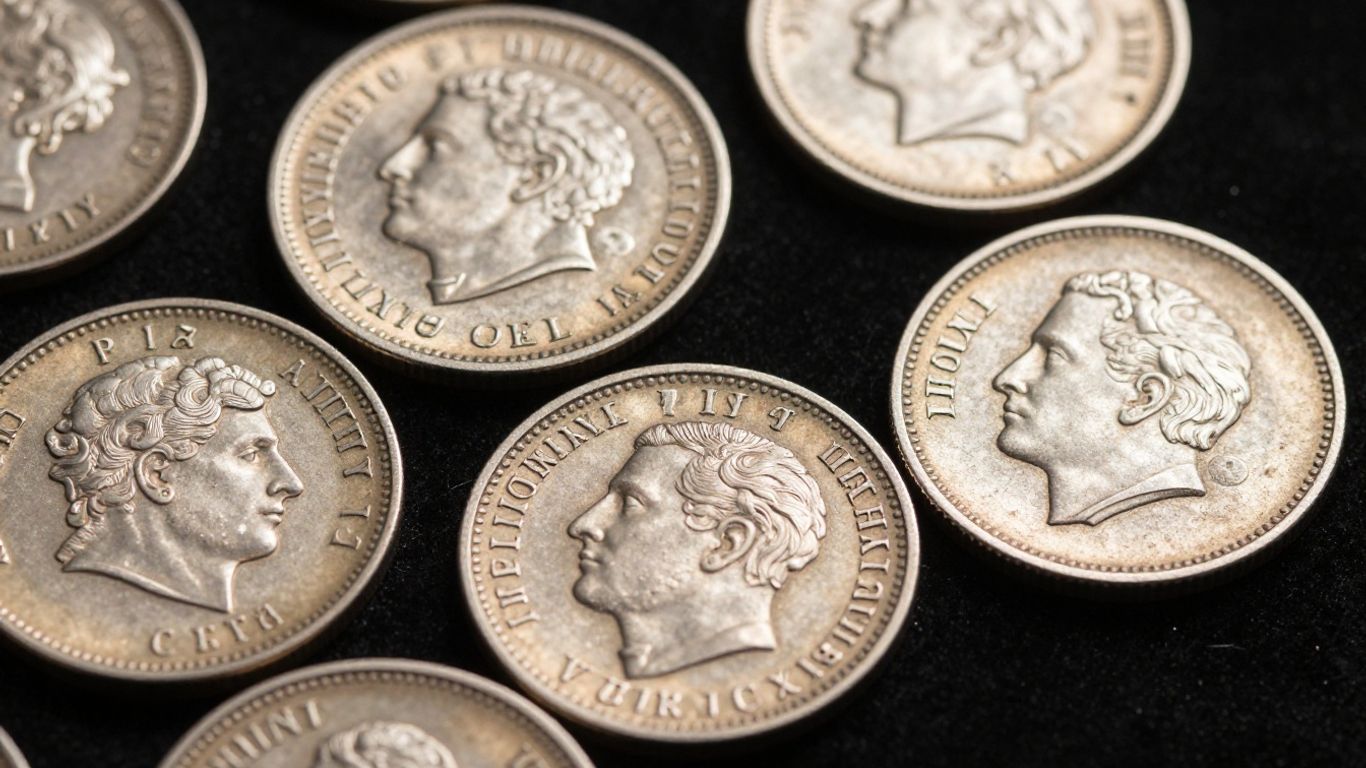
Designers have long utilized the third side of a coin to impart both functional utility and artistic beauty. While the obverse and reverse often focus on portraits or seals, the edge offers a narrow canvas for security and signature styling. Different edges serve unique purposes, from helping visually impaired individuals distinguish denominations to providing an extra layer of complexity that is difficult for imitators to replicate.
Reeded edges and their functional development
Reeded edges, characterized by vertical grooves, emerged as an ideal way to identify tampering. By feeling the ridges, a merchant could instantly detect if a coin had been shaved. This development transformed how currency was handled on a daily basis.
Ornate floral and geometric border motifs
Beyond functional ridges, some mints introduced delicate floral or geometric patterns that demanded higher strike pressure. These patterns are quite beautiful, and when found in high-grade examples, they represent a significant intersection of numismatic art and industrial precision. We can analyze the popularity of these designs by looking at specific trends in manufacturing history.
| Edge Type | Primary Function | Era Introduced |
|---|---|---|
| Reeded | Anti-clipping | 18th Century |
| Plain | Standard utility | Ancient Era |
| Lettered | Provenance marker | 17th Century |
| Floral | Aesthetic prestige | 19th Century |
The data above illustrates how different styles emerged over time to meet shifting economic requirements. It is helpful to note that while floral designs were largely ornamental, they still provided a baseline of protection against simple filing methods.
Lettering and incuse edge markings
Incuse lettering, where text is recessed into the metal, was a sophisticated answer to the limitations of simple reeds. This method is particularly durable, ensuring the legend remains legible even after significant circulation. Modern mints sometimes choose simplified motifs for Company Coins, which produces high-quality, realistic representations for various commemorative and artistic purposes.
The technical process of edge minting
Modern minting demands extreme precision to ensure that each coin reflects the exact specifications of the master die. The edge is not merely an afterthought; it is sculpted during the striking process itself to ensure it meets the highest standards. This process requires a coordinated effort between the press, the dies, and the containment collar that holds the metal under intense force.
Using segment dies during the coining process
When coins feature specific edge lettering, simple collars are often insufficient. Segmented dies slide against the edge of the planchet, impressing the required design with high pressure. This technique allows for complex text to wrap around the diameter without losing detail.
The role of the collar in precision shaping
The collar acts as a precise container for the coin during the strike, forcing the metal to expand outward and fill the design cavity. Without a robust collar, the metal would simply deform, losing its intended sharpness. Proper calibration of this component ensures the edge remains straight and consistently thick.
Challenges in achieving high-relief edge detail
High-relief edge designs often encounter mechanical hurdles because the metal must flow into deep recesses while maintaining structural integrity. Engineers must balance the speed of the press with the plasticity of the alloy. Many hobbyists look for consistent striking strength, which is often easier to achieve with modern, automated equipment.
Security and anti-counterfeiting through edge patterns
Security is the primary driver behind many of the most complex edge patterns found in modern currency. By creating a design that is difficult to recreate, central banks can ensure that genuine coins are easily distinguished from counterfeits. This serves as a vital safeguard for the public and a critical tool for banks.
Deterring coin clipping and illicit shavings
Historically, the easiest way to steal from a coin was to shave off the edge. Modern reeding and heavy, complex designs make this impossible without leaving obvious, unsightly gaps. The following list identifies key security features used historically and today:
- Standard grooved reeding to make edge file marks visible.
- Incuse lettering that is difficult to replicate with hand tools.
- High-relief ridges that require specialized equipment to simulate.
- Precise weight distribution through uniform edge thickness.
Each of these measures helps maintain the value and trustworthiness of the circulating currency system, preventing widespread fraud by making tampering visually apparent.
Complexity as a barrier for counterfeiters
Digital imaging and advanced modeling have made it easier to study genuine patterns, but the physical stamping process remains incredibly difficult to replicate outside of an official mint. A counterfeit coin may look accurate at first glance, but the edge detail usually lacks the sharp, clean lines produced by high-pressure striking.
How distinctive patterns verify authenticity
Authentic coins often feature microscopic deviations or distinct edge profiles that experts can verify under magnification. These unique characteristics allow for quick authentication. If you are struggling with behavioral training or need professional guidance similar to how Anvil K9 maintains success in their field, expert numismatists apply that same level of rigor to coin grading.
Identifying value in ornamental edge varieties
For the discerning collector, the edge is a primary zone of interest for finding rare varieties. Because the edge is struck simultaneously with the faces, errors here can indicate a failure in the alignment of the collar or die. Recognizing these rarities requires a keen eye and a solid understanding of the minting process.
Detecting error coins during the edge strike
Error coins, such as those with missing or partial reeding, are highly sought after in the numismatic community. These flaws provide a fascinating glimpse into the mint’s internal production challenges, offering rare pieces for personal collections.
Rarity and collector demand for edge variations
Collectors prioritize edge variations because they are often less common than standard strikes. A slightly off-center edge strike or a doubled imprint can drive significant interest at auction. This rarity often stems from the fact that such errors are usually caught during quality control and destroyed.
Preserving edge details for long-term valuation
Proper storage is essential for maintaining the edge detail that contributes so much to a coin’s grade. Plastic holders and climate control prevent the accumulation of surface damage, keeping the perimeter sharp and clean. A well-preserved edge is often the difference between a mid-grade coin and a true investment-quality piece.
Conclusion
The complex history and refined engineering of coin edges highlight how essential these elements are to the global financial system. From early anti-counterfeiting measures to modern aesthetic precision, understanding these details transforms one’s appreciation for numismatics, proving that even the narrowest surface can carry significant historical, technical, and artistic weight.
Frequently Asked Questions
What is the purpose of reeded edges on coins?
Reeding on the edge of a coin serves both a protective and functional purpose, making it easy to identify if any metal has been shaved off while aiding visually impaired individuals in recognizing the denomination.
How were coin edges made before modern machinery?
Early coins were minted through manual hammering, which resulted in uneven, irregular edges that lacked any specific pattern or protection until milling techniques were introduced in the 17th century.
Can edge patterns help in identifying counterfeits?
Yes, distinctive edge patterns are extremely difficult for counterfeiters to replicate with high precision; therefore, professionals often inspect the edge for sharpness and consistency to verify a coin’s authenticity.
What should collectors look for regarding edge errors?
Collectors often search for missing reeding, off-center striking, or doubled lettering on the edge, all of which are evidence of production irregularities that can significantly increase the value of a specific piece.
Are there coins that feature inscriptions on the edge?
Many historical and modern coins feature incuse or raised lettering on their edges, which was traditionally used to convey the issuing authority’s sovereignty or a specific motto.
How does the minting process ensure a uniform edge?
Modern coins are struck within a containment collar that prevents the metal from deforming, ensuring each coin maintains a standard diameter and uniform edge profile during the high-pressure striking process.
Does the term third side of a coin refer to the edge?
Yes, numismatists frequently refer to the edge as the third side because it holds unique informational and security value, acting as the perimeter between the obverse and reverse faces.