
So, you’ve got some variety coins and you’re wondering where to sell them in San Antonio. It might seem a little tricky, but knowing your options can really help you get the best price. This guide is here to walk you through it, making sure you know where to go and what to look for when you want to sell variety coins San Antonio.
Key Takeaways
- Local coin shops and dealers in San Antonio are generally the best places to sell variety coins for fair prices.
- Understand the silver content of your coins; pre-1965 U.S. coins often contain 90% silver, which impacts their value.
- Research current silver prices online to have a baseline for your coins’ melt value.
- Compare offers from multiple reputable buyers before deciding where to sell your coins.
- Avoid cleaning your coins, as this can damage their condition and reduce their numismatic value.
1. Local Coin Shops and Dealers
When you’re looking to sell your variety coins in San Antonio, the first place to consider is your local coin shops and dealers. These businesses are specifically set up to buy and sell coins, and they often have a good understanding of what your collection might be worth, especially if it has value beyond just the metal content. Visiting a few different dealers is a smart move to compare offers.
These specialists can help you figure out the true value of your coins, whether they’re old silver dollars, interesting foreign currency, or those Kennedy half dollars you’ve been holding onto. They have the knowledge to spot rare dates, mint marks, or specific conditions that might increase a coin’s desirability to collectors. You can usually find these shops by searching online for "coin dealers San Antonio" or "buy coins San Antonio." Some places, like San Antonio Coin Buyers, are known for their expertise.
Here’s a general idea of what to expect:
- Specialized Knowledge: Coin dealers understand numismatics – the study and collection of coins. They know which coins are sought after by collectors.
- Fair Pricing: Reputable dealers aim to offer prices that reflect a coin’s market value, considering both its silver content and collector appeal.
- Variety of Coins: They buy a wide range of coins, from common circulated pieces to rare and valuable specimens.
It’s always a good practice to do a little homework before you go. Knowing the general type of coins you have and any unique features can help you have a more productive conversation with the dealer. This preparation can lead to a more satisfactory selling experience.
Some dealers might also be involved in online sales or auctions, which can broaden their reach and potentially offer you more options for selling. For instance, Great Southern Coins, while located a bit outside the immediate San Antonio area in Boerne, TX, has a strong presence in the coin market, including online auctions and in-store assistance, and they also purchase coins. They’ve been in the business for nearly two decades and have a solid track record.
2. Pawn Shops vs. Reputable Coin Buyers
When you’re looking to sell your coins, you’ll run into different kinds of places that buy them. Pawn shops are one option, and they’re often easy to find. However, they usually don’t offer the best prices for coins. This is because pawn shops aren’t coin specialists; their main business is lending money and reselling general items. They need to make a profit, so they’ll factor in a big margin when buying from you.
Reputable coin buyers, on the other hand, know the coin market inside and out. They understand both the silver value (melt value) and the collector value (numismatic value) of your coins. This specialized knowledge means they can give you a more accurate and often much better offer, especially if your Kennedy Half Dollars have collector appeal beyond just their silver content.
Here’s a quick look at what you can generally expect:
- Pawn Shops: Tend to offer lower prices. Their expertise is broad, not specialized in coins. Their focus is quick resale of various items.
- Reputable Coin Dealers/Buyers: Offer fair to high prices. They have deep knowledge of coins, both for their silver and collector worth.
It’s always a good idea to get quotes from a few different coin dealers before deciding where to sell. This helps ensure you’re getting a competitive price for your collection.
When comparing offers, remember that a coin’s value isn’t just about the silver it contains. Collector appeal, rarity, and condition all play a part. A specialized coin buyer will be better equipped to assess these factors accurately.
3. Online Marketplaces and Auction Houses
Beyond local shops, the digital world offers another avenue for selling your coins. Online marketplaces and auction houses can connect you with a wider pool of buyers, potentially leading to competitive bids. Platforms like eBay allow you to list your coins directly, setting your own price or running an auction. This gives you control over the selling process, but it also means you’re responsible for accurate descriptions and shipping.
Auction houses, both online and physical, can be a good option, especially for rarer or more valuable collections. They handle the marketing, display, and sale of your items, taking a commission for their services. Some local auction houses in the San Antonio area specialize in collectibles and might be worth exploring. Researching the auction house’s track record and fees is important before committing.
Here’s a look at how these platforms generally work:
- Online Marketplaces (e.g., eBay): You list your item, set a price or auction terms, and manage the sale and shipping. This offers broad reach but requires more effort from the seller.
- Online Auction Sites (e.g., HiBid.com): Similar to marketplaces, but often focused on timed auctions. You might find specialized coin auctions here.
- Traditional Auction Houses: These often handle higher-value items and may offer in-person or online bidding. They provide a more hands-off experience for the seller.
When considering online sales, remember to factor in potential fees, shipping costs, and insurance. For those looking for local auction options, you can find a list of top auction houses near San Antonio to compare local auction services.
Selling online can expose your coins to a global market, potentially driving up prices. However, it also means dealing with shipping logistics and waiting for payment. Always ensure you understand the platform’s policies regarding seller protection and payment processing.
4. Researching Current Silver Prices
Before you even think about selling your coins, it’s a smart move to get a handle on what silver is going for right now. Prices can change daily, sometimes even hourly, based on global events. You can find this information easily online by searching for "live silver prices" or "spot silver price." This will give you a ballpark figure for the melt value of your coins, especially if they are the 90% silver variety. Knowing the current silver price is your first step to not getting shortchanged.
Here’s a quick look at how different silver coins are priced:
- Silver Maple Leaf Coin: Approximately $124.60 per ounce.
- Silver Maple Leaf Coin (2015 or later): Approximately $124.86 per ounce.
- Older coins (pre-1919, 92.5% pure silver): Valued around $63.85 per dollar face value.
When you have a collection of Kennedy Half Dollars, especially those made of 90% silver, the total weight of the silver content is a primary driver of value. Buyers often purchase these coins based on their silver content, paying a premium over the spot price of silver. It’s helpful to know the approximate weight of your coins. For example, a 90% silver Kennedy Half Dollar weighs about 12.5 grams. If you have a large quantity, calculating the total silver weight can give you a solid baseline for negotiations. You can find more details on the silver content of coins.
Understanding the current market value of silver is key. It provides a baseline for your coin’s worth, especially for those valued primarily for their metal content rather than their numismatic rarity. This knowledge empowers you to negotiate more effectively with potential buyers.
5. Understanding Your Kennedy Half Dollars
When you’re looking to sell your Kennedy Half Dollars, it’s helpful to know a bit about what makes them valuable. Not all of these coins are the same, and some can be worth quite a bit more than others. The most significant factor for many Kennedy half dollars is their silver content. Coins minted in 1964 are made of 90% silver, and this is a big deal, especially when silver prices are up. After 1964, the composition changed.
Here’s a quick breakdown of their silver content:
- 1964 Kennedy Half Dollars: 90% silver. These are the only ones struck for circulation that contain this much silver.
- 1965-1970 Kennedy Half Dollars: 40% silver. These have a silver-clad composition.
- 1971-Present Kennedy Half Dollars: No silver. These are made of a copper-nickel clad.
The date and mint mark on your coin are also very important. For example, a 1964 proof Kennedy half dollar might be more desirable to collectors than a regular business strike coin. Mint marks, like the ‘D’ for Denver or ‘S’ for San Francisco, can also play a role in a coin’s rarity and value. Coins from the San Francisco mint, particularly proof coins, can sometimes command higher prices. You can find a U.S. Coin price guide to help you identify specific values.
It’s also wise to understand the difference between bullion value and numismatic value. Bullion value is based purely on the silver the coin contains. Numismatic value, however, considers the coin’s rarity, condition, and collector demand. A common 1964 half dollar might be worth more for its silver than as a collectible, while a rare date in excellent condition could be worth much more to a collector than its silver alone.
When preparing to sell, resist the urge to clean your coins. While it might seem like a good idea to make them shiny, cleaning can actually damage the surface and significantly reduce their numismatic value. Patina or toning is often part of a coin’s history and can be desirable to collectors.
6. Identifying 90% Silver Kennedy Half Dollars
When you’re looking to sell Kennedy Half Dollars, knowing their silver content is the first step to understanding their worth. The key indicator for 90% silver Kennedy Half Dollars is the mint date. Coins minted in 1964 are the only ones struck for circulation that contain 90% silver. Any Kennedy Half Dollar dated 1965 or later was made with a different composition.
Here’s a quick breakdown of Kennedy Half Dollar silver content:
| Coin Type | Mint Years | Silver Content | Notes |
|---|---|---|---|
| Kennedy Half Dollar | 1964 | 90% | The only year struck for circulation |
| Kennedy Half Dollar | 1965-1970 | 40% | Clad with copper-nickel outer layers |
| Kennedy Half Dollar | 1971-Present | No Silver | Copper-nickel clad |
This means that if you have a Kennedy Half Dollar from 1964, it’s made of 90% silver. Coins from 1965 to 1970 contain 40% silver, and those from 1971 onward have no silver content. The value of the 90% silver coins is primarily driven by the market price of silver, often referred to as their "melt value." While some specific dates or coins in exceptional condition might have additional collector value (numismatic value), the silver content is the baseline for most sales.
Understanding the silver percentage is critical. Buyers will pay based on the amount of silver present, and 90% silver is significantly more desirable than 40% silver or no silver at all. This distinction directly impacts the price you can expect to receive when selling.
To identify these coins:
- Check the Date: Look for the year stamped on the coin. If it’s 1964, it’s likely 90% silver.
- Examine the Edge: For 90% silver coins, the edge will appear silver. For 40% silver coins (1965-1970), the edge will show a distinct copper stripe between the silver-colored outer layers.
- Weigh the Coin (Optional): A 90% silver Kennedy Half Dollar weighs approximately 12.5 grams. Knowing the weight can help you calculate the potential silver value, especially if you have many coins.
7. The Value of Silver Content in Your Coins
When you’re looking at coins, especially older ones like Kennedy Half Dollars minted before 1965, the amount of silver they contain is a major factor in their worth. These coins are often called "junk silver" by dealers, not because they’re worthless, but because their primary value comes from the metal itself, not necessarily rarity. This means that even a common coin can be worth a decent amount if it’s packed with silver.
Most U.S. dimes, quarters, and half dollars made before 1965 contain 90% silver. For Kennedy Half Dollars specifically, the 1964 issue is the only one struck for circulation with this high silver content. Coins made between 1965 and 1970 have a 40% silver composition, and after that, they stopped including silver altogether. It’s a big difference, and buyers will pay based on that percentage.
Here’s a quick breakdown of common silver compositions:
- Kennedy Half Dollar (1964): 90% Silver (approx. 11.25 grams of silver per coin)
- Kennedy Half Dollar (1965-1970): 40% Silver (approx. 4.0 grams of silver per coin)
- Kennedy Half Dollar (1971-Present): No Silver
The melt value of your coins is directly tied to the current market price of silver. For instance, if the price of silver is around $29.18 per kilo, that translates to about $2.92 per gram. Knowing this helps you understand the baseline value of your silver coins. You can check the current spot price for silver to get an up-to-date figure for silver prices.
While numismatic value – the worth based on rarity, condition, and collector demand – can add a premium, the silver content is often the most significant driver for common dates. Don’t overlook the intrinsic value of the metal.
When you have a quantity of these coins, like a roll of 1964 half dollars, the total weight of the silver becomes the main point of negotiation. A 90% silver Kennedy Half Dollar weighs about 12.5 grams. If you have many, calculating the total silver weight gives you a solid starting point before you talk to any buyers. This is why getting multiple offers from different dealers in San Antonio is a smart move; it helps ensure you’re getting a fair price based on the silver content.
8. Understanding Coin Grading Basics
When you’re looking to sell coins, especially variety coins or those with potential numismatic value beyond their silver content, understanding how condition affects price is pretty important. This is where coin grading comes in. Think of it as a way to describe how worn a coin is, or isn’t. A coin that looks like it just came from the mint will be worth more than one that’s been passed around in pockets for decades.
Most grading systems use a scale, often from 1 to 70. A coin with a grade of 1 is in rough shape, while a 70 is considered perfect, or ‘Mint State’. You don’t need to be a professional grader, but knowing some basic terms can help you talk to dealers and understand their offers.
Here are some common terms you’ll hear:
- Mint State (MS): This means the coin shows no signs of wear from circulation. It looks as it did when it was made at the mint. Higher numbers, like MS-65 or MS-70, indicate better eye appeal and preservation.
- Extremely Fine (XF or EF): You’ll see very light wear, mostly on the highest points of the coin’s design. Most of the detail is still sharp.
- Very Fine (VF): Moderate wear is visible, but all the main design elements are still clear and easy to make out.
- Fine (F): The coin shows significant wear, but you can still clearly see the coin’s outline and major features.
- Good (G): This is a heavily worn coin. Major design elements might be flattened, and the coin might have rim damage.
The condition of a coin is a major factor in its value. A coin that has been carefully preserved will almost always fetch a higher price than one that has seen heavy use. This is especially true for coins valued for their rarity or historical significance, not just their metal content.
Knowing these terms helps you have a more informed conversation with a coin dealer. It gives you a framework for understanding their assessment of your coins and why they might offer a certain price. Don’t expect to become an expert overnight, but a little knowledge goes a long way in the selling process.
9. Navigating the San Antonio Coin Market
When it comes to selling your coins in San Antonio, knowing the local landscape can really help you get the best outcome. It’s not just about finding any buyer; it’s about finding the right buyer for your specific collection. Think of it like this: you wouldn’t sell a rare book at a general store, right? The same applies to coins.
Understanding the different types of buyers available is your first step to a successful sale. You’ve got your established coin dealers, who often have a deep knowledge of numismatics and can accurately price coins based on rarity and condition, not just silver content. Then there are pawn shops, which are generally better for quick cash but usually offer significantly less. Online platforms exist, but for immediate transactions and face-to-face dealings, local San Antonio businesses are often the way to go.
Here’s a quick look at who you might encounter:
- Local Coin Shops: These are your specialists. They buy, sell, and appraise coins regularly. They’re often members of professional organizations, which can be a good sign of their legitimacy. Visiting a few different shops can give you a good sense of the market and what your coins might be worth.
- Pawn Shops: While convenient, they typically offer lower prices. Their business model isn’t focused on coin collecting, so expect them to offer a price based more on the metal value or a quick resale.
- Online Marketplaces: These can reach a wider audience but come with shipping risks and potential fees. Selling locally often means faster payment and less hassle.
Before you head out, it’s smart to do a little homework. Check out the current price of silver online; this gives you a baseline for the melt value of your silver coins. Knowing this number, along with any potential collector value your coins might have, puts you in a much stronger position. You can find live silver prices with a quick search for "spot silver price." This information is key when talking to potential buyers.
Selling coins requires a bit of preparation. Knowing the current market value of silver and understanding the different types of buyers in San Antonio will help you get a fair deal. Don’t rush the process; take your time to find the right place for your collection.
If you’re looking for a place that understands coins, San Antonio Coin Company is an option to consider. They operate by appointment, so it’s best to reach out beforehand to schedule a time to discuss your collection. This approach helps ensure you get dedicated attention when you visit.
10. Common Mistakes to Avoid When Selling
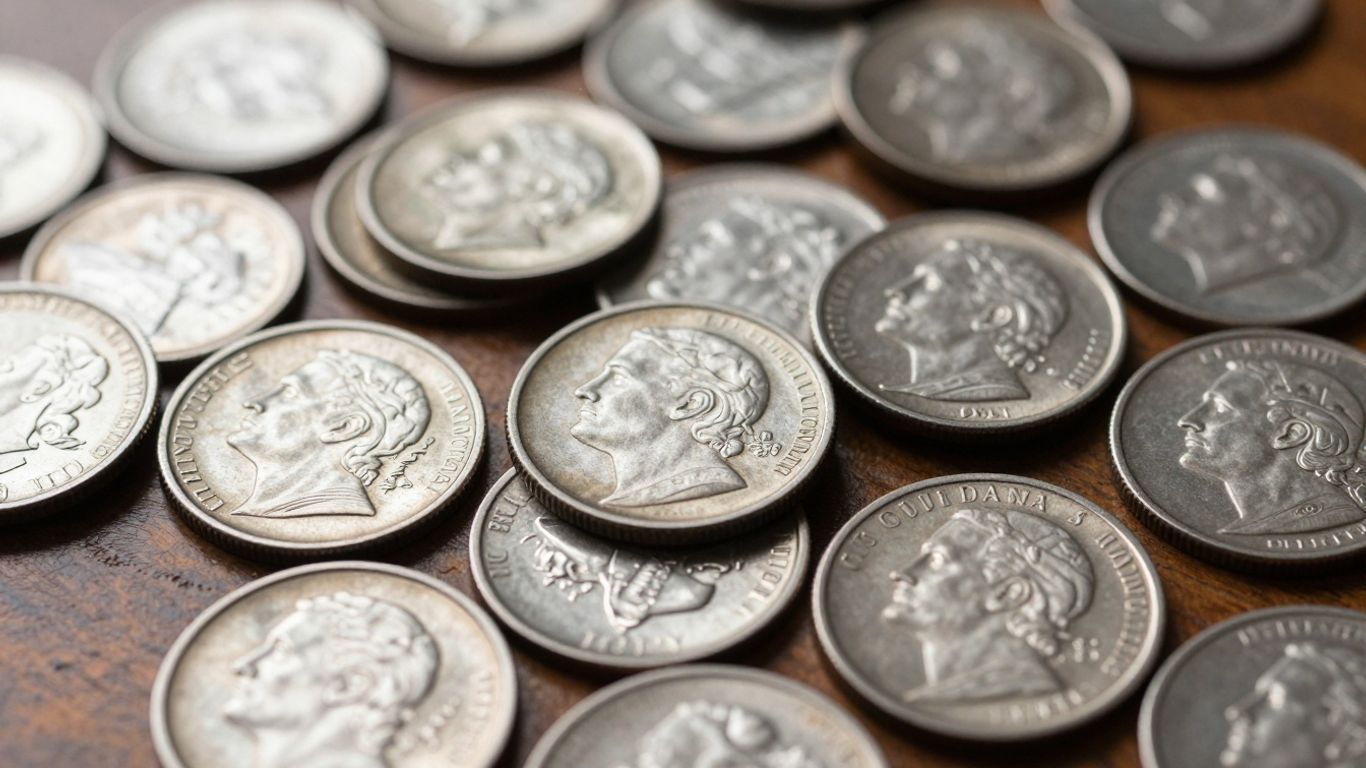
Selling your coins, especially something like Kennedy Half Dollars, can seem pretty straightforward, but it’s easy to trip up and end up with less money than you should. Being aware of a few common pitfalls can make a big difference.
One of the most frequent errors is accepting a low offer simply because you haven’t done your homework. Not knowing the actual worth of your coins is a fast track to getting shortchanged. This is especially true if you have coins with collector value beyond just their silver content. Always take the time to research what you have before you agree to sell.
Another mistake is not paying attention to specific dates and mint marks. Not all Kennedy Half Dollars are the same. Some years or mints are much rarer and can be worth significantly more than others. For example, a 1964 proof coin might be more desirable than a common circulation strike from the same year. Keep an eye out for these variations.
When it comes to preparing your coins, resist the urge to clean them. While it might seem like a good idea to make them shiny, cleaning often damages the coin’s surface, creating tiny scratches that collectors can see. This damage can drastically reduce a coin’s value. If a coin is dirty, a gentle rinse with distilled water is usually the most you should do.
It’s also helpful to organize your coins before you go to sell. Grouping them by date, mint mark, or even by their silver content (90% vs. 40%) can make the process smoother and help you keep track of what you have. This organization can also help you present your collection more effectively to potential buyers.
Finally, be wary of selling your coins in bulk without considering individual values. While selling everything at once is convenient, you might miss out on higher prices for rare or high-grade pieces. Selling these separately could yield more profit, though it takes more time and effort.
When selling coins, remember that condition plays a huge role in value. Coins that have been handled a lot will show wear, like scratches or dull surfaces, which lowers their price. Coins kept in good condition, with sharp details and no obvious damage, are worth more. This is particularly true for coins that have collector appeal beyond their silver weight.
Wrapping Up Your Coin Sale in San Antonio
So, you’ve got your coins and you’re ready to sell them here in San Antonio. Remember, doing a little homework first really pays off. Knowing what your coins are worth, especially if they’re the older silver ones, and understanding the current silver prices will help you get a fair deal. It’s always a good idea to check out a few different coin dealers, like San Antonio Coin Buyers or others you find online, and compare their offers. Don’t just go with the first place you find, especially if it’s a pawn shop that might not know much about coins. Taking the time to find a reputable buyer who knows their stuff means you’re more likely to walk away happy with your sale. Good luck out there!
Frequently Asked Questions
What makes a Kennedy Half Dollar valuable?
The value of a Kennedy Half Dollar mostly comes from its silver content or if it’s a rare collectible. Half dollars made before 1965 contain 90% silver, making them worth more than their face value. Some specific dates, mint marks, or coins with errors can also be very valuable to collectors, even if they aren’t made of silver.
How can I tell if my Kennedy Half Dollars are made of silver?
Look at the mint date on your coin. If it says 1964, it’s almost certainly 90% silver. Kennedy Half Dollars made between 1965 and 1970 contain 40% silver. Coins made after 1970 generally do not contain silver and are only worth their face value unless they are rare collector items.
Where is the best place to sell Kennedy Half Dollars in San Antonio?
Your best bet is usually a local coin shop or a reputable coin dealer in San Antonio. These places have experts who know the real value of coins, both for their silver and their collector appeal. It’s a good idea to visit a few different dealers to compare their offers.
Should I clean my old coins before selling them?
No, you should never clean your coins before selling them. Cleaning can damage the coin’s surface and actually lower its value, especially if it’s a collectible coin. Dealers prefer to see coins in their original condition.
What is the current silver price and why does it matter?
The current silver price is how much an ounce of silver is worth on the market today. This price is important because it directly affects the value of your silver coins. Checking the live silver price online will give you a good idea of the minimum value your 90% silver coins are worth.
How do pawn shops compare to coin dealers when selling coins?
Pawn shops usually offer much less money for coins than specialized coin dealers. Pawn shops are not experts in coins and aim to resell items quickly for a profit. Coin dealers understand the numismatic (collector) value and the silver value, so they can offer a fairer price.
What does 'numismatic value' mean?
Numismatic value refers to the worth of a coin based on its rarity, condition, historical significance, and collector demand, rather than just the value of its metal content. Some Kennedy Half Dollars have numismatic value because of their specific date, mint mark, or if they are part of a special collection.
What should I do if I have a large collection of coins to sell?
For a large collection, it’s wise to get an appraisal from a reputable coin dealer. You might also consider contacting coin buyers who offer services like at-home appraisals or virtual assessments. Always get multiple offers and compare them before deciding where to sell.