
Thinking about selling your Capped Bust coins in San Antonio? It’s a smart move, as these pieces of history can hold significant value. Whether you’re looking to sell a few individual coins or a larger collection, understanding where to get a fair appraisal and a good offer is key. This guide will help you find reputable places in San Antonio to sell your Capped Bust coins.
Key Takeaways
- Many places in San Antonio buy older U.S. silver coins, including those from the Capped Bust series.
- Coins made before 1965, like dimes, quarters, and half dollars, are typically 90% silver and sought after.
- Look for dealers who specialize in coins or precious metals for the best offers.
- Getting multiple appraisals can help ensure you receive a fair price for your Capped Bust coins.
- Consider the condition and rarity of your coins, as these factors greatly influence their value.
1. 90% Silver Dimes
When you’re looking to sell your old coins, dimes minted before 1965 are often among the first that come to mind. These aren’t just any old dimes; they’re made of 90% silver, which gives them a value beyond their 10-cent face value. Think of them as tiny silver treasures.
These dimes were once a standard part of everyday transactions in the United States. However, as the price of silver went up, the government changed the composition of dimes, quarters, and half dollars starting in 1965. That’s why you’ll find that dimes minted from 1965 onward are mostly copper and nickel, with no silver content.
So, what kind of dimes fall into this 90% silver category? You’ll find a few different types:
- Barber Dimes: These were made from 1892 to 1916. They have a distinctive look with a profile of Lady Liberty.
- Mercury Dimes: Minted from 1916 to 1945, these feature a profile of Lady Liberty wearing a winged cap. Don’t let the name fool you; it’s not actually the Roman god Mercury.
- Roosevelt Dimes: These are the ones you might recognize most easily. The silver versions were made from 1946 to 1964. After 1964, they continued to be minted, but without the silver.
These pre-1965 dimes are often grouped together and referred to as "junk silver" when sold for their metal content, rather than their numismatic value. While some might have collector appeal, most are valued primarily for the silver they contain. When you bring them in to sell, dealers will typically weigh them or calculate their silver value based on the current market price of silver.
When selling 90% silver dimes, it’s helpful to know that their value is tied directly to the silver market. While individual dimes might not seem like much, a collection of them can add up quickly. Reputable dealers will assess them based on their silver weight, offering a fair price for the precious metal content.
It’s pretty straightforward: if a dime has a mint date of 1964 or earlier, it’s likely made of 90% silver and has a melt value. If it’s dated 1965 or later, it’s generally not silver.
2. 90% Silver Quarters
When we talk about 90% silver coins, quarters minted before 1965 are a big part of that conversation. These aren’t just pocket change; they’re little pieces of history made with a significant silver content. Think of the Washington quarters, minted from 1932 all the way up to 1964. Before that, you had the Barber quarters, which were around from 1892 to 1916, and the Standing Liberty quarters, minted between 1916 and 1930. All of these are typically what people mean when they refer to ‘junk silver’ quarters – coins valued mostly for their silver content rather than their specific rarity or condition.
These quarters, along with dimes and half dollars made before 1965, were struck from a 90% silver alloy. The U.S. Mint changed the composition in 1965 due to rising silver prices, so any quarter dated 1965 or later is made of a copper-nickel clad material and contains no silver. This makes the pre-1965 quarters quite sought after by those looking to invest in silver.
Here’s a quick look at the common types of 90% silver quarters:
- Washington Quarters (1932-1964): The most common type of 90% silver quarter. While many are common, some dates and mint marks can be more valuable.
- Standing Liberty Quarters (1916-1930): Known for their distinctive design, these are generally more collectible than Washington quarters.
- Barber Quarters (1892-1916): These older quarters feature a profile of Lady Liberty. They are less common than Washington quarters and often carry a higher premium.
When selling, dealers often group these coins together, especially if they are in average circulated condition. The value is primarily tied to the silver melt value, though rarer dates or coins in better condition might fetch a bit more. If you’re looking to sell, getting an appraisal from a reputable dealer is a good first step. You can find services that specialize in coin appraisals in San Antonio, helping you get a fair offer.
The shift away from silver in coinage in the mid-1960s marked the end of an era for many common U.S. coins. Quarters minted before 1965 represent a tangible way to hold silver, and their value is largely determined by the current market price of the metal.
3. 90% Silver Half Dollars
When you’re looking at older U.S. coinage, half dollars minted before 1965 are a significant part of the 90% silver category. These coins, like the Barber, Walking Liberty, Franklin, and early Kennedy half dollars, are often sought after not just for their silver content but also for their historical significance. These pre-1965 half dollars contain a substantial amount of silver, making them a popular choice for investors and collectors alike.
Here’s a quick look at some common 90% silver half dollars:
- Barber Half Dollars (1892-1915): Designed by Charles E. Barber, these coins feature a profile of Liberty. They are among the earlier 90% silver half dollars.
- Walking Liberty Half Dollars (1916-1947): Known for their iconic design of Lady Liberty walking with a flag, these are highly recognizable and sought after.
- Franklin Half Dollars (1948-1963): These coins showcase Benjamin Franklin on the obverse and Independence Hall on the reverse. They represent a more modern design before the switch to clad coinage.
- Kennedy Half Dollars (1964): The first year of issue for the Kennedy half dollar was struck in 90% silver. Coins minted from 1965 onwards contain only 40% silver, and later issues are copper-nickel clad.
Many people hold onto these coins in bulk, sometimes referred to as "junk silver." While they might not have significant numismatic value beyond their silver weight, their intrinsic silver content makes them a tangible asset. If you’re looking to sell these, finding a dealer who understands both the bullion and potential collector value is key. For instance, places like Austin Coins and Jewelry often provide fair appraisals for such items.
The value of these coins is primarily tied to the silver market, but condition and rarity can add a numismatic premium. It’s always wise to get an appraisal from a reputable dealer to understand the full worth of your collection.
When selling, you might have them individually or as part of a larger collection. Dealers often buy them by the bag or roll, based on their face value and silver content. Understanding the melt value versus collector value is important for getting the best offer.
4. 90% Silver Dollars
When we talk about 90% silver dollars, we’re generally referring to two main types: the Morgan Dollar and the Peace Dollar. These coins, minted primarily in the late 19th and early 20th centuries, are a significant part of American coinage history and are highly sought after by collectors and investors alike. Their silver content alone makes them a tangible asset, but their historical significance adds another layer of appeal.
These silver dollars were once a common sight in circulation, but over time, many have been melted down or lost. Today, finding them in good condition can be a challenge. They were made from a 90% silver alloy, with the remaining 10% being copper, which gave them durability for everyday use.
Here’s a quick look at the two primary types:
- Morgan Dollars: Minted from 1878 to 1904, and again in 1921. These coins feature Lady Liberty on the obverse and a bald eagle on the reverse. They are known for their intricate design and substantial silver weight.
- Peace Dollars: Struck from 1921 to 1935. These were intended to commemorate the end of World War I and feature a more modern depiction of Liberty on the obverse and a resting eagle on the reverse.
When you’re looking to sell these coins, their value is typically determined by a combination of their silver melt value and any numismatic (collector) premium they might command. Common dates and conditions will often trade closer to their silver content, while rarer dates, mint marks, or coins in exceptionally high grades can be worth significantly more.
Selling 90% silver dollars requires understanding both their bullion value and their collector appeal. Reputable dealers will assess both factors to provide a fair offer. It’s always a good idea to get a few opinions if you have particularly old or well-preserved examples.
If you have a collection of these silver dollars, it’s worth getting them appraised by a professional who specializes in U.S. coinage. They can help you identify any rare varieties or high-grade pieces that might fetch a higher price than just their silver weight.
5. Barber Dimes
Barber dimes, designed by Charles E. Barber, were minted from 1892 to 1916. These dimes are made of 90% silver and are a popular choice for collectors and investors alike. While many Barber dimes are valued primarily for their silver content, certain dates and mint marks can significantly increase their numismatic worth. For instance, the 1894-S Barber dime is exceptionally rare and highly sought after by serious collectors.
When looking to sell your Barber dimes in San Antonio, it’s important to understand their potential value. This includes not just the spot price of silver but also any collector premiums.
Here’s a quick look at what influences their value:
- Date and Mint Mark: Specific years and mint locations (like San Francisco or New Orleans) can make a dime much rarer.
- Condition (Grade): Coins in better condition, with less wear and clearer details, are worth more.
- Rarity: Some Barber dimes were produced in much smaller quantities than others.
It’s not uncommon for these coins to be considered part of "junk silver" if they are common dates and in worn condition, meaning their value is mostly tied to the silver they contain. However, even common Barber dimes are generally not included in generic junk silver offerings because they retain some numismatic appeal even in lower grades. Understanding these factors will help you get a fair appraisal.
If you have a collection of Barber dimes, especially those with potential rarity, seeking an appraisal from a reputable dealer is a good idea. They can help identify any coins that might be worth more than just their silver weight. You can find a list of rare dimes that hold significant monetary value to help you identify potential treasures in this article.
When selling, consider dealers who specialize in U.S. coinage. They’ll be better equipped to assess the full value of your Barber dimes, whether they’re common circulated pieces or rare collector’s items.
6. Mercury Dimes
Mercury dimes, officially known as the Winged Liberty Head dime, were minted by the U.S. from 1916 to 1945. These coins are a popular choice for collectors and investors alike, primarily because they are made of 90% silver. While they might not be as old as some other silver coins, their design is quite distinctive, featuring a profile of Lady Liberty with a winged cap. This design was intended to symbolize freedom of thought and speech.
These dimes are a great entry point into collecting 90% silver coinage. They are relatively common, meaning you can often find them without paying a huge premium over their silver content. However, certain dates and mint marks can be more scarce and command higher prices, especially in better condition.
When you’re looking to sell your Mercury dimes in San Antonio, it’s important to know their general condition and any specific dates you might have. Most dealers will assess them based on their silver weight, but a rare date in excellent condition could be worth more.
Here’s a quick look at some key aspects:
- Composition: 90% silver, 10% copper.
- Minting Years: 1916-1945.
- Common Dates: Many dates from the 1930s and 1940s are readily available.
- Key Dates/Rarities: 1916-D, 1921, 1921-D, 1926-D, and 1942/1 overdates are generally more sought after.
Dealers in San Antonio will typically evaluate Mercury dimes based on their silver melt value. However, if you possess a coin with a significant numismatic value due to its rarity or condition, it’s wise to seek an appraisal that considers both factors. This ensures you receive a fair offer that reflects the coin’s true worth, not just its silver content.
7. Roosevelt Dimes
The Roosevelt dime, first minted in 1946, is a common sight for many coin collectors and investors. These dimes are made of 90% silver, with a composition of 90% silver and 10% copper. This means that even if the coin’s numismatic value is low, it still holds significant worth based on its silver content. Most Roosevelt dimes minted between 1946 and 1964 are considered "junk silver" and are valued primarily for their melt value.
When looking to sell your Roosevelt dimes, it’s helpful to know their general characteristics. They are easily recognizable by their date, which is always visible, and the portrait of Franklin D. Roosevelt on the obverse.
Here’s a quick look at what makes them sellable:
- Composition: 90% silver, 10% copper.
- Mint Years: 1946-1964 (for 90% silver content).
- Value Basis: Primarily silver bullion value, though some rare dates or mint marks can have added collector appeal.
It’s important to remember that while many Roosevelt dimes are common, their silver content makes them a consistent item for buyers. If you have a collection of these, getting a professional appraisal is a good idea to understand their full worth. You can get a general valuation from a service that specializes in coin appraisals.
While the face value of a Roosevelt dime is only ten cents, its silver content gives it a much higher intrinsic worth. This makes them a popular choice for those looking to invest in silver in smaller denominations.
8. Barber Quarters
Barber quarters, designed by Charles E. Barber, were minted from 1892 to 1916. These coins are a significant part of U.S. coinage history and are primarily sought after for their silver content, though some dates and mint marks can carry numismatic value.
These quarters are made of 90% silver, making them a popular choice for those looking to invest in silver bullion. While many Barber quarters are considered "junk silver" due to their commonality and condition, certain rare dates or those in exceptionally high grades can be worth considerably more than their silver melt value.
When selling Barber quarters, it’s helpful to know their general characteristics:
- Composition: 90% silver, 10% copper.
- Minting Years: 1892-1916.
- Key Dates/Mint Marks: Some dates, like the 1896-S, 1901-S, and 1913-S, are particularly scarce and command higher prices.
- Condition: While most are valued for silver, coins in uncirculated or near-uncirculated condition can have significant numismatic premiums.
Dealers in San Antonio will typically assess Barber quarters based on their silver weight, but they will also check for any special numismatic appeal. It’s always a good idea to have an idea of what you have before you go in, especially if you suspect you might possess a rare specimen.
Understanding the difference between bullion value and collector value is key when selling Barber quarters. Most will be bought based on their silver content, but a sharp eye might spot a coin that collectors would pay a premium for.
9. Standing Liberty Quarters
Standing Liberty quarters, minted from 1916 to 1930, are a distinct series of U.S. coinage. These quarters are made of 90% silver, making them attractive to both collectors and those interested in silver’s intrinsic value. While they are often considered part of "junk silver" when in lower grades, their unique design and historical significance can sometimes give them a numismatic premium above their melt value.
These quarters are a popular choice for investors looking to acquire silver in a recognizable coin format.
When evaluating Standing Liberty quarters, several factors come into play:
- Date and Mint Mark: The year the coin was minted and where it was produced (e.g., Philadelphia, Denver, San Francisco) can affect its rarity.
- Condition (Grade): Coins in better condition, with sharper details and less wear, are generally worth more. Even common dates can have significant value if they are in high grades.
- Design Details: The Standing Liberty quarter features Lady Liberty on the obverse and an eagle on the reverse. The level of detail preserved on these elements is important for collectors.
It’s worth noting that even common-date Standing Liberty quarters in lower grades (like Good or Fair) are typically valued based on their silver content. However, coins in higher grades (Very Fine and above) often command prices that reflect both their silver value and their collector appeal.
While many Standing Liberty quarters are sought for their silver content, some specific dates and mint marks are considerably rarer and more valuable to collectors. It’s always a good idea to have your coins appraised by a professional to understand their full worth, whether it’s based on silver alone or numismatic rarity.
10. Washington Quarters
Washington Quarters, minted from 1932 to 1964, are a common sight for coin collectors and investors alike. These quarters are made of 90% silver, making them a popular choice for those looking to invest in precious metals. While many Washington Quarters are valued primarily for their silver content, some dates and mint marks can carry additional numismatic value.
These coins are a staple in the world of "junk silver" due to their widespread availability and silver composition.
When you’re looking to sell Washington Quarters, understanding their value involves a few key points:
- Silver Content: The primary driver of value for most Washington Quarters is their 90% silver content. This means each coin contains a specific amount of silver that fluctuates with the market price of the metal.
- Date and Mint Mark: While common dates are usually valued based on silver alone, rarer dates or those from specific mints (like Denver or San Francisco) can be worth more to collectors, especially in higher grades.
- Condition: The physical state of the coin plays a significant role. Coins in better condition, with less wear and clearer details, will generally command higher prices, both for their silver and potential collector appeal.
Here’s a general idea of what to look for:
| Year Range | Composition | Typical Value Basis |
|---|---|---|
| 1932-1964 | 90% Silver | Bullion Value |
Many Washington Quarters fall into the category of "junk silver," meaning their value is mostly tied to the silver they contain rather than their rarity as a collectible coin. This makes them a straightforward asset for selling based on current silver prices.
11. Barber Half Dollars
Barber half dollars, designed by Charles E. Barber, were minted from 1892 to 1915. These coins are a significant part of U.S. numismatic history and are sought after by collectors and investors alike. Their value is primarily driven by their silver content, but rarer dates and better conditions can command a premium.
When you bring your Barber half dollars to a dealer in San Antonio, they’ll typically assess a few key things:
- Date and Mint Mark: Certain years and mints produced fewer coins, making them scarcer.
- Condition: Wear and tear significantly impact value. Coins with sharp details and minimal scratches are worth more.
- Silver Content: Like most pre-1965 U.S. coinage, Barber half dollars are 90% silver. This intrinsic metal value provides a baseline for their worth.
While many Barber half dollars are considered "junk silver" due to their commonality and condition, some specific issues are quite collectible. For instance, the 1892-O and 1894-O mint marks are particularly scarce. Even in circulated condition, these coins can be worth considerably more than their melt value. You can find general price estimates for these coins, with circulated examples often falling in the range of $30 to $50, though exceptional pieces can go much higher. It’s always a good idea to get a professional appraisal to understand the specific worth of your Barber half dollars.
Selling these coins often involves looking at their silver weight, but don’t overlook the possibility of a coin having a special date or mint mark that makes it more desirable to collectors. A quick check can reveal if you have something beyond just silver.
When looking to sell, reputable coin dealers in San Antonio will offer competitive prices based on both the silver market and any numismatic appeal your coins possess. They understand the nuances of these older half dollars and can provide a fair assessment.
12. Walking Liberty Half Dollars
The Walking Liberty Half Dollar is a really iconic American coin. Minted from 1916 to 1947, these half dollars are made of 90% silver. You can spot them by the image of Lady Liberty walking confidently, holding a laurel branch and a staff, with the sun rising behind her. It’s a pretty striking design, if you ask me.
These coins are often found in "junk silver" collections, meaning they’re valued mostly for their silver content rather than any special collector rarity, especially if they’re common dates and in worn condition. Still, some dates or mint marks can be more sought after by collectors.
Here’s a quick look at their silver content:
- Composition: 90% silver, 10% copper
- Silver Weight: Approximately 0.3617 troy ounces per coin
- Mintage Years: 1916-1947
When you’re looking to sell your Walking Liberty Half Dollars in San Antonio, dealers will typically assess them based on their silver weight. If you have a coin with a rare date or in exceptionally good condition, it might fetch a bit more than just its melt value. It’s always a good idea to get a few opinions if you think you might have something special.
Dealers often group these with other pre-1965 silver half dollars when buying. They’re looking at the total silver weight across all the coins you bring in. While most are valued for their silver, keep an eye out for specific dates like the 1921-S or 1938-D, which can sometimes be worth more to collectors.
13. Franklin Half Dollars
Franklin half dollars, minted from 1948 to 1963, are a popular choice for those looking to sell silver coins in San Antonio. These coins are made of 90% silver and are often considered "junk silver" due to their primary value being tied to their silver content rather than numismatic rarity, though some dates and mint marks can carry a premium.
These coins represent a significant piece of American history and are a tangible way to own silver.
When you’re ready to sell your Franklin half dollars, understanding their value is key. While most are valued based on the current silver market, certain factors can influence their worth:
- Date and Mint Mark: Common dates in circulated condition are typically valued close to their silver melt value. However, rarer dates or those from specific mints (like Denver or San Francisco) in uncirculated condition might fetch a higher price.
- Condition: The overall wear on the coin plays a big role. Coins that are heavily worn will be worth less than those in pristine, uncirculated condition.
- Silver Content: Each Franklin half dollar contains approximately 0.3617 troy ounces of pure silver.
Here’s a general idea of what to expect when selling common Franklin half dollars:
| Coin Type | Silver Content (per coin) | Typical Value Basis | Notes |
|---|---|---|---|
| Franklin Half Dollar | ~0.3617 troy ounces | Silver Bullion | Common dates, circulated condition |
| Franklin Half Dollar | ~0.3617 troy ounces | Numismatic Premium | Rare dates, uncirculated, or special strikes |
Many collectors and investors look for these coins in bulk, often in "bags" or "rolls." If you have a significant quantity, you might find that selling them as a lot can be more efficient. Reputable coin dealers in San Antonio can assess your collection and provide a fair offer based on the current market price for silver and any numismatic value your specific coins may hold.
14. Kennedy Half Dollars
The Kennedy half dollar, first minted in 1964, holds a special place in American coinage. These coins were initially struck in 90% silver, a composition that changed shortly after their introduction. If you’re looking to sell Kennedy half dollars, understanding their silver content is key to getting a fair appraisal.
The 1964 Kennedy half dollar is the only year struck entirely in 90% silver for general circulation. After 1964, the silver content was reduced to 40% for coins minted between 1965 and 1970. From 1971 onwards, Kennedy half dollars were made with a copper-nickel clad composition, meaning they contain no silver.
When appraising Kennedy half dollars, dealers will primarily look at the date and mint mark to determine the silver content. Coins from 1964 are the most sought after for their silver value.
Here’s a quick breakdown of silver content:
- 1964: 90% Silver
- 1965-1970: 40% Silver
- 1971-Present: Copper-Nickel Clad (No Silver)
While collector value can sometimes add a premium, especially for rare dates or uncirculated examples, the primary driver for selling these coins in San Antonio will be their silver melt value, particularly for the 1964 issues.
When selling your Kennedy half dollars, especially the 1964 date, remember that their value is largely tied to the silver market. Reputable coin dealers will assess them based on their silver content, offering a price that reflects current precious metal prices. It’s always a good idea to get a few opinions if you have a significant collection.
For those looking to sell, San Antonio coin shops that specialize in bullion and U.S. coinage are your best bet. They have the tools and knowledge to accurately weigh and assay your coins, providing an offer based on their silver weight.
15. Morgan Dollars
When you’re looking to sell Morgan Dollars in San Antonio, you’re dealing with a piece of American history. These silver dollars were minted from 1878 to 1904, and then again for a brief period in 1921. They’re made of 90% silver, which is a big part of their appeal, but their design is what really makes them stand out. The Morgan Dollar features Lady Liberty on the obverse and a bald eagle on the reverse, both designed by George T. Morgan. Many collectors consider the Morgan Dollar to be one of the most beautiful U.S. coins ever produced.
Because they were minted over a long period and in large quantities, most Morgan Dollars are valued primarily for their silver content. However, certain dates and mint marks can significantly increase a coin’s value due to rarity or historical significance. For instance, coins from the Carson City or New Orleans mints, or those from specific years like 1893-S, can be quite valuable beyond their melt value.
When you bring your Morgan Dollars to a dealer, they’ll likely assess a few things:
- Date and Mint Mark: This is the first thing they’ll check to see if it’s a common or rare variety.
- Condition (Grade): Even for coins valued mainly for silver, a better-preserved coin will fetch a higher price.
- Silver Content: The melt value of the silver is a baseline for any offer.
If you have a collection of Morgan Dollars, it’s wise to get an appraisal from a place like San Antonio Coin Buyers that knows these coins well. They can help you sort through the common ones and identify any potential treasures.
While many Morgan Dollars are considered "junk silver" due to their primary value being their silver content, it’s always worth investigating. Some common dates in circulated condition might only be worth their silver weight, but a rare date or a coin in uncirculated condition could be worth substantially more. Don’t assume all Morgan Dollars are the same; a quick check can make a big difference.
Selling these coins often involves looking at their weight in silver, but don’t overlook the possibility of numismatic value. A professional appraisal can help you understand the true worth of your Morgan Dollars.
16. Peace Dollars
Peace Dollars, minted from 1921 to 1935, represent a significant era in American coinage. These silver dollars are sought after by collectors and investors alike, primarily for their silver content and historical appeal. They are a key part of the 90% silver coinage that many people look to sell.
When you’re looking to sell your Peace Dollars, understanding their value involves looking at both their silver melt value and any potential numismatic (collector) value. While common dates in average condition might trade close to their silver content, rarer dates or those in high grade can command a premium.
Here’s a quick look at what influences their value:
- Silver Content: Each Peace Dollar contains approximately 0.7734 troy ounces of pure silver. This is a major factor in their worth, especially when silver prices are high.
- Date and Mint Mark: Certain years and mint marks are scarcer than others. For example, the 1928-S is a well-known key date.
- Condition (Grade): Coins in better condition, with sharp details and minimal wear, are worth more than heavily circulated pieces.
- Rarity: While millions were minted, the survival rate of high-grade examples or specific rare dates is lower.
If you have a collection of Peace Dollars, or even just a few, it’s a good idea to get them appraised by a professional. They can help you sort through common pieces and identify any that might have significant collector interest beyond their silver value. For those in the San Antonio area looking to sell, places like San Antonio Coin Buyers can offer expert advice and fair prices.
Selling Peace Dollars often means dealing with coins that have seen a lot of history. They were minted during a time of great change and were a common sight in circulation for decades. Their silver content makes them a tangible asset, and their design is iconic. When you bring them in, expect the buyer to assess both the metal’s worth and the coin’s individual appeal.
17. 35% Silver War Nickels
During World War II, the U.S. Mint faced a shortage of nickel, a metal crucial for the war effort. To conserve it, they introduced a special composition for nickels minted between 1942 and 1945. These "War Nickels" contain 35% silver and 65% copper, a departure from the usual 75% copper and 25% nickel alloy.
These 35% silver nickels are identifiable by a large mint mark above Monticello on the reverse side. This mark (P, D, or S) was also placed above the dome on the 1942 nickels to distinguish the silver alloy from the regular nickel ones. After 1945, the mint returned to the standard nickel composition.
While not as common as the 90% silver coins, War Nickels are still sought after by collectors and investors interested in U.S. coinage history and silver content. Their unique composition and wartime origin make them a distinct category.
Here’s a quick look at their composition:
- Years Minted: 1942-1945
- Silver Content: 35%
- Other Metals: 65% Copper
- Distinguishing Feature: Large mint mark above Monticello (on 1942-1945 issues)
When selling these, their value is typically based on their silver content, though some may carry a small numismatic premium due to their historical significance. Appraisers will look at the overall condition and the specific mint year.
18. 40% Silver Kennedy Half Dollars
While most collectors associate "junk silver" with the 90% silver coins minted before 1965, there’s another category that often gets lumped in: the 40% silver Kennedy Half Dollars. These coins were minted from 1965 through 1970. The U.S. government reduced the silver content in these half dollars from 90% to 40% due to rising silver prices.
These 40% silver Kennedy Half Dollars are a distinct group, often valued primarily for their silver content rather than their numismatic rarity. While they don’t hold the same silver weight as their 90% predecessors, they still represent a tangible piece of silver that can be sold.
When you’re looking to sell these coins in San Antonio, it’s important to know their composition. They are easily identifiable by their dates: 1965, 1966, 1967, 1968, 1969, and 1970. Any Kennedy Half Dollar minted after 1970 is typically made of copper-nickel clad and contains no silver.
Here’s a quick look at their silver content:
| Coin Type | Mint Years | Silver Content |
|---|---|---|
| Kennedy Half Dollar | 1965-1970 | 40% |
| Kennedy Half Dollar | 1964 | 90% |
| Kennedy Half Dollar | 1971-Present | 0% |
When selling these coins, dealers will typically offer a price based on the current spot price of silver, adjusted for the coin’s silver purity. It’s less common to find significant numismatic premiums on these specific dates unless they are in exceptionally high, uncirculated grades or have rare mint errors.
Selling 40% silver Kennedy Half Dollars is straightforward. Most reputable coin dealers and precious metal buyers in San Antonio will be interested in purchasing them based on their silver melt value. It’s always a good idea to get a few quotes to ensure you’re getting a fair offer for your coins.
19. Bags of 90% Silver Coins
When you’ve accumulated a good number of pre-1965 dimes, quarters, and half dollars, you might find yourself with what the industry calls "bags of 90% silver coins." These aren’t just random piles of old change; they represent a significant amount of silver content, often traded based on their melt value rather than their face value. These bags are a common way for investors to hold and trade silver bullion.
Think of these bags as a convenient way to store and transport a substantial quantity of silver. A typical $1,000 face value bag of these coins contains around 723 troy ounces of pure silver, assuming the coins are in average circulated condition. Of course, heavily worn coins will have slightly less silver due to metal loss over time.
Here’s a quick look at how many coins make up $1,000 in face value for different denominations:
- Dimes: 10,000 coins
- Quarters: 4,000 coins
- Half Dollars: 2,000 coins
- Silver Dollars: 1,000 coins
When selling, dealers often look at the total silver weight. It’s wise to sell to a reputable dealer who can accurately assess the weight and purity. You can find places that buy gold and silver in San Antonio, and they’ll be equipped to handle these larger quantities.
Selling bags of 90% silver coins is a straightforward transaction focused on the metal’s intrinsic worth. Reputable dealers will weigh the coins and offer a price based on the current silver market rate, minus a small margin for their services. It’s a practical way to liquidate a significant silver holding.
20. Rolls of 90% Silver Coins
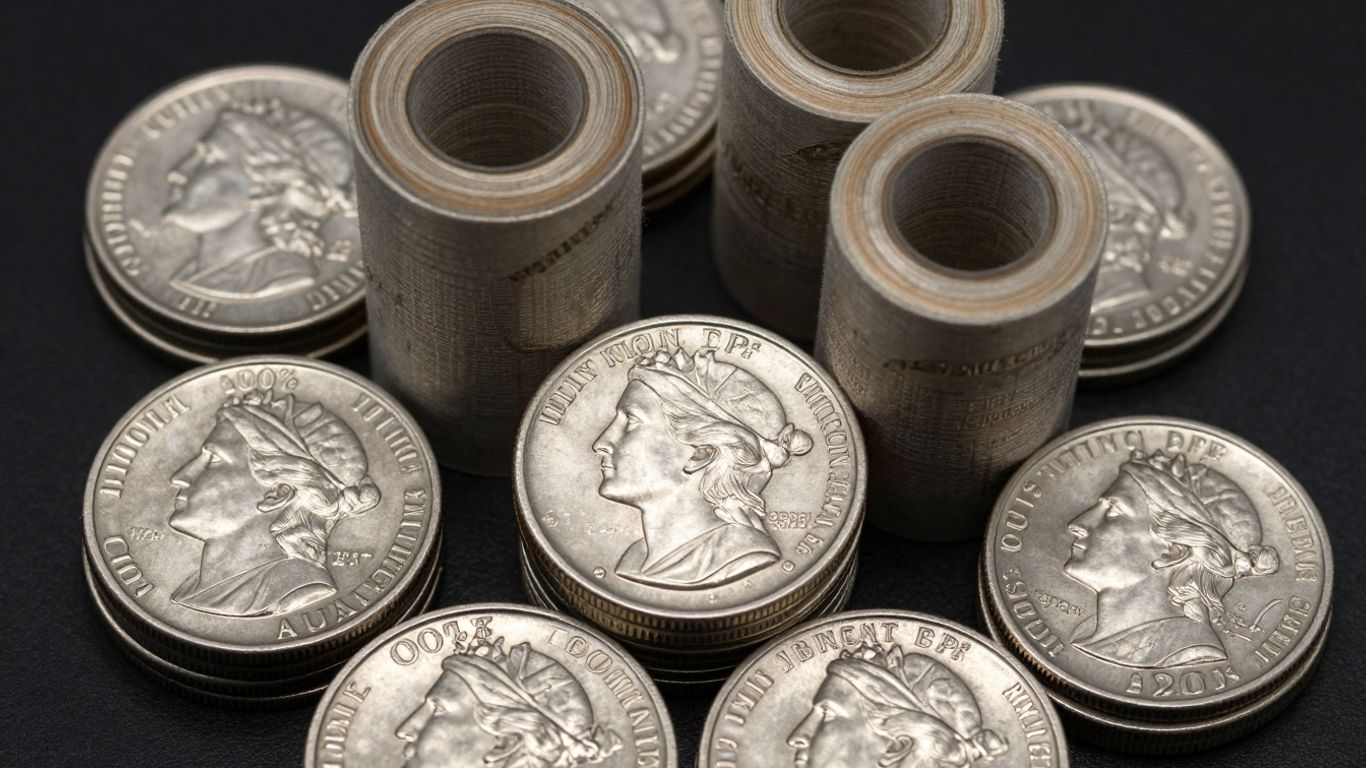
When you’re looking to sell your collection, you might find that some of your 90% silver coins are still in their original rolls. These rolls, often containing dimes, quarters, or half dollars minted before 1965, represent a significant amount of silver. Dealers often prefer to buy these rolls as a unit, simplifying the appraisal and purchase process.
Selling coins in rolls can be quite straightforward. Here’s a general idea of what to expect:
- Identification: Rolls are typically marked with the denomination and sometimes the mint year range (e.g., "Dimes 1932-1964").
- Weight Check: A dealer will likely weigh the roll to estimate the silver content, as wear can slightly reduce the total weight.
- Offer: Based on the current silver market price and the estimated silver weight, an offer will be made.
It’s important to remember that while the numismatic value of individual coins within the roll might be minimal, the primary value comes from the silver itself. This is often referred to as "junk silver." You can find these types of coins at places that deal with pre-1965 U.S. coins.
Selling rolls of 90% silver coins is a common transaction for coin dealers. They are typically purchased based on their melt value, meaning the price is directly tied to the silver content. While some rolls might contain a rare or collectible coin, most are valued for the silver they contain.
When you bring your rolls to a reputable dealer in San Antonio, they will assess the total silver weight and provide a fair offer based on the spot price of silver. It’s a straightforward way to liquidate your silver holdings.
Final Thoughts on Selling Your Capped Bust Coins
So, you’ve got these old coins, maybe Capped Busts or other pre-1965 silver pieces, and you’re wondering where to turn in San Antonio. It’s not just about finding anyone; it’s about finding someone who knows what they’re looking at and will give you a fair price. We’ve talked about how these coins aren’t just metal; they have history and potential value beyond just their silver content. Remember to look for dealers who are upfront about their appraisals and clearly explain what makes your coins worth what they are. Doing a little homework on potential buyers can really pay off, making sure you walk away feeling good about the deal. Happy selling!
Frequently Asked Questions
What are Capped Bust Coins?
Capped Bust coins are a type of U.S. coin minted in the early 19th century. They are known for their distinctive design featuring a bust of Lady Liberty with her hair tied up, covered by a cap. These coins are often sought after by collectors and investors due to their historical significance and silver content.
Are all Capped Bust Coins made of silver?
The dimes, quarters, half dollars, and dollar coins from the Capped Bust series that were minted for circulation are generally made of 90% silver. However, it’s always a good idea to have them checked by an expert to confirm their exact composition and value.
Where can I sell my Capped Bust Coins in San Antonio?
In San Antonio, you can sell your Capped Bust Coins at reputable coin shops and precious metal dealers. Look for businesses that specialize in buying and appraising U.S. coins. They can provide expert appraisals and offer competitive prices based on the coin’s silver value and any numismatic (collector) worth.
How much are Capped Bust Coins worth?
The value of a Capped Bust coin depends on several factors, including its silver content, its condition (grade), its rarity, and its historical significance. While the silver content provides a baseline value, rare dates or coins in excellent condition can be worth significantly more.
Do I need an appraisal for my Capped Bust Coins?
Yes, an appraisal is highly recommended. An expert appraisal will help you understand the true market value of your Capped Bust Coins. This ensures you receive a fair offer, whether it’s based on the silver content or the coin’s collectible value.
What is the difference between silver value and numismatic value?
Silver value, also known as melt value or bullion value, is the worth of the silver metal contained within the coin. Numismatic value refers to the coin’s worth as a collectible item, influenced by its rarity, condition, historical importance, and demand among collectors.
Should I clean my Capped Bust Coins before selling them?
It is generally advised NOT to clean your Capped Bust Coins. Cleaning can damage the coin’s surface and significantly reduce its numismatic value. Dealers prefer to see coins in their original, uncleaned state.
What makes a Capped Bust Coin valuable to collectors?
Collectors value Capped Bust Coins for their historical connection to early American history, their artistic design, and their silver composition. Specific dates, mint marks, and coins in exceptionally well-preserved condition are particularly sought after.