
You know, it’s funny how the stuff we carry around every day, like coins, can tell us so much about what the country’s been through. Especially when there’s a war on. Turns out, these little metal discs have seen some pretty big changes, not just in their looks but in what they’re actually made of. These wartime coin composition changes weren’t just random; they were a direct response to big world events, showing how even something as small as a penny or a nickel had to adapt to keep things running. It’s like they’re tiny history books in our pockets.
Key Takeaways
- During wartime, the U.S. Mint sometimes changed coin materials to save precious metals needed for the war effort, like using steel for pennies instead of copper.
- Major conflicts, such as World War II, led to temporary shifts in coin composition, like the silver alloy used in nickels to conserve nickel for military production.
- Coin designs and compositions often changed after wars to reflect national identity, honor leaders, and symbolize resilience, acting as tangible historical markers.
- The need to conserve resources during wartime directly influenced the materials used in everyday currency, impacting vending machines and public perception.
- Special circumstances, like the fear of invasion during WWII, led to unique currency alterations, such as overprinted ‘Hawaii’ notes, to manage funds and prevent enemy seizure.
Post-Civil War Coinage: Rebuilding National Identity
The Civil War really shook things up in America, leaving a lot of folks feeling unsettled. After the fighting stopped, the country needed to find a way to pull itself back together, and even the coins in our pockets played a part in that. It wasn’t just about having money to spend; it was about showing a united front and a renewed sense of purpose.
The Two-Cent Piece and "In God We Trust"
One of the first big changes came in 1864 with the introduction of the two-cent piece. This coin was pretty significant because it was the very first time the phrase "In God We Trust" appeared on U.S. currency. Think about it – after such a brutal conflict, a lot of people were looking for some kind of spiritual comfort and a shared belief to hold onto. This motto wasn’t just a catchy phrase; it was a public declaration of faith during a time when the nation was trying to heal and find its footing again. It really speaks to the mood of the era, a desire for reassurance.
Shield Nickels: Symbols of Protection
Around the same time, there was a shift away from using too much silver in coins. During the war, people had a tendency to hoard precious metals, which made everyday transactions a bit tricky. So, Congress decided to use less expensive materials. The Shield Nickel, which started being made in 1866, featured imagery that was meant to look strong and protective. It was a fitting symbol for a nation that was trying to safeguard its hard-won unity and rebuild trust between its citizens. It’s like the coin itself was saying, "We’re going to protect this peace."
Shifting Away From Precious Metals
The Coinage Act of 1873, sometimes called the "Crime of ’73," was a big deal. It basically stopped the minting of the standard silver dollar that people could use to convert their silver into coins. This happened right when a lot of silver was being found. It caused a stir, especially among silver miners who wanted to be able to use their silver. Later laws tried to address this, but the move away from silver in some coinage was definitely a sign of changing times and economic considerations. It showed that the U.S. was thinking about how to manage its resources, especially after the financial strains of the war. This period also saw the U.S. working to get back on a metallic standard, which involved careful management of money supply to align with pre-war values, a process that took years to fully stabilize the gold standard.
- Post-war economic recovery: The nation focused on stabilizing its currency after wartime inflation.
- Material availability: Decisions were made based on the supply and cost of metals.
- National unity: Coin designs aimed to foster a sense of shared identity and purpose.
The introduction of new coin designs and mottos after the Civil War was more than just a practical change in currency; it was a deliberate effort to shape national identity and provide a sense of stability and shared values in a reunited country.
World War I’s Subtle Influence on Coin Design
The Mercury Dime’s Message of Freedom
World War I didn’t bring about the dramatic shifts in coin composition that later conflicts would. Instead, its influence was more about the mood and symbolism reflected in new designs. The introduction of the Mercury dime in 1916, just as the war was intensifying in Europe, is a prime example. Many people thought the winged design depicted the Roman god Mercury, but it was actually meant to represent Liberty. The wings were intended to symbolize freedom of thought, a concept that likely felt particularly important as the world grappled with widespread conflict and the U.S. considered its role.
Standing Liberty Quarters and Vigilance
Following closely on the heels of the Mercury dime, the Standing Liberty quarter also debuted in 1916. While not directly commissioned as a war coin, its imagery certainly carried relevant themes. The depiction of Liberty standing tall, holding a shield and a sword, conveyed a sense of strength and readiness. This visual message of defense and vigilance resonated with a public that was increasingly aware of global instability, even before the United States officially entered the war.
A Mood of Simplicity in Design
Looking at the coins from this era, you can see a general trend towards more streamlined and symbolic designs. The intricate details of earlier coinage started to give way to clearer, more impactful imagery. This shift wasn’t solely due to the war, but the global tensions likely encouraged a move towards designs that were both aesthetically pleasing and carried a sense of national purpose. It was a subtle way for the country to express its values and resilience through the everyday objects people carried.
The period around World War I saw a quiet evolution in American coinage. Rather than drastic material changes, the focus shifted to symbolic representation, with new designs conveying messages of freedom and vigilance that aligned with the nation’s growing awareness of its place in a turbulent world.
World War II: Material Scarcity and Symbolic Shifts
World War II really put a strain on things, and our money wasn’t immune. With so much metal needed for the war effort – think bullets and planes – the U.S. Mint had to get creative. This period saw some pretty significant changes in what our coins were made of, all driven by the urgent need to conserve resources for the fight.
The Steel Penny: Conserving Copper for War
Copper was a hot commodity during World War II. It was absolutely vital for making ammunition, so the government decided to take it out of our pennies. Starting in 1943, pennies were made from steel coated with zinc. This was a big change! It made the pennies look a bit different, sort of grayish, and they were also lighter and more prone to rust. People noticed right away.
- Original Composition: Bronze (95% copper, 5% tin and zinc)
- Wartime Composition (1943): Steel core coated with zinc
- Post-War Composition: Returned to bronze (later changed to copper-clad zinc)
It was a clever move to save that precious copper, but it definitely made everyday transactions a little more interesting. Imagine trying to sort through a pile of these steel pennies – they were quite distinct.
The shift to steel pennies in 1943 was a direct response to the critical need for copper in the war effort. This seemingly small change in our pocket change had a significant impact on resource allocation and public awareness of wartime shortages.
Silver Nickels: A Temporary Composition Change
Nickels, usually made of 75% copper and 25% nickel, also saw a temporary alteration. Nickel itself was needed for things like stainless steel used in military equipment. So, for a few years, the composition of the nickel changed. From mid-1942 through 1945, nickels were made with a different alloy: 35% silver, 9% manganese, and 56% copper. This was done to save the nickel metal for war production.
These "silver nickels" are pretty neat for collectors today. They have a slightly different color and are magnetic, unlike the regular nickels. You can often spot them by a small mint mark above Monticello on the reverse side. It was a smart way to keep nickels in circulation without using up vital war materials.
Honoring Leaders on Postwar Dimes
While the war itself forced changes in coin materials, the aftermath brought a different kind of shift: honoring prominent figures. After the war, there was a desire to commemorate important leaders and events. This led to changes in coin designs that reflected a nation looking towards its heroes and its future. The most notable example of this post-war trend is the introduction of the Franklin D. Roosevelt dime, which began production in 1946, just a year after the war ended. It was a way to honor a beloved leader who had guided the nation through the Great Depression and World War II.
The Jefferson Nickel’s Evolving Significance
Introduction During Wartime
The Jefferson nickel, first minted in 1938, arrived on the scene just as global tensions were escalating. Its introduction marked a shift from the previous Buffalo nickel design, bringing the familiar profile of President Thomas Jefferson to the five-cent piece. While its initial purpose was simply to update the nation’s coinage, its existence during the tumultuous years of World War II would imbue it with a significance beyond its face value. The very act of producing and circulating this new coin during a time of global conflict underscored a commitment to normalcy and the continuation of American life, even as the world edged closer to war. This period saw the Jefferson nickel become a tangible symbol of a nation preparing for the challenges ahead.
Symbol of Democratic Values
As World War II raged, the Jefferson nickel, featuring a Founding Father on one side and his home, Monticello, on the other, took on a deeper meaning. Jefferson himself represented the ideals of democracy and liberty that the United States was fighting to preserve. In a world where these values were under severe threat, the nickel served as a constant, everyday reminder of what the nation stood for. It wasn’t just a coin for buying goods; it was a small emblem of freedom, carried in the pockets of citizens and soldiers alike. This association with democratic ideals became particularly potent in the post-war era, as the world grappled with the aftermath of conflict and the rise of new global dynamics.
Compositional Adjustments
World War II presented unique challenges for coin production, primarily due to the need for strategic metals. Nickel, a key component of the five-cent coin, was also vital for the war effort, particularly in the production of armor and weaponry. To conserve this precious resource, a significant change was implemented for the Jefferson nickel. Starting in March 1942, and continuing until the end of the war in late 1945, the composition of the nickel was altered.
Here’s a look at the wartime nickel’s composition:
- Pre-War Nickel (1938-1942): 75% Copper, 25% Nickel
- Wartime "Silver" Nickel (1942-1945): 56% Copper, 35% Silver, 9% Manganese
This temporary shift to a silver alloy was a clever solution. It allowed the mint to produce nickels without using any actual nickel, freeing up the metal for military applications. The resulting coins had a distinct silvery appearance and were identifiable by a large mint mark above Monticello on the reverse. This wartime adaptation highlights how even the most common objects were affected by the demands of global conflict, demonstrating a remarkable ability to innovate under pressure.
Wartime Coin Composition Changes: A Closer Look
The Penny’s Transformation
During World War II, the familiar copper penny underwent a surprising change. To conserve copper, which was vital for the war effort, the U.S. Mint switched to a zinc-coated steel composition for the Lincoln cent in 1943. This was the only time in history that the one-cent coin was not primarily made of copper. This temporary shift, while brief, had a significant impact on circulation and collector interest. The steel cents were lighter and had a distinct silvery appearance, often leading people to mistake them for dimes. This change highlights how even the most common currency had to adapt to the demands of total war, making the 1943 steel penny a unique artifact of that era.
The Nickel’s Silver Alloy
The nickel, ironically named, also saw a significant alteration in its makeup during the war. Starting in late 1942 and continuing through 1945, the standard alloy of copper and nickel was replaced. The new composition featured:
- 56% Copper
- 35% Silver
- 9% Manganese
This change was implemented to free up nickel for military production, such as in the manufacturing of armor plating and high-strength alloys. The silver used in these "wartime nickels" was a temporary measure, and the coins were marked with a large mint mark over Monticello on the reverse to identify them for eventual removal from circulation after the war. This strategic use of silver conserved a critical war material.
Impact on Vending Machines and Public Perception
These material shifts weren’t without their practical consequences. The change in the penny’s composition, for instance, caused issues with vending machines that relied on the coin’s specific weight and conductivity. The steel cents, being lighter and magnetic, often failed to register correctly. This led to a period of minor disruption in everyday transactions. Furthermore, the public’s perception of these altered coins was mixed. While many understood the necessity of the changes for the war effort, the unfamiliar appearance and performance of the steel pennies and silver nickels were notable departures from the currency they knew. This period demonstrated how wartime needs could directly affect the usability and public acceptance of everyday items like coins.
Honoring Leaders and Allies in Post-War Coinage
Franklin D. Roosevelt on the Dime
After President Franklin D. Roosevelt passed away in 1945, the nation quickly decided to honor him. Just a year later, in 1946, his likeness appeared on the dime. This was a pretty big deal. Roosevelt had guided the country through the Great Depression and most of World War II. Putting him on such a common coin was a way for people to remember his leadership and the hope he represented as the country moved forward.
Eisenhower Dollar: A Tribute to Leadership
Later on, in 1971, the Eisenhower Dollar coin was introduced. Dwight D. Eisenhower wasn’t just a former president; he had also been the Supreme Allied Commander in World War II. This coin served as a nod to his military background and the stability he brought to the nation during challenging times. It was a way to acknowledge the importance of strong leadership, especially after periods of conflict.
Reflecting National Gratitude
These changes in coin design weren’t just about putting faces on metal. They were about how the country felt. Honoring leaders like Roosevelt and Eisenhower showed a sense of gratitude and a desire to remember the figures who helped steer the nation through tough times. It was like a quiet way of saying ‘thank you’ to those who shaped the country’s path.
The choices made in coin design after major conflicts often reflect a nation’s collective mood – a blend of remembrance, gratitude, and a look towards future stability. These small pieces of metal carry significant symbolic weight, telling stories of leadership and national identity without a single word being spoken.
- Symbolic Representation: Coins became a canvas for national memory.
- Public Recognition: Honoring leaders offered a tangible way to express collective appreciation.
- Post-War Sentiment: Designs aimed to foster unity and a sense of forward momentum.
Vietnam War and Beyond: Commemoration in Metal
While the Vietnam War didn’t spark immediate, sweeping changes to U.S. coinage like earlier conflicts, the decades that followed saw a growing trend of incorporating historical figures and events onto our currency. It’s like the country started to take a breath after major wars and look back, deciding what stories were worth telling on the coins we use every day.
The Eisenhower Dollar’s Military Connection
In 1971, the U.S. Mint introduced the Eisenhower Dollar. This coin wasn’t just about honoring a former president; it was a nod to Dwight D. Eisenhower’s significant role as Supreme Allied Commander in World War II. Issuing this coin during a period of global tension served as a quiet reminder of past leadership and stability. It was a way to connect the present challenges with a figure who had successfully navigated immense conflict.
Later Programs Reflecting Broader History
As time moved on, coin programs began to broaden their scope. Instead of just presidents or military leaders, later initiatives started to capture a wider range of American experiences. This shift shows a developing national narrative, one that acknowledges more diverse aspects of history.
- America the Beautiful Quarters Program: This series, starting in 2010, featured national parks and sites, many of which have historical significance tied to different eras, including periods of conflict and peace.
- American Women Quarters Program: Launched in 2022, this program highlights the contributions of American women, bringing attention to figures and movements that shaped the nation in ways not always found on traditional currency.
- Commemorative Coins: Congress has authorized special coins to mark significant anniversaries and events, allowing for more focused tributes to specific historical moments or individuals, such as those planned for 2025, 2026, and 2027.
Memorials and Social Movements on Quarters
More recently, the designs on coins, particularly quarters, have become canvases for commemorating specific memorials and even social movements. This reflects a national desire to acknowledge and process different facets of the American story, including those that arose from or were influenced by periods of unrest and change. It’s a way of keeping these stories alive, not just in history books, but in the metal we carry in our pockets.
The evolution of coin design beyond wartime necessity shows a maturing approach to national memory. It’s less about immediate post-war symbols and more about a sustained effort to represent the complexity of the American journey, acknowledging both triumphs and struggles through tangible, everyday objects.
Coins as Tangible Historical Narratives
Think about the coins you carry in your pocket. They aren’t just for buying things, are they? Over time, especially after big events like wars, the designs on these coins have changed. It’s like they’re telling a story about what the country was going through. After the Civil War, for example, the U.S. Mint started putting "In God We Trust" on coins. This was a way to bring people together when the nation was really divided. Then came the Shield Nickel, which looked strong and protective, kind of like what people wanted for the country at that moment.
Silent Storytellers of National Transformation
Coins have a way of showing us how a country changes. After World War I, you see a shift towards simpler designs. The Mercury Dime, with its winged cap, was meant to represent freedom. The Standing Liberty Quarter showed a figure with a shield, suggesting a need for defense and watchfulness. These weren’t loud pronouncements, but quiet symbols that people saw every day. It’s fascinating how these small metal discs can reflect big national feelings and ideas.
Processing Conflict Through Coinage
During World War II, the need for certain metals meant changes to how coins were made. The penny, for instance, was made of steel for a short time to save copper for the war effort. Even the nickel had a different mix of metals. These material shifts show us the practical side of wartime – how resources were redirected. It’s a reminder that even everyday objects were part of the larger struggle. These changes in composition were direct responses to the demands of global conflict.
The Enduring Legacy of Wartime Currency
Looking back, coins from wartime periods offer a unique window into history. They show us:
- Material Scarcity: How the lack of certain metals led to temporary changes in coin composition.
- Symbolic Representation: How designs were chosen to convey messages of unity, strength, or freedom.
- National Identity: How coinage helped shape and reflect the country’s evolving sense of self.
It’s pretty amazing to think that the coins we use today have a history tied to major world events. They are like little history books we can hold in our hands. If you’re interested in how much these historical pieces might be worth, you can look into valuable US coins.
The way coins change after a war isn’t just about looks. It’s about what the country needs at that moment – maybe it’s a symbol of hope, a practical use of resources, or a way to remember important people. These coins become part of the story of how we got through tough times and moved forward.
Special Circumstances: Hawaii Overprint Notes
Preventing Enemy Seizure of Funds
Right after the attack on Pearl Harbor, there was a real worry that Japan might invade Hawaii, and maybe even the mainland. Because of this fear, the military governor of Hawaii, Lieutenant General Delos C. Emmons, put some new rules in place. The main idea was to stop US money being used on the islands from falling into enemy hands if an invasion happened. Starting January 10, 1942, people in Hawaii couldn’t carry more than $200 in cash each, and businesses were limited to $500. It was a way to keep track of money and make sure it wasn’t easily taken.
Distinctive "Hawaii" Markings
Then, in June 1942, things changed quite a bit. The military government in Hawaii made everyone swap their regular paper money for new bills. These new bills had "Hawaii" printed on them, pretty big on the back and smaller on the front. They also had a brown seal on the front, which made them look different from the money used during normal times. The US Bureau of Engraving and Printing made these special "Hawaii" notes in $1, $5, $10, and $20 amounts. By August 15, 1942, these were the only bills you could use in Hawaii. The government even burned over $200 million worth of the old money they collected. They didn’t want to ship it all back to the mainland. They kept printing these Hawaii notes until 1944, even after the immediate danger had passed and the war in the Pacific was going better for the US. In total, more than 64 million of these notes were put into circulation. When the war ended, in April 1946, the government called them all back in, but a lot of people kept them as souvenirs from that time.
A Souvenir of Wartime Preparedness
These "Hawaii" notes are a really interesting piece of history. They show how the US government reacted quickly to a potential threat. It wasn’t just about the money itself, but about controlling resources and preventing them from being used against the country. The fact that they were eventually recalled but many survived shows how people wanted to hold onto a reminder of those uncertain times. They’re a tangible link to a period when everyday items had to be adapted for national security.
The Broader Impact of Wartime Coin Composition Changes
Resource Mobilization and Economic Stability
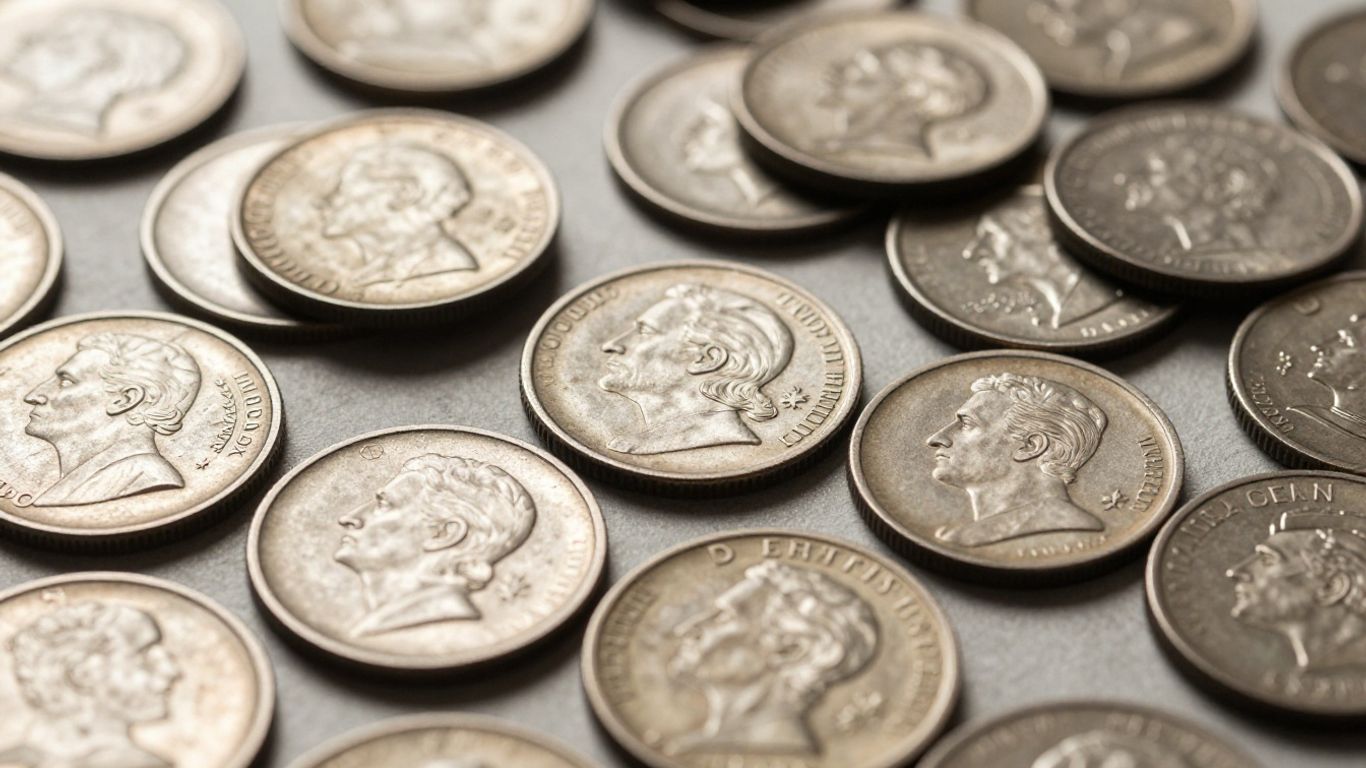
Wars demand a lot from a nation’s resources, and sometimes that means looking at the metal in our pockets. During times of conflict, especially World War II, the U.S. government needed to make sure vital materials like copper and nickel were available for making things like bullets and machinery. This led to some pretty interesting changes in our coins. For instance, the familiar copper penny was replaced by a zinc-coated steel version in 1943. This wasn’t just a quirky experiment; it was a serious effort to save copper. The amount of copper saved from making pennies that year was enough to produce a significant number of artillery shells. It shows how even small changes in everyday items could have a real impact on the war effort.
Everyday Artifacts of Resilience
These shifts in coin composition weren’t just about saving metal; they were also about keeping the economy running smoothly. When precious metals were scarce, the Mint had to get creative. The silver nickel, for example, saw its silver content temporarily reduced and then replaced with a mix of copper and manganese during the war years (1942-1945). This kept nickels in circulation without using up too much of the silver needed for other war-related industries. It’s a good reminder that the coins we use every day are more than just money; they’re tangible pieces of history that reflect the challenges and adaptations a nation goes through during wartime. People had to get used to these new coins, and sometimes it caused confusion, like when the steel pennies were mistaken for dimes or caused issues with vending machines.
Numismatic Clues to Wartime Logistics
For coin collectors and historians, these wartime changes offer a fascinating look into how the country managed its resources. The specific composition of coins from different years can tell us a story about what materials were available and where they were needed most. For example, the switch to steel pennies in 1943 is a clear indicator of copper shortages. Similarly, the temporary shift in the nickel’s alloy points to the strategic allocation of metals. These aren’t just random changes; they are direct results of wartime planning and resource management. They show us how the entire nation, down to the coins in our change, was mobilized to support the war effort.
The need to conserve critical metals during wartime often led to innovative solutions in coinage. These changes, while sometimes inconvenient for the public, were vital for ensuring that industrial resources were directed towards the war effort, demonstrating a nation’s ability to adapt its everyday systems under extreme pressure.
More Than Just Change
So, as we’ve seen, wars really did shake things up for American money. It wasn’t just about fighting overseas; it was about what we carried in our pockets every day. From using steel for pennies to save copper for bullets, to putting presidents on dimes right after they passed, these changes weren’t random. They tell a story about what the country was going through, what it valued, and how it tried to move forward after tough times. Next time you get change, take a closer look – you might just be holding a little piece of history, a reminder of how conflict shaped our nation, one coin at a time.
Frequently Asked Questions
Why did the U.S. change its coin designs during wartime?
During wars, the U.S. Mint sometimes changed coin designs and materials to save important metals for military use, like making bullets or equipment. The designs also sometimes changed to show national unity, strength, or to honor leaders who guided the country through difficult times.
What was the purpose of the steel penny in 1943?
In 1943, the U.S. made pennies out of steel instead of copper. This was because copper was needed for the war effort, such as making shells. Saving copper from pennies helped provide enough of this metal for military supplies.
Were there any changes to the nickel during World War II?
Yes, during World War II, the nickel’s metal mix was changed. To save nickel for war machines, the Mint used a different combination of metals, including silver and manganese, for the five-cent coin. These ‘silver nickels’ were made from 1942 to 1945.
Why was the phrase ‘In God We Trust’ added to coins?
The phrase ‘In God We Trust’ first appeared on the two-cent piece after the Civil War. It was added to coins to offer a sense of spiritual reassurance and national unity during a time when the country was trying to heal and come back together.
How did coins honor leaders after World War II?
After World War II, President Franklin D. Roosevelt was placed on the dime. This was a way for the nation to show its deep thanks for his leadership through tough times like the Great Depression and the war. It also represented moving forward.
What were the ‘Hawaii’ overprint notes?
During World War II, special paper money with ‘Hawaii’ printed on it was created for use in the Hawaiian Islands. This was done to prevent enemy forces from using regular U.S. currency if they managed to capture the islands, acting as a security measure.
Do coin changes during wartime affect their value today?
While some wartime coins, like the 1943 steel pennies or the silver nickels, are interesting because of their history, their value to collectors usually depends on their condition and rarity, not just the fact that they were made during wartime. Most are more valuable as historical items than for their metal content.
How do coins tell stories about history?
Coins are like small history books you can hold. When their designs or metal mixes change because of events like wars, they show us how the country was feeling, what resources were important, and who the nation looked up to. They are quiet reminders of past challenges and triumphs.