
Coin collecting can be a fascinating hobby, and one aspect that really captures attention is the natural toning coins develop over time. It’s not just about the metal; it’s about how the coin interacts with its surroundings. This article looks into what makes coins change color naturally, exploring the science and the time involved. We’ll also touch on how we perceive these changes and what it might mean for collectors.
Key Takeaways
- Natural coin toning happens when a coin’s surface reacts with its environment over time.
- The metal the coin is made from plays a big part in how it tones.
- Different environments cause different types of toning, like blues, reds, and golds.
- Understanding the factors behind toning helps collectors tell natural changes from fake ones.
- Appreciating coin toning involves looking at its history and the conditions it faced.
Understanding Natural Coin Toning
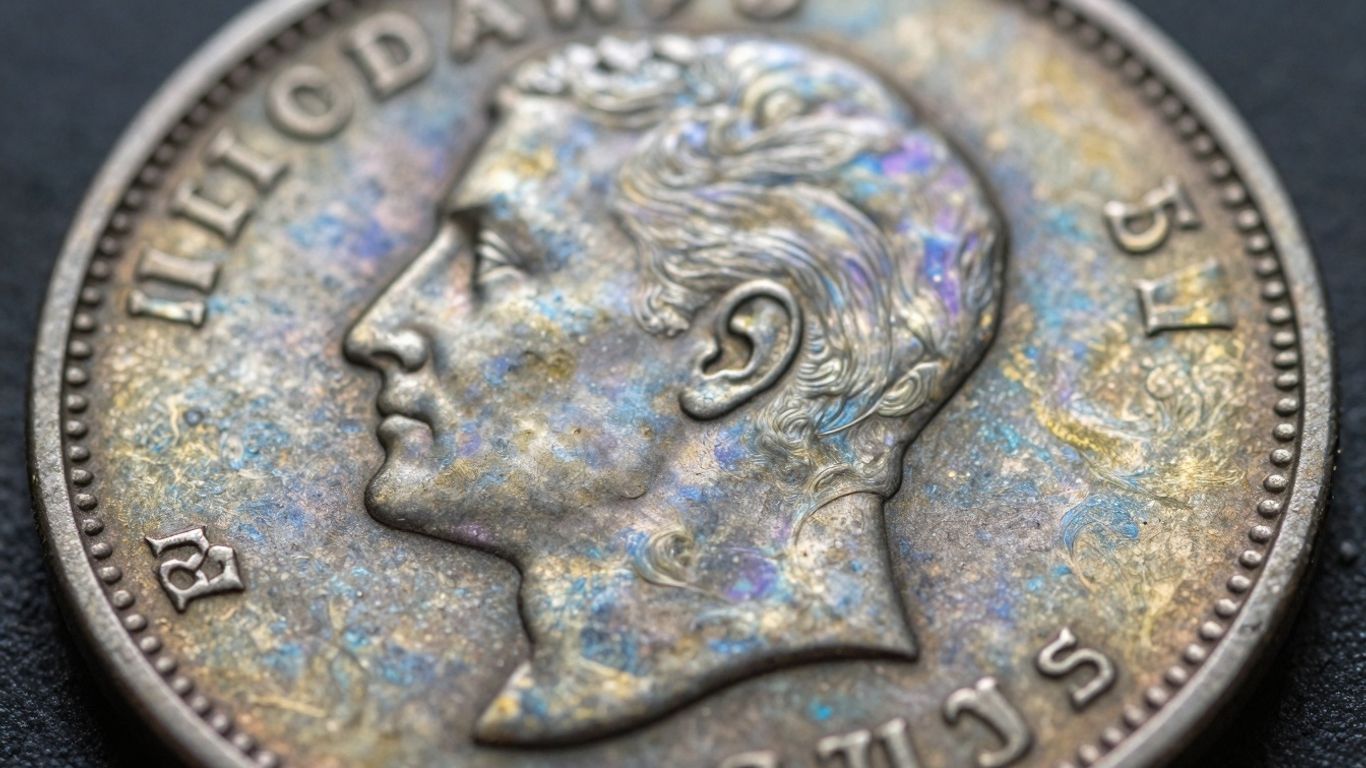
Coin toning is that colorful, often beautiful, surface change you see on older coins. It’s not paint or some artificial coating; it’s a natural process. Think of it like the way an old penny gets that dull, reddish-brown look, or how a silver dollar might develop a faint blue or gold hue over many years. This transformation happens because the metal on the coin’s surface reacts with its surroundings. The specific colors and patterns that emerge are a direct result of the coin’s journey through time and its environment.
The Vibrational Nature Of Coin Surfaces
It might sound a bit out there, but even the surface of a coin has a kind of energy, a vibration. This isn’t something you can see or feel in the usual way, but it’s there. When a coin is made, the metal is struck with immense force. This process, along with the inherent properties of the metal itself, creates a unique surface structure at a microscopic level. This structure can interact with the environment in subtle ways. Different metals vibrate at different frequencies, and these frequencies can influence how they react to the air, moisture, and other elements around them. It’s like each coin has its own quiet hum, and that hum changes as it ages.
How Environmental Factors Influence Patina
The environment a coin lives in plays a huge role in how it tones. Things like humidity, air quality, and even the materials the coin is stored with can cause chemical reactions on the metal. For example, a coin stored in a damp basement might develop different colors than one kept in a dry, climate-controlled vault. Sulfur compounds in the air, often found in polluted areas or near certain types of wood, are particularly known for causing colorful toning on silver coins. Even the paper or plastic used in coin holders can sometimes interact with the metal over long periods, leading to unique surface changes. It’s a slow dance between the coin and its surroundings.
The Role Of Time In Toning Development
Time is the silent artist behind natural coin toning. These surface changes don’t happen overnight. It takes years, sometimes decades, for significant toning to develop. The longer a coin is exposed to its environment, the more opportunity there is for these subtle chemical reactions to occur. Think of it like aging wine or cheese; the passage of time allows complex flavors and characteristics to develop. With coins, time allows for the gradual formation of thin layers of compounds on the surface, creating the varied colors and patterns collectors find so appealing. It’s a testament to the coin’s history and its journey.
The Science Behind Coin Patina
Chemical Reactions On Metal Surfaces
Coin patina isn’t just random color; it’s the result of specific chemical processes happening right on the metal’s surface. Think of it like a slow-motion reaction. When a coin is exposed to air and moisture over time, the metals it’s made from start to interact with their surroundings. For example, copper, a common coin metal, can react with oxygen and sulfur compounds in the air. This interaction forms new compounds, like copper oxides and sulfides, which have different colors than the original copper. These chemical changes are what create the visible toning we see. It’s a bit like how iron rusts, but with different metals and different resulting colors.
Microbial And Atmospheric Interactions
It’s not just simple chemistry; tiny living things and the general atmosphere play a part too. Microbes, like bacteria and fungi, can live on coin surfaces, especially in damp environments. These microbes can speed up or change the chemical reactions, contributing to unique toning patterns. The air itself is a mix of gases, and different environments have different levels of pollutants or humidity. A coin stored in a city might develop different toning than one kept in a rural area because of the different atmospheric elements it encounters. This complex interplay between the metal, the air, and even microscopic life is what gives coins their individual character.
Identifying Natural Versus Artificial Toning
Figuring out if a coin’s toning is natural or if someone artificially created it is a big deal for collectors. Natural toning usually develops slowly and evenly, often with subtle color transitions. Artificial toning, on the other hand, might look too perfect, too uniform, or have harsh color lines. Sometimes, artificial toning can even damage the coin’s surface. Collectors often look for specific patterns and color distributions that are characteristic of natural aging. For instance, a coin that has spent decades in a paper envelope might show a distinct ring of toning where the paper touched it. Understanding these subtle differences is key to appreciating a coin’s true history. Learning about the Royal Canadian Mint can give you a sense of the controlled environments where coins begin their lives, making the natural changes they undergo later even more interesting.
Factors Contributing To Coin Toning
So, what actually makes a coin get those cool colors? It’s not just random magic, you know. A few things really play a big part in how a coin develops its unique look over time.
Composition Of The Coin Metal
The metal the coin is made from is the first big piece of the puzzle. Different metals react differently to their surroundings. For instance, a coin made mostly of copper, like many older pennies, is going to tone very differently than a silver dollar or a nickel. Copper is pretty reactive and can develop deep browns, reds, and even purples. Silver, on the other hand, often shows blues, grays, and sometimes even golden or greenish hues when it reacts with sulfur compounds in the air. The specific alloy – meaning what other metals might be mixed in – also makes a difference. Even tiny amounts of other elements can alter the way the surface interacts with the environment.
Storage Environment And Its Impact
Where a coin spends its life is super important. Think about it: a coin kept in a dry, stable environment, maybe in a special holder in a safe, will likely tone much slower, if at all, compared to one that’s been loose in a pocket or stored in a humid basement.
Here are some environmental factors to consider:
- Humidity: Higher moisture levels can speed up chemical reactions on the coin’s surface.
- Air Quality: Pollutants, especially sulfur compounds (often found in areas with industrial activity or even from certain types of wood), are major contributors to toning.
- Temperature Fluctuations: While less direct, significant temperature swings can sometimes affect the rate of chemical processes.
- Contact Materials: What the coin touches matters too. Some plastics or papers can off-gas chemicals that interact with the metal, while others are inert.
Duration Of Exposure To Elements
Time is, of course, a massive factor. The longer a coin is exposed to its environment, the more opportunity there is for those subtle chemical reactions to occur and build up. A coin that’s been sitting in a collection for 50 years will likely have a more developed patina than one that’s only been around for five. It’s this slow, gradual change that often creates the most attractive and sought-after toning patterns. The depth and complexity of the colors are often directly related to the length of time the coin has been allowed to tone naturally.
It’s fascinating how something as simple as a coin’s journey through time and its surroundings can result in such varied and beautiful surface changes. What looks like just a bit of discoloration to the untrained eye is actually a historical record etched onto metal.
Recognizing Different Types Of Toning
Blue And Brown Tones
Coin toning can show up in a lot of different colors, and blue and brown are pretty common ones. Blue tones often show up as a sort of dusty or powdery layer, sometimes with hints of gray. It can look really subtle, or it can be quite vibrant, depending on what caused it. Brown tones, on the other hand, tend to be deeper and more solid. Think of a rich chocolate brown, or sometimes a lighter, almost tan color. These often come from prolonged exposure to certain types of materials or atmospheric conditions. The specific shade and texture of these colors can tell you a lot about the coin’s history.
Rainbow Toning And Its Characteristics
Rainbow toning is what many collectors really get excited about. It’s when you see a mix of colors – reds, oranges, yellows, greens, blues, and purples – all swirling together on the coin’s surface. It usually happens when a coin is exposed to a variety of different environmental elements over time, often in a way that creates distinct bands or patterns of color. It’s not just about having lots of colors; it’s about how they blend and interact. Some rainbow toning looks like a vibrant oil slick, while other examples might have more defined, concentric rings of color. The intensity and distribution of these colors are key factors in its appeal.
Golden Hues And Reddish Tints
Beyond the blues, browns, and rainbows, you’ll also find coins with golden or reddish tints. Golden tones can range from a pale, almost brassy yellow to a deep, rich gold. These often appear on coins made of alloys with a higher copper content or those that have been exposed to sulfurous compounds. Reddish tints, sometimes called "rosy" toning, are less common but can be quite striking. They might appear as blush-like patches or a more uniform reddish-brown overlay. These can sometimes be associated with specific types of packaging or storage materials that have reacted with the metal over many years.
The Subconscious Mind's Influence On Perception
Beliefs and Emotional Resonance
Our perception of anything, including the subtle beauty of a coin’s toning, isn’t just about what our eyes see. It’s deeply tied to what’s going on inside us, way below the surface of what we’re actively thinking about. This is where the subconscious mind comes in. It’s like a massive storage unit for all our past experiences, beliefs, and feelings. When we look at a coin, our subconscious might instantly link certain colors or patterns to feelings of value, rarity, or even just a pleasant aesthetic. These deeply ingrained associations can color our entire experience of the coin. If we’ve subconsciously learned to associate a certain type of patina with a valuable find, we’re more likely to perceive that coin as more appealing, regardless of its objective grading. It’s not just about the metal and the chemicals; it’s about the internal narrative we bring to the viewing.
Energetic Signatures of Certainty
Think about how some things just feel right, while others feel off. This is often the subconscious mind at work, picking up on subtle cues and matching them against its internal library. In the context of coin collecting, this can translate to an intuitive sense about a coin’s authenticity or the quality of its toning. If a coin’s toning has developed naturally over time, it often carries a certain ‘energy’ or ‘signature’ that feels cohesive and harmonious. Artificial toning, on the other hand, might feel jarring or ‘loud’ to our subconscious, even if we can’t pinpoint exactly why. This isn’t magic; it’s our inner processing system recognizing patterns and congruity. It’s like the difference between a perfectly composed piece of music and a jumbled mess of notes – one flows, the other clashes.
The Subtle Body As A Manifestation Vehicle
Beyond just perception, our subconscious mind is believed to influence our reality through what’s sometimes called the subtle body. This concept suggests we have an energetic structure that extends beyond our physical form. When our subconscious beliefs and emotional states are in alignment, this subtle body is thought to be clear and vibrant. This clarity can make us more receptive to noticing and appreciating the finer details, like the intricate patterns of natural coin toning. It’s as if a clear subtle body acts like a finely tuned antenna, picking up on the nuanced ‘vibrations’ of a coin’s history and its natural development. Conversely, internal ‘noise’ or blockages in our subtle body, often stemming from subconscious conflicts, can obscure our perception, making it harder to truly connect with and appreciate the coin’s unique story.
Here’s a look at how internal states might influence our perception:
| Internal State | Perceived Coin Quality | Subconscious Influence |
|---|---|---|
| Congruent & Aligned | High | Recognizes natural beauty and historical significance |
| Doubtful & Conflicted | Moderate | Focuses on potential flaws or artificiality |
| Unaware & Disconnected | Low | Sees only the surface, misses the depth of the toning |
Our internal world acts as a powerful lens through which we view the external. What we believe to be true, and how we feel about it, shapes our experience of reality, including our appreciation for the subtle artistry found in natural coin toning.
String Theory And Vibrational Reality
Fundamental Building Blocks Of The Universe
It’s pretty wild to think about, but modern physics, especially string theory, suggests that the tiniest bits of everything aren’t really little balls like we might imagine. Instead, they’re more like tiny, vibrating strings. The way these strings wiggle determines what kind of particle they are, like their weight or electrical charge. It’s a way scientists are trying to put together gravity and quantum mechanics, hoping for a single explanation for everything. It really makes you wonder about the basic stuff that makes up our world.
Frequencies And Their Manifestations
Everything in the universe is basically energy vibrating at different speeds. Think of it like a giant orchestra where each string is playing a note. The specific frequency, or how fast it’s vibrating, is what makes a particle a particle, or a force a force. This idea that vibration is the root of all existence is actually something ancient traditions have talked about for ages. It’s like science is catching up to old wisdom. It means that what we see and touch is just a more solid form of these underlying vibrations.
Personal Vibration Interacting With Universal Fields
So, if everything is vibration, then our own thoughts and feelings have a vibration too. This personal vibration doesn’t just float around; it interacts with the bigger vibrational field of the universe. It’s like tuning a radio – if you’re broadcasting on a certain frequency, you’re more likely to pick up signals on that same frequency. This is where things get interesting for us. It suggests that by managing our own inner state, we can actually influence what shows up in our lives. It’s a pretty profound idea when you start to consider it, and it connects to how we perceive things, like the subtle beauty of a coin’s patina. Understanding this connection can really change how you look at the world around you.
- Vibration is the core: All matter and energy stem from vibrating strings.
- Frequency matters: Different vibration patterns create different particles and forces.
- Interaction is key: Your personal vibration influences and is influenced by the universal field.
The idea that reality is fundamentally vibrational, as proposed by string theory, offers a compelling framework for understanding how subtle energies might influence physical phenomena. It suggests a universe that is far more interconnected and dynamic than classical physics might imply, where even the smallest components are in constant motion and interaction.
The Subtle Body's Role In Coin Appreciation
Energetic Structure Beyond the Physical
Think of the subtle body as the unseen framework that connects your physical self to your thoughts and emotions. It’s not something you can touch, but it’s believed to be where your life force, or prana, flows. In the context of coin collecting, this energetic structure plays a part in how we connect with and appreciate the objects we hold. It’s like an antenna, picking up on more than just the visual aspects of a coin. This energetic connection can influence our perception of a coin’s beauty and historical weight.
Transmitting and Receiving Vibrational Information
Everything, including coins, is thought to have a vibration. The subtle body acts as a receiver for these vibrations. When you hold a coin, especially one with a unique toning, your subtle body might be picking up on its history, the environment it’s been in, and even the energy of the people who have handled it. This isn’t about magic; it’s about a deeper, more intuitive way of sensing the world around us. It’s like feeling the ‘vibe’ of a place or an object.
- Receiving Historical Echoes: The subtle body can sense residual energies from the coin’s past.
- Interpreting Toning Frequencies: Different toning patterns might emit distinct energetic signatures.
- Connecting with Craftsmanship: The energy of the minting process itself could be perceived.
Magnetizing Reality Through Energetic Patterns
Our subtle bodies are also thought to influence what we attract into our lives. When our subtle body is in a state of harmony, it’s believed to create a more magnetic field around us. For coin collectors, this could mean attracting rare finds or developing a keener eye for quality. It suggests that our internal energetic state can shape our external experiences, including our collecting journey.
The way we energetically align with an object, like a coin, can profoundly shape our appreciation for it. It moves beyond mere visual inspection into a more holistic, felt sense of connection and value.
| Aspect of Subtle Body | Influence on Coin Appreciation |
|---|---|
| Pranamaya Kosha (Energy Body) | Affects the flow of life force when interacting with the coin. |
| Manomaya Kosha (Mental/Emotional Body) | Shapes emotional responses and thoughts about the coin’s appearance and history. |
| Vijnanamaya Kosha (Wisdom Body) | Enhances intuitive insights into the coin’s authenticity and significance. |
Cultivating Śraddhā For Enhanced Understanding
Imprinting The Subconscious With Certainty
Cultivating Śraddhā, a deep, heartfelt trust, is like planting seeds of unwavering conviction in the fertile ground of your subconscious. It’s not about blind faith, but a soul-level knowing that what you’re seeking is not only possible but is already on its way. This inner certainty acts as a powerful magnet, aligning your energetic state with your desires. When you approach coin collecting with this sense of trust, you begin to perceive the subtle energetic signatures that artificial toning can’t replicate. It’s about believing in the process, even when the visual evidence isn’t immediately apparent. This practice helps quiet the mental chatter of doubt, allowing you to connect more directly with the authentic story each coin holds.
Transforming Doubt Into Magnetic Trust
Doubt is a common hurdle for collectors, especially when trying to distinguish between natural and artificial toning. Śraddhā offers a way to shift this. It involves actively choosing to believe in the inherent authenticity and beauty of naturally toned coins. This isn’t about ignoring red flags, but about approaching each coin with an open heart and a willingness to see its true nature. By consistently practicing this trust, you retrain your subconscious mind to expect and recognize genuine patina. This magnetic trust draws you towards authentic pieces and helps you intuitively sense when something is off. Think of it as developing a refined energetic sense for what is real and what is not.
The Energetic Signature Of Mastery
Mastery in any field, including numismatics, isn’t just about accumulating knowledge; it’s about embodying a certain energetic state. Śraddhā is the energetic signature of this mastery. When you operate from a place of deep trust and conviction, your entire being vibrates at a higher frequency. This allows you to perceive the world, and in this case, coins, with greater clarity and insight. You start to recognize the subtle energetic patterns that indicate a coin’s journey through time and environment. This isn’t something that can be faked; it’s a natural outflow of a mind and spirit aligned with truth and possibility. It’s the quiet confidence that comes from knowing, not just believing.
Identity Shifting For Deeper Coin Insights
Elevating Your Self-Concept
Think about how you see yourself. It’s not just about what you do, but who you believe you are at your core. When it comes to coins, this inner belief system plays a bigger role than you might think. If you see yourself as someone who can spot a rare coin from a mile away, or someone who truly appreciates the history etched into its surface, your perception changes. It’s like putting on a new pair of glasses that highlight the details you couldn’t see before. This isn’t about pretending; it’s about consciously deciding to adopt a new way of being that aligns with what you want to experience.
Embodying The Desired Reality
This is where things get interesting. It’s not enough to just think about being a knowledgeable coin collector; you have to feel like one. What would that person think? How would they act? What would they notice? Try to step into that role. Imagine you’re holding a coin that has incredible toning. Instead of just seeing colors, you might feel a connection to the journey that coin has taken. This feeling, this embodiment, starts to shift your whole outlook. It’s about living as if you already possess the insight you’re seeking.
Activating Quantum Field Changes
From a certain perspective, everything is energy, and that energy is constantly in motion. When you change your inner state, your beliefs, and how you carry yourself, you’re actually changing your personal energy signature. This shift can influence the probabilities around you. It’s like tuning a radio to a different station; you start picking up different signals. For coin collectors, this means you might start noticing coins with exceptional toning more often, or you might find yourself drawn to information that deepens your appreciation. It’s about aligning your inner world so that your outer experience begins to reflect that new alignment.
The way you perceive yourself directly impacts what you attract and recognize. If you believe you are capable of understanding complex coin characteristics, you will naturally begin to see them. This inner conviction acts as a magnet, drawing experiences and insights that confirm your new self-view.
Here’s a simple way to think about it:
- Current Self: Sees a coin with some color.
- Desired Self: Sees a coin with historical patina, understanding its formation.
- Action: Start by acknowledging the beauty in coins you currently own, focusing on their unique characteristics.
This process isn’t about forcing a change, but about allowing a natural evolution of your perspective. It’s about becoming the person who naturally appreciates and understands the subtle beauty of toned coins.
Practical Applications For Collectors
Assessing Toning Authenticity
When you’re looking at a coin, especially one with interesting colors, figuring out if that toning is natural or if someone messed with it is pretty important. Natural toning happens over a long time, usually from the coin being stored in something like paper or wood, or just sitting in the air. Artificial toning, on the other hand, is often done quickly using chemicals or heat to make a coin look old. Genuine toning typically shows a gradual progression of colors and is often more subtle. You’ll want to look for signs of uneven color application or a "painted on" look, which usually points to artificial treatment. Sometimes, looking at the surface texture under magnification can reveal if it’s been altered.
Preserving Natural Patina
Once you’ve got a coin with nice natural toning, you’ll want to keep it that way. The best approach is usually to do as little as possible. Avoid cleaning the coin, even with a soft cloth, as this can easily remove or damage the delicate patina. Storing coins in inert materials is key. Many collectors use Mylar flips or specialized archival-quality holders. Keeping them away from harsh chemicals, high humidity, and extreme temperature changes will also help maintain their condition. Think of it like preserving an old photograph; you want to protect it from light and environmental damage.
Enhancing Appreciation Through Deeper Knowledge
Understanding the ‘why’ behind coin toning really changes how you see these pieces. It’s not just about the metal anymore; it’s about history, environment, and the passage of time. Knowing that a coin’s color tells a story can make collecting much more engaging. It adds a layer of appreciation that goes beyond just the coin’s grade or rarity. For instance, recognizing the subtle blues and golds on a silver dollar might make you think about where it was stored for decades. This deeper connection can transform your collecting from a simple hobby into a more profound pursuit. It’s about appreciating the journey the coin has taken. Learning about coin grading is also a big part of this, as it helps contextualize the coin’s overall condition and value.
Wrapping Up Our Journey
So, we’ve spent some time looking at how coins get their natural colors. It’s not magic, really, just chemistry and time doing their thing. Different metals, different environments – they all play a part in how a coin looks over the years. It’s pretty neat when you think about it, how something so simple can change the appearance of something made to last. Understanding this stuff can really change how you see old coins, making them more than just metal, but little pieces of history that have been through a lot. Keep an eye out for those interesting tones; they tell a story.
Frequently Asked Questions
What exactly is natural coin toning?
Natural coin toning refers to the color changes that happen on a coin’s surface over a long period due to its environment. Think of it like how an old penny might turn a darker brown or even get some colorful swirls. It’s a natural process, not something done on purpose.
How does the environment affect a coin's appearance?
The air, moisture, and even tiny particles around a coin can slowly react with its metal. Over many years, these reactions create a thin layer, called a patina, which gives the coin its unique colors and patterns. Different environments lead to different kinds of toning.
Can you tell if toning is natural or artificial?
Yes, experienced collectors can often tell the difference. Natural toning usually develops gradually and evenly, or in patterns that make sense with how the coin was stored. Artificial toning might look too bright, too uniform, or have unusual color spots that don’t seem natural.
What makes some coins have 'rainbow' toning?
Rainbow toning is a type of natural toning where a coin shows a variety of colors, like blues, greens, reds, and golds, often in circular patterns. This usually happens when a coin is exposed to specific elements in the air or stored in certain types of paper or cardboard that cause these vibrant reactions.
Does the metal a coin is made of matter for toning?
Absolutely. The type of metal is very important. For example, silver coins tend to tone differently than copper or nickel coins. The metal itself has a unique way of reacting with its surroundings, which directly influences the colors and patterns that appear.
How long does it take for a coin to get toned?
Toning takes a significant amount of time. It’s a slow process that happens over many years, sometimes even decades. The longer a coin is left undisturbed in its environment, the more likely it is to develop noticeable and interesting toning.
Why is natural toning sometimes seen as valuable?
Natural toning can increase a coin’s appeal and value because it shows the coin’s history and journey through time. Unique, attractive toning patterns are rare and can make a coin stand out, making it more desirable to collectors who appreciate its natural beauty and story.
Are there any special ways to store coins to encourage good toning?
Collectors often store coins in ways that allow for natural toning without harming the coin. This might involve using specific types of holders or storing them in environments where they are exposed to air and moisture in a controlled way. However, the goal is usually to protect the coin while letting nature take its course slowly.