
This article looks into the silver content percentages found in half dollar coins throughout history. We’ll explore how the composition of these coins has changed over time, from their early days as primarily silver to the clad coinage of today. Understanding these shifts is key for collectors and anyone interested in the history of U.S. currency and precious metals.
Key Takeaways
- Before 1965, U.S. half dollars were made with a standard silver alloy, typically 90% silver and 10% copper.
- The Kennedy half dollar series, introduced in 1964, initially maintained the 90% silver content, but this changed in 1965.
- Starting in 1965, half dollars transitioned to a copper-nickel clad composition, eliminating silver from their metallic makeup.
- The Benjamin Franklin half dollar, minted from 1948 to 1963, also featured the 90% silver composition.
- Changes in coinage acts and economic factors, like silver price fluctuations, directly influenced the silver content percentages used in half dollars.
Early Half Dollar Silver Content
Pre-1965 Silver Composition
Before the mid-1960s, the United States Mint used a standard silver composition for its half dollars. These coins were primarily made of a silver alloy, which gave them their distinctive look and intrinsic value. The standard for circulating silver coinage, including half dollars, was 90% silver and 10% copper. This alloy was chosen for its durability and workability, making it suitable for mass production while retaining a significant silver content.
The Standard Silver Alloy
The specific alloy used for these early half dollars was a mix of 90% pure silver and 10% copper. This combination was not unique to the U.S. Mint; many countries adopted similar silver-copper alloys for their coinage. The copper was added to harden the silver, making the coins more resistant to wear and tear from daily circulation. Without the copper, pure silver is quite soft and would deform easily.
Here’s a look at the composition:
- Silver: 90%
- Copper: 10%
This alloy was used consistently for decades, forming the basis of the silver half dollars that are now sought after by collectors and investors. The weight of these coins was standardized, typically around 12.5 grams (or 192.9 grains) for a half dollar.
The consistent use of this 90% silver alloy meant that for a long time, the intrinsic metal value of a half dollar was directly tied to the market price of silver. This made them more than just currency; they were also a store of value based on their silver content.
The Kennedy Half Dollar Era
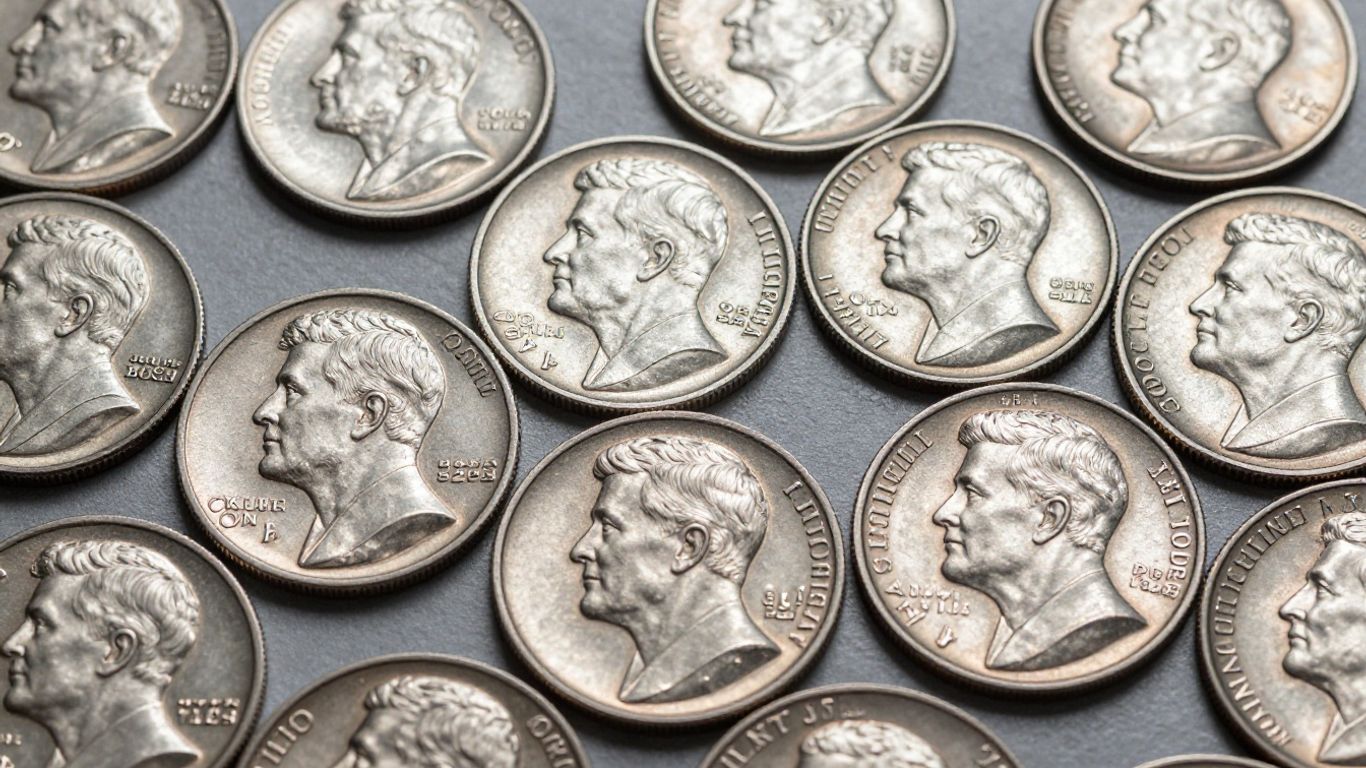
The introduction of the John F. Kennedy half dollar marked a significant moment in U.S. coinage history. Following President Kennedy’s assassination in November 1963, there was a swift move to honor him on a circulating coin. Public Law 88-256, signed on December 30, 1963, authorized the coinage of a 50-cent piece bearing his likeness, replacing the Benjamin Franklin half dollar. This was a notable change, as it had been more than 25 years since a coin’s design had been altered.
Silver Content of Kennedy Half Dollars
The initial Kennedy half dollars, minted starting in 1964, were struck from the traditional 90% silver and 10% copper alloy. This composition was consistent with the half dollars that had been produced for many years prior. The demand for these new coins was immense, with the first batch of $26 million reportedly disappearing in a single day. This high demand, coupled with a general coin shortage at the time, led to continuous production.
Here’s a look at the silver composition for the early Kennedy half dollars:
| Coin Type | Composition | Silver Purity | Silver Weight (approx.) |
|---|---|---|---|
| Kennedy Half Dollar (1964-1964) | 90% Silver, 10% Copper | 90% | 0.3617 troy oz |
Transition in Silver Composition
However, the era of 90% silver in Kennedy half dollars was relatively short-lived. Due to rising silver prices and a nationwide coin shortage, Congress passed legislation in 1965 to alter the silver content of half dollars and other circulating coins. Starting in 1965, the composition changed dramatically. The silver was removed from the outer layers, and the coins were made with a clad structure. This meant a copper core sandwiched between two layers of cupronickel (an alloy of copper and nickel). While they retained a silverish appearance, they no longer contained precious silver in their circulating versions. This change was a direct response to the economic pressures of silver prices and the need to keep coins in circulation. The transition meant that while the outward appearance remained similar, the intrinsic metal value changed significantly, impacting the long-term collectibility and value of these Kennedy half dollars for collectors.
The rapid shift in silver content for the Kennedy half dollar highlights the dynamic nature of coinage, often influenced by economic factors and public demand. What began as a tribute in precious metal soon adapted to the realities of metal costs and circulation needs.
Post-1965 Half Dollar Composition
Elimination of Silver in Half Dollars
Starting in 1965, the composition of the United States half dollar underwent a significant change. This shift was driven by a variety of factors, including rising silver prices and a desire to maintain a stable coinage supply. The Coinage Act of 1965 officially removed silver from circulating half dollars. This marked the end of an era for silver coinage that had been in place for centuries.
Clad Coinage Introduction
The new half dollars, minted from 1965 onwards, adopted a "clad" construction. This means they are made of three layers: a core of pure copper sandwiched between two outer layers of a copper-nickel alloy. This composition was chosen to provide a coin that was more durable and less susceptible to fluctuations in the silver market, while still retaining a similar appearance and weight to its silver predecessors.
Here’s a look at the composition change:
- Pre-1965 Half Dollars: Typically composed of 90% silver and 10% copper.
- Post-1965 Half Dollars: Composed of a copper core with outer layers of 75% copper and 25% nickel.
This transition meant that while the coins still looked like silver, they contained no actual silver content for circulation purposes. Special collector versions, however, might still be struck in silver, but these are not intended for general use.
The decision to move away from silver in circulating coinage was a pragmatic one, aimed at ensuring that the nation’s currency remained accessible and affordable for everyday transactions. The clad composition offered a cost-effective solution that balanced the need for a functional coin with the economic realities of precious metal prices.
Understanding Silver Content Percentages
When we talk about the silver content in coins, it’s not just a simple yes or no. The percentage of actual silver versus other metals used in the alloy is what really matters. This breakdown helps us understand the coin’s historical context and its potential value.
Defining Silver Purity in Coins
Coin purity is usually expressed as a percentage or a fineness. For example, "90% silver" means that 90% of the coin’s weight is pure silver, with the remaining 10% being other metals like copper, which adds durability. Before 1965, most U.S. half dollars were made of a 90% silver alloy. This was a standard for many silver coins for a long time. After 1965, the composition changed dramatically. The Kennedy half dollar, for instance, went from 90% silver to a 40% silver clad composition for a few years, and then to a completely silver-free copper-nickel clad. This shift reflects changes in economic conditions and government policy regarding precious metals.
Here’s a quick look at common silver compositions:
- 90% Silver: Used in U.S. coins prior to 1965 (like dimes, quarters, and half dollars).
- 40% Silver: Used in some U.S. commemorative coins and Kennedy half dollars from 1965-1970.
- Clad: Modern coins with outer layers of copper-nickel bonded to a pure copper core, containing no silver.
Understanding these percentages is key. It’s not just about the metal itself, but how it was used and why the composition changed over time. This knowledge helps collectors and investors make sense of their holdings.
Impact of Silver Content on Value
The amount of silver in a coin directly influences its intrinsic value. Coins with higher silver content are worth more based on the spot price of silver. For older coins, like those made before 1965, their value is often tied to both their numismatic (collector) appeal and their melt value, which is determined by the silver they contain. For example, a 1964 half dollar has a significant melt value due to its 90% silver content, whereas a modern half dollar has virtually none. The transition in silver composition for coins like the Kennedy half dollar is a prime example of how policy changes can affect a coin’s material worth. When silver prices rise, coins with higher silver percentages become more attractive from a bullion perspective, sometimes even exceeding their face value.
Historical Silver Dollar Coinage
Silver Dollar Composition Over Time
When we talk about silver dollars, we’re really looking at a long history of how the U.S. Mint has used silver in its coinage. It wasn’t always the same, you know? Different laws and needs changed things up.
Back in the day, like with the original dollar coin authorized by the Coinage Act of April 2, 1792, the standard was pretty high. These coins were made with 416 grains of silver, and the fineness was set at 892.4 parts per thousand. That’s a good chunk of silver.
Then, things shifted. The Act of January 18, 1837, changed the weight and fineness slightly for some coins, but the silver content remained significant. Later, the Coinage Act of February 12, 1873, made some bigger changes, moving towards a different standard weight for silver dollars.
Here’s a look at some key periods and their silver dollar compositions:
- 1792-1836: Standard weight of 416 grains, 892.4 fineness (90% silver, 10% copper).
- 1836-1873: Standard weight adjusted to 412.5 grains, 900 fineness (90% silver, 10% copper).
- 1878-1935: The Bland-Allison Act and subsequent legislation continued the use of 412.5 grains, 900 fineness for silver dollars, like the Morgan and Peace dollars.
It’s interesting to see how the weight and exact silver percentage were tweaked over the years, often due to economic reasons or changes in the value of silver itself. The goal was usually to maintain a certain intrinsic value while also making the coins practical for commerce.
Bullion Value of Silver Dollars
The bullion value of a silver dollar is basically what the silver in it is worth on the open market. This can change a lot, depending on global silver prices. For a long time, the face value of a silver dollar was pretty close to its melt value, especially for older coins made of 90% silver.
For example, a standard silver dollar minted before 1965 contains about 0.77 troy ounces of pure silver. If silver is trading at $25 per troy ounce, the melt value of that coin would be around $19.25 (0.77 x $25). That’s way more than its $1 face value!
This difference is why many older silver dollars are worth much more than just their silver content. Their numismatic value, or collector value, often adds a significant premium on top of the bullion price. So, while the silver content gives a baseline value, what a collector is willing to pay can be much higher, especially for rare dates or coins in excellent condition.
Minting Processes and Silver
The journey of silver from raw metal to a finished coin involves a series of precise steps, a process that has evolved over time but retains core elements. The minting of silver coinage is a complex operation, requiring specialized equipment and careful handling of precious metals.
Silver Bullion Transactions
Before silver can become a coin, it must first enter the mint’s possession. This typically happens through various transactions. The U.S. Mint, for instance, would acquire silver through several channels:
- Retirement of Silver Certificates: When silver certificates were in circulation, their retirement would often result in the silver backing being returned to the mint for processing.
- Ordinary Bullion Purchases: The mint could buy silver on the open market or from domestic sources.
- Newly Mined Domestic Silver: Under specific acts, newly mined silver from U.S. sources could be acquired.
- Recoinage Bullion: Old, uncurrent U.S. silver coins that were melted down also provided a source of silver for new coinage.
These transactions ensured a steady supply of silver for coinage purposes. For example, in fiscal year 1964, a significant amount of silver was processed into half dollars, quarter dollars, and dimes, sourced from these various channels.
Government Refinery Outputs
Once acquired, the silver often undergoes refining to meet the purity standards required for coinage. The U.S. Mint operated its own electrolytic refineries, such as those in New York and Denver. These facilities were responsible for purifying the silver, removing impurities to achieve the desired fineness. The output from these government refineries was then ready for the next stage: coinage.
The process of melting and rolling metal into strips of the correct thickness is quite standard, similar to what private industries use. This allows the mint to efficiently prepare the metal for striking coins.
This prepared metal, often in the form of coiled strips, is then fed into high-speed blanking presses. These presses cut out the coin-sized discs, known as blanks, from the strip. Following blanking, the coins undergo annealing, cleaning, and polishing before being struck with the final design. Companies involved in precious metals, like First Majestic, also have their own minting facilities to produce items for the public, showcasing the diverse landscape of metal processing for public sale.
| Bullion Source | Fine Ounces (FY 1964 Example) |
|---|---|
| Retirement of Silver Certificates | 126,671,878 |
| Ordinary Bullion | 15,443,662 |
| Newly Mined Domestic | 351,651 |
| Recoinage from Melted U.S. Coins | 1,509,923 |
| Total Processed | 143,977,114 |
Silver Price Fluctuations
New York Bullion Market Prices
The price of silver has seen considerable movement over the years, and understanding these shifts is key to appreciating the value of older coinage. In the New York bullion market, for instance, prices have varied quite a bit. Looking back, the high for a troy ounce of silver in 1874 was $1.29375, while the low was $1.25500. This shows a pretty tight range initially. Fast forward to more recent times, like the period between 1962 and 1964, the official quotation for refined silver hovered around $1.29 per ounce. It’s interesting to see how these figures changed, especially when you consider the impact of different Coinage Acts and market demands.
Here’s a quick look at some historical New York prices:
| Calendar Year | High | Low | Average |
|---|---|---|---|
| 1874 | $1.29375 | $1.25500 | $1.27195 |
| 1877 | $1.26000 | $1.16000 | $1.19408 |
| 1963 | $1.29300 | $1.21000 | $1.27912 |
| 1964 | $1.29300 | $1.29300 | $1.29300 |
London Bullion Market Prices
Across the Atlantic, the London bullion market also provides a vital perspective on silver’s value. For the calendar year 1963, the average price per ounce of 999/1000 fine silver in London was about $1.2448. This market often sets a global benchmark. The fluctuations here, influenced by international trade and economic conditions, directly affected the melt value of silver coins produced during those times. It’s a complex interplay of global supply and demand that shapes these figures.
Key points about London market prices:
- Prices are typically quoted in pence per ounce for 999/1000 fine silver.
- The U.S. dollar equivalent is calculated based on the exchange rate of the pound sterling.
- Historical data shows variations influenced by global economic events and monetary policies.
The ebb and flow of silver prices are not just abstract numbers; they directly tie into the intrinsic worth of the metal content within our coinage, influencing collector interest and the decisions made by mints regarding composition.
Coinage Acts and Silver
Several key pieces of legislation have shaped the silver content of United States coinage over the years. These acts dictated not only the amount of silver used but also the very nature of our currency. It’s a fascinating look into how economic and political decisions directly impacted the physical makeup of coins.
Acts Authorizing Silver Coinage
From the early days of the United States Mint, specific laws were passed to authorize the production of silver coins. These acts defined the denominations, the weight of the coins, and crucially, their silver fineness. For instance, the Coinage Act of 1792 established the dollar, half dollar, and quarter dollar, all with a standard fineness of .8924.
Later acts adjusted these standards. The Act of January 18, 1837, for example, standardized the fineness for most silver coins to 900 parts silver and 100 parts copper. This became the prevailing standard for decades.
- Coinage Act of 1792: Established initial silver denominations and fineness.
- Act of January 18, 1837: Standardized fineness to 900/1000 for most silver coins.
- Act of February 21, 1853: Reduced the weight of half dollars, quarter dollars, and dimes, while maintaining their fineness.
The composition of coins wasn’t static; it evolved based on the availability of silver, the needs of commerce, and the prevailing economic theories of the time. Each act represented a deliberate choice about the monetary metal content.
Legislative Changes Affecting Silver Content
The most significant shift in silver coinage came about in the mid-20th century. The Coinage Act of 1965 marked a dramatic departure, eliminating silver from dimes and quarters entirely and reducing the silver content of half dollars to 40%. This was a response to rising silver prices and a need to ensure sufficient coinage for circulation.
Before this major change, there were other legislative actions that influenced silver. For instance, the Silver Purchase Act of 1934 aimed to increase the amount of silver in the national coinage, but its effects were complex and eventually superseded by later legislation.
- Coinage Act of 1965: Eliminated silver from dimes and quarters, reduced half dollars to 40% silver.
- Silver Purchase Act of 1934: Mandated the purchase of silver by the U.S. government.
- Joint Resolution of July 22, 1876: Halted the coinage of silver dollars for a period.
These legislative actions demonstrate a clear historical trend: from a consistent use of silver in circulating coinage to a gradual reduction and eventual elimination due to economic pressures and policy shifts.
Assessing Monetary Assets
Monetary Assets and Liabilities Analysis
When we talk about money, especially in the context of coins and their historical value, it’s important to look at the bigger financial picture. This involves understanding what a government or a treasury holds as assets and what it owes as liabilities. For coins, particularly those made with precious metals like silver, this analysis gets a bit more complex. The U.S. Treasury, for instance, has to keep track of all the money in circulation, which includes the value of coins issued. This isn’t just about the face value; it’s also about the metal content, especially for older coins.
The balance between what’s held and what’s owed is a key indicator of financial health. For the Treasury, this means accounting for physical assets like gold and silver reserves, as well as the money that’s out there being used by the public. Reports from different periods show these figures, giving us a snapshot of the nation’s financial standing at specific times.
Here’s a look at how monetary assets and liabilities were reported at different points:
| Reporting Date | Monetary Assets (Approximate) | Monetary Liabilities (Approximate) |
|---|---|---|
| December 31, 1963 | $54 Billion | $47 Billion |
| June 30, 1964 | $47 Billion | $54 Billion |
Silver Holdings in Treasury
The Treasury’s holdings of silver are a significant part of its monetary assets, especially when considering the historical role of silver in U.S. coinage. Before the Coinage Act of 1965, half dollars, like many other coins, contained a substantial amount of silver. Tracking these silver reserves is important for several reasons:
- Historical Record: It shows how much silver was available for minting coins over different eras.
- Financial Value: The market price of silver directly impacts the value of these holdings.
- Policy Decisions: The amount of silver held can influence decisions about future coinage and monetary policy.
During periods when silver was a primary component of circulating currency, the Treasury managed large quantities of this precious metal. These holdings were not static; they changed based on production, coinage needs, and sales or purchases of silver bullion. The Treasury’s reports often detail the amounts of silver held, sometimes distinguishing between different forms like bullion and silver used in coinage. This information helps paint a picture of the metal’s role in the nation’s economy and financial management over time. For example, records indicate substantial silver bullion transactions, with figures showing millions of dollars worth of silver being handled through various accounts and deposits.
Benjamin Franklin Half Dollar
Coinage Years for Franklin Half Dollar
The Benjamin Franklin half dollar is a bit of an interesting case. Unlike many other circulating half dollars, it wasn’t minted for a super long stretch. Production ran from 1948 all the way through 1963. That’s a relatively short run when you think about it, especially compared to some other coins that have been around for a century or more. The design itself, featuring Benjamin Franklin on the obverse and Independence Hall on the reverse, was quite a departure from the Liberty Bell motif that preceded it. It’s a design that many collectors really appreciate.
Silver Content of Commemorative Issues
Now, about the silver content. This is where things get a little more straightforward for the Franklin half dollar. All Benjamin Franklin half dollars minted between 1948 and 1963 are made of 90% silver and 10% copper. This is the standard composition for most US silver coinage from that era. So, if you’re holding a Franklin half dollar from its original minting period, you can be pretty sure about its silver makeup. It’s not a commemorative issue in the modern sense, but rather a regular circulating coin that happened to be made of silver.
Here’s a quick look at the composition:
- Obverse: Portrait of Benjamin Franklin
- Reverse: Independence Hall
- Composition: 90% Silver, 10% Copper
- Weight: 12.5 grams
- Silver Weight: 11.25 grams (0.3617 troy ounces)
It’s important to note that after 1964, the composition of US half dollars changed, moving away from silver entirely. So, the Franklin half dollar represents the tail end of U.S. half dollars being struck in a significant silver alloy for general circulation.
Wrapping It Up
So, we’ve looked at a bunch of years and how much silver was in those half dollars. It’s kind of interesting to see how it changed over time, right? Like, one year it might be one amount, and then a few years later, it’s different. It makes you think about all the reasons why that might happen, from the metal prices to just decisions made by the people in charge of making the coins. It’s not super complicated, but it’s definitely something to notice if you’re into coins or just curious about how things were made back then. Hopefully, this breakdown made it a bit clearer for you.
Frequently Asked Questions
What were half dollars made of before 1965?
Before 1965, half dollars were made from a mix of silver and copper. Specifically, they contained 90% silver and 10% copper, making them valuable due to their silver content.
Did all Kennedy half dollars contain silver?
No, not all Kennedy half dollars contained silver. Half dollars made between 1965 and 1970 had a reduced silver content of 40% silver and 60% copper. Coins made after 1970 do not contain any silver.
When did half dollars stop being made with silver?
The U.S. Mint stopped making half dollars with a high silver content in 1965. After this year, the composition changed to a copper-nickel clad material, meaning they no longer contained significant amounts of silver.
What does 'silver content percentage' mean for coins?
The silver content percentage tells you how much of a coin’s total weight is made up of pure silver. For example, a coin with 90% silver content means that 90 out of every 100 parts of its weight is pure silver.
How does the silver content affect a coin's value?
A coin’s silver content directly impacts its value. Coins made with a higher percentage of silver are generally worth more than coins with less or no silver, especially when the price of silver in the market goes up.
Were silver dollars always made of pure silver?
Silver dollars, like half dollars, were typically made with a high silver content for much of their history. However, their composition also changed over time, with later versions being made from less silver or other metals entirely.
What are 'clad' coins?
Clad coins are made by bonding layers of different metals together. For half dollars after 1970, this usually means a layer of copper sandwiched between two layers of a copper-nickel alloy. This process eliminated the need for precious metals like silver in everyday coinage.
What was the Benjamin Franklin half dollar made of?
The Benjamin Franklin half dollar, minted from 1948 to 1963, was made of the standard silver composition used at the time: 90% silver and 10% copper.