
Thinking about investing in silver? You’ve probably heard the term ‘junk silver coins term meaning’ thrown around. It sounds a bit odd, right? But these coins, mostly old U.S. dimes, quarters, and half dollars, are actually a pretty popular way for people to get into owning physical silver. They’re called ‘junk’ not because they’re low quality, but because they’ve been used so much they’re not worth much as collector’s items anymore. Their real value comes from the silver they’re made of. This article breaks down what junk silver is, why people like it, and what you need to know before you buy.
Key Takeaways
- The term ‘junk silver coins term meaning’ refers to circulated U.S. silver coins minted before 1965, valued primarily for their silver content rather than their numismatic (collector) worth.
- These coins, often called ‘constitutional silver,’ were once legal tender and are seen by many as a tangible form of money, distinct from modern fiat currency.
- The most common junk silver coins are 90% silver dimes, quarters, and half dollars, with 40% silver Kennedy halves and 35% silver ‘war nickels’ being less common alternatives.
- Authenticating junk silver involves checking the coin’s date (pre-1965 for 90% silver), examining its edge for a silver color, performing a ‘ping test,’ verifying weight, and using a magnet.
- Junk silver offers advantages like divisibility for transactions, widespread recognizability, lower premiums compared to modern bullion, and government-backed authenticity, making it a practical choice for investors.
Understanding the “Junk Silver Coins Term Meaning”
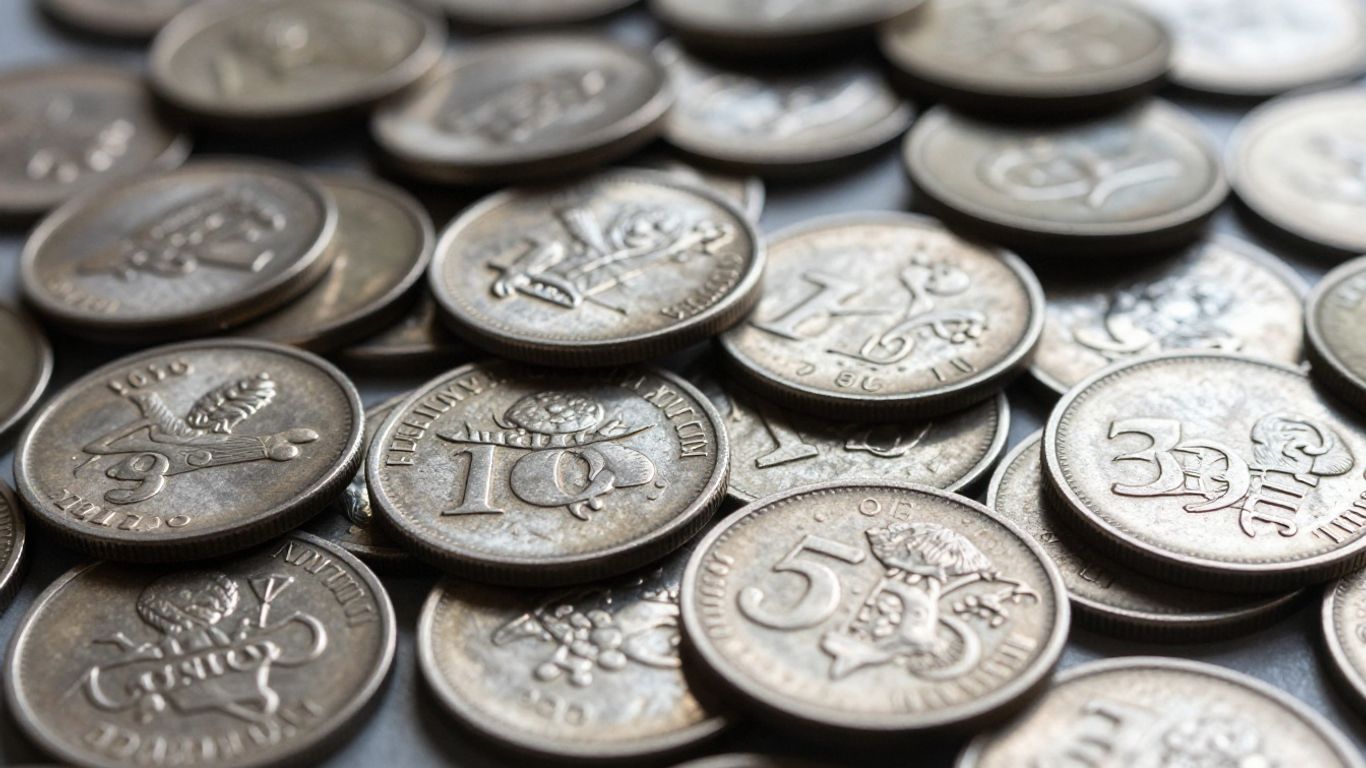
When people talk about "junk silver," it might sound a bit off-putting, like they’re talking about worthless trinkets. But in the world of precious metals, this term actually refers to something quite valuable. "Junk silver" is a nickname for U.S. dimes, quarters, and half dollars minted before 1965, which contain 90% silver. The "junk" part doesn’t mean the coins are in bad shape or have no worth; rather, it signifies that their value comes almost entirely from their silver content, not from any special collectible (numismatic) appeal. These coins have seen a lot of use in everyday transactions over the decades, so they’re often worn down and don’t have the pristine condition that collectors look for.
Defining "Junk" vs. "Constitutional" Silver
Many investors and collectors prefer to use the term "constitutional silver" instead of "junk silver." This name highlights the historical significance of these coins. They were minted under the authority of the U.S. Constitution and were once a standard part of American currency. Unlike today’s coins, which are made of base metals, these older coins were made with a significant amount of precious metal. This makes them a tangible form of wealth, a characteristic that many feel is missing from modern fiat money.
Here’s a quick look at the common compositions:
- 90% Silver Coins: These are the most common and include dimes, quarters, and half dollars minted up to and including 1964. They also include some dollar coins like the Morgan and Peace dollars, though these often carry numismatic premiums.
- 40% Silver Coins: Kennedy half dollars minted between 1965 and 1970 fall into this category. They have a lower silver content compared to the 90% coins.
- 35% Silver "War Nickels": These Jefferson nickels were made between 1942 and 1945. They are identifiable by a large mint mark above Monticello on the reverse side.
Why "Junk" Silver is Called "Real Money"
Despite the somewhat unflattering name, "junk silver" is often referred to as "real money." This is because these coins represent a direct link to a time when currency was backed by a physical commodity – silver. Their value is intrinsic, tied to the market price of silver, rather than being based solely on government decree. This intrinsic value provides a sense of security and tangibility that many investors seek, especially during uncertain economic times. The fact that they were once legal tender adds a layer of government-backed authenticity.
The transition away from silver coinage in the mid-1960s marked a significant shift in monetary policy. As the silver content in coins became worth more than their face value, people naturally started hoarding them, leading to shortages. This economic principle, often described by Gresham’s Law, highlights how intrinsic value influences the circulation of currency.
The Misnomer of "Junk" Silver
The term "junk" is really a misnomer because it implies worthlessness. However, these coins are far from worthless. Their value is stable and directly tied to the silver market. While they may not be in mint condition, the silver content remains. For investors looking for an accessible way to own physical silver, these coins offer a practical and recognizable option. They are often more affordable than modern bullion coins or bars because their premiums over the silver spot price tend to be lower, making them a popular choice for those starting their precious metals journey.
Historical Context of Junk Silver Coins
The story of what we now call "junk silver" really kicks off in the mid-1960s. Before that, U.S. dimes, quarters, and half dollars were made with a good amount of silver – 90% to be exact. But as the price of silver started creeping up, people noticed that the metal in these coins was worth more than their face value. This is a classic example of Gresham’s Law, where "bad money drives out good." People started pulling the silver coins out of circulation, hoarding them because they were worth more as silver than as money. This created a bit of a coin shortage.
The Coinage Act of 1965 and Its Impact
To deal with this shortage and the rising cost of silver, Congress passed the Coinage Act of 1965. This was a pretty big deal. It basically took the silver out of our everyday dimes and quarters, replacing it with a cheaper mix of copper and nickel. The Kennedy Half Dollar got a bit of a reprieve, keeping 40% silver for a few more years until 1970, after which it also went to the copper-nickel clad composition. This act effectively marked the end of precious metals being used in circulating U.S. coinage. The coins minted before this change, the ones that still held that 90% silver content, are what we now refer to as junk silver. They survived because their silver value was still less than their face value, or they were simply overlooked.
Gresham’s Law and Coin Shortages
Gresham’s Law, named after Sir Thomas Gresham, is an economic principle stating that when two forms of currency are in circulation, and one is perceived as more valuable (like silver coins compared to debased or fiat currency), people will hoard the more valuable currency and spend the less valuable one. This is exactly what happened with U.S. silver coinage in the lead-up to 1965. The silver content made these coins more desirable as a store of value than as a medium of exchange, leading to their disappearance from everyday commerce. This phenomenon is a key reason why pre-1965 silver coins are now considered a tangible asset, a form of real money that held its value differently than modern currency.
The End of Circulating Precious Metal Currency
Before 1965, carrying a pocketful of change meant you were carrying actual silver. Dimes, quarters, and half dollars were legal tender, and their value was tied to the precious metal they contained. The Coinage Act of 1965 changed all that, ushering in an era of cupro-nickel clad coins. This transition was significant because it severed the direct link between circulating currency and intrinsic commodity value for the majority of U.S. coins. The surviving 90% silver coins, though no longer minted for circulation, became a distinct category of silver holdings, valued purely for their metal content rather than their face value. They represent a tangible piece of monetary history, a time when the coins in your pocket had a direct, measurable worth in precious metal.
Common Types and Purity of Junk Silver
When people talk about "junk silver," they’re usually referring to older U.S. coins that were once made with a significant amount of silver. These coins aren’t valuable because they’re rare or in perfect condition; their worth comes from the actual silver content inside them. It’s a bit like having a worn-out tool that still does its job perfectly – the wear doesn’t change its core function. The term "junk" just means they’ve lost their collectible appeal due to heavy use over the years.
90% Silver Coins: The Most Common
This is the category most people think of when they hear "junk silver." These coins were minted in the United States up until 1964 and are made of a 90% silver and 10% copper alloy. This mix made them durable enough for everyday use while still containing a good amount of precious metal. You’ll find these in common denominations like dimes, quarters, and half dollars. For instance, dimes and quarters from before 1965 are typically 90% silver. It’s pretty straightforward: if the coin is dated 1964 or earlier, and it’s a dime, quarter, or half dollar, it’s almost certainly 90% silver.
- Dimes: Roosevelt, Mercury, and older dimes.
- Quarters: Washington, Standing Liberty, and older quarters.
- Half Dollars: Franklin, Walking Liberty, and older half dollars.
The value of these coins is directly tied to the current price of silver. Even if a coin is scratched or dented, its silver content remains the same, making it a reliable way to own silver.
40% Silver Kennedy Half Dollars
Things get a little different starting in 1965. Congress changed the rules, and the U.S. Mint began producing Kennedy Half Dollars with a lower silver content. These coins, minted from 1965 through 1970, contain 40% silver mixed with other metals. While they still have silver value, it’s less than the 90% coins. You can usually spot these by looking at the edge; they often have a different appearance compared to the older, higher-silver coins. They are still considered part of the broader "junk silver" category because their value is primarily based on their metal content rather than any numismatic rarity. You can find these 40% silver coins for sale at places like SD Bullion.
35% Silver "War Nickels"
There’s another, less common type of silver coin that sometimes gets lumped into the junk silver discussion: the "War Nickel." These were nickels minted during World War II, specifically from 1942 to 1945. To save nickel for the war effort, the U.S. Mint made these nickels out of 35% silver and 65% copper. They look like regular nickels, but they have a distinct magnetic property that regular nickels don’t. While they contain silver, their lower percentage and smaller size mean their silver value is less significant compared to the 90% dimes and quarters. They are more of a historical curiosity with a bit of silver value attached.
Identifying Genuine Junk Silver Coins
When you’re looking to buy or sell junk silver, making sure you’ve got the real deal is pretty important. It’s not like trying to spot a fake designer handbag; with coins, there are some straightforward ways to tell if you’re holding actual silver or just a cleverly disguised piece of metal. Most of the time, these coins are pretty worn from being passed around for years, but that wear doesn’t really affect their silver value. The key is to know what to look for.
Checking the Coin’s Date
This is usually the first and easiest step. For dimes, quarters, and half dollars, you’re looking for dates from 1964 or earlier. If it’s dated 1965 or later, it’s likely not 90% silver. There’s a small exception for "War Nickels" minted between mid-1942 and 1945; these have a 35% silver content and are identifiable by a large mint mark (like a ‘P’, ‘D’, or ‘S’) placed above the dome on the reverse side.
Examining the Coin’s Edge
Take a good look at the side of the coin, the edge. Genuine 90% silver coins will have a solid, consistent silver-colored edge. If you see a distinct stripe of copper running through the edge, that’s a sign it’s a modern clad coin, not silver. Keep in mind, the 40% silver Kennedy Half Dollars made between 1965 and 1970 will show this clad edge because they were made with a silver-copper composition.
The Ping Test for Authenticity
This one’s a bit more subtle but can be quite effective. Gently tap the coin with another coin or a hard surface. Real silver coins tend to produce a clear, high-pitched ringing sound that lasts for a few seconds. A fake or clad coin will usually make a duller, shorter "thunk" sound. It takes a little practice to get the hang of it, but it’s a classic method.
Verifying Coin Weight and Magnetism
Precision matters here. You’ll want a small digital scale. A genuine U.S. silver dime (90%) should weigh about 2.5 grams, a quarter around 6.25 grams, and a half dollar about 12.5 grams. If the weight is significantly off, it’s a red flag. Also, silver isn’t magnetic. Grab a reasonably strong magnet; if the coin sticks to it, you can be pretty sure it’s not silver.
Authenticating junk silver is generally simpler than verifying rare collectible coins or modern bullion. The value is primarily in the metal content, so minor imperfections from circulation don’t detract from its silver worth, but they can be clues to its authenticity. Always buy from trusted sources when possible.
Here’s a quick rundown of what to look for:
- Dates: Pre-1965 for dimes, quarters, and half dollars. Mid-1942 to 1945 for 35% silver War Nickels.
- Edge: Solid silver color for 90% coins; copper stripe for clad coins.
- Sound (Ping Test): Clear, ringing tone for silver; dull thud for clad.
- Weight: Check against standard weights (e.g., 2.5g for a dime).
- Magnetism: Silver is not magnetic; fakes often are.
Calculating the Value of Junk Silver
Figuring out what your junk silver is worth isn’t rocket science, but you do need to know a couple of things. The main driver of value is, surprise, the silver itself. The price of silver on the global market, often called the "spot price," changes daily, sometimes even by the minute. This is your baseline.
The Role of Silver Spot Price
The spot price is the going rate for one troy ounce of pure silver. When you’re looking at junk silver, which is typically 90% pure (though we’ll get to other types later), you’re not getting a full ounce of pure silver in every ounce of coin. This is where a simple calculation comes in. For every dollar of face value in 90% silver coins, you have about 0.715 troy ounces of actual silver. So, if the spot price is, say, $25 per troy ounce, a dollar’s worth of junk silver would have a melt value of roughly $17.88 (0.715 x $25).
Understanding Premiums Over Spot
Now, here’s the catch: you’ll almost never buy or sell junk silver at its exact melt value. Dealers need to make a living, and there are costs involved in sourcing, storing, and selling these coins. This difference between the melt value and the price you pay is called a "premium." Premiums can go up or down depending on how much silver is available, how much people want it, and even the specific type of coin. For instance, a bag of old dimes might have a lower premium than a few silver dollars because dimes are more common and easier to handle.
Formula for Calculating Melt Value
To get a good estimate of the melt value, you can use this straightforward approach:
- Total Silver Weight = Face Value of Coins x 0.715 (for 90% silver)
- Melt Value = Total Silver Weight x Current Silver Spot Price
Let’s say you have $100 in face value of 90% silver coins and the spot price of silver is $25 per troy ounce:
- Total Silver Weight = $100 x 0.715 = 71.5 troy ounces
- Melt Value = 71.5 x $25 = $1,787.50
This $1,787.50 is the theoretical melt value. When you’re buying, expect to pay more than this due to premiums. When selling, you might get a bit less than this, depending on the buyer.
It’s important to remember that this calculation gives you the melt value, which is based purely on the silver content. The actual market price you’ll pay or receive will include dealer premiums, which can fluctuate. Always factor these in when making investment decisions.
Here’s a quick look at how different types of silver investments stack up:
| Feature | Junk Silver (90%) | .999 Fine Silver Bars | Numismatic Coins |
|---|---|---|---|
| Purity | 90% | 99.9%+ | Varies |
| Value Basis | Silver Content | Silver Content | Rarity, Condition |
| Premiums | Generally Lower | Moderate | Can be High |
| Recognizability | High | High | Varies |
| Divisibility | Excellent | Good | Poor |
Key Advantages of Junk Silver Investments
When you’re looking at different ways to invest in silver, junk silver really stands out for a few solid reasons. It’s not just about owning silver; it’s about owning it in a way that makes practical sense for a lot of people.
Divisibility for Transactions
One of the biggest pluses with junk silver is how easy it is to break down into smaller pieces. Think about it: if you ever needed to use your silver for trading, having a bunch of dimes and quarters is way more useful than a big, heavy silver bar. You can actually use them for everyday stuff if needed. This makes junk silver a practical choice for real-world scenarios.
Recognizability and Trust
Because these are old U.S. coins, most people recognize them instantly. You don’t have to explain what they are or prove their authenticity like you might with some newer, privately minted silver rounds. This familiarity builds trust, which is pretty important when you’re dealing with assets.
Lower Premiums Compared to Bullion
When you buy newly minted silver coins or bars, you often pay a higher price on top of the silver’s actual market value. This extra cost is called a premium. Junk silver usually has much lower premiums. This means you get more actual silver for the money you spend. It’s a more cost-effective way to acquire physical silver.
Government-Backed Authenticity
These coins were made by the U.S. Mint. That government backing gives them a level of authenticity that’s hard to beat. While fakes can exist in any market, the history and origin of these coins make them a trusted part of many investment portfolios. It’s a bit like having a built-in guarantee of origin.
Junk Silver vs. Other Silver Investments
When you’re looking at silver as an investment, it’s not all the same. You’ve got a few main categories, and knowing the differences helps you pick what’s right for your goals. Junk silver, for instance, has its own spot compared to, say, shiny new silver bars or those collectible coins that people pay extra for.
Junk Silver vs. Numismatic Coins
This is a big one. Numismatic coins are all about rarity and historical significance, not just the silver they’re made of. Think old Morgan dollars or rare mint errors. People pay a premium for these because they’re collectible. Junk silver, on the other hand, is valued almost entirely for its silver content. The wear and tear from being used as money means it lost any special collector appeal. So, while a rare coin might be worth hundreds or thousands over its silver melt value, junk silver usually trades very close to its melt value, plus a small premium.
Here’s a quick breakdown:
- Junk Silver: Priced primarily on silver weight. Common, circulated pre-1965 U.S. coins. Lower premiums over spot price.
- Numismatic Coins: Priced on rarity, condition, and historical demand. Can have significant premiums far above silver content. Often requires specialized knowledge.
The term "junk" is a bit of a misnomer. It doesn’t mean the silver is bad quality; it just means the coin’s value comes from the metal, not its collectible status. This makes it a more straightforward way to invest in silver for many people.
Junk Silver vs. .999 Fine Silver Bars
This comparison is more about purity and how you plan to use your silver. .999 fine silver bars, whether they’re small one-ounce bars or larger ones, are made to be as pure as possible. They’re often called "bullion." Bars usually have lower premiums per ounce than junk silver because they’re easier to produce in large quantities and don’t have the same manufacturing costs as individual coins.
- Purity: Bars are typically .999 or .9999 fine silver. Junk silver is 90% silver (or 40% for some half dollars).
- Value Basis: Both are based on silver content, but bars offer more pure silver per dollar invested if you’re buying in larger quantities.
- Premiums: Bars generally have lower premiums than junk silver, especially in larger sizes. Junk silver’s premium is often tied to the cost of acquiring and processing circulated coins.
So, if your main goal is to get the absolute most pure silver for your money, especially in larger amounts, bars might be the way to go. But if you want something more divisible, recognizable, and with a bit of historical connection to everyday commerce, junk silver holds its own.
Risks and How to Avoid Them
When you’re looking at junk silver coins, it’s not all smooth sailing. Like any investment, there are some bumps in the road you should be aware of. The biggest thing is making sure what you’re buying is the real deal and that you’re not paying too much for it. It’s pretty straightforward once you know what to look for, though.
The Risk of Counterfeit Coins
It’s not super common with junk silver compared to, say, rare coins, but fake coins do pop up. Someone might try to pass off a modern, non-silver coin as an older, silver one. The best way to avoid this is to buy from dealers you trust. A good dealer will stand behind their products and guarantee authenticity. It’s always a good idea to do a little homework on the seller before you hand over your cash.
Avoiding Excessively High Premiums
Junk silver’s value is mostly tied to its silver content. While there’s usually a small markup over the spot price of silver, sometimes dealers try to charge way more than is reasonable. You really need to keep an eye on the current silver spot price. If a seller’s prices seem way out of line for common dimes, quarters, or halves, it’s probably best to look elsewhere. Don’t get caught paying a premium that eats up all your potential profit.
Understanding 40% Silver Coin Value
Specifically, Kennedy Half Dollars made between 1965 and 1970 are only 40% silver. These coins are often a bit trickier to deal with. They might not fetch as good a price when you go to sell them, and some buyers might even pass on them altogether, preferring the 90% silver stuff. It’s not that they have no value, but you should be aware that their value basis is lower, and they might be harder to move.
The Pitfall of Condition Hype
With junk silver, the condition of the coin really shouldn’t matter much. You’re buying it for the silver inside, not because it’s a pristine collectible. Some sellers might try to tell you a coin is worth more because it’s in "great shape" or has some minor historical significance. Don’t fall for it. The value is in the melt value, plain and simple. Unless it’s a truly rare, uncirculated piece (which isn’t really "junk silver"), you should be paying based on its silver weight, not its appearance.
Here are some quick checks to help you spot genuine junk silver:
- Check the Date: For dimes, quarters, and half dollars, look for dates 1964 or earlier. "War Nickels" (mid-1942 to 1945) will have a large mint mark on the reverse.
- Examine the Edge: A genuine 90% silver coin has a solid silver edge. If you see a copper stripe, it’s likely a modern clad coin.
- The Ping Test: Gently tap the coin. Silver produces a clear, ringing sound, while clad coins make a duller thud.
- Verify Weight: Use a scale. A silver dime should weigh 2.5 grams, a quarter 6.25 grams, and a half dollar 12.5 grams. Deviations can be a warning sign.
- Use a Magnet: Silver isn’t magnetic. If a magnet sticks to the coin, it’s not silver.
When you’re buying junk silver, remember that its value is primarily based on the silver content. Don’t get sidetracked by claims about condition or rarity unless you’re specifically looking at numismatic coins, which are a different category altogether. Stick to the metal’s worth and you’ll be on much safer ground.
Strategies for Acquiring Junk Silver
Working with Reputable Dealers
When you’re looking to add junk silver coins to your collection, finding a trustworthy source is pretty important. It’s not like picking up groceries; you want to be sure you’re getting what you pay for. Reputable dealers are your best bet for ensuring authenticity and fair pricing. They often have established businesses and a reputation to uphold, which means they’re less likely to deal in fakes or overcharge. Think of them as the established shops in town versus a random person selling coins out of a van. They’ll usually have a good selection and can answer your questions, which is a big help when you’re starting out or expanding your holdings.
Buying in Bulk by Face Value
One of the most common and often most cost-effective ways to buy junk silver is by its face value, especially for the 90% silver coins. This usually applies to dimes, quarters, and half dollars minted before 1965. Dealers will often sell these in bulk bags, where you’re buying a certain dollar amount of the coins (like $100 face value) rather than trying to pick out individual coins. This method simplifies the buying process and typically results in lower premiums over the spot price of silver. It’s a practical approach for building a significant amount of silver relatively quickly.
Here’s a general idea of how much silver you get for a given face value:
| Face Value | Approximate Silver Content (Troy Ounces) |
|---|---|
| $1.00 | 0.715 |
| $10.00 | 7.15 |
| $100.00 | 71.5 |
Note: These figures are approximations and account for typical wear and tear on circulated coins.
The Benefits of Dollar-Cost Averaging
Dollar-cost averaging is a strategy where you invest a fixed amount of money at regular intervals, regardless of the price. It’s a bit like setting up an automatic payment for your savings. Instead of trying to guess the perfect time to buy, you just keep buying consistently. When silver prices are high, your fixed amount buys fewer coins. When prices are low, that same amount buys more coins. Over time, this can help smooth out the average cost you pay per ounce and reduce the risk of buying a large amount right before the price drops. It’s a patient approach that works well for building a substantial silver position without the stress of market timing.
This method is particularly useful for tangible assets like junk silver. It allows you to steadily accumulate physical metal over time, building a tangible store of value that is less susceptible to the short-term fluctuations that can affect other investments. It’s a disciplined way to grow your holdings.
The Role of Junk Silver in a Diversified Portfolio
Junk silver isn’t really about getting rich quick. Think of it more as a solid building block for protecting your wealth. It’s a tangible asset that can help keep your overall financial picture more stable, especially when things get a bit shaky in the economy.
Junk Silver as an Inflation Hedge
Over time, the money in your bank account tends to buy less and less. That’s inflation. Physical silver, including junk silver coins, has historically held its value better than fiat currencies when inflation rises. While stocks and bonds can be unpredictable, silver’s intrinsic worth means it often keeps pace with or even outpaces rising prices, helping your purchasing power stay intact.
A Safe Haven During Economic Instability
When there’s a lot of uncertainty – maybe a financial crisis or geopolitical tension – people often look for places to put their money where it’s safe. Precious metals like silver have a long track record of being a reliable store of value during these turbulent times. Junk silver, being easily accessible and recognizable, offers a practical way to hold onto that kind of security.
Tangible Asset Protection
Unlike stocks, bonds, or digital currency, which are essentially promises or entries in a ledger, junk silver is something you can physically hold. This physical possession means it’s independent of any single financial institution or government system. Having tangible assets can provide a real sense of security and control over your wealth, especially when you can’t always trust the digital world.
Diversification Benefits
It’s generally smart not to put all your eggs in one basket. In investing, this means diversifying your portfolio. Precious metals often behave differently than traditional investments like stocks and bonds. Sometimes, when stocks are down, silver might be up, or vice versa. Adding junk silver to your mix can help reduce the overall ups and downs (volatility) of your entire investment portfolio. It provides a counterbalance that can lead to smoother returns over the long haul.
Here’s a quick look at how junk silver fits in:
- Inflation Hedge: Helps maintain purchasing power.
- Safe Haven: Provides security during uncertain economic times.
- Tangible Asset: Offers physical ownership independent of financial systems.
- Diversification: Can reduce overall portfolio risk by acting as a counterweight to other assets.
Wrapping Up: Why ‘Junk’ Silver is Actually a Smart Move
So, after all that, it’s pretty clear that calling these old coins ‘junk’ just isn’t right. They’re actually a solid way to own silver, especially if you’re just starting out or looking for something practical. Because they’re not rare collectibles, you’re mostly paying for the silver itself, which is a big plus. Plus, they’re easy to recognize and can even be used for trading if you ever needed to. Think of them as a dependable part of your financial plan, a real asset that holds its own when other things get shaky. It’s a straightforward way to get your hands on precious metal without breaking the bank.
Frequently Asked Questions
What exactly is “Junk Silver”?
The term “junk silver” might sound bad, but it’s actually a bit misleading. It refers to old U.S. coins, usually dimes, quarters, and half dollars, that were made before 1965. These coins are called “junk” because they’ve been used a lot and aren’t special to collectors anymore. Their real value comes from the silver they contain, not their looks or rarity.
Why do some people call it “Constitutional Silver” instead?
Many people prefer calling these coins “constitutional silver.” This is because they were once official money, or legal tender, under the U.S. Constitution. They represent a time when American money was backed by real silver. This gives them a sense of trustworthiness that many people feel modern money lacks.
Why did the U.S. stop making silver coins for everyday use?
The U.S. stopped using silver in most coins because the price of silver went up. By 1965, the silver inside the coins was worth more than the coin’s face value. People started saving these coins, causing a shortage. To fix this, the government changed the coins to be made of cheaper metals, like copper and nickel.
What kind of silver coins are usually considered “Junk Silver”?
The most common junk silver coins are dimes, quarters, and half dollars made before 1965. These coins are typically 90% silver. Sometimes, older silver dollars are also included, but only if they are very worn and don’t have much value to collectors.
How can I tell if a coin is real junk silver?
There are a few simple ways. First, check the date – it should be 1964 or older for most dimes and quarters. Look at the edge of the coin; real silver coins have a solid silver edge, while newer ones have a copper stripe. You can also try a ‘ping test’ – silver coins make a clear ringing sound when tapped, unlike the dull thud of fake coins. Finally, silver isn’t magnetic, so a real silver coin won’t stick to a magnet.
How is the value of junk silver figured out?
The value of junk silver is mainly based on how much silver is in it. This is tied to the current market price of silver, often called the “spot price.” You’ll usually pay a little more than the spot price, which is called a “premium,” to cover costs like making and selling the coins.
Is junk silver a good investment?
Junk silver can be a good part of an investment plan. It’s seen as a way to protect your money against rising prices (inflation) and during uncertain economic times. Because it’s made of real silver and is easy to divide into smaller amounts, it’s a practical choice for many investors.
What’s the difference between junk silver and pure silver bars?
Pure silver bars are made of 99.9% silver and are great for buying a lot of silver at once, often with lower costs per ounce. Junk silver, typically 90% silver, is easier to break down for trading or selling in smaller amounts and is often more recognizable. Both have their place, depending on what you want to achieve with your investment.