
Coins are like tiny history books, and knowing where to look for the writing on them is half the battle. This coin inscription locations guide is here to help you figure out what all those little marks and words mean. We’ll cover the basics of what’s on a coin and where to find it, making it easier to understand the stories these old pieces of metal have to tell. It’s not as complicated as it sounds, and with a little practice, you’ll be reading coins like a pro.
Key Takeaways
- Coins have two main sides: the obverse (usually with a portrait) and the reverse (often with scenes or symbols).
- The writing on coins, called legends, provides names, titles, and dates.
- Abbreviations are common on coins, especially for rulers’ titles, and understanding them helps in identification.
- Mintmarks are symbols that tell you where a coin was made, which can be useful for dating.
- The material a coin is made from (gold, silver, bronze) gives clues about its value and use in ancient times.
Understanding Coin Inscription Locations
When you first look at an old coin, it might seem like a jumble of images and letters. But these coins are like tiny history books, and the inscriptions tell us a lot. Knowing where to look is the first step to reading them. Most coins have two main sides, and each side has a purpose for its markings.
The Obverse: Portraits and Titles
The obverse, often called the ‘heads’ side, is usually where you’ll find the main portrait. This is typically an emperor, a ruler, or sometimes a significant deity. Around the portrait, you’ll see inscriptions, which are mostly titles and names. These can be quite long, so the Romans got good at using abbreviations to fit everything in. Figuring out who is on the coin is usually the easiest part. For example, you might see IMP CAESAR TRAIANVS AVG, which means Emperor Caesar Trajan Augustus. These titles tell us about the ruler’s status and authority at the time the coin was made. Sometimes, the reverse side might have a portrait too, but the obverse is the standard place for the main figure.
The Reverse: Narratives and Symbols
The reverse, or ‘tails’ side, is where the coin tells a story. This is where you’ll find images that represent victories, religious figures, public buildings, or abstract ideas like ‘Victory’ or ‘Peace’. The inscriptions here often explain what the image means or commemorate an event. For instance, you might see VICTORIA AVG, meaning ‘Victory of the Emperor’. These images and words give us a window into what the rulers wanted people to remember or believe. It’s like a miniature propaganda poster. You can find examples of this on early medieval English coins which also feature pictorial designs.
The Edge: Often Overlooked Details
While most of the important information is on the obverse and reverse, don’t forget the edge of the coin. In ancient times, the edge was often plain, but later on, some coins started to have inscriptions or decorative patterns here. These could include mint marks, dates, or even religious phrases. It’s a small detail, but it can sometimes provide the final piece of the puzzle for identifying a coin’s origin or age. It’s easy to miss if you’re not looking closely, but it’s worth checking out.
Coins are more than just money; they are historical documents. The placement and content of inscriptions were carefully chosen to convey specific messages about power, religion, and societal values.
Deciphering Roman Coin Legends
Roman coins are like tiny history books, and their inscriptions are the text you need to read to understand them. It might seem a bit daunting at first, especially with all those abbreviations and Latin phrases, but it’s really not as complicated as it looks. The key is to break it down and know what to look for.
Common Obverse Abbreviations
The "heads" side, or obverse, usually shows the emperor’s portrait. Because emperors had so many titles and names, the inscriptions are often shortened. You’ll see abbreviations for things like ‘Imperator’ (IMP), ‘Caesar’ (CAES), ‘Augustus’ (AVG), and ‘Pius’ (P). Sometimes, you’ll also find titles related to their religious or military roles. For example, ‘Pontifex Maximus’ (P.M.) means chief priest. Knowing these common abbreviations is a big step in identifying who is on the coin and their status. It’s like learning a secret code that unlocks the ruler’s identity.
Here’s a quick look at some frequent ones:
| Abbreviation | Full Title/Meaning |
|---|---|
| IMP | Imperator (Commander) |
| CAES | Caesar |
| AVG | Augustus |
| P.M. | Pontifex Maximus (Chief Priest) |
| TR.P. | Tribunicia Potestas (Tribunician Power) |
| COS | Consul |
Reverse Inscriptions and Their Meanings
The "tails" side, the reverse, often tells a story. It might show a god, a goddess, a military victory, or a public building. The inscriptions here can tell you what the image represents or give credit to the Senate (often seen as ‘S.C.’ for Senatus Consultum). For instance, you might see ‘VICTORIA AVG’ meaning the Emperor’s Victory, or ‘ROMA’ indicating the city of Rome. These inscriptions help connect the imagery to a specific event or concept important to the Romans. It’s fascinating how much information they packed onto these small metal discs. You can often find guides that help you identify Roman coins by looking at both the portrait and the reverse type [5807].
Dating Coins Through Inscriptions
While Roman coins don’t usually have a year printed on them like modern currency, their inscriptions can help you figure out when they were made. The emperor’s name and titles are the biggest clue. As emperors reigned for specific periods, knowing who is depicted helps narrow down the date range. Also, certain titles were only used during particular times in an emperor’s reign. For example, the title ‘Tribunicia Potestas’ (TR.P.) was renewed annually, and the number associated with it (TR.P. XX for the 20th time) can pinpoint a specific year or period. Sometimes, the reverse inscription might refer to an event, like a specific victory or building project, which can also be dated. This process of piecing together clues from the ruler, their titles, and the imagery is how numismatists date these ancient artifacts.
The careful study of inscriptions, combined with the imagery and portraiture, allows us to reconstruct historical narratives and understand the propaganda and messaging the Roman state wished to convey to its populace. Each coin is a deliberate communication tool from its time.
Key Elements in a Coin Inscription Locations Guide
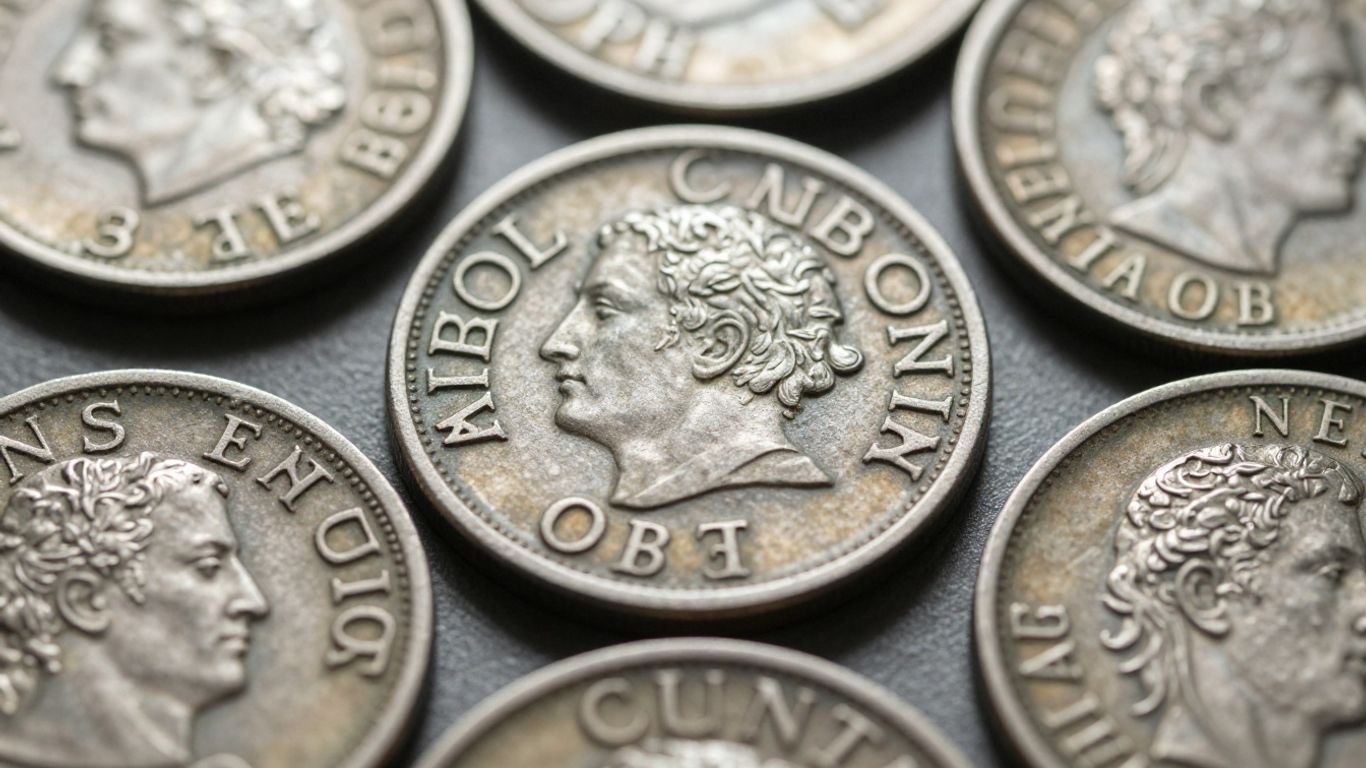
When you’re looking at an old coin, figuring out what the writing means and where it is can tell you a lot. It’s not just random letters; it’s like a tiny history book stamped onto metal. The placement of these inscriptions is just as important as the words themselves.
Identifying Rulers and Their Titles
On the front, or obverse, of many coins, you’ll often find the portrait of a ruler. The writing around this portrait usually gives you their name and titles. For Roman coins, you’ll see abbreviations like IMP (Imperator) or AVG (Augustus). Knowing these titles helps place the coin in a specific time period and understand the ruler’s status. For example, seeing ‘CAESAR’ might point to an earlier period, while ‘AVG’ usually indicates an emperor.
Recognizing Deities and Personifications
The back, or reverse, of a coin is where the real stories often unfold. You might see images of gods and goddesses, or figures representing abstract ideas like Victory or Peace. These figures often have specific symbols that help identify them. Jupiter might hold a lightning bolt, while Victory is often shown with wings and a palm branch. These images, along with any accompanying text, give clues about the coin’s purpose or the message the issuer wanted to send.
Interpreting Commemorative Imagery
Sometimes, coins were made to celebrate specific events or achievements. You might see depictions of buildings, military triumphs, or public works. These images are like historical snapshots. For instance, a coin showing a newly built aqueduct would tell you about the emperor’s focus on infrastructure during their reign. Understanding these scenes helps you date the coin and learn about the historical context in which it was created. It’s a way to connect with the past through the eyes of those who lived it. For more on how to read coins, check out this guide to understanding coin details.
The inscriptions and imagery on coins are not just decorative; they are deliberate messages from the past. By carefully examining who is depicted, what symbols are used, and what is written, we can piece together historical narratives and understand the values and priorities of the societies that produced them.
Here’s a quick look at common elements:
- Obverse: Ruler’s portrait, name, titles, and sometimes a symbol of the state.
- Reverse: Deities, personifications, historical events, buildings, or military scenes.
- Edge: Less common for inscriptions on older coins, but can sometimes feature patterns or text on more modern issues.
| Coin Side | Common Elements |
|---|---|
| Obverse | Ruler’s Name & Titles, Portrait |
| Reverse | Deities, Symbols, Commemorative Scenes |
Finding reliable information about these elements can sometimes be tricky. If you’re looking to buy or sell coins, finding a reputable dealer is a good step. Resources like the NGC Coin Dealer Locator can help you find professionals in your area.
Navigating Mintmarks and Their Significance
Coins aren’t just metal discs; they’re tiny historical documents. One of the most telling features, often overlooked, is the mintmark. This little symbol or letter tells you where a coin was actually made. Think of it like a maker’s mark, but for money. Understanding these marks can significantly help in dating a coin and even identifying its authenticity.
Common Mint Locations
Roman mints were spread across the vast empire, and each had its own way of marking its output. Some common mints and their marks include:
- Rome (ROMA, R, RM): The heart of the empire, Rome was a primary minting location for much of its history.
- Alexandria (ALE): A major center in Egypt, its coins often reflect distinct styles.
- Trier (TR, TRIER, PTR): Located in modern-day Germany, this mint was important for the western provinces.
- Cyzicus (KV, KA, SMK): Situated in Asia Minor, this mint produced a large volume of coinage.
- Lugdunum (Lyon) (LUGD, LG, LVG): An important mint in Gaul (modern France).
Understanding Mintmark Variations
It wasn’t always straightforward. Mintmarks could change over time, even for the same city. Sometimes, a mint might use different letters or symbols depending on the emperor or the specific period. For example, London was sometimes marked as ‘LN’ or ‘LON’, and later, during the 4th century, it was even referred to as ‘Augustus’. This variation means you can’t just look for one symbol; you need to consider the coin’s overall style and the emperor depicted.
Mintmarks as Dating Clues
Mintmarks are incredibly useful for dating coins. Certain mints were more active during specific periods, and the introduction or discontinuation of a particular mintmark can help narrow down the timeframe of a coin’s production. For instance, if a specific mintmark only appears on coins of a particular emperor, it strongly suggests the coin was minted during that ruler’s reign. This is especially true when combined with other inscriptions like the tribunician power dates (TRP) or consulship dates (COS).
The presence and style of a mintmark are not just about location; they are integral to the coin’s historical narrative. They speak to the administrative reach of the empire and the logistical networks involved in producing currency. A coin from a distant mint might tell a different economic story than one from the capital.
In modern times, mintmarks continue to be important. For example, American coins today are primarily marked with "S" for San Francisco, "D" for Denver, "P" for Philadelphia, and "W" for West Point. These mint marks indicate where the coins were produced, much like their ancient predecessors.
Exploring Coin Materials and Their Impact
The metal a coin is made from tells us a lot about its place in history and its intended use. Different materials had different values, which affected who used them and for what. Think of it like this: not every transaction needs a gold bar, right? The same applied to ancient coins.
Gold Aurei: High Value and Imperial Use
Gold coins, like the Roman aureus, were the big players. These weren’t for buying bread. They were used for major purchases, paying soldiers, and as gifts from emperors. Because gold is rare and valuable, these coins show us who had the real power and wealth. The purity of the gold could also be a sign of the emperor’s stability. A debased gold coin might mean trouble was brewing.
Silver Denarii: The Workhorse of Commerce
Silver coins, especially the denarius in Roman times, were the backbone of the economy for a long stretch. They were used for everyday trade, paying for goods and services, and were widely accepted. The silver content was important, and changes in it could signal economic shifts. Many historical accounts and even oral traditions mention the importance of silver coinage in daily life, showing how it connected people across the empire. Understanding these coins helps us grasp the flow of commerce.
Bronze Sestertii and Dupondii: Everyday Transactions
Bronze coins, like the sestertius and dupondius, were the coins you’d find in your pocket for daily needs. They were used for market purchases, paying for transport, or small fees. Their larger size often meant they could carry more detailed imagery, sometimes depicting public works or important events, making them a sort of miniature public announcement system. The sheer volume of these coins found tells us about the scale of daily economic activity.
The choice of metal for coinage was never arbitrary. It was a deliberate decision tied to economic policy, social structure, and the perceived value of the metal itself. This material aspect is a direct link to the metallurgical practices of the time, a field with a long history in many regions, including the Indian subcontinent where metalworking dates back millennia. The history of metallurgy is thus intertwined with the history of coinage.
Here’s a quick look at some common Roman denominations and their materials:
| Coin Type | Material | Primary Use |
|---|---|---|
| Aureus | Gold | High-value transactions, imperial gifts |
| Denarius | Silver | General commerce, everyday trade |
| Sestertius | Bronze | Daily purchases, small transactions |
| Dupondius | Bronze | Everyday transactions, often half a sestertius |
| As | Bronze | Smallest daily purchases |
Advanced Techniques for Coin Inscription Analysis
Beyond the basics of reading names and titles, there are more intricate ways to understand what a coin is telling us. It’s like going from recognizing letters to reading full sentences, and then understanding the author’s intent. This is where things get really interesting for anyone serious about numismatics.
Recognizing Die Axis and Errors
When a coin is struck, the hammer die and the anvil die need to align properly. The die axis describes this alignment. Most coins have a standard alignment, often referred to as a "coin turn" or "medal turn." However, sometimes the dies aren’t perfectly aligned, leading to what collectors call a "rotated die" error. The degree of rotation can vary, from a slight tilt to a full 180-degree flip. These errors, while technically flaws, can make a coin more desirable and valuable to collectors who specialize in error coins. Examining the orientation of the obverse and reverse designs relative to each other is key to spotting these.
The Role of Patina in Identification
Patina is that surface layer that forms on a coin over time due to chemical reactions with its environment. For ancient coins, especially those found in the ground, patina isn’t just discoloration; it’s a historical record. A well-formed, stable patina can actually protect the coin’s surface and details. Different environments produce different types of patina – think earthy browns and greens from soil, or darker, more metallic sheens from being submerged. The color, texture, and even the presence of encrustations can offer clues about a coin’s provenance and how it was stored or lost. It’s a visual story of the coin’s journey through time. Learning to distinguish between natural, desirable patina and artificial toning or damage is a skill that takes practice and careful observation, often aided by a 10x loupe.
Utilizing Numismatic Resources
To truly master coin inscription analysis, you can’t go it alone. There’s a whole world of information and help out there. Think of it as having a team of experts ready to assist. This includes:
- Reference Books: These are packed with detailed information on coin types, rulers, mintmarks, and abbreviations. They are indispensable for serious study.
- Online Databases and Forums: Websites dedicated to numismatics allow you to compare your coins with known examples and connect with other collectors who can offer advice.
- Coin Shows and Societies: Meeting other collectors and dealers in person provides opportunities to see a wide variety of coins and learn from experienced individuals. Engaging with numismatic societies can be particularly beneficial.
Understanding the subtle nuances of coin inscriptions requires patience and a willingness to learn. It’s a process of piecing together historical, artistic, and metallurgical information. Don’t be discouraged if it seems complex at first; every expert was once a beginner.
Beyond Roman Coins: Broader Inscription Insights
Greek Coinage Inscriptions
Ancient Greek coins offer a fascinating glimpse into the early development of coinage and its inscriptions. Unlike the more standardized Roman legends, Greek coins often featured the name of the city-state (polis) in the genitive case, alongside symbols or deities associated with that city. For instance, a coin from Athens might bear the inscription ‘ATHENON’ (of the Athenians) and an image of Athena’s owl. These inscriptions were not just identifiers but also statements of civic pride and identity. The variety in Greek scripts and artistic styles across different city-states makes deciphering them a rich, albeit sometimes challenging, pursuit. The evolution from simple symbols to more complex legends reflects a growing sophistication in both minting technology and the use of coins as a medium of communication.
- City Identification: Often the primary inscription, indicating the issuing authority.
- Deities and Symbols: Common imagery linked to the city’s patron god or local significance.
- Rulers (Later Periods): As monarchies became more prevalent, ruler portraits and names appeared.
Medieval Coinage Markings
Medieval coinage presents a different set of challenges and insights. With the fragmentation of empires and the rise of numerous kingdoms and feudal lords, coin inscriptions became highly localized. Legends might include the name of the king, duke, or even a bishop, often in Latin or the vernacular language of the region. Mintmarks were also common, though their standardization varied greatly. The quality of inscriptions could also be inconsistent, reflecting the often turbulent political and economic conditions of the era. Studying these markings helps us understand the complex political landscape and trade networks of the Middle Ages. For example, early Islamic coins, while often lacking imagery, featured extensive Arabic inscriptions with religious and political messages, showcasing a distinct numismatic tradition.
Modern Coinage Legends
Modern coins, while generally more standardized, still carry inscriptions that tell a story. Beyond the country name and denomination, many coins feature mottos, national symbols, or commemorative designs. The rise of national identities in the modern era is often reflected in these legends. For example, the United States’ ‘E Pluribus Unum’ (Out of Many, One) speaks to the nation’s founding principles. Similarly, many European coins now bear inscriptions related to the European Union. The clarity and consistency of modern minting mean that inscriptions are usually easy to read, providing direct information about the issuing authority and the coin’s purpose. Examining these inscriptions can offer insights into a nation’s history, values, and aspirations. You can find more about the history of coinage at ancient Greek and Roman coins.
The transition from ancient to medieval and then to modern coinage shows a clear progression in how inscriptions were used. What began as simple city identifiers evolved into complex statements of power, religious devotion, and national identity, adapting to the changing political and social structures of each era.
Finding and Consulting Coin Experts
Sometimes, you’ll hit a wall with your coin research. Maybe you’ve got a coin with an inscription you just can’t figure out, or you’re trying to get a sense of what a particular piece is really worth. That’s when it’s time to call in the pros. Luckily, there are several ways to connect with people who know their stuff when it comes to coins.
Locating Reputable Coin Dealers
Finding a good coin dealer is like finding a good mechanic – you want someone honest and knowledgeable. Many dealers specialize in certain areas, like ancient coins, world coins, or specific historical periods. A great place to start is by looking for dealers who are members of professional organizations. These groups often have codes of ethics that members must follow. You can often find these dealers through online directories provided by numismatic organizations. A well-established dealer can be an invaluable resource for both buying and selling coins, as well as for getting expert opinions.
Here are some common places to look:
- Professional Numismatist Guild (PNG): Membership signifies a dealer has met strict standards of experience and integrity.
- American Numismatic Association (ANA): While not exclusively for dealers, many reputable dealers are members and attend their events.
- Local Coin Shops: Don’t underestimate the local shop! Many have been serving collectors for decades and have deep knowledge.
Engaging with Numismatic Societies
Numismatic societies are fantastic hubs for collectors of all levels. They’re places where people share their passion, swap stories, and, importantly, share knowledge. Attending meetings can expose you to different perspectives and introduce you to experienced collectors who might be willing to share their insights. These societies often have libraries or resources that can help with your research. It’s a good way to learn about coin grading basics and other aspects of the hobby.
Utilizing Online Dealer Directories
In today’s digital age, online resources make finding experts easier than ever. Many organizations and even some large coin dealers maintain directories on their websites. These directories often allow you to search by location, specialty, or even specific services offered. For instance, you might find a dealer who specializes in Roman Republican coinage or one who is particularly skilled in identifying mintmarks. These online tools can save you a lot of time when you’re trying to pinpoint the right person to help with a specific numismatic question. The world of numismatics is vast, and these directories help narrow your focus.
Putting It All Together
So, we’ve gone over a lot of ground, looking at all the different places you can find writing and pictures on old coins. It might seem like a lot at first, especially with all the abbreviations and symbols. But honestly, the more you look at these coins, the more sense it all starts to make. Think of it like learning a new language, but instead of words, you’re learning about history. Each little mark, each figure, it all adds up to tell a story. Don’t worry if you don’t get it all right away. Just keep looking, keep comparing, and you’ll start to see the patterns. Pretty soon, you’ll be able to pick up a coin and know what it’s trying to tell you about the past. It’s a pretty neat feeling, really.
Frequently Asked Questions
What are the main parts of a coin where I can find inscriptions?
You can usually find writing, or inscriptions, on the main sides of a coin, known as the obverse (the ‘heads’ side, often with a portrait) and the reverse (the ‘tails’ side, usually with a picture or scene). Sometimes, the very edge of the coin might also have writing on it, though this is less common and can be harder to see.
What kind of information can I expect to find in Roman coin inscriptions?
Roman coin writings often tell you who was in charge, like the emperor’s name and titles. They might also mention important events, gods, or symbols that were meaningful to the Romans. Sometimes, they even give clues about where the coin was made or when.
Why are abbreviations so common on Roman coins?
Roman coins were quite small, and emperors had very long names and many titles. To fit all this important information onto the coin’s surface, the Romans used abbreviations. It was a clever way to pack a lot of meaning into a small space.
How can coin inscriptions help me figure out when a coin was made?
Many inscriptions include titles or terms that were used during specific times or by certain rulers. For example, a title like ‘Tribune’ might be followed by a number showing how many years the emperor had served in that role. This can help you narrow down the coin’s age.
What is a mintmark and why is it important?
A mintmark is a small symbol or letter found on a coin that tells you which city or workshop made it. Knowing the mintmark is important because different locations might have produced coins with unique styles or slight variations, and it can also help confirm a coin’s origin and sometimes its date.
Are there specific terms I should know when studying coin inscriptions?
Yes, there are. The ‘obverse’ is the front, and the ‘reverse’ is the back. The writing itself is called the ‘legend.’ The blank space around the main design is the ‘field,’ and the area at the very bottom of the reverse is the ‘exergue.’ Knowing these terms helps when discussing or researching coins.
What does 'patina' mean in the context of old coins?
Patina refers to the natural coloring or surface layer that forms on a coin over a very long time due to its environment. It’s not dirt, but rather a chemical change on the metal. While it can sometimes hide details, a good patina can also be a sign of a coin’s age and authenticity.
Where can I find experts to help me understand coin inscriptions better?
You can find knowledgeable people by visiting local coin shops or dealers who specialize in coins. Joining a numismatic society, which is a group for coin collectors and experts, is also a great way to learn. Many online directories can help you find reputable dealers and organizations.