
When you look at coins, you might just see a piece of metal with a picture on it. But for collectors, there’s a lot more going on. One of the big things people look at is something called ‘strike quality.’ It’s basically how well the coin was made, if all the little details came out clear when it was stamped. This quality can really change how much someone likes a coin and, you guessed it, how much it’s worth. Understanding this ‘strike quality importance coins’ aspect is key to appreciating coins.
Key Takeaways
- A strong strike means a coin’s details are sharp and clear, like the fine lines on a portrait or the individual feathers on an eagle. Weak strikes often look soft or mushy, especially in areas with high design.
- The way a coin looks, its ‘eye appeal,’ is heavily influenced by its strike quality. Crisp details make a coin more attractive to collectors.
- Strike quality is a major factor in coin grading. Higher grades often require a strong strike, as it shows the coin was well-made and potentially better preserved.
- Things like worn-out dies or minting errors can lead to poor strike quality. Conversely, well-maintained dies and careful minting processes result in better strikes.
- Coins with excellent strike quality often command higher prices because they are more desirable and visually appealing to collectors. The strike quality importance coins is clear in the market.
Understanding Strike Quality's Impact
When you first start looking at coins, you might not think much about how well they were made. But honestly, the way a coin was struck has a big effect on how good it looks and, later on, how much it’s worth. It’s all about how the metal moved when the coin was being made.
Defining A Strong Strike
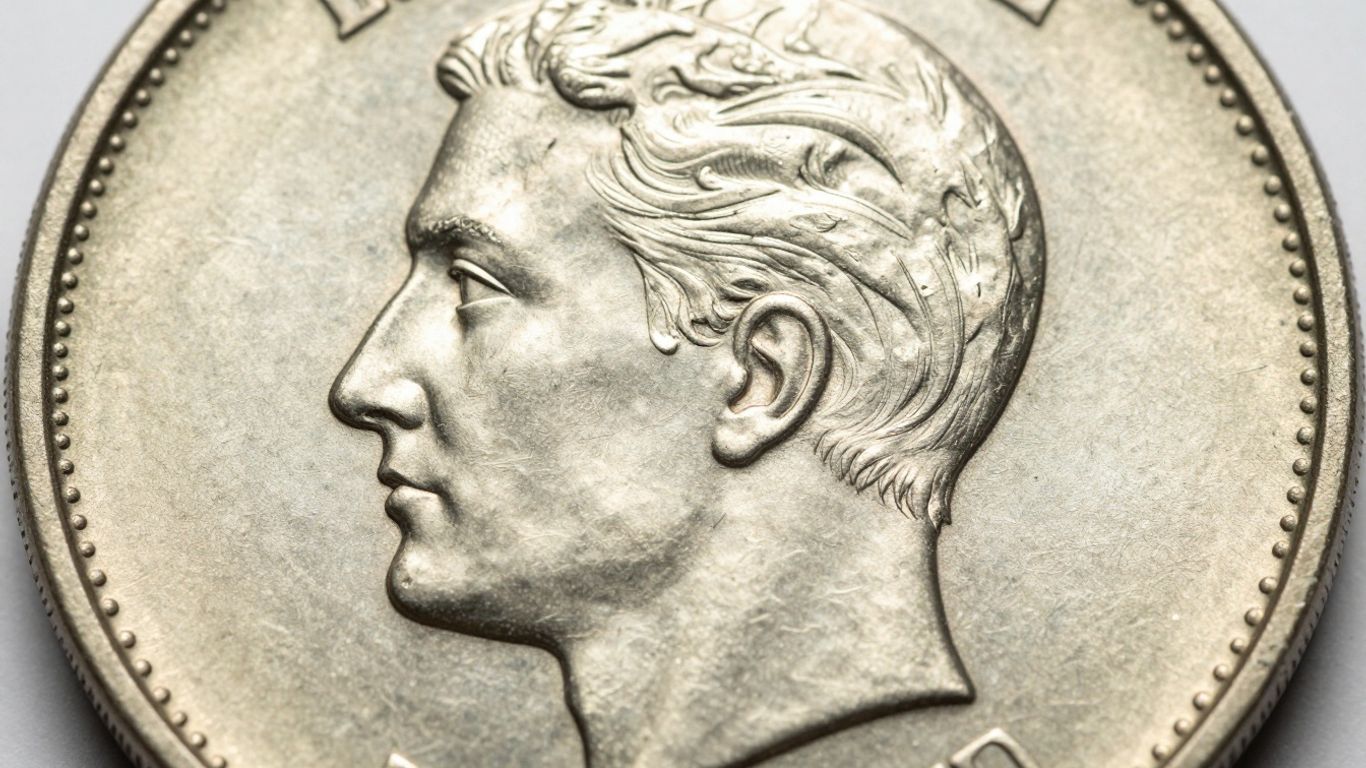
A strong strike means the coin’s design came out really clear and sharp. Think of all the little details, like the feathers on an eagle or the hair on a portrait, looking just like the mint intended. The metal filled every part of the die completely. This crispness is what collectors really look for. It shows the coin was made with good dies and proper pressure.
Recognizing Weak Strike Characteristics
On the flip side, a weak strike is when some of the details are missing or look soft and mushy. This often happens when the dies used to make the coins get worn down over time. You might see areas that should be sharp looking rounded or faded. It’s like the coin didn’t get a full impression from the die. This can make a coin look less appealing, even if it’s otherwise in good shape.
The Role Of Metal Movement In Strike Quality
Metal movement is basically how the molten metal flows into the die cavities when the coin is being made. A good strike happens when the metal moves just right, filling all the nooks and crannies of the die. If the metal doesn’t move evenly, or if there’s not enough pressure, you end up with those weak spots we talked about. It’s a delicate balance that the minting process tries to get right every time.
The quality of a coin’s strike is a direct reflection of the minting process. It’s not just about the metal; it’s about the dies, the pressure, and how everything comes together at the moment of impact. A well-struck coin feels complete, while a weakly struck one often feels like something is missing.
Strike Quality And Coin Appeal
How Crisp Details Enhance Eye Appeal
When a coin is struck with enough force, the metal flows into every nook and cranny of the die. This results in sharp, well-defined details. Think of it like a really clear photograph versus a blurry one. On a coin, this means you can see every strand of hair, every feather, or every letter with perfect clarity. Coins with these crisp details just look better; they have more ‘pop’ to them. This sharpness is a big part of what numismatists call ‘eye appeal,’ which is basically how attractive a coin is to look at. A coin that looks like it was stamped with a dull hammer just doesn’t grab your attention the same way a sharply struck one does. It’s the difference between a coin that’s just okay and one that makes you say, ‘Wow, look at that!’
The Connection Between Strike And Luster
Luster is that shiny, almost glowing surface that many Mint State coins have. It’s the original sheen from the minting process. A strong strike plays a role here too. When the metal is pressed firmly and evenly, it creates a surface that reflects light beautifully. This can result in a frosty appearance or a satiny sheen, depending on the coin’s design and metal. Weakly struck coins, on the other hand, often have a duller surface. The metal might not have filled out properly, leading to a less reflective, more muted look. So, a coin that’s well-struck not only has sharp details but often boasts a more vibrant and appealing luster, making it more attractive to collectors.
Strike's Influence On Toning
Toning refers to the natural discoloration that can occur on a coin’s surface over time due to its environment. While strike quality doesn’t directly cause toning, it can influence how toning appears and how attractive it is. On a sharply struck coin, toning can create beautiful, colorful patterns that follow the design’s contours. The raised devices and recessed fields can catch the toning differently, leading to a pleasing contrast. For example, a well-struck coin might develop vibrant rainbow toning that really stands out. However, on a weakly struck coin, the details are already soft, and any toning might just make it look muddy or indistinct. The subtle nuances of the design are lost, and the toning doesn’t have sharp lines to follow, making the overall appearance less appealing.
A coin’s visual appeal is a complex mix of factors, but the quality of the strike is a foundational element. Even the most beautiful toning or the most brilliant luster can be diminished if the underlying design is poorly rendered due to a weak strike. Collectors often seek out coins where the strike allows the design to be fully appreciated, making the coin a more satisfying object to own and admire.
Evaluating Strike Quality In Grading
Strike As A Key Grading Factor
When we talk about grading coins, it’s not just about how worn down a coin looks. There’s a whole other side to it, and that’s how well it was struck at the mint. Think of it like this: even a coin that hasn’t seen much action in terms of wear can look pretty unimpressive if the details are all mushy. A strong strike is absolutely vital for a coin to reach its full potential in the grading world. It means the dies that made the coin pressed down hard enough and evenly enough to bring out all the fine lines and textures. Without that, you lose a lot of the coin’s character and appeal, no matter how clean its surfaces might be.
Comparing Strike To Grading Standards
Grading services use a scale, usually from 1 to 70, to rate coins. While wear is a big part of that, the strike quality plays a significant role, especially in the higher grades. A coin might be technically uncirculated, meaning no wear from being passed around, but if it has a weak strike, it won’t get the same high grade as a coin with a bold, sharp strike. For instance, a coin might have a grade of MS-65, but within that grade, there’s a spectrum. A coin with a fantastic strike, showing every tiny detail crisply, will be considered a better example than another MS-65 coin that looks a bit soft or incomplete in its design.
Here’s a general idea of how strike quality can influence grades, particularly in the Mint State (MS) range:
| Grade Range | Strike Quality Expectation |
|---|---|
| MS-60 to MS-64 | Average to slightly weak strike, some details may be soft or incomplete. |
| MS-65 to MS-67 | Well-struck to sharply struck, most details are clear, minor softness possible. |
| MS-68 to MS-70 | Very sharply struck, full, crisp details across the entire design. |
The Importance Of Full Details
What graders are really looking for is completeness in the design. This means all the little things – the hair on a portrait, the feathers on an eagle, the lettering around the rim – should be fully formed and clear. A weak strike often means these areas are mushy, indistinct, or even missing. For example, on a coin like a Morgan dollar, the "full bands" on the heraldic eagle are a key indicator of a strong strike. If those bands are weak or not fully visible, it significantly impacts the coin’s grade and desirability, even if the rest of the coin looks great. It’s all about how well the design was impressed into the metal.
When you’re looking at a coin, especially one that’s supposed to be in a high grade, pay close attention to the highest points of the design. These are the areas that are most likely to show weakness if the strike wasn’t strong. Things like the tips of hair, the edges of lettering, or the points of stars are often the first places to lose detail. A coin that shows these elements clearly and sharply is a much better candidate for a top grade.
Factors Influencing Strike Quality
The way a coin is struck, meaning how well the details are impressed onto the metal, is a big deal for its look and value. Several things can affect this, from the very beginning of the minting process right up to the condition of the tools used. Understanding these influences helps you appreciate why some coins look so sharp and others a bit soft.
Die Condition and Its Effect on Strike
The dies are essentially the stamps that create the coin’s image. When they’re brand new and in perfect shape, they can transfer every tiny detail to the metal with incredible precision. This results in what we call a strong strike, where all the design elements are crisp and clear. Think of the fine lines on a portrait or the individual feathers on an eagle – a good die makes them pop. However, dies don’t stay perfect forever. They are used repeatedly, and over time, they can develop imperfections.
Minting Errors and Strike Variations
Sometimes, things go a little sideways during the minting process, and these hiccups can really change how a coin looks. Errors aren’t always about missing metal or double images; they can also affect the strike. For instance, if the planchet (the blank metal disc) isn’t perfectly centered between the dies, or if the striking pressure isn’t quite right, you might get a coin where one side is well-struck and the other is weak. These variations are part of what makes collecting interesting, as they create unique pieces.
- Off-center strikes: The coin is struck with the die not fully covering the planchet.
- Struck through foreign material: Something gets between the die and the planchet, leading to incomplete or distorted details.
- Inconsistent striking pressure: Variations in the force applied can lead to uneven detail across the coin’s surface.
The Impact of Die Wear on Detail
As dies are used, they wear down. This is probably the most common reason for a weaker strike. Imagine pressing something repeatedly into soft clay; eventually, the original sharp edges will become rounded. The same happens with coin dies. The fine details, especially in high-relief areas, start to soften and lose their definition. A heavily worn die might produce a coin where the lettering is mushy, or a portrait looks blurred. This gradual degradation of the die is a primary factor in why older coins, or those from high-mintage runs, often exhibit weaker strikes compared to newer issues or those from limited mintages. It’s why collectors often seek out coins that show the sharpest possible detail, as it indicates less die wear or a particularly strong strike from a fresh die. Learning to spot these differences is key to accurately assessing a coin’s condition.
The quality of the strike is directly tied to the condition of the dies and the precision of the minting machinery. A fresh, perfectly prepared die, combined with optimal striking pressure and alignment, will produce a coin with sharp, well-defined details. Conversely, worn dies, misaligned strikes, or insufficient pressure will result in a coin with softer, less distinct features, significantly impacting its visual appeal and numismatic value.
Strike Quality's Effect On Coin Value
How Strong Strikes Command Premiums
A coin’s strike quality is a big deal when it comes to how much it’s worth. Think about it: a coin that was made with fresh, sharp dies will show all the little details perfectly. This means things like the hair on a portrait, the feathers on an eagle, or the lines on a building will be super clear and defined. Collectors really like this. A coin with a strong strike often looks more impressive and complete, which naturally makes it more desirable. This desirability translates directly into higher prices. When you see two coins that are otherwise identical in grade and condition, the one that was struck more forcefully, showing off all its design elements with crispness, will almost always fetch a better price. It’s like the difference between a blurry photo and a sharp, clear one – the sharp one just looks better and is more appealing.
The Detrimental Effect Of Weak Strikes
On the flip side, a weak strike can really hurt a coin’s value. This usually happens when the dies used to make the coin are worn out. When dies get old and worn, they don’t transfer the design onto the metal blank as well. This results in soft, mushy details. You might see areas that should be sharp and distinct looking faded or incomplete. For example, on a coin with an eagle, the feathers might look smudged, or on a portrait, the hair might lack definition. This lack of detail makes the coin look less appealing and less like a complete piece of art. Collectors, especially those looking for high-grade coins, will often pass over weakly struck examples, even if they are otherwise in good condition. This reduced demand means the coin will likely sell for less money compared to a well-struck counterpart. It’s a clear indicator that the coin didn’t quite make it as a top-tier example.
Strike Quality Importance For Coins
So, why is strike quality so important across the board? It really comes down to how well the coin represents its intended design. A strong strike means the minting process was successful in fully impressing the die’s details onto the coin’s surface. This is especially true for coins with intricate designs or high relief, where a weak strike can obscure important features. For many collectors, a coin’s strike is a primary factor in its overall appeal and, consequently, its value. It’s not just about the metal content or the date; it’s about the artistry and precision of its creation.
Here’s a quick look at how strike impacts value:
- Strong Strike: Crisp, well-defined details. Commands a premium, especially in higher grades.
- Average Strike: Most coins fall into this category. Details are generally visible but may lack sharpness.
- Weak Strike: Soft, mushy, or incomplete details. Generally reduces desirability and value.
The difference between a coin that is considered ‘average’ and one that is ‘exceptional’ often comes down to the quality of the strike. A coin that was struck with full force, showing every intended detail with clarity, stands out from the crowd. This attention to detail is what numismatists look for and are willing to pay more for.
Beyond Strike: Other Value Determinants
While a strong strike really makes a coin pop, it’s not the only thing that bumps up its worth or makes it desirable. Lots of other stuff plays a part, and sometimes these other factors can even overshadow the strike quality. It’s like baking a cake – the frosting (strike) is important, but the cake itself (the coin’s overall condition and history) matters just as much, if not more.
The Significance Of Surface Condition
Think about the coin’s surface. Even a perfectly struck coin can lose value if its surface is messed up. We’re talking about things like:
- Scratches: These are probably the most obvious. Even light ones can be a problem, but deep gouges? They really hurt a coin’s appeal and price.
- Spots and Toning: Sometimes coins develop spots, maybe from being stored improperly. Natural toning, which is like a patina that develops over time, can be beautiful and add value if it’s colorful and even. But ugly, dark spots or uneven, splotchy toning? Not so much.
- Cleaning: This is a big one. If a coin has been cleaned, especially with harsh chemicals or abrasive cloths, it often loses its original mint luster. This ‘cleaned’ look is usually a major red flag for collectors and can drastically reduce a coin’s value, no matter how well it was struck.
Assessing Original Mint Luster
Original mint luster is that special sheen or glow a coin has when it first comes from the mint. It’s not just shininess; it’s a specific kind of frosty or satiny appearance that reflects light in a particular way. This original luster is a key indicator of a coin’s untouched state. When you see it, you know the coin hasn’t been messed with, cleaned, or heavily handled. Different metals show luster differently – copper coins might have a vibrant red sheen, while silver coins can have a bright, frosty look. Losing this luster, often due to cleaning or even just rough handling over the years, significantly impacts a coin’s desirability and, consequently, its market price.
Identifying And Valuing Minting Varieties
Sometimes, the minting process itself creates variations that collectors find fascinating. These aren’t errors in the sense of being mistakes, but rather unique outcomes of the die-making or striking process. Think about:
- Doubled Dies: Where the die itself was accidentally struck twice, creating a noticeable doubling of the design elements. These can be very popular.
- Repunched Mint Marks: Where the mint mark (like a ‘D’ for Denver or ‘S’ for San Francisco) was punched onto the die more than once, resulting in a layered or offset appearance.
- Die Breaks and Clipped Planchets: While sometimes considered errors, significant die breaks (cracks in the die) or coins struck on metal discs that were already missing a piece (clipped planchets) can also be sought after by collectors looking for specific types of mint-made oddities.
These varieties, when recognized and cataloged, can add a significant premium to a coin’s value, sometimes far beyond what its strike quality alone would command. It really pays to know your minting history and what makes certain coins stand out from the crowd.
Practical Tips For Assessing Strike
Using Magnification For Detail Assessment
When you’re looking at a coin, especially to figure out how well it was struck, a magnifying glass is your best friend. It’s not just about seeing the date clearly; it’s about spotting those fine lines and details that tell the story of the strike. Think about the hair on a portrait, the feathers on an eagle, or the leaves on a branch. A strong strike will show these elements with sharp, clear definition. A weak strike, on the other hand, will make them look soft, blurry, or even incomplete.
The goal is to see how much of the intended detail the coin actually received from the die.
Here’s a quick way to approach it:
- Start with the high points: These are the areas that take the brunt of the impact. Look at the very top of a portrait’s hair, the eagle’s head, or the tips of leaves. Are they fully formed, or do they look like they were smoothed over?
- Check for completeness: Are there any missing elements? Sometimes, a weak strike means certain parts of the design just didn’t get impressed into the metal properly.
- Look for consistency: Does the sharpness of the detail vary across the coin? A well-struck coin usually has consistent detail, while a weak one might have some areas that are okay and others that are quite soft.
It’s easy to get lost in the tiny details, but remember to step back and look at the overall impression. Does the coin look bold and clear, or does it seem a bit faded?
Comparing Coins For Strike Nuances
One of the best ways to really get a feel for strike quality is to compare coins side-by-side. You might have two coins of the same date and mint mark, and they can look quite different in terms of how well they were struck. This is where your magnifying glass really comes into play.
Let’s say you have two uncirculated Morgan dollars. One might have incredibly sharp details on the hair of Lady Liberty and the eagle’s wings, while the other looks a bit softer, even though both are technically uncircilled. The one with the sharper details, assuming other factors like surface condition are equal, is generally considered to have a superior strike.
Here’s a simple comparison framework:
- Identify key design elements: Pick a few specific areas on the coin that are known to be challenging for striking (e.g., the points of stars, the fine lines in hair, the talons on an eagle).
- Observe the definition: How clear and sharp are these elements on each coin you are comparing?
- Note the contrast: Is there a noticeable difference in how well the details stand out?
This direct comparison helps you train your eye to recognize the subtle differences that can significantly impact a coin’s appeal and value. You’ll start to see patterns and understand what makes one coin stand out from another, even if they appear similar at first glance.
The Role Of Practice In Sharpness Of Eye
Honestly, getting good at spotting strike quality isn’t something that happens overnight. It takes time and a lot of looking at coins. The more coins you examine, the more you’ll start to notice the little things. You’ll develop an instinct for what looks right and what looks a bit off.
Think of it like learning to identify different types of birds or recognizing different car models. At first, they all might look the same, but with practice, you start to pick up on the distinguishing features. The same applies to coins. You’ll begin to see how different minting facilities, different years, and even different dies used within the same year can produce variations in strike.
Don’t get discouraged if you don’t see it all right away. Keep looking at coins, whether they’re in your own collection, at a local coin shop, or even in online auction photos. Pay attention to the details, compare them, and over time, your eye will become much sharper. It’s a skill that builds with consistent effort.
It’s also helpful to look at grading guides or resources that show examples of strong versus weak strikes. Seeing these comparisons laid out can really help solidify your understanding. Eventually, you’ll be able to assess strike quality with confidence, which is a big step in becoming a more knowledgeable collector.
Special Strike Characteristics
Understanding Proof Coin Strike
Proof coins are made differently than regular circulation coins, and this shows in their strike. They’re struck multiple times with specially polished dies to get those super sharp details and mirror-like fields. When you see a proof coin, you’re looking for a really strong contrast between the frosted design elements and the shiny background. This contrast is what numismatists call ‘cameo’ or ‘ultra cameo’ effect. It’s not just about being shiny; it’s about how well those frosted parts stand out. A weak strike on a proof coin means less contrast, making it look flat and less appealing. It’s a big deal for collectors who want that dramatic look.
Full Bands and Other Strike Indicators
Sometimes, specific parts of a coin’s design are used as indicators of a strong strike. For example, on some dimes, like the Mercury dime, collectors look for ‘Full Bands’ on the fasces. This means all the bands holding the bundle of sticks are clearly visible and well-defined. If the strike was weak, these bands might be soft or even missing. Other coins might have specific features, like the hair on a portrait or the feathers on an eagle, that should be fully rendered. These details act as little checkpoints to see how well the metal flowed into every nook and cranny of the die during striking. A coin with these specific details fully present often commands a higher price.
Deep Prooflike Surfaces
This term, ‘Deep Prooflike’ or DPL, is usually used for business strike coins that have fields so reflective they look like they were struck as proofs. It’s not a true proof, but the minting process somehow resulted in incredibly smooth, mirror-like surfaces. These coins are often struck from dies that were polished to an extreme degree, sometimes even before they were used for regular production. When light hits these surfaces, it creates a very deep, almost liquid reflection. It’s a desirable characteristic that can significantly boost a coin’s appeal and value, making it stand out from other coins of the same grade. It’s important to note that this designation doesn’t apply to actual proof coins, as their fields are meant to be reflective by definition.
Strike Quality And Market Demand
The way a coin is struck really matters to people who collect them. It’s not just about the metal or the date; how sharp and clear the details are plays a big part in what collectors want and how much they’ll pay. Think of it like this: a coin that looks like it was stamped with a dull hammer just doesn’t have the same appeal as one where every tiny line and feature is perfectly defined. This difference can really affect how a coin is perceived in the market.
Historical Coins And Their Strike Appeal
When it comes to older coins, the strike quality can tell a story. Coins from earlier eras, especially those made before modern minting techniques were perfected, often show a wider range of strike characteristics. Some might be incredibly sharp, showing off the artistry of the time, while others might be quite soft, a result of worn dies or less precise machinery. Collectors often seek out those historical pieces with a strong, clear strike because they represent the best possible outcome from the minting process of that period. It’s like finding a perfectly preserved snapshot of history. For instance, a well-struck coin from the 19th century can be far more desirable than a similar coin with weak details, even if they are the same grade. This preference means that coins with superior strike quality often command a higher price among collectors of historical coins.
Bullion Coins And Strike Expectations
For bullion coins, the primary focus is usually on the precious metal content. However, even here, strike quality plays a role, especially for those who also appreciate the numismatic aspect. While a bullion coin’s value is largely tied to the market price of gold or silver, a coin that is sharply struck and free of major imperfections will generally be more appealing than one with soft details or other issues. Minted for investment, these coins are expected to be produced with a certain level of quality. A coin with a strong strike, even if it’s a modern issue, can stand out and be preferred by buyers who want both the metal value and a visually pleasing piece. This is particularly true for coins that might also be graded, where strike is a significant factor.
Collector Preferences For Well-Struck Coins
Across the board, collectors tend to favor coins that exhibit a strong strike. This preference isn’t just about aesthetics; it’s often about the coin representing the pinnacle of what the mint could produce. A coin with full, sharp details suggests that it was struck with good dies, under proper pressure, and likely handled with care from the moment it left the mint. This attention to detail in the minting process translates directly into desirability. When comparing two coins of the same grade and type, the one with the superior strike will almost always be the more sought-after piece. This is why understanding strike quality is so important for anyone looking to build a collection or make informed purchasing decisions. It’s a key indicator of a coin’s overall quality and potential for appreciation.
Preserving Strike Quality Over Time
Once a coin has been struck with excellent detail, keeping that quality intact is the next big challenge for collectors. It’s not just about finding a well-struck coin; it’s about making sure it stays that way. Think of it like keeping a new car looking showroom-ready – it takes consistent effort and the right approach.
Proper Storage to Maintain Detail
How you store your coins makes a huge difference. The wrong environment can lead to all sorts of problems that dull a coin’s appearance and, yes, its strike quality. We’re talking about things like corrosion, environmental damage, and even just accidental scratches. Using the right materials is key here. Archival-quality holders, like 2×2 cardboard flips or inert plastic slabs, are a good start. Just make sure they don’t contain PVC, which can break down and damage the coin over time. I learned that the hard way with an old album that turned some silver coins a nasty brown. Keeping coins in a cool, dry place is also important. Humidity is the enemy of metal, especially for older coins.
Handling Techniques to Prevent Damage
This is where most people slip up. It’s tempting to pick up a coin to admire it, but every time you do, you risk damaging it. Fingerprints leave oils that can cause toning or corrosion, and even the slightest slip can result in a hairline scratch. The best practice is to handle coins by their edges, using cotton gloves if possible. This might seem a bit much for everyday coins, but for anything valuable, it’s a necessary step. Imagine trying to sell a coin with your thumbprint permanently etched onto its surface – not ideal.
Avoiding Cleaning That Degrades Strike
Cleaning a coin is almost always a bad idea, especially if you’re concerned about preserving its original strike. When a coin is cleaned, especially with abrasive materials or harsh chemicals, it can remove a microscopic layer of metal. This process can soften sharp details, reduce the coin’s natural luster, and leave behind fine hairlines that are visible under magnification. Even seemingly gentle cleaning methods can alter the coin’s surface in ways that detract from its original appearance and strike. Once a coin is cleaned, its original mint state is compromised, and its value often plummets. It’s far better to accept a coin with some natural toning or minor imperfections than to risk damaging it through cleaning.
Bringing It All Together
So, we’ve talked about how well a coin was struck, its overall look, and even the little imperfections that can pop up. It all adds up, you know? A coin that looks sharp and has all its details clear, especially if it’s got that original shine, is just going to catch more eyes and usually fetch a better price. It’s not just about the metal it’s made of; how it was made and how it’s been treated really matters. Paying attention to these things, like strike quality, helps you appreciate coins more and makes you a smarter collector, whether you’re just starting out or have been at it for years. Keep looking, keep learning, and you’ll get a better feel for what makes a coin truly stand out.
Frequently Asked Questions
What exactly is a 'strike' in coin collecting?
A coin’s ‘strike’ refers to how well the design was pressed into the metal by the dies. A strong strike means all the little details are sharp and clear, like every feather on an eagle’s head. A weak strike means some parts look blurry or not fully formed, often because the metal didn’t fill the die completely or the dies were worn out.
How does a strong strike affect a coin's value?
Coins with a strong, clear strike are generally more valuable. Collectors prefer coins that show the full beauty of the design. A coin that looks sharp and well-made usually costs more than one that looks mushy or incomplete, even if they are the same age and have similar wear.
What are the signs of a weak strike?
You can spot a weak strike when important design elements are soft, fuzzy, or missing details. For example, the lettering might be hard to read, or areas like the hair on a portrait might look smudged instead of sharp. Sometimes, even the rim of the coin might not be fully formed.
Does strike quality matter for all types of coins?
Yes, strike quality is important for all coins, whether they are old historical pieces, modern circulating coins, or special collector coins like proofs. A well-struck coin always looks better and is more desirable to collectors, which usually means it’s worth more.
Can the condition of the dies affect the strike?
Absolutely. The dies are the metal tools that stamp the design onto the coin. If the dies are new and sharp, they produce a strong strike with crisp details. However, as dies are used over and over, they wear down. Worn dies can’t transfer the full design to the metal, leading to weaker strikes with less detail.
How does strike quality relate to a coin's 'eye appeal'?
Strike quality is a big part of ‘eye appeal,’ which is how attractive a coin looks. A coin with a strong strike has sharp, clear details that catch the eye and make the design stand out. This sharpness makes the coin more pleasing to look at and therefore more appealing to collectors.
Are proof coins always well-struck?
Proof coins are made using special methods to produce very high-quality coins with sharp details and often mirrored surfaces. They are specifically struck multiple times to ensure the design is as perfect as possible. So, yes, proof coins are generally expected to have excellent strike quality.
What is 'metal movement' in relation to strike quality?
‘Metal movement’ refers to how the molten metal flows into the die cavities when the coin is struck. A good strike happens when the metal completely fills all the nooks and crannies of the die. If the metal doesn’t move properly or fill the die fully, it can result in weak spots or missing details, affecting the overall strike quality.