
Before 1965, the coins jingling in your pocket were made of real silver. Dimes, quarters, and half dollars carried a significant silver content, giving them an intrinsic value. This changed when the U.S. government altered the composition of its coinage, leading to the era of what we now call ‘constitutional silver.’ Understanding the background of these coins is key to appreciating their place in history and their appeal to collectors and investors today.
Key Takeaways
- Constitutional silver refers to U.S. dimes, quarters, and half dollars minted before 1965, which contain 90% silver.
- The Coinage Act of 1965 removed silver from most circulating U.S. coins, creating the category of ‘junk silver’ valued primarily for its metal content.
- The value of constitutional silver coins is determined by both their melt value (based on silver content and market price) and their numismatic value (based on rarity, condition, and collector demand).
- Key factors influencing a coin’s numismatic value include its date, mint mark, overall condition, and the presence of any minting errors.
- While often called ‘junk silver,’ these coins offer a tangible way to invest in silver, with advantages like lower premiums and divisibility compared to modern bullion.
Understanding Constitutional Silver Coins Background
Before we get into the nitty-gritty of collecting and valuing these coins, it’s important to understand what exactly makes them "constitutional silver." This term refers to U.S. coins that were minted with a specific silver content and were legally recognized as currency. These coins represent a tangible link to America’s monetary past, a time when the value of our currency was directly tied to precious metals.
Defining Constitutional Silver
Constitutional silver, often called "junk silver" by collectors and investors, specifically refers to U.S. dimes, quarters, and half dollars minted before 1965. These coins were made from a 90% silver and 10% copper alloy. The term "junk" doesn’t imply they are worthless; rather, it signifies that their primary value comes from their silver content, not necessarily their rarity or condition as collectible items. However, as we’ll explore, some of these coins can indeed hold significant numismatic value beyond their melt price.
The Historical Shift Away From Silver Coinage
The transition away from silver in U.S. coinage was a significant event driven by economic factors. As the price of silver began to climb, the melt value of these silver coins started to exceed their face value. This led to people hoarding the coins, effectively removing them from circulation. To address this, Congress passed the Coinage Act of 1965. This act removed silver from dimes and quarters entirely, switching them to a copper-nickel clad composition. The silver content in half dollars was also reduced. This change marked the end of an era for circulating silver coinage in the United States and is a key reason why pre-1965 silver coins are now sought after. The debates around monetary policy during this time were quite heated, with movements like the Free Silver Movement advocating for the continued coinage of silver.
Silver Content Percentages in U.S. Coins
While 90% silver is the most common for constitutional coinage, it’s not the only silver content found in U.S. coins that might be considered. Understanding these different percentages is key to calculating melt value.
- 90% Silver: This applies to all dimes, quarters, and half dollars minted before 1965. It also includes some silver dollars like the Morgan and Peace dollars.
- 40% Silver: These are Kennedy Half Dollars minted between 1965 and 1970. They represent a transitional period after the Coinage Act of 1965.
- 35% Silver: These are the "War Nickels" from 1942-1945. Due to wartime metal shortages, nickel was replaced with silver in these specific nickels.
It’s worth noting that while these are the most common, other silver coins exist, and their value is always tied to their silver weight and the current market price of silver.
Common Types of Constitutional Silver
When people talk about "constitutional silver," they’re usually referring to U.S. coins minted before 1965 that contained a significant amount of silver. These coins were once part of everyday commerce, but rising silver prices led to their removal from circulation and a change in their composition. These coins are often called "junk silver" because their value is primarily tied to their silver content rather than their face value or collector rarity.
Ninety Percent Silver Dimes
Dimes minted before 1965 are 90% silver and 10% copper. This includes several popular series:
- Mercury Dimes (1916-1945): Easily recognizable by the winged cap on Lady Liberty’s head.
- Roosevelt Dimes (1946-1964): The first Roosevelt dimes were struck in 90% silver.
These dimes contain approximately 0.0723 troy ounces of pure silver each.
Ninety Percent Silver Quarters
Similar to dimes, quarters made before 1965 are also 90% silver. Common types include:
- Barber Quarters (1892-1916): Designed by Charles E. Barber.
- Standing Liberty Quarters (1916-1930): Features a prominent depiction of Lady Liberty holding a shield and a sword.
- Washington Quarters (1932-1964): The familiar profile of George Washington has graced these quarters for decades.
Each of these quarters holds about 0.1808 troy ounces of pure silver.
Ninety Percent Silver Half Dollars
Half dollars minted prior to 1965 are also 90% silver. This category includes some highly collectible series:
- Barber Half Dollars (1892-1915)
- Walking Liberty Half Dollars (1916-1947): A very popular design featuring Lady Liberty walking towards the sun.
- Franklin Half Dollars (1948-1963): Showcases Benjamin Franklin on the obverse.
- Kennedy Half Dollars (1964 only): The first year of issue for the Kennedy half dollar was struck in 90% silver.
These 90% silver half dollars contain approximately 0.3617 troy ounces of pure silver.
Silver Dollars and Other Denominations
While dimes, quarters, and half dollars are the most common forms of constitutional silver, other denominations also exist. The most well-known are the Morgan Dollars (1878-1904, 1921) and Peace Dollars (1921-1935). These large silver dollars are also 90% silver and contain a substantial 0.7734 troy ounces of pure silver each. It’s worth noting that some less common denominations or specific issues might also fall into this category, but they are generally less frequently encountered by investors looking for bulk silver. You can find a selection of these coins available for purchase at SD Bullion.
The shift away from silver in U.S. coinage, particularly after the Coinage Act of 1965, is what created the market for these older silver coins. Before this change, the intrinsic silver value of a dime, quarter, or half dollar was often close to, or even exceeded, its face value, leading people to hoard them. This historical context is key to understanding why these coins are now primarily valued for their metal content.
Factors Influencing Coin Value
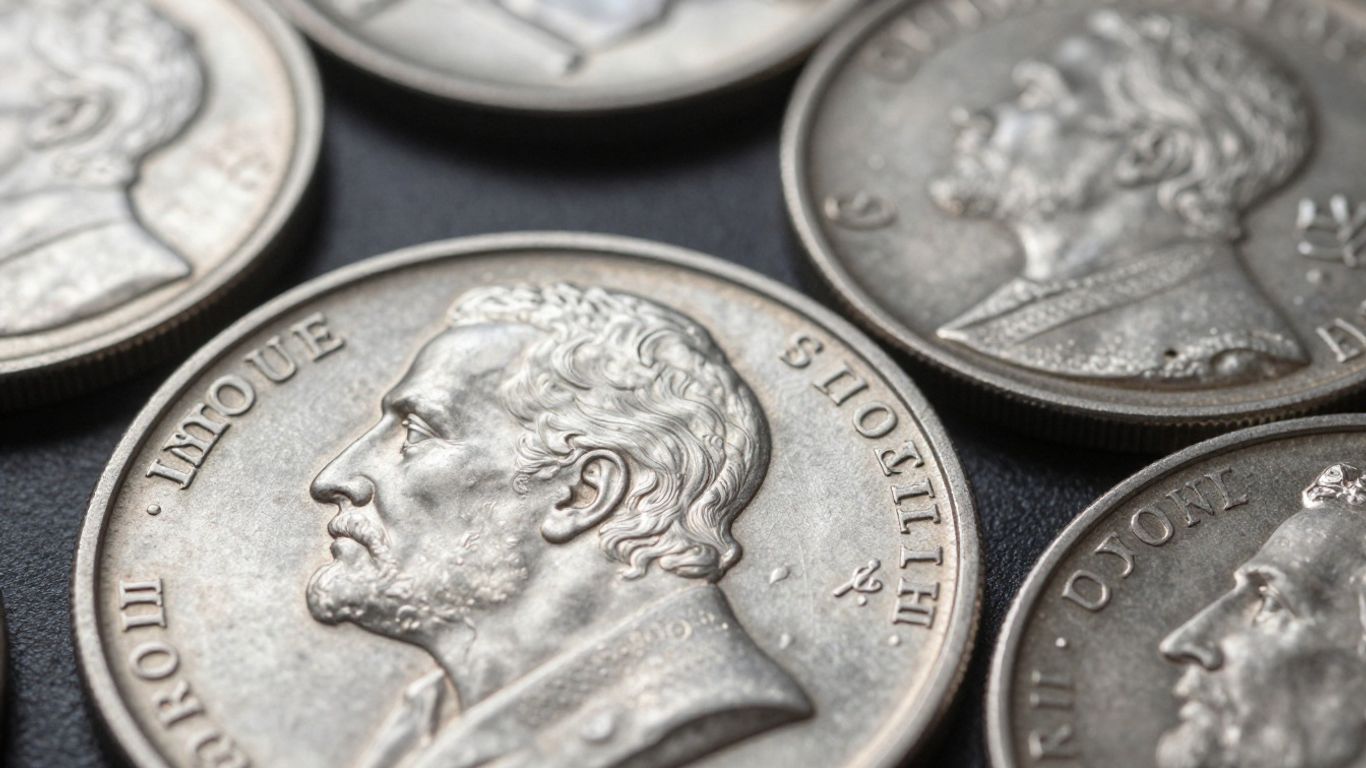
So, you’ve got some old silver coins, maybe dimes, quarters, or half dollars. You’re probably wondering what makes one coin worth more than another, right? It’s not just about the silver content, though that’s a big part of it. There are actually a few things that come into play, and understanding them can help you figure out what your coins are really worth.
Melt Value: The Foundation of Worth
This is pretty straightforward. Melt value is basically what the silver in your coin is worth if you were to melt it down. It’s the most basic way to figure out the worth of what we often call "junk silver." Several things affect this:
- Live Silver Prices: The price of silver changes every single day, sometimes by a lot. This is the biggest factor in melt value. If silver prices go up, your coins are worth more, and vice versa.
- Silver Purity: Most U.S. silver coins made before 1965 are 90% silver. Some older ones might be different, and knowing the exact percentage is key to calculating how much pure silver is actually in there.
- Actual Silver Weight (ASW): Each coin has a standard weight. When you combine that weight with the silver purity, you get the ASW. This tells you the exact amount of pure silver in the coin.
The weight of the silver in a coin, combined with the current market price of silver, forms the bedrock of its value. It’s the intrinsic worth you can count on, regardless of other factors.
Numismatic Value: Beyond the Metal
This is where things get more interesting. Numismatic value is what collectors are willing to pay for a coin, based on its rarity, historical significance, and condition, not just its silver content. Think of it as the collector’s premium.
Here’s what can add numismatic value:
- Key Dates and Rare Mint Marks: Some coins are rarer than others. This could be because they were made in a specific year with a low mintage (like a 1916-D Mercury Dime) or because they came from a mint that produced fewer coins (like the "CC" mint mark from Carson City).
- The Role of Coin Condition and Grading: A coin that looks like it just came off the minting press, with no scratches or wear, is worth way more than one that’s been tossed around in pockets for decades. This is where grading comes in. Professional services assess coins on a scale, usually from 1 to 70, with 70 being perfect. Higher grades mean higher value.
- Error Coins: Sometimes, the mint makes mistakes. Coins with errors, like a double strike or an off-center design, can be really sought after by collectors because they’re unique.
Basically, while melt value gives you a baseline, numismatic value can push that price much higher, especially for coins that are hard to find in good condition or have a special story.
Calculating Melt Value
Figuring out what your old silver coins are actually worth based on their metal content is pretty straightforward. This is called the "melt value," and it’s basically the price of the silver locked inside. It’s a solid starting point for understanding the worth of your collection, especially for coins that aren’t rare collector’s items.
Understanding Actual Silver Weight (ASW)
Every silver coin has a specific amount of pure silver in it. This isn’t the same as the coin’s face value or even its total weight. For U.S. coins made before 1965, most dimes, quarters, and half dollars are 90% silver. This means that out of their total weight, 90% is pure silver. The rest is copper, which was added to make the coins more durable. The Actual Silver Weight (ASW) is the amount of pure silver in a coin, measured in troy ounces. For example, a U.S. silver dollar minted before 1936 contains about 0.7734 troy ounces of pure silver.
The Impact of Live Silver Prices
The price of silver changes all the time, just like stocks. It’s influenced by global markets, supply and demand, and even world events. To calculate the melt value, you need to know the current price of silver per troy ounce. This price is often called the "spot price." You can find this information easily on financial news websites or specialized precious metals sites. This live price is the biggest factor in how much your silver coins are worth on any given day.
Practical Calculation Methods
Calculating melt value involves a simple formula: Melt Value = ASW x Spot Price of Silver. For instance, if a coin has an ASW of 0.7734 troy ounces and the spot price of silver is $30 per troy ounce, the melt value would be 0.7734 x $30 = $23.20.
Here’s a quick look at the ASW for common U.S. 90% silver coins:
| Coin Type | Face Value | Approx. ASW (troy oz) | Approx. Melt Value (at $30/oz) |
|---|---|---|---|
| Dime (pre-1965) | $0.10 | 0.0723 | $2.17 |
| Quarter (pre-1965) | $0.25 | 0.1808 | $5.42 |
| Half Dollar (1964) | $0.50 | 0.3617 | $10.85 |
For larger collections, especially bags of coins sold by face value (like a $10 bag of dimes), you can estimate the total silver content. A common rule of thumb is that $1.00 in face value of 90% silver coins contains about 0.715 troy ounces of pure silver. So, a $10 bag would have roughly 7.15 troy ounces of silver.
While manual calculation is possible, many online melt value calculators can do the work for you. You just input the type and quantity of coins, and the calculator uses the current spot price to give you an estimate. This is super handy for checking the value of a large stack of coins quickly.
Exploring Numismatic Potential
While many constitutional silver coins are primarily valued for their silver content, a select few possess a numismatic value that goes far beyond their melt price. This is where the real treasure hunt begins for collectors. It’s about finding those special coins that collectors actively seek out, driving their prices higher than what the silver alone would fetch.
Identifying Key Dates and Rare Mint Marks
Some coins are simply rarer than others. This rarity can stem from a specific year of issue or the location where the coin was minted. "Key dates" are coins from a particular year and mint mark combination that had a very low production run. Think of a 1916-D Mercury Dime; its mintage was so low that it’s highly sought after by collectors, making its value significantly higher than its silver content. Similarly, certain mint marks, like the "CC" for Carson City, are often more desirable due to historical significance or limited production. These are the coins that can turn a bag of silver into a collection of valuable pieces.
The Significance of Uncirculated Condition
Condition is king in the world of coin collecting. A coin that has been through the wringer, so to speak, will always be worth less than one that looks like it just left the mint. We’re talking about coins that show no signs of wear, no scratches, and still have their original shine. These are called "uncirculated" or "mint state" coins. For numismatic value, the difference between a heavily circulated coin and a pristine, uncirculated one can be enormous. It’s like comparing a well-loved paperback to a brand-new hardcover – the appeal and price are just different.
Recognizing Error Coins
Sometimes, the minting process itself goes a little awry, and these mistakes can create valuable coins. Error coins are produced when something goes wrong during manufacturing. This could be anything from a coin being struck off-center, a "double die" where the image appears doubled, or even a foreign object getting caught in the press. While most errors are minor, some can be quite significant and make a coin incredibly rare and desirable to collectors who appreciate these unique pieces of minting history. They are a fascinating category for those looking for something truly out of the ordinary.
The pursuit of numismatic value requires a keen eye and a bit of luck. It involves looking beyond the silver and appreciating the history, rarity, and condition that make certain coins stand out. While melt value provides a baseline, it’s the numismatic potential that can truly make a constitutional silver coin a significant find.
Mint State Coins: A Collector’s Focus
When we talk about constitutional silver, we’re often looking at coins that have seen some life. But there’s a whole other world for collectors: mint state coins. These are the ones that never made it into your pocket change. They’ve come straight from the mint and have been kept in their original, untouched condition. For many collectors, the pursuit of perfection in these uncirculated coins is the ultimate goal.
Defining Mint State and Its Appeal
A mint state (MS) coin is essentially a coin that has not been used for everyday transactions. It retains the original luster and appearance it had when it was first struck. This pristine condition is what makes them so attractive. Collectors often look for coins graded on the Sheldon Scale, with MS-60 being the lowest uncirculated grade and MS-70 representing absolute perfection – no wear, no blemishes, just pure mint quality. The appeal comes from owning a piece of history exactly as it was made, a tangible link to a specific moment in time without the wear and tear of circulation.
Modern vs. Classic Mint State Coins
There’s a clear distinction between modern and classic mint state coins, and it affects how they’re viewed and valued.
- Modern Coins: Generally produced after World War II, these coins benefit from advanced minting technology. This means they often have sharper details, better luster, and fewer imperfections. Think of coins like the American Silver Eagle, which frequently achieves top MS-70 grades. Their superior condition is a direct result of improved manufacturing processes.
- Classic Coins: These are typically American coins minted before World War II. Examples include the well-known Morgan silver dollars. Due to less sophisticated minting and handling practices of their era, it’s much rarer to find these in very high mint state grades. They might show more minor marks or have a less brilliant luster, but their historical significance adds a different kind of appeal.
This difference is important. A modern MS-70 coin might be plentiful, while finding a classic coin in, say, MS-65 condition can be a significant achievement.
The Importance of Professional Grading
Because the difference between an MS-65 and an MS-67 can mean a huge jump in value, professional grading is a big deal in the mint state coin world. Services like PCGS (Professional Coin Grading Service) and NGC (Numismatic Guaranty Company) examine coins and assign them a grade. They then encapsulate the coin in a protective holder, often called a slab. This process not only authenticates the coin but also protects it from further damage and environmental issues. It provides a standardized, trusted opinion on the coin’s condition, which is vital for collectors and investors alike. While there’s a cost involved, the security and marketability it provides for higher-grade coins are often well worth it.
The Role of Grading Services
When you’re looking at constitutional silver, especially if you’re thinking about its value beyond just the metal, you’ll quickly run into the topic of coin grading. It’s a pretty big deal in the coin collecting world. Basically, grading is a way to figure out exactly how good a coin’s condition is and if it’s the real deal. Think of it like a report card for your coin.
Authenticating and Verifying Coin Grades
Professional grading services are the ones who do this work. Companies like PCGS (Professional Coin Grading Service) and NGC (Numismatic Guaranty Company) are the big names. They have experts who look at coins really closely. They check if the coin is genuine and then assign it a grade based on a standard system, usually the Sheldon Scale, which goes from 1 to 70. A coin with a 70 is basically perfect, while a 1 is pretty beat up. They look at things like:
- Strike: How clear and sharp are the coin’s details?
- Luster: Does it still have that original shine, or does it look dull?
- Surface: Are there any scratches, nicks, or other marks on it?
- Eye Appeal: Just how good does it look overall?
These services put the coin in a special holder, often called a "slab," with a label that tells you its grade and confirms it’s authentic. This is super important because it takes a lot of the guesswork out for buyers and sellers.
Protective Holders and Preservation
Those plastic holders, or "slabs," aren’t just for show. They do a really good job of protecting the coin. Once a coin is graded and sealed in its slab, it’s pretty much safe from fingerprints, scratches, and other damage that could happen if you handled it a lot. This protection is key to keeping the coin in the condition it was graded at. For collectors, especially those buying higher-grade coins, this preservation is a big part of why they pay for grading in the first place. It means the coin is likely to stay in great shape for a long, long time.
Understanding Grading Costs and Benefits
Now, getting a coin graded isn’t free. The cost can vary quite a bit, usually depending on how much the coin is worth and how fast you want it back. It might cost anywhere from $30 to $300 or even more for very valuable coins. So, you have to ask yourself if the cost is worth it.
For coins that are common or in lower grades, the cost of grading might actually be more than any increase in value the grade provides. It often makes more sense to grade coins that have a good chance of receiving a high grade, like an MS-65 or better, where the added value from the grade can easily cover the grading fees and then some.
The benefit is that a professionally graded coin is much easier to sell and often fetches a higher price than an ungraded one, especially if it gets a top grade. It gives buyers confidence, which is a big deal in the collecting world. But, if you’re just holding onto common silver dimes and quarters for their melt value, paying to get them graded probably isn’t the best use of your money.
International Silver Coinage
Canadian Silver Coinage History
Canada also has a rich history of minting silver coins for circulation. Before 1967, many Canadian dimes, quarters, and half dollars were struck from 80% silver. This composition was common for circulating coinage across many nations during periods when silver was more economically viable for such purposes. Like their U.S. counterparts, these older Canadian silver coins are often valued based on their silver content, especially when silver prices are high. Identifying these coins involves checking the mint date; those minted prior to 1967 are generally the ones to look for if you’re interested in their silver value.
Mexican Silver Pesos and World Coins
Mexico has a long tradition of producing silver coinage, with the Mexican Silver Peso being a notable example. Many older Mexican pesos, particularly those minted before the mid-1970s, contain significant amounts of silver. Beyond Mexico, numerous other countries have issued silver coins that might find their way into collections or investment portfolios. The key challenge and opportunity with world silver coins lie in their diverse compositions and varying levels of collectibility. Determining the exact silver purity and weight is the first step in assessing their worth.
Determining Value of Foreign Silver
Valuing foreign silver coins follows a similar logic to that of U.S. constitutional silver. The process generally involves two main considerations:
- Melt Value: This is calculated by determining the coin’s actual silver weight (ASW) and multiplying it by the current market price of silver. You’ll need to research the specific silver content for the particular coin and date.
- Numismatic Value: Some foreign silver coins, due to their rarity, historical significance, or condition, may be worth more than their silver content alone. This is more common with older or less common issues.
To get a clearer picture, it’s helpful to consult specialized catalogs or online resources that focus on world coins. Understanding the silver content is paramount, and resources like the Silver Institute or reputable bullion dealer websites can provide current silver prices.
When evaluating foreign silver coins, remember that market demand and collector interest can vary significantly by region and by the specific country of origin. What might be common in one part of the world could be a rarity elsewhere, influencing its numismatic appeal.
Investing in Constitutional Silver
Advantages Over Modern Bullion
Constitutional silver, often called "junk silver" by collectors and investors, presents a unique set of benefits when compared to newer silver products like bullion coins or bars. For starters, the premiums you’ll pay over the spot price of silver are typically lower. This means you get more silver for your money, which is a big deal when you’re trying to build up a substantial stack. Plus, these coins are already in small denominations – dimes, quarters, and half dollars. This makes them incredibly divisible, which can be handy if you ever need to trade or sell smaller amounts. They’re also instantly recognizable as U.S. currency, which helps with liquidity and trust when you’re looking to sell.
The face value of these coins, though small, offers a layer of protection. It makes them harder for counterfeiters to pass off fake silver, as the government-issued value adds a layer of authenticity that generic silver rounds lack.
Here’s a quick look at how they stack up:
- Lower Premiums: Generally trade closer to the silver spot price.
- High Divisibility: Easy to break down into smaller units for trading or selling.
- Recognizability: Widely known U.S. coinage, aiding in quick sales.
- Fraud Protection: Government-issued face value adds a layer of trust.
Potential Risks and Considerations
While constitutional silver has its perks, it’s not without its downsides. The biggest factor is that its value is tied directly to the price of silver. If silver prices drop, the value of your coins goes down too. Another thing to think about is storage. If you accumulate a lot of these coins, they can get pretty heavy and bulky, so you’ll need a secure place to keep them. Sometimes, people get so caught up in looking for rare dates or mint marks within their junk silver that they forget the main goal is just to own silver. This can distract from the primary investment objective.
Junk Silver vs. Other Silver Investments
When you compare constitutional silver to other options, its strengths become clearer. Take silver bars, for example. Bars are usually more pure (.999 fine) and can have the lowest premiums per ounce, especially in larger sizes. However, they aren’t divisible at all – you can’t easily sell half a 10-ounce bar. Modern bullion coins, like American Silver Eagles, are also very pure and globally recognized, but they often come with higher premiums. Constitutional silver hits a sweet spot: it’s pure enough for investment purposes (90% silver for most dimes, quarters, and halves), offers excellent divisibility, and has lower premiums than many modern coins.
| Feature | Constitutional Silver (90%) | Silver Bars (.999 Fine) | Modern Bullion Coins (.999 Fine) |
|---|---|---|---|
| Purity | 90% (or 40%, 35%) | Very High | Very High |
| Premium Over Spot | Generally Lower | Often Lowest | Generally Higher |
| Divisibility | Excellent | Poor | Good (1 oz units) |
| Numismatic Potential | Low to Moderate | None | Low to Moderate |
| Fraud Protection | Yes (Gov’t Face Value) | No (Relies on Refiner) | Yes (Gov’t Face Value) |
Wrapping It Up
So, we’ve gone over what makes constitutional silver coins, well, constitutional. It’s pretty neat how these old coins, the ones that used to be in everyday pockets, are now seen as something more. They’re not just metal; they’re a bit of history you can hold. Figuring out what they’re worth comes down to a couple of things: the silver inside them and whether they’re rare enough to catch a collector’s eye. Most of the time, it’s all about that silver content, but sometimes, you might stumble upon a coin that’s worth a lot more than just its weight. Whether you’re looking to invest or just curious about these pieces of the past, understanding the basics of silver content and rarity is the way to go. It’s a solid way to own a bit of tangible history and maybe even hedge against future economic ups and downs.
Frequently Asked Questions
What exactly is “Constitutional Silver”?
Constitutional silver refers to U.S. coins made before 1965 that contained actual silver. Think of dimes, quarters, and half dollars from that time. They were made with 90% silver and 10% copper, giving them a real metal value beyond their face value. These coins are sometimes called “junk silver” because their value is mostly based on the silver they contain, rather than their rarity.
Why did the U.S. stop making silver coins?
The U.S. government stopped making most silver coins for everyday use because the price of silver went up. By 1965, the silver inside the coins was worth more than the coin’s face value. This meant people started saving them, and they disappeared from circulation. To fix this, the government changed the coins to a mix of copper and nickel, which didn’t have silver in them.
How can I figure out how much my silver coins are worth?
The main way to know the worth of these coins is by their “melt value.” This is calculated by looking at the current price of silver and figuring out how much silver is actually in your coins. You can find charts online that tell you the silver content of each type of coin. The condition of the coin also matters, but for most “junk silver,” the amount of silver is the biggest factor.
Are all pre-1965 silver coins worth a lot?
Not all of them. While they all have silver value, some coins are worth much more than just their silver content. This happens if a coin is very rare, has a special “mint mark” (showing where it was made), is in perfect condition, or has a mistake from the minting process. These are called “key dates” or have “numismatic value.”
What’s the difference between “junk silver” and modern silver coins like American Eagles?
Modern silver coins, like American Eagles, are made of very pure silver (usually .999 fine) and are bought mostly for their silver weight. They often cost a bit more than the silver’s price. “Junk silver” coins, like older dimes and quarters, are not as pure (90% silver) and are often bought for a price closer to their melt value. They can sometimes have extra value if they are rare, while modern bullion coins are usually only worth their silver content plus a small extra charge.
What does “Mint State” mean for a coin?
A “Mint State” coin is one that has never been used in everyday spending. It looks just as it did when it left the mint, with its original shine and no signs of wear. Collectors really like these coins because they are in perfect or near-perfect condition. They are graded on a scale, with higher numbers meaning a better, more valuable coin.
Are there silver coins from other countries that are valuable?
Yes, many countries made silver coins that can be valuable. For example, Canadian coins made before 1967 often contain silver. Like U.S. coins, the value depends on how much silver is in them and if the coin itself is rare or in excellent condition. You’d figure out their worth by checking the silver content and the current silver price.
Is buying constitutional silver a good way to invest?
Constitutional silver can be a good way to invest in silver because it often has lower markups compared to brand-new silver coins or bars. It’s also easily divided into smaller amounts, and it’s recognizable. However, like all investments, its value goes up and down with the price of silver. It’s important to understand both the silver value and any potential collector value.