
Coin collecting is a fascinating hobby that really pulls you into history and art. You start looking at coins, and then you notice all these little details – the weight, the size, the markings. It’s like each coin has its own story to tell, and understanding these specifications is key to appreciating them. For bullion coins especially, knowing the exact coin weight specifications significance is pretty important for figuring out their actual worth and making sure they’re the real deal. It’s not just about the pretty pictures; it’s about the metal, the minting, and the history behind it all.
Key Takeaways
- The weight of a coin is a primary indicator of its authenticity and a significant factor in determining its value, especially for bullion coins.
- Understanding specifications like fineness (purity) and the use of troy ounces is vital for assessing the true metal content and value of bullion.
- Details such as diameter, thickness, and edge treatments (like reeding) help in identifying coins and can serve as security features against counterfeits.
- Mint marks and the quality of the strike are important for identifying a coin’s origin and assessing its overall condition and collectibility.
- While weight is critical, factors like rarity, historical context, condition, and market demand also heavily influence a coin’s overall value beyond its metal content.
Understanding Coin Weight Specifications Significance
When it comes to coins, weight isn’t just a number on a scale. This single factor affects a coin’s authenticity, value, and how it’s seen in the world of collecting or investing. Let’s look at why coin weight matters and what you need to know.
The Role of Weight in Coin Authenticity
Coin weight is often the first test for authenticity. A real gold or silver coin will have a specific weight, set by the mint, and even tiny differences can raise red flags. Collectors and dealers check weight with precision digital scales, comparing the result to official specifications. If a supposed 1 troy ounce gold coin weighs only 30 grams instead of 31.1 grams, it usually means something’s wrong—like a fake or a coin that’s been tampered with. Here’s what checking the weight can reveal:
- Uncovering counterfeit coins made from cheaper metals.
- Spotting coins that have been filed, drilled, or shaved (especially with old coins).
- Detecting manufacturing errors or mint anomalies.
Weight as a Determinant of Bullion Value
For bullion coins, weight is tied directly to financial value. The price of gold or silver coins is based mostly on their metal content, which means the exact weight matters.
| Coin | Official Weight (troy oz) | Weight (grams) |
|---|---|---|
| Gold Eagle | 1.0909* | 33.93 |
| Gold Maple | 1.0000 | 31.10 |
| Silver Eagle | 1.0000 | 31.10 |
*U.S. Gold Eagles contain an ounce of pure gold but weigh more due to alloy metals.
With bullion coins, even a small difference in weight can change the coin’s price quickly, since buyers pay by the gram or troy ounce.
Historical Context of Weight Standards
Coin weight standards weren’t always as strict as they are today. Over the centuries, governments changed the standards for coins in response to economic needs, new metals, or advances in minting technology. Some interesting historical notes:
- Ancient coins were often weighed by hand, and small differences were common.
- In medieval Europe, coin clipping (people shaving off precious metal) was a big problem, so mints started using ridged edges to discourage it.
- The modern system uses troy ounces for precious metals, not regular ounces—this is sometimes confusing for new buyers.
Some of the most important coin discoveries happen because of small weight differences. Spotting a coin that’s underweight—or oddly overweight—can sometimes uncover a rare error, or even help identify a counterfeit long before any visual inspection.
In short, whether you’re investing in bullion or collecting rare coins, knowing about weight specifications gives you a real edge. It’s one of the easiest ways to spot a problem and understand what you’re truly holding in your hand.
Key Specifications for Bullion Coins
When it comes to bullion coins, the details spelled out on each piece are more than just technical jargon. They’re the foundation that tells you exactly what you’re getting—right down to the fraction of a gram. Let’s look at some of the core attributes every bullion coin should clearly state.
Defining Karat and Fineness
Karat and fineness both measure a coin’s purity, but they speak different languages.
- Karat is based on a 24-part scale, so a 24-karat gold coin is pure gold, while a 22-karat coin (like an American Gold Eagle) mixes in a little alloy for added strength.
- Fineness expresses purity as a decimal, showing how much of the metal in the coin is precious. For example, a .9999 fine coin is 99.99% gold or silver—think Canadian Maple Leaf.
- Most coins have these details right on the face, making it easy to spot what you’re dealing with.
| Purity Type | Example Coin | Purity Mark | Gold Content (%) |
|---|---|---|---|
| 24-Karat | Canadian Maple Leaf | 24K or .9999 | 99.99 |
| 22-Karat | American Gold Eagle | 22K or .9167 | 91.67 |
| .999 Fineness | Australian Kangaroo | .999 or .9999 | 99.9–99.99 |
Understanding purity helps collectors and investors make informed decisions, especially when moving between coins from different mints or countries.
The Importance of Troy Ounces
Bullion coins aren’t weighed using regular ounces. They’re measured in troy ounces, which are a bit heavier—one troy ounce equals 31.1035 grams.
Why does this matter? For precious metals, weight equals value, so you don’t want to mistake a regular ounce for a troy ounce. Usually, bullion coins come in common sizes: 1 oz, 1/2 oz, 1/4 oz, and 1/10 oz. This system makes it simple when you’re buying, trading, or selling coins around the world.
- The troy ounce system ensures uniform pricing globally.
- Even tiny discrepancies in weight can signal a counterfeit or altered coin.
- Always check a coin’s listed troy ounce before comparing its price to spot values.
Understanding Denomination and Metal Value
Most bullion coins carry an official face value, but in reality, that number doesn’t matter much. A one-ounce gold coin might have a $50 face value stamped on it, but the actual gold inside is worth way more than that number.
- The face value is mostly symbolic and meant for legal reasons.
- Market value comes from the metal content and current spot price.
- Bullion coins from respected mints are easy to trade because everyone recognizes their denomination and purity, even if they’re not spending them like cash.
Even though the denomination is there, remember: the real worth is in the metal, not the number stamped on the coin.
Paying attention to these details keeps you from getting shortchanged, whether you’re buying, selling, or adding to your collection.
The Significance of Diameter and Thickness
Beyond just weight, a coin’s physical size, specifically its diameter and thickness, plays a big role. It’s not just about how heavy it is; it’s also about its dimensions. These measurements are key for a few reasons, especially when you’re trying to figure out if a coin is what it’s supposed to be.
Identifying Coins Through Dimensions
Think of diameter and thickness as a coin’s fingerprints. Every coin, especially bullion coins made to specific standards, has a set of dimensions it should meet. For example, a one-ounce American Gold Eagle coin has a specific diameter and thickness. If you pick up a coin that’s supposed to be a Gold Eagle but it’s noticeably thicker or wider than it should be, that’s a red flag. It might be a fake, or perhaps it’s a different coin altogether.
Here’s a quick look at how some common bullion coins stack up:
| Coin Name | Diameter (mm) | Thickness (mm) | Weight (troy oz) |
|---|---|---|---|
| American Gold Eagle | 32.70 | 2.87 | 1.00 |
| Canadian Maple Leaf | 30.00 | 2.80 | 1.00 |
| South African Krugerrand | 32.60 | 2.84 | 1.00 |
| Australian Kangaroo | 32.10 | 2.80 | 1.00 |
These numbers aren’t just random; they’re part of the coin’s official specifications. Deviations can point to problems.
How Dimensions Affect Handling and Storage
These measurements also matter for practical reasons. If you’re building a collection, you want your coins to fit neatly into holders or albums. A coin that’s slightly off in size might not fit properly, potentially leading to damage over time. Imagine trying to force a slightly-too-large coin into a slot designed for its exact dimensions – it’s not going to end well. For larger collections, especially for dealers or serious collectors, consistent dimensions mean easier and more organized storage. It also affects how coins stack or are displayed.
The Role of Calipers in Verification
So, how do you check these dimensions accurately? That’s where tools come in. While a ruler might give you a rough idea, a caliper is the go-to instrument for precise measurements. A good set of digital calipers can measure both diameter and thickness down to a fraction of a millimeter. This level of accuracy is vital for:
- Authenticity Checks: Comparing a coin’s measured dimensions against its known specifications is a quick way to spot potential counterfeits.
- Identifying Varieties: Sometimes, slight variations in size can indicate a different minting die or a specific variety of a coin.
- Condition Assessment: While not a primary grading factor, consistent dimensions suggest the coin hasn’t been significantly altered or damaged.
When you’re looking at a coin, especially one you’re considering buying, don’t just focus on the design or the weight. Take a moment to consider its size. Those seemingly minor details of diameter and thickness are actually pretty important for confirming what you have and how it fits into the larger picture of coin collecting.
Using calipers might seem a bit technical, but it’s a straightforward process that adds a solid layer of confidence to your coin evaluations. It’s a simple step that can save you from making costly mistakes.
Edge Details and Their Impact
The edge of a coin, that narrow band around its perimeter, is often overlooked. But for collectors and investors, it’s a detail that can tell a story and even signal authenticity. Think of it as the coin’s handshake – it gives you a first impression and can reveal a lot.
Reeding as a Security Feature
Many coins, especially older ones or those made of precious metals, have reeded edges. These are those tiny, parallel grooves you see running around the rim. Historically, this was a smart way to prevent people from shaving off bits of the valuable metal without anyone noticing. If the edge was smooth, someone could file it down, steal a little bit of gold or silver, and pass the coin off as full weight. The reeding made tampering obvious. Today, while less critical for preventing metal theft due to modern minting and assaying, reeding often remains as a traditional design element and a quick visual cue.
The Significance of Plain and Lettered Edges
Not all coins have reeded edges. Some feature a plain, smooth edge. This is common on many modern circulating coins and some bullion pieces. Then there are coins with lettered edges. These have words or phrases inscribed directly onto the edge, like "In God We Trust" or the coin’s weight and purity. Reading these inscriptions usually requires tilting the coin under good light. These details are important because:
- Authenticity Check: A coin with the wrong type of edge (e.g., a reeded edge on a coin that should be plain) is a red flag for a counterfeit.
- Information Source: Lettered edges often confirm the coin’s specifications, like its metal content and weight, directly on the coin itself.
- Design Element: For some collectors, the edge design is just as much a part of the coin’s overall appeal as the obverse and reverse.
Modern Edge Security Patterns
In the world of bullion and commemorative coins, edge security has become more sophisticated. Mints are now incorporating unique patterns, micro-text, or even laser-engraved designs onto the edges. These are much harder for counterfeiters to replicate accurately. For instance, some gold or silver coins might have a repeating geometric pattern or a series of dots that are precisely spaced. These advanced features serve as an additional layer of protection, making it harder for fakes to pass unnoticed.
The edge of a coin, though small, is a significant part of its identity. It can serve as a historical security measure, a source of vital information, and a canvas for modern anti-counterfeiting technology. Always take a moment to examine it closely.
Mint Marks and Strike Quality
Identifying the Mint of Origin
Mint marks are small letters stamped on coins to indicate where the coin was produced. Their locations vary: sometimes you spot them near the year on the obverse, sometimes hidden below the main design on the reverse. Here are the most typical U.S. mint marks and their corresponding locations:
| Mint Mark | Location | City & State |
|---|---|---|
| P | Obverse/Rev | Philadelphia, PA |
| D | Obverse/Rev | Denver, CO |
| S | Obverse/Rev | San Francisco, CA |
| W | Obverse/Rev | West Point, NY |
These marks may seem minor, but they separate a common coin from a key rarity. Some mints like Philadelphia, for many decades, didn’t use a mint mark at all, so absence can mean something too.
When examining a coin for its mint mark, you should:
- Use a magnifying glass to locate and clearly see the tiny stamp
- Reference coin guides for proper mint mark positions
- Take note of style differences in older versus newer coins
The hunt for a specific mint mark is often what turns a casual purchase into a passionate hobby—one missing letter can shift a coin’s price by hundreds of dollars.
Assessing Strike Clarity and Detail
Strike quality is all about how completely and evenly the coin’s design was stamped during minting. Poor strike results in weak or blurry details, while a full strike brings out crisp lines even in tiny areas like feathers or hair. It’s not uncommon for coins from the same year and mint to show big differences depending on die wear or pressure used.
Factors that affect strike quality include:
- The condition of the dies used (new dies make sharper coins)
- The exact pressure at the time of striking
- Metal composition (softer metals reveal more detail)
Here’s what to look for when evaluating strike:
- Clear separation on fine details (such as scales, feathers, or lines)
- Uniform sharpness across the coin, not just certain areas
- Signs of metal "flow lines," hinting at fresh, strong strikes
Coins noted for "weak strike" are usually less in demand and can fetch lower values in the same grade.
The Impact of Mint Marks on Collectibility
Mint marks do far more than just tell you where a coin was made. They’re often a key reason for major price gaps between coins from the same year. Collectors hunt for certain mint issues because production numbers, or "mintage," can vary widely.
A few examples:
- "S" mint marks on some silver dollars are worth far more due to low counts
- Some coins, like the 1909-S VDB cent, are famous entirely because of their rare mint mark
- Special marks (such as "W" for West Point) on modern bullion can mean limited runs for collectors
Key reasons mint marks boost collectibility:
- Rarity driven by lower mintage numbers
- Certain marks tied to historic events or closed mints
- Specific varieties (like repunched or misplaced marks) spark extra interest and value
Having a coin from the right mint can be the difference between a piece for pocket change and one for a showcase—the thrill is in finding that tiny, often overlooked mark.
Surface Finishes and Luster
Recognizing Original Mint Luster
When you first get a coin, especially a newer one, it often has this really bright, almost frosty shine to it. That’s what people call "mint luster." It’s basically the natural look the coin has right after it’s made, before it gets handled or worn down. This original shine is a big deal for collectors because it shows the coin is in its best possible condition. Think of it like the paint on a new car – it’s supposed to be perfect. If a coin looks dull or has lost that sparkle, it usually means it’s been used or cleaned, which can make it less interesting to serious collectors.
Identifying Surface Imperfections
Even coins that look shiny can have little problems. Sometimes, you’ll see tiny scratches, almost like someone dragged a fingernail across it. Other times, there might be little dings or marks from when the coin was being made or handled. These little flaws, called imperfections, can really affect how much a coin is worth. A coin with a lot of these marks won’t be as valuable as one that looks almost perfect. It’s like finding a small dent in a brand-new phone – it’s still usable, but it’s not quite the same.
The Effect of Finish on Coin Appeal
Coins come in different finishes, and this changes how they look and how collectors see them. There are "uncirculated" coins, which are meant to look like they just came from the mint, with that bright luster. Then there are "proof" coins, which are made specially for collectors and have a really sharp, mirror-like finish with frosted designs. Even coins made for everyday use, called "circulating" coins, have a certain look. The finish isn’t just about looks; it tells a story about the coin’s life and how it was made, which is why it matters so much to people who collect them.
Composition and Purity Verification
When you’re looking at coins, especially those meant for investment like bullion, knowing what they’re actually made of is a big deal. It’s not just about the shiny metal; it’s about the exact percentage of that metal and how it’s presented. This is where composition and purity come into play, and they’re pretty important for figuring out what a coin is really worth and if it’s the genuine article.
Decoding Metal Content
Coins, particularly those made of precious metals, have specific recipes. These aren’t like secret family cookie recipes, though. They’re usually clearly stated by the mint. For example, a gold coin might be advertised as 99.99% pure gold. This percentage tells you how much of the coin is the actual metal you’re interested in, and how much is something else, usually added to make the coin more durable. Think of it like baking – sometimes you add a little something extra to make the final product hold up better.
The Difference Between Karat and Fineness
People often talk about gold in terms of karats, like 24-karat or 18-karat. Karat is a system that divides pure gold into 24 parts. So, 24-karat gold is pure gold (or very close to it), while 18-karat gold is 18 out of 24 parts gold, meaning it’s 75% gold. This system is common for jewelry. However, when we talk about bullion coins, you’ll more often see ‘fineness’. Fineness is a simpler way to express purity as a decimal. For instance, .999 fine means 99.9% pure, and .9999 fine means 99.99% pure. So, a coin with a fineness of .9995 is almost entirely pure metal. It’s just a different way of saying the same thing, but fineness is the standard for investment-grade bullion.
Ensuring Bullion Purity Standards
Minting authorities have strict rules about the purity of the coins they produce, especially for bullion. They want buyers to trust that what’s stamped on the coin is what’s actually inside. This is why you’ll see numbers like .999 or .9999 frequently. These high purity levels are what give bullion coins their value as a store of wealth. If a coin doesn’t meet these standards, it’s not really considered true bullion and its value can drop significantly. It’s all about consistency and trust. You need to know that a one-ounce gold coin from a reputable mint will contain a specific, very high amount of gold, every single time.
Verifying the metal content isn’t just for investors; it’s a basic check for authenticity. Counterfeit coins often get the composition wrong, using cheaper metals that might look similar but don’t have the right weight or density. Knowing the expected purity helps you spot fakes.
Here’s a quick look at how purity is often represented:
| Purity Term | Meaning |
|---|---|
| Karat (k) | Parts out of 24 (e.g., 24k = 100%) |
| Fineness | Decimal representation (e.g., .999 = 99.9%) |
| Percentage (%) | Direct measure of pure metal content |
When you’re examining a coin, look for these markings. They’re usually right there on the coin’s surface, often near the denomination or the mint’s mark. It’s your first clue to the coin’s true nature and value.
The Role of Design in Coin Specifications
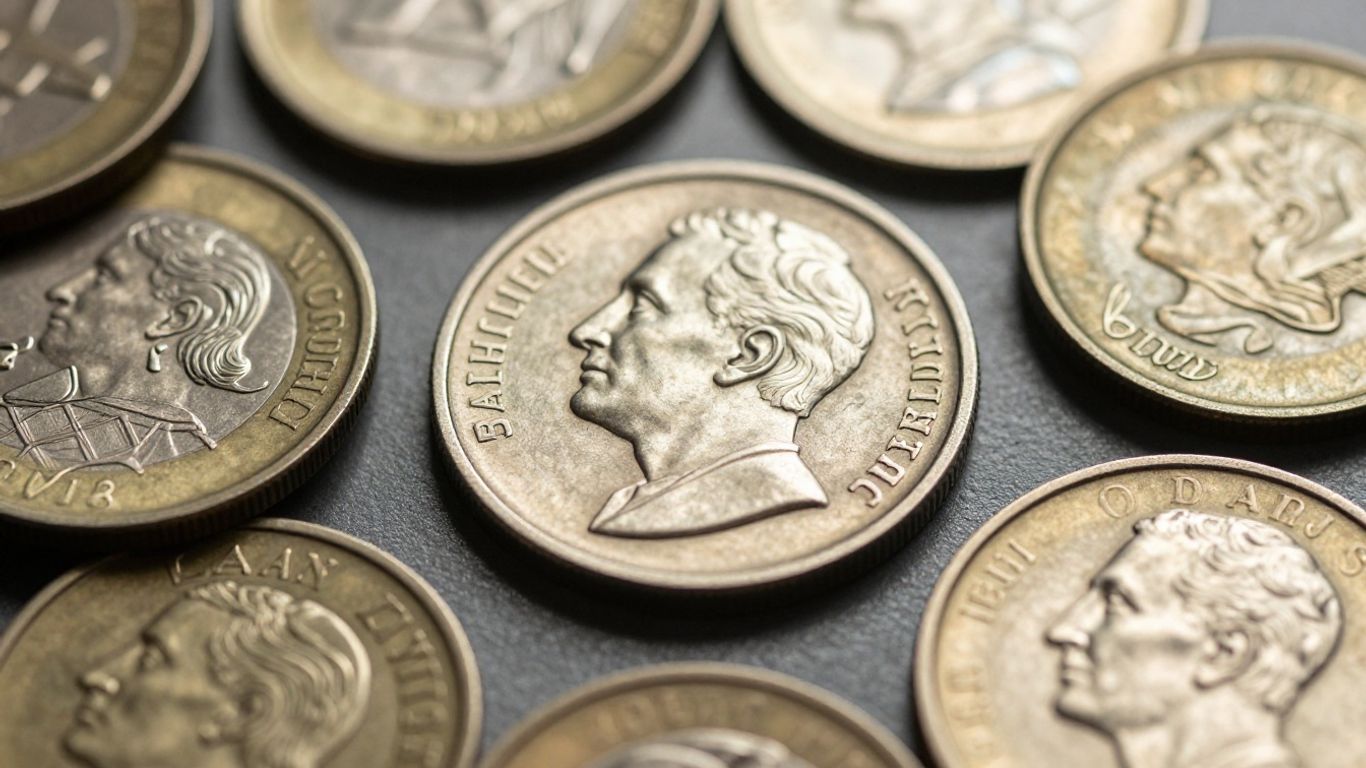
Design features on coins don’t just make them look good—they carry a lot of information that affects collectability, identification, and even value. Sometimes these details are subtle, so it’s important to know exactly what signals you’re looking for.
Obverse and Reverse Design Elements
The obverse, often called the “heads” side, almost always hosts a prominent figure or national symbol. It’s your first clue to the coin’s identity. The reverse, or “tails,” showcases a complementary image—maybe an animal, building, or commemorative theme. Both sides include details that collectors use to pinpoint the coin’s series or commemorative issue.
- Central images reveal the issuing authority or theme.
- Background details, like fields and relief, help with grading and authentication.
- Unusual designs or reliefs can set certain coins apart from regular currency, which is part of how collector coins can be distinguished by their unique designs.
Sometimes it only takes a small change on the obverse or reverse for a coin to stand out and gain interest from collectors—those minor changes can be the difference between a standard issue and something much rarer.
Inscriptions Confirming Specifications
Pretty much every modern coin will have various inscriptions stamped into its design—these are more than decoration. Inscriptions can confirm weight, metal content, denomination, and even sometimes where and when the coin was minted. Without these, it becomes much harder to match a coin to official records or know exactly what you’re holding.
You’ll usually find:
- Denomination (like $1, €2)
- Year of issue
- Statements of metal content, such as “1 OZ FINE SILVER” or similar
- National mottos or short commemorative messages
Designer's Initials and Their Significance
Many coins quietly credit their creators with tiny initials, often tucked near the rim or within the main motif. These small marks not only honor the designer—they can help confirm a piece’s authenticity. Sometimes, coins with a specific designer’s mark are more sought after, especially if the artist became well known or if the design is rare.
Quick reference:
| Initials Example | Associated Designer | Notability |
|---|---|---|
| "VDB" | Victor David Brenner | Lincoln Cent |
| "LGF" | Laura Gardin Fraser | Commemoratives |
| "ASG" | Augustus Saint-Gaudens | Double Eagle |
Even if you have to hunt for them, designer’s initials are worth checking for—they might be your clue to a particularly interesting or high-value coin.
Weight Verification Methods
When you’re looking at a coin, especially one that’s supposed to be made of precious metal, checking its weight is a pretty big deal. It’s one of the first things you’d do to see if it’s the real deal or just a clever fake. Think of it like checking the ingredients on a food package; you want to know what you’re actually getting.
Using Precision Scales for Accuracy
Forget your kitchen scale; we’re talking about precision here. These scales can measure down to a fraction of a gram, which is exactly what you need. Most reputable mints publish the exact weight their coins should be. For example, a standard American Gold Eagle coin is supposed to weigh 1.0909 troy ounces, which translates to about 33.93 grams. If your coin is significantly lighter or heavier, that’s a red flag.
Here’s a quick look at some common bullion coin weights:
| Coin Type | Metal | Weight (Troy Ounces) | Weight (Grams) | Fineness |
|---|---|---|---|---|
| American Gold Eagle | Gold | 1.0909 | 33.93 | .9167 |
| Canadian Maple Leaf | Gold | 1.00 | 31.1035 | .9999 |
| American Silver Eagle | Silver | 1.00 | 31.1035 | .999 |
| Australian Kangaroo | Gold | 1.00 | 31.1035 | .9999 |
Comparing Weight to Mint Specifications
Once you have the weight from your scale, you just look up what the official weight for that specific coin should be. Most mints have this information readily available on their websites. It’s a straightforward comparison. If the coin you have matches the official specs, it’s a good sign. If it’s off, even by a little bit, it warrants further investigation. Sometimes, minor variations can occur due to normal minting processes, but large discrepancies usually point to a problem.
The Magnet Test for Metal Verification
This is a super simple test, but it can catch a lot of fakes. Gold and silver, the metals most commonly used in bullion coins, aren’t magnetic. So, if you bring a strong magnet near your coin and it sticks, you can be pretty sure it’s not pure gold or silver. It’s likely made from a cheaper, magnetic metal like iron or steel, possibly with a thin plating. This test is quick, easy, and doesn’t harm the coin at all. It’s a great first step before you even get out the scale.
While weight and the magnet test are excellent starting points, they aren’t the whole story. A coin could be the correct weight and non-magnetic but still be a counterfeit made from a mix of metals. That’s why looking at other details, like the coin’s dimensions, edge, and overall appearance, is also important for a thorough check.
Factors Influencing Coin Value Beyond Weight
While a coin’s weight is a primary indicator of its metal content and a key factor in its bullion value, it’s far from the only thing that determines what a coin is worth. Many other elements come into play, turning a simple piece of metal into something much more significant. It’s like looking at a car; the engine size (weight) is important, but the make, model, condition, and even its history all add to its overall value.
Rarity and Mintage Numbers
One of the biggest drivers of a coin’s worth, especially for collectors, is how many were made. Low mintage numbers mean fewer coins are available, making them harder to find and thus more desirable. Think about it: if there are only 100 of something in the world, people will likely pay more for it than if there are a million. This scarcity principle applies directly to coins. Sometimes, a coin that was common when it was first minted can become rare later if many were melted down or lost over time. The fewer coins that exist, the higher the potential value.
Historical Significance and Storytelling
Coins are tiny pieces of history. Some coins are tied to major events, famous figures, or significant periods. A coin minted during a war, a royal coronation, or to commemorate a national milestone carries a story. This narrative adds a layer of numismatic value that goes way beyond the metal. Collectors often seek out these historical artifacts not just for their material worth but for the connection they provide to the past. It’s like owning a tangible piece of a story you can hold in your hand. For instance, coins from ancient civilizations or those associated with pivotal moments in a country’s history often command premiums because of their unique provenance.
Condition, Grading, and Market Demand
How well a coin has been preserved is absolutely critical. A coin that looks like it just left the mint, with no scratches or wear, is worth far more than one that’s been heavily circulated. Professional grading services assess this condition using a standardized scale, and coins with top grades (like MS70 for uncirculated or PF70 for proof coins) fetch the highest prices. Beyond condition, market demand plays a huge role. Economic conditions, collector trends, and even global events can influence how much people are willing to pay for certain coins at any given time. If there’s a surge in interest for a particular series or type of coin, prices can climb rapidly. It’s a dynamic interplay between the coin itself and the people who want to own it. Understanding these factors helps in appreciating the full picture of a coin’s worth, moving beyond just its weight specifications. You can find more information on how old coin values are determined by looking at metal content, quality, rarity, historical significance, and provenance.
Wrapping It Up
So, we’ve talked a lot about coin weights, and honestly, it’s more than just a number on a scale. It’s about what that weight tells you – is it pure gold, is it a genuine minting, or is it something else entirely? For anyone serious about collecting or investing, paying attention to these specs, like fineness and troy ounces, is pretty important. It helps you spot fakes, understand value, and just generally know what you’re holding. It’s not always the most exciting part of coin collecting, but it’s definitely one of the smarter things to keep in mind. Don’t just look at the pretty pictures; know the specs too.
Frequently Asked Questions
Why is the weight of a coin so important?
The weight of a coin is a key detail for checking if it’s real. Official weights are set by the mint. If a coin is too light or too heavy, it might be fake or damaged. For coins made of precious metals like gold or silver, their weight directly tells you how much metal they contain, which is a big part of their value.
What does 'fineness' mean for gold and silver coins?
Fineness tells you how pure the metal is in a coin. It’s shown as a number, like .999 or .9999. A fineness of .999 means the coin is 99.9% pure metal. This is super important for bullion coins because their value is based on the amount of pure gold or silver they have.
How are bullion coins measured?
Bullion coins, especially those made of gold, silver, or platinum, are usually measured in troy ounces. One troy ounce is a bit more than a regular ounce, about 31.1 grams. So, a ‘1 oz gold coin’ means it contains one troy ounce of gold.
What are 'reeding' on a coin's edge?
Reeding refers to the small grooves or lines you see on the edge of some coins, like many U.S. quarters. Years ago, this was a way to make sure no one shaved off tiny bits of the metal, which would reduce the coin’s weight and value. Today, it’s often just a design feature.
What is a 'mint mark' and why does it matter?
A mint mark is a small letter or symbol on a coin that shows which mint facility made it. For example, a ‘D’ might mean Denver, and an ‘S’ might mean San Francisco. Sometimes, coins from certain mints are rarer or more sought after, which can affect their value to collectors.
How can I tell if a coin has been cleaned?
Coins that have been cleaned often lose their original shine, called ‘luster.’ They might look too shiny, have tiny scratches from the cleaning cloth, or appear dull. Original mint luster is a sign of a coin that hasn’t been messed with, which is important for its value.
What's the difference between a coin's face value and its metal value?
A coin’s face value is the amount printed on it, like ‘$1’ on a U.S. dollar coin. This is what it’s worth as money. However, for bullion coins made of gold or silver, their value based on the precious metal inside (metal value or melt value) is usually much, much higher than their face value.
Besides weight, what else makes a coin valuable?
Many things can make a coin valuable beyond just its weight. These include how rare it is (how many were made), its historical importance, its condition and grade (how well-preserved it is), and how much collectors want it right now. Sometimes, a coin with a cool design or a famous mistake can be worth a lot.