
Keeping your coin collection in good shape is pretty important if you want it to hold its value. You know, things like scratches, tarnish, and especially damage from certain plastics can really mess with a coin’s condition. This article is all about how to avoid that, focusing on how to prevent pvc damage on coins and other common issues so your coins stay looking good for a long time.
Key Takeaways
- Always use storage materials that are specifically made for coins and are known to be inert, meaning they won’t react with the metal. Avoid plastics like vinyl that contain PVC, as they can release chemicals that harm your coins over time.
- Handle your coins carefully by their edges to avoid transferring oils and dirt from your skin, which can cause spots or corrosion.
- Store your coins in a stable environment with consistent temperature and low humidity. Big swings in heat and moisture can lead to oxidation and damage.
- Minimize exposure to air and light. Keep coins in sealed holders or containers when possible, and avoid direct sunlight, which can discolor them.
- For valuable coins, consider extra security like fireproof safes or bank deposit boxes, and look into getting your collection insured.
Understanding PVC Damage on Coins
The Harmful Nature of PVC Plastics
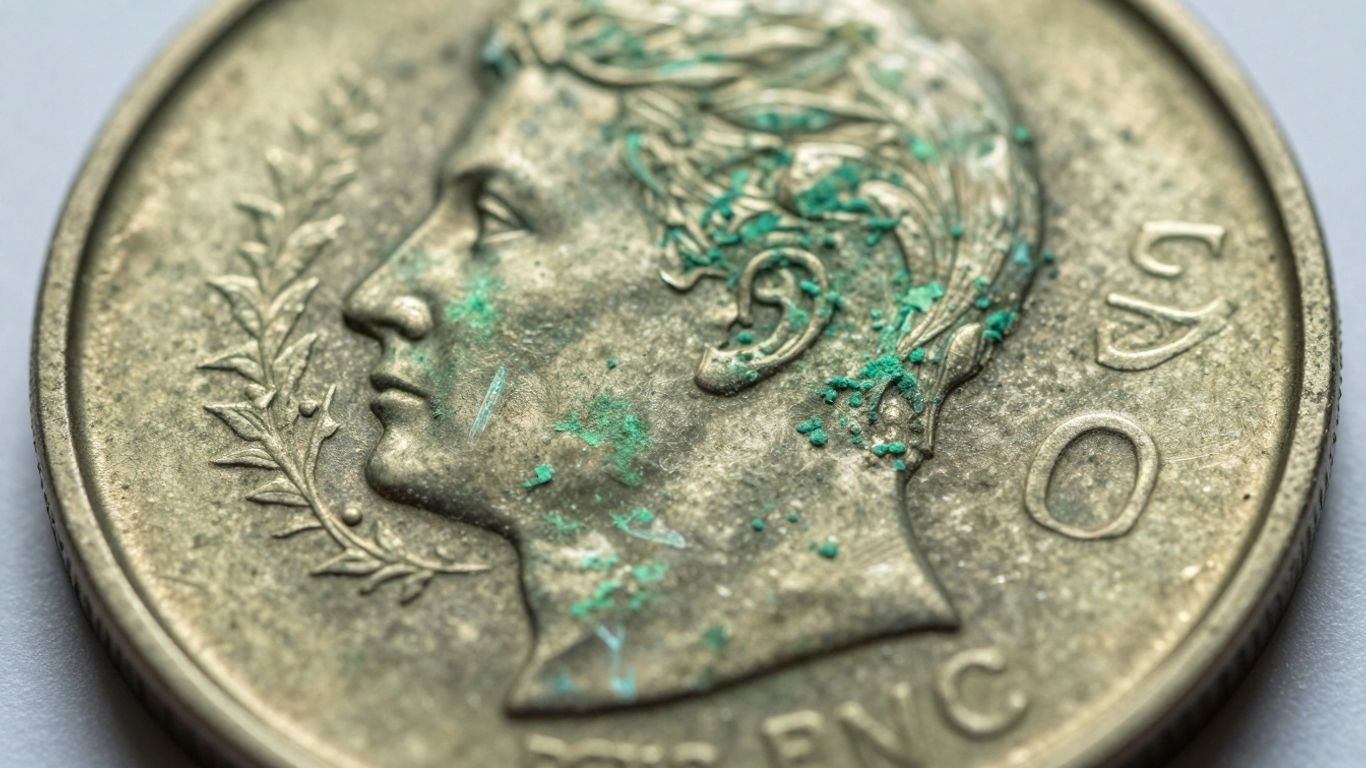
When you’re building a coin collection, the last thing you want is for your hard-earned treasures to get damaged. One sneaky culprit that can cause real problems is PVC, or polyvinyl chloride. You might find this plastic in some older coin flips or storage materials. The issue is that PVC isn’t stable over the long haul. It can break down, releasing chemicals that are bad news for metal. This breakdown process can leave a sticky, greenish residue on your coins, and it’s not just unsightly – it can actually eat into the coin’s surface. Think of it like a slow-acting acid. Over time, this residue can cause permanent damage, dulling the coin’s shine and potentially lowering its value. It’s a real bummer when you discover this on a coin you thought was safely stored.
Identifying PVC Residue on Your Collection
Spotting PVC damage isn’t always obvious at first, but there are signs to look for. The most common indicator is that green, waxy, or sticky film that appears on the coin’s surface. It often looks like a smear or a patch, and it might feel a bit tacky to the touch if you were to (carefully!) inspect it. Sometimes, the plastic holder itself might look discolored or brittle where it’s been in contact with the coin. If you notice any unusual discoloration or a strange texture developing on your coins, especially on those stored in older, flexible plastic flips, it’s worth investigating further. It’s a good idea to periodically check your collection, particularly any coins housed in materials you’re not entirely sure about. A quick visual inspection can save you a lot of heartache down the line.
Long-Term Effects of PVC Contamination
The damage from PVC isn’t just a surface-level issue; it can have lasting consequences for your coins. That green residue we talked about? It’s acidic and can actively corrode the metal. This means it can cause pitting, discoloration, and a general degradation of the coin’s surface. Unlike a simple smudge that can be wiped away, PVC damage often penetrates the metal itself. This can permanently alter the coin’s appearance and, unfortunately, its market value. Coins are often prized for their original surfaces and luster, and PVC contamination directly attacks these qualities. Once the damage is done, it’s very difficult, and sometimes impossible, to fully reverse without professional intervention. That’s why taking preventative measures is so important for any serious collector.
It’s really important to know what your coin storage materials are made of. Not all plastics are created equal, and some can cause serious harm to your collection over time. Always opt for materials specifically designed for archival use, which are chemically inert and won’t degrade or release harmful substances onto your coins. This simple step can prevent a world of trouble.
Selecting Inert Coin Storage Solutions
When it comes to keeping your coins safe, the materials you use for storage really matter. Not all plastics are created equal, and some can actually harm your collection over time. We need to be smart about what we put our coins in, especially if we want them to last.
Prioritizing Archival-Quality Holders
Archival-quality holders are made from materials that won’t react with your coins. Think of them as a safe, neutral environment. These are usually made from materials like Mylar, polyester, or polypropylene. They’re designed to protect your coins from dust, fingerprints, and environmental damage without introducing any harmful chemicals. It’s like giving your coins a protective bubble that won’t break down or leach anything nasty.
Choosing Mylar, Polyester, and Polypropylene
These three types of plastics are generally considered safe for coin storage. They are inert, meaning they don’t chemically react with the metals in your coins. Mylar (often found in "flips" or "slips") is a good choice, as is polyester. Polypropylene is also widely used and is a safe bet. Always check the packaging or product description to confirm it’s PVC-free and archival-safe.
Avoiding Vinyl and Other Harmful Plastics
The big one to avoid is vinyl, especially if it contains PVC (polyvinyl chloride). Over time, PVC breaks down and releases harmful plasticizers that can cause a sticky, green residue on your coins. This residue is difficult to remove and can permanently damage the coin’s surface. Other plastics that aren’t specifically made for archival use might also contain chemicals that could cause problems down the line. It’s best to stick to known safe materials.
Here’s a quick rundown of what to look for:
- Safe Materials: Mylar, Polyester, Polypropylene
- Materials to Avoid: Vinyl (especially PVC-containing), unknown plastics
- Look For: "PVC-Free", "Archival Safe", "Inert"
When in doubt, always err on the side of caution. If a storage product isn’t clearly labeled as safe for coin collecting, it’s probably best to skip it. Your coins are too important to risk with questionable materials.
Proper Handling Techniques for Coin Preservation
When you’re working with coins, especially those with significant value or delicate surfaces, how you hold them matters a lot. It’s not just about not dropping them, though that’s a big part of it. The oils and microscopic particles on our skin can actually damage a coin’s surface over time, leading to spots or even corrosion. So, it’s really important to be mindful of how you’re interacting with your collection.
Always Handle Coins by Their Edges
This is probably the most talked-about rule in coin collecting, and for good reason. Always pick up and hold a coin by its rim, the outer edge. Avoid touching the flat surfaces, known as the obverse (front) and reverse (back), with your bare fingers. Even if your hands feel clean, they carry natural oils and microscopic debris that can leave marks. These marks might not be visible right away, but they can etch into the metal over time, especially on softer metals like copper or silver, or on coins with highly polished proof surfaces. If you need to set a coin down, place it on a soft, clean surface like a piece of felt, a microfiber cloth, or even a clean sheet of archival paper. Never place a coin directly onto a hard or dirty tabletop.
The Role of Cotton Gloves in Handling
Many collectors wonder about gloves. While clean, bare hands are often preferred by professionals for better dexterity and feel, gloves can be a good idea in certain situations. For very high-grade proof coins with mirror-like surfaces, or for coins made of reactive metals like copper, cotton gloves can provide an extra layer of protection against fingerprints. However, there’s a trade-off. Gloves can reduce your grip and tactile sense, increasing the risk of dropping the coin. If a gloved hand fumbles, the resulting drop could cause more damage than a fingerprint would have. So, use gloves when you feel it’s necessary for particularly sensitive coins, but always remember to still handle them by the edges.
Maintaining a Clean and Safe Workspace
Before you even pick up a coin, think about your environment. You want a workspace that is well-lit, free from clutter, and clean. Avoid eating, drinking, or smoking anywhere near your coins. Crumbs, spills, or even smoke residue can settle on the coin’s surface and cause damage or discoloration. It’s also wise to work over a soft surface, like a tray lined with a cloth or a large piece of felt. This acts as a safety net in case a coin slips from your grasp. Holding only one coin at a time also minimizes the risk of them bumping into each other and causing scratches. If you’re showing a coin to someone else, it’s best to hand it to them by the edge or place it in a protective holder first, rather than just handing them the coin directly.
Environmental Controls for Coin Collections
Keeping your coins in a stable environment is just as important as the holders you choose. Think of it like this: even the best house won’t protect you if it’s constantly flooding or freezing. Coins are sensitive to their surroundings, and big swings in temperature or humidity can cause real problems.
Stabilizing Temperature and Humidity Levels
Coins are made of metal, and metal reacts to its environment. When temperatures go up, metal expands a little. When it cools down, it contracts. Over time, these tiny movements can stress the metal. More importantly, temperature changes often bring humidity changes. If a coin gets too warm and then cools rapidly in a humid spot, condensation can form. That moisture is a direct invitation for corrosion, which is pretty much the worst thing that can happen to a coin’s surface.
- Aim for consistency: The ideal spot for your coins is a place that feels comfortable to you – think room temperature, not too hot, not too cold.
- Control the moisture: Low humidity is the goal. Keeping things dry helps prevent those nasty corrosion reactions.
- Watch out for extremes: Avoid places like attics, basements, or near windows where temperatures and humidity can really go wild.
The Importance of Low Humidity for Coins
Humidity is the enemy of metal. Water molecules in the air can attach themselves to the coin’s surface and start a chemical reaction, leading to tarnish or even pitting. For most common coin metals, keeping the relative humidity below 50% is a good target. If you live in a naturally damp area, or if your storage space tends to be humid, you might need to take extra steps. Using desiccant packs, like silica gel, can help absorb excess moisture from the air within your storage containers or the general area. Just remember to replace or recharge them periodically so they can keep doing their job.
Avoiding Fluctuations in Storage Environments
It’s not just about the average temperature or humidity; it’s about the changes. A storage area that stays at 75°F and 60% humidity all the time might be less damaging than one that swings wildly between 60°F and 40% humidity one day, and then 80°F and 70% humidity the next. These constant shifts are what really stress the metal and create opportunities for moisture to do its work. So, find a spot that’s relatively stable and try to keep it that way. A closet in a climate-controlled part of your house is often a better choice than a garage or shed, even if those places seem cooler or drier on average.
The goal is to create a calm, predictable environment for your coins. Think of it as giving them a stable home where they won’t be constantly stressed by environmental changes. This stability is key to preventing long-term damage and preserving their condition.
Best Practices for Individual Coin Storage
When you’re looking to keep your coins safe and sound, especially those special ones, thinking about how you store them individually makes a big difference. It’s not just about tossing them in a box; each coin needs its own little space to prevent damage. This is where specialized holders come into play, acting like tiny protective cocoons.
Utilizing Individual Coin Flips and Sleeves
Coin flips are probably the most common way people store individual coins. You’ve got the basic idea: a small pouch that holds one coin. But here’s the catch – not all flips are created equal. You absolutely need to steer clear of anything made with PVC, that’s polyvinyl chloride. Why? Because over time, PVC can break down and release chemicals that leave a sticky, greenish residue on your coins. This stuff is bad news and can permanently damage the coin’s surface. Instead, look for flips made from Mylar, polyester, or archival-grade polypropylene. These materials are inert, meaning they won’t react with your coins. They keep each coin separate, stopping them from rubbing against each other and getting scratched. It’s a simple step, but it really helps keep those surfaces clean and original.
Employing 2x2 Cardboard Holders
These are another popular choice, especially for coins that aren’t super high value but still deserve good protection. A 2×2 holder is basically a cardboard square with a clear window (usually made of Mylar) in the center. You place your coin in the window, fold the cardboard over, and then staple or tape it shut. The cardboard itself provides a bit of rigidity, and the Mylar window lets you see the coin clearly. A big plus here is that you can write directly on the cardboard. This is super handy for noting down the coin’s date, mint mark, condition, or even where you got it. Just make sure the Mylar window is indeed PVC-free. Some older or cheaper ones might not be, so always check the packaging or product description. They’re great for organizing and storing a lot of coins without them touching.
Securing Coins in Hard Plastic Capsules
For your more valuable or delicate coins, hard plastic capsules are often the way to go. These are typically made from acrylic or polycarbonate, which are inert plastics. They come in two halves that snap together, creating a snug, protective enclosure for a single coin. The advantage here is the level of protection. They offer a good barrier against environmental factors like dust and moisture, and they provide excellent protection against physical damage. If a coin were to be dropped, a capsule offers much more impact resistance than a flip or a cardboard holder. They’re also crystal clear, so you can admire your coin without any worry. These capsules are particularly recommended for coins where preserving the original surface is paramount.
When choosing any individual storage solution, always prioritize materials explicitly labeled as "archival quality" or "PVC-free." This simple check can prevent a host of problems down the line, saving your collection from irreversible chemical damage and preserving its aesthetic appeal and monetary worth for years to come.
Bulk Storage and Display Options
When your coin collection starts to grow beyond just a few pieces, you’ll need ways to store them together without causing any harm. This is where bulk storage solutions come into play. Think about how you want to keep your coins organized and accessible, whether it’s by denomination, type, or just a general grouping.
Utilizing Individual Coin Flips and Sleeves
Coin flips, often made of plastic, are a common way to store coins individually. They’re usually inexpensive and make it easy to label each coin. However, you have to be careful about the type of plastic used. Some plastics, especially older or cheaper ones, can contain PVC which is bad for coins. Always look for flips made from inert materials like Mylar or polyethylene. These flips protect the coin from dust and minor handling, but they don’t offer much protection against physical impact. It’s a good option for short-term storage or for coins that aren’t particularly valuable.
Employing 2x2 Cardboard Holders
These are a step up from simple flips. A 2×2 holder is typically made of cardboard with a clear window, usually made of Mylar, so you can see both sides of the coin. The cardboard part gives you space to write information like the coin’s date, mint mark, or any notes you have. They’re quite affordable and popular, especially for beginners. The main drawback is that the cardboard itself can sometimes release dust or chemicals that might affect the coin over time. Also, some 2x2s use staples to hold them together, and these staples can sometimes scratch coins or leach harmful substances if they come into contact.
Securing Coins in Hard Plastic Capsules
For more valuable or sensitive coins, hard plastic capsules are a great choice. These are usually made from acrylic or other inert plastics and fit snugly around the coin, offering good protection from physical damage and environmental factors. They often allow for excellent viewing of both sides of the coin and can even have space for labels. While they provide superior protection, they are more expensive than flips or 2x2s, and coins are not meant to be removed frequently once placed inside. This makes them a more permanent storage solution.
Here’s a quick look at some common storage types:
| Storage Type | Material Examples | Pros | Cons |
|---|---|---|---|
| Coin Flips | Mylar, Polyethylene | Inexpensive, easy to label | Limited protection, potential for PVC damage if not inert |
| 2×2 Cardboard Holders | Cardboard, Mylar window | Affordable, space for notes | Cardboard dust, staple risks, limited viewing |
| Hard Plastic Capsules | Acrylic, Inert Plastics | Excellent protection, good visibility | Higher cost, not for frequent removal |
When storing multiple coins, especially in tubes or larger containers, make sure they are all made of the same inert material. Mixing different plastics or materials can sometimes lead to unexpected reactions that could harm your collection. It’s always better to err on the side of caution and stick to known safe materials.
Using Coin Tubes for Denomination Sets
Coin tubes are perfect for storing multiple coins of the same size and denomination together. They are typically made of clear plastic and come in various diameters to fit different coin types, from pennies to silver dollars. They’re a space-efficient way to keep your sets organized and protected from dust. Most modern coin tubes are made from PVC-free plastics, but it’s always wise to check the packaging or manufacturer’s specifications. The downside is that you can’t see the individual coins clearly without opening the tube, and coins can sometimes shift within the tube, potentially causing minor abrasions if they’re not a perfect fit.
Preventing Air and Light Exposure Damage
Keeping your coins safe means thinking about what they’re exposed to, even when they’re just sitting there. Two big culprits that can mess with your collection over time are air and light. Oxygen in the air can cause tarnishing, and UV light, like from the sun, can actually change the color of your coins, especially those made with silver. It’s not usually a quick process, but over years, it can make a difference.
Minimizing Contact with Oxygen
Oxygen is everywhere, and while you can’t completely remove it from your coin’s environment, you can certainly limit its access. The best way to do this is by using sealed holders. Think of them like little bubbles protecting your coins. When coins are stored loosely in a box or drawer, they’re constantly breathing in whatever air is around. This is where good storage solutions really pay off.
- Use individual, sealed holders: This is your first line of defense. Whether it’s a hard plastic capsule or a Mylar flip, make sure it seals well.
- Consider inert containers: Beyond individual holders, the container you put those holders in matters. Archival-quality boxes made from stable materials help keep outside air from getting in.
- Limit opening storage: Try not to open your coin storage frequently. Every time you do, you’re letting in fresh air and potentially other airborne contaminants.
Protecting Coins from UV Radiation
Direct sunlight is a no-go for coin collections. The ultraviolet (UV) rays can cause what’s called toning, which is a color change on the coin’s surface. While some collectors actually like certain types of toning, uncontrolled and uneven toning from light exposure isn’t usually desirable and can affect a coin’s appearance and value. This is especially true for coins with a higher silver content.
- Avoid direct sunlight: Never place your coin display or storage where the sun shines directly on it for extended periods.
- Use UV-protective display cases: If you want to display your coins, opt for cases or frames that have UV-filtering glass or acrylic. This lets you show them off without exposing them to damaging rays.
- Store in dark places: The safest bet for most coins is to keep them stored away from light altogether. Think drawers, cabinets, or safes.
Storing Coins in Dark, Sealed Conditions
Putting it all together, the ideal scenario for your coins involves keeping them in the dark and sealed away from the elements. This dual approach tackles both the air and light issues. For most collectors, this means using individual, inert plastic holders and then storing those holders in a dark, stable environment like a cabinet or a safe. This kind of protection is key to preserving the coin’s original surfaces and maintaining its long-term appeal. For more detailed information on conservation standards, you can consult the conservation standards published by the National Park Service.
Keeping your coins in sealed, dark conditions is one of the most straightforward yet effective ways to prevent damage from air and light. It’s a simple step that makes a big difference over time.
Securing High-Value Coin Investments
The Benefits of Fireproof and Waterproof Safes
When you’ve got coins that represent a significant financial investment, just tossing them in a drawer isn’t going to cut it. You need serious protection. A good quality fireproof and waterproof safe is a solid first step. Think of it as a personal vault right in your home. These safes are built to withstand extreme heat and water, which can be lifesavers if something unexpected happens, like a house fire or a flood. It’s not just about theft prevention, though that’s a big part of it; it’s also about safeguarding your collection from environmental disasters. The peace of mind knowing your valuable assets are shielded from common household calamities is well worth the investment.
Considering Bank Safe Deposit Boxes
For an extra layer of security, especially for your most prized and rarely accessed coins, a bank safe deposit box is a smart move. Banks have robust security systems, and their vaults are designed to offer a very stable environment, often with controlled temperature and humidity. This is great for long-term preservation. However, it’s important to remember that the bank typically doesn’t insure the contents of the box. You’ll need to arrange your own separate insurance policy to cover your coins if you choose this option. It’s a trade-off: top-tier physical security versus the need for your own insurance and the inconvenience of accessing your collection.
The Role of Coin Collection Insurance
No matter where you store your high-value coins, whether it’s a home safe or a bank deposit box, having dedicated insurance is a really good idea. Standard homeowner’s insurance often has limits on the amount it will pay out for collectibles, and sometimes it might not cover them at all, especially if they’re stolen from your home. A specialized coin collection insurance policy is tailored to your specific collection. It covers theft, damage, and loss, and it’s usually based on the appraised value of your coins. This provides a financial safety net, ensuring that if the worst happens, you can recoup your investment.
Proper storage and security measures are not just about protecting physical items; they are about safeguarding financial assets and preserving historical artifacts for the future. Taking these steps shows respect for the coins themselves and for the investment they represent.
The Dangers of Improper Coin Cleaning
It’s a common urge for new collectors: see a coin that’s a bit dull or tarnished, and immediately want to make it shine. You might think a quick scrub or a dip in some cleaner will make it look better, maybe even increase its value. Unfortunately, this is almost always the opposite of what you should do. Cleaning a coin, especially without knowing exactly what you’re doing, can cause permanent damage that drastically lowers its worth. Even if it looks brighter to you, experienced collectors and grading services can spot cleaning a mile away, and they’ll consider it a "problem coin."
Why Original Surfaces Are Crucial
The surface of a coin is like its skin, and over time, it develops a unique character. This can be a beautiful, natural patina or toning that tells a story of the coin’s history. These original surfaces are what collectors value most. When you clean a coin, you’re not just removing dirt; you’re often stripping away this original character, which is irreplaceable. Think of it like sanding down an antique piece of furniture – you might remove the grime, but you also remove the history and the unique finish that made it special. For valuable coins, this original surface is a huge part of their appeal and, therefore, their value.
Risks Associated with Coin Dips and Abrasives
When people talk about cleaning coins, they often think of two main methods: abrasive cleaning and chemical dips. Both are incredibly risky.
- Abrasives: This includes anything from toothpaste and baking soda to scrubbing pads or even a rough cloth. These materials create microscopic scratches, often called "hairlines," on the coin’s surface. These aren’t visible to the naked eye usually, but under magnification, they’re obvious and signal that the coin has been tampered with. Polishing, in particular, can give a coin an unnatural, glossy look that completely destroys its original luster.
- Chemical Dips: Many "coin dips" or jewelry cleaners contain acids. While they might remove tarnish quickly, they also eat away a thin layer of the coin’s metal. Overuse can leave a coin looking unnaturally white and dull, a state collectors call "over-dipped." Other household chemicals like vinegar or lemon juice can also react with the metal, causing etching or leaving residues that lead to corrosion later.
The takeaway is simple: avoid anything that physically rubs or chemically alters the coin’s surface.
When to Seek Professional Coin Conservation
So, what if you have a coin that’s genuinely damaged by something like PVC residue or has some other contaminant that seems to be harming it? Or perhaps it’s a very rare coin that you feel must be cleaned? In these situations, the absolute best course of action is to consult a professional coin conservation service. Companies like PCGS and NGC offer these services. They have specialized knowledge and techniques to carefully remove harmful substances without damaging the coin’s original surfaces. They can address issues like PVC damage, verdigris, or heavy tarnish. While it costs money, for valuable coins where any mistake could mean a huge loss in value, professional conservation is often the only safe route. They aim to reveal the coin’s original state, not to make it look artificially "new."
Maintaining Coin Integrity Over Time
The Value of Natural Patina and Toning
Many collectors mistakenly believe that any change in a coin’s surface appearance is a sign of damage. However, this isn’t always the case. Natural patina and toning are often desirable characteristics that develop over many years as a coin interacts with its environment. These surface changes can add depth and historical character to a coin, sometimes even increasing its appeal and value to knowledgeable collectors. Original surfaces, with their inherent patina, are highly prized. Think of it as the coin’s unique story told through its surface. Cleaning a coin to remove this natural toning can inadvertently strip away this history, leaving it looking artificial and less appealing.
Understanding Coin Degradation Processes
Coins are susceptible to various forms of degradation over time, even when stored properly. Understanding these processes helps in preventing them. The primary culprits are environmental factors like humidity, oxygen, and light, which can lead to tarnishing, corrosion, and surface etching. Chemical reactions from improper storage materials, such as PVC, can also cause significant damage. Physical damage, like scratches or nicks from mishandling or poor storage, is irreversible. Even seemingly stable metals can degrade if exposed to adverse conditions for extended periods. Keeping coins in a stable, controlled environment is the best defense against these slow-acting agents of decay.
Preserving Coins for Future Generations
Preserving your coin collection for the future is about more than just keeping it safe; it’s about maintaining its historical and numismatic integrity. This involves a commitment to consistent, proper care. Here are some key practices:
- Consistent Environment: Maintain stable temperature and humidity levels, ideally around 60-70°F (15-21°C) with relative humidity below 50%. Avoid storing coins in attics, basements, or garages where conditions fluctuate wildly.
- Appropriate Storage: Use archival-quality holders made from inert materials like Mylar or polyethylene. Avoid PVC plastics at all costs, as they release harmful chemicals. For valuable coins, consider sealed capsules or professionally graded slabs.
- Mindful Handling: Always handle coins by their edges to prevent transferring oils and dirt from your skin. Clean, dry hands are a must, and cotton gloves can be beneficial for high-grade or sensitive coins.
- Minimize Exposure: Limit exposure to direct light, especially UV radiation, which can cause discoloration. Store coins in dark, sealed conditions whenever possible.
The overarching principle from the experts is that maintaining a coin’s original surfaces and toning is crucial to its value. Cleaning is usually unwarranted and often harmful. Many experienced collectors prefer a coin with natural tarnish or aging over one that has been obviously cleaned, because originality is part of the coin’s story and appeal. So when in doubt, don’t clean it!
By adhering to these practices, you are not just protecting your investment but also safeguarding a piece of history for those who will appreciate it long after you are gone. Proper care today means a legacy preserved for tomorrow. You can find more professional methods for preserving your collection by looking at professional coin preservation resources.
Wrapping Up: Keep Those Coins Safe
So, we’ve gone over a lot of stuff about keeping PVC and other bad things away from your coins. It might seem like a lot at first, but really, it just comes down to using the right holders, keeping things clean, and storing your coins in a stable spot. Avoiding those cheap plastic flips is a big one, and so is not messing with cleaning them unless you absolutely have to. Think of it like this: a little bit of care now means your coins will still look good for a long, long time. Your future self, and maybe even the next person who gets to enjoy your collection, will definitely thank you for it.
Frequently Asked Questions
What exactly is PVC damage on coins, and why is it bad?
PVC damage happens when plastic containing PVC, a type of chemical, touches your coins. Over time, this plastic can break down and release harmful stuff that leaves a sticky, green mess on your coins. This green gunk can eat away at the coin’s surface, making it look bad and lowering its value. It’s like a slow poison for your collection.
How can I tell if my coins have PVC residue on them?
Look closely at your coins. If you see a sticky, green, or sometimes bluish-green coating, especially where the coin touched plastic, that’s likely PVC residue. It might also look like a dull film or even cause dark spots on the coin’s surface. If you notice this, it’s important to remove the coin from the harmful plastic right away.
What are the best types of holders to use for my coins?
You should always use holders that are made from materials safe for coins, often called ‘archival quality’ or ‘inert.’ Good choices include holders made of Mylar, polyester, or polypropylene. These materials won’t break down and harm your coins. Things like 2×2 cardboard holders and hard plastic capsules are also great options for keeping coins safe and separate.
Are there any plastic holders I should absolutely avoid?
Yes, definitely avoid any coin holders or flips that are made of vinyl or contain PVC. These are often the cheaper, more flexible plastic holders. They might seem okay at first, but they will eventually release chemicals that damage your coins. It’s always better to spend a little more on safe storage than to risk ruining your collection.
How should I handle my coins to avoid damaging them?
The best way to handle coins is to always hold them by their edges, also known as the rim. This way, your fingers don’t touch the main surfaces where fingerprints and oils can cause damage over time. It’s also a good idea to work over a soft surface, like a cloth or tray, in case you accidentally drop a coin.
Do I really need to wear gloves when handling coins?
For most coins, clean, dry hands are perfectly fine, as long as you hold them by the edges. Gloves, especially cotton ones, are mostly recommended for very special coins, like high-grade proof coins or coins made of easily damaged metals like copper. Gloves can sometimes make it harder to grip the coin, so use them carefully if you choose to.
What's the ideal environment for storing my coin collection?
Coins like a stable, comfortable place. Think of a cool, dry room with steady temperatures, ideally around 68 degrees Fahrenheit (20 degrees Celsius) and humidity below 50%. Avoid places like attics or basements where the temperature and moisture can change a lot. Keeping your coins in a dark, sealed place also helps protect them from light and air.
Should I ever clean my coins?
Generally, it’s best not to clean your coins. Most collectors and experts believe that a coin’s original surface, including any natural toning or patina, is very important to its value. Cleaning can easily scratch or damage the surface, which often lowers the coin’s worth. If a coin has something like PVC residue that needs removing, it’s usually best to seek help from a professional coin conservator.