
When looking at gold coins, you’ll often see numbers and letters that tell you about the gold’s purity. It can get a bit confusing with terms like ‘karat’ and ‘fineness.’ Basically, these are just different ways to talk about how much pure gold is in the coin versus other metals mixed in. Understanding this difference between fineness versus karat in gold coins is key to knowing what you’re actually buying and how much it’s worth. It’s not as complicated as it sounds, and knowing the basics can help you make smarter choices.
Key Takeaways
- Gold purity is measured using two main systems: Karat and Millesimal Fineness.
- The Karat system uses a scale up to 24, where 24K means pure gold, and lower numbers indicate a mix with other metals.
- Millesimal Fineness expresses purity as parts per thousand, with 1000 being pure gold (e.g., 750 fineness equals 18K gold).
- Higher purity gold (higher karat or fineness) is generally more valuable but also softer and more prone to damage.
- Understanding these purity markings is important for assessing the true value and authenticity of gold coins.
Understanding Fineness Versus Karat in Gold Coins
When you’re looking at gold coins, you’ll notice different numbers and terms used to describe their gold content. It can get a little confusing, but it all boils down to how pure the gold is. Two main ways we talk about this are using the karat system and millesimal fineness. They might seem similar, but they measure gold purity in slightly different ways, and understanding this difference is key to knowing what you’re actually buying.
The Karat System Explained
The karat system is probably the one most people are familiar with, especially when it comes to jewelry. It’s a scale that goes up to 24, where 24 karats means the gold is considered pure. So, if you see a coin marked with a karat value, it’s telling you how many parts out of 24 are pure gold. For example, 18-karat gold means that 18 out of the 24 parts are pure gold, with the remaining 6 parts being other metals like copper, silver, or zinc. These other metals are added to make the gold harder and more durable, which is important for coins that might be handled a lot.
- 24 Karat (24K): Represents 100% pure gold (or as close as practically possible, often 99.9%).
- 18 Karat (18K): Contains 75% pure gold (18/24).
- 14 Karat (14K): Contains approximately 58.3% pure gold (14/24).
- 10 Karat (10K): Contains about 41.7% pure gold (10/24).
It’s important not to confuse ‘karat’ with ‘carat,’ which is used to measure the weight of gemstones. They sound alike but mean totally different things!
Millesimal Fineness: A Measure of Purity
Millesimal fineness is a more precise way to state gold purity, and you’ll often see it used for investment-grade gold coins and bars. Instead of using a scale of 24, millesimal fineness expresses purity in parts per thousand. So, if a coin has a fineness of 999, it means that 999 out of every 1000 parts of the metal are pure gold. This system is common worldwide, especially for bullion, because it offers a very clear and standardized measurement.
Here’s how the two systems relate:
| Karat Value | Millesimal Fineness | Gold Content (approx.) |
|---|---|---|
| 24K | 999 or 999.9 | 99.9% – 100% |
| 22K | 916 | 91.6% |
| 18K | 750 | 75.0% |
| 14K | 585 | 58.5% |
| 10K | 417 | 41.7% |
While karat is widely used for jewelry, millesimal fineness is the standard for precious metals like gold bullion, offering a universally understood measure of purity.
Decoding Gold Hallmarks and Stamps
To figure out the purity of a gold coin, you need to know how to read the markings on it. These are called hallmarks or stamps. They are usually small imprints directly on the coin’s surface. For karat, you’ll typically see a number followed by ‘K’ or ‘Kt’, like ’18K’. For millesimal fineness, you’ll see a three-digit number, such as ‘999’ or ‘750’. Sometimes, you might find both markings on a single piece, or you might see other symbols that indicate the mint or the assay office that verified its purity. Learning to read these stamps is your first step to understanding the true gold content and, therefore, the value of your coin.
The Karat Scale: Gauging Gold Purity
What Does Karat Signify?
When we talk about gold, especially in coins and jewelry, you’ll often hear the term ‘karat’. It’s a way to measure how much pure gold is actually in a piece. Think of it like a scale, where 24 is the top. The higher the karat number, the more pure gold you’re getting. Pure gold itself is quite soft, so to make it more durable for things like coins or rings, it’s usually mixed with other metals. These other metals are called alloys, and they change the color, hardness, and yes, the value of the gold.
The Purity Breakdown of Karat Values
So, what do those numbers actually mean? It’s pretty straightforward once you see it laid out. Each karat represents a fraction of the whole, with 24 karats being the standard for pure gold. Here’s a look at how it breaks down:
- 24 Karat (24K): This is considered pure gold. It’s 99.9% gold, or very close to it. You’ll see this in investment-grade bullion coins and bars.
- 22 Karat (22K): This is about 91.6% gold. It’s still very high purity and often used for coins where a bit more durability is needed.
- 18 Karat (18K): This means the gold is 75% pure. The other 25% is made up of other metals, which makes it quite strong.
- 14 Karat (14K): Here, the gold content is about 58.3% pure. This is a common mix for jewelry because it balances gold content with toughness.
- 10 Karat (10K): This is the lowest commonly accepted ‘gold’ standard in some places, with about 41.7% pure gold. It’s very durable but has less gold content.
Here’s a quick table to visualize this:
| Karat Value | Gold Content (Approximate) |
|---|---|
| 24K | 99.9% |
| 22K | 91.6% |
| 18K | 75.0% |
| 14K | 58.3% |
| 10K | 41.7% |
Distinguishing Karat from Carat
It’s easy to get confused between ‘karat’ and ‘carat’, but they mean totally different things. Karat (with a ‘K’) refers to the purity of gold. Carat (with a ‘C’) is used to measure the weight of gemstones, like diamonds. So, when you’re looking at gold coins or jewelry, you’re interested in the karat value, not the carat weight.
Millesimal Fineness: Precision in Purity Measurement
Defining Millesimal Fineness
While the karat system is common, especially for jewelry, another method offers a more precise way to describe gold purity: millesimal fineness. This system expresses the proportion of pure gold in an alloy as parts per thousand. It’s a straightforward, numerical approach that leaves little room for interpretation. For example, 18-karat gold, which is 75% pure gold, would be marked as 750 in millesimal fineness. This means that out of every 1,000 parts of the metal, 750 are pure gold. This method is widely adopted globally for its clarity and accuracy.
Common Fineness Markings for Bullion
When you look at gold bullion, like coins or bars, you’ll often see fineness markings. These numbers tell you exactly how much pure gold is present. The highest purity you’ll typically find is 999.9, often referred to as "four nines" fine. Some exceptionally pure bullion might even reach 999.99, or "five nines" fine. These high fineness levels are particularly sought after by collectors and investors who prioritize the purest form of the metal. Here’s a quick look at some common fineness levels and their approximate karat equivalents:
| Millesimal Fineness | Approximate Karat | Gold Content |
|---|---|---|
| 999.9 | 24K | 99.99% |
| 995 | 23.9K | 99.5% |
| 916 | 22K | 91.6% |
| 750 | 18K | 75.0% |
| 585 | 14K | 58.5% |
Fineness as a Global Standard
Millesimal fineness serves as a more universal language for gold purity, especially in the international bullion market. Unlike karat standards which can sometimes have slight regional variations or minimum requirements for what can be called "gold" in jewelry, fineness is a direct measurement. This makes it easier for buyers and sellers worldwide to understand and compare the purity of gold products. It’s a system that emphasizes transparency and precision, which is why it’s the preferred method for marking investment-grade gold. You can find detailed information on gold purity standards when examining different coins and bars.
The adoption of millesimal fineness provides a clear, numerical representation of gold’s purity, simplifying international trade and investment decisions. It removes ambiguity often associated with other measurement systems.
The Impact of Gold Purity on Value
Higher Karats, Higher Value
When it comes to gold, more pure usually means more valuable. It’s pretty straightforward: the higher the karat number, the more actual gold is in the mix. Think of it like this: 24 karat gold is considered pure gold, meaning it’s 24 out of 24 parts gold. So, if you see a coin marked 24K, it’s packed with pure gold. Coins with lower karats, like 18K or 14K, have other metals mixed in to make them harder or change their color. These other metals, called alloys, bring down the percentage of gold, and that directly affects the price. Pure gold is simply rarer and more sought after, driving up its cost.
Purity and Investment Potential
For collectors and investors, purity is a big deal. Coins made with higher purity gold, especially those marked 24K or with a fineness of 999.9, are often seen as a more stable investment. They tend to hold their value well over time because their worth is directly tied to the market price of gold itself. When you buy a high-purity gold coin, you’re essentially buying a chunk of gold with minimal dilution. This makes them attractive for people looking to add tangible assets to their portfolios. Lower karat coins, while still containing gold, have a larger portion of their value tied up in the alloy metals and the craftsmanship, which can make their value fluctuate a bit differently.
The Role of Alloys in Gold Value
Alloys aren’t just there to cut costs; they play a significant role in a gold coin’s overall profile. While pure gold is soft and can easily get scratched or bent, adding metals like copper, silver, or zinc makes the coin more durable. This increased hardness is important for coins that are meant to be handled or circulated. For instance, a 14K gold coin (which is about 58.3% gold) will be much tougher than a 24K coin (99.9% gold). This durability can be a plus for certain types of coins, especially if they are intended for more than just sitting in a vault. However, this added durability comes at the cost of gold content, meaning the intrinsic value derived purely from the gold itself is lower compared to a purer coin.
Here’s a quick look at how purity breaks down:
| Karat | Fineness (approx.) | Gold Content (approx.) |
|---|---|---|
| 24K | 999 | 99.9% |
| 22K | 916 | 91.6% |
| 18K | 750 | 75.0% |
| 14K | 585 | 58.3% |
| 10K | 417 | 41.7% |
The decision between a higher karat coin and one with alloys often comes down to what the coin is intended for. Investment-grade bullion coins prioritize purity for maximum gold content, while commemorative or circulating coins might use alloys for better resilience and detail preservation.
Practical Considerations for Gold Coins
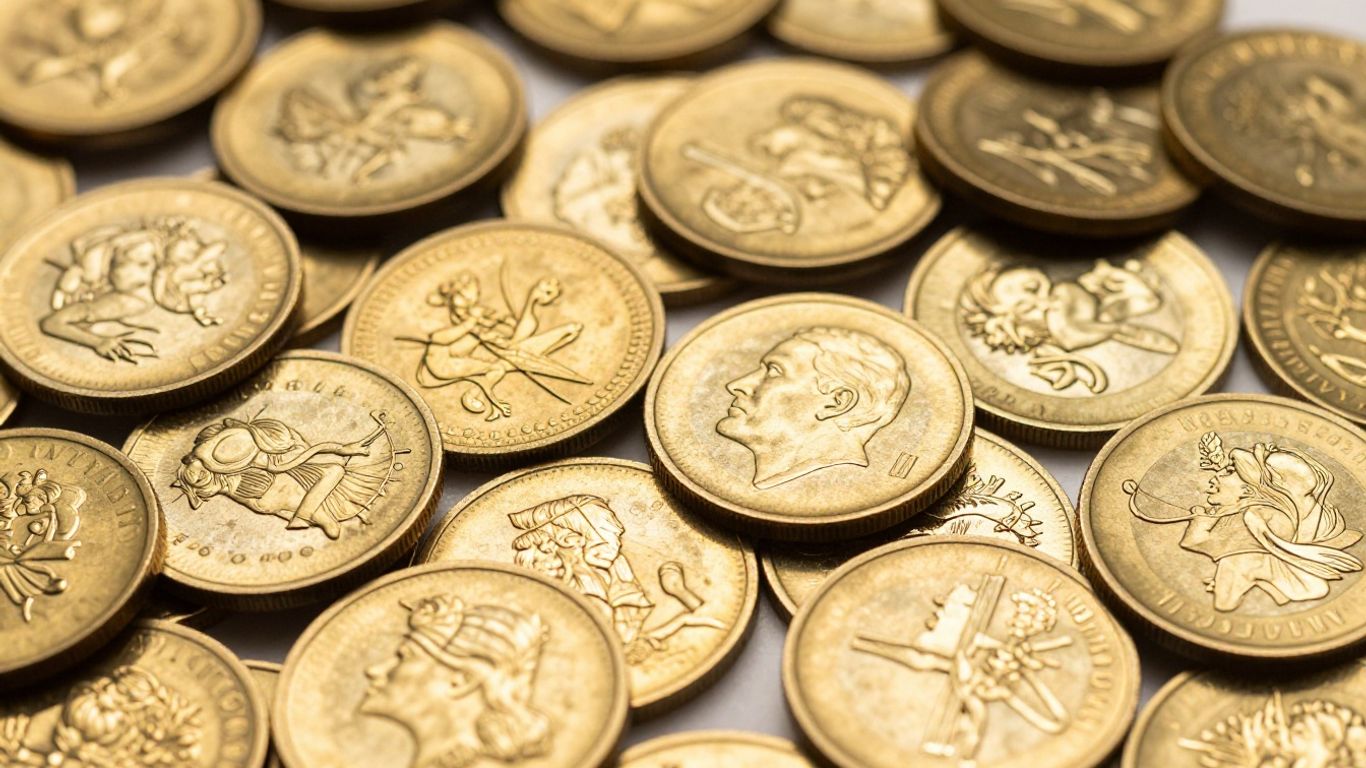
Durability Versus Purity in Coins
When we talk about gold coins, especially those meant for collecting or investing, the balance between how pure the gold is and how tough the coin itself is becomes a big deal. Pure gold, which is 24 karats or 99.9% fine, is really soft. Think of it like butter – easy to shape, but also easy to scratch or bend. This softness means that a coin made of pure gold can get damaged pretty easily during handling or even just from being stored improperly. Scratches, nicks, or dents can really lower its value, especially for collectors who care about condition.
On the other hand, mixing gold with other metals, like copper, silver, or zinc, makes it harder. This is how we get lower karat values, like 22K or 18K. Coins made with these alloys are much more resistant to wear and tear. They can be handled more freely without much worry about damage. However, the trade-off is that they aren’t as pure. So, you have to decide what’s more important for your specific coin: the absolute highest gold content or the ability to withstand the bumps of everyday life.
Aesthetic Qualities of Different Purity Levels
The look of a gold coin changes quite a bit depending on its purity. Pure gold (24K) has a very distinct, rich yellow color that’s quite striking. It’s a deep, warm hue that many people associate with true gold. As you add other metals to create lower karats, the color shifts. For instance, 18K gold might have a slightly paler yellow, while 14K can look even lighter, sometimes leaning towards a more brassy tone depending on the alloy mix. Some alloys can even give gold a reddish or greenish tint.
For collectors, this color difference can be a significant factor. Some might prefer the intense, pure yellow of 24K, while others might find the slightly varied tones of lower karats more appealing or even more visually interesting. It really comes down to personal taste and what you’re looking for in the appearance of your gold coins.
The Trade-offs of Softness in Pure Gold
Pure gold, at 24 karats, is incredibly soft. This means it’s very easy to deform. While this makes it ideal for casting intricate jewelry, it presents challenges for coins. A coin made of pure gold is more susceptible to damage from everyday handling. Even a slight pressure can cause it to dent, and a sharp object can easily scratch its surface. This lack of durability is why many gold coins, especially those intended for circulation or frequent handling, are made with alloys. These alloys add hardness, making the coins more robust and able to withstand wear and tear over time. However, this increased durability comes at the cost of purity, as the gold content is reduced. For investors focused purely on the gold content, this might be less of a concern, but for collectors or those who want a coin that looks pristine for years, the softness of pure gold is a significant consideration.
The decision between a higher karat coin and one with alloys involves weighing the intrinsic value of pure gold against the practical need for a coin that can maintain its physical integrity over time. Both have their place, depending on the coin’s intended purpose and the owner’s priorities.
Identifying Gold Purity in Your Collection
So, you’ve got some gold coins, maybe inherited them, maybe bought them over the years. Now you’re wondering, ‘How pure is this stuff, really?’ It’s not always as straightforward as it seems. Luckily, there are ways to get a good idea of what you’re holding.
Reading Gold Coin Markings
First things first, take a close look at the coin itself. Many gold coins, especially those intended for investment or as legal tender, will have markings right on them. These are like little labels telling you about the gold.
- Fineness: This is a super common way to see purity on coins. It’s usually shown as a three-digit number, like 999 or 999.9. This means 999 parts of gold out of 1000, or 999.9 parts out of 1000. Basically, the higher the number, the purer the gold. For example, a coin marked ‘999’ is 99.9% pure gold.
- Karat: While more common for jewelry, some older coins or coins from certain regions might use karats. Remember, 24K is considered pure gold (or very close to it).
- Mint Mark: Sometimes, the place where the coin was made (the mint) will be stamped on it. This can sometimes give you a clue about the standards they followed.
Don’t forget to use a magnifying glass for these tiny details! Sometimes, these markings are very small and can be hard to spot.
Understanding Purity Charts
Once you’ve found any markings, you’ll want to compare them to a standard chart. This helps you translate those numbers into what they actually mean in terms of gold content. Here’s a quick look at how fineness relates to purity:
| Fineness Marking | Purity (% Gold) |
|---|---|
| 999 | 99.9% |
| 999.9 | 99.99% |
| 916 | 91.6% (22K) |
| 750 | 75.0% (18K) |
Knowing these conversions is key. A coin marked ‘999’ is significantly purer than one marked ‘750’. This difference directly impacts its value, especially for investment-grade coins.
When to Consult a Professional
Sometimes, a coin might not have clear markings, or you might have a very old or unusual piece. In these situations, it’s best to get an expert opinion. Professional coin dealers or precious metal assayers have specialized tools that can accurately determine the gold content without damaging the coin.
Trying to figure out gold purity on your own can be tricky. While markings and charts are helpful, they aren’t always foolproof. For valuable coins, especially if you’re thinking of selling or insuring them, a professional assessment is the most reliable way to go. They can use methods like X-ray fluorescence (XRF) testing, which is non-destructive and gives precise results.
Don’t hesitate to seek help if you’re unsure. It’s better to be certain about the purity and value of your collection.
Comparing Karat and Fineness Systems
Key Differences Between the Systems
When we talk about gold purity, two main systems pop up: Karat and Millesimal Fineness. They both aim to tell you how much pure gold is in a piece, but they go about it differently. Think of it like measuring distance in miles versus kilometers – same idea, different numbers.
Karat, often seen as ‘K’ or ‘kt’, uses a scale out of 24. So, 24 Karat means pure gold, and 18 Karat means 18 parts gold out of 24 total parts. It’s a bit like saying "this is 75% gold" (since 18/24 = 0.75).
Millesimal Fineness, on the other hand, is more precise. It measures purity in parts per thousand. So, instead of 18 Karat, you’d see ‘750’. This means 750 parts out of 1000 are pure gold. It’s a more direct, numerical way to express the exact gold content.
The main difference is the scale: Karat is out of 24, while Fineness is out of 1000.
Here’s a quick look at how they line up:
| Karat Value | Millesimal Fineness | Gold Content (approx.) |
|---|---|---|
| 24K | 999 or 1000 | 99.9% – 100% |
| 22K | 916 | 91.6% |
| 18K | 750 | 75.0% |
| 14K | 585 | 58.5% |
| 10K | 417 | 41.7% |
Converting Between Karat and Fineness
It’s pretty straightforward to switch between these two systems once you get the hang of it. For Karat to Fineness, you take the Karat number, divide it by 24, and then multiply by 1000. For example, to convert 18 Karat to Fineness:
(18 / 24) * 1000 = 0.75 * 1000 = 750
So, 18K is the same as 750 fineness.
To go the other way, from Fineness to Karat, you take the Fineness number, divide it by 1000, and then multiply by 24. Let’s convert 916 fineness to Karat:
(916 / 1000) * 24 = 0.916 * 24 = 21.984
This is usually rounded to 22 Karat, which is why you often see 22K marked as 916 or 917 fineness.
Which System is More Common for Coins?
When it comes to gold coins, especially investment-grade bullion coins, millesimal fineness is generally the preferred system. You’ll see markings like ‘999.9 fine’ or ‘9999’ on coins from mints around the world. This is because bullion coins are typically made to be as pure as possible, and fineness offers a more exact measurement for these high-purity standards.
Think about coins like the Canadian Maple Leaf or the American Gold Eagle. They often proudly display their fineness, like ‘9999’ for the Maple Leaf, indicating an extremely high level of gold purity. This precision is important for investors who want to know exactly what they’re buying.
While Karat is super common for jewelry, fineness is the go-to for coins where purity is the main selling point. It provides a clear, universally understood standard for the highest grades of gold.
The Significance of Purity in Gold Coinage
Historical Context of Gold Purity Standards
Gold has been a measure of wealth for thousands of years, and with that came the need to standardize its purity. Early civilizations often relied on visual inspection or simple tests to gauge gold’s quality. Over time, as trade expanded and the desire for more reliable measures grew, systems like the karat and millesimal fineness emerged. These weren’t just about knowing how much gold you had; they were about trust. When you traded a gold coin, you needed to be reasonably sure of its content. This historical drive for consistency laid the groundwork for the purity standards we see today, especially in coinage where uniformity is key for acceptance and value.
Purity and Legal Tender Status
For gold coins to function as legal tender, their purity is often a defining characteristic. Governments minting these coins guarantee a certain level of gold content, which underpins their face value. This guarantee is what allows them to be used in transactions. Think about it: if a coin labeled as ‘one ounce of pure gold’ turned out to be mostly copper, it would quickly lose its credibility and its status as legal tender. The purity isn’t just a number; it’s a promise from the issuer. This is why official government mints are meticulous about maintaining strict purity standards for their gold coinage.
The Appeal of High-Purity Bullion Coins
When people talk about gold coins for investment, they’re usually thinking about bullion coins. These are coins specifically made for their gold content, not for circulation as currency. The higher the purity of a bullion coin, the more desirable it generally is for investors. This is because you’re getting more of the actual precious metal for your money. Coins like the American Gold Eagle or the Canadian Gold Maple Leaf are famous for their high purity levels, often 99.9% or even 99.99% pure gold. This makes them a straightforward way to hold physical gold, as their value is directly tied to the spot price of gold, minus a small premium for minting and distribution. It simplifies things for the buyer – you know exactly what you’re getting.
Here’s a quick look at common purity levels in bullion coins:
| Coin Name | Purity (Millesimal Fineness) | Purity (% Gold) | Notes |
|---|---|---|---|
| American Gold Eagle | 916.7 | 91.67% | Contains copper and silver alloys |
| Canadian Gold Maple Leaf | 999.9 | 99.99% | Very high purity |
| South African Krugerrand | 916.7 | 91.67% | Contains copper alloy |
| Austrian Philharmonic | 999.9 | 99.99% | Very high purity |
The decision to mint gold coins at specific purity levels often involves balancing the desire for maximum gold content with practical considerations like durability and cost. While 24-karat (99.9% pure) gold is the softest, alloys are sometimes added to make coins more resistant to wear and tear, which is important for coins that might be handled or stored for long periods.
Navigating Gold Purity for Informed Decisions
Making Smart Investment Choices
When you’re looking at gold coins, especially for investment, knowing the purity is a big deal. It’s not just about how shiny the coin is; it’s about how much actual gold is in there. This directly affects its worth, not just today but also down the road. Think of it like buying a house – you want to know exactly what you’re getting, right? With gold, that means understanding if it’s 24K pure or a mix with other metals.
The more pure gold in a coin, the higher its intrinsic value. This is a simple rule, but it’s the foundation for making good choices.
Here’s a quick look at how purity breaks down:
- 24 Karat (24K): This is considered pure gold, or very close to it (99.9% or higher). It’s soft and usually found in bullion coins meant purely for investment.
- 22 Karat (22K): This means 22 parts gold and 2 parts other metals. It’s about 91.7% pure gold. Some older or specific collectible coins might be this purity.
- 18 Karat (18K): This is 18 parts gold and 6 parts other metals, making it 75% pure gold. You’ll see this more in jewelry than in investment coins.
Understanding Authenticity and Value
It’s easy to get confused, especially when you see different numbers and letters on coins. Sometimes you’ll see ‘fineness’ numbers, like .999 or .9999. This is just another way of saying how pure the gold is, using a scale of 1000. So, .999 fineness is the same as 99.9% pure gold, which is 24K.
Knowing the difference between karat and fineness helps you read the markings on a coin and understand its true gold content. This knowledge is your best defense against overpaying or buying something that isn’t what it seems.
The Importance of Knowing Your Gold
So, why does all this matter? Because gold is a significant purchase, whether you’re buying a single coin or a whole collection. You want to be sure you’re getting what you pay for. If a coin is advertised as pure gold but is actually an alloy, its value will be much lower. This is where knowing the markings comes in handy.
- Check for Hallmarks: Reputable coins will have stamps indicating their purity. Look for numbers like 999, 999.5, or 999.9 for high purity.
- Research the Mint: Official government mints and well-known private refiners usually produce coins with high, verifiable purity.
- Compare Prices: If a deal seems too good to be true for a high-purity coin, it probably is. Always compare prices against the current market value of gold.
Being informed means you can confidently buy, sell, or simply appreciate your gold coins, knowing their true worth.
Wrapping Up: Karat, Fineness, and Your Gold Choices
So, we’ve gone over how gold is measured, right? You’ve got karats, which is like a 1-to-24 scale, and fineness, which is parts per thousand. Basically, they both tell you how much pure gold is actually in something. Higher numbers mean more gold, which usually means more value, but also, pure gold is pretty soft. That’s why you see different karats for jewelry versus, say, gold coins or bars. Knowing this stuff helps you figure out what you’re actually buying, whether it’s for wearing or for keeping. It’s not super complicated once you see how it all fits together.
Frequently Asked Questions
What is the main difference between Karat and Fineness when talking about gold?
Think of it like this: Karat is a way to measure gold purity using a scale from 1 to 24, where 24 means pure gold. Fineness is a more exact way, showing how much pure gold is in a thousand parts of the metal. For example, 18 Karat gold is about 750 parts pure gold out of 1000, which is its fineness.
Why isn't gold always 24 Karat in coins and jewelry?
Pure gold (24 Karat) is very soft and can easily get scratched or bent. To make gold coins and jewelry stronger and more durable for everyday use, other metals like copper, silver, or nickel are mixed in. This mixture is called an alloy.
How does the Karat number affect the value of gold?
Generally, a higher Karat number means more pure gold, making it more valuable. So, 24 Karat gold is worth more than 18 Karat gold because it has a higher percentage of actual gold.
What does a hallmark or stamp on gold mean?
A hallmark is like a tiny official mark stamped onto gold items. It usually tells you the purity of the gold, often shown in Karats (like 14K or 18K) or Fineness (like 585 or 750).
Is 24 Karat gold the best for making coins?
While 24 Karat gold is the purest, it’s very soft. For coins that need to be handled a lot or last a long time, like collectible or investment coins, they are often made with a slightly lower Karat (like 22K or even 18K) to make them more durable.
Can you explain the difference between Karat and Carat?
It’s easy to mix them up! ‘Karat’ (with a K) is used to measure the purity of gold. ‘Carat’ (with a C) is used to measure the weight of gemstones, like diamonds.
How does fineness help in understanding gold's value?
Fineness gives a very precise measurement of gold purity. For example, knowing a coin is ‘999.9’ fine means it’s 99.9% pure gold, which is a clear indicator of its high value and quality, especially for investment purposes.
Why are different metals added to gold?
Adding other metals to gold creates alloys that make the gold harder and more resistant to wear and tear. These alloys can also change the color of the gold, giving us different shades like rose gold or white gold, and they affect the overall cost.