
The Buffalo nickel, a coin that circulated for decades, holds a special place in the hearts of many. Its design, featuring a Native American profile on one side and a bison on the other, is instantly recognizable. But beyond its familiar images, there’s a lot to appreciate about the artistry that went into creating this coin. Let’s take a closer look at what makes the buffalo nickel coin artistry so special and why it continues to capture our attention.
Key Takeaways
- The buffalo nickel coin artistry is celebrated for its detailed depiction of both a Native American chief and a powerful American bison.
- James Earle Fraser, the designer, aimed to represent American ideals and history through his chosen subjects.
- The coin’s design faced some debate, particularly regarding the identity of the Native American model and the representation of Indigenous peoples.
- Subtle elements like feather details, ground lines, and the integration of the date and mint mark add to the overall artistic merit of the buffalo nickel.
- The lasting appeal of the buffalo nickel has influenced subsequent coin designs and remains a significant piece of numismatic art.
The Enduring Allure of Buffalo Nickel Coin Artistry
A Glimpse into the Iconic Design
The Buffalo nickel, officially known as the Indian Head nickel, is a coin that really stands out. It was made for a pretty short time, from 1913 to 1938, but its design has stuck with people. It’s not just another coin; it’s like a small piece of American history you can hold. The design is simple but strong, showing a Native American on one side and a bison on the other. This coin really captured something about the American spirit at the time.
The Enduring Appeal of the Buffalo Nickel
What makes this coin so special, even today? Well, a lot of it has to do with the art. It wasn’t just slapped together; someone put real thought into how it looked. The images are clear and powerful. The Buffalo nickel is often seen as one of the most artistically successful US coins ever made. It’s the kind of design that makes you want to look closer. Collectors love it, and even people who don’t collect coins often recognize it. It’s a classic for a reason.
Exploring the Buffalo Nickel's Artistic Legacy
When you look at the Buffalo nickel, you see more than just metal. You see a story. The Native American portrait and the bison are more than just pictures; they represent important parts of America’s past and identity. The way these images are put onto the coin, with all the details and textures, shows a high level of skill. It’s this combination of historical meaning and artistic skill that gives the Buffalo nickel its lasting appeal. It’s a coin that invites us to explore its details and appreciate the craft.
The design of the Buffalo nickel is a masterclass in simplicity and impact, using bold lines and clear imagery to create a memorable and enduring piece of art.
Here’s a quick look at what makes the design so memorable:
- Native American Portrait: A strong, dignified profile that honors the continent’s first peoples.
- American Bison: A powerful depiction of a symbol of the American West.
- Naturalistic Elements: The ground and textures add a sense of realism and depth.
This coin’s design has influenced many others, showing just how much people appreciate its artistic merit. It’s a testament to how good coin design can capture the imagination and stand the test of time, much like the 1926-S Buffalo nickel has become a sought-after piece for its own unique story.
Sculpting the American Bison: A Masterpiece in Metal
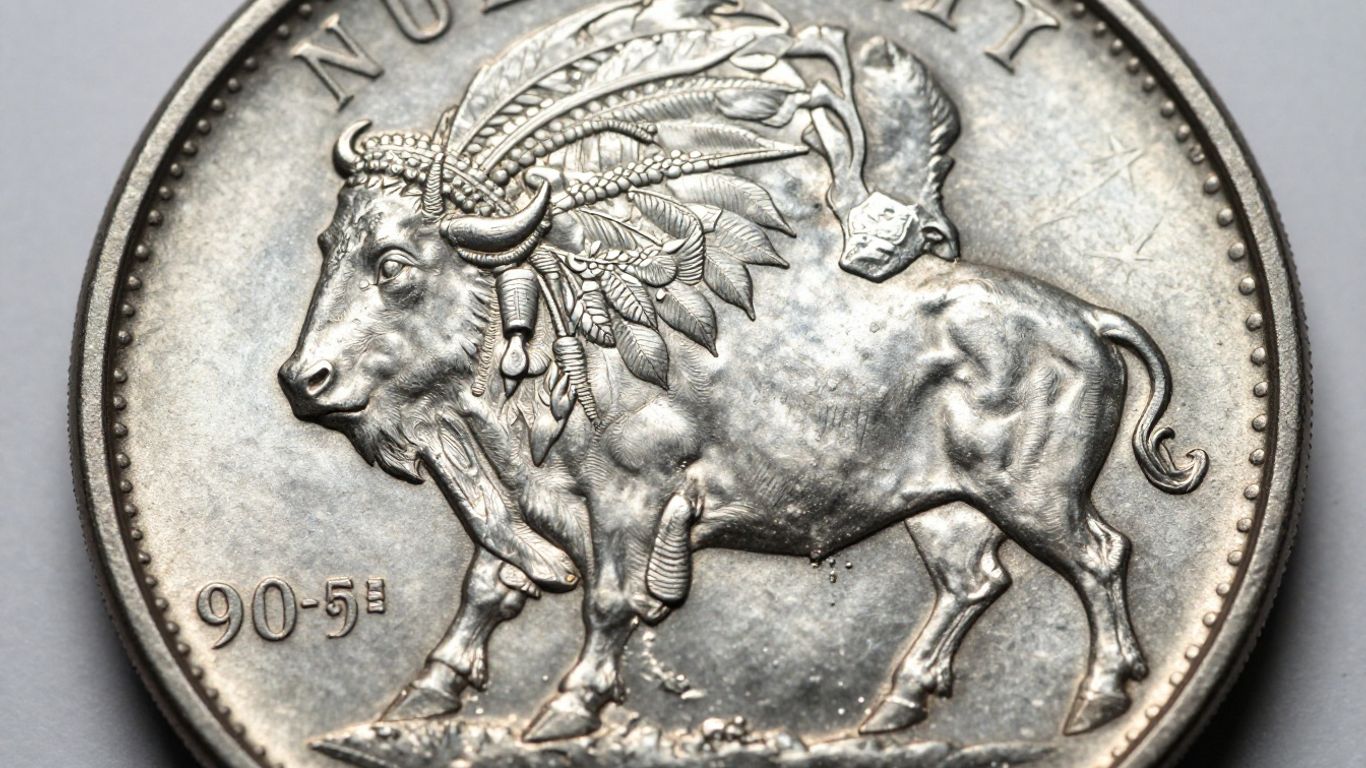
When you look at the Buffalo Nickel, the image of the American bison immediately commands attention. It’s not just a drawing; it’s a carefully crafted representation of a powerful animal that once roamed the plains in vast numbers. The detail captured in the metal is quite something, showing a creature that feels alive and present.
The Majestic Bison on the Reverse
The reverse of the coin features a bison, a symbol deeply tied to the American West. This wasn’t just any bison; it was intended to represent a specific, well-known animal. The story goes that sculptor James Earle Fraser based his design on an animal named ‘Black Diamond,’ a resident of the Central Park Zoo in New York City. This choice adds a layer of specific history to the coin’s imagery.
Details of the Bison's Portrayal
Fraser put a lot of thought into how the bison would look. You can see the thick, shaggy fur, the powerful hump on its back, and the sturdy legs. The way the bison is positioned, looking slightly to the left, gives it a sense of movement and presence. The sheer detail in the musculature and the texture of the fur makes it stand out among coin designs. It’s a testament to Fraser’s skill in translating a living animal into a relief on a coin.
Symbolism of the American Bison
The bison itself carries a lot of meaning. For Native Americans, it was a vital source of food, shelter, and tools, playing a central role in their culture and survival. For the expanding United States, the bison also came to represent the wild, untamed spirit of the West. Its inclusion on the nickel was a way to honor this significant animal and the history it represents. The coin’s design invites us to explore the symbolism of this iconic creature.
The bison’s presence on the coin serves as a constant reminder of the natural heritage of North America and the creatures that defined its landscapes.
James Earle Fraser's Vision: The Native American Portrait
The Profile of a Noble Warrior
When you look at the Buffalo Nickel, the first thing that really grabs you is that strong profile on the front. It’s not just any face; it’s meant to represent a Native American. James Earle Fraser, the guy who designed this coin, wanted something that felt truly American, something different from the usual European-style figures you see on coins. He spent time with different Native American leaders and individuals, trying to capture a sense of dignity and strength. The resulting portrait is a composite, a blend of features from several individuals Fraser met, rather than a direct likeness of any single person. This approach allowed him to create an idealized image that embodied the spirit of the people he saw as the original inhabitants of the land.
Interpreting the Native American Imagery
Fraser’s goal was to honor Native American culture, and he did this by incorporating specific details. The headdress, for instance, is a significant element. While often depicted with feathers, the specific style and arrangement can vary among different tribes. On the Buffalo Nickel, the feathers are shown flowing back, suggesting movement and perhaps a connection to the natural world. The facial features are strong and stoic, conveying a sense of resilience. It’s a powerful image that aimed to represent the nobility and character of Native Americans. The artist wanted to move away from the often-negative stereotypes prevalent at the time and present a more respectful portrayal.
Fraser's Artistic Intentions
Fraser wasn’t just making a coin; he was trying to tell a story. He wanted the Buffalo Nickel to be a symbol of America’s past and its connection to the land. He felt that Native Americans were a vanishing part of the American story, and he wanted to preserve their image in metal. His intention was to create a coin that was both artistically beautiful and culturally significant. He aimed to capture the essence of a people deeply connected to the continent. This vision is what makes the Native American portrait on the Buffalo Nickel so compelling and enduring.
The design was a deliberate departure from traditional numismatic portraiture, seeking to represent a distinctly American identity through its indigenous peoples and native wildlife. Fraser’s work aimed to evoke a sense of pride and historical connection to the continent’s original inhabitants.
The 'Indian Head' Controversy and Artistic Interpretation
Addressing Misconceptions
It’s easy to get things mixed up when you’re looking at old coins, and the Buffalo nickel is no exception. A lot of people have heard it called the ‘Indian Head’ nickel, and that’s led to some confusion over the years. This nickname, while catchy, isn’t quite accurate and sometimes overshadows the actual artistic intent behind the design. The coin’s portrait is not of a specific, named chief, but rather a composite representation.
The True Identity of the Model
Artist James Earle Fraser didn’t base the portrait on just one person. Instead, he gathered features from several Native American individuals he met. This approach was meant to honor Native American heritage as a whole, rather than focusing on a single leader. It’s a common misconception that the profile belongs to a famous chief, but the reality is more nuanced. Fraser aimed for a generalized, noble representation.
Artistic License and Representation
Fraser’s goal was to capture the spirit and dignity of Native Americans. He wasn’t trying to create a photographic likeness of any one person. This is where artistic license comes into play. The design is a powerful symbol, and like many symbols, it’s open to interpretation. The use of a composite model allowed Fraser to create an image that represented a broader idea of Native American identity for the time.
| Aspect | Description |
|---|---|
| Artist | James Earle Fraser |
| Inspiration | Composite of several Native American individuals |
| Intended Message | Dignity and spirit of Native American heritage |
| Common Misconception | Believed to be a portrait of a single chief |
This method of representation was quite common in art during that period. Artists often sought to create archetypes rather than exact portraits to convey a larger message. The Buffalo nickel’s obverse is a prime example of this artistic choice, aiming to evoke a sense of nobility and strength.
Beyond the Obverse and Reverse: Examining the Buffalo Nickel's Details
While the Native American portrait on the obverse and the majestic bison on the reverse grab most of the attention, the Buffalo Nickel is packed with smaller, yet significant, details. These elements, often overlooked, contribute to the coin’s overall artistic merit and historical narrative. Let’s take a closer look at some of these finer points.
The 'Buffalo' on the Reverse
It’s easy to just say "a buffalo," but the creature depicted is actually an American bison. Fraser’s rendition captures a powerful, yet weary, animal. The bison is shown in profile, facing left, with its head lowered slightly. Its shaggy coat, horns, and tail are all rendered with a surprising amount of detail for such a small canvas. The artist chose to depict a specific bison, Black Diamond, known for its impressive size and presence at the New York Zoological Park. This wasn’t just any generic buffalo; it was a specific, recognizable subject.
The 'Indian Head' on the Obverse
Similarly, the portrait on the front isn’t just any "Indian Head." It’s a composite of several Native American leaders. Fraser interviewed and sketched various individuals, aiming to create an idealized representation of Native American nobility and strength. The profile is strong, with a prominent nose and high cheekbones, framed by a headdress that, while detailed, is also somewhat generalized to represent a broader cultural identity rather than a specific tribe’s regalia. This approach was intended to honor Native American heritage.
The Intricate Textures and Lines
Look closely at the coin’s surface. You’ll notice the varied textures Fraser employed. The bison’s fur has a rough, dense appearance, contrasting with the smoother planes of its body. The Native American’s hair and feathers show distinct lines, giving them a sense of movement and form. Even the ground beneath the bison isn’t just a flat line; it has subtle undulations and textures that add depth. These deliberate choices in line work and texture are what give the coin its lifelike quality and tactile appeal.
Here’s a breakdown of some key areas:
- Bison’s Fur: Rendered with short, choppy lines to suggest thickness and coarseness.
- Native American’s Hair: Depicted with flowing, parallel lines that follow the contours of the head.
- Feathers: Each feather is outlined, with some internal lines to suggest structure.
- Ground Line: Features subtle bumps and variations, avoiding a perfectly flat appearance.
The careful attention to surface detail, from the coarseness of the bison’s coat to the flow of the Native American’s hair, is a testament to Fraser’s skill. These elements, though small, are what truly bring the design to life and make it a work of art, not just a piece of currency. It’s a reminder that even in mass-produced items, artistry can be found in the smallest of touches.
Collectors often find that the condition of these fine details can significantly impact a coin’s value. For instance, the sharpness of the bison’s horns or the clarity of the feathers on the headdress are key indicators of wear. Understanding these nuances helps in appreciating the historical context of the 1913 Type 1 Buffalo Nickel and its place in numismatic history.
The 'Feather' Detail: A Subtle Yet Significant Element
Close Examination of the Headdress
When you look closely at the Native American portrait on the Buffalo Nickel’s obverse, you’ll notice a headdress. This isn’t just a random collection of lines; it’s a carefully rendered element that adds to the overall artistry. The feathers are depicted with a certain texture, suggesting their natural form and how they might catch the light. It’s these small touches that elevate the coin from a simple piece of currency to a work of art. The way the lines flow and curve gives the impression of movement, even though the coin is static.
The Significance of Feather Detail
Feathers in Native American headdresses often carry deep meaning, representing honor, strength, and connection to the spiritual world. While the coin’s design is a simplification, the inclusion of these feathered elements speaks to the cultural context Fraser was trying to evoke. Each feather, though small, contributes to the dignity and nobility of the portrait. It’s a detail that, while not immediately obvious to everyone, adds a layer of authenticity and respect to the design. Examining these details helps us appreciate the thought that went into the coin’s creation.
Artistic Nuances in Coin Design
Coin design is a balancing act. Designers have to create something that is both aesthetically pleasing and practical for mass production. The feather detail on the Buffalo Nickel is a good example of this. It’s intricate enough to be visually interesting but not so complex that it would be difficult to strike consistently on millions of coins. The engravers who translated Fraser’s vision into the metal dies had to capture these nuances.
Here’s a breakdown of what makes the feather detail so effective:
- Texture: The lines used suggest the soft, layered texture of feathers.
- Form: The curves and shapes mimic the natural bend and flow of actual feathers.
- Placement: The feathers are arranged in a way that complements the portrait, framing the face and adding to the headdress’s structure.
It’s a testament to the skill of both the designer and the engravers that these subtle elements are so well-preserved, even on coins that have seen a lot of use. You can often still make out the feather details on well-circulated examples, which is a sign of a robust design. Learning to spot these details can be a fun part of examining all aspects of a coin.
The careful rendering of even minor elements, like the feathers in the headdress, shows a commitment to capturing a sense of realism and cultural significance. It’s these thoughtful additions that make the Buffalo Nickel a lasting piece of numismatic art.
The 'Ground' and 'Mound' Elements: Adding Depth to the Design
Analyzing the Base of the Bison
The Buffalo Nickel’s reverse, featuring the majestic bison, isn’t just a flat image. Look closely at the base where the bison stands. You’ll notice a distinct mound or raised area. This isn’t just random detail; it’s a deliberate artistic choice by James Earle Fraser to give the animal a sense of place and solidity. It makes the bison appear grounded, as if it’s truly standing on a patch of earth rather than floating in empty space. This subtle elevation helps the viewer perceive the weight and presence of the animal.
The Role of the Ground Line
This "ground line" or mound serves a practical purpose in coin design. It provides a visual anchor for the main subject. Without it, the bison might seem less substantial. The way Fraser sculpted this area, with its gentle curves and slight texture, adds to the overall realism. It’s a simple element, but it plays a big part in making the entire scene feel more believable and less like a mere illustration. It’s a good example of how even small details contribute to the coin’s artistic impact.
Creating a Sense of Realism
Think about how artists create depth in paintings. They use perspective and shading. On a coin, the options are more limited, but Fraser used the "mound" effectively. It creates a foreground element, making the bison appear to be in front of it, rather than just on it. This illusion of depth is key to the coin’s enduring appeal. It’s this attention to how the elements interact that makes the Buffalo Nickel stand out. The way the bison’s hooves meet this raised earth is carefully rendered, adding to the overall impression of a living creature in a natural setting. It’s a testament to Fraser’s skill in making metal feel alive.
The ground and mound elements on the Buffalo Nickel are more than just filler; they are foundational to the design’s success. They provide context, depth, and a sense of realism that elevates the bison from a simple depiction to a powerful symbol.
The 'Mint Mark' and Its Artistic Context
Location and Significance of the Mint Mark
The mint mark on a coin is a small detail, but it carries a lot of weight for collectors and historians. On the Buffalo Nickel, this mark tells us where the coin was actually made. For instance, coins struck in Philadelphia don’t have a mint mark, while those from Denver will show a ‘D’ and those from San Francisco will have an ‘S’. This little letter is more than just a factory stamp; it’s a piece of the coin’s identity and can significantly affect its value and rarity. The placement of the mint mark on the Buffalo Nickel is typically found on the reverse side, below the "ONE CENT" inscription and to the right of the bison’s leg. This distinct location helps collectors easily identify the coin’s origin without obscuring the main artistic elements.
How Mint Marks Affect the Artistry
While the mint mark itself isn’t a primary artistic feature, its presence and location are part of the overall design considerations. The goal was to include this important information without detracting from James Earle Fraser’s powerful imagery. The chosen spot on the reverse is subtle, allowing the bison and the landscape to remain the focal point. Different mints produced varying quantities of these coins, which directly impacts their availability today. For example, coins from mints with lower production numbers are often more sought after by collectors.
Here’s a look at the mint marks and their general production context:
| Mint Mark | Mint Location |
|---|---|
| (None) | Philadelphia, PA |
| D | Denver, CO |
| S | San Francisco, CA |
Variations in Mint Mark Placement
While the standard location for the mint mark is consistent, there can be minor variations, especially in early production runs or due to die wear. These subtle differences are what make numismatics so fascinating. Sometimes, a mint mark might appear slightly shifted or be a different size, creating a unique variety that collectors actively search for. These variations, though small, add another layer to the study of the Buffalo Nickel and its production history. Understanding these nuances is key to appreciating the full story behind each coin, beyond just the iconic images of the Native American and the bison. It’s a reminder that even the smallest details can tell a big story about a coin’s journey, much like exploring the history of American coinage itself [7941].
The mint mark, though small, is a critical piece of information for any collector. It speaks to the coin’s origin and can be a deciding factor in its rarity and value. For the Buffalo Nickel, its placement was carefully considered to maintain the integrity of Fraser’s design while still providing this essential identifier.
The 'Full Date' Feature: A Mark of Time and Artistry
The Importance of the Date
The year a coin was minted is more than just a number; it’s a direct link to a specific moment in history. For the Buffalo Nickel, the date is a key part of its overall design, anchoring it in time. It’s not just stamped on; it’s integrated into the artwork. This integration makes the date a vital element of the coin’s artistic composition.
How the Date Integrates with the Design
On the Buffalo Nickel, the date is typically found on the obverse, near the bottom. It’s usually presented in a clear, sans-serif font, designed to be legible without disrupting the main portrait. The placement is deliberate, balancing the visual weight of the Native American’s profile. The numerals themselves, while functional, contribute to the overall texture and line work of the coin’s surface. The way the date sits on the "ground" or "mound" element beneath the portrait adds a layer of realism, suggesting the passage of time in a tangible way.
Wear and Tear on the Date
Because the date is often one of the highest points on the coin, it’s also one of the first areas to show wear. This wear can significantly impact a coin’s appearance and, consequently, its value to collectors. A well-preserved date indicates a coin that has been handled with care, while a heavily worn date might suggest a coin that has seen a lot of circulation. This makes the condition of the date a significant factor when assessing the artistic integrity and numismatic worth of a Buffalo Nickel. Collectors often look for coins with sharp, clear dates, especially for key dates and mint marks like those found on the 1913-S Type 2 or the 1918/7-D Overdate.
The date on a coin is a constant reminder of its origin. It tells us when the metal was struck, when the artist’s vision was brought to life by the minting process. This temporal marker is not merely an identifier but an intrinsic part of the coin’s narrative, connecting the present-day observer to the past.
The Buffalo Nickel's Impact on Numismatic Art
The Buffalo Nickel wasn’t just another coin; it really changed things up in the world of coin design. Before this one came out, a lot of coins looked pretty similar, you know? They had the standard stuff, but nothing that really made you stop and look. James Earle Fraser’s design, though, was different. It had this raw, American feel to it that just grabbed people.
Influence on Subsequent Coin Designs
Fraser’s approach showed that coins could be more than just money; they could be art. This idea really stuck. After the Buffalo Nickel, you started seeing more coins with unique imagery and a focus on artistic merit. It was like a wake-up call for designers. They realized they could be more creative and tell a story with their work. This shift is pretty clear when you look at coins that came out in the decades following the Buffalo Nickel’s debut. The focus moved from just functional to also being visually interesting.
Appreciation for its Artistic Merit
People just seemed to connect with the Buffalo Nickel’s look. The strong image of the bison on one side and the Native American portrait on the other felt authentic and powerful. It captured a piece of American history and identity that many found compelling. This appreciation wasn’t just a passing fad; it’s something that has lasted for generations. Collectors and non-collectors alike often point to the Buffalo Nickel as a prime example of great coin art. It’s a design that continues to be admired for its boldness and its representation of American themes. The story of the old five cents buffalo coin really highlights this drive to improve the artistic quality of our currency [e48c].
The Enduring Legacy of Buffalo Nickel Coin Artistry
So, what’s the big takeaway? The Buffalo Nickel proved that a coin could be both a piece of currency and a work of art. It pushed the boundaries of what was expected in coin design and left a lasting mark on numismatics. Its influence can still be seen today in how we think about and create coins. It’s a testament to Fraser’s vision and his ability to capture the spirit of America in metal. The design itself, inspired by Fraser’s experiences, aimed to represent the dignity of Native Americans and the iconic American bison [76cf].
The Buffalo Nickel’s success wasn’t just about its looks; it was about its ability to connect with people on a deeper level, representing a significant part of the American experience. This connection is what makes it stand out even today.
A Lasting Impression
So, we’ve taken a good look at the Buffalo Nickel, and it’s pretty clear why people still talk about it. It’s not just a coin; it’s a piece of art that tells a story. The way the Native American portrait and the bison are shown, it really makes you think. It’s a simple design, but it packs a punch. It’s a reminder of a different time in America, and that’s something special. It’s cool how a small metal disc can hold so much history and beauty. It’s definitely a coin worth appreciating, even today.
Frequently Asked Questions
What makes the Buffalo Nickel design so special?
The Buffalo Nickel is admired for its unique and detailed artwork. It features a strong Native American portrait on one side and a majestic American bison on the other, both designed by James Earle Fraser. The realistic details and the powerful imagery make it stand out among coins.
Who was the Native American depicted on the Buffalo Nickel?
The person on the front of the coin is not just one specific individual. Artist James Earle Fraser combined the features of several different Native American leaders from various tribes to create a representation of a noble warrior, symbolizing the spirit of the American Indian.
Why is the bison on the back of the coin important?
The bison, or American buffalo, was a vital animal for Native American cultures and a symbol of the American West. Its inclusion on the coin honors this important creature and represents the wild spirit of the American landscape.
What are some of the interesting details on the coin?
Look closely, and you’ll find many fine points! The Native American’s headdress has detailed feathers. The bison is shown on a dusty mound, giving the coin depth. Even the date and the mint mark (which shows where the coin was made) are carefully placed.
What does the 'full date' mean on the coin?
The ‘full date’ refers to the year the coin was made, shown clearly on the coin’s surface. Having the complete date visible is important for collectors and helps tell the story of when the coin was created.
Are there any common issues or things to watch out for with Buffalo Nickels?
Yes, due to their age and the softness of the metal, Buffalo Nickels often show wear. The bison’s horns and legs, as well as the details on the Native American’s face, can become worn down over time, making coins with sharper details more valuable.
How did the Buffalo Nickel influence other coins?
The Buffalo Nickel’s artistic success inspired many later coin designs. Its bold, realistic style and focus on American themes showed that coins could be more than just money; they could be miniature works of art.
Is the Buffalo Nickel still made today?
No, the original Buffalo Nickel was produced from 1913 to 1938. However, its popularity led the U.S. Mint to create special collector versions, like the Buffalo Nickel Bullion Coin, which feature a similar design but are not intended for everyday use.