
Coin collecting is a hobby that can bring a lot of joy, but it also comes with the responsibility of keeping those coins in good condition. One of the biggest challenges collectors face is preventing tarnish on coins, especially those made of silver. Tarnish isn’t just unsightly; it can actually lower the value of your collection. Fortunately, with the right knowledge and practices, you can significantly slow down or even stop this process. This guide will walk you through the best ways to protect your coins from tarnish, ensuring they remain beautiful and valuable for years to come.
Key Takeaways
- Handle coins minimally, ideally with cotton gloves, to avoid transferring skin oils and chemicals that speed up tarnishing.
- Store coins in a stable environment with controlled temperature and humidity, avoiding places like attics or basements.
- Use inert storage materials such as specific coin flips, cardboard holders, or airtight capsules designed to protect against environmental damage.
- Consider using Vapor Corrosion Inhibitor (VCI) products, which create a protective shield against tarnish-causing agents in enclosed spaces.
- Understand that while some toning can be desirable, excessive tarnish generally reduces a coin’s value, making prevention the best strategy.
Understanding The Causes Of Coin Tarnish
So, you’ve got some coins, maybe they’re silver, maybe they’re something else, and you’ve noticed they’re not as shiny as they used to be. That dull, dark coating? That’s tarnish, and it’s a pretty common issue for coin collectors. It’s basically a chemical reaction happening right on the surface of your coins.
The Chemical Reaction Behind Silver Sulfide Formation
For silver coins, the main culprit is usually hydrogen sulfide. This gas is just floating around in the air, often in tiny amounts, but it’s enough to react with the silver. When silver meets sulfur, it forms silver sulfide. This isn’t like rust on iron, which can eat away at the metal. Silver sulfide just sits on the surface, making it look dark or black. It doesn’t usually damage the underlying silver, but it definitely changes the look. The longer a coin is exposed to these sulfur compounds, the more tarnish will build up. It’s a natural process, but one we can try to slow down. If you’re interested in how this happens with silver, you can read more about silver sulfide formation.
Environmental Factors Accelerating Tarnish
Besides hydrogen sulfide, other environmental things can speed up tarnishing. Think about where your coins are kept. High humidity is a big one. Moisture in the air can help those chemical reactions happen faster. Pollution in the air, especially in urban or industrial areas, can also contain sulfur compounds or other reactive elements that contribute to tarnish. Even just storing coins in places with fluctuating temperatures can play a role, though the exact science behind that is a bit more complex. It’s all about creating a stable, dry environment for your collection.
Human Interaction And Its Impact On Coin Surfaces
And then there’s us. We’re often the biggest cause of problems for our coins. When you handle a coin, especially with bare hands, you’re transferring oils and residues from your skin. These aren’t just dirt; they can contain chemicals from lotions, soaps, or even just natural skin oils that can react with the coin’s surface. This is why collectors often use cotton gloves. It’s not just about keeping fingerprints off; it’s about preventing these oils from kickstarting the tarnishing process or causing other surface issues. Even a clean workspace can make a difference, as dust and other airborne particles can settle on coins and contribute to their degradation over time.
It’s easy to think of tarnish as just a cosmetic issue, but for collectors, it can affect the coin’s value. While some toning can be attractive, heavy tarnish is generally seen as undesirable, especially on valuable pieces. Preventing it in the first place is always easier than trying to fix it later, as cleaning can sometimes cause more harm than good.
Essential Handling Practices For Preventing Tarnish
When it comes to keeping your coins looking their best, how you handle them makes a big difference. It might seem obvious, but touching coins directly is one of the quickest ways to introduce oils and contaminants that speed up tarnishing. Your skin has natural oils, and even if you just washed your hands, there can be residue from soaps or lotions. These substances react with the metal, especially silver, creating a surface that’s more prone to developing that dull, dark coating we call tarnish. Minimizing direct contact is key to preserving the original surface of your coins.
Minimizing Direct Contact With Coins
Think of your coins as delicate historical artifacts. The less they’re handled, the better. When you absolutely must move or inspect a coin, try to handle it by its edges. This reduces the surface area that comes into contact with your skin. It’s a simple habit, but it pays off in the long run for maintaining the coin’s condition.
The Importance Of Cotton Gloves
For serious collectors, investing in a pair of white cotton gloves is a no-brainer. These gloves act as a barrier between your skin and the coin’s surface. They prevent those natural oils and any trace contaminants from transferring. It’s a small step that offers significant protection, especially for more sensitive metals like silver. Make sure the gloves are clean and lint-free before each use. This is a standard practice for anyone serious about coin preservation.
Maintaining A Clean Workspace
Before you even think about touching your coins, take a moment to prepare your workspace. Ensure the surface you’re working on is clean and free of dust, debris, or any potential contaminants. A cluttered or dirty area increases the risk of accidentally scratching a coin or exposing it to harmful substances. A tidy setup helps you focus and reduces the chances of mishaps. Consider using a soft mat or cloth on your work surface for an extra layer of protection. Keeping your environment clean is just as important as how you handle the coins themselves. You can find specialized coin storage solutions to help keep your collection safe and organized here.
Handling coins with care isn’t just about aesthetics; it’s about preserving their intrinsic and numismatic value. Every touch, every interaction, has the potential to alter the coin’s surface. By adopting mindful handling techniques, you’re actively safeguarding your collection against the detrimental effects of environmental factors and direct contact.
Optimal Storage Solutions For Coin Preservation
Choosing Inert Storage Materials
When it comes to keeping your coins in good shape, the materials you use for storage really matter. You want things that won’t react with the metal of your coins. Think of it like this: you wouldn’t store food in a rusty can, right? Same idea here. Materials like PVC, which is found in some older plastic flips, can break down over time and release chemicals that cause damage. That’s why it’s best to stick with supplies made from inert materials. These are materials that are chemically stable and won’t cause any unwanted reactions. This is especially important for coins made of silver or copper, which are more prone to tarnishing.
Utilizing Coin Flips And Cardboard Holders
Coin flips and cardboard holders are pretty common for storing individual coins. They’re usually pretty affordable and let you see both sides of the coin easily. Just make sure you’re getting the right kind. For flips, look for ones made from polyethylene or polypropylene – these are generally safe. Avoid anything that feels really soft or sticky, as that might be PVC. Cardboard holders are a good option too, especially if you want to write down some details about the coin right on the holder. They offer a decent amount of protection for everyday handling and storage, keeping coins from rubbing against each other.
The Benefits Of Airtight Holders And Capsules
For coins that are more valuable or that you want to protect from the environment, airtight holders and capsules are a step up. These are usually made of hard plastic and seal the coin off from the air and moisture. This is a big deal because air and humidity are the main culprits behind tarnish. Think of them like little protective bubbles for your coins. They prevent dust from getting in and stop any harmful gases from reaching the coin’s surface. While they might cost a bit more than basic flips, the peace of mind they offer for your prized possessions is often well worth it. You can find these in various sizes to fit different coin denominations, and they often provide a very secure fit.
Safe Deposit Boxes For Enhanced Security
If you have a particularly valuable collection or just want an extra layer of security, a safe deposit box at a bank is a solid choice. It offers protection against theft, fire, and other potential disasters that might happen at home. It’s a good way to keep your most precious coins out of harm’s way. Plus, it can be a good place to store important documents related to your collection, like certificates of authenticity or appraisals. Just remember that while the bank provides the secure vault, you’re still responsible for the actual storage containers you use inside the box. So, even in a safe deposit box, using inert and protective holders for your coins is still a must. You can find professional coin grading services that utilize sealed holders, known as slabs, to safeguard authenticated and graded coins [d580].
Controlling The Storage Environment
Maintaining Stable Temperature And Humidity Levels
Keeping your coins in a stable environment is super important for stopping tarnish. Think about it – big swings in heat and moisture can really mess with the metal. You want to aim for a consistent temperature, somewhere around 65-75°F (about 18-24°C) is usually good. Humidity is also a big deal; try to keep it between 35-55 percent. Too much moisture can speed up oxidation, and nobody wants that. It’s like trying to keep a delicate plant alive; consistency is key.
Fluctuations in temperature and humidity are a primary driver of environmental damage to coins. These shifts can cause materials to expand and contract, potentially leading to stress on the coin’s surface and accelerating chemical reactions that result in tarnish.
The Role Of Silica Gel Packs And Dehumidifiers
So, how do you actually keep that humidity in check? That’s where silica gel packs and dehumidifiers come in handy. Silica gel packs are those little packets you sometimes find in new shoes or electronics. They’re great for smaller storage areas, like inside a safe or a storage box, because they soak up extra moisture. For larger spaces, a small dehumidifier can make a big difference. Just remember to check and replace or recharge your silica gel packs regularly, and empty your dehumidifier when it gets full. It’s a bit of maintenance, but it’s worth it for the protection it offers your collection. You can find these helpful items at most hardware or craft stores, and they’re pretty affordable. For serious collectors, investing in a good dehumidifier is a smart move to protect your coin collection.
Avoiding Fluctuations In Basements And Attics
Basements and attics are generally the worst places to store coins, and here’s why. They’re notorious for having wild temperature and humidity swings. In the summer, attics can get incredibly hot, and basements can be damp and cool all year round. These unstable conditions are exactly what you want to avoid. Think about it: the constant changes are like a stress test for your coins, making them more susceptible to tarnish and other forms of damage. It’s much better to find a climate-controlled space within your main living area, like a closet or a dedicated cabinet, where the environment is more consistent. Your coins will thank you for it.
Advanced Protection With Vapor Corrosion Inhibitors
How VCI Technology Works
Vapor Corrosion Inhibitors, or VCIs, are pretty neat. They’re basically chemicals that release a protective vapor. This vapor then forms a thin, invisible layer on metal surfaces, like your coins. Think of it like a shield against the stuff that causes tarnish, such as moisture and certain gases in the air. This technology is designed to protect metals in enclosed spaces where the vapor can build up. It’s not something you’d use out in the open, but for storage, it’s quite effective.
VCI Products For Coin Storage
There are a few ways you can use VCIs for your coins. You can get special bags or wraps that have VCI built right in. Some people also use VCI emitters or tablets that you place inside a storage container. These slowly release the protective vapor over time. It’s a good idea to check the product’s lifespan, as they don’t last forever.
Here are some common VCI product types:
- VCI Bags: These are often used for individual coins or small groups. You just place the coin inside and seal it.
- VCI Emitters/Tablets: These are small units you put into a larger storage box or safe.
- VCI Paper/Wraps: Similar to bags, but you wrap the coin in the paper.
Effectiveness In Enclosed Storage Areas
VCIs really shine when they’re used in a confined space. That’s where the vapor can concentrate and create that protective barrier. So, using them in a coin cabinet, a storage box, or even a safe deposit box makes a lot of sense. If the space is too large or not sealed well, the vapor can escape, and the protection won’t be as strong. It’s all about creating that controlled environment where the VCI can do its job properly.
The key to VCI effectiveness is containment. Without a reasonably sealed environment, the protective vapors dissipate, reducing their ability to shield your coins from corrosive elements. This makes them ideal for use within boxes, bags, or cabinets rather than open-air displays.
Protecting Coins From Light Exposure
The Damaging Effects Of UV Rays
Light, especially the ultraviolet (UV) kind, can really do a number on your coins over time. Think of it like a slow sunburn for your collection. UV rays can cause spots and other discoloration to show up on the surface of your coins. It’s not just about looks, either; this can actually affect the coin’s surface chemistry. The longer a coin is exposed to direct sunlight or strong artificial light sources containing UV, the more likely it is to develop these unwanted marks. It’s a gradual process, but one that’s definitely worth paying attention to if you want your coins to stay in top shape.
Using UV Filters For Window Protection
If you’ve got a coin display or storage area that gets a lot of light, and you can’t move it to a darker spot, there’s a workaround. You can put UV filters on your windows. These filters act like sunglasses for your room, blocking out those damaging UV rays before they can hit your coins. You can find these filters at places that sell coin collecting supplies, or just online. It’s a pretty simple step that can make a big difference in preventing light damage, especially if you have a large collection and can’t just tuck everything away in a dark drawer.
Storing Coins In Dark Environments
Honestly, the best way to keep light from messing with your coins is to just keep them out of the light altogether. This means storing them in places that are naturally dark. Think about drawers, cabinets, or even specialized coin storage boxes that are designed to block out light. If you have a lot of coins, you might need to get a bit creative with your storage solutions to make sure they’re all kept away from light sources. It might seem obvious, but it’s a really effective way to prevent long-term damage from UV exposure.
The Nuances Of Coin Cleaning
When it comes to keeping your coins looking their best, cleaning can be a tricky subject. It’s not always as simple as just wiping away the grime. In fact, for many collectors, the idea of cleaning a coin can send shivers down their spine. Why? Because the wrong approach can seriously hurt a coin’s value. For valuable or rare coins, it’s often best to leave them as they are.
When Cleaning May Devalue Your Collection
Think of it this way: a coin’s history and the marks it carries are part of its story. When you clean a coin, especially with abrasive materials or harsh chemicals, you can inadvertently remove its original surface, known as the patina. This can leave microscopic scratches that are visible to the naked eye, or at least to a trained numismatist. These imperfections can significantly reduce a coin’s desirability and, consequently, its monetary worth. It’s like trying to fix a scratch on an antique table with sandpaper – you might remove the scratch, but you’ve also damaged the original finish.
For coins that hold significant numismatic or historical importance, the original surface and any toning it has developed are often considered part of its character and value. Aggressive cleaning can strip away this character, making the coin less appealing to serious collectors.
Gentle Cleaning Methods For Common Coins
So, what if you have common coins, perhaps ones you’ve found or acquired without significant investment, and you just want them to look a bit cleaner? There are ways to do this without causing major damage. For everyday coins that aren’t destined for a high-end collection, a mild approach is usually sufficient. You might start with a simple rinse under cool water. If there’s light dirt, a very gentle wipe with a soft, lint-free cloth can sometimes do the trick. Remember, the goal here is to remove surface dirt, not to make the coin look brand new.
Here are a few gentle steps for common coins:
- Rinse: Gently rinse the coin under cool, distilled water. Avoid running water directly onto the coin’s surface if possible.
- Soak (Optional): For slightly more stubborn dirt, a brief soak in distilled water might help.
- Wipe (Very Gently): If needed, use a soft, lint-free cloth (like a microfiber cloth) to gently dab or lightly wipe away any remaining surface residue. Never rub vigorously.
Professional Cleaning For Valuable Pieces
If you have a coin that you suspect has significant value, or if you’re unsure about its condition, the safest bet is always to consult a professional. Numismatic conservation services have specialized tools and knowledge to clean coins without damaging them. They understand the different metal compositions and how they react to various treatments. While this service comes at a cost, it can be far less expensive than devaluing a rare coin through a DIY cleaning attempt. For those looking to protect their investments, seeking expert advice is a wise step. You can find professional services through coin dealers or numismatic organizations. For instance, if you’re dealing with older silver pieces, you might want to look into specialized coin care.
It’s important to remember that not all tarnish is bad. Sometimes, a natural toning can add character and even increase a coin’s appeal. The decision to clean should always weigh the potential risks against the perceived benefits.
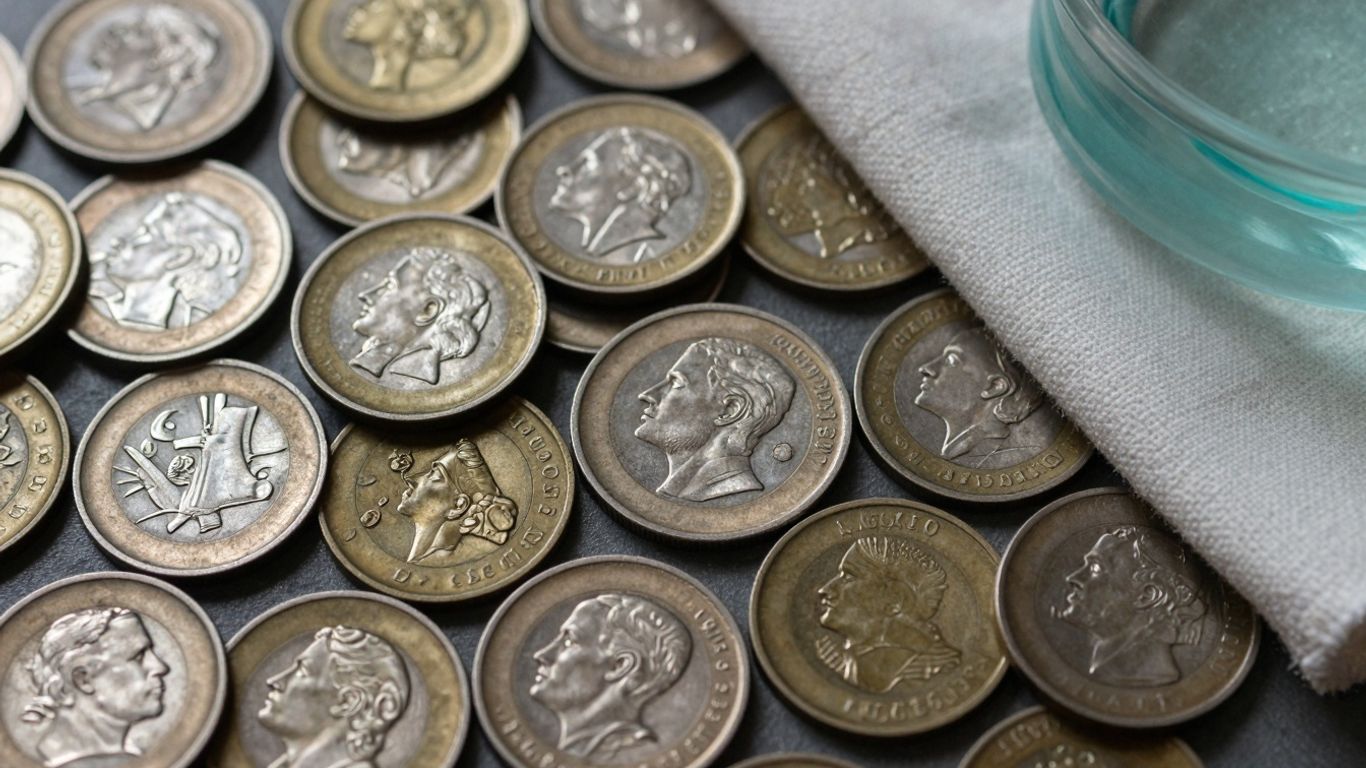
Safe Cleaning Techniques For Tarnished Coins
Using Baking Soda and Aluminum Foil
So, you’ve got some coins that have seen better days, covered in that dull, dark tarnish. It happens, especially with silver. Before you go reaching for harsh chemicals, let’s talk about a method that’s pretty common and uses stuff you might already have around the house: baking soda and aluminum foil. It’s a bit of a science experiment, but it can work wonders on bringing back some shine.
Here’s how you can give it a try:
- Prepare your setup: Grab a non-metallic container. Line the bottom completely with aluminum foil. You want to make sure there aren’t too many gaps. Then, sprinkle a generous layer of baking soda over the foil. You should barely be able to see the foil underneath.
- Add the coins: Place your tarnished coins on top of the baking soda, tarnish-side up if one side is worse than the other. If both sides look equally grim, don’t worry too much about it.
- The magic mix: Sprinkle more baking soda over the coins. Now, carefully pour hot water into the container until the coins are fully submerged. Give it another sprinkle of baking soda on top.
- Let it work: Let the coins soak for at least five minutes. For really stubborn tarnish, you might need to let them sit a bit longer. Keep an eye on them.
- Rinse and check: After soaking, gently rinse the coins under cold water. This is important to get rid of any baking soda residue. You don’t want white spots left behind.
This method relies on an electrochemical reaction. The aluminum foil, baking soda, and hot water work together to transfer sulfur from the coin’s surface to the aluminum. It’s a gentler approach than aggressive scrubbing, but it’s still wise to be cautious, especially with rare or valuable pieces.
The Baking Soda and Hot Water Soak
This is really the core of the aluminum foil method. The hot water helps speed up the chemical reaction, and the baking soda acts as a mild abrasive and helps with the conductivity of the solution. It’s a pretty straightforward process, but patience is key. You’re not trying to scrub the tarnish off; you’re letting chemistry do the heavy lifting. Remember, the goal is to remove the silver sulfide, which is what causes that dark appearance.
Rinsing to Remove Residue
This step is super important, and honestly, sometimes people skip it. After the coins have had their soak, you need to rinse them thoroughly under cool, running water. If you don’t get all the baking soda off, it can dry as white spots on your coins, which is just another thing to deal with. A good rinse ensures you’re left with just the coin and hopefully, a lot less tarnish. Give them a gentle shake or pat dry with a soft cloth afterward. Avoid rubbing too hard, as that can cause its own set of problems.
Organizing And Securing Your Coin Collection
Labeling and Inventory Management
Keeping track of your coins is more than just a good idea; it’s a necessity for serious collectors. Without a proper system, you might forget what you have, misplace items, or struggle to assess your collection’s overall worth. A detailed inventory is your first line of defense against disorganization. Think of it like a library catalog for your coins. You’ll want to note down key details for each piece: the date it was minted, where it was made (the mint mark), its condition or grade, and perhaps what you paid for it. This information is invaluable not just for knowing your collection, but also for insurance purposes or when you decide to sell something.
- Spreadsheets: A simple spreadsheet on your computer can work wonders. You can create columns for all the important details.
- Dedicated Software/Apps: There are specialized programs and mobile apps designed specifically for coin collectors. These often have built-in databases and can help you track market values.
- Physical Ledgers: For a more traditional approach, a well-maintained notebook or ledger can also serve the purpose.
A well-organized inventory prevents accidental mix-ups and makes it easy to locate any specific coin you’re looking for.
Separating Valuable Coins
Once you have your inventory sorted, it’s time to think about physical separation. Not all coins are created equal, and your most prized possessions deserve extra attention. High-value coins should be stored apart from your general collection. This isn’t just about prestige; it’s about protection. Keeping your most valuable pieces separate minimizes the risk of them being accidentally handled, dropped, or exposed to less-than-ideal conditions that might affect more common coins. It also makes it easier to apply specific security measures to these items.
Storing your most valuable coins in a separate, secure location reduces the chances of accidental damage or loss, safeguarding your most significant investments within the collection.
Investing in a Locked Safe or Vault
For the serious collector, especially those with rare or high-value coins, a locked safe or a personal vault is a wise investment. These provide a physical barrier against theft and can offer protection against environmental hazards like fire or flood, depending on the safe’s rating. When choosing a safe, consider its size – you’ll need enough space for your collection now and potentially for future additions. Also, look into the safe’s security features and its resistance to different types of damage. Remember, the combination to your safe should be known only to you, or perhaps one other trusted individual, as a contingency.
- Fire Resistance: Look for safes with a UL fire rating, indicating how long they can withstand high temperatures.
- Burglary Resistance: Safes are rated based on their ability to resist forced entry.
- Size and Interior: Ensure it can accommodate your current collection and any future acquisitions, with appropriate shelving or coin storage inserts.
Understanding Toning Versus Tarnish
The Difference Between Toning and Tarnish
It’s easy to get toning and tarnish mixed up when you’re looking at coins, but they’re actually quite different things. Tarnish is basically a chemical reaction that happens when the metal on your coin interacts with certain elements in the air, like sulfur. This usually results in a dull, dark, or grayish coating. Think of it like the way a silver spoon can get dark if you leave it out too long. It’s a surface change, and while it can look unsightly, it doesn’t typically damage the coin itself in a deep way.
Toning, on the other hand, is also a surface change, but it’s often caused by different environmental factors or even the way the coin was originally processed. Sometimes, toning can happen naturally over time due to exposure to specific gases or materials. It can create a whole spectrum of colors on the coin’s surface, from subtle blues and greens to vibrant oranges and purples. It’s not a sign of decay like tarnish is; it’s more like a natural aging process for the coin’s surface.
Desirable Toning in Coin Collecting
Now, here’s where it gets interesting: while tarnish is almost always seen as a negative, toning can sometimes be a good thing. Some collectors actually seek out coins with specific types of toning. For example, certain silver dollars, like some Morgan Dollars, can develop a beautiful, multi-colored "rainbow" toning that many people find really attractive. This kind of toning can actually increase a coin’s appeal and, yes, its value. It shows the coin has a history and has aged gracefully, so to speak. It’s all about the look and the story the toning tells.
When Tarnish Becomes Undesirable
So, when does tarnish cross the line from a minor annoyance to a real problem? Well, if that dull, dark coating starts to look really heavy or if it’s accompanied by pitting or other signs of corrosion, that’s when it’s definitely not good. Heavy tarnish can obscure the coin’s details, making it harder to appreciate the design. More importantly, if the tarnish is a sign of a more aggressive chemical reaction happening on the coin’s surface, it could potentially lead to damage over time. For most collectors, the goal is to keep coins looking as clean and bright as possible, and heavy tarnish gets in the way of that. It’s the difference between a coin that looks like it’s aged a bit and one that looks like it’s been neglected.
Here’s a quick rundown:
- Tarnish: Usually dark, dull, gray or black. Caused by chemical reactions with sulfur. Generally undesirable.
- Toning: Can be colorful (blues, greens, purples, oranges). Caused by various environmental factors. Can be desirable, especially if attractive and evenly distributed.
The key takeaway is that while both affect the coin’s surface, toning is often a more natural and sometimes even attractive aging process, whereas tarnish is typically a sign of unwanted chemical degradation.
Wrapping Up: Keeping Your Coins Shiny
So, we’ve gone over a few ways to keep those silver coins from getting that dull, dark coating. It really comes down to being careful with how you handle them and where you keep them. Think about it, a little bit of effort now can save you a lot of trouble later, especially if your coins are valuable or have some history. Remember, preventing tarnish is way easier than trying to clean it off later, and cleaning can sometimes do more harm than good. Just a few simple steps, like using gloves, storing them in a cool, dry spot, and maybe using some special anti-tarnish products, can make a big difference. Your collection will thank you for it, and you can enjoy those coins looking good for a long time.
Frequently Asked Questions
Why do my silver coins get that dull, dark coating?
That dark coating is called tarnish, and it happens when silver reacts with sulfur in the air. Think of it like a natural chemical reaction. While it doesn’t usually hurt the coin’s metal underneath, it can make the coin look less appealing and might affect its value to collectors.
Is it okay to touch my coins with my bare hands?
It’s best to avoid touching your coins directly with your hands. The natural oils and any lotions or soaps on your skin can speed up the tarnishing process. Using clean cotton gloves or handling coins only by their edges is a much safer approach to keep them looking good.
What's the best way to store my coins to stop them from tarnishing?
Storing coins in a cool, dry place is key. Use storage materials that are specifically made for coins, like inert plastic flips or cardboard holders. Keeping them away from moisture and air helps a lot. For really valuable coins, airtight capsules or specialized VCI (Vapor Corrosion Inhibitor) products can offer extra protection.
Can I clean tarnish off my coins myself?
For common coins that you don’t plan to sell, gentle cleaning might be okay. However, for valuable or rare coins, cleaning can actually lower their worth. Harsh cleaning can cause scratches or remove important details. It’s often better to leave them as they are or consult a professional if you’re unsure.
What are VCI products and how do they help coins?
VCI stands for Vapor Corrosion Inhibitor. These products release a special gas that forms a protective shield around your coins within an enclosed space. This shield prevents the chemical reactions that cause tarnish, offering a convenient way to protect your collection, especially in storage boxes or drawers.
Does light hurt my coins?
Yes, prolonged exposure to light, especially UV rays from the sun, can cause discoloration and spots on your coins over time. It’s a good idea to store your coins away from direct sunlight or use UV-filtering materials on windows if they are displayed.
What's the difference between toning and tarnish?
Tarnish is generally seen as a negative, dulling effect caused by chemical reactions. Toning, on the other hand, can sometimes be a beautiful, colorful change on a coin’s surface, like the ‘rainbow’ look on some silver coins. While both involve surface changes, desirable toning is often appreciated by collectors, whereas tarnish is usually not.
Are places like basements and attics bad for storing coins?
Generally, yes. Basements and attics often have big swings in temperature and humidity. These constant changes can make your coins more likely to tarnish or develop other issues. A stable environment, like a room with controlled temperature and humidity, is much better for preserving your coin collection.