
Figuring out how much silver is actually in your coins can seem a bit tricky at first. It’s not just about looking at the coin; you have to consider a few different things. This guide is here to break down the process of calculating silver content in coins, making it easier for anyone to understand. We’ll cover the basics, like how to weigh your coins and figure out their purity, and then move on to how the current price of silver plays a role. Whether you’re a collector, an investor, or just curious, knowing these details helps you get a clearer picture of your coin’s worth.
Key Takeaways
- Accurate silver content calculations in coins depend on precise coin weight, confirmed purity levels, and current market silver prices.
- The melt value of a silver coin is found by multiplying its weight by its purity percentage and then by the current market price of silver.
- Silver prices can change due to various economic, industrial, and global events, making it important to track these market dynamics.
- Specific coin types, like silver bullion or older U.S. dimes and quarters, have their own valuation methods that go beyond just melt value.
- Using reliable tools like accurate scales and understanding units of measurement (troy ounces vs. grams) is vital for precise calculations.
Understanding the Core Components of Silver Content Calculations
Before we get into the nitty-gritty of calculating melt value, it’s important to get a handle on the basic pieces of information you’ll need. Think of these as the building blocks for any accurate silver calculation. Without them, you’re just guessing, and when it comes to precious metals, guessing can cost you.
Determining Coin Weight Accurately
This is pretty straightforward, but precision matters. You need to know exactly how much your coin or silver item weighs. For precious metals, this is almost always done using troy ounces. One troy ounce is a bit heavier than a standard ounce, coming in at about 31.1 grams. Using a scale that can measure in troy ounces is best, but if you only have a gram scale, just remember that conversion factor.
- Use a reliable digital scale: Cheap kitchen scales won’t cut it. Look for one designed for accuracy, often found in jewelry or coin shops.
- Weigh in troy ounces: This is the industry standard for precious metals.
- Convert if necessary: If your scale only shows grams, divide the gram weight by 31.1035 to get troy ounces.
Identifying Coin Purity Levels
Not all silver is 100% pure silver. Coins, especially older ones, often contain other metals mixed in to make them more durable. This is called an alloy. You need to know the percentage of actual silver in your coin. For modern silver bullion, purity is usually very high, like 99.9% or even 99.99%. Older coins, like U.S. dimes and quarters before 1965, are typically 90% silver.
- Bullion coins: Usually stamped with their purity (e.g., .999 fine).
- Older coinage: Often have a standard purity (e.g., 90% for U.S. 90% silver coins).
- Check reliable sources: For specific coin series, look up their official silver content.
Accessing Current Market Silver Prices
The price of silver changes constantly, just like stocks. This is often referred to as the ‘spot price’. You can find this information on financial news sites, commodity tracking websites, or specialized precious metals dealer sites. Knowing the current spot price is absolutely vital for calculating melt value.
The spot price is the going rate for silver right now, ready for immediate delivery. It’s the baseline you’ll use for your calculations, but remember that actual buying and selling prices might differ slightly due to premiums or dealer markups.
Here’s a quick look at how these components fit together:
| Component | Description |
|---|---|
| Weight | The amount of silver you have, measured in troy ounces. |
| Purity | The percentage of actual silver in the item (e.g., 0.999 for 99.9%). |
| Market Price | The current price of one troy ounce of silver on the open market. |
Once you have these three figures, you’re ready to move on to the actual calculation.
Mastering the Silver Coin Melt Value Formula
Once you have a handle on the weight and purity of your silver coins, and you know the going rate for silver, it’s time to put it all together. This is where the melt value formula comes into play. It’s not overly complicated, but getting it right means you won’t be short-changed when selling.
Applying Weight to Purity Percentage
The first step is to figure out how much actual silver you have. Coins aren’t always 100% pure silver. They often contain other metals to make them more durable. You need to take the coin’s total weight and multiply it by its silver purity percentage. For example, if a coin weighs 10 grams and is 90% silver, you have 9 grams of actual silver (10 grams * 0.90 = 9 grams).
Multiplying by Current Market Price
Next, you take the amount of pure silver you just calculated and multiply it by the current market price of silver. This price is usually quoted per troy ounce. So, if you have 9 grams of pure silver, you’ll need to convert that to troy ounces first. Remember, one troy ounce is about 31.1 grams. So, 9 grams is roughly 0.289 troy ounces (9 / 31.1).
Calculating the Final Melt Value
Finally, multiply the weight in troy ounces by the current market price per troy ounce. If silver is trading at $25 per troy ounce, then your 0.289 troy ounces would be worth about $7.23 (0.289 * $25). This gives you the basic melt value.
Here’s a quick breakdown of the formula:
- Melt Value = (Coin Weight in Troy Ounces) x (Silver Purity Percentage) x (Current Market Price per Troy Ounce)
It’s important to note that this is the melt value, not necessarily what a collector might pay. That’s a different story.
The market price of silver can change daily, sometimes even hourly. Always check a reliable source for the most up-to-date spot price before doing any calculations. This number is the foundation of your melt value.
Factors like dealer premiums and the condition of the coin can affect the final price you get, but the melt value formula gives you a solid baseline for understanding the intrinsic worth of the silver content itself.
Navigating Precious Metal Market Dynamics
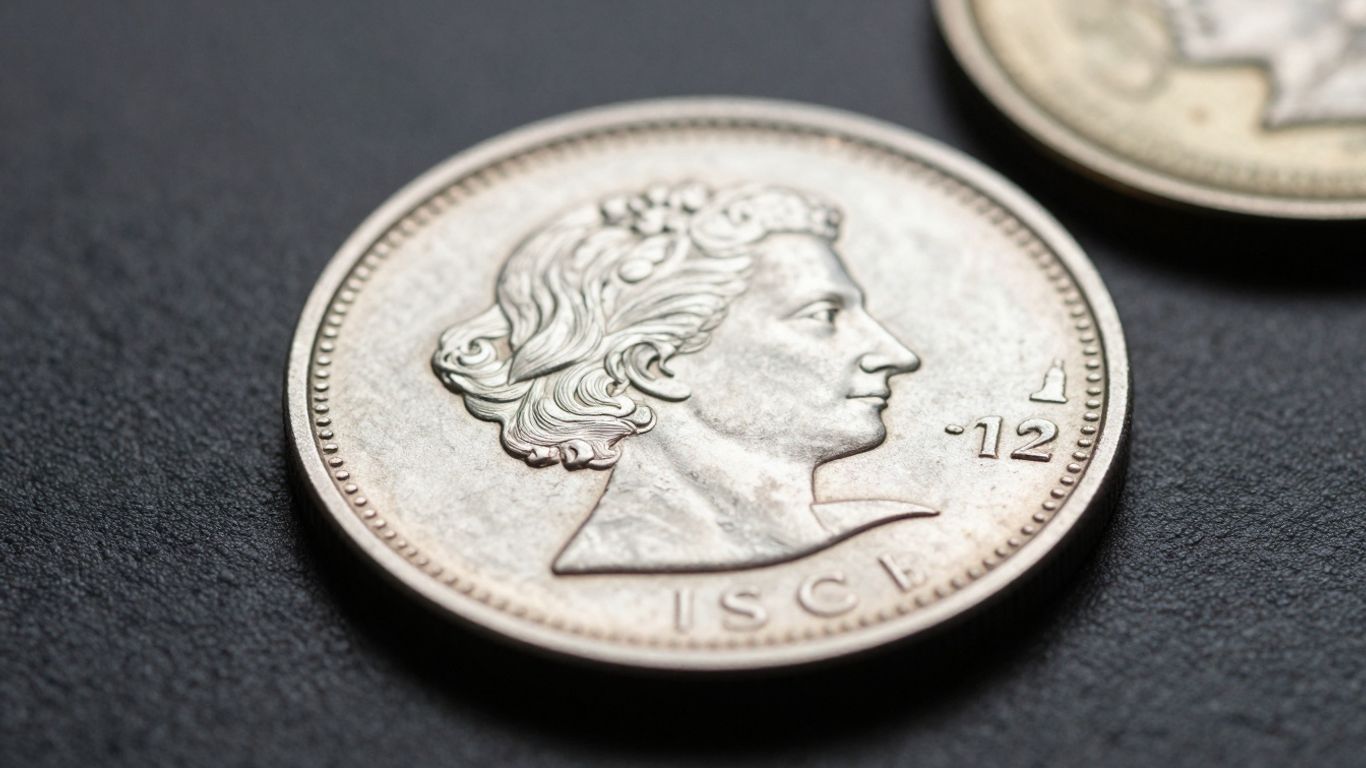
Understanding what makes silver prices move is pretty important if you’re dealing with coins. It’s not just one thing; a bunch of factors play a role. Think about the global economy – when things are shaky, people often turn to silver as a safe bet. Then there’s what’s happening in industries that use silver, like electronics and solar panels. More demand from them means higher prices, usually. Geopolitical events can also cause a stir, making prices jump or drop unexpectedly. Keeping an eye on these influences helps you get a better picture of the market.
Here are some key things that affect silver prices:
- Economic Stability: Recessions or booms can significantly impact demand and investor confidence.
- Industrial Demand: Silver is used in many manufacturing processes; changes here directly affect its value.
- Geopolitical Events: Wars, political unrest, or major policy changes can create market uncertainty.
- Currency Fluctuations: The value of the US dollar, for instance, can influence the price of silver, which is often priced in dollars.
The spot price is basically the price for silver right now, for immediate delivery. It’s like the going rate at this very moment. This number changes constantly throughout the day based on all sorts of trading activity. For anyone buying or selling physical silver, like coins or bars, knowing this spot price is a big deal. It gives you a baseline for what something should be worth. You can find this information on financial news sites or specialized precious metals sites like Kitco Metals.
Looking at historical pricing trends can also be really insightful. Seeing how silver has performed over the years, through different economic cycles, gives you a sense of its volatility and potential. It helps you understand that prices don’t just go up in a straight line; they have ups and downs. Analyzing these patterns can help you make more informed decisions about when to buy or sell your silver assets.
Specific Coin Type Valuations
When you’re looking at silver coins, not all of them are valued the same way. Some are mostly about the metal they contain, while others have extra worth because they’re rare or historically important. It’s good to know the difference.
Calculating Value for Silver Bullion
Silver bullion coins are pretty straightforward. Their value is tied directly to the amount of silver in them and the current market price of silver. Think of coins like the American Silver Eagle or Canadian Maple Leaf. They’re made with a specific amount of pure silver, usually measured in troy ounces. To figure out their melt value, you just need to know their weight, the purity of the silver (which is typically very high, like 99.9%), and the current spot price of silver.
The core idea is that their worth comes from the silver itself.
Appraising American Silver Dimes
Older American dimes, specifically those minted from 1964 and earlier, are made of 90% silver. This is different from modern dimes, which are mostly copper and nickel. So, if you have a bunch of these older dimes, they’re worth more than their face value because of the silver content.
Here’s a quick look at their silver content:
| Coin Type | Silver Purity | Silver Weight per Coin (troy oz) | Melt Value Factor |
|---|---|---|---|
| Mercury Dime (1916-1945) | 90% | ~0.0723 | 0.0723 x Spot Price x 0.90 |
| Roosevelt Dime (1946-1964) | 90% | ~0.0723 | 0.0723 x Spot Price x 0.90 |
To calculate the melt value of a roll of dimes (50 dimes), you’d multiply the melt value factor by 50 and then by the current spot price of silver.
Evaluating Washington Quarters
Similar to dimes, Washington quarters minted before 1965 are also 90% silver. These coins are larger than dimes, so they contain more silver.
| Coin Type | Silver Purity | Silver Weight per Coin (troy oz) | Melt Value Factor |
|---|---|---|---|
| Washington Quarter (1932-1964) | 90% | ~0.1798 | 0.1798 x Spot Price x 0.90 |
If you’re looking to sell these, knowing their silver weight and the current market price is key. It’s not just about the face value anymore; it’s about the precious metal inside.
When you’re dealing with older silver coins, remember that their value is primarily driven by their silver content. While some might have collector appeal, for melt value calculations, focus on the weight and purity of the silver. This is especially true for common dates and circulated coins where rarity isn’t a major factor.
Essential Tools for Accurate Measurement
To get the most accurate silver content calculations, you really need the right gear. It’s not just about guessing; precision matters a lot when you’re dealing with precious metals. Think of it like baking – you wouldn’t just eyeball the flour, right? Same idea here.
Utilizing Precise Weighing Scales
First off, you need a scale that’s up to the task. We’re not talking about your kitchen scale that measures in pounds. For coins and precious metals, you need something that measures in grams or, more commonly, troy ounces, and it needs to be accurate to at least 0.01 grams. A good digital scale is your best friend for this. Look for scales specifically designed for weighing jewelry, coins, or precious metals. These are calibrated for smaller, more precise measurements. You’ll want to make sure it’s on a level surface and away from any drafts or vibrations when you’re using it, as even tiny disturbances can throw off the reading.
Understanding Troy Ounces vs. Grams
This is a common point of confusion. Most precious metals, including silver, are weighed using the troy ounce system, not the avoirdupois ounce system that we use for everyday things like food. One troy ounce is heavier than a standard ounce. Here’s a quick breakdown:
- 1 Troy Ounce = approximately 31.1035 grams
- 1 Gram = approximately 0.03215 troy ounces
When you’re looking at coin specifications or market prices, they’ll almost always be quoted in troy ounces. So, if your scale measures in grams, you’ll need to do a quick conversion. It’s a simple multiplication or division, but getting it wrong means your entire calculation will be off.
Resources for Purity Verification
Beyond just weight, knowing the actual silver content (purity) is key. While many coins have their purity stamped on them (like .999 fine silver for modern bullion coins), older coins or those from less reputable sources might need verification. Here are a few ways to get a handle on purity:
- Visual Inspection with a Loupe: Start by looking closely at the coin. Use a magnifying glass (a jeweler’s loupe, usually 10x magnification) to check for any mint marks, hallmarks, or stamped purity levels. Genuine coins usually have clear, consistent markings. You can also look for signs of plating or wear that might indicate a lower silver content than claimed.
- Magnet Test: Pure silver is not magnetic. If a coin sticks to a strong magnet, it’s definitely not pure silver, or it has a significant amount of other metals mixed in. This is a quick, easy, and non-destructive first check.
- Electronic Purity Testers (like XRF Analyzers): For serious collectors or dealers, more advanced tools exist. X-ray Fluorescence (XRF) analyzers, for example, can scan the surface of a coin and give you a detailed breakdown of its elemental composition without damaging it. These are quite expensive, though, and usually overkill for the average person just trying to figure out the melt value of a few old dimes.
Relying on a single method for purity verification is risky. It’s always best to combine a few different approaches. For instance, a coin that passes the magnet test and has clear markings might still be a counterfeit if you don’t also consider its weight and dimensions. Experienced collectors often develop a feel for genuine silver, but that takes time and handling a lot of real pieces.
Having these tools and understanding how to use them will make a big difference in how accurately you can calculate the silver content of your coins.
Beyond Melt Value: Additional Considerations
While calculating the melt value of silver coins gives you a baseline for their worth, it’s not the whole story. Several other factors can significantly influence what a coin is actually worth, both to a dealer and to a collector. Ignoring these can lead to you selling your silver for less than it’s truly worth.
Premiums and Dealer Pricing Policies
Dealers often add a premium to the melt value when selling silver. This premium covers their costs of doing business, like acquiring the silver, storing it, and making a profit. Conversely, when you sell to a dealer, they will typically offer you a price below the current spot price, reflecting their need to make a profit when they eventually resell it. These pricing policies can vary quite a bit from one dealer to another, so it’s always a good idea to shop around.
Here’s a general idea of how dealer pricing might work:
| Item Type | Melt Value | Dealer Buy Price (Approx.) | Dealer Sell Price (Approx.) |
|---|---|---|---|
| Silver Bullion | $25.00 | $23.00 – $24.00 | $26.00 – $27.00 |
| Common Silver Coin | $18.00 | $16.00 – $17.00 | $19.00 – $21.00 |
| Rare Silver Coin | $15.00 | Varies Widely | Varies Widely |
Currency Conversion for International Markets
If you’re dealing with silver in different countries, or if prices are quoted in a foreign currency, you’ll need to account for exchange rates. The price of silver is usually set in U.S. dollars per troy ounce. If you’re in Europe, for example, you’ll need to convert that dollar price into Euros using the current exchange rate. This adds another layer of calculation to get an accurate value in your local currency.
- Check the current USD to your local currency exchange rate.
- Convert the silver price from USD to your local currency.
- Factor this into your final valuation.
The Role of Coin Condition and Rarity
This is where things get interesting beyond just the silver content. The physical condition of a coin, known as its grade, can dramatically affect its value. A coin that’s heavily worn, scratched, or damaged will be worth much closer to its melt value. However, a coin in pristine condition, especially if it’s a rare date or mint mark, can be worth many times its silver content. This is the realm of numismatics, where collector demand and historical significance play a huge role.
Sometimes, a coin’s historical context or its rarity can make it far more valuable than the metal it’s made from. A coin that’s hard to find, or one that has a unique story behind it, will always command a higher price from collectors than a common piece of silver, regardless of its weight.
Think about it: a tarnished old dime might be worth just its silver weight, but a perfectly preserved, rare mint-year dime could be worth hundreds or even thousands of dollars to the right collector. It’s a balance between the intrinsic value of the metal and the extrinsic value driven by demand and scarcity.
Leveraging Expert Insights for Coin Valuation
The Advantage of Working with Knowledgeable Dealers
When you’re trying to figure out what your silver coins are really worth, talking to people who do this for a living makes a big difference. These folks have seen a lot of coins and know the ins and outs of the market. They can spot details you might miss, like subtle differences in mint marks or wear patterns that affect value. Their experience helps you avoid common mistakes and get a more accurate picture of your coin’s worth. It’s not just about the silver content; they understand the collector’s side of things too.
Understanding Numismatic vs. Bullion Value
It’s important to know that a silver coin can have two kinds of value: its melt value and its numismatic value. Melt value is simply what the silver in the coin is worth if you melted it down. Numismatic value, on the other hand, is what the coin is worth to collectors. This can be much higher than the melt value, depending on the coin’s rarity, condition, and historical significance.
Here’s a simple breakdown:
- Bullion Value: Based purely on the precious metal content (silver, gold, etc.).
- Numismatic Value: Based on factors like rarity, condition, historical interest, and demand from collectors.
- Combined Value: Often, the final price reflects both, with numismatic factors usually adding a premium over the base bullion value.
Securing Optimal Prices for Silver Assets
Getting the best price for your silver coins involves more than just knowing the current silver price. It means understanding when and where to sell. Dealers who specialize in precious metals and coins can guide you on market timing. They know when demand is high and when collectors are actively seeking certain types of coins. They can also help you present your coins in the best possible light, highlighting their unique features to potential buyers. This often means getting a better price than you might achieve on your own, especially if you’re new to selling coins.
Working with a reputable dealer means you’re less likely to be taken advantage of. They have a reputation to uphold and usually offer fair prices based on their knowledge and the current market conditions. It’s about building trust and making sure your transaction is sound.
Market Research and Trend Analysis for Investors
Gaining Insights into Current Market Trends
Keeping up with what’s happening in the silver market is pretty important if you’re looking to invest. Prices don’t just stay the same; they move around based on a bunch of things. Think about global events, how much silver is being used in industries like electronics and solar panels, and even what investors are doing. Watching these trends helps you figure out when might be a good time to buy or sell.
- Monitor daily price movements: Keep an eye on the spot price of silver. This is the going rate for silver right now, and it changes constantly.
- Follow industry news: Read up on reports about silver mining, industrial demand, and economic forecasts.
- Understand supply and demand: More demand than supply usually pushes prices up, and vice versa.
Verifying Coin Authenticity
It’s a real bummer to find out you’ve bought a fake. So, making sure your silver coins are the real deal is a big deal. This means looking at the coin’s details, like its weight, size, and any markings. Sometimes, you might need special tools or a professional to be absolutely sure. A trusted dealer can be a lifesaver here.
Always double-check the source of your coins. Reputable dealers are your best bet for getting genuine items.
Strategies for Informed Decision-Making
Putting all this information together helps you make smarter choices. It’s not just about knowing the silver content; it’s about understanding the bigger picture. This includes knowing the difference between what a coin is worth for its silver content (melt value) and what it might be worth to collectors (numismatic value). Having a plan based on solid research means you’re less likely to make costly mistakes.
- Compare prices: Don’t just take the first offer you get. Shop around and see what different buyers are offering.
- Know your coin’s specifics: Understand its silver purity, weight, and any collector appeal it might have.
- Consult experts: If you’re unsure, ask a trusted coin dealer or appraiser for their opinion.
Practical Application of Silver Content Calculations
So, you’ve got some silver and you want to figure out what it’s actually worth, right? It sounds complicated, but it really boils down to a few key things. We’re going to walk through how to do it, step-by-step, so you’re not left guessing.
Step-by-Step Calculation Example
Let’s say you have a batch of silver, and you need to know its melt value. Here’s how you’d break it down:
- Weigh Your Silver: First, you need to know exactly how much silver you have. Make sure you’re using a scale that measures in troy ounces, as that’s the standard for precious metals. Let’s pretend you have 50 troy ounces.
- Determine Purity: Next, figure out how pure your silver is. This is usually given as a percentage. For example, many silver coins or bars are 99.9% pure. So, you’d use 0.999 in your calculation.
- Find the Current Market Price: You’ll need to check the going rate for silver. This changes daily, sometimes hourly. Let’s assume the current price is $25 per troy ounce.
- Do the Math: Now, put it all together. The formula is pretty straightforward: Melt Value = Weight × Purity × Market Price.
Using our example numbers:
Melt Value = 50 troy ounces × 0.999 × $25
Melt Value = 49.95 × $25
Melt Value = $1,248.75
So, in this scenario, your 50 troy ounces of 99.9% pure silver would be worth about $1,248.75 in melt value.
Real-World Scenarios for Coin Valuation
This calculation method is super useful for a few different situations:
- Selling Silver Bullion: If you have silver bars or rounds, this formula gives you a solid baseline for what a dealer might offer.
- Valuing Old Silver Coins: For coins that aren’t rare collectibles, their value is often tied to their silver content. Think of older dimes, quarters, or half dollars made before 1965. You’d need to know the silver weight and purity for those specific coins.
- Comparing Offers: When you get quotes from different buyers, using this calculation helps you see if their offer is fair based on the metal’s value alone.
Ensuring Fair Transactions
It’s important to remember that melt value is just one part of a coin’s worth. Sometimes, a coin might be worth more because it’s rare or in great condition. But for most silver, especially if you’re selling it to a refiner or a dealer who melts it down, the melt value is the main number.
Always double-check your measurements and the current silver price. Small errors can add up, and knowing the exact purity is key. If you’re unsure about purity, it’s best to get it tested.
By following these steps, you can get a pretty good idea of what your silver is worth, making sure you get a fair deal when you decide to sell.
Understanding the Broader Precious Metals Landscape
Gold and Platinum Calculation Comparisons
While silver often takes center stage in coin collecting and investment, it’s useful to see how its valuation compares to other precious metals like gold and platinum. The basic principles of calculating value remain similar: you need the current market price, the weight of the metal, and its purity. However, the numbers involved can be quite different. Gold, for instance, typically commands a much higher price per troy ounce than silver. Platinum also holds a premium, often fluctuating based on industrial demand and its rarity. When calculating the value of gold, you’ll often encounter purity expressed in karats (e.g., 14K, 18K, 24K), where 24K represents pure gold. For platinum, purity is usually stated as a percentage, like 95% or 99.9%. The formula remains consistent: Value = Weight × Purity × Current Market Price. For example, if gold is trading at $1,800 per troy ounce and platinum at $1,000 per troy ounce, a troy ounce of pure gold is worth significantly more than a troy ounce of pure platinum. This difference highlights why understanding the specific metal you’re dealing with is so important.
Palladium Valuation Methods
Palladium, another precious metal, has its own valuation nuances. Like gold, silver, and platinum, its value is tied to market price, weight, and purity. Palladium is often found in catalytic converters, which significantly influences its demand and price. Its purity is typically measured in percentages, similar to platinum. The calculation method is the same: Value = Weight × Purity × Current Market Price. However, palladium’s price can be more volatile than gold or silver due to its specific industrial applications and supply chain dynamics. Keeping an eye on the evolving central bank demand and industrial trends is key to understanding palladium’s market.
Diversifying Precious Metal Investments
Thinking about precious metals shouldn’t stop at just one. Diversifying your holdings across different metals can be a smart strategy. This means not only considering different types of silver coins but also looking at gold, platinum, and palladium. Each metal has its own market drivers and potential for growth or decline. A balanced portfolio might include a mix of these metals, perhaps with a focus on bullion for stability and collectible coins for potential numismatic premiums. Understanding the unique characteristics and market behaviors of each metal allows for more informed investment decisions. It’s about building a robust collection that can weather different economic conditions. Remember to also consider storage and insurance costs for physical holdings.
Wrapping It Up
So, we’ve gone over how to figure out what your silver coins are really worth. It’s not just about knowing the price of silver today, but also about checking the weight and how pure the silver is. We looked at how to do the math for different kinds of silver items, from old dimes to bigger silver pieces. Doing these calculations yourself can really help you understand your collection better and make sure you’re getting a fair deal when you buy or sell. It’s good to know this stuff, whether you’re just starting out or have been collecting for a while. Knowing the numbers gives you confidence.
Frequently Asked Questions
What is the main idea behind calculating the silver content in coins?
The main idea is to figure out how much pure silver is actually in a coin. This helps you know its basic value, especially if you plan to sell it for its metal content.
How do I find out how much a coin weighs?
You’ll need a precise scale, like one used for jewelry or precious metals. Make sure to weigh the coin carefully to get an accurate measurement.
What does 'coin purity' mean?
Coin purity tells you how much of the coin is actually silver compared to other metals mixed in. It’s usually shown as a percentage, like 90% or 99.9% pure silver.
Where can I find the current price of silver?
You can find the current price of silver, often called the ‘spot price,’ on financial news websites, commodity trading sites, or special precious metals websites.
What is the formula for calculating a coin's melt value?
The formula is pretty simple: you multiply the coin’s weight by its purity percentage and then by the current market price of silver. This gives you the coin’s basic metal value.
Why are some silver coins worth more than just their metal value?
Some silver coins are special because of their history, how rare they are, or their condition. These are called numismatic value, and it can make them worth much more than just the silver inside.
What's the difference between grams and troy ounces?
A troy ounce is a special unit used for precious metals, and it’s a bit heavier than a regular gram. One troy ounce is about 31.1 grams. Most silver prices are given per troy ounce.
What are some things that can change the price of silver?
Many things can change silver prices, like how well the economy is doing, big world events, how much silver is being used in industries like electronics, and how much people want to buy silver as an investment.