
When you’re looking at gold coins, whether for collecting or investing, knowing their purity is a big deal. It’s not just about how shiny they are; the actual amount of gold affects their worth. This guide breaks down how we measure gold purity in coins, what those numbers mean, and why it all matters for getting a fair shake.
Key Takeaways
- Gold purity is measured using systems like karats (out of 24) and millesimal fineness (parts per thousand), with 24K or .999 representing pure gold.
- The troy ounce is the standard unit for weighing precious metals, distinct from the common avoirdupois ounce, and is crucial in bullion trading.
- Common gold coin purities include 24K (like Canadian Maple Leafs) and 22K (like American Gold Eagles), with alloys added for durability.
- Testing methods range from non-destructive X-ray Fluorescence (XRF) to traditional acid tests and electronic testers, each with its own way of showing results.
- Understanding hallmarks, maker’s marks, and consulting reputable sources or professionals is vital for verifying gold purity and ensuring trust in transactions.
Understanding Gold Purity Measurement Systems
When you’re looking at gold coins, especially for investment, you’ll run into different ways people talk about how pure the gold is. It’s not just a simple percentage sometimes. There are a couple of main systems used, and knowing them helps you figure out exactly what you’re buying.
The Karat System Explained
The karat system is probably what most people are familiar with, especially if they’ve looked at jewelry. It’s a way of measuring gold purity based on a 24-part scale. Think of it like this: pure gold is considered 24 karats (24K). So, if something is 18K, it means 18 out of those 24 parts are pure gold, and the remaining 6 parts are other metals. These other metals, like copper, silver, or zinc, are added to make the gold stronger and more durable, because pure gold is actually quite soft.
Here’s a quick breakdown:
- 24 Karat (24K): Considered pure gold (99.9% pure).
- 22 Karat (22K): About 91.67% pure gold.
- 18 Karat (18K): About 75% pure gold.
- 14 Karat (14K): About 58.3% pure gold.
This system is handy for everyday items, but for serious investors, it might not be precise enough.
Millesimal Fineness: A Global Standard
For the world of bullion and investment-grade gold, you’ll see a different system called millesimal fineness. This method measures gold purity in parts per thousand. It’s a more exact way to describe the gold’s composition. For example, gold that is 99.9% pure is marked as .999 or 999 fineness. Gold that is 99.99% pure is marked as .9999 or 9999 fineness.
Here are some common fineness levels you might encounter:
- 999.9 (or 9999): Represents 99.99% pure gold. This is often called "four nines" fine and is a very high standard for investment bullion.
- 999: Represents 99.9% pure gold, often called "three nines" fine.
- 916: Represents 91.6% pure gold, which is equivalent to 22 Karat.
- 750: Represents 75% pure gold, which is equivalent to 18 Karat.
This system is preferred by refiners and international markets because it’s very specific and leaves no room for misinterpretation.
Why Purity Matters in Gold Coins
The purity of gold in a coin directly impacts its value. Pure gold (24K or .999 fineness) is the most valuable per ounce because you’re getting the most gold content. However, as mentioned, pure gold is soft. For coins, especially those intended for circulation or frequent handling, a slightly lower purity is often used. This is because adding small amounts of other metals creates an alloy that makes the coin more durable, resistant to scratches, and less likely to deform over time. Investment coins, like many bullion issues, aim for very high purity (often .999 or .9999) to maximize their gold content and value as a store of wealth. Jewelry, on the other hand, might use lower karats (like 18K or 14K) for the sake of durability and to achieve different colors. Understanding these systems helps you appreciate why a coin is marked the way it is and what that means for its worth and physical properties.
The choice between karat and fineness systems often depends on the intended use of the gold. Jewelry typically uses karats for a simpler understanding of alloy percentages, while investment-grade bullion relies on the precision of millesimal fineness to clearly define its gold content.
The Significance of the Troy Ounce
Origin and History of the Troy Ounce
The troy ounce is a unit of measurement that’s been around for a long time, specifically for trading precious metals like gold and silver. It actually got its name from the town of Troyes in France, which was a big deal for trade back in the Middle Ages. Before the troy ounce, figuring out weights for trading could get pretty messy, causing problems for merchants. So, this system helped make things more straightforward.
Troy Ounce vs. Avoirdupois Ounce
It’s really important not to mix up the troy ounce with the regular ounce you use for things like groceries. They’re not the same! A troy ounce is actually a bit heavier. Think about it this way:
- Avoirdupois Ounce: Roughly 28.35 grams. This is what we use for everyday items.
- Troy Ounce: Approximately 31.1035 grams. This is the standard for gold, silver, and platinum.
So, if you’re dealing with gold coins or bars, that "1 oz" marking almost always means 1 troy ounce. Getting this wrong could mean you’re undervaluing your gold by quite a bit.
Troy Ounce in Modern Bullion Trading
Today, the troy ounce is the go-to unit for anyone trading precious metals. Whether you’re at a refinery, an exchange, or just buying gold from a dealer, this is the measurement you’ll see. When prices for gold are discussed, they’re usually given per troy ounce. This global standard helps keep trading fair and consistent across different countries and markets. For example, when looking at the price of gold, you’ll often see it quoted in dollars per troy ounce. This makes it easier to compare prices internationally and track market movements. The fineness of the gold is then applied to this weight to determine the actual gold content and value.
Common Gold Purity Standards in Coins
When you’re looking at gold coins, especially for investment or collecting, you’ll notice they come in different levels of purity. This isn’t just about making them look shinier; it really affects how they hold up over time and what they’re worth. Most gold coins you’ll find fall into a couple of main categories, and knowing these will help you understand what you’re buying.
24 Karat Gold Purity
This is the gold standard, literally. 24 karat (24K) gold is considered pure gold, meaning it’s 99.9% or even 99.99% pure. You’ll often see this marked as .999 or .9999 fineness. Coins made with 24K gold are the most valuable in terms of raw gold content. They’re typically used for investment-grade bullion coins because their value is directly tied to the spot price of gold. Think of coins like the Canadian Maple Leaf or the Austrian Philharmonic – these are usually minted in 24K gold. However, pure gold is quite soft. It can scratch and bend more easily than gold with alloys mixed in, so these coins need to be handled with care and stored properly to maintain their condition.
22 Karat Gold Purity
Twenty-two karat (22K) gold is a popular choice for many gold coins because it strikes a good balance between gold content and durability. It means the coin is made up of 22 parts gold and 2 parts other metals, like copper or silver. This translates to about 91.67% pure gold (often marked as .9167 fineness). The addition of these alloys makes the coin harder and more resistant to wear and tear. This is why coins like the American Gold Eagle and the British Sovereign are made with 22K gold. They can withstand more handling and are less prone to damage, which is important for coins that might be traded or passed around more frequently. While they contain slightly less pure gold than 24K coins, their enhanced durability is a significant advantage.
18 Karat Gold Purity
Eighteen karat (18K) gold contains 18 parts gold and 6 parts other metals, making it 75% pure gold (or .750 fineness). While you might see 18K gold in some collectible or commemorative coins, it’s much more common in jewelry than in bullion coins. The higher proportion of alloys makes 18K gold quite strong and durable, but its lower gold content means it’s generally less sought after for pure investment purposes compared to 22K or 24K coins. The value of an 18K coin will be significantly lower than a coin of the same weight made from 24K gold, as the price is directly influenced by the amount of pure gold present. The alloys also affect the color of the gold, often giving it a warmer, richer tone than higher purities.
Here’s a quick look at how these purities stack up:
| Purity | Fineness | Gold Content | Common Use in Coins |
|---|---|---|---|
| 24 Karat | .999-.9999 | 99.9%-99.99% | Investment Bullion |
| 22 Karat | .9167 | 91.67% | Durable Bullion |
| 18 Karat | .750 | 75% | Collectible/Commemorative |
The choice of purity for a gold coin isn’t arbitrary. It’s a deliberate decision that impacts the coin’s value, its physical properties like hardness and color, and its intended purpose, whether that’s pure investment or a more durable collectible.
Accurate Gold Purity Testing Methods
When it comes to gold coins, knowing their exact purity is super important, whether you’re buying, selling, or just curious. Thankfully, there are several ways to get a pretty good idea of what you’re dealing with. It’s not always as simple as just looking at it, though. Different methods have their own strengths and weaknesses, and some are definitely more involved than others.
X-Ray Fluorescence (XRF) Analysis
XRF analysis is often considered the top-tier method for checking gold purity, and for good reason. It’s a non-destructive technique, meaning it won’t damage the coin at all. The machine shoots X-rays at the coin, and then it measures the way the metal reacts. This gives a really detailed breakdown of all the elements present, not just the gold itself. This method can even detect if a coin is plated, which is a common way for fakes to try and fool people. Results come back fast, usually within a few seconds, and the accuracy is generally around 99%. It’s a bit of an investment for the equipment, so you’ll find it mostly in professional settings like reputable coin dealers or assay labs.
Acid Testing and Touchstones
Acid testing is a more traditional approach, and you might have seen it in movies or old-timey pawn shops. It involves using a set of acids, each with a specific strength designed to react with different gold purities. Here’s how it generally works:
- Prepare the Touchstone: You’ll rub the gold coin against a special black stone, called a touchstone, to leave a small streak of metal.
- Apply the Acid: A drop of the appropriate acid is then applied to that streak. The strength of the acid corresponds to a specific karat value (e.g., 10K acid, 14K acid, 18K acid, 22K acid).
- Observe the Reaction: Pure gold is pretty resistant to most acids, but alloys will react. If the streak dissolves or changes color significantly, it indicates a lower karat value. Matching the reaction to a chart helps determine the purity. This method is quite accessible for home use, but it does require a bit of practice to get right, and it’s not as precise as XRF. You can find acid testing kits online or at specialty stores.
While acid testing is a common method, it’s important to remember that it can leave a small mark on the item being tested. For valuable or collectible coins, this might be a concern.
Electronic Gold Testers
Electronic gold testers offer a middle ground between the high-tech XRF and the hands-on acid test. These devices work by measuring the electrical conductivity of the metal, which varies depending on its composition and purity. They typically provide a digital readout that directly indicates the gold’s karat value. They are generally faster than acid testing and don’t involve chemicals. However, it’s really important to calibrate these testers correctly according to the manufacturer’s instructions to get reliable results. They also tend to work best on solid pieces and might not be as accurate on hollow or very thin items. Some testers can also be fooled by thick plating, so it’s wise not to rely on them as the sole method of verification for high-value items.
Interpreting Gold Purity Test Results
Understanding XRF Reports
X-Ray Fluorescence (XRF) analysis gives you a detailed breakdown of what’s in your gold. Think of it like a full ingredient list. It doesn’t just tell you how much gold is there; it also identifies other metals present in the alloy. This is super helpful because it can spot things like copper, silver, zinc, or even nickel. The reports usually show percentages for each element. For example, a report might say 75.1% Gold, 12.5% Copper, 10.2% Silver, and 2.2% Zinc. This combination would point towards 18-karat gold (which is 75% gold). The precision of XRF makes it a top choice for serious buyers and sellers. It’s also great because it’s non-destructive – you don’t have to scratch or damage the coin to test it.
Matching Acid Tests to Karat Values
Acid testing is a bit more hands-on and relies on observing how the gold reacts to different acid strengths. Each acid is formulated to test a specific karat range. You typically scratch a bit of the gold onto a testing stone and then apply a drop of acid to the streak. Here’s a general idea of how it works:
- 10K Acid: Used for testing gold rated at 10 karats or lower. A reaction here means it’s likely below 10K.
- 14K Acid: Applied if the 10K test shows no reaction. If it reacts to 14K acid, it’s probably 10K or 14K.
- 18K Acid: Used if the 14K test is clean. A reaction here suggests 14K or 18K.
- 22K Acid: The strongest acid, used if the 18K test shows no reaction. If it reacts to 22K acid, it’s likely 18K or 22K.
Pure gold (24K) won’t react to any of these acids. The color of the streak left on the stone after the acid is applied is also a clue. A bright, consistent color usually indicates higher purity for that karat level.
Remember, acid testing requires a steady hand and a good eye. It’s easy to misread the results if you’re not careful, especially with older coins that might have surface wear or plating.
Calibrating Electronic Gold Testers
Electronic gold testers offer a quick digital readout of gold purity. They work by measuring electrical conductivity or other properties. However, their accuracy really depends on proper calibration. Before you start testing, you need to calibrate the device using known standards. This usually involves testing a piece of gold with a certified purity (like a 10K, 14K, or 18K sample) and adjusting the tester until it shows the correct reading for that sample. Most testers come with a set of calibration weights or reference pieces. It’s a good idea to re-calibrate regularly, especially if the tester has been moved or exposed to temperature changes. Following the manufacturer’s instructions for calibration is key to getting reliable numbers.
Hallmarks and Purity Stamps on Gold Coins
When you’re looking at gold coins, especially those meant for investment or collecting, you’ll often see little marks stamped right onto them. These aren’t just decorative; they’re official indicators of the coin’s metal content and origin. These hallmarks and purity stamps are your first line of defense in verifying authenticity and value. Understanding what they mean can save you from a bad deal.
Decoding Official Hallmarks
Hallmarks are essentially a system of official marks that guarantee the purity and authenticity of precious metals. Think of them as a quality control stamp from a governing body or a reputable assay office. For gold coins, these marks typically indicate the fineness of the gold, often expressed in karats (like 14K, 18K, 22K, or 24K) or as a decimal representing parts per thousand (e.g., .999 for 99.9% pure gold).
- Karat System: This is common in some regions, with 24K representing pure gold. So, 18K means 18 parts gold and 6 parts other metals, or 75% gold.
- Millesimal Fineness: This is a more precise system used globally, especially for bullion. A mark like ‘999’ signifies 99.9% pure gold, while ‘999.9’ (or ‘four nines’) indicates an even higher level of purity, often seen on modern investment coins.
- Maker’s Marks: Alongside purity, you might find a mark identifying the mint or manufacturer. This adds another layer of traceability.
Location of Purity Stamps
Where you find these stamps can vary, but they are usually placed in a way that is visible without damaging the coin. On coins, these marks are typically integrated into the design itself, often appearing on the obverse (heads) or reverse (tails) side. Sometimes, they might be found along the edge of the coin, especially on older or more specialized pieces. Unlike jewelry, where stamps are often on clasps or inside bands, coin stamps are part of the minted surface.
Maker's Marks and Authenticity
Beyond just the gold content, maker’s marks play a significant role in confirming a coin’s authenticity. These marks identify the specific mint or refiner that produced the coin. For instance, a Canadian Maple Leaf gold coin will bear marks from the Royal Canadian Mint, while an American Gold Eagle will have marks from the U.S. Mint. These marks, when paired with the purity stamp, provide a traceable history for the coin. A crisp, clear, and well-defined stamp is generally a good sign, whereas blurry or shallow marks could indicate a counterfeit. When evaluating a coin, always check that the purity stamp and the maker’s mark are consistent with known examples from the issuing authority.
The presence and clarity of hallmarks are direct indicators of a coin’s legitimacy. They are not merely decorative but serve as a verifiable record of the metal’s origin and purity, directly impacting its trustworthiness and market value.
Factors Affecting Gold Coin Value
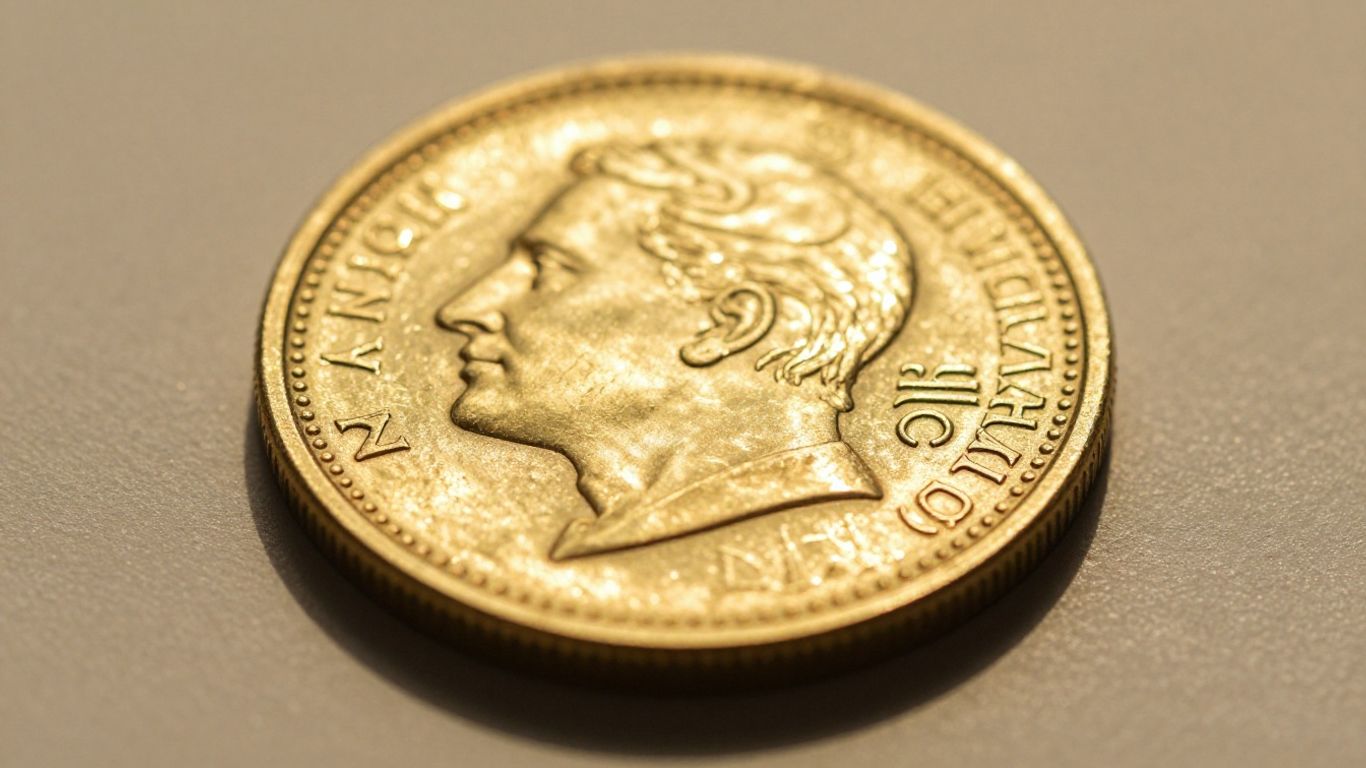
When you’re looking at gold coins, a few things really change how much they’re worth. It’s not just about having gold; it’s about the specifics of that gold and the coin itself.
Weight and Purity Correlation
The most straightforward way a coin’s value is set is by how much gold it has and how pure that gold is. Think of it like this: more pure gold means more value, plain and simple. Gold is usually measured in troy ounces, which is a bit different from the ounces we use for everyday things like groceries. One troy ounce is about 31.1 grams. So, a coin that’s heavier or purer will naturally be worth more.
Here’s a quick look at how purity breaks down:
- 24 Karat (24K): This is considered pure gold, usually around 99.9% or higher. It’s soft and can scratch easily, so it’s often used for investment bars or coins where durability isn’t the main concern.
- 22 Karat (22K): This is about 91.7% gold, with the rest being other metals like copper or silver. This mix makes the coin tougher and more resistant to wear, which is why you see it in popular coins like the American Gold Eagle.
- 18 Karat (18K): This is 75% gold. While common in jewelry, it’s less typical for pure gold bullion coins meant for investment, as the lower gold content reduces its direct value as a commodity.
The price of a gold coin is directly tied to the amount of pure gold it contains. This means that even small differences in purity, when multiplied by the weight of the coin, can lead to significant variations in market value.
Impact of Alloys on Durability
Adding other metals, known as alloys, to gold changes how strong the coin is. Pure gold (24K) is quite soft. If you were to handle it a lot, it would get scratched or bent pretty easily. Coins made with alloys, like 22K gold, are much more durable. This is important because coins that hold up better over time will maintain their condition and, therefore, their value more effectively. A coin that looks worn out or damaged won’t fetch as much as one that’s in good shape, even if they started out with the same amount of gold.
Liquidity and Marketability of Purity Levels
How easily you can sell a gold coin also depends on its purity. Coins that are made of very high-purity gold, like 24K or .9999 fine, are generally easier to sell because they’re recognized worldwide as investment-grade. They trade very close to the spot price of gold, plus a small premium. Coins with lower purity levels, or those made with unusual alloys, might be harder to sell. You might need to find a specific buyer who understands their value, or you might get less for them because they aren’t as universally accepted in the bullion market. It’s like trying to sell a common item versus something a bit more niche; one moves faster than the other.
Gold Purity in Investment vs. Jewelry
Investment Grade Gold Standards
When you’re looking at gold for investment, like coins or bars, the goal is usually maximum purity. Think 24 karat, or .999 fine. This means you’re getting as close to pure gold as possible, with minimal alloys. The reason for this is simple: value. Investment-grade gold’s worth is directly tied to the spot price of gold. The less other metals are mixed in, the more closely its value tracks that global price. It makes it easier to buy and sell, and there’s less guesswork involved. You’ll often see markings like "999.9 fine" on these items, which is a clear signal that you’re dealing with high-purity bullion. This purity also means the metal is quite soft, so while it’s great for holding value, it’s not ideal for something you’d wear every day.
Gold Purity for Wearable Jewelry
Jewelry, on the other hand, needs to be tough. Pure gold is soft and scratches easily, which isn’t practical for rings, bracelets, or necklaces that get bumped around. That’s why jewelry often uses lower karat ratings, like 18K (75% gold) or 14K (58.3% gold). These lower purities mean more alloys like copper, silver, or zinc have been added. These alloys make the gold harder, more durable, and can even change its color, leading to popular options like white gold or rose gold. While these pieces are still valuable, their price is influenced by both the gold content and the craftsmanship, and they don’t track the gold spot price as closely as pure bullion.
The Role of Alloys in Coin Production
Coins can be a bit of a middle ground, and their purity often depends on their purpose. Many collectible or investment coins aim for high purity, similar to bullion. However, some coins, like the American Gold Eagle, are made with a slightly lower purity, such as 22 karat (91.7% gold). This is done to increase durability, making the coins more resistant to wear and tear, especially if they were intended for circulation at some point. The alloys added also affect the coin’s color and can sometimes be a distinguishing feature. So, while pure gold is the ultimate measure of value, the practicalities of use and appearance mean that alloys play a significant role in the final product, whether it’s jewelry or a specific type of coin.
Challenges in Measuring Antique Coin Purity
Historical Alloy Variations
When you’re dealing with older coins, the idea of a single, consistent gold purity can go right out the window. Back in the day, mints and jewelers didn’t always stick to the strict standards we have now. They often used different mixes of metals, or alloys, to achieve specific colors or hardness. This means a coin marked as, say, 18 karat from the 1800s might actually have a different gold content than an 18 karat coin made today. It’s not uncommon to find that historical alloy compositions varied quite a bit, even within the same country or mint. For instance, some Victorian-era pieces might have less gold than their markings suggest, making direct comparisons tricky.
Non-Destructive Testing for Collectibles
One of the biggest headaches with antique coins is how to test their purity without damaging them. You can’t just scratch up a rare, valuable coin with an acid test or toss it in an electronic tester and expect it to retain its collector value. This is where non-destructive methods become really important. X-Ray Fluorescence (XRF) analysis is a top choice here. It shoots X-rays at the coin and analyzes the energy that bounces back, telling you what elements are present and in what amounts, all without leaving a mark. This is a big deal for collectors who want to know the metal content but also preserve the coin’s condition. It’s a delicate balance between getting the data you need and keeping the item pristine for its historical worth.
Professional Appraisal for Purity and Value
Because of all these complexities, getting a professional appraisal is often the best route when you’re unsure about an antique coin’s purity. Experts have the experience and the right tools, like advanced XRF scanners, to get accurate readings. They also understand the historical context, knowing what alloy variations to expect for certain periods or regions. A good appraiser can tell you not just the metal content but also how that affects the coin’s overall value, considering its rarity, condition, and historical significance. They can help you understand if a coin is worth more for its metal or for its place in history. For serious collectors or investors, this kind of detailed assessment is key to making informed decisions and avoiding costly mistakes. It’s often the most reliable way to get a true picture of what you’re dealing with, especially when you’re looking at pieces that might have significant historical context.
The historical context of an antique coin is as important as its metal content. Understanding the era it comes from, the minting practices of the time, and the common alloys used provides a framework for interpreting any purity test results. Without this background, a simple percentage might be misleading.
Ensuring Trust in Gold Purity Measurements
When you’re dealing with gold coins, knowing their actual purity is pretty important. It’s not just about the shiny appearance; it’s about the real value. Trusting the purity claims made by sellers or even the stamps on the coin itself is key to making smart decisions, whether you’re buying, selling, or just curious.
Reputable Sellers and Dealers
One of the simplest ways to get reliable purity information is to buy from places that have a good name. Think about established coin shops, well-known bullion dealers, or even jewelers who specialize in precious metals. These businesses usually want to keep their reputation intact, so they tend to be more careful about what they sell and how they represent it. They often use professional testing equipment themselves and can provide documentation to back up their claims. It’s always a good idea to do a little homework on a seller before you make a big purchase.
The Importance of Verification
Don’t just take someone’s word for it, or even a stamp on the coin, without some form of verification. While hallmarks and purity stamps are helpful, they can sometimes be faked or worn down over time. Using a combination of testing methods can give you more confidence. For instance, a quick magnetic test can rule out obviously fake items, as pure gold isn’t magnetic. Then, if you’re serious about accuracy, methods like X-Ray Fluorescence (XRF) analysis offer a non-destructive way to get a precise reading of the metal’s composition. Even simpler methods, like acid testing, when done correctly, can give you a good idea of the karat value.
Here’s a quick look at common purity standards and what they mean:
- 24 Karat (24K): This is considered pure gold, typically 99.9% or higher. It’s very soft and usually reserved for investment bullion rather than coins meant for circulation or jewelry.
- 22 Karat (22K): This is about 91.7% pure gold. Many popular gold coins, like the American Gold Eagle or the British Sovereign, are made to this standard. The added alloys make them more durable.
- 18 Karat (18K): This is 75% pure gold. While less common for investment coins, it’s a popular choice for jewelry due to its balance of gold content and hardness.
- 14 Karat (14K): This is 58.3% pure gold. It’s quite durable and often used for everyday jewelry, but not typically for collectible or investment coins.
When to Consult a Professional
Sometimes, especially with older coins or when dealing with very large amounts of gold, you might need an expert. Professional appraisers or assayers have the specialized knowledge and equipment to accurately determine purity, especially for items where destructive testing isn’t an option. They can also help authenticate the coin and assess its overall value, taking into account factors beyond just the gold content. If you’re unsure about a coin’s purity or its worth, getting a professional opinion is a wise step.
Relying on multiple checks and balances is the best approach. This means looking at the seller’s reputation, understanding the markings on the coin, and, if possible, using testing methods to confirm the purity. It’s about building confidence in your transaction through careful examination and informed choices.
Wrapping Up: Knowing Your Gold's Worth
So, we’ve gone over how to figure out what your gold coins are really made of. Whether it’s the old-school acid test or the fancy XRF machines, knowing the purity is key. It’s not just about knowing if it’s pure gold; it’s about understanding how much actual gold is in there, which directly affects its value. From the familiar karat system to the more technical fineness numbers, these details matter. Whether you’re buying, selling, or just curious about that coin in your pocket, getting a good read on its purity helps you make smarter moves and ensures you’re dealing with fair prices. Don’t be afraid to ask questions or get a second opinion if you’re unsure – your gold’s worth depends on it.
Frequently Asked Questions
What is the difference between 24K, 22K, and 18K gold in terms of purity?
Think of karats like a pie chart for gold. 24K is the whole pie, meaning it’s 99.9% pure gold – the most pure you can get. 22K gold is like having 22 slices of that pie, so it’s about 91.7% pure gold, with the rest being other metals like copper or silver. These extra metals make it a bit stronger. Then, 18K gold is like having 18 slices, meaning it’s 75% pure gold and 25% other metals. This makes it even tougher but less pure than 22K or 24K.
How is the purity percentage of gold figured out?
We use a system where 24 karats represent pure gold. To find the percentage of pure gold in any karat amount, you just divide the karat number by 24 and then multiply by 100. For example, with 18K gold, you’d do 18 divided by 24, which equals 0.75. Multiply that by 100, and you get 75%, meaning 18K gold is 75% pure.
What does a '999.999 gold bar' mean?
When you see a gold bar labeled ‘999.999’, it means it’s incredibly pure – almost 100% gold, specifically 99.9999%. This is known as ‘six nines’ fineness and is the highest level of purity you can typically find. It means there’s only a tiny, tiny bit of other stuff in it. This super pure gold is usually used for special scientific or high-tech purposes, not everyday coins.
What is the purest gold you can usually buy, and what is it used for?
The highest purity gold you’ll commonly find for sale is 99.99%, often called ‘four nines’ fine. This is the standard for most investment-grade gold bars and coins because it’s very pure but still manageable. While even purer gold exists (like the ‘six nines’ mentioned earlier), it’s much harder to make and usually reserved for specific industries like advanced electronics or research where even the smallest impurity matters.
Why isn't all gold jewelry made of pure 24K gold?
Pure gold (24K) is very soft, like butter. If you made rings or bracelets out of it, they would easily bend, scratch, or get damaged with everyday wear. By mixing in other metals like copper, silver, or zinc, we create alloys that make the gold harder and more durable, perfect for jewelry that needs to last.
What is a Troy Ounce, and how is it different from a regular ounce?
A Troy Ounce is the special unit of weight used for precious metals like gold and silver. It’s a bit heavier than the regular ounce you use for things like sugar or flour. One Troy Ounce is equal to about 31.1 grams, while a regular ounce is about 28.35 grams. This difference might seem small, but it’s important when buying or selling valuable metals.
What are hallmarks and purity stamps on gold coins?
Hallmarks and purity stamps are like official seals on gold coins. They are small markings that tell you exactly how pure the gold is (like 24K or .999) and often show who made the coin or where it came from. These stamps help buyers trust that they are getting what they are paying for and are a key part of identifying authentic gold.
How do different testing methods check gold purity?
There are a few ways to test gold. X-Ray Fluorescence (XRF) machines use X-rays to see what’s inside the metal without damaging it, giving a very accurate reading. Acid testing involves scratching a bit of gold onto a special stone and then applying different acids; how the scratch reacts tells you the purity. Electronic testers use electrical currents to measure purity. Each method has its own strengths for checking if gold is genuine and how pure it is.