
Key Takeaways
- Understanding coin edges is vital for authentication and determining the minting process.
- Specialized tools like loupes and microscopes are necessary to identify minute features.
- Edge variations, such as reeded or lettered designs, are specific markers for many coinage types.
- High-quality counterfeiters often leave telltale signs like casting seams or uneven lettering.
- Properly grading an edge requires distinguishing between intentional design features and incidental circulation damage.
Importance of edge details in numismatics
Examining the periphery of a coin provides a unique window into its manufacturing history and heritage. By focusing on the rim, numismatists can uncover evidence that is often overlooked when simply inspecting the obverse or reverse. The investigation of microscopic edge details coins enthusiasts prioritize offers a deeper level of validation beyond surface design alone.
Identifying minting methods through edge patterns
Many historic minting techniques are physically etched onto the edges of finished pieces. Observing these patterns allows experts to differentiate between machine-struck coins and those produced via older, manual processes. When coins like a Signature Solitaire Collection piece are inspected, the regularity of the strike remains paramount to their integrity.
Differentiating real coins from high-quality counterfeits
Authentic pieces typically exhibit consistent metal flow, whereas forgeries often show signs of rapid, low-quality production. Utilizing resources such as expert authentication and grading services helps collectors confirm whether edge characteristics match known specimens. Through careful observation, seasoned enthusiasts identify discrepancies that reveal a fake.
Assessing wear and damage on coin rims
Distinguishing between deliberate minting variations and damage sustained during circulation is crucial for accurate assessment. Often, a coin may be misidentified as a variety when it is merely suffering from post-mint impact.
| Feature Type | Observation | Significance |
|---|---|---|
| Rim Denticles | Crisply defined | Indicates high-quality strike |
| Edge Path | Uniform smoothness | Suggests genuine machine finish |
| Incuse Marks | Sharp, clear depth | Reflects authentic pressure |
Careful study of the rim confirms that even minor deviations from the norm can suggest external interference. Always compare suspicious rims against established data from a coin collecting glossary to confirm standard features.
Essential tools for observing microscopic features
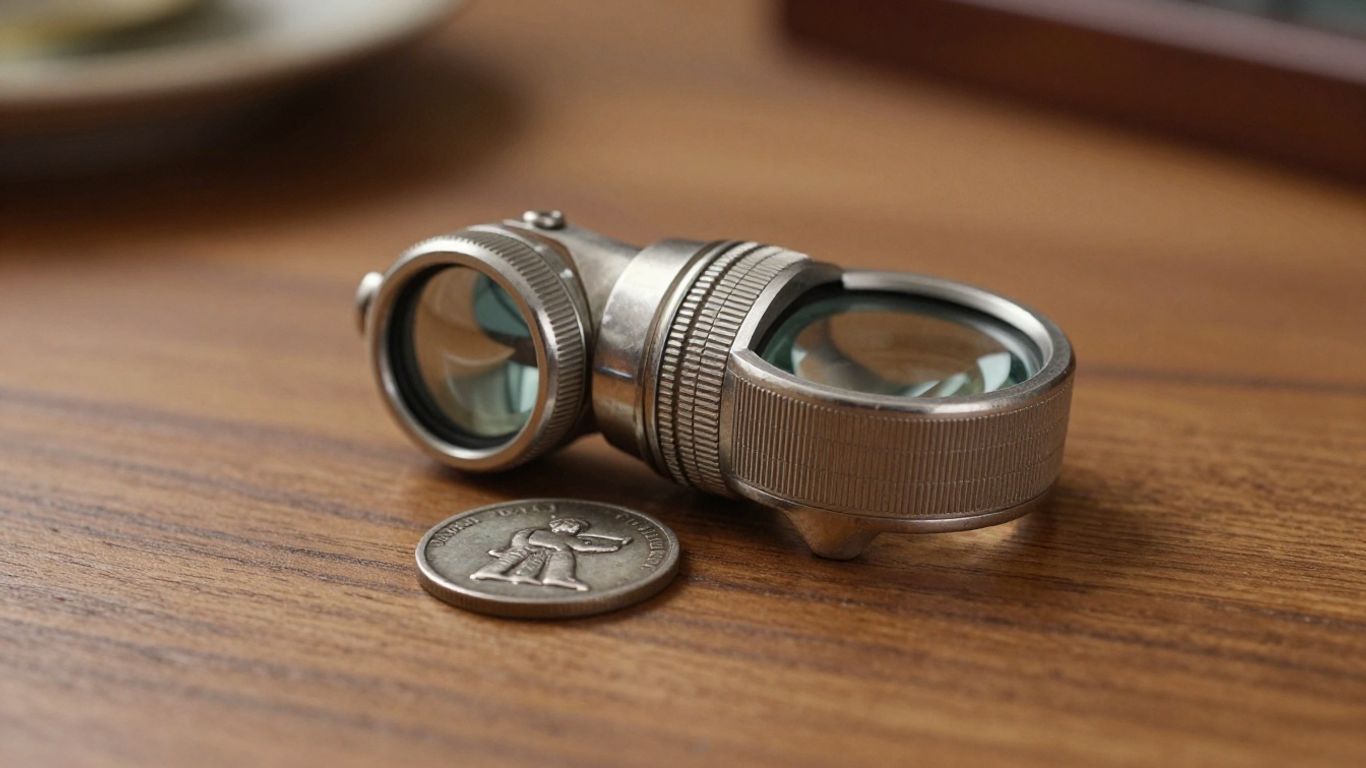
Equipped with the right optics, a collector can see details that are invisible to the naked eye. Selecting appropriate gear is the first step toward becoming a more capable authenticator. Having a consistent methodology for your equipment setup improves repeatability during your analysis.
Magnification devices and high-resolution loupes
Portable loupes provide the necessary magnification for on-the-go checks, while specialized glass ensures clarity. These tools allow for quick inspections of rims and surfaces when professional labs are unavailable. Referencing an Attention to Detail guide provides further context on choosing the right lens strength.
Digital microscopes for captured analysis
Digital imaging has revolutionized how we document coin surfaces. Using these devices, a collector can view images on a monitor, making it easier to share findings with peers.
- Ensure the digital camera is calibrated for high focal accuracy.
- Utilize a stable mount to prevent unwanted shaking during capture.
- Save high-resolution files for long-term reference and comparison.
This workflow ensures that even the smallest anomalies are permanently captured for later review. Proper digital storage protects your findings and maintains a digital history of your collection.
Proper lighting techniques for depth of field
Lighting is perhaps the most critical factor in seeing microscopic features. Adjusting the angle of your light source highlights the relief on the edge and helps distinguish depth accurately. Proper illumination prevents shadows from masking critical information during examination.
Common edge variations and mint marks
Different minting facilities historically used unique rim finishes to distinguish their output. Understanding these distinctions is fundamental to building a knowledgeable collection.
Reeded edges versus plain edges
Reeding was introduced primarily to prevent fraudulent clipping of precious metals from the edges. These tiny vertical ridges represent a significant technological shift in the history of currency, ensuring that a coin’s diameter remained intact through circulation.
Lettered edges and incuse features
In some historical series, inscriptions appear directly on the rim, adding a layer of complexity to the manufacturing process. These lettered edges often served as anti-counterfeiting measures, as the equipment required to impress them was difficult for illicit minters to replicate.
Identifying mint-specific edge characteristics
Each mint has its own set of standards for rim thickness and design transition. A challenge coin sizing assessment helps collectors recognize when a rim deviates from expected norms for a specific era. Maintaining consistency in your knowledge of these mint-specific traits is essential for identifying potential errors.
Analyzing counterfeit indicators on edges
When evaluating a piece, look for evidence that suggests the coin was not produced at a formal government facility. Counterfeiters rarely achieve the metallurgical or pressure standards of a central bank.
Tool marks from casting molds
Cast coins frequently display small indentations or scratches caused by the removal from a mold. These marks are often located on the edge, hidden from the primary view but easily visible under magnification. Recognizing such flaws is a core skill for any serious numismatist.
Seams and flashing patterns from modern fakes
Modern injection techniques often leave a distinct, sharp line or ‘seam’ along the rim where mold halves joined. Genuine coins, manufactured under immense pressure, do not have these artificial artifacts.
Incorrect or inconsistent lettering precision
Even with advanced technology, forgers often fail to replicate perfect alignment on lettered edges. The spacing, depth, and serif quality of these letters frequently appear uneven compared to original specimens, which highlights why expert grading services remain vital for high-value acquisitions.
Challenges in edge condition grading
Determining the grade of a coin is complex, as the condition of the rim influences the overall assessment. A perfect obverse is sometimes compromised by edge issues that detract from the overall value.
Impact of edge bumps on overall grade
Significant dents or ‘dings’ commonly lower the technical grade of a coin. These impacts are often the result of reckless handling in loose rolls or coin counting machines, creating a contrast between a pristine center and a damaged edge.
Distinguishing edge damage from circulation wear
It takes practice to discern between simple high-point wear and intentional damage. Natural circulation tends to flatten features slowly, while localized impact creates distinct, jagged damage to the rim.
Surface cleaning effects on microscopic textures
Cleaning a coin is often detrimental, as it strips away the natural luster and can obscure microscopic textures. Once an edge has been harshly scrubbed, it becomes nearly impossible to identify original minting characteristics, essentially capping the grade at lower tiers.
Conclusion
Mastering the study of coin edges transforms how one evaluates numismatic assets. By combining the proper tools, deep historical knowledge, and a commitment to professional authentication, you can protect the integrity of your collection. Paying attention to these often-overlooked features ensures that your appreciation of history rests on a solid foundation of certainty.
Frequently Asked Questions
Why are edge details important for authenticating coins?
Edge features often reveal the specific manufacturing pressure and method used at the mint, which are difficult for counterfeiters to replicate exactly.
How does magnification aid in rim examination?
Magnification reveals tiny irregularities, such as casting mold seams or mechanical damage, that remain invisible to the naked eye.
Are all reeded edges identical across different mints?
No, reeding count and thickness can vary by era and mint, serving as a key diagnostic tool for experienced collectors.
What do tool marks on an edge signify during authentication?
Tool marks usually indicate an attempt to clean or modify the edge, which is a major red flag for potential alteration or forgery.
Does edge damage immediately ruin the value of a coin?
While edge damage significantly lowers the grade and market value, the impact depends on the rarity and overall condition of the specific coin.
How can I distinguish between a seam and a natural die crack?
Seams are usually uniform and circular at the mold parting line, whereas die cracks on genuine coins appear irregular and flow across the surface based on metal stress.
Is it possible to self-teach coin edge analysis?
Many collectors develop these skills through persistent practice, consistent access to loupes, and studying documented examples of genuine and counterfeit specimens.