
Figuring out how coins are graded can be a bit tricky. It’s not always as simple as it looks, and there are lots of little things that can affect how much a coin is worth. This guide is here to help you sort through the details, understand the tools you need, and learn how to spot the good from the not-so-good when you’re looking at coins. We’ll cover the basics, talk about the main grading companies, and give you some pointers on how to get better at it yourself. It’s all about making sure you know what you’re looking at, especially when comparing coin grading services.
Key Takeaways
- Learning the basic terms for coin conditions, like ‘Good’ or ‘Mint State,’ is the first step to understanding coin values.
- Using tools like a magnifying glass and good lighting helps you see small details on coins that affect their grade.
- Checking for wear on a coin’s surface and looking at its original shine are important for determining its condition.
- Be aware of common mistakes, such as letting personal feelings affect your judgment or not having enough light to see properly.
- Comparing how different grading services, like PCGS and NGC, evaluate coins helps you get a clearer picture of a coin’s true grade and value.
Understanding The Nuances Of Coin Grading
Decoding Basic Coin Grading Terminology
Coin grading is like learning a new language, and understanding the basic terms is your first step. It’s how everyone talks about a coin’s condition. Think of it as a way to describe how much a coin looks like it did when it first left the mint, versus how much it’s been handled or worn down.
- Poor (P-1): Barely recognizable, major parts missing.
- Fair (F-12): Very worn, but the main design elements are visible.
- Good (G-4): Significant wear, but the coin is complete.
- Very Good (VG-8): Moderate wear, some details are softened.
- Fine (F-15): Clear details, but wear is evident on most surfaces.
- Very Fine (VF-20 to VF-35): Moderate wear, but most major features are sharp.
- Extremely Fine (XF or EF-40 to XF-45): Light wear, only on the highest points of the design.
- About Uncirculated (AU-50 to AU-58): Very light wear, almost looks uncirculated but shows a hint of handling.
- Mint State (MS-60 to MS-70): No wear from circulation. The numbers indicate the level of preservation and eye appeal.
The difference between an About Uncirculated coin and a Mint State coin can significantly change its value. It’s all about those tiny details that show whether a coin has ever been used as money.
Key Coin Grading Categories Explained
Beyond the basic terms, grading involves looking at several key areas. These categories help paint a complete picture of a coin’s condition. It’s not just about wear; it’s about the whole package.
- Wear: This is the most obvious factor. How much has the coin’s design been smoothed down from being passed around?
- Luster: This refers to the original shine or reflectivity the coin had when it was made. A coin with full luster looks bright and vibrant, while one that’s lost its luster might look dull.
- Surface Preservation: This covers things like scratches, nicks, bag marks (dings from other coins in a bag), and other marks that aren’t part of the original design.
- Eye Appeal: This is a bit more subjective but refers to how attractive the coin is overall. Does it have good color, pleasing surfaces, and a strong strike?
Understanding these categories helps you look at a coin more objectively. It’s about seeing the coin as it is, not as you wish it were.
The Sheldon Scale: A Universal Standard
The Sheldon Scale is the system most people use today. It ranges from 1 to 70, with 70 being the best possible grade. This scale was originally developed for United States currency but has become widely adopted for grading coins from around the world.
Here’s a quick look at how the scale generally breaks down:
| Grade Range | Description |
|---|---|
| 1-10 | Poor to Good |
| 11-35 | Very Good to Fine |
| 36-49 | Very Fine to XF |
| 50-58 | About Uncirculated |
| 60-70 | Mint State (Uncirculated) |
Each number within these ranges represents a specific level of detail and preservation. For example, an MS-60 coin is uncirculated but might have numerous marks, while an MS-65 coin is also uncirculated but has far fewer, less noticeable imperfections and better eye appeal. Getting familiar with this scale is key to understanding price guides and dealer listings.
Essential Tools For Accurate Coin Assessment
When you’re looking at coins, especially if you’re trying to figure out their grade, having the right gear makes a huge difference. It’s not just about having good eyesight; it’s about being able to see the tiny details that graders look at. Think of it like a mechanic needing a good wrench set – you can’t do the job right without the proper equipment.
The Importance Of Magnification Tools
Your eyes can only do so much. To really see what’s going on with a coin’s surface, you need magnification. A jeweler’s loupe, typically with 10x magnification, is pretty much standard issue for anyone serious about coins. It lets you zoom in on wear patterns, check out the sharpness of the design, and spot any little nicks or scratches that might not be obvious otherwise. A good loupe helps you see the story the coin is trying to tell. When picking one out, look for something that gives a clear, sharp image without making things look warped. Triplet or achromatic loupes are often recommended because they offer better optical quality, meaning less distortion and truer colors.
Optimal Lighting For Detailed Inspection
Good lighting is just as important as magnification. You need a light source that’s bright enough to illuminate the coin’s surface but also allows you to see the subtle details. Direct, harsh light can sometimes hide imperfections or create glare. Many collectors prefer using an adjustable desk lamp with a flexible neck so they can position the light from different angles. This helps reveal surface textures and any minor imperfections that might be missed under a single light source. Rotating the coin slowly under consistent, angled light is a common technique to bring out these details.
Utilizing Gloves And Clean Surfaces
This might seem obvious, but it’s worth repeating: always handle your coins with care. The oils and dirt from your fingers can cause damage over time, and this damage can affect a coin’s grade. Using soft cotton gloves is a simple way to protect both your hands and the coin. It’s also a good idea to work on a clean, uncluttered surface. A plain white background can make it easier to see the coin and any marks on it. Keeping your workspace tidy prevents accidental drops or scratches. Basically, treat every coin like it’s a delicate artifact, because in the numismatic world, it often is.
Evaluating A Coin's Surface And Preservation
Assessing Wear Patterns On Design Elements
When you look at a coin, the first thing you might notice is how worn it looks. This wear isn’t just random; it tells a story about the coin’s life. High points on the design, like the tops of letters, a person’s cheek, or the tips of hair, tend to wear down first. Think of it like a well-loved book – the cover edges and the corners of pages get the most use. For coins, this means areas that stick out will show smoother surfaces before flatter areas do. A coin that’s been handled a lot will have these high points softened, while one that’s been kept safe will still show sharp, crisp details. It’s about looking at how much of the original design is still clearly visible and how much has been smoothed away by time and handling.
Understanding Original Mint Luster
Original mint luster is that special shine a coin has when it’s brand new, fresh from the mint. It’s not like the shine you get from polishing a coin; it’s a softer, more natural glow that seems to move across the surface when you tilt the coin. This effect is often called a ‘cartwheel’ effect because of how the light seems to radiate outwards. Seeing good luster is a big sign that a coin hasn’t been spent or handled much. It shows that the coin’s original surface is intact. If a coin looks dull or has a uniform, flat shine, it might have been cleaned or just lost its original luster over time. Preserving this luster is key to a coin’s appeal and value. For example, NGC employs proprietary methods to help preserve these delicate surfaces.
Identifying Surface Marks And Imperfections
Beyond wear and luster, you need to look for other things on the coin’s surface. These are the little imperfections that can affect its grade. They can include:
- Contact Marks: These are small nicks, scratches, or dings that happen when coins bump into each other, either in a mint bag or during circulation.
- Scratches: These are longer, more visible lines that can be caused by anything from a careless grader to someone trying to clean the coin.
- Pits or Corrosion: Sometimes, especially on older coins or those stored improperly, the metal itself can develop small indentations or signs of decay.
- Rim Dings: Damage specifically to the edge of the coin.
It’s important to remember that not all marks are created equal. A tiny, insignificant scratch might not affect a coin’s grade much, but a deep, obvious one can lower it significantly. The location and severity of these marks play a big role in how a grader views the coin’s overall condition.
When you’re assessing these surface issues, try to use good lighting that can cast shadows, making scratches and nicks more visible. Comparing your coin to known examples or using detailed reference images can also help you understand what’s considered normal wear and what’s a significant flaw.
Navigating Common Pitfalls In Coin Grading
Even with the best intentions, grading coins can lead you down some tricky paths. It’s easy to make mistakes that might not seem like a big deal at first, but they can really mess with how much a coin is worth. Learning to spot these common errors is a big step in protecting your collection.
Avoiding Subjective Bias And Emotional Attachment
One of the biggest hurdles is letting your personal feelings get in the way. We all have coins we love, maybe because of their history or just how they look to us. But this fondness can make us see a coin as better than it actually is. It’s like looking at a family photo – you might overlook flaws because you’re so attached. In coin grading, this means we might bump up a coin’s grade in our head, thinking it’s a solid MS-65 when it’s really more of an MS-63. This kind of bias can lead to overpaying for coins or misjudging their true market value. It’s important to try and look at each coin with a fresh, objective eye, no matter how much you like it.
The Dangers Of Inadequate Lighting
Trying to grade a coin under poor lighting is like trying to read a book in the dark. You just can’t see the details. A dimly lit room or using a light source that casts weird shadows can hide a lot. You might miss tiny scratches, bag marks, or even subtle wear on the coin’s surface. These are the very things that determine a coin’s grade. Good lighting, ideally from multiple angles, is key. It helps reveal the coin’s true surface condition and any imperfections that might be lurking.
Recognizing Signs Of Coin Restoration
Sometimes, coins are cleaned or altered to make them look better. This is called restoration, and it can seriously affect a coin’s grade and value. A coin that has been polished might look shiny and new, but it has lost its original mint luster, which is a key grading factor. You might see unnaturally smooth surfaces, a lack of fine detail, or a greasy appearance. Some coins might even have their edges altered or have been plugged to fill holes. Detecting these alterations requires a sharp eye and knowledge of what a coin should look like in its original state. If you suspect a coin has been messed with, it’s often best to be cautious.
Here are some common signs of coin alteration:
- Unnatural smoothness or lack of detail on surfaces.
- A greasy or oily appearance, especially in the fields.
- Scratches that look too uniform or shallow.
- Edges that appear filed or altered.
- A color that seems off from what’s typical for the coin’s metal and age.
When you’re assessing a coin, remember that every mark, every bit of wear, and every bit of shine tells a story. Your job is to read that story accurately, without letting your own feelings or poor conditions cloud your judgment. Being aware of these common mistakes will help you make much better decisions about your collection.
Comparing Grading Standards: PCGS, NGC, And Beyond
Understanding Variations Across Grading Services
When you start looking at graded coins, you’ll notice a few big names keep popping up, like PCGS and NGC. They’re like the rock stars of coin grading, and for good reason. But here’s the thing: they don’t always see eye-to-eye on every single coin. It’s not like one is always right and the other is always wrong; it’s more about subtle differences in how they look at things. Think of it like two art critics looking at the same painting – they might both appreciate it, but they’ll focus on different brushstrokes or color nuances.
It’s important to remember that even within the top-tier services, a coin graded MS-65 by one might be considered MS-64 by another. This isn’t a sign of a bad service, but rather a reflection of the inherent subjectivity in grading, even with detailed scales. Understanding these differences helps you make better decisions when buying or selling.
The Role Of Regional Specializations
Some grading services have a particular knack for certain types of coins, often tied to their geographic origins. For instance, if you’re dealing with Canadian coins, a service like ICCS (Industry Canada Certification Service) might have a more specialized understanding of their unique characteristics and historical context compared to a service that grades coins from all over the world. This isn’t to say the global services are bad at grading Canadian coins, but the specialized ones might have that extra layer of insight.
- PCGS: Generally strong across the board, with a vast database and broad market acceptance.
- NGC: Also a major player, often seen as a close competitor to PCGS, with a strong reputation.
- ICCS: Particularly noted for its focus and detailed grading of Canadian numismatic items.
Cross-Referencing Grades For Validation
So, what do you do with all this information? You cross-reference. If you’re looking at a coin and you’re not quite sure about its grade, or if you’re trying to get the best possible price for a coin you own, it pays to see what different services might say. Sometimes, a coin might get a grade from one service, and then a different service might give it a slightly higher or lower grade. This is where things like third-party authentication services (like CAC, which adds a sticker to already graded coins if they meet certain quality standards) come into play. They act as an extra layer of validation.
Looking at multiple opinions helps paint a clearer picture of a coin’s true condition and market desirability. It’s like getting a second opinion from a doctor – it can confirm the diagnosis or offer a slightly different perspective that might be important.
It’s not about finding the highest grade possible just for the sake of it, but about understanding where a coin truly sits in the grading spectrum according to different, reputable sources. This practice builds your confidence and helps you avoid overpaying or underselling.
Deep Dive Into Leading Grading Services
When you start looking at graded coins, you’ll notice a few names pop up again and again. For collectors of U.S. coins, NGC and PCGS are the big players, the ones most people think of first. But there are others, each with their own focus and reputation. Understanding these differences can really help you make sense of the market.
Professional Coin Grading Service (PCGS) Overview
PCGS has been around since the mid-1980s and has built a strong reputation for consistency. They grade a huge variety of coins, from ancient pieces to modern issues. Their holders are pretty recognizable, and they have a massive database of graded coins that’s useful for research. They were one of the first services to really standardize the grading process.
Numismatic Guaranty Corporation (NGC) In Focus
NGC is another giant in the grading world, often seen as PCGS’s main competitor. They also grade a wide range of coins and have a very thorough grading process. Many collectors feel that NGC has a slightly more detailed approach to certain aspects, like surface preservation. Their holders are also distinct, and they have a large following.
Industry Canada Certification Service (ICCS) Specialization
ICCS is a bit different. While PCGS and NGC cover coins from all over the world, ICCS has a specific focus on Canadian coins. This specialization means they often have a deeper understanding of the nuances and varieties specific to Canadian numismatics. If you’re collecting Canadian material, ICCS grades can be particularly insightful. They provide a more focused evaluation for these specific coins.
It’s not uncommon for collectors to cross-reference grades from different services. While the top services aim for consistency, slight variations in opinion can occur. This is why understanding the general reputation and focus of each service is important for making informed decisions about a coin’s value and authenticity.
The Significance Of 'Details' Grades
Sometimes, a coin doesn’t quite fit neatly into the standard numerical grading system. This is where ‘Details’ grades come into play. Instead of a number from 1 to 70, these coins receive a descriptive grade that highlights specific issues. This approach acknowledges that not all coins are perfect and provides a more accurate picture of their condition and marketability.
When Numerical Grades Are Not Applicable
Numerical grades, like those on the Sheldon scale, are reserved for coins that exhibit wear or other imperfections but still maintain a level of preservation that allows for a standard assessment. However, some coins have problems so significant that a numerical grade would be misleading. These issues can include:
- Damage: This could be anything from scratches and gouges to bent rims or plugged holes.
- Cleaning: If a coin has been cleaned in a way that removes original mint luster or leaves visible lines, it will typically receive a ‘Details’ grade.
- Environmental Damage: This refers to issues caused by the coin’s storage or exposure, such as corrosion or heavy toning.
- Altered Surfaces: This covers things like tooling or polishing that alters the coin’s original appearance.
When a coin has one of these problems, a grading service might assign a grade like "Genuine – Cleaned" or "VF Details – Damaged." This tells you the coin’s general condition (e.g., Very Fine) but immediately flags a significant problem that prevents a standard numerical grade. Understanding these distinctions is vital for collectors, as it directly impacts how the coin is perceived in the market. For instance, a coin graded "AU Details – Cleaned" will be worth considerably less than a coin graded AU-55 without that qualifier. You can find more information on how services like NGC coin grading handle these situations.
Understanding The Impact On Coin Value
Coins with ‘Details’ grades almost always carry a lower market value compared to their numerically graded counterparts, assuming all other factors are equal. The severity of the imperfection plays a huge role. A coin with a minor, almost imperceptible cleaning might still command a decent price, while a coin with significant damage or corrosion could be worth only a fraction of what a problem-free coin of the same general condition would be. It’s important to remember that a ‘Details’ grade doesn’t necessarily mean a coin is worthless; it simply means its value is affected by specific, noted issues.
Identifying Coins With Significant Imperfections
When you encounter a coin with a ‘Details’ grade, it’s your cue to look closer. What exactly is the imperfection? Is it a light cleaning that’s hard to spot, or is it a deep scratch that mars the design? The key is to be observant and understand that these coins often require a more critical eye. Sometimes, a coin might look appealing at first glance, but the ‘Details’ grade is a warning sign. It prompts you to investigate further and determine if the coin’s aesthetic appeal outweighs its condition issues for your personal collection goals. Always compare what you see with the grading service’s description to fully grasp the coin’s true state.
Leveraging Reference Materials For Skill Development
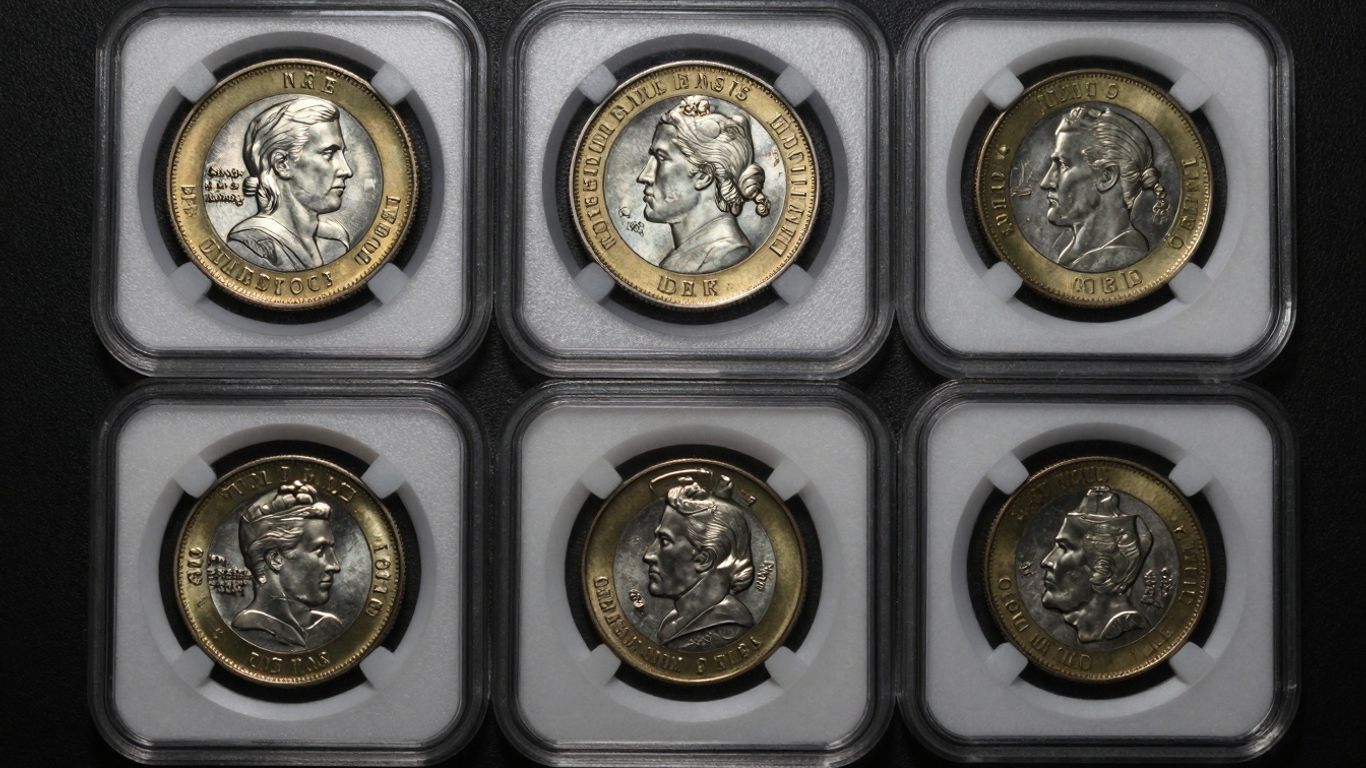
Becoming proficient in coin grading isn’t something that happens overnight. It requires consistent effort and a willingness to learn from established examples. Think of it like learning a new language; you need to immerse yourself in it and practice regularly. Fortunately, there are several ways to build your knowledge base and refine your grading eye.
Collecting Graded Coin Reference Images
One of the most accessible ways to start is by gathering high-quality images of coins that have already been graded by reputable services. These images serve as visual benchmarks. You can find these on grading service websites, in auction archives, and in specialized numismatic publications. By comparing these professional examples to coins you own or are considering, you begin to train your eye to recognize subtle differences in wear, luster, and surface preservation. This practice helps you understand how a coin moves from one grade to another. It’s a bit like having a cheat sheet for what to look for.
Studying Professional Grading Guides
Beyond just images, there are detailed guides written by experts in the field. These guides often break down the grading process into specific categories, explaining what to look for in each. They might discuss how to assess wear on specific design elements, the characteristics of original mint luster, and common types of surface marks. Some guides even offer detailed explanations of the Sheldon Scale and how it applies to different coin series. Understanding these nuances is key to making accurate assessments. For instance, knowing the specific wear patterns on a particular coin series can make a big difference in its grade. You can find these guides through numismatic organizations or specialized book dealers.
Building A Personal Reference Collection
For those serious about improving their grading skills, creating a personal reference collection is an excellent step. This doesn’t mean you need to buy expensive coins; you can start with more common ones. The goal is to acquire examples that represent different grades and conditions. For example, try to get a coin that is clearly circulated, one that shows minimal wear (perhaps an About Uncirculated grade), and one that appears to be in Mint State. Document your observations for each coin, noting its features and why you believe it falls into a certain grade. Photographing these coins under consistent lighting conditions will allow for direct side-by-side comparisons. This hands-on approach solidifies what you learn from images and guides. It’s about building practical experience that you can trust.
Developing a systematic approach to learning is vital. Simply looking at coins without a framework for assessment will yield limited results. Utilize the resources available, compare diligently, and practice consistently. This methodical process will gradually build your confidence and accuracy in grading.
Practical Strategies For Improving Grading Expertise
Getting better at grading coins isn’t something that happens overnight. It takes time, patience, and a willingness to really look closely at a lot of different coins. Think of it like learning to spot the differences between similar-looking birds; at first, they all seem the same, but with practice, you start noticing the subtle markings and behaviors that set them apart. Consistent practice is the bedrock of developing a sharp grading eye.
Attending Numismatic Workshops And Seminars
Workshops and seminars are fantastic places to learn from experienced collectors and professional graders. These events often provide hands-on opportunities to examine coins under expert supervision. You can ask questions in real-time and get immediate feedback, which is incredibly helpful for clearing up confusion. Many of these sessions focus on specific areas, like identifying wear patterns on high-relief coins or understanding the nuances of original mint luster. It’s a great way to get a concentrated dose of knowledge and practical tips.
Engaging With Local Coin Collector Groups
Joining a local coin club is another excellent way to improve. You’ll meet people who are passionate about numismatics and often have a wealth of knowledge. Sharing your observations and listening to how others grade coins can expose you to different perspectives. Many club members are happy to share their collections and help newer collectors learn. It’s also a good place to find out about upcoming shows or events where you might see a wider variety of coins.
Participating In Online Grading Forums
Online forums and communities offer a vast resource for learning and practice. You can find discussions where collectors post images of coins and ask for grading opinions. This allows you to compare your assessment with those of others and see how different people interpret the same coin. Some forums even host grading challenges or quizzes. It’s a convenient way to get exposure to a wide range of coins from the comfort of your home. Remember to cross-reference information, as opinions can vary widely online. You can find some great resources for Canadian coins and their grading standards.
Developing your grading skills is an ongoing journey. It involves actively seeking out learning opportunities, engaging with the numismatic community, and consistently applying what you learn. Don’t be discouraged by initial challenges; every coin you examine brings you one step closer to becoming a more confident and knowledgeable collector.
The Role Of Third-Party Grading In The Market
Third-party grading services have changed the way people buy, sell, and collect coins. Before these groups became popular, most grading was left up to dealers, and that could lead to disagreements or even inflated claims about a coin’s condition.
Relying on a trusted third-party grader can bring a lot of peace of mind, but collectors should always keep their critical thinking sharp when evaluating any certified piece.
Understanding Certified Coin Holders
A certified coin holder, often called a "slab," seals the coin inside a tamper-evident plastic case. The case displays the coin’s grade, along with information about its type and date. This layer of protection and certification gives buyers more confidence that what they see is what they get, not just a seller’s opinion. Coin holders also help guard coins against environmental damage and make them easier to store or display.
Here are the main advantages of certified holders:
- Clear labeling of coin details and grade
- Tamper-reducing design to prevent meddling
- Protection from scratches, finger oils, and environmental changes
- Helps with insurance and estate records
The 'Crackout Game' And Grade Arbitrage
Some collectors and dealers actively play what’s known as the "crackout game." They buy coins that seem under-graded, break them out of their holders, and resubmit to grading companies hoping for a higher grade. Even a single-point bump can mean hundreds—or thousands—of dollars more value.
Key steps many take in this process:
- Identify coins that look nicer than their assigned grade.
- Crack the coin out of its holder, taking care not to scratch or damage it.
- Resubmit to the same or competing grading service for an upgrade.
This practice isn’t risk-free; sometimes the new grade comes back lower or unchanged, which can actually hurt the coin’s resale value. So, while grade arbitrage offers potential reward, it’s not a guaranteed win.
| Scenario | Original Grade | New Grade | Value Increase |
|---|---|---|---|
| Successful Regrade | MS-62 | MS-63 | Significant |
| Unchanged After Resubmit | AU-55 | AU-55 | None |
| Downgraded After Resubmit | MS-64 | MS-63 | Negative |
Trusting, But Verifying, Third-Party Grades
Most buyers lean on grading services for objectivity and consistency, especially with names like NGC and PCGS. The truth is, even the major players sometimes get it wrong—grades might be a little too generous or too strict. That’s why, even with a slabbed coin, it’s smart to take a careful look yourself before making a purchase or sale.
Third-party certification shapes the market by increasing trust and liquidity, especially among investors and dealers seeking to boost coin desirability. But it’s no substitute for developing a sharp eye and a skeptical mindset. Consider these habits to stay ahead:
- Always inspect coins in person if possible, even when slabbed
- Cross-check grades between services when buying top-dollar pieces
- Be aware that the presence of a certification doesn’t automatically mean a good investment
Collectors who blend expert grading services with their own judgments are usually the happiest in the long run—protecting both their hobby and their wallets.
Wrapping Up Your Grading Journey
So, we’ve gone over a lot about coin grading, looking at services like PCGS and NGC, and even touching on others like ICCS. It’s clear that picking the right service, or at least understanding how they all work, can really make a difference in how your coins are seen and valued. It’s not just about getting a grade; it’s about getting a reliable grade that collectors trust. Remember, even with the big names, a little bit of your own knowledge goes a long way. Knowing the basics yourself helps you spot when a coin might be a good deal or when it’s maybe not quite what it seems. Keep practicing, keep looking at coins, and you’ll get better at spotting the good ones. Happy collecting!
Frequently Asked Questions
What are the main categories used in coin grading?
Coin grading uses categories that describe a coin’s condition, from Poor (P-1) to Mint State (MS-70). Understanding these main groups, like Good, Very Fine, and About Uncirculated, helps you figure out how worn a coin is and how much it might be worth.
What tools are really needed to check a coin's grade?
To properly check a coin’s grade, you’ll need a magnifying glass, usually a 10x jeweler’s loupe, and good lighting. Using soft gloves and working on a clean surface also helps you see the coin’s details without causing damage.
How can I tell if a coin has its original shine (luster)?
To check a coin’s original shine, look at it under soft light and turn it slowly. You’re looking for a bright, reflective quality. If the coin has been handled a lot, the shine might be dull or missing in certain spots.
What are some common mistakes people make when grading coins?
A big mistake is letting personal feelings about a coin affect its grade; this can make you think it’s better than it is. Not using enough light or not noticing small marks and signs that a coin might have been cleaned or fixed are also common errors.
Why is it important to compare different coin grading services?
Different grading services, like PCGS and NGC, might grade the same coin slightly differently. Comparing their grades helps you get a better idea of a coin’s true condition and value, making sure you haven’t missed any important details.
What does a 'Details' grade mean for a coin?
A ‘Details’ grade is given to coins that have big problems, like being cleaned or having damage, which stops them from getting a regular numerical grade. These coins usually aren’t worth as much as coins with a standard grade.
How can I get better at grading coins on my own?
You can improve your grading skills by looking at lots of pictures of graded coins and studying guides. It also helps to compare coins you own to these examples and to join groups where other collectors share their knowledge.
What is the role of third-party grading services in the coin market?
Third-party grading services, like PCGS and NGC, provide an expert opinion on a coin’s grade, which is then sealed in a protective holder. This helps buyers trust the coin’s condition and value, making the market more reliable, though it’s still wise to verify grades yourself.